If you own or are shopping for a used 2018 Chevy Malibu Hybrid, the high-voltage battery is likely your biggest long-term ownership question. Unlike the Malibu's standard 12V auxiliary battery (which powers lights, infotainment, and accessories), the hybrid traction battery is the heart of the electrified powertrain — and its health directly impacts fuel economy, acceleration assist, and regenerative braking performance.
This guide covers the 2018 Malibu Hybrid's specific battery pack, then zooms out to the broader EV and hybrid battery landscape — chemistry trade-offs, degradation data, warranty coverage, replacement costs, and how to monitor and maximize battery health in 2026.
The 2018 Chevy Malibu Hybrid Battery: What You Need to Know
The 2018 Chevrolet Malibu Hybrid uses a 1.5 kWh lithium-ion battery pack (not NiMH as some older GM hybrids used). This is a relatively small pack compared to full battery-electric vehicles — it's designed for short electric-only assists, regenerative braking capture, and engine stop-start smoothing, not extended EV driving.
2018 Malibu Hybrid Battery Quick Specs:
- Capacity: 1.5 kWh (gross)
- Chemistry: Lithium-ion (NMC-type cells)
- EPA Combined MPG: 49 MPG (city 49 / highway 43) — source: EPA fueleconomy.gov
- Electric-only capability: Brief low-speed assist only (no meaningful EV-only range)
- Warranty: 8 years / 100,000 miles (hybrid/electric components)
At the 2018 model year, the Malibu Hybrid's battery was already in its second generation of GM's eAssist-style hybrid system. The small pack size means degradation has a less dramatic impact on daily driving than it would in a full BEV — you won't lose 20% of a 300-mile range. But you may notice reduced regenerative braking efficiency and slightly lower MPG as the pack ages.
How Long Do EV and Hybrid Batteries Last?
The most common question from hybrid and EV buyers is straightforward: how long will the battery last before it needs replacement?
Based on aggregated fleet data and manufacturer studies, modern lithium-ion EV batteries typically retain 85-90% of original capacity after 100,000 miles and 75-85% after 150,000 miles. For a 2018 Malibu Hybrid in 2026, that means an 8-year-old pack with moderate mileage likely still has 80-88% of its original 1.5 kWh capacity — enough to maintain most of its hybrid functionality.
Typical EV/Hybrid Battery Degradation Curve (NMC Chemistry):
| Age / Mileage | Avg. Capacity Retention | Notes |
|---|---|---|
| Year 1 / 12,000 mi | 95-97% | Initial drop then plateau |
| Year 3 / 36,000 mi | 92-95% | Gradual linear decline |
| Year 5 / 60,000 mi | 89-93% | Still well above warranty threshold |
| Year 8 / 100,000 mi | 84-90% | Warranty coverage period ends |
| Year 10 / 125,000 mi | 80-87% | Noticeable but manageable loss |
| Year 15 / 180,000 mi | 73-82% | Approaching replacement territory |
Data synthesized from fleet studies by Recurrent Auto and manufacturer warranty thresholds. Individual results vary based on climate, charging habits, and usage patterns.
For the Malibu Hybrid specifically, the small 1.5 kWh pack experiences less thermal stress than larger BEV packs because it operates within a narrow state-of-charge window (typically 20-80% SoC managed by the vehicle's battery management system). This conservative operating window is one reason GM's hybrid packs tend to outlast their warranty periods without issue.
Battery Chemistry: LFP vs NMC Trade-Offs
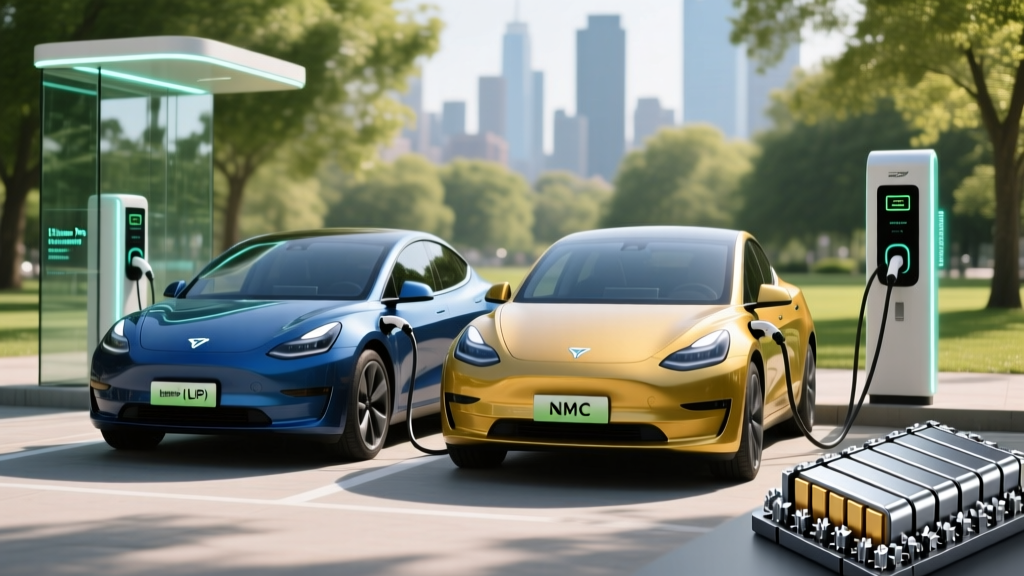
Understanding battery chemistry helps explain why some EVs degrade slower, charge faster, or cost less than others. The two dominant chemistries in 2026 are NMC (Nickel Manganese Cobalt) and LFP (Lithium Iron Phosphate).
The 2018 Malibu Hybrid uses NMC-type cells — the standard for most GM electrified vehicles of that era. Here's how the two chemistries compare:
| Factor | NMC / NCA | LFP |
|---|---|---|
| Energy Density | Higher (~250 Wh/kg cell-level) | Lower (~170 Wh/kg cell-level) |
| Cycle Life | 1,000-2,000 cycles to 80% | 3,000-5,000+ cycles to 80% |
| Cold-Weather Performance | Better low-temp discharge | Reduced performance below 32°F |
| Thermal Stability | Good (requires active cooling) | Excellent (inherently safer chemistry) |
| Cost per kWh | Higher (~$120-140/kWh pack-level in 2026) | Lower (~$80-100/kWh pack-level in 2026) |
| Optimal Daily SoC | 80% daily, 100% for trips | 100% daily is fine |
| Common In (2026) | Tesla Model S/X/3 LR, Hyundai Ioniq 5/6, Ford F-150 Lightning ER | Tesla Model 3/Y RWD, Ford Mustang Mach-E SR, Rivian Standard |
Which is better? It depends on your use case. NMC wins for long-range vehicles where energy density matters — you get more miles per pound of battery. LFP wins for cost-conscious buyers, high-mileage drivers, and those who want to charge to 100% daily without accelerating degradation. Many 2026 models now offer LFP on base trims and NMC on extended-range trims, letting buyers choose.
For a hybrid like the Malibu, the small NMC pack is appropriate — energy density matters more than cycle life when the pack is only 1.5 kWh and operates in a narrow SoC band.
Battery Warranty: What's Covered and for How Long?
Federal law mandates that hybrid and EV battery packs carry a minimum warranty of 8 years / 100,000 miles (in California Air Resources Board states, this extends to 10 years / 150,000 miles). For the 2018 Malibu Hybrid, the standard federal warranty applies unless the vehicle was originally sold and registered in a CARB state.
| Vehicle | Battery Warranty | Capacity Threshold | Coverage Details |
|---|---|---|---|
| 2018 Chevy Malibu Hybrid | 8 yr / 100,000 mi | ~60-70% capacity | Defects + excessive degradation |
| 2026 Tesla Model 3 (NMC LR) | 8 yr / 120,000 mi | 70% retention | Defects + degradation below 70% |
| 2026 Hyundai Ioniq 5 | 10 yr / 100,000 mi | 70% retention | Defects + degradation below 70% |
| 2026 Ford F-150 Lightning | 8 yr / 100,000 mi | 70% retention | Defects + degradation below 70% |
What triggers a warranty claim? Most manufacturers define "excessive degradation" as the battery falling below 70% of original usable capacity within the warranty period. For the Malibu Hybrid, this means the 1.5 kWh pack dropping below roughly 1.05 kWh of usable capacity — a threshold most packs never reach during the warranty window. Note that the warranty covers defects in materials and workmanship as well, which includes cell failures, BMS malfunctions, and cooling system defects.
For a 2018 model in 2026, the federal warranty has expired for most owners (8 years from the original in-service date). If you're buying used, check whether the vehicle was originally sold in a CARB state (CA, CT, ME, MD, MA, NJ, NY, OR, RI, VT, WA, CO, MN, NV, NM, VA) — if so, the 10-year/150,000-mile warranty may still apply.
EV and Hybrid Battery Replacement Costs
This is the topic that generates the most anxiety, so let's put it in context: most EV and hybrid batteries outlast the vehicles they're installed in. Replacement is uncommon before 150,000-200,000 miles, and by that point, many vehicles have been traded, retired, or are worth less than the replacement cost.
That said, here's what replacement looks like when it is needed:
| Vehicle Type | Battery Size | Replacement Cost (2026) | Typical Replacement Timeline |
|---|---|---|---|
| Mild Hybrid (e.g., 2018 Malibu Hybrid) | 1.5 kWh | $2,000 - $4,000 | 150,000-200,000+ mi (if ever) |
| PHEV (e.g., Toyota RAV4 Prime) | 18.1 kWh | $6,000 - $10,000 | 150,000-200,000+ mi |
| Compact BEV (e.g., Chevy Bolt EV) | 65 kWh | $10,000 - $16,000 | 175,000-250,000+ mi |
| Mid-size BEV (e.g., Tesla Model 3 LR) | 82 kWh | $12,000 - $18,000 | 175,000-250,000+ mi |
| Large BEV / Truck (e.g., F-150 Lightning ER) | 131 kWh | $18,000 - $28,000 | 200,000+ mi |
For the 2018 Malibu Hybrid specifically, the small 1.5 kWh pack makes replacement relatively affordable compared to full EVs — typically $2,000-$4,000 including labor at a dealership. Independent hybrid specialists may offer lower pricing. Refurbished or remanufactured packs are sometimes available for 20-30% less than new OEM units.
An important cost context: a 2018 Malibu Hybrid in 2026 has a Kelley Blue Book value of roughly $12,000-$17,000 depending on condition and mileage. A $3,000 battery replacement represents a meaningful percentage of the car's value — which is why many owners at this age opt to trade in rather than replace. However, if the rest of the vehicle is in excellent shape, the replacement extends the car's useful life by another 5-8 years.
Factors That Affect Battery Life (and How to Maximize It)
Battery degradation isn't just about age — how you use and charge the pack matters significantly. Here's a practical checklist for maximizing longevity:
Battery Health Best Practices:
- Avoid sustained 100% SoC: For NMC batteries, daily charging to 80% is optimal. Charge to 100% only when you need full range for a trip. (LFP batteries are the exception — 100% daily is fine and actually recommended for SoC calibration.)
- Minimize DC fast charging: Occasional fast charging is fine, but daily use of 150+ kW DCFC accelerates degradation through heat stress. Level 2 home charging (7-11 kW) is gentler on cells.
- Precondition in cold weather: Most EVs let you precondition the battery while plugged in — this warms the cells before driving and charging, reducing lithium plating risk in sub-freezing temps.
- Avoid extreme heat exposure: Parking in shade or a garage during summer reduces passive thermal stress. Batteries degrade faster at sustained temperatures above 95°F.
- Don't let SoC sit at 0% or 100%: If storing the vehicle for weeks, aim for ~50% SoC. The BMS manages this to some degree, but extreme states of charge accelerate calendar aging.
- Use regenerative braking wisely: For the Malibu Hybrid, the regen system charges the small pack frequently in short bursts — this is normal and the BMS manages the charge rate to protect cells.
For the 2018 Malibu Hybrid specifically, the vehicle's battery management system already handles most of these concerns automatically. The hybrid system keeps the pack in a narrow 20-80% SoC window, and the small capacity means thermal loads are low. Your main job is simply to drive normally and address any hybrid system warning lights promptly.
How to Check Battery Health (State of Health)
State of Health (SoH) is the metric that tells you what percentage of original battery capacity remains. Here's how to check it across different vehicle types:
For the 2018 Malibu Hybrid: GM does not provide a driver-facing SoH percentage in the infotainment system. Options include:
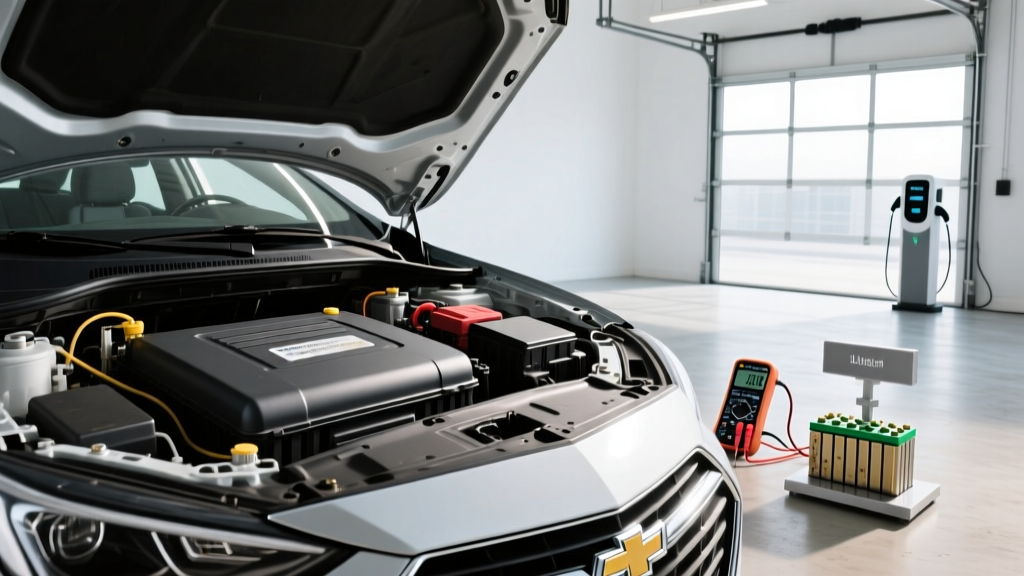
- Dealership diagnostic scan: A Chevy dealer can run a hybrid battery diagnostic via the GDS2 scan tool, which reads individual cell voltages and overall pack capacity. Ask specifically for a "hybrid battery health report."
- OBD-II scanner with hybrid support: Third-party tools like Torque Pro (with appropriate PIDs) or dedicated hybrid scan tools can read battery data. Results vary in accuracy.
- MPG tracking: A simpler proxy — if your real-world MPG has dropped significantly below the EPA-rated 49 combined (e.g., consistently below 40 MPG with normal driving), the hybrid battery may be degraded enough to warrant a diagnostic check.
For full BEVs (Tesla, Hyundai, Ford, etc.):
- In-car displays: Some EVs show battery health or degradation data in the settings menu.
- Third-party services: Companies like Recurrent offer battery health reports by connecting to your vehicle's telematics data.
- Range comparison: Compare your current max range at 100% SoC against the original EPA rating. A consistent 10-15% reduction suggests ~85-90% SoH.
Emerging Battery Tech: What's Next (and When)
If you're planning your next vehicle purchase, here's where battery technology is heading — with realistic timelines, not hype:
Solid-state batteries: These replace the liquid electrolyte with a solid material, promising higher energy density (~400-500 Wh/kg), faster charging, and improved safety. Toyota, Samsung SDI, and QuantumScape are leading development. Realistic timeline: Limited production in premium vehicles beginning 2027-2028, with mainstream availability not expected until 2030+. Early units will carry significant price premiums.
Silicon-dominant anodes: Replacing graphite anodes with silicon can boost energy density by 20-40%. Companies like Sila Nanotechnologies and Group14 are supplying early production cells. Realistic timeline: Already appearing in limited applications (2025-2026 model-year premium EVs); broader adoption expected 2027-2029.
Sodium-ion batteries: A lower-cost alternative to lithium for budget EVs and stationary storage. CATL and BYD are producing these at scale in China. Realistic timeline: US-market vehicles likely 2028+ due to supply chain buildout needs.
LFP improvements: Ongoing cell-level engineering is closing the energy density gap between LFP and NMC. By 2028, expect LFP packs approaching 200 Wh/kg — enough for 300+ mile range in mid-size sedans at lower cost.
None of these technologies are available in production vehicles you can buy today. For a 2018 Malibu Hybrid owner planning a future EV purchase, the current-generation NMC and LFP batteries in 2026 models are mature, well-understood, and backed by robust warranty coverage.
Frequently Asked Questions
How long do EV batteries last in years and miles?
Modern EV and hybrid batteries typically last 15-20 years or 150,000-250,000 miles before capacity drops below 70-80% of original. Many outlast the vehicles they're installed in. The 2018 Malibu Hybrid's 1.5 kWh pack, operating in a narrow SoC window, is likely to remain functional for the vehicle's entire remaining lifespan.
How much does it cost to replace the 2018 Malibu Hybrid battery?
Expect $2,000-$4,000 for a dealership replacement of the 1.5 kWh hybrid battery pack, including labor. Independent hybrid specialists may offer lower pricing, and refurbished packs can reduce cost by 20-30%. This is significantly less than full EV battery replacements, which range from $10,000-$28,000 depending on pack size.
What does the Chevy Malibu Hybrid battery warranty cover?
GM covers the hybrid battery for 8 years/100,000 miles (10 years/150,000 miles in CARB states) against defects in materials, workmanship, and excessive capacity loss. For a 2018 model, the federal warranty has expired in 2026 for most owners, but CARB-state vehicles may still have coverage through 2028.
How do I check my Malibu Hybrid's battery health?
The most reliable method is a dealership diagnostic scan using GM's GDS2 tool, which reads cell-level voltage data and overall pack capacity. You can also monitor real-world MPG — a sustained drop below 40 MPG combined (vs. the 49 MPG EPA rating) may indicate battery degradation worth investigating.
Is LFP or NMC better for my next EV?
Choose NMC if you need maximum range in cold climates or tow frequently — its higher energy density and better cold-weather performance suit those needs. Choose LFP if you prioritize longevity, lower cost, and the ability to charge to 100% daily without worry. LFP's cycle life (3,000-5,000+ cycles) makes it ideal for high-mileage commuters.
Does fast charging damage my hybrid or EV battery?
Occasional DC fast charging has minimal impact, but daily use of high-power (150+ kW) chargers accelerates degradation through heat accumulation. For the Malibu Hybrid, this is largely irrelevant — the small 1.5 kWh pack charges primarily through regenerative braking and the engine-driven generator, not external charging. For full BEVs, rely on Level 2 home charging for daily use and reserve DCFC for road trips.
Can extreme weather damage my EV battery?
Extreme heat (sustained 95°F+) accelerates calendar aging more than extreme cold. Cold weather temporarily reduces range and charge speed but doesn't cause permanent damage if the battery is preconditioned before fast charging. Modern BMS systems actively manage thermal limits — the Malibu Hybrid's liquid-cooled pack is well-protected against both extremes.