If you've landed here searching for a 2018 Buick Encore battery, you likely need a straightforward answer about a conventional compact crossover. But because the Encore's name frequently overlaps with the Buick Electra E5 and other GM electric vehicles in online searches, this guide addresses both scenarios: the 12V auxiliary battery in the gasoline Encore, and the high-voltage traction batteries powering today's EVs — including the chemistry, degradation data, warranty terms, and replacement costs every electrified-vehicle owner or shopper needs to understand.
12V Battery for the 2018 Buick Encore: Quick Specs
Before we dive into EV traction battery technology, here are the essentials for the gasoline Encore owner:
| Spec | Detail |
|---|---|
| Battery Group Size | 47 (H5) or 48 (H6) — verify owner's manual |
| Cold Cranking Amps (CCA) | 570–730 CCA |
| Typical Cost (installed) | $150–$270 |
| Expected Lifespan | 3–5 years |
| Warranty | 2–3 years free replacement, prorated after |
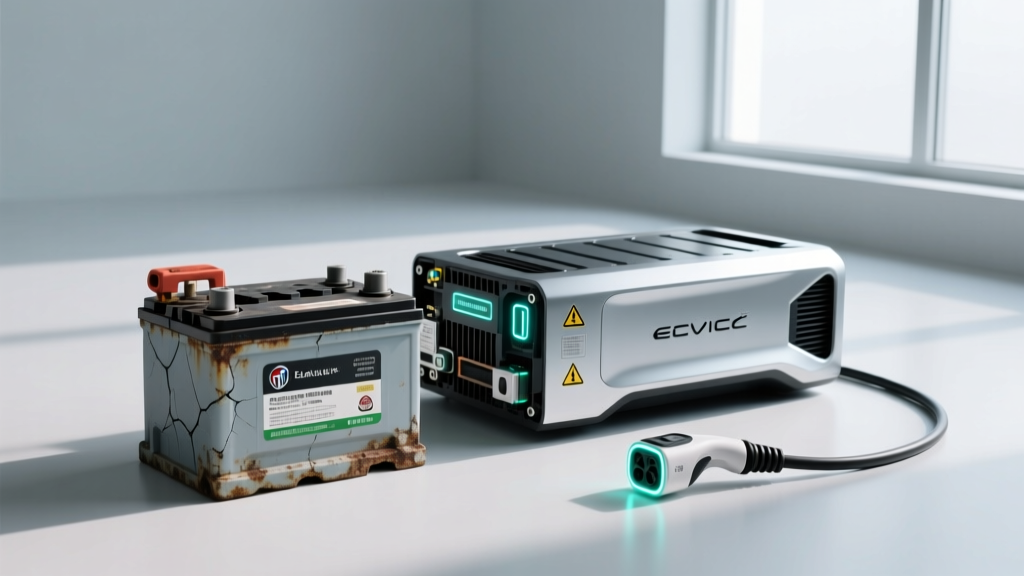
This 12V battery is entirely separate from the high-voltage traction batteries discussed below. If your Encore won't start, you need a conventional 12V replacement — not an EV battery service.
EV Traction Battery Chemistry: LFP vs NMC vs NCA
For electric vehicles, the traction battery is the single most expensive and technically complex component. Two dominant lithium-ion chemistries power nearly every EV on the road in 2026: LFP (lithium iron phosphate) and NMC/NCA (nickel manganese cobalt / nickel cobalt aluminum). Understanding the trade-offs between them is essential for any EV buyer.
| Attribute | LFP (LiFePO₄) | NMC / NCA |
|---|---|---|
| Energy Density | Lower (~160–200 Wh/kg cell-level) | Higher (~220–300 Wh/kg cell-level) |
| Cycle Life | 3,000–6,000+ cycles | 1,000–2,500 cycles |
| Cold-Weather Performance | Weaker — greater range loss below 32°F | Better cold-weather retention |
| Thermal Stability / Safety | Excellent — highly resistant to thermal runaway | Good, but requires more active thermal management |
| Cost | Lower — no cobalt or nickel | Higher — commodity-priced metals |
| Recommended SoC for Daily Use | 100% OK (manufacturer-approved) | 80% preferred for daily; 100% for trips |
| Common Applications (2026) | Tesla Model 3/Y RWD, Ford Mustang Mach-E Select, BYD models | Tesla Long Range, Hyundai Ioniq 5/6, GM Ultium vehicles, Rivian |
The bottom line: LFP wins on longevity, safety, and cost but sacrifices range-per-pound and cold-weather efficiency. NMC/NCA delivers more range in a lighter package at higher cost and with a somewhat shorter cycle life. Neither chemistry is universally "better" — the right choice depends on your driving patterns, climate, and budget.
How Long Do EV Batteries Last? Degradation Data
The fear that an EV battery will "die" at 60,000 miles is outdated. Modern liquid-cooled lithium-ion packs are engineered for the life of the vehicle. Here's what the data actually shows:
- Tesla Model 3/Y (NMC/LFP): ~5–8% capacity loss at 100,000 miles, based on Tesla's 2024 Impact Report fleet telemetry.
- Nissan Leaf (passive air-cooled, older gen): ~15–25% loss at 100,000 miles — a cautionary example of why thermal management matters.
- Hyundai/Kia E-GMP platform (Ioniq 5, EV6): ~5–7% loss at 100,000 miles in owner-reported fleet data.
- GM Ultium platform: GM has stated a target of less than 10% degradation over 150,000 miles; independent long-term testing is still maturing as the platform launched in 2022–2023.
- LFP packs broadly: Lab testing shows 10% degradation only after 2,000–4,000 full charge cycles — equivalent to 500,000+ miles in a 250-mile-range vehicle.
In practical terms, most EVs sold from 2020 onward will retain 85–92% of original battery capacity at 100,000 miles under normal use. Catastrophic failure (requiring full replacement) is rare and typically covered under warranty.
EV Battery Warranty Terms: What's Actually Covered
Federal law in the United States mandates that EV battery warranties cover a minimum of 8 years / 100,000 miles (in California Air Resources Board states, it extends to 10 years / 150,000 miles). Here's how major manufacturers structure their coverage in 2026:
| Manufacturer | Duration | Mileage | Capacity Threshold |
|---|---|---|---|
| Tesla | 8 years | 100,000–120,000 mi (varies by model) | 70% retention |
| Hyundai / Kia | 10 years | 100,000 mi | 70% retention |
| GM (Chevrolet/Cadillac/GMC) | 8 years | 100,000 mi | 70% retention (60% on some commercial) |
| Ford | 8 years | 100,000 mi | 70% retention |
| Rivian | 8 years | 175,000 mi (R1T/R1S) | 70% retention |
What "70% retention" means: If your battery's usable capacity drops below 70% of its original kWh rating within the warranty period, the manufacturer will repair or replace it at no cost. Normal gradual degradation above that threshold is considered expected wear and is not covered.
For the latest federal warranty and tax-credit rules, consult IRS.gov's clean vehicle credits page and your manufacturer's warranty booklet.
EV Battery Replacement Cost: What to Expect
Full traction battery replacement is uncommon within the first 10–15 years of ownership, but costs are important context — especially for used-EV buyers or those planning to keep their vehicle past the warranty window.
| Vehicle / Battery Size | Battery (kWh) | Replacement Cost Range |
|---|---|---|
| Chevrolet Bolt EV / EUV | 65 kWh | $9,000–$14,000 |
| Tesla Model 3 (LFP RWD) | ~60 kWh | $10,000–$16,000 |
| Tesla Model Y / 3 Long Range | ~75–82 kWh | $13,000–$20,000 |
| Hyundai Ioniq 5 / Kia EV6 | 77.4 kWh | $12,000–$18,000 |
| Ford F-150 Lightning (Extended) | 131 kWh | $20,000–$30,000+ |
| GMC Hummer EV | ~212 kWh | $30,000–$40,000+ |
These figures include the battery pack and labor but can vary significantly by region, dealership vs. independent shop, and whether modules (rather than the full pack) can be replaced. Many modern packs allow module-level repair — replacing only the degraded sections for a fraction of the full-pack cost.
Industry-wide, battery pack prices have fallen from over $1,000/kWh in 2010 to approximately $115–$130/kWh at the cell level in 2025 (per BloombergNEF surveys), though installed/pack-level costs remain higher due to packaging, thermal management, and BMS electronics.
Factors That Affect EV Battery Lifespan
Not all miles are equal when it comes to battery wear. These are the variables that most influence how quickly your pack degrades:
- Limit DC fast charging to road trips. Frequent 150+ kW charging sessions accelerate degradation. For daily use, Level 2 home charging (7–11 kW) is ideal.
- Avoid extreme State of Charge. For NMC/NCA batteries, keep daily SoC between 20–80%. LFP batteries can and should be charged to 100% regularly per manufacturer guidance — this helps the BMS calibrate.
- Precondition in cold weather. Using your EV's preconditioning feature warms the battery before driving and charging, reducing stress and improving charge acceptance. Most EVs do this automatically when you set a departure time or navigate to a charger.
- Park in shade or a garage when possible. Prolonged exposure to extreme heat (above 95°F / 35°C) with a high SoC is one of the most damaging conditions for lithium-ion cells.
- Don't leave the car at 100% SoC for extended periods. If you charge to full for a road trip, try to depart within 24 hours rather than letting it sit at 100% for days.
- Use regenerative braking moderately in extreme cold. Some EVs limit regen when the battery is cold — this is protective, not a malfunction.
Monitoring Battery Health: Checking Your State of Health (SoH)
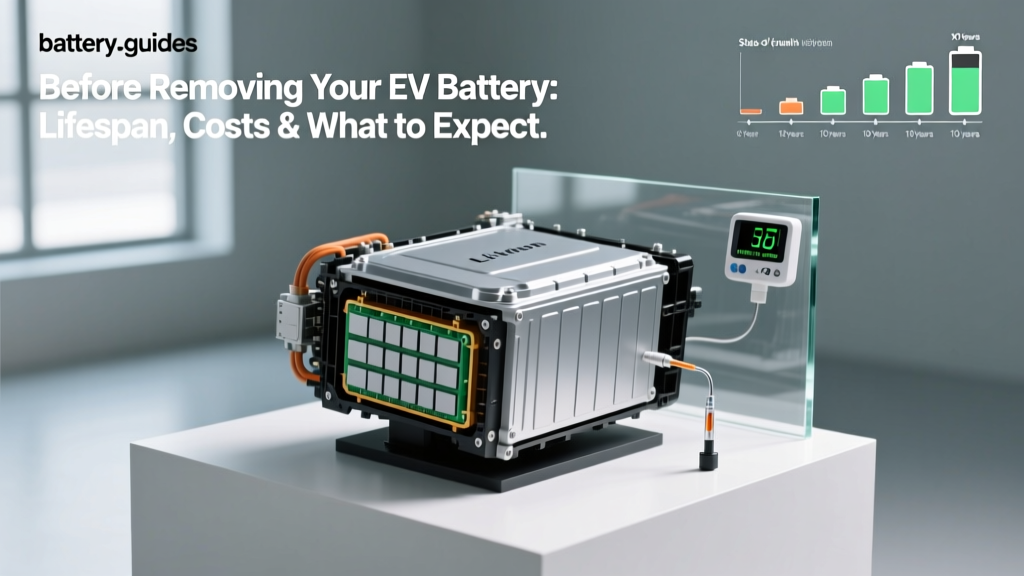
State of Health (SoH) is the percentage of your battery's original usable capacity that remains available. A brand-new EV has 100% SoH; a vehicle with 8% degradation sits at 92% SoH.
Here's how to check it:
- In-vehicle displays: Tesla provides a battery health estimate in the service menu (on recent software). Hyundai/Kia offers SoH readouts through the infotainment system on some models. GM's Ultium vehicles display battery health via the Driver Information Center or myChevrolet/myCadillac app.
- OBD-II dongles + apps: Third-party tools like OBDLink SX/MX+ paired with apps such as LeafSpy (Nissan Leaf), Scan My Tesla, or manufacturer-specific diagnostic apps can read detailed cell-level data including SoH, individual cell voltages, and temperature differentials.
- Dealer diagnostics: Any authorized service center can perform a battery health report, typically during routine service visits. Request one before purchasing a used EV.
- Charging data analysis: Compare the kWh dispensed by your charger (from your Level 2 unit's app or meter) against the vehicle's displayed range gain. A consistent discrepancy over time indicates degradation.
For used-EV buyers, a battery health report should be as non-negotiable as a pre-purchase inspection on a gas car. The EPA's fueleconomy.gov site lists original range figures you can compare against a used EV's current displayed range at full charge.
Emerging Battery Technology: Solid-State and Beyond
Next-generation battery chemistries promise step-change improvements, but realistic timelines matter more than press-release hype:
- Solid-state batteries: Replace the liquid electrolyte with a solid conductor, offering higher energy density (~400+ Wh/kg projected), faster charging, and improved safety. Toyota has announced commercial solid-state EV production targeting 2027–2028, with initial availability likely limited to premium models in Japan. Nissan and Samsung SDI have similar timelines. Expect meaningful US-market availability no earlier than 2029–2030, with cost parity years later.
- Silicon-anode batteries: Companies like Sila Nanotechnologies and Group14 are replacing graphite anodes with silicon composites, boosting energy density by 20–40%. These are already appearing in limited production (Mercedes-Benz G 580 EQ with optional silicon-anode cells) and will proliferate through 2026–2028.
- Sodium-ion batteries: Using abundant sodium instead of lithium, these offer lower cost and excellent cold-weather performance at the expense of energy density. CATL and BYD have begun deploying them in Chinese-market EVs; US-market adoption is expected after 2027 for budget-oriented models.
- LMFP (lithium manganese iron phosphate): An evolution of LFP that adds manganese for ~15–20% higher energy density while retaining LFP's safety and cycle-life advantages. Tesla and Ford are expected to adopt LMFP cells in upcoming model years.
None of these technologies are available in production EVs sold in the US as of early 2026, with the limited exception of silicon-anode cells in select high-end applications. If you're buying an EV today, you're buying LFP or NMC/NCA — and both are proven, durable chemistries.
Frequently Asked Questions
How long do EV batteries last in years and miles?
Most modern liquid-cooled EV batteries are designed to last 15–20 years or 150,000–200,000+ miles before reaching 70–80% of original capacity. Fleet data from Tesla, Hyundai, and others shows approximately 5–8% degradation at 100,000 miles. Catastrophic failure is rare and covered under the 8-year/100,000-mile federal minimum warranty.
How much does it cost to replace an EV battery?
Full-pack replacement ranges from approximately $9,000 for a Chevrolet Bolt to $30,000+ for large-pack vehicles like the GMC Hummer EV or Ford F-150 Lightning Extended Range. However, most EVs will never need a full replacement during typical ownership. Module-level repairs are often possible at lower cost. Battery cell prices continue to decline year over year.
What does the EV battery warranty actually cover?
Manufacturer warranties guarantee that the battery will retain at least 70% of its original usable capacity (kWh) for a minimum of 8 years / 100,000 miles (10 years / 150,000 miles in CARB states). If capacity drops below this threshold, the manufacturer repairs or replaces the pack at no cost. Normal gradual degradation above the threshold is not covered.
How do I check and maximize my EV battery health?
Check SoH through your vehicle's infotainment display, a dealer diagnostic report, or an OBD-II scanner app. Maximize lifespan by favoring Level 2 home charging over DC fast charging, keeping NMC/NCA batteries between 20–80% SoC for daily use (LFP to 100%), preconditioning in cold weather, and avoiding prolonged high-SoC exposure in extreme heat.
LFP vs NMC — which battery chemistry is better?
Neither is universally superior. LFP offers longer cycle life (3,000–6,000 cycles), lower cost, better thermal safety, and can be charged to 100% daily — but it's heavier and loses more range in cold weather. NMC/NCA provides higher energy density (more range per pound) and better cold-weather performance at higher cost and a shorter cycle life (1,000–2,500 cycles). Choose LFP for budget, longevity, and warm climates; choose NMC for maximum range and cold-weather driving.
Does the 2018 Buick Encore have an EV battery?
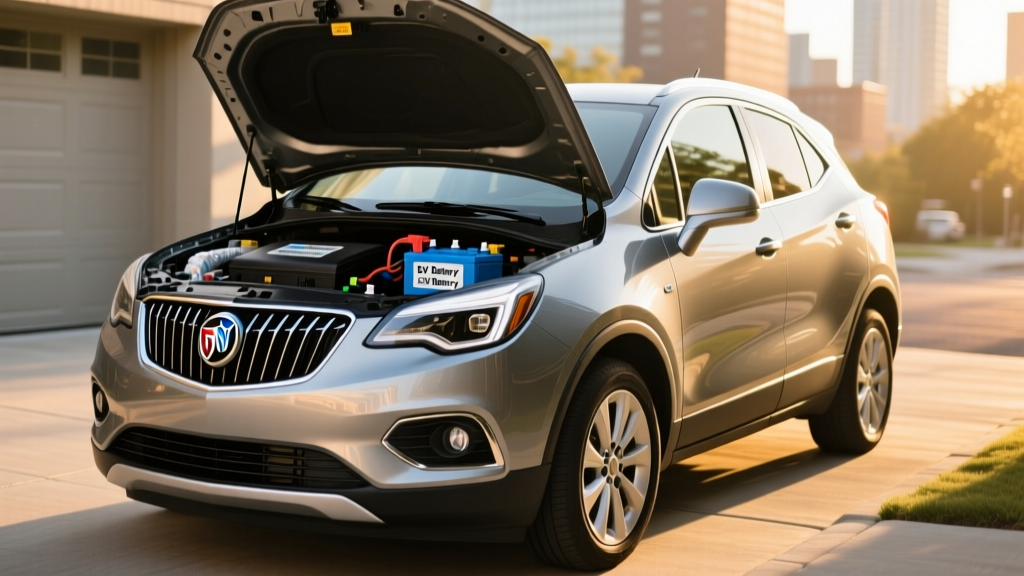
No. The 2018 Buick Encore is a gasoline-powered subcompact SUV with a 1.4L turbocharged engine. It uses a conventional 12V lead-acid battery (Group 47/H5 or 48/H6). If you're looking for an electric Buick, the Buick Electra E5 (an Ultium-based EV sold in China, with US availability anticipated) is the brand's first EV. For 2018 Encore 12V battery replacement, expect to pay $150–$270 at any auto parts store or service center.