Why EV Owners Search for the 2017 Kia Sportage Battery
Searches for the 2017 Kia Sportage battery are almost always about the 12V lead-acid starter battery — a $150–$250 consumable that powers the infotainment, lights, and engine cranking in Kia's compact gasoline SUV. But that search query reveals a deeper question for drivers considering an electric vehicle: How does the high-voltage traction battery in an EV compare in cost, lifespan, and replacement burden?
The short answer: EV traction batteries are engineered to outlast the vehicle itself, backed by federally mandated warranties, and cost far less per mile than repeatedly replacing 12V batteries in aging ICE vehicles. Let's break down the chemistry, degradation data, replacement economics, and care practices that every current or prospective EV owner needs to understand.
LFP vs NMC vs NCA: EV Battery Chemistry Explained
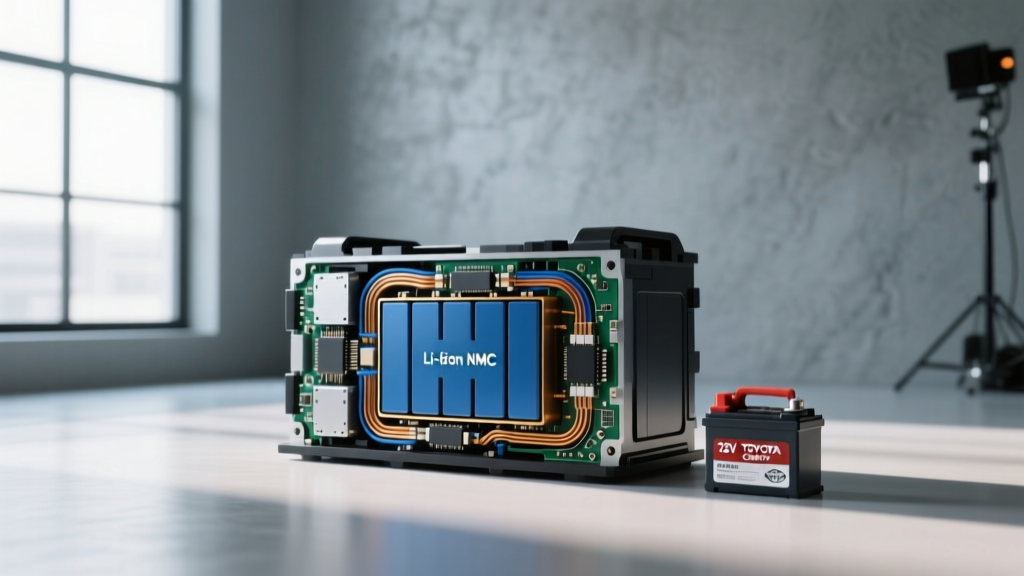
Not all EV batteries use the same chemistry. The two dominant types in 2026 are NMC/NCA (nickel-manganese-cobalt or nickel-cobalt-aluminum) and LFP (lithium iron phosphate). Each has distinct trade-offs that affect range, longevity, and cost.
| Attribute | NMC / NCA | LFP |
|---|---|---|
| Energy Density | High (250–300 Wh/kg cell-level) | Moderate (160–200 Wh/kg) |
| Cycle Life | 1,000–2,000 cycles | 3,000–5,000+ cycles |
| Cold-Weather Performance | Better at low temps | Reduced below 32°F; preconditioning critical |
| Cost per kWh | Higher ($130–$160/kWh pack-level) | Lower ($90–$120/kWh pack-level) |
| Thermal Stability | Good with active cooling | Excellent — inherently safer chemistry |
| Typical Use | Long-range sedans/SUVs (Tesla Model 3 LR, Hyundai Ioniq 5 LR) | Standard-range models (Tesla Model 3 RWD, Ford Mustang Mach-E SR) |
Which is better? It depends on your priority. If you need maximum range in a cold climate, NMC/NCA delivers. If you want maximum cycle life and lower cost — and don't mind slightly less range — LFP is the smarter long-haul choice. Many automakers now offer both chemistries across their lineups.
How Long Do EV Batteries Actually Last?
The fear that EV batteries need replacement every 5–7 years is not supported by fleet data. According to analysis by Recurrent Auto, which tracks over 15,000 EVs in real-world conditions, the average EV battery retains approximately 90–95% of original capacity after 5 years and 85–90% after 8 years of typical use.
Typical Degradation Curve (Fleet Average):
- Year 1 / 15,000 mi: 2–5% loss (initial formation loss)
- Year 3 / 45,000 mi: 5–8% total loss
- Year 5 / 75,000 mi: 8–12% total loss
- Year 8 / 120,000 mi: 10–15% total loss
- Year 10 / 150,000 mi: 12–18% total loss
These figures represent fleet averages across NMC and LFP chemistries. LFP packs tend to degrade more slowly but may show more variance in state-of-charge estimation. The degradation curve is not linear — the steepest loss occurs in the first year, then flattens considerably.
For context, a 2017 Kia Sportage's gasoline engine may require a timing chain inspection, transmission fluid changes, and multiple 12V battery replacements by 100,000 miles — maintenance costs that an EV's traction battery simply doesn't parallel.
What Does the EV Battery Warranty Cover?
U.S. federal law mandates a minimum battery warranty of 8 years / 100,000 miles for EVs certified in California-emissions states, and 8 years / 100,000 miles has become the industry standard nationwide. Some manufacturers exceed this.
| Automaker | Warranty Term | Capacity Retention Threshold |
|---|---|---|
| Tesla (Model 3/Y NMC) | 8 yr / 120,000 mi | 70% |
| Tesla (Model 3/Y LFP) | 8 yr / 100,000 mi | 70% |
| Hyundai / Kia | 10 yr / 100,000 mi | 70% |
| Ford (Mach-E, F-150 Lightning) | 8 yr / 100,000 mi | 70% |
| GM (Ultium-based) | 8 yr / 100,000 mi | 70% |
| Rivian | 8 yr / 175,000 mi (commercial) | 70% |
What triggers a warranty claim? If your battery's usable capacity drops below the threshold (typically 70% of original) within the warranty period, the manufacturer must repair or replace the battery at no cost. In practice, very few EVs fall below this threshold under normal use — the warranty is a safety net that most owners never need.
How Much Does an EV Battery Cost to Replace?
Out-of-warranty battery replacement is the single biggest fear among EV shoppers. Here are real-world replacement cost ranges as of 2026, based on manufacturer service data and third-party repair shops:
| Battery Size / Vehicle Class | Replacement Cost Range | When Typically Needed |
|---|---|---|
| 40–60 kWh (Nissan Leaf, Chevy Bolt) | $6,500–$10,000 | Rarely before 150,000+ mi |
| 75–90 kWh (Tesla Model 3/Y LR, Ioniq 5) | $10,000–$16,000 | Rarely before 200,000+ mi |
| 100–130 kWh (F-150 Lightning, Hummer EV) | $15,000–$25,000 | Rarely before 200,000+ mi |
| LFP packs (various) | $7,000–$12,000 | Extremely rare; cycle life exceeds typical ownership |
Critical context: Battery replacement before 150,000 miles is statistically uncommon. Most EVs are scrapped or retired for collision damage, not battery failure. Pack-level costs continue to decline — Bloomberg NEF reports average pack prices fell below $130/kWh in 2025, and module-level repairs (replacing individual bad modules rather than the entire pack) can reduce costs by 50–70%.
Compare this to a 2017 Kia Sportage, where a transmission replacement can run $3,500–$5,500 and an engine rebuild $4,000–$7,000 — costs that are far more likely before 150,000 miles than an EV battery failure.
Factors That Affect EV Battery Lifespan
Battery degradation is influenced by how you charge, drive, and store your EV. Here are the factors ranked by impact:
- DC Fast Charging Frequency: Occasional DC fast charging (1–2x/week) has minimal impact. Daily exclusive use of 150+ kW DC fast charging accelerates degradation by an estimated 2–4% over 5 years vs. Level 2 charging. The charge curve matters — batteries taper charge rate above 80% SoC to protect cells.
- State of Charge Habits: For NMC/NCA batteries, consistently charging to 100% or draining below 10% stresses cells. Best practice: keep daily SoC between 20–80%. LFP batteries tolerate 100% SoC better and manufacturers often recommend periodic full charges for SoC calibration.
- Extreme Temperatures: Sustained exposure to ambient temperatures above 95°F or below 10°F without preconditioning accelerates degradation. Active thermal management (liquid cooling/heating) in modern EVs mitigates this significantly compared to early-generation passively cooled packs.
- High-Performance Driving: Sustained high-current discharge (track use, heavy towing at high speed) generates heat. Occasional hard acceleration is fine; repeated high-load sessions without cooldown increase wear.
- Storage at High SoC: Storing an EV at 100% SoC for weeks in hot weather is one of the most damaging scenarios. If storing, set SoC to 50–60% and use a trickle charger or scheduled charging.
How to Check and Monitor Battery Health (SoH)
State of Health (SoH) is the percentage of original battery capacity remaining. Here's how to monitor it:
- In-Vehicle Displays: Many EVs (Hyundai Ioniq 5/6, Kia EV6/EV9, newer Teslas via service mode) display SoH or battery health percentage in settings or diagnostic menus.
- OBD-II Scanners with EV Support: Tools like the OBDLink CX or Car Scanner ELM OBD2 app can read battery SoH, cell voltage variance, and degradation data from the BMS (Battery Management System).
- Manufacturer Apps: Tesla, Ford, and Hyundai/Kia apps provide battery health summaries or service-mode readouts.
- Third-Party Testing: Services like Recurrent offer fleet-grade battery health reports for individual vehicles — useful when buying a used EV.
- Manual Calculation: Track your kWh added during a full charge vs. original usable capacity. If your 75 kWh pack now only accepts 65 kWh from 0–100%, SoH is approximately 87%.
For buyers comparing a used EV to a used 2017 Kia Sportage, the difference is transparency: you can quantify exactly how much battery life remains in an EV, whereas assessing engine wear in a gas SUV requires a mechanic's inspection and guesswork.
Emerging Battery Tech: Solid-State and Silicon Anodes
Several next-generation technologies promise to further extend battery life and reduce costs, but realistic timelines matter:
- Solid-State Batteries: Replace liquid electrolyte with a solid conductor, offering higher energy density (~400 Wh/kg projected), faster charging, and improved safety. Toyota, Samsung SDI, and QuantumScape are leading development. Realistic timeline: limited production vehicles in 2027–2028; mainstream availability 2030+. Do not delay an EV purchase waiting for solid-state.
- Silicon Anode Batteries: Silicon can store ~10x more lithium ions than graphite anodes, boosting energy density. Sila Nanotechnologies and Group14 are supplying early production cells. Timeline: appearing in select 2025–2026 models (e.g., Mercedes G-Class EV); broader adoption 2027–2029.
- Sodium-Ion Batteries: Lower cost and no critical mineral dependency, but lower energy density (~120–150 Wh/kg). Best suited for urban/short-range EVs and stationary storage. CATL has begun production. Timeline: limited EV applications 2026–2027 in Chinese-market vehicles; U.S. availability uncertain.
These technologies are forward-looking and should not factor into current purchase decisions. Today's NMC and LFP batteries already deliver 150,000–200,000+ mile lifespans with proper care.
Frequently Asked Questions
How long do EV batteries last in years and miles?
Most EV batteries retain 85–90% capacity after 8 years / 100,000 miles and can functionally operate for 150,000–200,000+ miles before capacity drops below 70–80%. Fleet data from Recurrent Auto and Geotab confirms that catastrophic failure is rare; gradual capacity loss is the norm.
How much does it cost to replace an EV battery out of warranty?
Replacement costs range from $6,500 for smaller packs (40–60 kWh) to $25,000 for the largest packs (100+ kWh). However, module-level repairs can reduce this by 50–70%, and the vast majority of EVs never need a full pack replacement during typical ownership.
What does the federal battery warranty require?
Under EPA/CARB rules, EV batteries must be warranted for a minimum of 8 years / 100,000 miles against capacity loss below a stated threshold (typically 70%). Some manufacturers like Hyundai and Kia extend this to 10 years / 100,000 miles. The warranty covers defects and excessive degradation, not damage from accidents or misuse.
How do I maximize my EV battery's lifespan?
Charge to 80% daily (NMC/NCA) or 100% if LFP with periodic calibration. Minimize exclusive DC fast charging. Precondition the battery in cold weather before charging. Avoid storing at 100% SoC in hot conditions. Use Level 2 home charging as your primary method.
LFP vs NMC — which battery chemistry should I choose?
Choose NMC/NCA if you need maximum range, live in a cold climate, or frequently road-trip. Choose LFP if you prioritize long-term durability, lower cost, and plan to keep the vehicle 8+ years. LFP's cycle life (3,000–5,000 cycles) means the battery will likely outlast the rest of the vehicle.
Is the 2017 Kia Sportage battery the same as an EV traction battery?
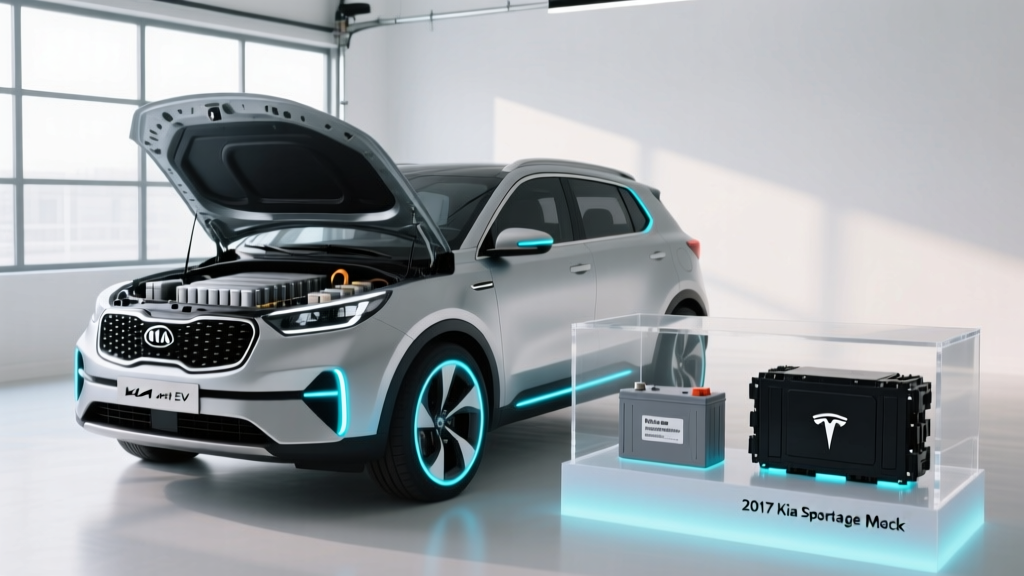
No. The 2017 Kia Sportage uses a conventional 12V lead-acid battery (Group 47/H5, ~$150–$250) to start the engine and power accessories. An EV traction battery is a high-voltage lithium-ion pack (40–130 kWh, $6,500–$25,000) that powers the electric motor. They serve entirely different functions, have different chemistries, and operate on completely different timescales for replacement.