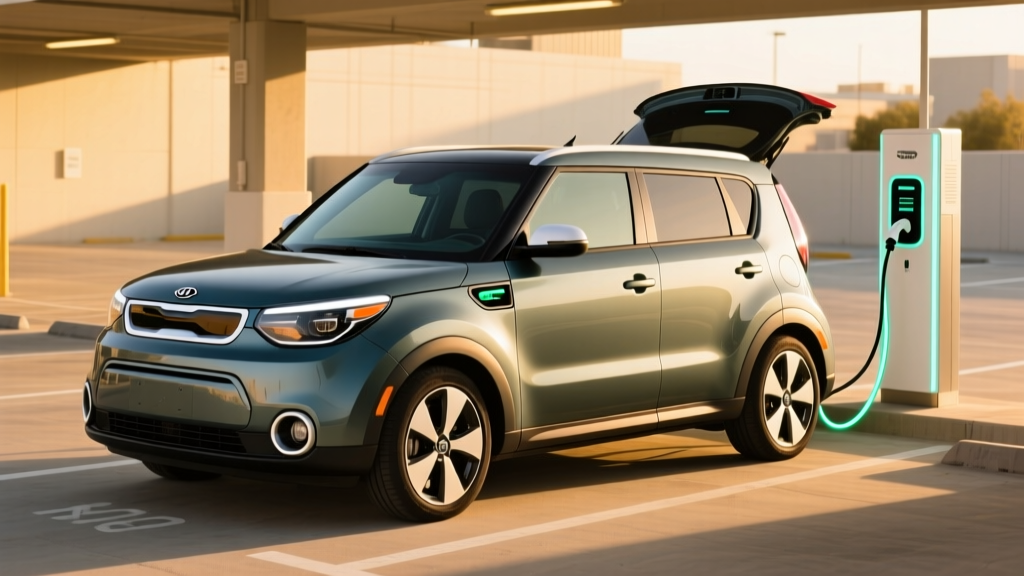
The 2017 Kia Soul EV was one of the first affordable, practical electric crossovers to reach US showrooms in meaningful numbers. Nearly a decade later, owners and prospective used-EV buyers are asking the same question: how is that 27 kWh battery holding up? With examples now trading well under $10,000 on the used market, understanding the state of the 2017 Kia Soul EV battery — its chemistry, degradation trajectory, replacement economics, and daily care — is essential before you hand over cash.
This guide combines the Soul EV's original powertrain specs with real-world aging data, current replacement pricing, and broader EV battery science so you can evaluate any 2017 Soul EV on its merits. We also explain the LFP vs. NMC chemistry divide that shapes every modern EV, and what solid-state timelines actually mean for today's owners.
The 2017 Kia Soul EV Battery Pack: Original Specs
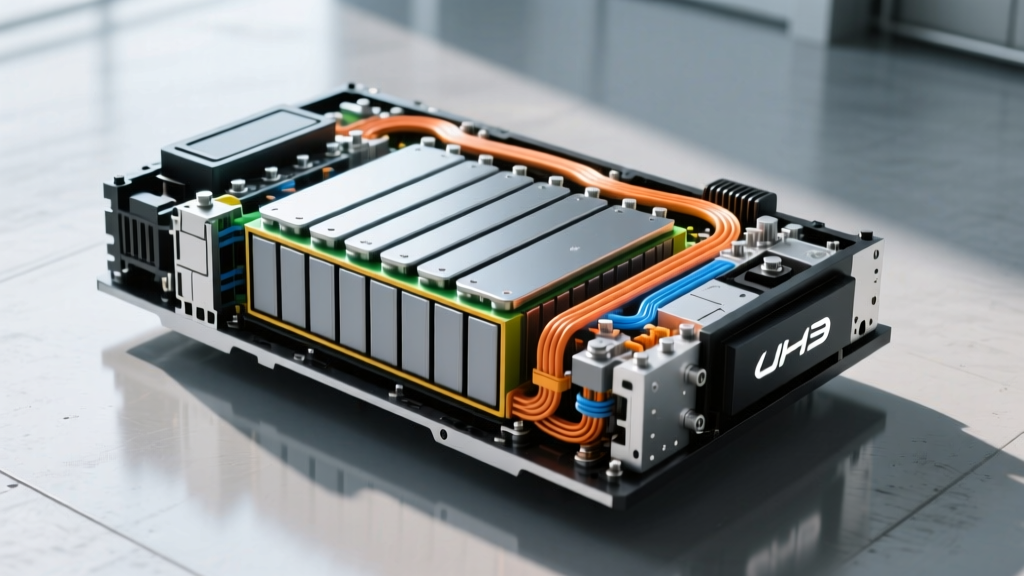
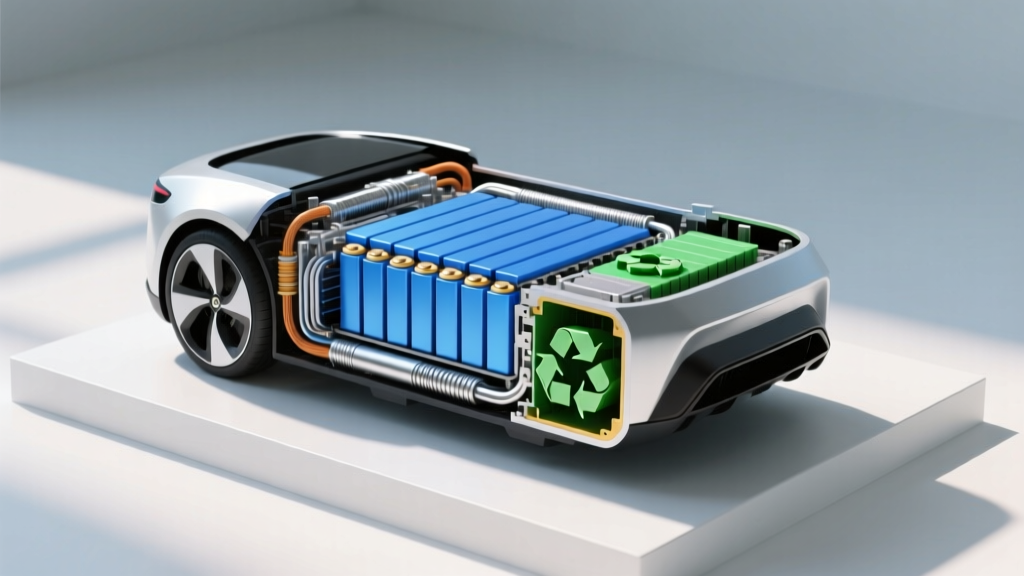
The 2017 Kia Soul EV shipped with a 27 kWh usable lithium-ion traction battery (30.5 kWh gross) using NMC (nickel-manganese-cobalt) pouch cells supplied primarily by SK Innovation. Kia paired it with an 81.4 kW (109 hp) electric motor producing 210 lb-ft of torque, good for a 0-60 mph time of approximately 11.2 seconds.
| Spec | Value |
|---|---|
| Battery chemistry | NMC (nickel-manganese-cobalt) pouch cells |
| Usable capacity | 27 kWh (30.5 kWh gross) |
| EPA range (new) | 93 miles |
| EPA efficiency | 105 MPGe combined |
| Motor output | 81.4 kW / 109 hp / 210 lb-ft |
| DC fast charge (CHAdeMO) | Up to 50 kW peak |
| Level 2 charge rate | 6.6 kW onboard charger |
| 10-80% DC fast charge | ~33 minutes (at 50 kW) |
| Battery warranty (new) | 7 years / 100,000 miles |
| Liquid cooling | Yes — active thermal management |
EV Battery Chemistry Explained: NMC vs. LFP
The 2017 Soul EV's NMC pack represents the dominant chemistry of its era. But if you're comparing it to a newer EV — say a 2024+ Tesla Model 3 RWD or a BYD Atto 3 — you'll encounter LFP (lithium iron phosphate) chemistry. Understanding the trade-offs matters for any buyer weighing a used Soul EV against a newer alternative.
| Factor | NMC (Soul EV) | LFP (modern budget EVs) |
|---|---|---|
| Energy density | Higher — more range per kg | Lower — heavier pack for same kWh |
| Cycle life | ~1,000-1,500 full cycles to 80% SoH | ~2,500-5,000+ full cycles to 80% SoH |
| Cold-weather performance | Better low-temp discharge | Greater range loss below freezing |
| Cost per kWh (2026) | ~$120-140/kWh at pack level | ~$80-100/kWh at pack level |
| Thermal runaway risk | Moderate (managed by cooling) | Very low — inherently stable chemistry |
| Optimal daily SoC | 20-80% recommended | Can charge to 100% daily safely |
| Cobalt content | Contains cobalt (supply-chain concern) | Cobalt-free |
Which is better? For the 2017 Soul EV's 93-mile-range use case, NMC was the right call — the pack needed maximum energy density to hit that figure in a compact crossover. LFP's advantage is longevity: it tolerates daily 100% charges and thousands more cycles. If you're choosing between a used NMC Soul EV and a new LFP vehicle, expect the LFP pack to outlast the car with minimal care, while the NMC pack requires more mindful habits to maximize remaining life.
2017 Kia Soul EV Battery Degradation: What the Data Shows
NMC batteries in actively cooled packs like the Soul EV's typically lose 10-18% of original capacity over 8-10 years of normal use. The degradation curve is not linear: the steepest drop occurs in the first 1-2 years (roughly 5-8%), then the rate flattens considerably.
Year 1: ~95% SoH (5% loss, initial formation)
Year 3: ~90% SoH
Year 5: ~86% SoH
Year 7: ~83% SoH
Year 9-10: ~80-84% SoH (varies significantly by climate and charging habits)
Sources: Geotab fleet battery data, Recurrent Auto degradation studies
For a 2017 Soul EV in 2026, that means most examples sit between 80-88% State of Health, translating to roughly 74-82 miles of EPA-equivalent range. Units in hot climates (Arizona, Texas) that were frequently DC fast-charged may show SoH closer to 75-78%, while garage-kept Pacific Northwest cars can still read 88-90%.
The Soul EV's liquid thermal management system is a significant longevity advantage over the passively cooled 24 kWh Nissan LEAF of the same era, which suffered notorious capacity loss in warm climates. According to fueleconomy.gov, the 2017 Soul EV maintained competitive efficiency figures, and its active cooling has helped packs age more gracefully than contemporaries without thermal management.
Battery Warranty: What Kia Covered and What Remains
Kia's original battery warranty for the 2017 Soul EV was 7 years / 100,000 miles (whichever came first), covering defects and capacity loss below 70% of original capacity. For a 2017 model, this warranty expired in 2024 at the latest.
| Vehicle | Warranty Term | Capacity Threshold | Status in 2026 |
|---|---|---|---|
| 2017 Kia Soul EV | 7 yr / 100,000 mi | 70% SoH | Expired |
| 2017 Nissan LEAF | 8 yr / 100,000 mi | 66% SoH (9 bars of 12) | Expired |
| 2017 Chevy Bolt EV | 8 yr / 100,000 mi | 60% SoH | Expired or expiring |
| 2026 Kia EV6 | 10 yr / 100,000 mi | 70% SoH | Active |
| 2026 Tesla Model 3 | 8 yr / 120,000 mi | 70% SoH | Active |
If you're buying a used 2017 Soul EV today, you are purchasing the battery as-is with no remaining factory coverage. This makes a pre-purchase State of Health check non-negotiable. Some states' emissions or ZEV warranty extensions may apply — check your state's DMV or attorney general's office for specifics.
Battery Replacement Cost: What to Budget
Out-of-warranty replacement of a 27 kWh pack in the Soul EV is a real but uncommon expense. Most packs outlast the vehicle's economic life, but if cells fail or degradation accelerates past usability, here is what to expect:
| Component | Estimated Cost |
|---|---|
| Remanufactured 27 kWh pack | $4,500 - $6,500 |
| New OEM pack (if available) | $7,000 - $9,500 |
| Labor (dealership, 4-6 hours) | $800 - $1,500 |
| Diagnostics & software calibration | $200 - $400 |
| Total estimated range | $5,500 - $11,400 |
For context, a clean 2017 Soul EV trades for roughly $7,000-$10,000 in 2026 depending on mileage and SoH. A full battery replacement at the upper end can approach or exceed the car's value — which is why checking SoH before purchase is the single most important step in evaluating one of these vehicles.
Independent EV shops and refurbished-pack suppliers have emerged as cost-effective alternatives to dealership replacement. Companies like Greentec Auto and others offer remanufactured packs with 1-3 year warranties at the lower end of the range above.
Factors That Accelerate Battery Degradation
Not all 2017 Soul EV batteries age equally. The following factors have the greatest measurable impact on NMC cell longevity:
- Frequent DC fast charging: Regular use of 50 kW CHAdeMO stations (especially without preconditioning) generates sustained heat. Studies from the Idaho National Laboratory show that exclusive DC fast charging can add 5-10% additional capacity loss over 100,000 miles compared to Level 2-only charging.
- High ambient temperatures: Sustained exposure to 95°F+ ambient heat accelerates electrolyte decomposition. Even with liquid cooling, packs in Phoenix or Houston degrade measurably faster than those in Seattle or Minneapolis.
- Prolonged high or low State of Charge: Storing the car at 100% SoC for days or weeks stresses NMC cathodes. Similarly, leaving it below 10% for extended periods risks copper dissolution in the anode.
- Deep discharge cycles: Regularly driving from 100% to near 0% puts more mechanical stress on cells than partial cycles (e.g., 80% to 30%).
- Cold-weather fast charging without preconditioning: Charging a cold NMC pack at high power can cause lithium plating on the anode — permanent capacity loss that cannot be reversed.
- Charge to 80% for daily use; reserve 100% for trips
- Use Level 2 (240V) home charging as your primary method
- Limit DC fast charging to road trips when possible
- Avoid leaving the car at 100% SoC for more than a few hours
- In winter, precondition the battery before fast charging (if equipped — the 2017 Soul EV has limited preconditioning capability)
- Keep the car plugged in during extreme heat so the thermal management system can cycle
- Avoid storing below 10% SoC for more than a week
How to Check Battery State of Health (SoH)
Before purchasing or periodically during ownership, verifying the 2017 Soul EV's battery SoH is critical. Here are the available methods, from most to least precise:
1. OBD-II Diagnostic Scan (Most Accurate): Using an OBD-II dongle (such as an OBDLink MX+) paired with the SoulEV Spy or EV Notify app, you can read the battery management system's (BMS) reported SoH percentage directly. This is the gold standard for used-EV evaluation and takes about 5 minutes.
2. Dealership Health Check: A Kia dealership can run a full battery diagnostic that prints out cell voltage spread, internal resistance, and overall SoH. Expect to pay $100-$150 for this service out of warranty.
3. Dashboard Range Estimator Cross-Check: Charge the Soul EV to 100% and note the displayed range estimate. If it reads 70-75 miles on a full charge (vs. the original ~93), the pack is likely around 75-80% SoH. This method is imprecise because the estimator adjusts for recent driving patterns, but it provides a ballpark.
4. Third-Party Battery Reports: Services like Recurrent and some EV-focused pre-purchase inspection companies offer battery health reports based on telematics data if the previous owner enrolled the vehicle.
What Solid-State and Silicon Anode Tech Means for Today's Owners
Next-generation battery technologies are advancing, but timelines matter. Here is where things stand in 2026:
Solid-state batteries: Toyota, Samsung SDI, and QuantumScape have demonstrated prototype cells with energy densities above 400 Wh/kg (roughly double current NMC). However, commercial production at automotive scale remains in the 2028-2032 window based on current announcements. These packs will debut in premium vehicles at high cost. A solid-state retrofit for a 2017 Soul EV is not realistic — the vehicle's architecture, BMS, and cooling system are not compatible with next-gen cells, and economics would never justify it.
Silicon-dominant anodes: Companies like Sila Nanotechnologies and Group14 are shipping silicon-blend anodes in limited production (the Mercedes G 580 EQ uses Group14 silicon anode cells). This technology increases energy density by 20-40% within existing form factors and is expected to reach mainstream vehicles by 2027-2029. Again, this benefits new-car buyers, not legacy pack retrofits.
Sodium-ion batteries: CATL and BYD are producing sodium-ion packs for budget Chinese-market EVs. These offer lower energy density but dramatically lower cost and no lithium or cobalt. They may appear in US-market budget EVs by 2028-2029.
The practical takeaway: the 2017 Soul EV's NMC pack is mature, well-understood technology. Replacement parts and expertise exist today. Future chemistries will transform new vehicles but won't extend backward to aging platforms.
Is the 2017 Soul EV Still a Smart Buy in 2026?
Buy it if:
- You need a short-range city commuter (under 50 miles daily round-trip)
- OBD-II SoH reads 82% or above
- The asking price is under $8,000 with budget set aside for potential pack work
- You have reliable Level 2 home charging
- You value the Soul's upright cargo space and easy entry
- SoH is below 78% unless the price reflects imminent replacement cost
- You need 100+ miles of daily range
- You lack home charging and would rely on public DC fast chargers
- You live in an extreme-heat climate and the car has no garage history
- You want modern ADAS features (the 2017 Soul EV has minimal driver assistance)
Frequently Asked Questions
How long do EV batteries last in years and miles?
Actively cooled NMC packs like the 2017 Soul EV's typically retain 80-85% of original capacity at 10 years / 100,000 miles under normal use. LFP packs in newer vehicles can retain 90%+ over the same period. Most EV batteries outlast the vehicle's economic life — total failure before 150,000 miles is uncommon with proper care.
How much does it cost to replace the 2017 Kia Soul EV battery?
A remanufactured 27 kWh pack installed runs $5,500-$8,000 at independent shops. A new OEM pack from Kia (if still available) can reach $9,500-$11,400 with dealership labor. Most owners will never need a full replacement — individual module repair or cell balancing may address specific issues for less.
What does the Kia EV battery warranty cover?
Kia's original warranty covered defects and capacity loss below 70% of original capacity for 7 years / 100,000 miles. For 2017 models, this warranty has expired as of 2024. Current Kia EVs (2026 EV6, EV9) carry a 10-year / 100,000-mile battery warranty with the same 70% threshold.
How do I check my 2017 Soul EV battery health?
The most reliable method is an OBD-II scan using SoulEV Spy or a similar app with an OBDLink MX+ adapter, which reads the BMS-reported SoH percentage in minutes. A Kia dealership can also perform a formal battery health check for approximately $100-$150.
Is LFP or NMC better for EV batteries?
Neither is universally better. LFP offers longer cycle life (2,500-5,000+ cycles), lower cost, and safer chemistry, making it ideal for daily commuting and budget EVs. NMC provides higher energy density and better cold-weather performance, suited for longer-range vehicles. The 2017 Soul EV uses NMC; most 2026 standard-range EVs use LFP.
Can I upgrade the 2017 Soul EV to a larger battery?
No practical upgrade path exists. The Soul EV's pack enclosure, BMS, cooling system, and wiring harness are designed for the specific 27 kWh NMC module configuration. While the 2020+ Soul EV uses a 64 kWh pack, it is physically and electronically incompatible with the first-generation platform.
Does the 2017 Kia Soul EV qualify for any tax credits in 2026?
As a used vehicle, the 2017 Soul EV may qualify for the IRS §25E used clean vehicle credit — up to $4,000 or 30% of the sale price (whichever is lower). Eligibility requires: purchase from a licensed dealer, sale price under $25,000, buyer income under $75,000 (single) / $150,000 (joint), and the vehicle must be at least two model years old. Confirm current rules with a tax professional before relying on this credit.