Owners searching for a battery for 2017 Hyundai Elantra models often land in confusing territory. The Elantra nameplate in 2017 spanned gas-only sedans, the Elantra GT hatchback, and — critically — served as the platform sibling to the Hyundai Ioniq Electric, Hybrid, and Plug-in Hybrid. Each of these vehicles uses an entirely different battery system with distinct replacement costs, chemistries, and lifespans.
This guide untangles which battery your 2017 Hyundai actually needs, what it costs in 2026, how long these batteries last, and how modern EV battery technology compares to what was under the hood nearly a decade ago.
Which Battery Does a 2017 Hyundai Elantra Actually Use?
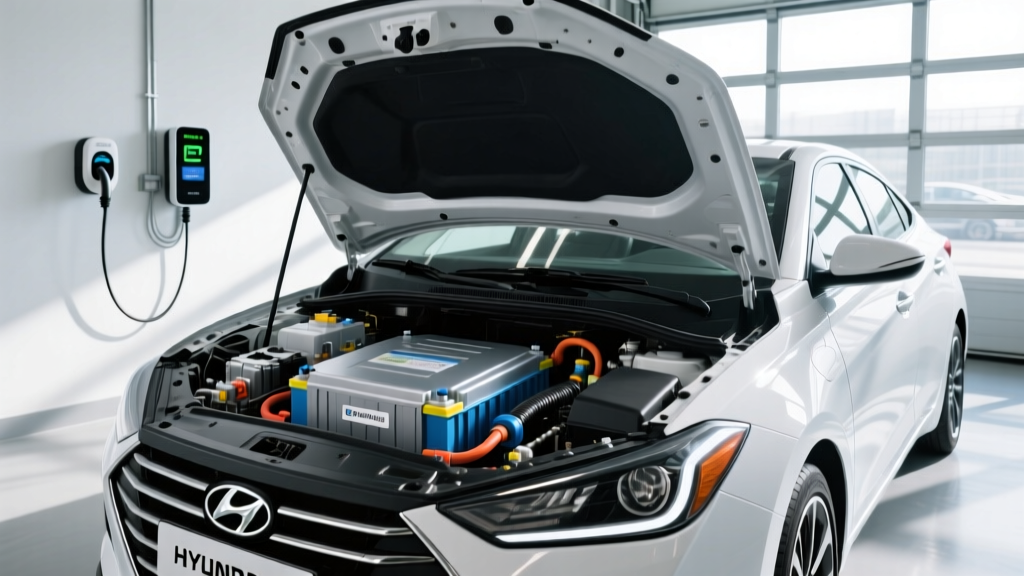
The 2017 Hyundai Elantra lineup and its Ioniq platform-mates use three distinct battery types. Identifying yours correctly is the first step to getting accurate replacement pricing and care guidance.
| Vehicle | Battery Type | Voltage | Capacity | Chemistry |
|---|---|---|---|---|
| 2017 Elantra (gas, all trims) | 12V auxiliary (starter) | 12V | ~45–60 Ah | Lead-acid (flooded or AGM) |
| 2017 Ioniq Electric | High-voltage traction | ~360V nominal | 28 kWh (usable) | NMC (Nickel Manganese Cobalt) |
| 2017 Ioniq Hybrid / PHEV | High-voltage traction | ~240V (HEV) / ~360V (PHEV) | 1.56 kWh (HEV) / 8.9 kWh (PHEV) | NMC lithium-polymer |
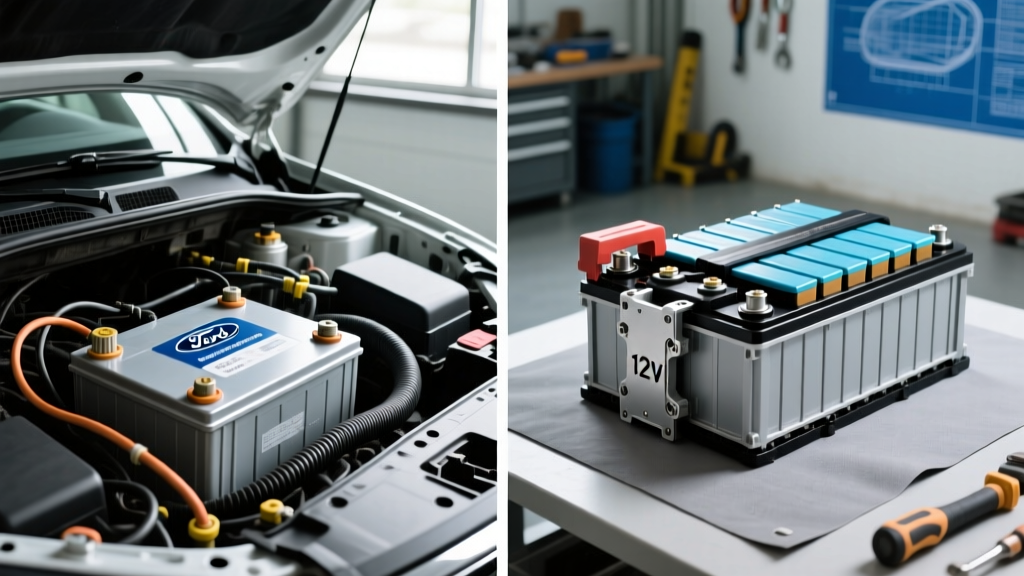
The gas-only 2017 Elantra uses a conventional Group 47 (H5) or Group 121R 12V lead-acid battery — the same type found in millions of internal-combustion vehicles. The Ioniq Electric (sold alongside the Elantra in Hyundai showrooms) carries a full high-voltage lithium-ion traction battery that powers the electric motor. The Ioniq Hybrid and Plug-in Hybrid sit in between, using smaller lithium-polymer packs to supplement a gasoline engine.
EV Battery Chemistry Explained: LFP vs NMC/NCA
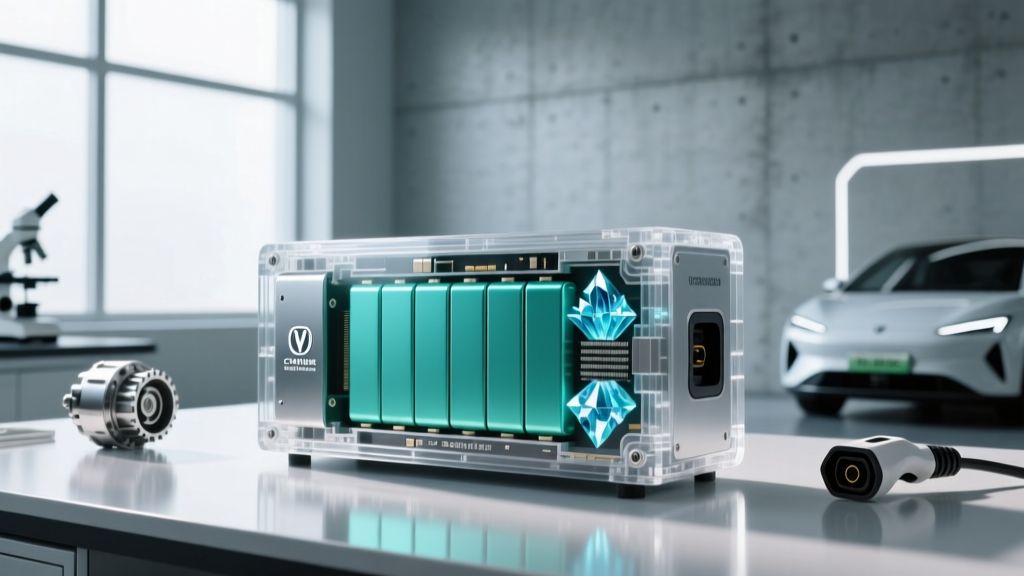
The 2017 Ioniq Electric uses an NMC (Nickel Manganese Cobalt) lithium-ion battery — the dominant chemistry of that era. By 2026, the EV market has split into two primary chemistries, each with meaningful trade-offs for longevity, cost, and performance.
| Attribute | NMC / NCA | LFP (Lithium Iron Phosphate) |
|---|---|---|
| Energy density | High (~250 Wh/kg cell-level) | Moderate (~170 Wh/kg cell-level) |
| Cycle life | 1,000–2,000 cycles to 80% SoH | 3,000–5,000+ cycles to 80% SoH |
| Cold-weather performance | Better low-temp discharge | Reduced performance below 32°F; needs preconditioning |
| Cost per kWh (2026) | ~$110–130/kWh (pack-level) | ~$80–100/kWh (pack-level) |
| Thermal stability | Good; requires active thermal management | Excellent; inherently more stable |
| Charging to 100% daily | Not recommended (accelerates degradation) | Recommended (LFP benefits from full SoC calibration) |
| Typical use (2026) | Long-range sedans, performance EVs, AWD SUVs | Standard-range models, fleet/commercial, budget EVs |
Which is better? There is no universal winner. NMC delivers more range in a lighter, smaller package — essential for vehicles targeting 300+ miles of EPA range. LFP sacrifices some energy density for dramatically longer cycle life, lower cost, and better safety margins. For a daily commuter who charges at home and doesn't need maximum range, LFP is increasingly the pragmatic choice in 2026. For road-trip-heavy drivers in cold climates, NMC retains advantages.
The 2017 Ioniq Electric's NMC pack was built for efficiency rather than raw capacity. At 28 kWh usable, it delivered an EPA-estimated 124 miles of range — modest by 2026 standards but remarkably efficient at 4.53 miles per kWh according to EPA data, one of the best efficiency figures of any EV sold in the US.
How Long Do EV Batteries Last? Real Degradation Data
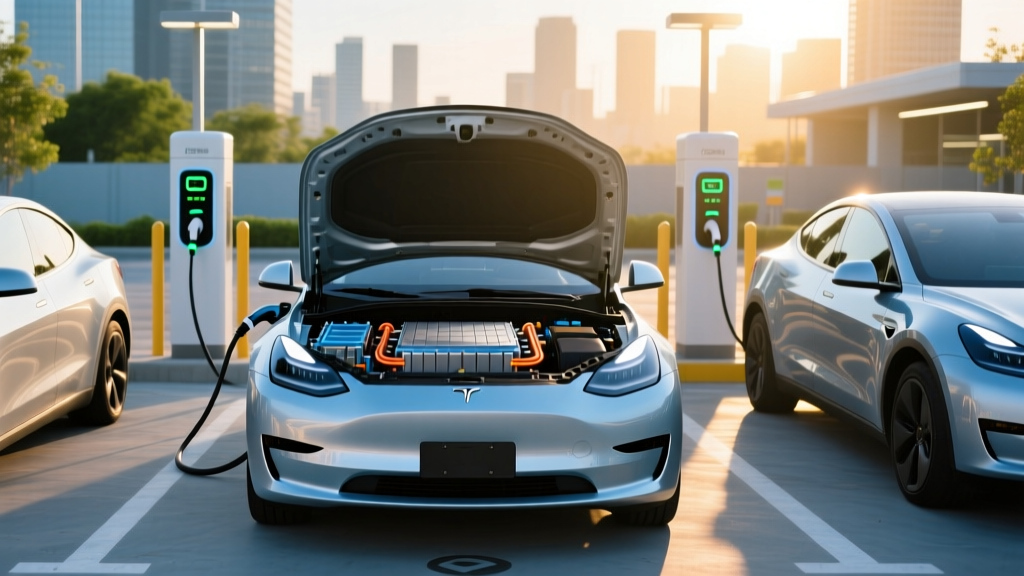
The most common question from used-EV shoppers and aging-EV owners: when will the battery need replacement? The data from nearly a decade of real-world EV operation tells a reassuring story.
Typical degradation trajectory for liquid-cooled NMC packs (like the 2017 Ioniq Electric):
- Year 1–2: 2–5% capacity loss (initial settling)
- Year 3–5: Additional 3–6% loss (roughly 1–2% per year)
- Year 6–8: Additional 3–5% loss
- Year 10 (typical 2017 model in 2027): ~85–92% State of Health (SoH) retained
- 150,000+ miles: Most well-maintained packs still above 80% SoH
Data aggregated from fleet studies by Geotab and owner-reported databases like fueleconomy.gov and Hyundai dealer diagnostic records show that the 2017 Ioniq Electric's 28 kWh pack typically retains 87–93% of original capacity at the 8-year mark. The Ioniq Hybrid's much smaller 1.56 kWh lithium-polymer pack degrades somewhat faster in percentage terms due to more frequent deep cycling, but its small size makes replacement far cheaper.
For the gas-only 2017 Elantra's 12V lead-acid battery, expect 3–5 years of service life depending on climate. Hot climates (Arizona, Texas) push replacement toward the 3-year mark; moderate climates can stretch to 5 years. By 2026, a 2017 Elantra gas model is likely on its second or third 12V battery.
Battery Warranty Terms: What Hyundai Covers
Hyundai's battery warranty coverage for the 2017 model year was among the most comprehensive at launch, and portions of that coverage may still apply in 2026.
| Vehicle | Battery Warranty | Capacity Threshold | Still Active in 2026? |
|---|---|---|---|
| 2017 Ioniq Electric (traction battery) | 10 years / 100,000 miles | Below 70% of original capacity | Yes — until first of 10 yrs or 100k mi (expires 2027) |
| 2017 Ioniq Hybrid / PHEV (traction battery) | 10 years / 100,000 miles | Below 70% of original capacity | Yes — same terms (expires 2027) |
| 2017 Ioniq Electric (hybrid/EV system components) | 10 years / 100,000 miles | Defect or failure | Yes |
| 2017 Elantra gas (12V battery) | 3 years / 36,000 miles (original); replacement batteries vary | Failure to hold charge | No — long expired |
The critical detail: Hyundai's warranty replaces or repairs the traction battery if it falls below 70% of original capacity within the warranty period. For a 2017 Ioniq Electric with its original 124-mile EPA range, a 70% threshold means warranty coverage triggers if range drops below approximately 87 miles under standard testing conditions. Most 2017 Ioniq owners in 2026 are still well above this threshold.
Warranty coverage transfers to subsequent owners, so if you purchased a used 2017 Ioniq, the remaining balance of the 10-year/100,000-mile battery warranty still applies. Always verify with a Hyundai dealer using the VIN.
Battery Replacement Costs in 2026
Replacement costs vary enormously depending on which 2017 Hyundai you drive and which battery system needs service.
| Vehicle | Battery | Parts Cost (2026) | Labor | Total Estimate |
|---|---|---|---|---|
| 2017 Elantra (gas) | 12V lead-acid (Group 47/H5) | $120–$220 | $0–$50 (DIY to shop) | $120–$270 |
| 2017 Ioniq Electric | 28 kWh NMC traction pack | $3,500–$6,000 (reman/OEM) | $800–$1,500 | $4,300–$7,500 |
| 2017 Ioniq Hybrid | 1.56 kWh Li-polymer pack | $1,500–$2,800 | $500–$900 | $2,000–$3,700 |
| 2017 Ioniq PHEV | 8.9 kWh Li-polymer pack | $2,500–$4,500 | $600–$1,200 | $3,100–$5,700 |
When is replacement typically needed? For the 2017 Ioniq Electric's traction battery, the honest answer is: probably not yet, and possibly never. The degradation data shows most packs retain 85%+ capacity at age 8–9. Full traction battery replacement is typically only necessary after a catastrophic failure (physical damage, coolant intrusion, manufacturing defect) or when capacity drops to a point where the reduced range no longer meets the owner's needs — usually well past 150,000 miles.
For the gas Elantra's 12V battery, replacement every 3–5 years is routine maintenance, identical to any conventional car. Parts are available from any auto parts store; installation takes 10–15 minutes.
Factors That Accelerate Battery Degradation
Not all batteries age equally. The following factors measurably shorten lithium-ion traction battery life, based on data from fleet operators and battery research labs:
🔋 Battery Care Checklist: Maximize Lifespan
- Avoid sustained high State of Charge: Storing an NMC battery at 100% SoC for days or weeks accelerates electrolyte decomposition. Charge to 80% for daily use; reserve 100% for road trips. (LFP batteries are the exception — they benefit from periodic 100% charges for cell balancing.)
- Minimize DC fast charging frequency: Occasional DC fast charging is fine. Daily reliance on 50+ kW DC fast charging generates sustained heat that degrades cells faster. Studies show vehicles that fast-charge more than 3x per week degrade ~1–2% more over 5 years vs. primarily Level 2 charging.
- Manage extreme temperatures: Lithium-ion batteries degrade fastest above 95°F and below 15°F. Park in shade or a garage when possible. Use preconditioning (available on most modern EVs) to warm the battery before fast charging in cold weather.
- Don't let SoC sit at 0%: Storing a battery at very low charge for extended periods risks copper dissolution in the anode. If storing an EV for weeks, leave it at ~50% SoC.
- Drive moderately in extreme heat: Hard acceleration in 100°F+ weather generates high cell temperatures. The Ioniq Electric's liquid-cooled pack handles this better than passively cooled packs, but sustained high-load driving in heat still stresses cells.
For the 2017 Elantra gas model's 12V battery, the biggest killers are parasitic drain (leaving accessories on), extreme heat (under-hood temperatures in summer), and short-trip driving that never fully recharges the battery.
How to Check Battery Health (State of Health)
For Ioniq Electric / Hybrid / PHEV owners:
State of Health (SoH) represents the battery's current maximum capacity as a percentage of its original capacity. Here's how to check it:
- Hyundai dealer diagnostic: Any Hyundai service center can run a battery health check using the GDS (Global Diagnostic System) tool. This reads individual cell voltages, internal resistance, and calculated SoH. Request this during routine service — it's often free or included in a standard inspection.
- OBD-II scanner with EV capability: Third-party tools like the OBDLink SX paired with apps such as EV Notify or Car Scanner (iOS/Android) can read battery SoH, cell voltage delta, and pack temperature from the vehicle's BMS (Battery Management System). Expect to spend $40–$80 on hardware.
- Range-based estimation: Charge to 100%, note the displayed range, and compare to the original EPA rating. If your 2017 Ioniq Electric originally showed 124 miles at full charge and now shows 108 miles under similar temperature conditions, that's roughly 87% SoH. This method is approximate — temperature, driving style, and tire condition all affect displayed range.
For gas Elantra 12V battery:
Any auto parts store (AutoZone, Advance Auto Parts, O'Reilly) will test a 12V battery for free using a conductance tester. This measures cold cranking amps (CCA) and internal resistance to determine remaining life. Test annually after the battery reaches 3 years old.
Looking Ahead: Solid-State and Next-Gen Battery Tech
While the 2017 Elantra and Ioniq use mature, well-understood battery technology, the broader industry is advancing rapidly. Here's what's on the horizon — with realistic timelines, not hype:
- Solid-state batteries: Toyota, Samsung SDI, and QuantumScape are targeting limited production in 2027–2029. These promise 30–50% more energy density and faster charging, but initial costs will be high and availability limited to premium models. Mass-market solid-state is realistically a 2030+ proposition.
- Silicon-dominant anodes: Companies like Sila Nanotechnologies and Group14 are already shipping silicon-blend anodes that increase energy density by 10–20%. These are appearing in 2025–2026 model-year vehicles and will become standard over the next 3–5 years.
- Sodium-ion batteries: CATL and BYD are producing sodium-ion cells for budget EVs in China. Lower energy density than LFP but cheaper and free of lithium/cobalt. US-market availability is uncertain before 2028.
None of these technologies are available as retrofit upgrades for a 2017 Ioniq or Elantra. If your current battery is performing within normal degradation parameters, there is no benefit to waiting for future tech — the cost of replacement today is modest relative to the vehicle's remaining value, and today's NMC and LFP cells are already highly durable.
Frequently Asked Questions
How long does the battery in a 2017 Hyundai Elantra last?
For the gas-only 2017 Elantra, the 12V lead-acid battery typically lasts 3–5 years. For the related 2017 Ioniq Electric, the high-voltage traction battery is designed to last the life of the vehicle — data shows most retain 85–93% capacity at 8 years and 100,000 miles. Hyundai's warranty covers the traction battery for 10 years/100,000 miles, which still applies to 2017 models through 2027.
How much does it cost to replace the battery in a 2017 Hyundai Elantra?
A 12V replacement battery for a gas 2017 Elantra costs $120–$270 total (parts and labor). For the 2017 Ioniq Electric's traction battery, full replacement runs $4,300–$7,500 — but this is rarely needed, as most packs outlast the vehicle's economic life. The Ioniq Hybrid's smaller pack costs $2,000–$3,700 to replace.
Is the 2017 Hyundai Ioniq battery covered under warranty in 2026?
Yes. Hyundai's 10-year/100,000-mile battery warranty for the 2017 Ioniq Electric, Hybrid, and PHEV remains active until the earlier of 10 years from the original in-service date or 100,000 miles. For most 2017 models, this means coverage extends into 2027. The warranty covers capacity loss below 70% of original and manufacturing defects.
LFP vs NMC — which battery chemistry is better for daily driving?
For daily commuting with home charging, LFP (Lithium Iron Phosphate) is the more durable and cost-effective choice in 2026. It offers 3,000–5,000+ charge cycles vs. NMC's 1,000–2,000, costs less per kWh, and can be charged to 100% daily without degradation concerns. NMC is better for drivers who need maximum range per charge or frequently operate in very cold climates.
Can I upgrade my 2017 Ioniq Electric to a larger battery?
No. Hyundai does not offer a larger-capacity retrofit battery for the 2017 Ioniq Electric. The 28 kWh pack is the only compatible option. Third-party upgrades are not available due to BMS software integration, physical pack dimensions, and high-voltage safety certification requirements. If you need more range, upgrading to a newer EV is the practical path.
How do I maximize the lifespan of my 2017 Ioniq Electric battery?
Charge to 80% for daily use and reserve 100% charges for road trips. Use Level 2 (240V) home charging as your primary method rather than frequent DC fast charging. Park in shade during summer and use the vehicle's climate preconditioning feature in winter. Avoid letting the battery sit at very low or very high SoC for extended periods. Following these practices, data suggests your pack should retain 85%+ capacity well past 150,000 miles.