Why "2017 Buick Encore Battery" Searches Usually Mean the 12V Unit
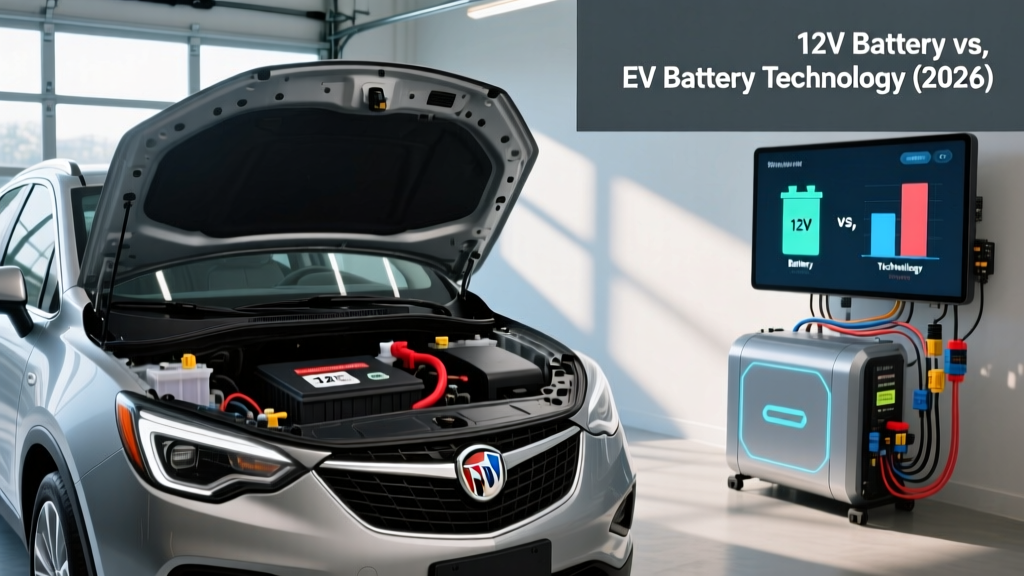
If you've landed here searching for a 2017 Buick Encore battery, you're most likely dealing with a dead 12-volt starting battery — not a high-voltage EV pack. The 2017 Encore is a conventional gasoline subcompact SUV (1.4L turbo, no electrification), so its battery needs are traditional: a Group 47 (H5) or Group 48 (H6) AGM/flooded 12V unit that powers the starter, lights, and electronics.
However, because AutoEdgeView focuses on electrified vehicles, we're using this common search as a springboard into a broader, data-driven look at all automotive battery systems in 2026 — from the $180 lead-acid unit under your Encore's hood to the 60–100 kWh lithium-ion traction packs powering today's EVs. Understanding the difference matters: the 12V battery is a wear item you'll replace every 3–5 years, while a modern EV traction battery is engineered to outlast the vehicle itself.
2017 Buick Encore 12V Battery: Specs, Cost, and Replacement
The 2017 Buick Encore uses a 12V lead-acid or AGM (Absorbent Glass Mat) battery. Here are the key specs:
- Group Size: 47 (H5) or 48 (H6) — check your owner's manual or existing battery label
- Cold Cranking Amps (CCA): 585–730 CCA depending on brand and chemistry
- Reserve Capacity: ~90–120 minutes
- Typical Lifespan: 3–5 years (shorter in extreme heat climates like Arizona or Texas)
- Replacement Cost: $130–$250 for the battery; $30–$60 for professional installation if not DIY
AGM batteries cost roughly $50–$80 more than flooded lead-acid but handle the Encore's start-stop system (if equipped on higher trims) and electronics load far better. Brands like Interstate, DieHard, and Optima are widely available at auto parts retailers.
EV Traction Batteries: Chemistry Explained (LFP vs NMC/NCA)
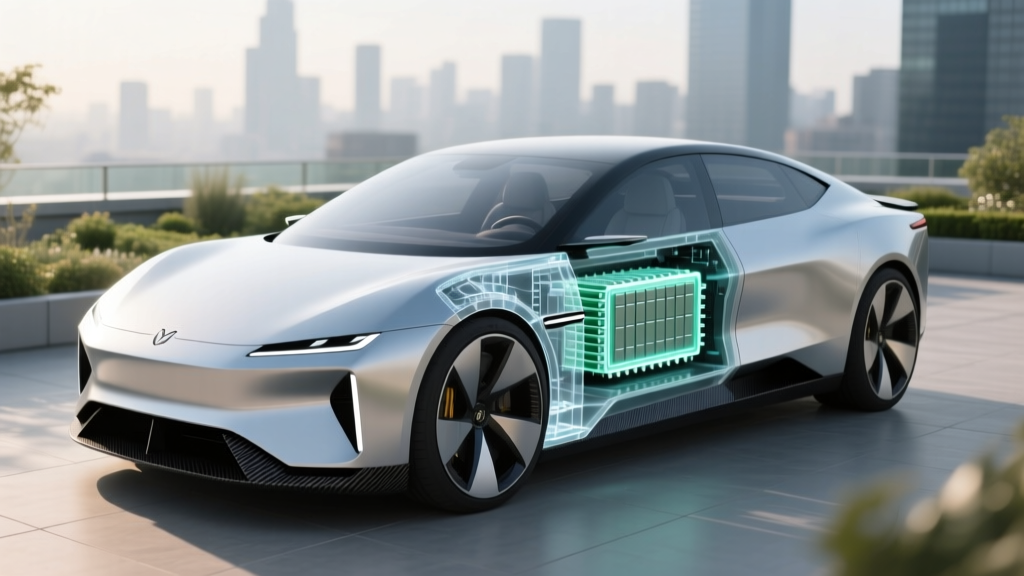
For EV shoppers and owners, the real battery conversation centers on lithium-ion traction packs — the 40–100+ kWh units that store energy for propulsion. Two dominant chemistries define the 2026 market:
- NMC (Nickel Manganese Cobalt) / NCA (Nickel Cobalt Aluminum): Higher energy density, better cold-weather performance, but more expensive and slightly shorter cycle life. Used in most long-range vehicles (Tesla Model 3 Long Range, Hyundai Ioniq 5, Ford Mustang Mach-E Extended Range).
- LFP (Lithium Iron Phosphate): Lower energy density (heavier for the same kWh), but dramatically longer cycle life (3,000–5,000+ cycles vs ~1,500–2,500 for NMC), lower cost, no cobalt, and can safely sit at 100% State of Charge without accelerating degradation. Used in standard-range models (Tesla Model 3 RWD, Ford Mustang Mach-E Select base, BYD models).
| Attribute | LFP (Lithium Iron Phosphate) | NMC / NCA |
|---|---|---|
| Energy Density | ~160–180 Wh/kg | ~220–260 Wh/kg |
| Cycle Life | 3,000–5,000+ cycles | 1,500–2,500 cycles |
| Cold Performance | Reduced (~20–30% range loss below 20°F) | Better (~15–25% loss below 20°F) |
| 100% SoC Tolerance | Excellent — can daily-charge to 100% | Degrades faster above 80% — best at 20–80% daily |
| Cost per kWh | ~$80–$100 (cell level) | ~$110–$140 (cell level) |
| Cobalt Content | None | Present (supply-chain/ethical concern) |
| Best For | Daily commuting, standard-range, fleet/robotaxi | Long-range, cold-climate, performance models |
Which is better? It depends on your use case. If you drive 250+ miles per trip regularly in cold weather, NMC gives you the range headroom. If you commute 40 miles round-trip and can charge at home nightly, LFP's longevity and 100%-charge tolerance make it the smarter long-term ownership play. In 2026, roughly 40% of new EVs sold in the US use LFP chemistry, up from ~15% in 2022.
How Long Do EV Batteries Actually Last? Degradation Data
The single biggest misconception among EV-curious buyers is that the traction battery will need a $15,000 replacement after a few years. Real-world data tells a different story.
According to aggregated fleet data from sources like Recurrent Auto and manufacturer reports, modern lithium-ion EV batteries degrade as follows:
- Year 1–2: ~2–5% capacity loss (initial "break-in" degradation)
- Year 3–5: ~1–2% per year (linear phase)
- Year 8–10: Most packs retain 80–90% of original capacity
- Year 15+: Many packs still above 70% — the threshold where replacement becomes worth considering
For context, a 2017 Buick Encore with its original engine at 150,000 miles would likely need significant powertrain work — timing chain, turbo, transmission. The EV equivalent (the traction battery) is typically still healthy.
Battery Warranty Terms: What's Covered and for How Long
Federal law mandates a minimum 8-year/100,000-mile warranty on EV battery packs (10 years/150,000 miles in CARB states like California, New York, and Massachusetts). Here's how major manufacturers structure coverage in 2026:
| Manufacturer | Warranty Period | Capacity Threshold | Notes |
|---|---|---|---|
| Tesla | 8 yr / 120,000 mi (100k on RWD) | 70% retention | Covers defects + degradation below threshold |
| Hyundai / Kia | 10 yr / 100,000 mi | 70% retention | Among the longest standard warranties |
| Ford | 8 yr / 100,000 mi | 70% retention | Covers F-150 Lightning, Mach-E, E-Transit |
| GM (Chevrolet, Cadillac) | 8 yr / 100,000 mi | 70% retention | Ultium platform vehicles |
| BMW | 8 yr / 100,000 mi | 70% retention | i4, i5, i7, iX |
What triggers a warranty claim? If your pack falls below 70% of original capacity within the warranty period, the manufacturer must repair or replace it — typically by swapping failed modules rather than the entire pack. Note that the warranty covers capacity degradation, not cosmetic damage or failures caused by aftermarket modifications, flooding, or accidents.
EV Battery Replacement Cost: When and How Much
If your EV's battery degrades below 70% capacity after the warranty expires — typically at 150,000–250,000+ miles — replacement becomes an economic decision. Here's the 2026 cost landscape:
| Battery Size / Vehicle Class | Full Pack Replacement Cost | Module Repair Cost | Typical Mileage Before Needed |
|---|---|---|---|
| 40–50 kWh (compact EV, e.g., Nissan Leaf, Chevy Bolt older gen) | $6,000–$9,000 | $1,500–$3,500 | 200,000+ mi |
| 60–75 kWh (mid-range, e.g., Model 3 RWD, Ioniq 5 standard) | $9,000–$14,000 | $2,500–$5,000 | 200,000–300,000 mi |
| 80–100 kWh (long-range, e.g., Model Y LR, F-150 Lightning) | $13,000–$20,000 | $3,500–$7,000 | 250,000+ mi |
| 100+ kWh (luxury/truck, e.g., Rivian R1T, Hummer EV) | $18,000–$30,000 | $5,000–$10,000 | 250,000+ mi |
Critical context: Most EVs are totaled, traded, or retired before the battery needs full replacement. According to iSeeCars data, the average EV is owned for ~8 years and ~100,000 miles — well within warranty. Cell-level pricing has dropped from ~$1,200/kWh in 2010 to ~$95/kWh in 2026, meaning replacement costs continue to decline. Many shops now offer module-level repair (replacing only the degraded cells) for a fraction of a full pack swap.
Factors That Accelerate (or Preserve) Battery Life
Not all miles are equal when it comes to battery wear. Here's what actually moves the needle on degradation:
✅ Battery Care Best Practices
- Daily SoC target: 20–80% for NMC/NCA; 0–100% is fine for LFP
- DC fast charging: Occasional use is fine; daily 350 kW sessions accelerate degradation by ~1–2% extra over 5 years
- Extreme heat: Prolonged exposure above 95°F with high SoC is the #1 degradation factor — park in shade/garage when possible
- Extreme cold: Reduces range temporarily but doesn't permanently damage; preconditioning before driving protects the pack
- Storage: If leaving the car for 2+ weeks, set SoC to ~50% — never store at 100% or near 0%
- Regen braking: Standard regen is fine; max-regen in freezing temps without preconditioning can stress cells
The thermal management system in modern EVs (liquid cooling/heating) does much of this work automatically. Tesla, Hyundai, GM, and Ford all actively precondition the battery before fast charging — warming it to ~30–35°C to accept peak kW without lithium plating. This is why fueleconomy.gov range figures assume a preconditioned pack.
How to Check Your EV Battery's State of Health (SoH)
State of Health (SoH) is the percentage of original capacity your battery can still hold. Here's how to monitor it:
- In-car display: Most EVs show estimated range at full charge, which decreases as SoH drops. Compare your current "100% range" to the original EPA sticker.
- Manufacturer app: Tesla, Hyundai (Bluelink), Ford (FordPass), and GM (myChevrolet/myCadillac) provide battery health estimates in their companion apps.
- OBD-II scanners: Tools like the OBD Eleven or Carista can read battery SoH directly from the BMS (Battery Management System) on most EVs.
- Third-party services: Recurrent offers free battery health reports by connecting to your vehicle's telematics data.
- Dealer diagnostic: Any authorized dealer can pull a full BMS report showing individual module voltages, internal resistance, and SoH percentage.
When to worry: A drop below 90% SoH in the first 3 years or below 75% at any point warrants a warranty claim. Normal degradation of 1–2% per year is expected and not actionable.
Emerging Battery Tech: Solid-State and Silicon Anodes
Looking ahead, two technologies promise to reshape EV batteries:
- Solid-state batteries: Replace the liquid electrolyte with a solid material, enabling higher energy density (~400+ Wh/kg), faster charging (10–80% in under 10 minutes), and near-zero fire risk. Toyota, Samsung SDI, and QuantumScape have prototypes, but commercial availability is expected 2028–2032 at earliest, initially in premium models only. Do not delay an EV purchase waiting for solid-state.
- Silicon anode batteries: Replace graphite anodes with silicon, boosting energy density by 20–40%. Already in limited production (Sila Nanotechnologies supplies Mercedes and Panasonic). Expect broader adoption by 2027–2028.
- Sodium-ion batteries: Cheaper than lithium, lower energy density. CATL has begun production in China; US availability likely 2027+ for budget/fleet models.
These technologies are forward-looking and not yet available in any 2026 production vehicle sold in the US. Today's NMC and LFP packs are mature, well-understood, and backed by real-world data spanning over a decade of fleet use.
2017 Buick Encore vs. EV: A Battery Ownership Comparison
To bring this full circle, here's how the 12V battery in a 2017 Buick Encore compares to an EV traction battery in terms of ownership burden:
| Factor | 2017 Encore 12V Battery | 2026 EV Traction Battery (75 kWh NMC) |
|---|---|---|
| Replacement Cost | $150–$250 | $10,000–$14,000 (if needed) |
| Replacement Interval | Every 3–5 years | Rarely — most outlast the vehicle |
| Warranty | 1–3 years (retailer) | 8 yr / 100,000 mi federal minimum |
| DIY Replaceable? | Yes — basic hand tools | No — high-voltage, requires certified tech |
| Total Cost Over 10 Years | $400–$750 (2–3 replacements) | $0 (under warranty; likely never needed) |
Frequently Asked Questions
How long do EV batteries last in years and miles?
Modern EV batteries (2020 and newer) typically retain 80–90% capacity at 150,000 miles and 8–10 years. Many packs reach 250,000+ miles before dropping below the 70% threshold where replacement is worth considering. LFP chemistry packs often exceed 300,000 miles. This data is backed by fleet studies from Recurrent Auto and manufacturer impact reports.
How much does an EV battery cost to replace?
Full pack replacement ranges from $6,000 for a small 40 kWh pack to $20,000+ for a 100 kWh long-range pack. However, module-level repair (replacing only degraded cells) costs $1,500–$7,000. Most EVs never need a replacement — the battery outlasts the vehicle's economic life. Prices continue to fall as cell costs drop below $100/kWh.
What does the EV battery warranty cover?
Federal law requires a minimum 8-year/100,000-mile warranty (10/150k in CARB states). It covers both manufacturing defects and capacity degradation below 70% of original capacity. If your battery falls below that threshold within the warranty period, the manufacturer must repair or replace it at no cost to you.
How do I check and maximize my EV battery health?
Check SoH through your vehicle's app, an OBD-II scanner, or a dealer diagnostic. Maximize longevity by keeping NMC batteries between 20–80% daily charge (LFP can go to 100%), avoiding prolonged exposure to extreme heat, using DC fast charging sparingly, and preconditioning before fast charging and in cold weather.
LFP vs NMC — which battery chemistry is better for me?
Choose LFP if you want maximum longevity, plan to keep the car 10+ years, mostly drive under 200 miles per trip, and can charge at home regularly. Choose NMC/NCA if you need maximum range, frequently drive in sub-freezing temperatures, or take regular road trips exceeding 250 miles. Neither is universally "better" — the right choice depends on your driving pattern.
Does the 2017 Buick Encore have an EV battery?
No. The 2017 Buick Encore is a conventional gasoline vehicle with a 1.4L turbocharged engine. It uses a standard 12V lead-acid/AGM battery (Group 47 or 48) for starting and electronics — not a high-voltage EV traction battery. If you're looking to transition to an electrified vehicle, the Encore's replacement in Buick's lineup is the 2026 Buick Electra E5, which uses a 68 kWh or 95.7 kWh Ultium NMC pack.