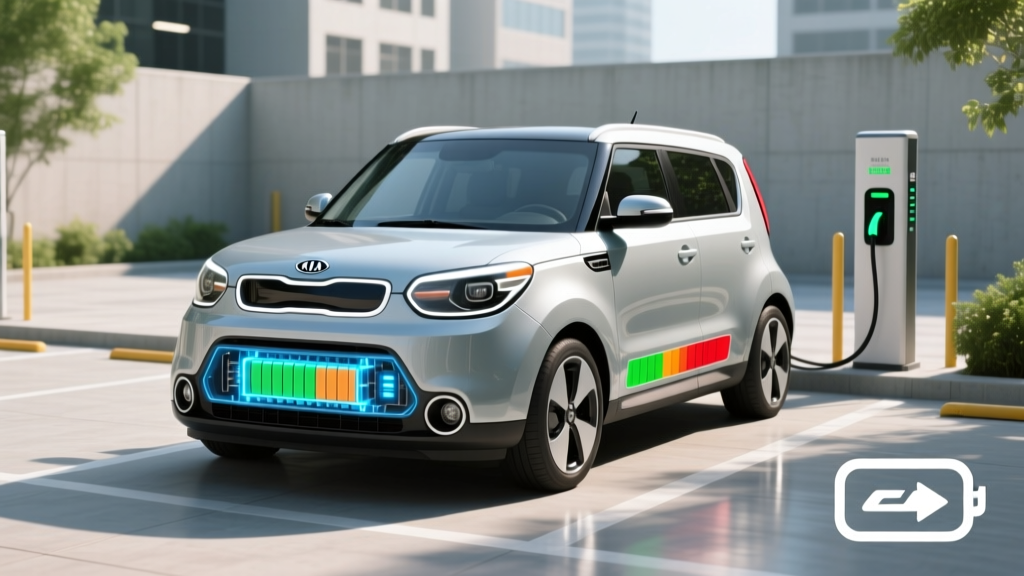
If you're evaluating a used 2016 Kia Soul EV — or already own one — the high-voltage traction battery is the single most important component to understand. This first-generation Soul EV was Kia's mass-market electric debut in the U.S., and nearly a decade later, its 27 kWh lithium-ion polymer pack is showing predictable but meaningful age-related degradation. This guide breaks down the chemistry, real-world lifespan data, replacement economics, and what modern battery tech means for older EV owners in 2026.
The 2016 Kia Soul EV Battery: Core Specifications
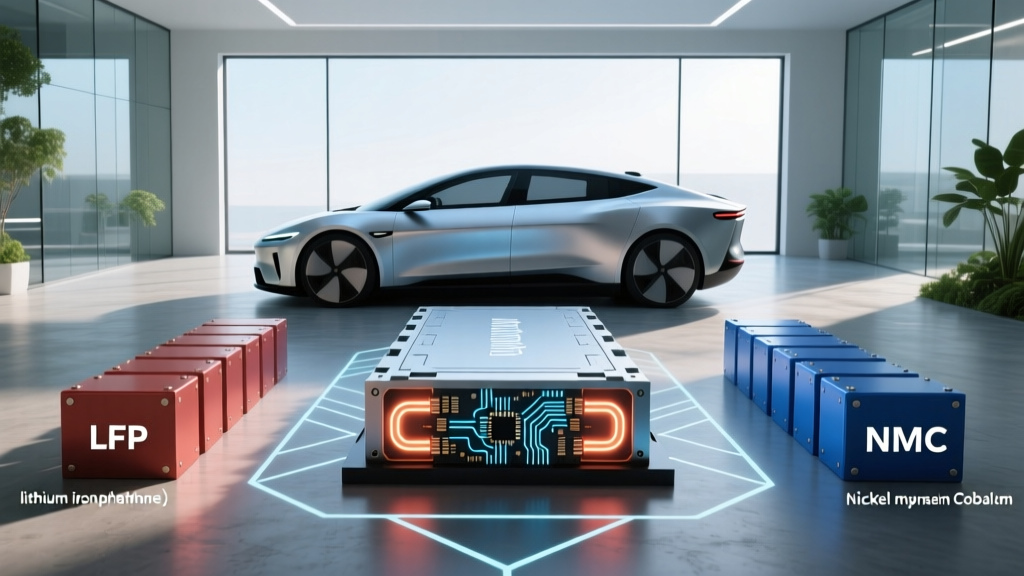
The 2016 Kia Soul EV uses a 27 kWh (usable) lithium-ion polymer battery pack manufactured by SK Innovation. The chemistry is NMC (Nickel Manganese Cobalt), which was the dominant EV chemistry in the 2014–2018 era before LFP (Lithium Iron Phosphate) gained widespread adoption. The pack is air-cooled — a design choice that keeps weight and cost down but makes the battery more susceptible to thermal stress during fast charging and extreme-temperature operation.
| Specification | Value |
|---|---|
| Battery Capacity (usable) | 27 kWh |
| Battery Chemistry | NMC (Nickel Manganese Cobalt) |
| Thermal Management | Air-cooled (passive) |
| EPA Range (new) | 93 miles |
| EPA Efficiency | 105 MPGe combined (31 kWh/100 mi) |
| Motor Output | 109 hp / 210 lb-ft torque |
| 0–60 mph | ~11.2 seconds |
| DC Fast Charge (CHAdeMO) | ~50 kW peak, 0–80% in ~33 min |
| Level 2 AC Charge | 6.6 kW, full charge in ~4.5 hours |
| Battery Warranty (original) | 10 years / 100,000 miles |
NMC vs. LFP Chemistry: What Soul EV Owners Should Know
The 2016 Soul EV's NMC pack was a solid choice for its time — offering high energy density in a compact crossover footprint. But the EV landscape has shifted significantly. Modern EVs increasingly use LFP (Lithium Iron Phosphate) chemistry, particularly in standard-range models. Understanding the trade-offs helps contextualize what you're living with and what future replacement options might look like.
| Attribute | NMC (2016 Soul EV) | LFP (Modern Standard-Range EVs) |
|---|---|---|
| Energy Density | Higher (~150–220 Wh/kg cell-level) | Lower (~130–170 Wh/kg) |
| Cycle Life | ~1,000–1,500 full cycles to 80% SoH | ~2,500–4,000+ full cycles to 80% SoH |
| Cold-Weather Performance | Better low-temp discharge capability | Reduced performance below 20°F without heating |
| Thermal Stability | Good but requires active management | Excellent — inherently more stable |
| Cost per kWh | Higher (cobalt/nickel commodity pricing) | ~20–30% lower (no cobalt, abundant iron) |
| Recommended Charge Habit | Daily charge to 80%; avoid 100% storage | Can charge to 100% regularly; benefits from periodic full calibration |
| Typical Degradation Curve | Steeper initial drop, then gradual | Very linear and slow |
For the 2016 Soul EV owner, the NMC chemistry means your battery is more sensitive to sustained high states of charge and heat exposure. The air-cooled thermal system compounds this — unlike the liquid-cooled packs in a Tesla Model 3 or Hyundai Ioniq 5, your Soul EV cannot actively shed heat during DC fast charging or hot-weather driving. This is the single biggest factor accelerating degradation in early air-cooled EVs.
Degradation Data: What 2016 Soul EV Batteries Look Like in 2026
Based on owner reports across EV forums, fueleconomy.gov data, and aggregated telematics from third-party battery health services, here is the typical degradation trajectory for the 27 kWh NMC pack in the 2016 Soul EV:
| Vehicle Age | Approx. Mileage | Avg. Capacity Retained (SoH) | Est. Real-World Range |
|---|---|---|---|
| New (2016) | 0 mi | 100% | 80–93 mi |
| 3 years | ~30,000 mi | 92–95% | 74–88 mi |
| 5 years | ~50,000 mi | 86–91% | 68–84 mi |
| 7 years | ~70,000 mi | 80–87% | 63–80 mi |
| 10 years (2026) | ~90,000–100,000 mi | 74–84% | 58–78 mi |
Key variables that push degradation toward the lower end:
- Frequent DC fast charging: The 50 kW CHAdeMO charger generates significant heat in an air-cooled pack. Owners who DC fast-charged 3+ times per week typically see SoH in the 74–78% range at 10 years.
- Hot climates: Sustained ambient temperatures above 95°F (Phoenix, Las Vegas, Houston summers) accelerate calendar degradation in NMC cells.
- Consistent 100% storage: Leaving the pack at full charge for extended periods (overnight, multiple days) stresses NMC chemistry more than LFP.
- High mileage: Vehicles exceeding 100,000 miles show measurable additional cycle-based wear.
Key variables that preserve health:
- Primarily Level 2 home charging (gentler charge rate, less heat)
- Moderate climates (Pacific Northwest, coastal California)
- Charging to 80–90% for daily use, reserving 100% for longer trips
- Lower annual mileage (under 8,000 miles/year)
It's worth noting that Kia's 10-year/100,000-mile battery warranty covers capacity below 70% of original. If your 2016 Soul EV measures below ~18.9 kWh usable (70% of 27 kWh), you may still have a valid warranty claim — though the 10-year window from the original in-service date is closing or has closed for most 2016 models by 2026.
EV Battery Replacement Cost: 2016 Kia Soul EV and Broader Market
Battery replacement is the most feared EV ownership expense, but context matters. The vast majority of EV batteries outlast the vehicles they're installed in — a fact supported by NREL longevity studies and real-world fleet data. That said, if your 2016 Soul EV's pack drops below usable thresholds or develops a cell fault, here's what replacement looks like:
| Vehicle / Pack Size | Remanufactured / Refurbished | New OEM Pack | Typical Replacement Trigger |
|---|---|---|---|
| 2016 Kia Soul EV (27 kWh) | $4,500–$6,500 | $7,500–$9,500 | SoH below 65–70%, cell imbalance, or fault code |
| Nissan Leaf 30 kWh | $5,000–$7,000 | $8,000–$10,000 | SoH below 70%, significant range loss |
| Chevrolet Bolt EV 60 kWh | $8,000–$11,000 | $13,000–$16,000 | Post-recall replacement, cell module failure |
| Tesla Model 3 75 kWh | $10,000–$13,000 | $14,000–$18,000 | Rare; typically module-level repair ($2,000–$5,000) |
| Hyundai Ioniq 5 77.4 kWh | $11,000–$14,000 | $15,000–$20,000 | Extremely rare under warranty coverage |
For the 2016 Soul EV specifically, a full pack replacement at $7,500–$9,500 often exceeds the vehicle's current market value ($6,000–$9,000 for a well-maintained example in 2026). This is the economic reality of older, lower-range EVs: the battery replacement decision frequently becomes a vehicle replacement decision.
Module-level repair is sometimes an option. Independent EV shops can identify and replace individual degraded cell modules within the pack for $1,500–$3,500, restoring meaningful capacity without a full swap. Availability depends on your region and the specific failure mode.
Battery Warranty Terms: What Kia Covered and What's Left in 2026
| Warranty Element | Coverage |
|---|---|
| Duration | 10 years from original in-service date |
| Mileage Limit | 100,000 miles |
| Capacity Retention Threshold | 70% of original capacity (~18.9 kWh usable) |
| What's Covered | Battery capacity below threshold, cell/module defects, BMS failures |
| What's NOT Covered | Normal gradual degradation above 70%, damage from accidents/modifications, 12V auxiliary battery |
| Transferability | Yes — transfers to subsequent owners |
For a 2016 model first sold in mid-2016, the 10-year warranty window expired in 2026. If your Soul EV was sold later (as a 2016 model in early 2017), you may have a few months of coverage remaining. Check your original purchase documents for the exact in-service date.
Important distinction: The warranty covers the high-voltage traction battery only — not the 12V auxiliary battery that powers lights, infotainment, and the contactor relay. The 12V battery in the Soul EV is a standard AGM unit that typically needs replacement every 3–5 years at a cost of $150–$250, similar to any conventional vehicle.
Factors That Accelerate (or Preserve) Your Soul EV Battery
The 27 kWh air-cooled NMC pack in the Soul EV is more sensitive to abuse than modern liquid-cooled systems. Here's a practical care framework:
- Avoid daily DC fast charging. The air-cooled pack cannot dissipate 50 kW charge heat effectively. Limit CHAdeMO sessions to road trips or when Level 2 isn't available.
- Set charge limit to 80–90% for daily driving. NMC chemistry degrades faster when held at 100% SoC for extended periods. Reserve full charges for days you need maximum range.
- Don't store the vehicle at very low or very high SoC. If parking for a week or more, aim for 50–60% state of charge.
- Precondition while plugged in. Use the Soul EV's scheduled departure feature to warm or cool the cabin (and battery) while connected to shore power. This draws from the grid, not the pack.
- Minimize exposure to extreme heat. Park in shade or a garage during summer. Sustained pack temperatures above 104°F (40°C) accelerate calendar degradation in NMC cells.
- Drive moderately in cold weather. Aggressive acceleration on a cold, unconditioned battery increases internal resistance and stress.
- Keep firmware updated. Kia issued BMS (Battery Management System) updates over the years that improved charge management and cell balancing. Verify your dealer applied all available updates.
How to Check Your Soul EV's Battery Health (State of Health)
Unlike newer EVs with built-in SoH readouts in the infotainment system or companion app, the 2016 Soul EV doesn't display a simple "battery health percentage" on the dashboard. Here are your options:
1. OBD-II Scanner with EV Capability
Devices like the OBDLink MX+ or Konwei KW510 paired with apps such as Soul EV Spy (Android) or EVnotify can read the BMS directly. Key parameters to pull:
- SoH (State of Health): The percentage of original capacity the BMS calculates remains available. A reading of 82% means your pack holds roughly 22.1 kWh usable.
- Cell voltage spread: Healthy packs show cell-to-cell variance under 0.05V at rest. A spread exceeding 0.1V suggests module imbalance.
- Total charge/discharge energy: Cumulative kWh throughput gives a usage-based wear estimate.
2. Dealer Diagnostic Scan
Any Kia dealer can run a battery health report via the KDS (Kia Diagnostic System). Request a printout showing SoH percentage and individual cell group voltages. This is typically free or a nominal diagnostic fee ($50–$100).
3. Manual Range Tracking
If you've tracked your real-world range over time, you can estimate SoH by comparing current achievable range to your baseline when the car was newer. For example, if you consistently achieved 85 miles at 100% SoC in 2017 and now achieve 68 miles under similar conditions, your estimated SoH is approximately 80%. This method is imprecise (weather, driving style, and tire condition all affect range) but provides a useful trend line.
4. Third-Party Battery Health Certificates
Services like Recurrent and Geotab offer battery health reports that aggregate your charging data over time. These are particularly useful when buying or selling a used Soul EV, as they provide a verifiable, third-party SoH assessment.
Battery Technology Beyond NMC: What's Coming and When
If you're weighing whether to invest in a battery replacement for your 2016 Soul EV or transition to a newer EV, it helps to understand where battery technology is heading:
Silicon-Anode Lithium-Ion (2025–2027 production):
Companies like Sila Nanotechnologies and Group14 are bringing silicon-dominant anodes to market, replacing graphite anodes in NMC cells. The result: 20–40% higher energy density at the cell level, faster charging capability, and modest cost reduction. These cells are beginning to appear in premium vehicles (Mercedes G-Class EV, certain GM Ultium applications) and will trickle down to mainstream models by 2028–2029.
Solid-State Batteries (2028–2032 realistic timeline):
Despite years of announcements, true solid-state EV batteries — replacing liquid electrolyte with a solid ceramic, polymer, or sulfide conductor — remain in limited production. Toyota, Samsung SDI, and QuantumScape have demonstrated prototype cells with 500+ mile range potential and 10-minute fast charging, but manufacturing scale-up is the bottleneck. DOE analysis suggests meaningful solid-state EV availability in the U.S. market no earlier than 2029–2030, with cost parity to current lithium-ion not expected until the mid-2030s.
Sodium-Ion Batteries (2025–2027 for budget EVs):
CATL and BYD are producing sodium-ion cells for entry-level EVs in China, with energy density around 120–160 Wh/kg — lower than NMC but extremely low-cost and cobalt-free. These may appear in budget U.S. EVs or as stationary storage by 2027–2028, though they won't retrofit into a Soul EV.
What this means for Soul EV owners: Next-generation battery tech won't be backward-compatible with your 2016 platform. If your pack needs replacement, you'll source a refurbished or new NMC pack of the original specification. The economic case for replacement improves if refurbished pack prices continue to decline as more first-generation EVs are decommissioned and their packs are harvested for modules.
Frequently Asked Questions
How long do EV batteries last in years and miles?
Modern liquid-cooled EV batteries (2020+) are designed to retain 70–80% capacity after 150,000–200,000 miles and 15–20 years. The 2016 Soul EV's air-cooled NMC pack has a shorter practical lifespan — typically 80–85% SoH at 100,000 miles with careful use, or 70–78% with heavy fast-charging and heat exposure. Most EV batteries outlast the vehicles they're in; total failure is rare. Gradual capacity loss is the norm, not sudden death.
How much does a 2016 Kia Soul EV battery cost to replace?
Expect $4,500–$6,500 for a refurbished/remanufactured pack or $7,500–$9,500 for a new OEM pack (plus $500–$1,200 labor). Module-level repair, if only specific cell groups are degraded, can cost $1,500–$3,500. Given the Soul EV's 2026 resale value of $6,000–$9,000, a full new-pack replacement often doesn't make financial sense — a refurbished pack or module repair is the more common path.
What does the Kia Soul EV battery warranty actually cover?
Kia's original warranty guaranteed the high-voltage traction battery would retain at least 70% of its original capacity for 10 years or 100,000 miles (whichever came first). It covered cell defects, BMS failures, and abnormal capacity loss. It did not cover normal gradual degradation above the 70% threshold, accident damage, the 12V auxiliary battery, or modifications. For 2016 models, the 10-year window has expired or is expiring in 2026.
How do I check and maximize my Soul EV's battery health?
Use an OBD-II scanner with EV-specific software (Soul EV Spy, Leaf Spy-compatible tools) to read SoH percentage and cell voltage spread directly from the BMS. To maximize longevity: limit DC fast charging, charge to 80–90% daily, avoid storing at 100% or below 20%, precondition while plugged in, and park in shade during hot weather. An annual dealer diagnostic scan provides a professional baseline.
LFP vs. NMC — which chemistry is better for daily driving?
Neither is universally better; they serve different priorities. NMC offers higher energy density (more range in a smaller, lighter pack) and better cold-weather performance — ideal for long-range and AWD vehicles in cold climates. LFP delivers far longer cycle life (3,000+ cycles vs. 1,000–1,500), greater thermal stability, lower cost, and tolerance for daily 100% charging — ideal for standard-range daily drivers in moderate climates. The 2016 Soul EV uses NMC; most 2025–2026 standard-range models (Tesla Model 3 RWD, base BYD, some Ford Mustang Mach-E trims) use LFP.
Is the 2016 Kia Soul EV still a practical daily driver in 2026?
It depends on your commute and charging access. With a degraded pack delivering 60–75 real-world miles, the Soul EV works as a city commuter and errand runner if you can charge at home overnight. It struggles as a primary vehicle for anyone with a round-trip commute exceeding 50 miles or who lacks reliable home Level 2 charging. Its CHAdeMO connector is increasingly unsupported at new public fast-charging stations (which favor NACS and CCS), further limiting road-trip utility. If your pack is above 80% SoH and your daily driving is under 40 miles, it remains a charming, practical urban EV.