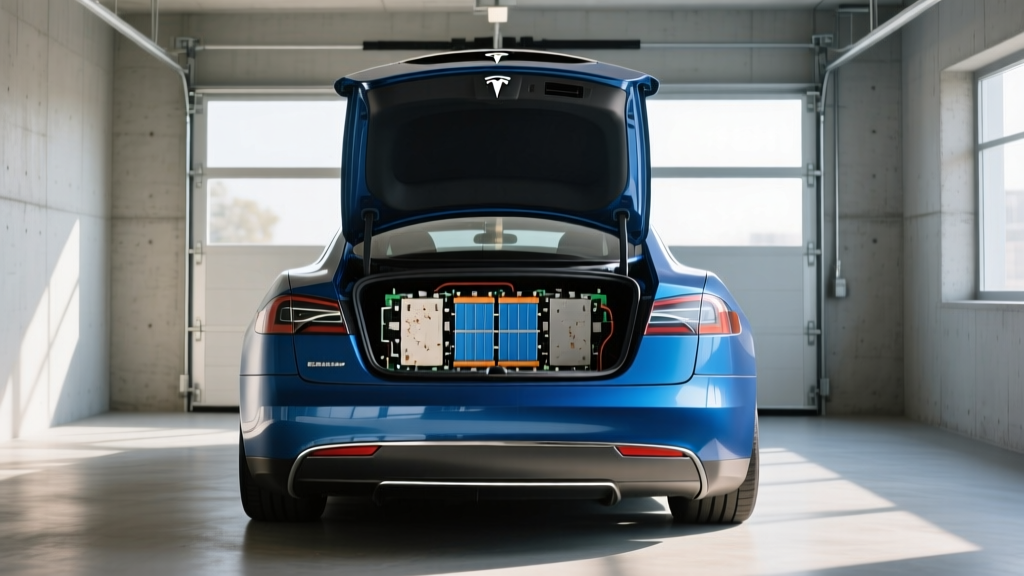
If you own, or are considering buying, a used 2015 Tesla Model S, the high-voltage traction battery is the single most important — and most expensive — component in the car. Now more than a decade old, these early large-pack EVs are the best real-world laboratory we have for understanding how lithium-ion batteries age. The data is largely reassuring: most 2015 Model S batteries retain 80–88% of their original capacity well past 150,000 miles, and catastrophic failures outside warranty are uncommon. But replacement, when it is needed, is a five-figure event.
This guide breaks down exactly what happens to the 2015 Tesla Model S battery over time, what replacement costs in 2026, how the warranty applies, and what every EV owner — whether in a decade-old Model S or a brand-new Ioniq 5 — should know about battery chemistry, degradation, and care.
The 2015 Tesla Model S Battery: Specs and Chemistry
The 2015 Model S was offered with three battery pack sizes: 70 kWh, 85 kWh, and 90 kWh (the latter introduced mid-year). All used NCA (nickel-cobalt-aluminum) cathode chemistry supplied primarily by Panasonic, manufactured at the Gigafactory and Tesla's Fremont plant. NCA was chosen for its high energy density — critical for delivering the 265-mile EPA range the 85 kWh model advertised.
| Variant | Usable Capacity | Chemistry | EPA Range (Original) | 0-60 mph |
|---|---|---|---|---|
| 70 kWh | ~67 kWh | NCA | 240 mi | 5.8 sec |
| 85 kWh | ~81 kWh | NCA | 265 mi | 5.4 sec |
| 90 kWh | ~86 kWh | NCA | 294 mi | 5.2 sec (P90D: 3.2 sec) |
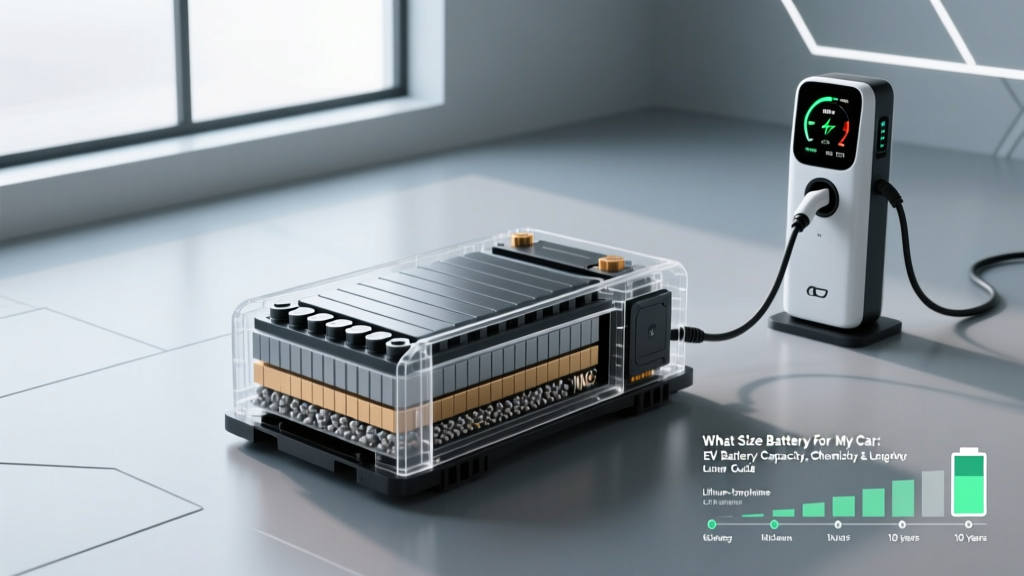
Understanding what NCA chemistry means for longevity requires comparing it to the other dominant EV battery type: LFP (lithium iron phosphate).
LFP vs NMC/NCA: Which Chemistry Ages Better?
Every modern EV uses one of two broad lithium-ion chemistries. The 2015 Model S uses NCA; most Teslas built since 2021 for the standard-range trims use LFP. Here is how they compare across the dimensions that matter for longevity:
| Factor | NCA / NMC (Nickel-based) | LFP (Lithium Iron Phosphate) |
|---|---|---|
| Energy Density | High (~250 Wh/kg cell-level) | Lower (~160–180 Wh/kg) |
| Typical Cycle Life | 1,000–2,000 full cycles | 3,000–5,000+ full cycles |
| Cold-Weather Performance | Better energy delivery below freezing | Reduced range & slower charging in cold |
| Calendar Aging | Moderate — degrades even when parked | Slower calendar aging |
| Cost per kWh | Higher (cobalt/nickel supply chain) | Lower (iron/phosphate abundant) |
| Optimal Daily SoC | 80% recommended for daily use | 100% OK — Tesla recommends weekly full charge |
| Used In (Examples) | Model S/X, long-range Model 3/Y | Standard-range Model 3/Y, Ford Mustang Mach-E Select |
The takeaway: LFP batteries generally last longer in terms of charge cycles and tolerate daily 100% charging better. NCA/NMC batteries offer more range per pound and perform better in cold climates. For the 2015 Model S owner, NCA was the right choice at the time — LFP lacked the energy density to deliver 265+ miles in a sedan platform in 2015.
Real-World Degradation: What the Data Shows
Battery degradation follows a predictable curve: a sharper drop in the first 20,000–30,000 miles (typically 3–5%), followed by a long, slow linear decline. This pattern is well-documented across Tesla's fleet.
Typical NCA Degradation Trajectory (Tesla Fleet Data & Owner Surveys):
| Mileage / Age | Average Capacity Retained | Real-World Impact (85 kWh pack) |
|---|---|---|
| Year 1 / 15,000 mi | ~95–97% | ~255 mi range (from 265) |
| Year 3 / 50,000 mi | ~92–94% | ~245 mi range |
| Year 5 / 80,000 mi | ~89–92% | ~235 mi range |
| Year 8 / 120,000 mi | ~85–90% | ~225 mi range |
| Year 10+ / 150,000+ mi | ~80–88% | ~210–235 mi range |
Sources: Tesla Impact Reports, Recurrent Auto battery degradation studies, owner-collected data from Tesla Motors Club forums.
For the 2015 Model S specifically, a car that started with an EPA-rated 265 miles (85 kWh) can realistically be expected to deliver 210–235 miles at 10–11 years old, depending on charging habits and climate. That is still a usable daily-driver range, but the loss is noticeable on road trips.
Real-world caveat: Range loss is not just about battery capacity. Tire condition, alignment, ambient temperature, and HVAC use all affect delivered miles. A 2015 Model S in a Minnesota winter at highway speeds may deliver only 170–190 miles on a full charge — a combination of ~15% degradation and ~20–25% cold-weather efficiency loss.
Battery Warranty: What Tesla Covers (and When It Expires)
The 2015 Model S left the factory with Tesla's battery and drive unit warranty: 8 years / unlimited miles for the 85 kWh and 90 kWh packs, and 8 years / 125,000 miles for the 70 kWh pack. The warranty guarantees the battery will retain at least 70% of its original capacity over the warranty period.
| Pack Size | Warranty Term | Capacity Threshold | Warranty Status in 2026 |
|---|---|---|---|
| 70 kWh | 8 yr / 125,000 mi | 70% retention | Expired (by time, ~2023) |
| 85 kWh | 8 yr / unlimited mi | 70% retention | Expired (by time, ~2023) |
| 90 kWh | 8 yr / unlimited mi | 70% retention | Expired (by time, ~2023–2024) |
What this means for 2026 buyers: Every 2015 Model S is now out of battery warranty. If the battery fails or drops below 70% capacity, the owner bears the full replacement cost. That said, the 70% threshold is quite conservative — data shows very few NCA packs drop that far within 150,000 miles. If a 2015 Model S you are evaluating shows less than 70% capacity, that is an outlier and a negotiation point.
Replacement Cost: What It Actually Costs in 2026
Out-of-warranty battery replacement for the 2015 Model S is the number-one anxiety for prospective used buyers. Here is the realistic cost landscape:
| Scenario | Cost Range (Parts + Labor) | Notes |
|---|---|---|
| Tesla Service Center — new/remanufactured pack | $16,000–$22,000 | Full replacement; includes labor, coolant refill, diagnostics |
| Independent EV specialist — refurbished pack | $10,000–$15,000 | Growing network of shops (e.g., Electrified Garage, Gruber Motors); quality varies |
| Module-level repair (1–2 bad modules) | $2,500–$5,500 | Viable if only a subset of 16 modules has failed; requires specialist diagnostics |
| Used/salvage pack | $6,000–$10,000 | From a wrecked Model S; capacity/health uncertain; limited warranty |
When is replacement actually needed? Most 2015 Model S batteries will never need a full replacement for degradation alone — a pack at 80% capacity is still a functional car. Full replacement is typically triggered by: (1) an internal cell or module failure causing a fault code, (2) coolant intrusion into the battery case, or (3) physical damage from road debris. Gradual degradation to 75–80% is livable; sudden failure is what drives the big bills.
For context, the average 2015 Model S 85 kWh trades for $14,000–$22,000 in 2026 depending on mileage and condition (per Kelley Blue Book). A $18,000 battery replacement can approach or exceed the car's value — a factor that should inform whether you repair or replace the vehicle.
What Kills an EV Battery Faster: Risk Factors
Not all 2015 Model S batteries age equally. A car in San Diego that was Level-2 charged nightly to 80% will have a measurably healthier pack than one in Phoenix that Supercharged daily and sat at 100% in 110°F heat. The factors that accelerate degradation, in rough order of impact:
- High State of Charge + Heat: Storing the car at 100% SoC in hot climates (above 90°F) is the single worst thing for NCA chemistry. Calendar aging accelerates dramatically above 80% SoC at high temperatures.
- Frequent DC Fast Charging: Occasional Supercharging is fine; daily DC fast charging raises cell temperatures and stresses the cathode. Tesla's thermal management helps, but the cumulative effect is real over 100+ fast-charge sessions per year.
- Deep Discharges: Regularly driving the battery below 10% SoC stresses the anode. The car's buffer (the 85 kWh pack has ~81 kWh usable) protects against true zero, but repeatedly hitting the low warning is not ideal.
- Extreme Cold Without Preconditioning: Charging a cold NCA battery (below 20°F) without preconditioning causes lithium plating on the anode — a permanent capacity loss mechanism. Tesla's navigation-to-charger preconditioning mitigates this when used.
- Long-Term Storage at High or Low SoC: Parking for weeks at 100% or near 0% causes irreversible capacity loss. Tesla recommends 50% SoC for storage longer than two weeks.
Checking Battery Health: How to Monitor SoH
State of Health (SoH) is the percentage of original capacity a battery currently holds. For a 2015 Model S owner, here is how to check it:
Via the Tesla App / In-Car Display
Tesla does not display a direct SoH percentage in the app or on the touchscreen. However, you can estimate it: charge to 100%, note the displayed rated range, and divide by the original EPA range (265 mi for 85 kWh). A car showing 225 rated miles at 100% has approximately 85% SoH.
Third-Party Diagnostics
For a more precise reading, third-party tools can query the battery management system (BMS) directly:
- TeslaFi / Tessie: These apps log charge data over time and can estimate degradation curves from your charging history.
- Recurrent Auto: Offers a free battery health report for Tesla owners who share telematics data; compares your pack to a fleet baseline.
- Independent EV shop scan: A shop with Tesla-compatible diagnostic tools (e.g., Toolbox access or aftermarket equivalents) can read individual module voltages and internal resistance — the gold standard for pre-purchase inspections on a used 2015 Model S.
What to Look for Pre-Purchase
If you are evaluating a used 2015 Model S, request a full-charge screenshot showing rated miles. Anything above 220 rated miles (85 kWh) suggests a well-maintained pack. Below 200 miles, investigate further — and budget for a potential module or full-pack replacement within a few years.
Beyond 2026: Solid-State and Silicon-Anode Batteries
The battery landscape is evolving, though timelines remain long and commercialization is slower than headlines suggest:
- Solid-state batteries (using a solid electrolyte instead of liquid) promise higher energy density and faster charging. Toyota, Samsung SDI, and QuantumScape have announced pilot production, but no mass-market vehicle currently uses a solid-state pack. Realistic availability in consumer EVs: 2028–2030 at the earliest, initially in limited, premium models.
- Silicon-anode batteries (replacing graphite anodes with silicon for higher capacity) are closer to market. Companies like Sila Nanotechnologies and Group14 are supplying silicon-dominant anode materials to automakers now, with incremental energy-density gains of 10–20% expected in production vehicles by 2027–2028.
- LFP continues to expand: LFP is already the dominant chemistry for standard-range EVs globally and is expected to reach 40%+ of global EV battery production by 2027, driven by cost and longevity advantages.
For 2015 Model S owners: These advances will not result in a drop-in replacement pack for your car. Tesla has never offered a chemistry-swap retrofit for older vehicles, and the physical form factor, cooling architecture, and BMS of a 2015 pack are incompatible with next-gen cells. Your upgrade path is a new vehicle, not a new battery chemistry.
Maximizing Your 2015 Model S Battery Life: A Practical Checklist
- Set the daily charge limit to 80%. Use the Tesla app or in-car scheduler to stop charging at 80% for daily driving. Charge to 100% only before road trips.
- Use Level 2 (home) charging as your primary method. A 240V / 48A Level 2 charger adds ~29 miles per hour and is gentler on the pack than daily Supercharging.
- Plug in whenever possible. The Model S uses battery power for vampire loads (sentry mode, connectivity, thermal management). Staying plugged in at even a low SoC prevents parasitic drain from cycling the pack unnecessarily.
- Precondition before Supercharging in cold weather. Navigate to the Supercharger in the Tesla app or touchscreen — the car will warm the battery to optimal charging temperature, reducing lithium-plating risk and improving charge speed.
- Avoid storing the car above 90% or below 20% SoC. If leaving the car for a week or more, set the charge limit to 50% and leave it plugged in.
- Minimize Sentry Mode and cabin-overheat protection when parked for long periods. These features draw continuous power and can add 15–30 miles of equivalent drain per day.
Frequently Asked Questions
How long do EV batteries last in years and miles?
Modern lithium-ion EV batteries (NCA, NMC, and LFP) are designed to retain at least 70–80% of original capacity over 150,000–200,000 miles, which translates to 12–15 years for the average driver (12,000–15,000 miles/year). Data from Tesla's fleet and independent studies by Recurrent Auto confirm that the vast majority of EV batteries outlast the car they are installed in. Catastrophic failure (a pack that simply stops working) is rare and usually covered within the warranty period.
How much does it cost to replace a 2015 Tesla Model S battery?
A full battery replacement at a Tesla Service Center runs $16,000–$22,000 in 2026. Independent EV shops offering refurbished packs charge $10,000–$15,000. Module-level repairs (replacing 1–2 failed modules rather than the entire pack) cost $2,500–$5,500. Given the car's resale value of roughly $14,000–$22,000, a full replacement is a significant economic decision.
What does the Tesla battery warranty cover?
Tesla's original warranty on the 2015 Model S guaranteed the battery would retain at least 70% of its original capacity for 8 years (unlimited miles for 85/90 kWh; 125,000 miles for 70 kWh). It covered defects, premature degradation below the threshold, and complete failure. As of 2026, all 2015 Model S vehicles are out of this warranty period. Tesla does not offer an extended battery warranty for out-of-warranty vehicles.
How do I check my Tesla Model S battery health?
Charge to 100% and note the rated range displayed. Divide that number by the original EPA range (265 mi for the 85 kWh) to estimate your State of Health percentage. For a more detailed analysis, use a service like Recurrent Auto or have an independent EV shop perform a BMS diagnostic scan to check individual module balance and internal resistance.
LFP vs NMC/NCA — which is better for longevity?
LFP batteries generally last longer: they tolerate 3,000–5,000 charge cycles (vs. 1,000–2,000 for NCA/NMC), can be stored and charged at 100% without accelerated degradation, and use cheaper, more abundant materials. However, NCA/NMC offers higher energy density (more range in a smaller, lighter pack) and better cold-weather performance. For a daily commuter who charges at home, LFP is the better longevity choice. For maximum range and cold-climate driving, NCA/NMC remains the practical pick. The 2015 Model S uses NCA — appropriate for its era and performance targets.
Is it worth buying a 2015 Model S in 2026 given battery risk?
It depends on the specific car and your risk tolerance. A 2015 Model S 85 kWh with under 100,000 miles, consistent Level 2 charging history, and 225+ rated miles at full charge is a reasonable buy at $16,000–$20,000 — with the understanding that you have no warranty backstop. Budget $2,000–$5,000 as a reserve for potential module repair. Avoid examples with fewer than 200 rated miles at full charge, evidence of exclusive Supercharger use, or coolant-leak history.
Does frequent Supercharging damage the battery?
Occasional Supercharging (1–2 times per week) has a minimal measurable effect on battery health, thanks to Tesla's active liquid thermal management. However, daily DC fast charging over several years does accelerate degradation compared to Level 2 charging — studies show an additional 2–4% capacity loss over 100,000 miles. The bigger risk is fast-charging a cold battery without preconditioning, which can cause lithium plating.