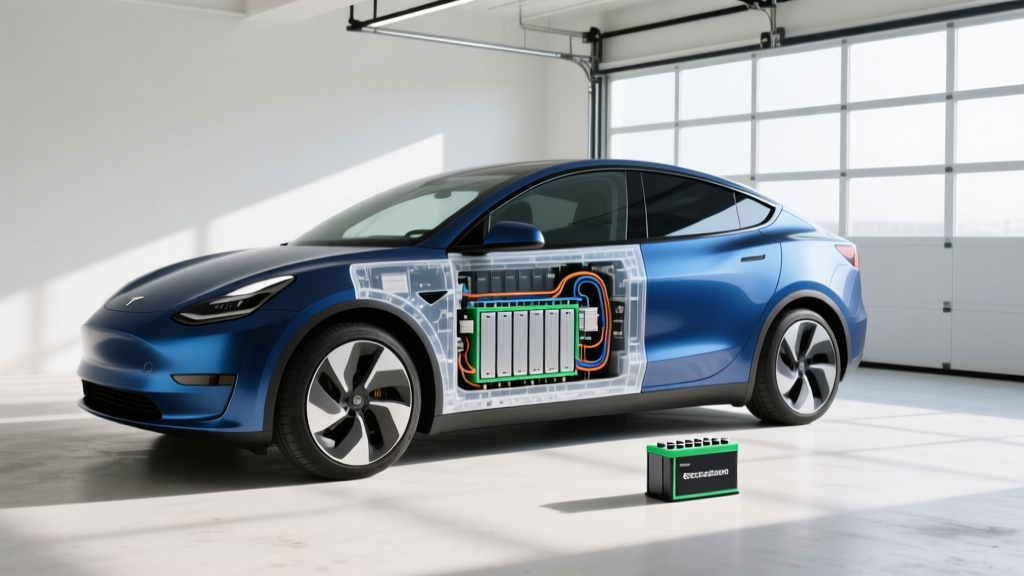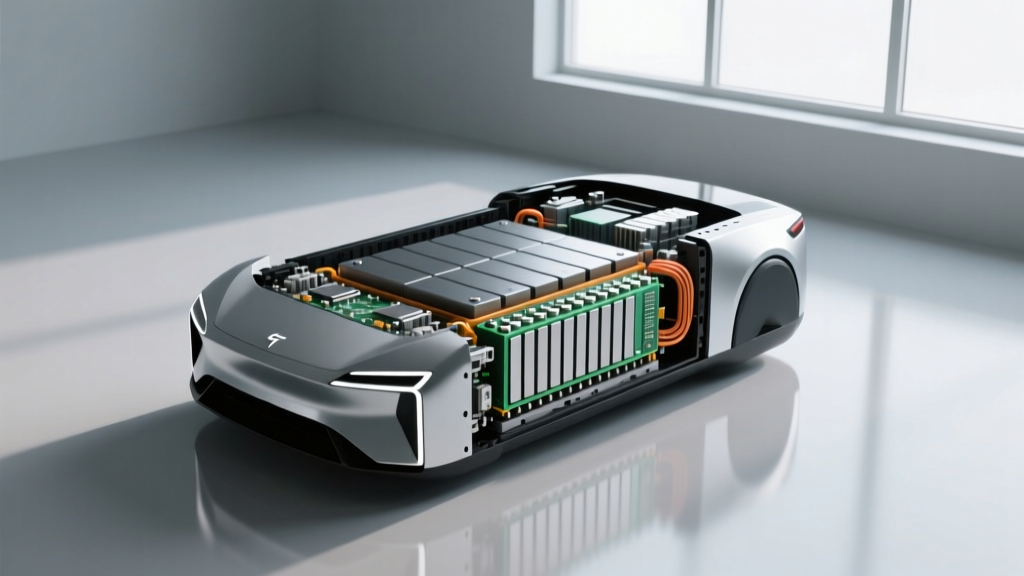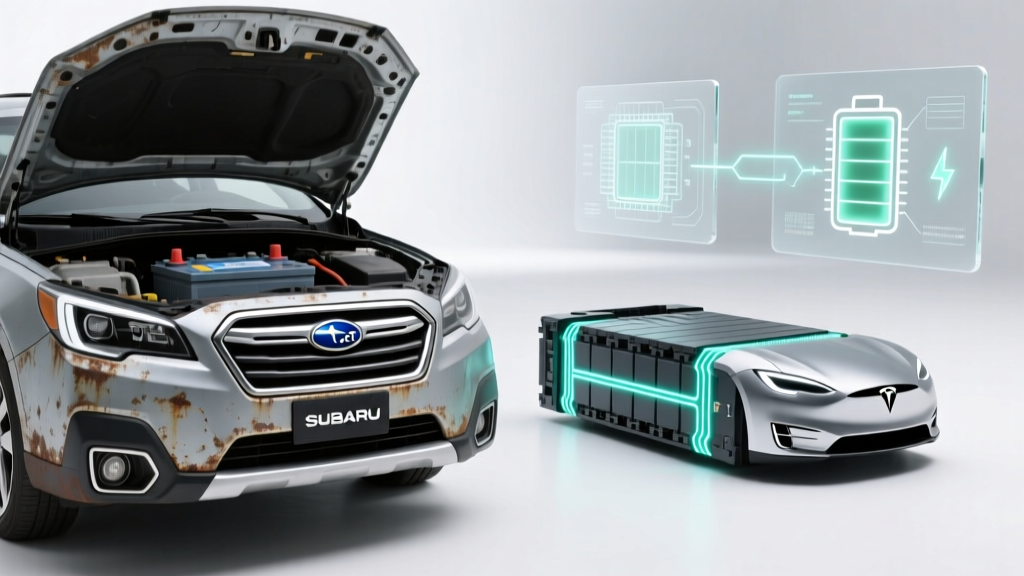
If you own a 2015 Subaru Outback, you’ve likely replaced its 12V lead-acid battery at least once by now. That familiar $150–$250 swap at the auto parts store is a rite of gas-car ownership. But as more Outback owners consider trading in for a modern EV, the question shifts dramatically: How do high-voltage EV traction batteries actually hold up over time, and what happens when one needs replacing?
This guide bridges that gap. We’ll briefly cover what you’re used to with the 2015 Subaru Outback battery, then dive deep into the real data on EV battery longevity, chemistry trade-offs, warranty coverage, replacement costs, and care strategies — everything you need to evaluate an EV purchase with eyes wide open.
The 2015 Subaru Outback Battery: A Quick Baseline
The 2015 Subaru Outback uses a standard Group 35 or 25 12V lead-acid battery (typically 550–650 cold cranking amps) to start its flat-four engine and run accessories. Replacement cost runs $130–$250 for the battery alone, and most owners swap one every 3–5 years. It’s a simple, cheap, well-understood wear item.
This is the baseline many transitioning buyers carry into EV ownership — and it’s where the confusion starts. An EV’s high-voltage traction battery (the pack that actually moves the car) is an entirely different animal: far more expensive, far longer-lasting, and governed by electrochemistry rather than simple mechanical wear. Let’s break down exactly what you’re dealing with.
How Long Do EV Batteries Actually Last?
The short answer, backed by fleet data: most modern EV traction batteries outlast the cars they’re installed in. But "outlast" doesn’t mean "zero degradation." Here’s what the numbers actually show.
Real-World Degradation Data Points:
- Geotab fleet study (2024 update, 10,000+ vehicles): Average capacity loss of ~1.8% per year across all chemistries, with most packs retaining 80–85% of original capacity at the 10-year mark.
- Tesla 2025 Impact Report: Model 3/Y packs showed ~12% average degradation at 150,000 miles, with LFP variants degrading roughly 2–3% less than NMC equivalents over the same distance.
- Recurrent Auto (2025 data, ~15,000 vehicles): Hyundai Ioniq 5 and Kia EV6 packs averaged 6–8% loss at 80,000 miles; Chevrolet Bolt EV (NMC) averaged ~10% at 100,000 miles before the recall-related replacements.
- Nissan Leaf (passive-cooled, older gen): Notably worse — early 24 kWh Leafs lost 20–30% capacity within 5 years in hot climates, a cautionary tale about thermal management.
The pattern is clear: liquid-cooled packs with active thermal management (standard on virtually every 2024+ EV) degrade far more predictably and slowly than older passively-cooled designs. A well-maintained 2025-era pack should retain 80%+ capacity well past 150,000 miles — which, for most owners, means it will last the life of the vehicle.
LFP vs NMC/NCA: Which Chemistry Is Right for You?
Not all lithium-ion batteries are created equal. The two dominant chemistries in 2026 EVs are LFP (lithium iron phosphate) and NMC/NCA (nickel manganese cobalt / nickel cobalt aluminum). Each has distinct strengths.
| Attribute | LFP (LiFePO₄) | NMC / NCA |
|---|---|---|
| Energy Density | Lower (~160–180 Wh/kg cell-level) | Higher (~220–280 Wh/kg cell-level) |
| Cycle Life | 3,000–5,000+ cycles to 80% SoH | 1,000–2,000 cycles to 80% SoH |
| Cold-Weather Performance | Weaker — ~20–30% range loss below 20°F without preconditioning | Better — ~15–25% range loss in same conditions |
| Cost (cell-level) | ~$80–95/kWh in 2026 | ~$110–135/kWh in 2026 |
| Maximum SoC Charging | Can be charged to 100% daily without harm | Best kept at 80% daily; 100% for trips only |
| Thermal Stability | Excellent — far less prone to thermal runaway | Good — requires robust BMS and cooling |
| Typical Use | Standard-range models, fleet/ride-share, warm climates | Long-range models, cold climates, performance trims |
Bottom line: If you drive in a warm climate, primarily commute, and want maximum battery longevity with minimal fuss, LFP is the stronger pick. If you need maximum range, drive in cold winters, or want the performance variant, NMC/NCA is the trade-off — and you’ll need to be more disciplined about not sitting at 100% SoC.
Current 2026 models using LFP include the Tesla Model 3 RWD, standard-range Ford Mustang Mach-E, and base BYD Atto 3. NMC/NCA dominates long-range trims across Hyundai, Kia, BMW, Rivian, and GM’s Ultium platform.
What Does the EV Battery Warranty Actually Cover?
Federal law mandates a minimum 8-year/100,000-mile warranty on EV battery packs (10 years/150,000 miles in CARB states like California, New York, and Massachusetts). But the details matter enormously.
| Manufacturer | Warranty Term | Capacity Threshold | Notes |
|---|---|---|---|
| Tesla (Model 3/Y LFP) | 8 yr / 120,000 mi | 70% retention | Transfers to subsequent owners |
| Tesla (Model S/X) | 8 yr / 150,000 mi | 70% retention | Longer mileage due to larger pack |
| Hyundai / Kia (EV6, Ioniq 5/6) | 10 yr / 100,000 mi | 70% retention | Among the longest terms in the US market |
| GM (Ultium: Equinox EV, Blazer EV, Silverado EV) | 8 yr / 100,000 mi | 70% retention (60% for commercial) | Module-level replacement when possible |
| Ford (Mach-E, F-150 Lightning) | 8 yr / 100,000 mi | 70% retention | Includes battery management system components |
| Rivian (R1T, R1S) | 8 yr / 175,000 mi | 70% retention | Higher mileage cap reflecting truck use case |
| BMW (i4, iX, i7) | 8 yr / 100,000 mi | 70% retention | Modular pack allows partial replacement |
Critical fine print: "70% retention" means the warranty kicks in only if your pack falls below 70% of its original usable capacity within the warranty period. Normal gradual degradation from 100% to 71% is not a warranty claim. Also, warranties typically do not cover damage from accidents, flooding, or unauthorized modifications — only manufacturing defects and premature degradation.
According to fueleconomy.gov, warranty coverage is one of the key ownership advantages of newer EVs, as the mandated minimums far exceed typical powertrain warranties on ICE vehicles.
How Much Does an EV Battery Cost to Replace?
This is the question that generates the most fear — and the most misinformation. Let’s separate the scary headline numbers from the realistic ownership picture.
| Vehicle / Pack Size | Full Pack Replacement (OEM) | Module-Level Repair | Aftermarket / Refurbished |
|---|---|---|---|
| Tesla Model 3 RWD (60 kWh LFP) | $12,000–$15,000 | $3,000–$5,000 per module section | $7,000–$10,000 |
| Tesla Model Y LR (82 kWh NMC) | $15,000–$20,000 | $4,000–$6,000 per module section | $9,000–$13,000 |
| Hyundai Ioniq 5 (77.4 kWh) | $14,000–$18,000 | $3,500–$5,500 per module | $8,000–$12,000 |
| Ford F-150 Lightning Ext. Range (131 kWh) | $22,000–$30,000 | $5,000–$8,000 per module | $14,000–$20,000 |
| Chevrolet Equinox EV (85 kWh Ultium) | $13,000–$17,000 | $3,000–$5,000 per module | $8,000–$11,000 |
| Rivian R1T Dual-Motor (128 kWh) | $20,000–$28,000 | $5,000–$7,000 per module | $12,000–$18,000 |
Context that matters:
- Most EVs never need a full pack replacement. Geotab’s data shows fewer than 2% of EVs in their 10,000-vehicle study required a battery replacement under normal use within the first 8 years.
- Module-level repair is increasingly standard. Many packs (especially GM Ultium, BMW, and newer Hyundai/Kia designs) allow replacing individual modules rather than the entire pack, cutting costs by 60–75%.
- Cell prices have fallen ~90% since 2010 (BloombergNEF), and refurbished packs are a growing market. A 2018 Nissan Leaf pack that cost $8,500 to replace in 2020 now runs ~$5,500 refurbished.
- Compare to the 2015 Outback: You’d spend $150–$250 every 3–5 years on a 12V battery — roughly $600–$1,200 over 15 years. An EV’s traction battery, if it lasts 15+ years (which data increasingly supports), is a single large cost that may never materialize during ownership.
Factors That Accelerate (or Preserve) Battery Life
Battery degradation isn’t random — it’s driven by measurable factors you can control. Here’s the hierarchy of impact, based on published research and fleet data.
High-Impact Factors (Manage These):
- ☑ State of Charge extremes: Regularly sitting at 100% SoC or below 10% accelerates degradation. For NMC/NCA packs, the 20–80% daily window is the longevity sweet spot. LFP packs can handle 100% daily without penalty.
- ☑ DC fast-charging frequency: Occasional fast charging is fine. But daily use of 150+ kW DC chargers (especially without preconditioning) adds measurable wear. Tesla’s own data suggests packs that fast-charge >90% of the time degrade ~1–2% faster over 100,000 miles than those primarily Level-2 charged.
- ☑ Extreme heat exposure: Sustained ambient temperatures above 95°F with a high SoC is the worst-case scenario. Park in shade/garages when possible. Active thermal management (standard on 2024+ EVs) mitigates this significantly.
- ☑ Deep discharge cycles: Running the battery to near-zero and leaving it there stresses cells. If you’re storing an EV for weeks, set SoC to 50–60%.
Lower-Impact Factors (Don’t Obsess):
- ☐ Cold weather charging: Cold reduces charging speed (the car protects itself by limiting C-rate until the pack warms). This is protective, not harmful. Preconditioning before charging restores speed.
- ☐ Regenerative braking intensity: No meaningful impact on long-term pack health. Use whatever setting you prefer.
- ☐ Calendar aging vs cycle aging: Even a parked EV loses ~1% capacity per year from calendar aging alone. This is normal and unavoidable.
How to Check and Monitor Your EV’s Battery Health (SoH)
State of Health (SoH) is the percentage of your battery’s original usable capacity that remains. A new pack is 100% SoH; at 70%, you’d trigger a warranty claim. Here’s how to monitor it:
- In-car displays: Tesla’s app (under Battery Health on 2024+ software), Hyundai/Kia’s EV dashboard, and GM’s myChevrolet/myCadillac apps now show estimated SoH percentage. Accuracy varies ±2–3%.
- OBD-II diagnostic tools: Devices like the OBDLink MX+ paired with apps such as EVNotify or LeafSpy (Nissan-specific) can read the BMS-reported SoH directly. Cost: $50–$120 for the adapter.
- Dealer diagnostic reports: Any authorized service center can pull a detailed SoH report, including per-module voltage variance (a key early indicator of cell imbalance). Request this at annual service visits.
- Third-party services: Companies like Recurrent Auto offer free battery health reports that benchmark your pack against their fleet data. You share anonymized telemetry; they return a health score.
Pro tip for used-EV buyers: Before purchasing any used EV, request a dealer SoH diagnostic report. A 2020 Tesla Model 3 LR at 60,000 miles showing 91% SoH is healthy; one at 82% SoH warrants negotiation or avoidance. Per the IRS §30D guidelines, used EVs may qualify for up to $4,000 in federal credit (30% of sale price, capped) — factor this into your total-cost math.
What’s Next: Solid-State, Silicon Anodes, and Realistic Timelines
If you’re researching EV batteries, you’ve seen headlines about solid-state batteries promising 600-mile range and 10-minute charging. Here’s the honest status as of mid-2026:
- Toyota’s solid-state pilot: Toyota has demonstrated prototype cells with ~750 km (466 mi) WLTP range and 10-minute 10–80% charging in lab settings. However, Toyota has confirmed that limited production won’t begin before 2027–2028, and initial deployment will be in low-volume, premium models. Broad market availability is realistically 2029+.
- Silicon anode batteries: Companies like Sila Nanotechnologies and Group14 are shipping silicon-dominant anode materials to manufacturers now. These boost energy density ~15–25% over graphite anodes. The Mercedes-Benz G-Class EV (2025+) uses Sila’s material. Expect broader adoption in 2026–2027 model-year vehicles.
- Sodium-ion batteries: CATL and BYD have begun shipping sodium-ion packs in Chinese-market micro-EVs. Lower energy density (~120–140 Wh/kg) limits them to budget city cars for now, but they eliminate cobalt and nickel entirely. US-market availability: 2027+ at earliest, likely in fleet/commercial applications first.
- Semi-solid-state (transitional tech): NIO’s 150 kWh semi-solid pack (available in China) achieves ~1,000 km NEDC range. This is a bridge technology — expensive and limited-production — not the full solid-state revolution.
Practical takeaway: If you’re buying an EV in 2026, don’t wait for solid-state. Current LFP and NMC packs are mature, well-warrantied, and backed by a decade of real-world degradation data. The next generation will be better — but "better" is incremental, not transformational for most buyers.
Frequently Asked Questions
How long do EV batteries last in years and miles?
Based on fleet data from Geotab, Recurrent, and manufacturer reports, most modern liquid-cooled EV batteries retain 80%+ capacity at 150,000 miles and 10–12 years of use. Many will outlast the vehicle itself. The key variable is thermal management — actively cooled packs (standard since ~2020) vastly outperform older passively-cooled designs like the early Nissan Leaf.
How much does an EV battery cost to replace?
Full OEM pack replacements range from ~$12,000 (smaller packs like a 60 kWh Model 3 LFP) to ~$30,000 (large packs like the F-150 Lightning’s 131 kWh). However, module-level repairs cost 60–75% less ($3,000–$8,000), and fewer than 2% of EVs require any battery replacement within the first 8 years. Refurbished packs offer a growing budget alternative.
What does the EV battery warranty actually cover?
Federal law requires a minimum 8-year/100,000-mile warranty (10/150,000 in CARB states). Coverage applies if capacity drops below 70% of original within the warranty period. Warranties cover manufacturing defects and premature degradation but exclude accident damage, flooding, and unauthorized modifications. Most warranties transfer to second owners.
How do I check my EV battery’s State of Health?
Use your vehicle’s built-in battery health display (available on most 2024+ EVs), an OBD-II adapter with EV diagnostic apps like EVNotify, a dealer diagnostic report, or free third-party services like Recurrent Auto. For used-EV purchases, always request a dealer SoH report before committing.
LFP vs NMC — which battery chemistry is better?
Neither is universally "better." LFP offers longer cycle life (3,000–5,000+ cycles), lower cost, the ability to charge to 100% daily, and superior thermal safety — making it ideal for daily commuters, warm climates, and fleet use. NMC/NCA offers higher energy density (more range in a smaller pack) and better cold-weather performance — making it better for long-range needs and cold climates. Choose based on your driving pattern, not marketing.
Does the 2015 Subaru Outback’s 12V battery have anything to do with EV batteries?
No. The Outback’s 12V lead-acid battery is a starting/accessory battery — completely separate from an EV’s high-voltage traction battery (typically 400V–800V, 50–130+ kWh). EVs also have a small 12V auxiliary battery for computers and accessories, but it’s a minor $150–$300 replacement item, not the expensive traction pack. Don’t conflate the two.
Is it worth waiting for solid-state batteries before buying an EV?
For most buyers, no. Solid-state batteries are in prototype and limited-pilot stages as of 2026, with realistic broad-market availability in 2029+. Current LFP and NMC packs are proven, warrantied, and depreciating in cost. If you need an EV now, today’s battery technology is mature enough to buy with confidence.
Sources: Geotab EV Battery Degradation Study (2024 update), Tesla 2025 Impact Report, Recurrent Auto battery health data (2025), fueleconomy.gov, IRS §30D Clean Vehicle Credits, BloombergNEF Battery Price Survey.