The 2015 Chevrolet Silverado 1500 Battery Question: 12V Starter vs EV Traction Pack
Search for "2015 Chevrolet Silverado 1500 battery" and you'll mostly find 12V lead-acid starter batteries — the Group 48 AGM units that crank a 5.3L V8. But as Chevy's Silverado lineup has expanded to include the Silverado EV (launched for the 2024 model year with an Ultium battery pack up to 200 kWh usable), many truck shoppers are now asking a more nuanced question: how does a conventional truck battery compare to the high-voltage traction batteries powering modern electric pickups?
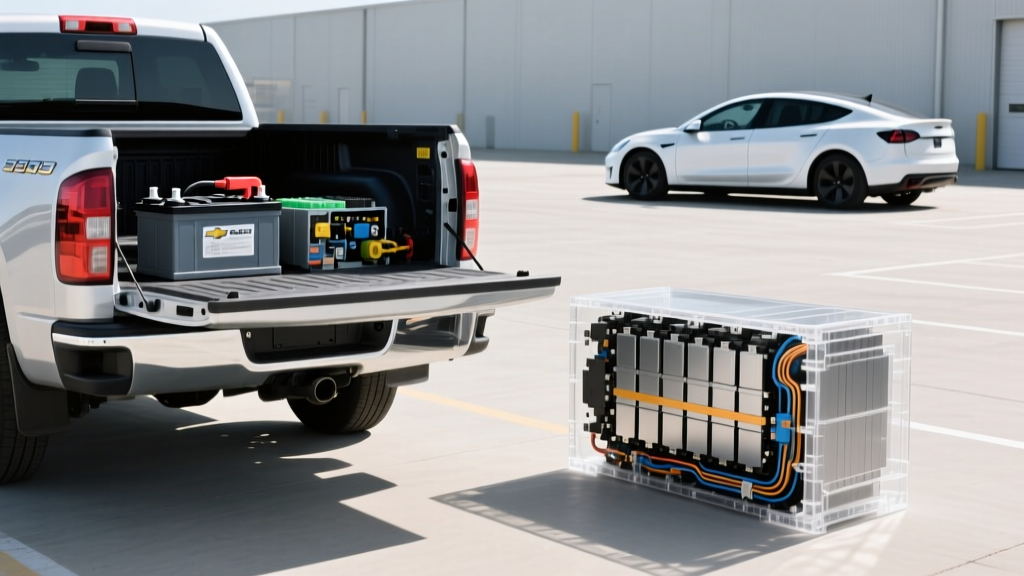
This guide dissects both worlds. We'll clarify what the 12V battery in a 2015 Silverado 1500 actually does, then pivot to the chemistry, degradation data, warranties, and replacement economics of the high-voltage lithium-ion packs found in the Silverado EV and other mainstream EVs. If you're cross-shopping a used gas Silverado against a new electric truck, understanding these two very different "batteries" is essential.
12V Starter Battery in the 2015 Silverado 1500: Specs and Replacement
The 2015 Silverado 1500 came from the factory with a Group 48 (H6) AGM or flooded lead-acid battery, typically rated at 730–800 CCA and roughly 70 Ah of capacity. This battery powers the starter motor, ECU, lights, and infotainment when the engine is off. It's recharged by the alternator whenever the engine runs.
Replacement is straightforward and affordable. A quality Group 48 AGM battery from brands like ACDelco, Optima, or DieHard costs $180–$280 at retail. Installation takes minutes. Expect a lifespan of 3–5 years depending on climate — heat degrades lead-acid chemistry faster than cold. This is a well-understood maintenance item, not a long-term ownership risk.
EV Traction Batteries: LFP vs NMC Chemistry Explained
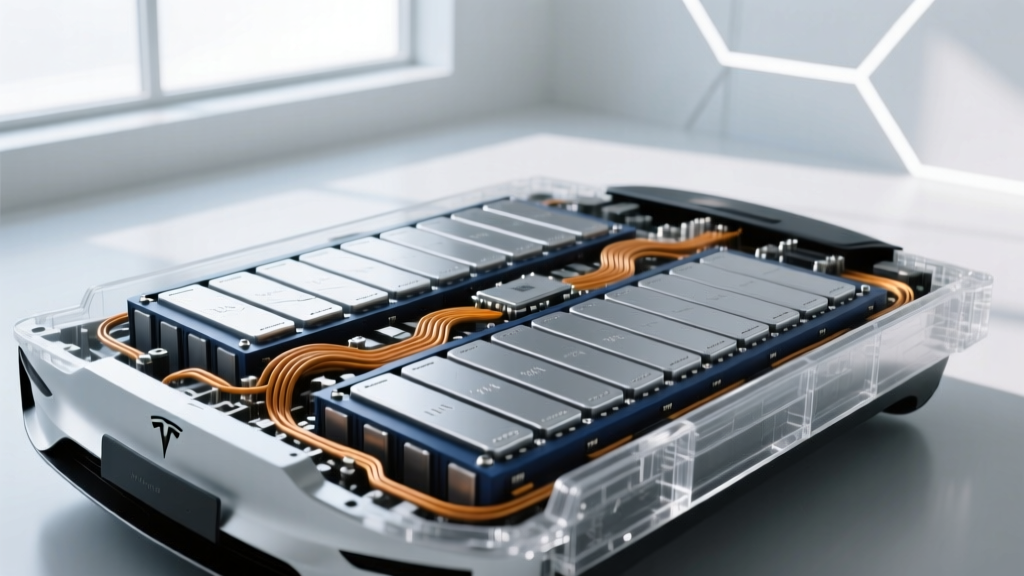
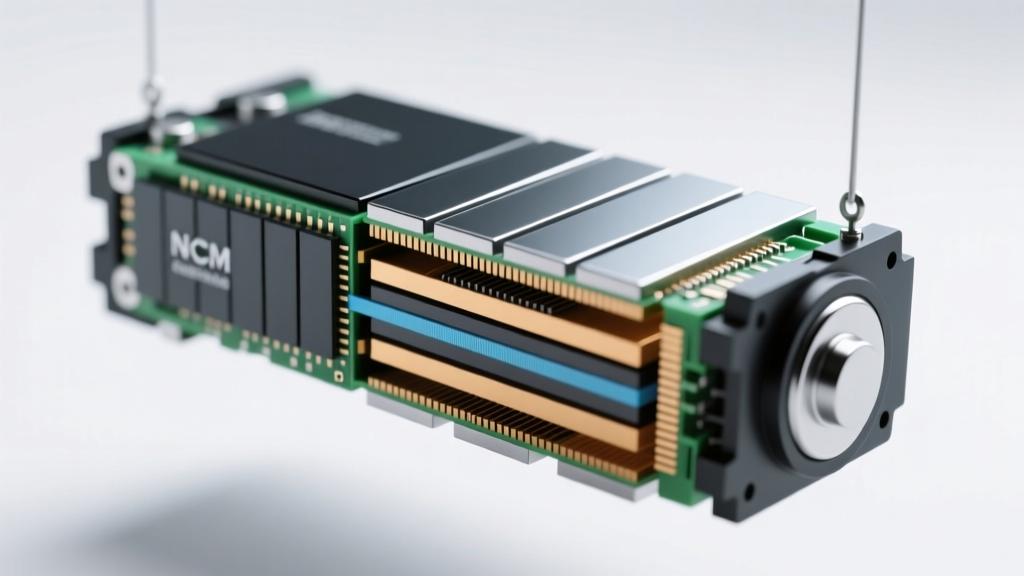
Modern EVs use one of two dominant lithium-ion chemistries for their high-voltage traction packs. The Silverado EV uses GM's Ultium platform with NMC (nickel manganese cobalt) cells. Tesla's standard-range models and many Chinese-market EVs use LFP (lithium iron phosphate). Here's how they compare:
| Attribute | LFP (Lithium Iron Phosphate) | NMC/NCA (Nickel-based) |
|---|---|---|
| Energy density | ~160 Wh/kg — heavier for same kWh | ~250 Wh/kg — lighter, more range per kg |
| Cycle life | 3,000–5,000+ cycles to 80% SoH | 1,000–2,000 cycles to 80% SoH |
| Cold performance | Poor below 32°F; slower charging, more range loss | Better low-temp performance with thermal management |
| Cost per kWh | ~$90–110/kWh (cell level, 2025–2026) | ~$120–145/kWh (cell level, 2025–2026) |
| Thermal stability | Excellent — very resistant to thermal runaway | Good with active cooling; historically more risk |
| Recommended SoC | Can charge to 100% daily; periodic full charge calibrates BMS | Daily charge to 80%; 100% only for trips |
| Common vehicles (2026) | Tesla Model 3/Y RWD, Ford Mustang Mach-E Select, Rivian Standard | Silverado EV, GMC Sierra EV, Tesla Long Range, Hyundai Ioniq 5/6 |
Which is better? For fleet and high-mileage drivers who charge daily and operate in moderate climates, LFP's superior cycle life and 100% SoC tolerance make it the practical winner. For buyers prioritizing maximum range, towing, or cold-weather capability — like Silverado EV customers — NMC's energy density is the right call. Neither is universally "better"; the choice depends on use case.
How Long Do EV Batteries Last? Real-World Degradation Data
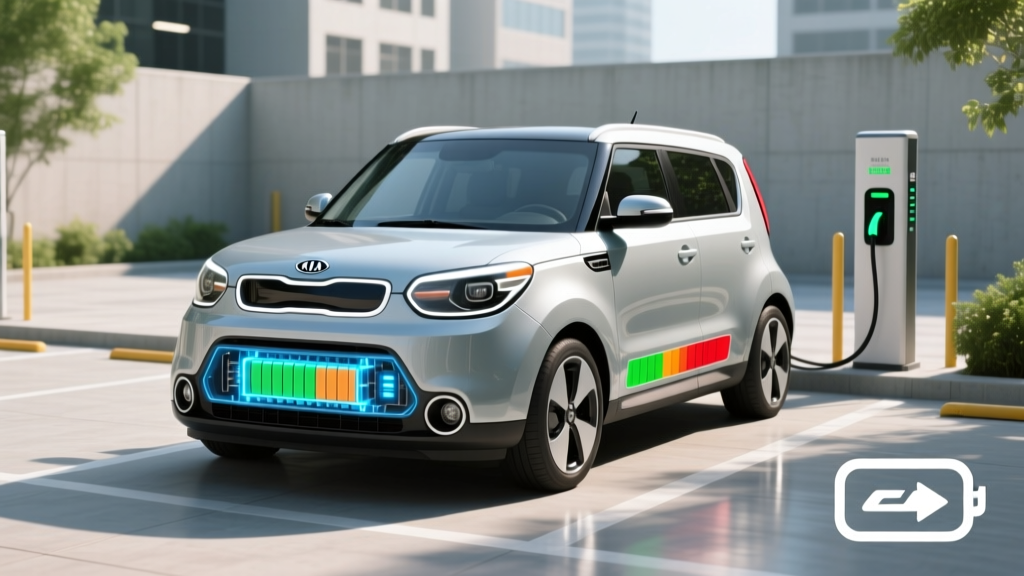
The single most persistent myth in EV ownership is that traction batteries need frequent replacement. The data tells a different story. According to long-term fleet studies and manufacturer reports:
- Tesla's 2024 Impact Report documented that Model S/X batteries retained approximately 85% capacity after 200,000 miles — roughly 15% degradation over the typical lifespan of the vehicle.
- Geotab's fleet analysis of over 10,000 EVs found average degradation of ~2.3% per year across all chemistries, meaning a typical EV retains ~88% capacity after 5 years.
- GM's Ultium packs (as in the Silverado EV) target less than 10% degradation over 150,000 miles based on accelerated aging tests and early fleet data.
- Nissan Leaf (early passive-cooled NMC packs) showed steeper degradation — some 2011–2015 models lost 20–30% capacity by 100,000 miles, underscoring the importance of active thermal management.
For context, a 2026 Silverado EV with a 200 kWh usable Ultium pack losing 2% per year would still hold ~180 kWh after 10 years — translating to roughly 340+ miles of EPA-rated range from its original ~380 miles. That's still more range than most gas trucks get on a full tank.
Battery Warranty Terms: What's Covered and for How Long
Federal law mandates that EV traction batteries carry a minimum warranty of 8 years/100,000 miles (10 years/150,000 miles in CARB states like California, New York, and Massachusetts). Most manufacturers exceed these minimums. Here's how major warranties compare as of the 2026 model year:
| Manufacturer | Coverage Period | Capacity Retention Threshold | Notes |
|---|---|---|---|
| GM (Silverado EV, Equinox EV) | 8 yr / 100,000 mi | Below 70% SoH | Covers cell modules and BMS; transferable |
| Tesla | 8 yr / 100,000–120,000 mi (varies by model) | Below 70% SoH | Long Range/Plasma: 120k mi; RWD: 100k mi |
| Hyundai/Kia | 10 yr / 100,000 mi | Below 70% SoH | Industry-leading duration; first-owner 10yr |
| Ford (F-150 Lightning, Mach-E) | 8 yr / 100,000 mi | Below 70% SoH | Covers battery and hybrid/electric components |
| Rivian | 8 yr / 175,000 mi | Below 70% SoH | Highest mileage threshold in the segment |
The 70% State of Health (SoH) threshold is the industry standard. If your Silverado EV's 200 kWh pack drops below 140 kWh usable capacity within the warranty period, GM will repair or replace the defective modules at no cost. In practice, very few packs hit this threshold — most degrade gradually to 80–85% over the warranty window.
EV Battery Replacement Cost: Numbers and Context
Out-of-warranty battery replacement remains a legitimate concern, but the costs have dropped substantially and most packs outlive the vehicles they're installed in. Here's what replacement looks like across popular EVs as of 2026:
| Vehicle | Pack Size (usable) | Estimated Full Replacement | Module-Level Repair |
|---|---|---|---|
| Chevrolet Silverado EV | ~200 kWh (NMC, Ultium) | $28,000–$35,000 | $3,000–$6,000 per module group |
| Tesla Model 3/Y (NMC Long Range) | ~75 kWh | $13,000–$16,000 | $4,000–$7,000 |
| Tesla Model 3 RWD (LFP) | ~57 kWh | $8,000–$11,000 | $2,500–$5,000 |
| Ford F-150 Lightning (Extended) | ~131 kWh | $20,000–$26,000 | $3,500–$6,500 |
| Hyundai Ioniq 5 | ~77.4 kWh | $12,000–$15,000 | $3,000–$5,500 |
Important context: most EV batteries never need full replacement. Module-level repairs — swapping individual cell groups that have degraded unevenly — are increasingly common and far cheaper. GM's Ultium architecture was specifically designed for module-level serviceability. Additionally, cell costs continue to decline; BloombergNEF reported average pack prices below $130/kWh in 2025, down from $180/kWh in 2022.
Compare this to the 2015 Silverado 1500's 12V battery: a $200 part you'll replace 3–4 times over 15 years of ownership, totaling $600–$800. The EV traction battery is a single (likely never-needed) event at a far higher individual cost, but the total lifetime battery spend may be comparable when you factor in zero oil changes, no spark plugs, and regenerative braking saving pad wear.
Factors That Affect EV Battery Life (and How to Maximize It)
Battery degradation isn't random — it's driven by specific, controllable factors. Here's a practical checklist for extending your EV's battery lifespan:
- Avoid habitual DC fast charging above 150 kW. Occasional road-trip fast charging is fine, but daily use of 250–350 kW chargers accelerates degradation. Level 2 home charging (7–11 kW) is the gentlest method.
- Keep State of Charge between 20–80% for daily use (NMC/NCA packs). LFP packs are an exception — charge to 100% at least weekly to keep the BMS calibrated.
- Minimize prolonged exposure to extreme heat. Parking in shade or a garage in 100°F+ summers matters more than cold. Active thermal management helps, but a baked battery degrades faster.
- Don't store the vehicle at 100% or 0% SoC for weeks. If leaving for vacation, set the charge limit to ~50% and leave it plugged in so the thermal system can maintain temperature.
- Precondition the battery before fast charging. Most EVs (including the Silverado EV) do this automatically when you navigate to a charger. A warm battery charges faster and with less stress.
- Use regenerative braking in moderate settings. Aggressive regen that frequently pulls the battery to high SoC during mountain descents can cause micro-cycling stress.
Following these practices, data from Geotab's fleet study suggests you can keep degradation under 1.5% per year — meaning 90%+ capacity retention after 7 years.
Monitoring Battery Health: How to Check State of Health (SoH)
Unlike the 2015 Silverado 1500's 12V battery (where you test voltage with a multimeter or have AutoZone load-test it), EV traction batteries require software-based State of Health monitoring. Here's how:
- In-vehicle displays: Most 2024–2026 EVs, including the Silverado EV, show estimated range and energy consumption but don't display a raw SoH percentage in the main UI. Some, like the Hyundai Ioniq 5 and Kia EV6, include a battery health indicator in the settings menu.
- OBD-II diagnostic tools: Devices like the OBDLink SX paired with apps such as LeafSpy (Nissan), TeslaFi, or manufacturer-specific tools can read the BMS-reported SoH directly. For GM Ultium vehicles, the myChevrolet app provides battery status and warranty tracking.
- Dealer diagnostics: Any GM dealer can pull a full battery health report via the GDS2 diagnostic system, showing individual module voltages, resistance, and overall SoH. This is useful before buying a used Silverado EV.
- Third-party certifications: Services like Recurrent Auto and AVIC Energy offer battery health certificates for used EVs, providing buyer confidence similar to a Carfax report.
Emerging Battery Tech: Solid-State and Silicon Anodes
Looking beyond today's lithium-ion packs, two technologies are in advanced development — but neither is ready for production vehicles as of 2026:
Solid-state batteries replace the liquid electrolyte with a solid ceramic or polymer layer, promising energy densities above 400 Wh/kg, faster charging (10–80% in under 10 minutes), and near-zero fire risk. Toyota has announced a solid-state EV targeting 2027–2028 production with ~750 km (466 mi) of range, while QuantumScape is working with Volkswagen on cells currently in validation. Realistic mass-market availability is 2028–2030 at earliest, with initial deployment in premium vehicles due to high manufacturing costs.
Silicon-dominant anodes replace graphite with silicon to increase energy density by 20–40%. Companies like Sila Nanotechnologies (partnered with Mercedes-Benz and Panasonic) and Amprius are shipping cells to early customers. Expect silicon-anode cells in production EVs by 2027, initially in high-performance applications. These cells improve range without the manufacturing overhaul that solid-state requires.
For today's buyers, current NMC and LFP packs are mature, well-warrantied, and cost-effective. Waiting for solid-state means waiting 3–5 years and paying a premium. The pragmatic move: buy the EV that meets your needs now and let the warranty cover the battery.
Frequently Asked Questions
How long do EV batteries last in years and miles?
Based on fleet data from Tesla, Geotab, and manufacturer reports, modern liquid-cooled EV batteries (NMC or LFP) typically retain 80–90% of original capacity after 10 years or 150,000–200,000 miles. Most packs will outlast the vehicle's useful life. The warranty floor is 8 years/100,000 miles with a 70% SoH threshold, but real-world degradation averages only 1.5–2.5% per year.
How much does an EV battery cost to replace?
Full pack replacement ranges from $8,000–$35,000 depending on pack size — an LFP Tesla Model 3 RWD is at the low end; a 200 kWh Silverado EV Ultium pack is at the high end. Module-level repairs cost $2,500–$7,000. Cell prices have fallen from $180/kWh in 2022 to under $130/kWh in 2025 per BloombergNEF, and replacement costs will continue declining. Critically, most EV batteries never require replacement.
What does the EV battery warranty actually cover?
Federal law requires a minimum 8-year/100,000-mile warranty on EV traction batteries. Coverage applies when the pack's State of Health drops below a stated threshold — typically 70% of original capacity. The warranty covers defective cells, modules, the battery management system (BMS), and related high-voltage components. It does not cover damage from accidents, flooding, or unauthorized modifications. In CARB states, coverage extends to 10 years/150,000 miles.
How do I check and maximize my EV's battery health?
Check SoH via the vehicle's settings menu, the manufacturer's app (myChevrolet, Tesla app), an OBD-II diagnostic tool, or a dealer service visit. To maximize lifespan: charge to 80% daily (100% for LFP), use Level 2 home charging over DC fast charging when possible, precondition before fast charging, avoid storing at extreme SoC levels, and park in shade during extreme heat.
LFP vs NMC — which battery chemistry is better for a truck buyer?
For a truck buyer prioritizing maximum range, towing capacity, and cold-weather performance, NMC (as in the Silverado EV, F-150 Lightning, and Rivian R1T) is the better fit due to its higher energy density. For a daily-driver or fleet buyer who charges every night and operates in moderate climates, LFP offers longer cycle life, lower cost, and the convenience of daily 100% charging. Neither chemistry is universally superior — the right choice depends on your driving patterns and climate.
Is the 12V battery in a 2015 Silverado 1500 the same as an EV traction battery?
No. The 2015 Silverado 1500's 12V lead-acid battery is a ~70 Ah starter/accessory battery costing ~$200 and lasting 3–5 years. An EV traction battery is a 60–200+ kWh lithium-ion pack costing $8,000–$35,000, warrantied for 8–10 years, and designed to last 150,000–200,000+ miles. They serve entirely different functions. Note: even EVs like the Silverado EV still carry a separate 12V battery (increasingly lithium 12V) for accessory systems and safety redundancies.