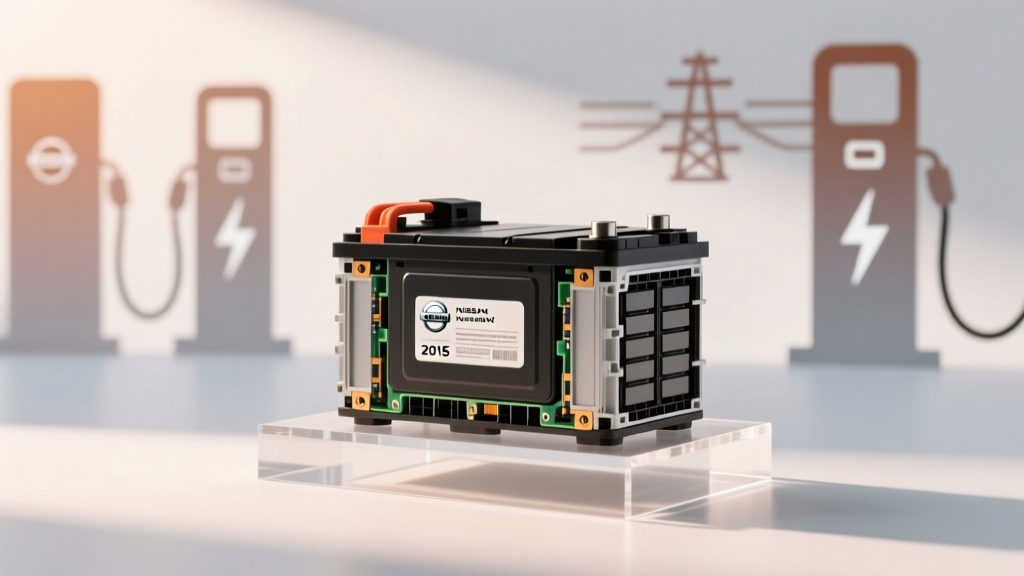
For owners of the 2015 Nissan Leaf — one of the best-selling early mass-market EVs — battery health is no longer a theoretical concern. A decade after these cars rolled off the assembly line, many original 24 kWh and 30 kWh lithium-ion packs have lost significant capacity, reducing real-world range from the original EPA-estimated 84 miles (24 kWh) or 107 miles (30 kWh) to figures that may struggle with daily commutes. If you're researching a 2015 Nissan Leaf battery replacement, this guide covers exact costs, degradation data, warranty coverage, chemistry considerations, and practical strategies to maximize whatever pack you're running.
Why 2015 Leaf Owners Are Facing Battery Decisions Now
The 2015 model year was a transition point for Nissan. Early 2015 Leafs shipped with the original 24 kWh NMC (nickel-manganese-cobalt) battery pack. Late 2015 models received an updated 30 kWh pack with slightly revised chemistry and improved thermal management. Both packs use passive air cooling rather than the active liquid thermal management systems found in modern EVs like the Tesla Model 3 or Hyundai Ioniq 5 — and that design choice has real consequences for long-term degradation.
According to EPA data on fueleconomy.gov, the 2015 Leaf 24 kWh was rated at 84 miles of range and 114 MPGe combined. The 30 kWh variant achieved 107 miles and 112 MPGe combined. In real-world driving — especially in hot climates like Arizona or Texas where battery temperatures regularly exceed 100°F — many owners report 30-40% capacity loss after 8-10 years, translating to 50-60 miles of usable range on a full charge.
How Much Does a 2015 Nissan Leaf Battery Replacement Cost?
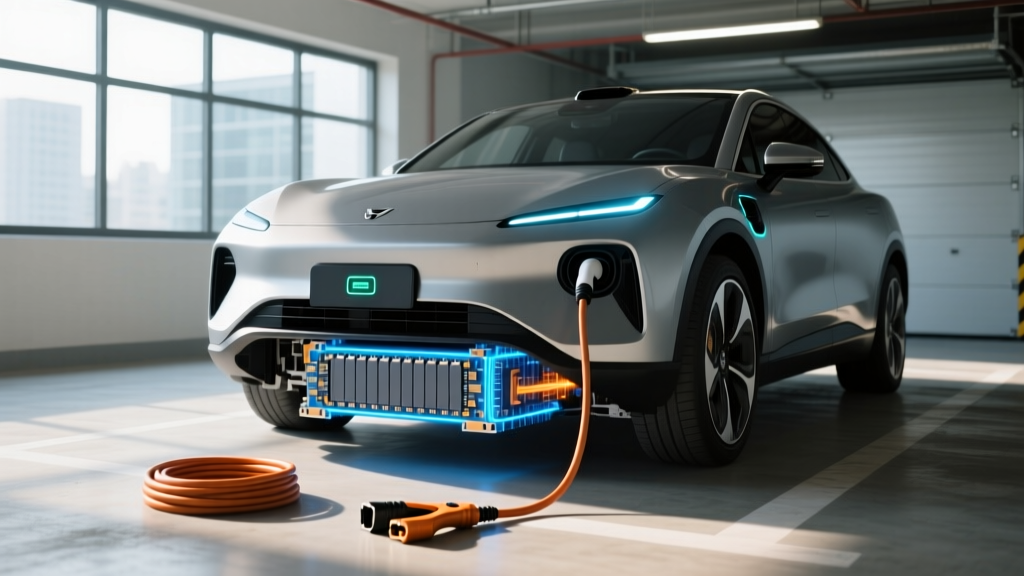
Battery replacement pricing varies based on pack size, source (new OEM vs. refurbished), and whether you use a Nissan dealer or independent EV specialist. Here's the current cost landscape as of 2026:
| Component | 24 kWh Pack | 30 kWh Pack |
|---|---|---|
| New OEM battery (Nissan dealer) | $8,000–$9,500 | $9,000–$11,000 |
| Refurbished/remanufactured pack | $5,500–$7,000 | $6,500–$8,500 |
| Labor (dealer or specialist) | $1,000–$1,500 | $1,000–$1,500 |
| Diagnostics & programming | $200–$400 | $200–$400 |
| Total estimated cost | $6,700–$11,400 | $7,700–$12,400 |
A critical cost-benefit calculation: the average 2015 Nissan Leaf has a private-party resale value of roughly $5,000–$8,000 depending on mileage and condition (per Kelley Blue Book). A full-price OEM battery replacement from a dealer can approach or exceed the vehicle's total value. This is why many owners opt for refurbished packs, third-party EV shops, or simply sell the vehicle as-is to a buyer willing to accept reduced range.
Some independent EV shops source battery modules from wrecked Leafs with low mileage and swap individual degraded modules rather than replacing the entire pack. This module-level repair can cost $3,000–$5,000 but requires a technician experienced with Nissan's battery management system (BMS) to properly balance and calibrate the pack.
What Does the Nissan Leaf Battery Warranty Actually Cover?
For the 2015 model year, Nissan provided two separate battery warranties. Understanding both is essential because one may still apply depending on your mileage and the nature of the failure.
| Warranty Type | Coverage Period | What It Covers |
|---|---|---|
| Lithium-Ion Battery Capacity Coverage | 5 years / 60,000 miles | Capacity loss below 9 bars (out of 12) on the dashboard capacity gauge — approximately 66.25% of original capacity |
| Lithium-Ion Battery Component Coverage | 8 years / 100,000 miles | Defects in materials or workmanship — complete pack failure, BMS faults, internal short circuits |
By 2026, virtually all 2015 Leafs are beyond both warranty periods unless they have extraordinarily low mileage (under 60,000 miles for capacity coverage or under 100,000 for component coverage). The capacity warranty was notably less generous than modern EV standards — Nissan's current Ariya and newer Leaf models carry an 8-year/100,000-mile warranty with a 70% capacity retention threshold, aligning with industry norms set by competitors like Tesla, Hyundai, and Chevrolet.
The component warranty is the one still worth checking: if your 2015 Leaf has under 100,000 miles and the battery fails catastrophically (not gradual degradation, but a hard fault), Nissan may still cover the replacement. Contact Nissan EV support at 1-877-NO-NISSAN with your VIN to verify remaining coverage.
Battery Chemistry Deep Dive: What's Inside the Leaf's Pack
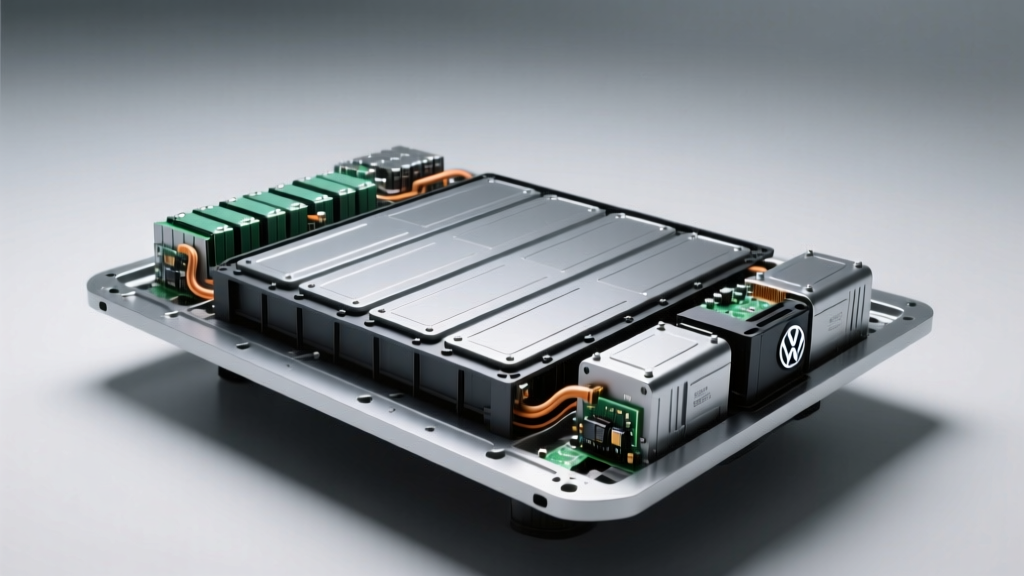
The 2015 Leaf uses NMC (nickel-manganese-cobalt) lithium-ion cells manufactured by Automotive Energy Supply Corporation (AESC), a joint venture between Nissan and NEC. Understanding how this chemistry compares to alternatives explains both the Leaf's strengths and its degradation vulnerabilities.
| Property | NMC (Leaf, most EVs) | LFP (Tesla Model 3 RWD, BYD) |
|---|---|---|
| Energy density | Higher (~200-260 Wh/kg cell-level) | Lower (~140-180 Wh/kg cell-level) |
| Cycle life | 1,000–2,000 full cycles to 80% SoH | 3,000–5,000+ full cycles to 80% SoH |
| Cold-weather performance | Better low-temp conductivity | More range loss below freezing |
| Thermal stability | Moderate — requires active cooling in hot climates | Excellent — inherently more stable |
| Cost per kWh | Higher (cobalt/nickel supply costs) | Lower (iron/phosphate abundant) |
| Recommended daily SoC | 20-80% for longevity | Can charge to 100% regularly |
The Leaf's NMC chemistry offers solid energy density for its era, but the pack's passive air cooling is its Achilles' heel. Without liquid coolant circulating through the battery, sustained DC fast charging and hot-climate operation accelerate degradation. Research published by the National Renewable Energy Laboratory (NREL) shows that battery temperatures consistently above 95°F (35°C) can double the rate of capacity loss in NMC cells compared to packs maintained between 68-77°F (20-25°C).
This is why 2015 Leafs in Phoenix or Las Vegas typically show more degradation than identical vehicles in Seattle or Portland — it's a thermal management problem, not a fundamental chemistry flaw. Modern EVs with active liquid cooling (Tesla, Hyundai E-GMP platform, GM Ultium) largely solved this issue, but retrofitting liquid cooling into a Leaf is not feasible.
Real Degradation Data: What 2015 Leaf Owners Actually Experience
Based on aggregated owner reports from forums like MyNissanLeaf.com and SpeakEV, plus fleet data from early Leaf taxi operations, here is the typical degradation curve for the 2015 model year:
- Year 1-2 (0-30,000 miles): 5-8% capacity loss — relatively rapid initial drop as the solid electrolyte interphase (SEI) layer forms on the anode
- Year 3-5 (30,000-75,000 miles): Additional 5-10% loss, bringing total degradation to 10-18%
- Year 6-8 (75,000-120,000 miles): Degradation rate slows; total loss typically 18-30% depending on climate and charging habits
- Year 9-10+ (120,000+ miles): Highly variable — some packs hold 70%+ capacity, others drop to 55-65%, particularly in hot climates with frequent DC fast charging
A 2015 Leaf 24 kWh that started with 84 EPA miles and has degraded 30% will display roughly 59 miles of range at full charge. For the 30 kWh variant with the same degradation percentage, expect about 75 miles. These figures assume moderate temperatures (60-75°F) and mixed city/highway driving.
The Leaf's dashboard capacity bar display (12 bars total, with each bar representing roughly 6.67% of original capacity) provides a quick visual reference. Owners who have dropped to 9 bars or below have lost more than 25% of original capacity — a threshold where daily usability becomes a genuine concern for anyone with a commute exceeding 30 miles round-trip.
Factors That Accelerate or Slow Battery Degradation
Not all 2015 Leafs age equally. The following factors have the largest measurable impact on long-term State of Health (SoH):
- Minimize DC fast charging: CHAdeMO fast charging (the Leaf's standard) generates significant heat. Limit to once per week or less when possible. Level 2 charging at 3.3 kW or 6.6 kW is far gentler on the pack.
- Avoid 100% SoC storage: If you don't need full range the next day, charge to 80%. NMC cells degrade faster when held at high voltage (above 4.1V per cell) for extended periods. The Leaf's timer function can help limit charge sessions.
- Park in shade or a garage: Every degree matters. A Leaf parked in direct sun in a 95°F ambient environment can see battery temperatures exceed 120°F — accelerating chemical degradation even when not driving.
- Precondition while plugged in: Use the Leaf's climate timer to warm or cool the cabin while connected to shore power. This draws from the grid rather than the battery, preserving range and reducing thermal stress.
- Don't let the pack sit at very low SoC: Storing a Leaf below 10% charge for weeks can cause cell voltage to drop below safe thresholds, triggering permanent capacity loss. If storing long-term, aim for 50-60% SoC.
How to Check Your 2015 Leaf's Battery State of Health
The Leaf provides several methods to assess battery health, ranging from quick visual checks to detailed diagnostic data:
1. Dashboard Capacity Bars: The 12-bar display to the right of the instrument cluster shows remaining capacity relative to when the car was new. This is Nissan's built-in SoH indicator, though it's approximate and resets if the BMS is recalibrated after a battery swap.
2. LeafSpy Pro (OBD-II app): The most detailed consumer-accessible tool for Leaf battery diagnostics. A $20 OBD-II Bluetooth adapter paired with the LeafSpy Pro app (~$20 on iOS/Android) reveals:
- Exact State of Health percentage (calculated from measured vs. design capacity)
- Individual cell voltage readings (identifies weak or imbalanced cells)
- Battery temperature in real-time
- Total energy charged and discharged (lifetime kWh throughput)
- Hx value — Nissan's internal capacity measurement metric
3. Dealer Diagnostic Report: A Nissan service department can pull a full battery health report using the CONSULT diagnostic tool. This typically costs $100-$150 and provides the most authoritative SoH reading, useful if you're buying a used 2015 Leaf and want to verify the seller's claims about battery condition.
Is Battery Replacement Worth It? A Decision Framework
The economics of replacing a 2015 Leaf battery depend on your specific situation:
- The car has under 80,000 miles and is otherwise in excellent mechanical condition
- You need 60+ miles of reliable daily range and no affordable alternative EV fits your budget
- You can source a refurbished pack for under $7,000 installed
- You plan to keep the car for 3+ more years to amortize the investment
- Total repair costs (battery + any other deferred maintenance) exceed the car's replacement value
- You have access to home charging and can qualify for the federal §30D clean vehicle credit on a new EV (up to $7,500 with income, MSRP, and battery-sourcing requirements)
- Your commute has grown beyond what even a fresh 24 kWh pack can support
Looking Ahead: Solid-State and Next-Generation Battery Tech
Nissan has announced plans to bring solid-state battery technology to production vehicles, with prototype testing underway and a target for commercialization around 2028-2029. Solid-state batteries promise higher energy density (potentially 2x current NMC), faster charging, improved safety, and longer cycle life. However, this technology will debut in new vehicles — it cannot be retrofitted into a 2015 Leaf.
For current Leaf owners, the practical battery technology landscape remains NMC and LFP chemistries. If you do replace your pack, you'll receive functionally identical NMC cells unless you pursue a custom aftermarket solution (which introduces BMS compatibility challenges and voids any remaining Nissan support).
Frequently Asked Questions
How long do EV batteries typically last?
Modern EV batteries (2020+) with active thermal management are designed to retain 70-80% capacity after 150,000-200,000 miles or 10-15 years. Early EVs like the 2015 Leaf, with passive cooling and older NMC formulations, typically reach 70% SoH between 80,000-130,000 miles depending on climate. Most EV batteries outlast the vehicle's useful economic life — catastrophic failure is rare; gradual degradation is the norm.
Can I upgrade my 2015 Leaf to a larger battery?
Yes, with caveats. Several aftermarket shops offer 40 kWh or even 62 kWh pack swaps using batteries from newer (2018+) Leafs. This requires BMS reprogramming, potential wiring harness modifications, and dashboard recalibration. Costs range from $10,000-$16,000 installed. The upside is 150+ miles of range; the downside is cost, complexity, and loss of any Nissan dealer support for the battery system.
Does the 2015 Leaf qualify for any tax credits if I replace the battery?
No. The federal §30D clean vehicle credit applies only to the purchase of new or qualifying used EVs — not to battery replacement on an existing vehicle. However, if your battery replacement pushes you toward purchasing a newer EV instead, the used EV credit (up to $4,000 for vehicles under $25,000) or new vehicle credit (up to $7,500) may apply depending on your income, the vehicle's MSRP, and battery sourcing requirements per current IRS guidelines.
What's the difference between the 24 kWh and 30 kWh 2015 Leaf batteries?
The 24 kWh pack was carried over from the 2011-2014 model years. The 30 kWh pack, introduced for late-2015 production, uses revised NMC cell chemistry with slightly higher nickel content and improved electrode coatings. The 30 kWh pack delivers 107 EPA miles vs. 84 for the 24 kWh, and shows marginally better long-term degradation resistance — though both suffer from the same passive cooling limitation.
Should I buy a used 2015 Leaf in 2026?
Only if the price reflects the battery condition. A 2015 Leaf with 8+ capacity bars and under 60,000 miles can be a solid short-range commuter for $4,000-$6,000. Assume you'll need a battery replacement within 2-4 years and budget accordingly. Always check SoH with LeafSpy before purchasing — the dashboard bars can be misleading if the BMS has been reset.