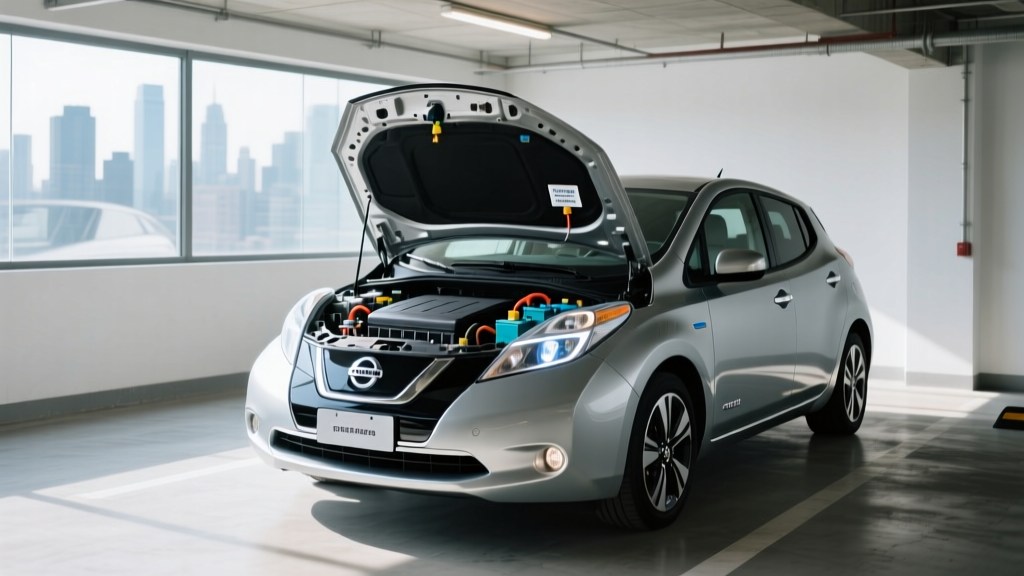
The 2015 Nissan Leaf was one of the most popular early mass-market EVs, selling over 17,000 units in the U.S. that year alone. Now more than a decade old, many of these vehicles are still on the road — but their original 24 kWh lithium-manganese-oxide (LMO) traction batteries are showing significant capacity loss. If you own a 2015 Leaf or are considering buying one used, understanding the battery's current state, realistic replacement costs, and care strategies is essential.
This guide covers everything from degradation data pulled from real owner reports to replacement pricing in 2026, plus a broader look at EV battery chemistry, warranties, and longevity so you can contextualize the Leaf's situation against modern EVs.
2015 Nissan Leaf Battery: Specs and Current-State Reality
The 2015 Leaf shipped with a 24 kWh (usable) air-cooled lithium-ion pack using LMO/NMC blend chemistry. The EPA rated it at 84 miles of range when new. Unlike the liquid-cooled thermal management systems in modern EVs, Nissan relied on passive air cooling — a decision that has had long-term consequences for battery longevity, particularly in hot climates.
| Spec | Value |
|---|---|
| Battery capacity (usable) | 24 kWh |
| Chemistry | LMO/NMC blend |
| Thermal management | Passive air cooling |
| EPA range (new) | 84 miles |
| DC fast charge (CHAdeMO) | ~50 kW peak |
| Level 2 charge rate | 6.6 kW |
| Original battery warranty | 8 yr / 100,000 mi (capacity loss below 9 bars) |
How Long Do EV Batteries Actually Last?
The short answer: most modern EV batteries outlast the vehicles they're installed in. But "outlast" doesn't mean "no degradation." Every lithium-ion pack loses capacity over time and charge cycles. The question is how much, and how fast.
Data aggregated from fleet studies and owner reports (including Recurrent Auto's 2024 battery health report covering over 15,000 EVs) shows typical degradation curves:
- Years 1–3: 5–8% capacity loss (initial drop as the solid electrolyte interphase layer stabilizes)
- Years 4–7: Roughly 1–2% loss per year (linear, gradual)
- Years 8–12: Continued 1–2%/year for liquid-cooled packs; accelerated loss possible for passively cooled packs in hot climates
- Typical 10-year SoH: 80–88% for liquid-cooled NMC packs (e.g., Tesla Model 3, Chevy Bolt); 60–75% for the 2015 Leaf's air-cooled pack
The Leaf's air-cooled design is the outlier here. Without active thermal management, repeated DC fast charging and exposure to high ambient temperatures accelerate cell degradation. This is well-documented: Leaf owners in Phoenix routinely report 2–3 capacity bar losses within the first 5 years, while Seattle-based Leafs often retain 11 of 12 bars at the same age.
How Much Does a 2015 Nissan Leaf Battery Cost to Replace?
As of 2026, a replacement traction battery for the 2015 Leaf falls into a few categories depending on the route you take:
| Option | Capacity | Estimated Cost (parts + labor) | Notes |
|---|---|---|---|
| OEM 24 kWh (new from Nissan) | 24 kWh | $6,500–$8,000 | Limited availability; restores original 84-mi range |
| OEM 40 kWh upgrade (Nissan) | 40 kWh | $8,500–$10,000 | ~140 mi range; requires dealer programming |
| Refurbished / used 24 kWh pack | 24 kWh | $3,500–$5,500 | SoH varies (70–90%); verify before purchase |
| Aftermarket 62 kWh upgrade (specialist shops) | 62 kWh | $12,000–$16,000 | ~200+ mi range; limited installer network |
The economic calculus matters here. A 2015 Leaf in average condition has a private-party resale value of roughly $5,000–$8,000 in 2026. Spending $8,500+ on a 40 kWh upgrade can make sense if the rest of the vehicle is in excellent shape and you need a reliable short-range commuter — but it rarely pencils out as a financial win versus selling and putting that money toward a newer used EV like a 2019+ Bolt or 2021+ Model 3.
What Did the 2015 Leaf Battery Warranty Cover — and Is It Still Active?
Nissan's original high-voltage battery warranty for the 2015 Leaf was structured differently from most modern EV warranties. Instead of a percentage-based capacity retention guarantee, Nissan used a "bar" system visible on the dashboard:
- Coverage: 8 years or 100,000 miles (whichever came first)
- Trigger: Loss of the 9th capacity bar (out of 12 displayed on the instrument cluster), representing roughly 70% or less State of Health
- What was excluded: Gradual capacity loss that didn't drop below 9 bars; damage from accidents, misuse, or unauthorized modifications
For a 2015 model-year vehicle, that 8-year window expired at the end of 2023. Unless you purchased an extended warranty or certified pre-vehicle coverage, the original battery warranty is no longer active for virtually all 2015 Leafs on the road today.
Compare this to modern EV battery warranties, which are more standardized and more protective:
| Vehicle | Warranty Period | Capacity Threshold |
|---|---|---|
| 2015 Nissan Leaf | 8 yr / 100,000 mi | Below 9 of 12 bars (~70%) |
| 2026 Tesla Model 3 (RWD, LFP) | 8 yr / 100,000 mi | 70% retention |
| 2026 Hyundai Ioniq 5 | 10 yr / 100,000 mi | 70% retention |
| 2026 Chevy Equinox EV | 8 yr / 100,000 mi | 60% retention (warranty minimum) |
EV Battery Chemistry: LFP vs. NMC and What It Means for Longevity
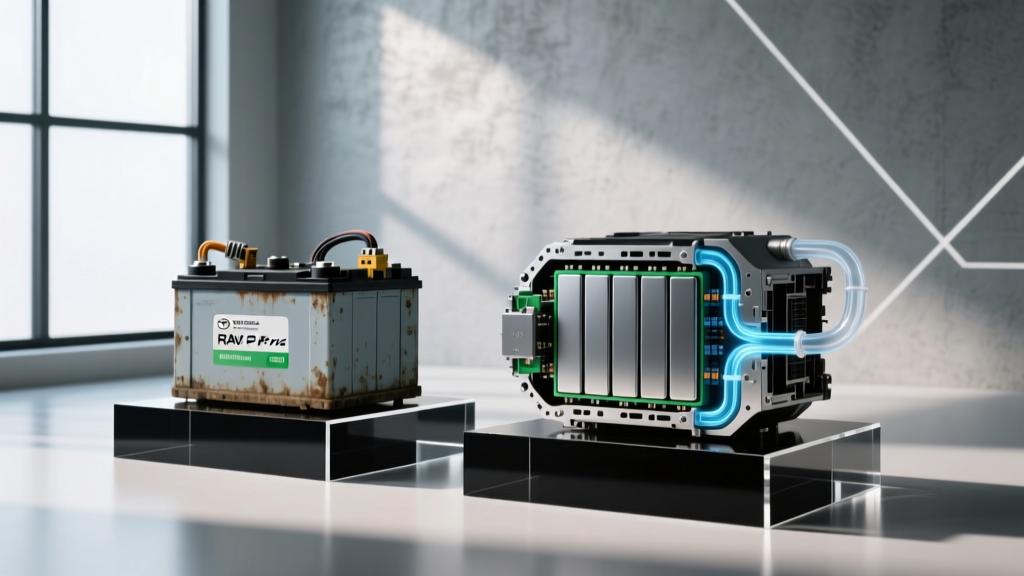
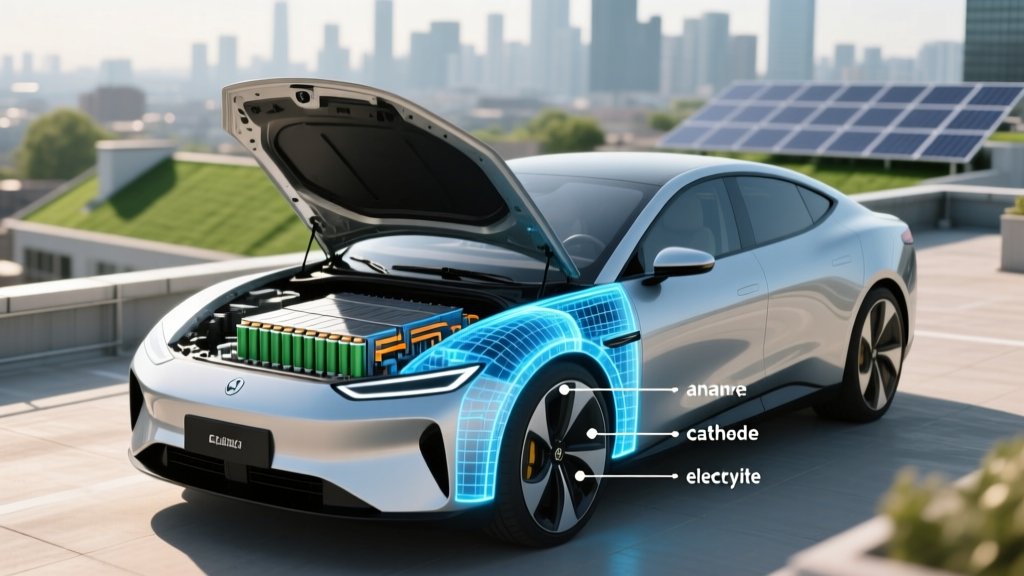
The 2015 Leaf used an LMO/NMC (lithium manganese oxide with nickel-manganese-cobalt) blend — a chemistry chosen for its balance of energy density and cost at the time. Modern EVs have largely converged on two dominant chemistries, each with distinct trade-offs:
| Factor | LFP (Lithium Iron Phosphate) | NMC / NCA (Nickel-based) |
|---|---|---|
| Energy density | Lower (~160 Wh/kg cell-level) | Higher (~250–300 Wh/kg cell-level) |
| Cycle life | 3,000–5,000+ cycles to 80% SoH | 1,000–2,000 cycles to 80% SoH |
| Cold-weather performance | Weaker; greater range loss below 32°F | Better low-temp discharge capability |
| Cost per kWh | Lower (no cobalt or nickel) | Higher |
| 100% SoC tolerance | Can be charged to 100% regularly without accelerated wear | Best kept at 80–90% daily; 100% only for trips |
| Common in (2026) | Tesla Model 3 RWD, Model Y RWD, standard-range BYD models | Long-range Teslas, Hyundai Ioniq 5/6, Ford F-150 Lightning Extended |
Neither chemistry is universally "better." LFP wins on longevity and cost, making it ideal for standard-range vehicles where daily charging to 100% is convenient. NMC/NCA wins on energy density, which matters for long-range models where packing maximum kWh into a limited space is the priority. The 2015 Leaf's LMO/NMC blend sits somewhere in between — decent energy density for its era but lacking the cycle-life advantages of LFP or the sophisticated thermal management that lets modern NMC packs last.
Factors That Accelerate (or Slow) EV Battery Degradation
Whether you're nursing a 2015 Leaf along or maintaining a brand-new EV, these factors have the largest measurable impact on battery lifespan:
- Avoid frequent DC fast charging. Occasional road-trip use is fine, but daily DCFC sessions (especially on passively cooled packs like the Leaf) generate sustained heat that accelerates cell wear. Stick to Level 2 for daily charging.
- Keep State of Charge between 20–80% for NMC/NCA. If your EV has an LFP pack, charging to 100% periodically is actually recommended for cell balancing. For NMC, set your charge limit to 80–90% for daily use.
- Minimize exposure to extreme heat. Parking in shade or a garage matters. The 2015 Leaf's passive cooling makes this especially critical — an Arizona Leaf parked outdoors in summer will degrade noticeably faster than a garage-kept one in Oregon.
- Don't store at 100% or 0% SoC for extended periods. If leaving your EV unused for weeks, aim for ~50% SoC.
- Precondition before fast charging in cold weather. Most modern EVs do this automatically when you navigate to a charger. For the 2015 Leaf (which lacks battery preconditioning), try to fast-charge after the car has been driven and the pack is warm — not from a cold-soak start in winter.
- Use Level 2 home charging as your primary method. A 240V Level 2 charger at 6.6 kW (the Leaf's onboard charger limit) adds roughly 22–25 miles per hour of charging — plenty for overnight replenishment.
How to Check the 2015 Leaf's Battery State of Health
The 2015 Leaf provides a straightforward, if crude, method for checking battery health: the capacity bar display on the instrument cluster. Located to the right of the speedometer, you'll see 12 small bars. Each bar represents roughly 6.25% of original capacity.
- 12 bars: ~100–95% SoH
- 11 bars: ~85–90% SoH
- 10 bars: ~78–83% SoH
- 9 bars: ~72–77% SoH
- 8 bars or fewer: Below 70% — significant range reduction
For a more precise reading, third-party OBD-II tools like Leaf Spy Pro (paired with a compatible Bluetooth OBD dongle) can read the battery management system's internal State of Health percentage, individual cell voltages, and temperature data. This is the gold standard for evaluating a used Leaf before purchase — a seller claiming "11 bars" could be anywhere from 84% to 91% SoH, and that gap translates to 5–6 real-world miles of range.
Modern EVs typically surface SoH data through the infotainment system or companion app (e.g., Tesla's battery health metric in the app, Hyundai's SoH readout in the Ioniq's EV menu). The Leaf's bar system is a product of its era but still functional for basic assessment.
Emerging Battery Technology: What's Next Beyond Lithium-Ion
The battery landscape is shifting, though timelines for next-generation technology remain longer than headlines suggest:
- Solid-state batteries: Toyota, Samsung SDI, and QuantumScape are all pursuing solid-state cells that promise higher energy density (potentially 400+ Wh/kg) and faster charging. Toyota has announced limited production in select models by 2027–2028, but mass-market availability at competitive pricing is not expected before 2030. These are not available in any production vehicle today.
- Silicon-dominant anodes: Companies like Sila Nanotechnologies and Group14 are replacing graphite anodes with silicon-based materials, boosting energy density by 20–40%. Mercedes-Benz's upcoming G-Class EV (announced for 2025–2026) is among the first to incorporate silicon-anode cells from Factorial Energy. Expect gradual adoption in premium vehicles through the late 2020s.
- Sodium-ion batteries: CATL and BYD have begun deploying sodium-ion cells in low-cost Chinese-market EVs. Lower energy density (~120–140 Wh/kg) limits them to city cars, but the cost advantage is significant and they perform well in cold weather. U.S. market availability is uncertain but being watched closely.
None of these technologies will help a 2015 Leaf owner today. But they do signal that replacement battery costs for current-generation lithium-ion packs should continue declining through the rest of this decade, which is relevant if you plan to hold onto an aging EV long-term.
Frequently Asked Questions
How long does a 2015 Nissan Leaf battery last before needing replacement?
Most original 24 kWh packs are still functional at 10–11 years old, but with 25–40% capacity loss depending on climate and charging history. "Needing replacement" depends on your tolerance for reduced range. If 55–65 miles of real-world range meets your daily needs, the pack may last several more years. If you need more range, a 40 kWh OEM upgrade is the most practical path.
Is it worth replacing the battery in a 2015 Leaf?
It depends on the vehicle's overall condition and your budget. A $6,500–$8,500 battery replacement on a car worth $5,000–$8,000 is a significant investment. If the Leaf is your secondary car and you drive short routes, a refurbished pack at $3,500–$5,000 can extend its life affordably. If you need reliable daily range above 100 miles, putting that money toward a newer used EV (2019+ Bolt, 2021+ Model 3) is usually the better financial decision.
Can I upgrade my 2015 Leaf to a larger battery?
Yes. Nissan dealers in some markets offer a 40 kWh upgrade kit (from the second-generation Leaf), restoring approximately 140 miles of range. Aftermarket specialists in the U.S. and Europe have also performed 62 kWh swaps (from the Leaf e+), yielding 200+ miles, though this route is more expensive ($12,000–$16,000) and installer availability is limited.
Does the 2015 Leaf qualify for any federal tax credits if I buy it used?
Under the IRS §30D used EV credit (up to $4,000 or 30% of the sale price, whichever is less), the 2015 Leaf may qualify if the sale price is $25,000 or less (easily met), the buyer meets income caps ($75,000 single / $150,000 joint), and the vehicle is purchased from a licensed dealer. The credit can be transferred at point of sale as a discount. Check current eligibility rules at irs.gov, as requirements can change.
How does the Leaf's battery degradation compare to modern EVs?
The 2015 Leaf degrades faster than most modern EVs due to its passive air-cooling system. A liquid-cooled 2020+ Tesla Model 3 or Chevrolet Bolt typically retains 88–93% capacity at 5 years / 60,000 miles, while a 5-year-old Leaf in a hot climate might be at 75–82%. The gap is primarily a thermal management issue, not a fundamental chemistry limitation.
What's the single best thing I can do to preserve my Leaf's battery?
Use Level 2 home charging exclusively (avoid routine DC fast charging) and park in shade or a garage during hot months. These two steps alone can add years to the pack's usable life. For more on charging levels and home setup, see our guide to EV charging basics via the Department of Energy.