Quick Verdict: The 2015 Kia Soul EV's Aging Battery
If you're researching the battery for 2015 Kia Soul EV — whether as a used-EV buyer, a current owner approaching 100,000 miles, or someone weighing a pack swap — this guide covers the exact numbers you need. The 2015 Soul EV launched with a 27 kWh (usable) lithium-ion NMC pack rated at 93 miles EPA. A decade later, most surviving examples show 10–20% capacity loss depending on climate and charging habits, putting real-world range in the 70–85 mile band. Replacement is possible but rarely economical on a vehicle with a current market value around $6,000–$9,000.
EPA sticker: 93 miles | Real-world 2026 observed: 70–85 mi (moderate climate), 55–70 mi (sub-30°F winter). Highway driving at 70+ mph further reduces range by ~10–15%.
Spec Snapshot: 2015 Kia Soul EV Battery & Powertrain
| Spec | Value |
|---|---|
| Battery chemistry | NMC (Nickel Manganese Cobalt) |
| Gross capacity | ~30 kWh |
| Usable capacity | ~27 kWh |
| EPA range (new) | 93 miles |
| Combined MPGe (new) | 105 MPGe |
| Motor output | 109 hp / 210 lb-ft |
| 0–60 mph | ~11.2 seconds |
| DC fast charge (CHAdeMO) | ~50 kW peak, 10–80% in ~33 min |
| Level 2 AC charge | 6.6 kW, ~4.5 hours 0–100% |
| Connector | J1772 (AC) + CHAdeMO (DC) |
| Original battery warranty | 7 years / 100,000 miles |
| Original MSRP (base) | $34,500 (before incentives) |
Source: fueleconomy.gov — 2015 Kia Soul EV listing.
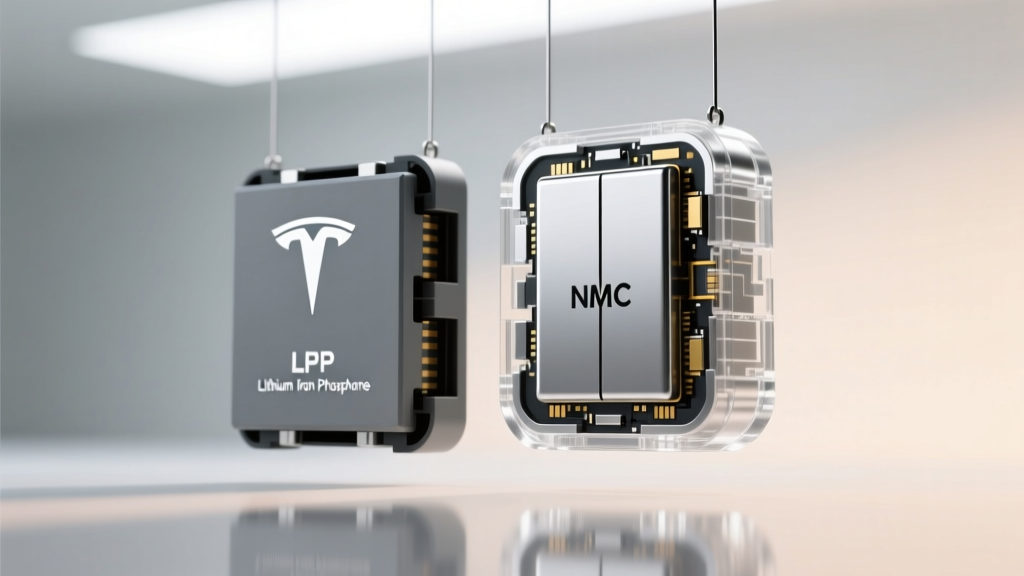
Battery Chemistry Explained: NMC vs LFP and Why It Matters
The 2015 Soul EV uses an NMC (nickel manganese cobalt) pouch-cell pack supplied by SK Innovation. Understanding this chemistry is essential when evaluating longevity, replacement options, and how the Soul EV compares to modern EVs.
| Attribute | NMC (2015 Soul EV) | LFP (modern EVs like base Model 3, Bolt EUV LFP) |
|---|---|---|
| Energy density | Higher — more range per kg | Lower — heavier pack for same range |
| Cycle life | ~1,000–1,500 full cycles to 80% SoH | ~3,000–5,000+ full cycles to 80% SoH |
| Cold-weather performance | Better low-temp discharge | Reduced range & slower charge in cold |
| Thermal stability | Good, but more sensitive to heat | Excellent — less thermal runaway risk |
| Cost per kWh | Higher (cobalt/nickel) | Lower (iron/phosphate) |
| Recommended SoC habit | 20–80% daily; avoid 100% storage | OK to charge to 100% regularly |
| Typical use today | Older EVs, performance trims | Standard-range models, fleet vehicles |
Which is better? It depends on priority. LFP wins on longevity and cost; NMC wins on energy density and cold-weather behavior. For a 2015 Soul EV owner, the NMC pack's sensitivity to sustained high SoC and heat is the practical takeaway — habits matter more with this chemistry.
How Long Do EV Batteries Last? Degradation Data for the Soul EV
The most common question about the battery for 2015 Kia Soul EV: how much range has it actually lost? Based on owner-reported data aggregated by EV tracking communities and Kia's warranty framework, here is what a decade of NMC aging looks like:
Typical 2015 Soul EV Degradation Curve (NMC pack)
| Age / Mileage | Avg. Capacity Retained (SoH) | Approx. Range Remaining |
|---|---|---|
| Year 1 / 12k mi | ~96–98% | ~90 mi |
| Year 3 / 36k mi | ~92–95% | ~85 mi |
| Year 5 / 60k mi | ~88–92% | ~80 mi |
| Year 7 / 84k mi | ~84–89% | ~78 mi |
| Year 10 / 100k+ mi | ~80–87% | ~70–82 mi |
Note: Hot-climate vehicles (AZ, TX, FL) that frequently DC fast-charged tend toward the lower end. Garage-kept, mild-climate examples using mostly Level 2 charging trend toward the upper end. Degradation is non-linear — the steepest loss occurs in the first 1–2 years, then flattens.
Most modern NMC packs, including the Soul EV's, are engineered to retain 70–80% capacity at 100,000–150,000 miles. Catastrophic failure (sudden cell-group death) is rare; gradual fade is the norm.
What Does the Battery Warranty Cover — and Is It Still Active?
Kia's original high-voltage battery warranty for the 2015 Soul EV was 7 years / 100,000 miles (whichever came first), with a capacity-retention threshold of approximately 70%. In California and states adopting CARB emissions rules (the Soul EV was originally sold only in select states, heavily weighted to CARB states), the warranty extended to 10 years / 150,000 miles.
| Coverage | Standard States | CARB States (CA, NY, etc.) |
|---|---|---|
| Duration | 7 years | 10 years |
| Mileage | 100,000 mi | 150,000 mi |
| Capacity threshold | ~70% SoH | ~70% SoH |
| Covers | Defects + excess degradation | Defects + excess degradation |
| Transferable to 2nd owner | Yes | Yes |
| Status in 2026 | Expired for all 2015 models | Expired or expiring for all 2015 models |
As of 2026, the original warranty on any 2015 Soul EV has expired or is in its final weeks (CARB 10-year from a late-2015 sale date). This means replacement or repair costs fall to the owner — a key factor in purchase decisions.
How Much Does a 2015 Kia Soul EV Battery Replacement Cost?
Replacement cost is the single biggest concern for buyers and owners of early EVs. For the 2015 Soul EV's ~27 kWh NMC pack:
| Option | Estimated Cost (parts + labor) | Notes |
|---|---|---|
| New OEM pack (Kia dealer) | $8,000 – $12,000 | Rarely stocked; may require special order. Often exceeds vehicle value. |
| Remanufactured / refurbished pack | $5,000 – $8,000 | Third-party EV shops; cell-balanced, typically 12-month warranty. |
| Used pack from salvage | $2,500 – $5,000 | SoH varies (usually 80–90%); no long-term warranty. Riskiest option. |
| Module-level repair (bad cell group) | $1,000 – $3,000 | Only viable if 1–2 modules degraded; requires specialist diagnostics. |
When is replacement typically needed? Most Soul EV packs do not require full replacement before 120,000–150,000 miles unless there is a defect. At 100,000 miles with 80–85% SoH, the vehicle remains functional for daily commutes under 60 miles round-trip — the point where replacement becomes economically questionable on a car worth $6,000–$9,000.
For comparison, a 2026 Hyundai Ioniq 5 (84 kWh pack) replacement would run $14,000–$20,000 — larger packs cost proportionally more. The Soul EV's smaller pack keeps replacement within a more manageable range, but the low vehicle value makes the math painful.
Factors That Accelerate (or Preserve) Battery Life
Maximize your Soul EV battery health with these habits:
- Avoid sustained 100% SoC. NMC chemistry degrades faster when held at full charge. Charge to 80% for daily use; reserve 100% for trips.
- Minimize DC fast charging. The Soul EV's CHAdeMO inlet peaks at ~50 kW. Frequent 50 kW sessions generate heat that accelerates NMC wear. Use Level 2 (240V, 6.6 kW) as your primary charging method.
- Don't store at low SoC. Leaving the car below 15% for days or weeks stresses cells. If storing, target 50% SoC.
- Park in shade or a garage in hot climates. Sustained battery temps above 95°F (35°C) are the #1 degradation accelerant for NMC packs.
- Use preconditioning when plugged in. The Soul EV's cabin timer warms/cools the cabin (and indirectly the pack) on grid power, reducing cold-start stress.
- Drive moderately in extreme cold. Sub-20°F temps reduce available capacity by 20–30% temporarily; hard acceleration on a cold-soaked pack strains cells.
- Keep tire pressure at spec. Under-inflated tires increase rolling resistance, forcing the pack to work harder — minor, but cumulative.
How to Check Battery Health (State of Health) on a Soul EV
Unlike newer EVs with granular SoH readouts in the infotainment system, the 2015 Soul EV does not display a State of Health percentage on the dash. Here are the methods owners and buyers use:
1. OBD-II diagnostic tools. Apps like Soul EV Spy (Android) or generic OBD-II readers with Kia/Hyundai EV PIDs can read the BMS-reported SoH directly. This is the most accurate consumer method. Expect to spend $30–$60 on a Bluetooth OBD-II adapter.
2. Dealer diagnostic scan. A Kia service department can pull the battery management system (BMS) report, showing SoH%, cell voltage spread, and any fault codes. Request this before purchasing a used 2015 Soul EV — it's the EV equivalent of a compression test.
3. Range-based estimation. Fully charge to 100%, note the GOM (Guess-O-Meter) range estimate, and compare to the original 93-mile EPA figure. A reading of 75 miles suggests roughly 80% SoH. This method is imprecise (the GOM factors in recent driving style) but gives a ballpark.
4. Full discharge/recharge tally. Drive from ~100% down to ~10%, then recharge on a Level 2 station that displays total kWh delivered. If the charger reports ~22 kWh delivered and the pack is 27 kWh usable, SoH is approximately 22/27 = ~81%. Account for ~5–8% charging losses.
Emerging Battery Tech: What's Next (and When)
The 2015 Soul EV's NMC pack represents first-generation mass-market EV battery tech. Here's what's on the horizon — none of it retrofittable to the Soul, but relevant context for buyers deciding between maintaining an older EV and upgrading:
Solid-state batteries — Promising 2× energy density and faster charging with improved safety. Toyota, Samsung SDI, and QuantumScape target limited production in 2027–2029. Realistic mass-market availability: 2030+. Not applicable to existing vehicles.
Silicon-dominant anodes — Replacing graphite anodes with silicon increases energy density ~20–40%. Companies like Sila Nanotechnologies and Group14 are in early commercial deployment (2025–2026). Will appear in new models, not as retrofit packs.
Sodium-ion (Na-ion) — Lower cost, no lithium or cobalt. CATL and BYD are deploying Na-ion in Chinese-market EVs (2024–2026). Lower energy density limits use to budget/city cars. US availability: TBD, likely 2027+.
LFP improvements — LFP chemistry continues gaining energy density through cell-to-pack (CTP) designs. The 2026 Tesla Model 3 Standard Range achieves 272 EPA miles on an LFP pack — a figure unimaginable in 2015. If your Soul EV is nearing end-of-life, a modern LFP-based EV offers dramatically better range and longevity.
Frequently Asked Questions
How long do EV batteries last in years and miles?
Most modern EV batteries, including the 2015 Soul EV's NMC pack, are designed to retain 70–80% capacity at 100,000–150,000 miles or 10–15 years. The pack rarely "dies" — it gradually loses range. Many early Nissan Leafs and Soul EVs are still on their original packs at 120,000+ miles, albeit with reduced range.
How much does an EV battery cost to replace?
For the 2015 Kia Soul EV: $5,000–$12,000 depending on new, refurbished, or used. For context, larger modern packs (80–100 kWh) cost $14,000–$25,000 to replace. Most EV batteries outlive the vehicle's economic value, making full replacement rare.
What does the battery warranty cover?
Kia's original warranty covered defects and capacity loss below ~70% SoH for 7 years/100,000 miles (10/150,000 in CARB states). It does not cover damage from accidents, flooding, or improper charging equipment. As of 2026, this warranty has expired for all 2015 Soul EVs.
How do I check my Soul EV's battery health?
Use an OBD-II adapter with an EV-specific app (Soul EV Spy, Torque Pro with Kia PIDs) to read BMS-reported SoH%. Alternatively, a Kia dealer can run a full battery diagnostic. A quick ballpark: compare your full-charge range estimate to the original 93-mile EPA figure.
LFP vs NMC — which is better for daily use?
LFP is better for daily commuting: longer cycle life, tolerance for 100% daily charges, lower cost, and better thermal safety. NMC is better for cold climates and maximum range in a compact pack. The 2015 Soul EV's NMC pack requires more careful SoC management (20–80% daily) than a modern LFP vehicle.
Is it worth replacing the battery in a 2015 Soul EV?
Financially, usually not. A $6,000–$10,000 battery replacement on a car worth $6,000–$9,000 rarely pays off unless the rest of the vehicle is in excellent condition and you have no other EV option. A refurbished pack at $5,000 can extend the car's life 3–5 more years for short commutes, making it a break-even proposition at best. Most owners are better served applying that budget toward a newer used EV with remaining warranty.
Does DC fast charging damage the Soul EV battery?
Occasional DC fast charging (CHAdeMO, ~50 kW) is fine. Daily or near-daily fast charging, especially in hot weather, accelerates NMC degradation due to sustained heat. The Soul EV's relatively modest 50 kW peak rate is gentler than modern 250+ kW chargers, but heat accumulation is still a concern. Prioritize Level 2 home charging for daily use.
Can I upgrade the 2015 Soul EV to a larger battery?
No. Kia did not offer a larger pack option, and the BMS, cooling system, and physical pack enclosure are specific to the 27 kWh unit. Unlike the Nissan Leaf (which has a community-developed 40/62 kWh swap path), the Soul EV has no established aftermarket upgrade route.