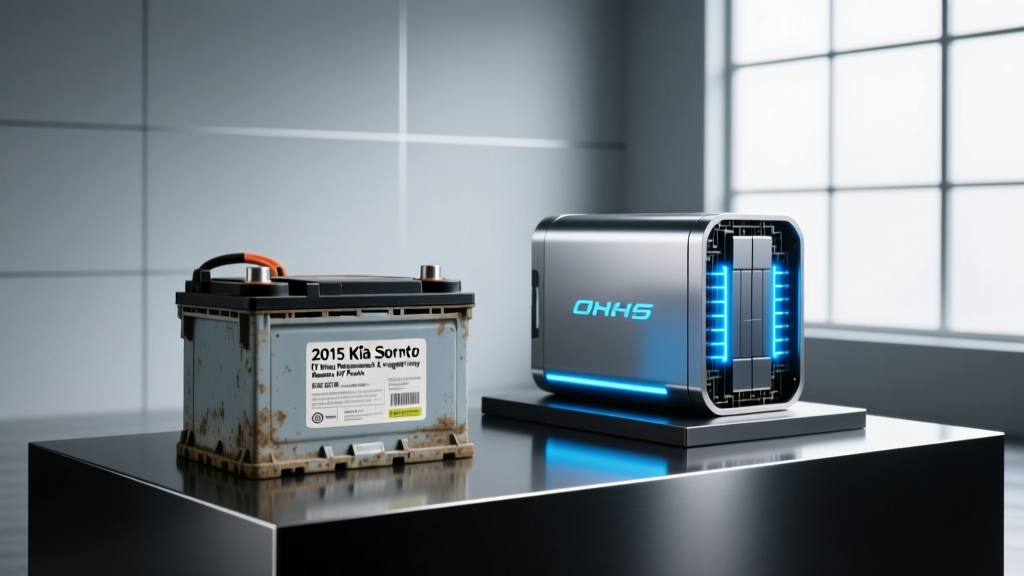
If you've ever searched for a 2015 Kia Sorento battery, you already know the drill: a 12-volt lead-acid unit under the hood that costs $150–$250, takes five minutes to swap, and dies every 3–5 years. It's mundane, predictable, and entirely unrelated to the high-voltage traction batteries that power modern electric vehicles. Yet the confusion between a conventional auxiliary battery and an EV's multi-thousand-dollar lithium-ion pack remains one of the most common sources of anxiety for shoppers transitioning to electric.
This guide bridges that gap. We'll use the 2015 Kia Sorento's battery as a baseline reference point — a familiar, well-understood component — and then walk through everything you need to know about modern EV traction batteries: chemistry, degradation data, warranty coverage, replacement costs, and what's coming next. The numbers below reflect 2026 model-year data and current ownership realities.
12V Auxiliary vs. High-Voltage Traction: Clearing Up the Confusion
The 2015 Kia Sorento uses a Group 124R or H7 lead-acid 12V battery rated at roughly 70 Ah. It starts the engine, powers accessories, and costs around $180 at any auto parts store. Even the Sorento Hybrid (which arrived in later model years) uses a small 12V battery alongside its hybrid traction pack.
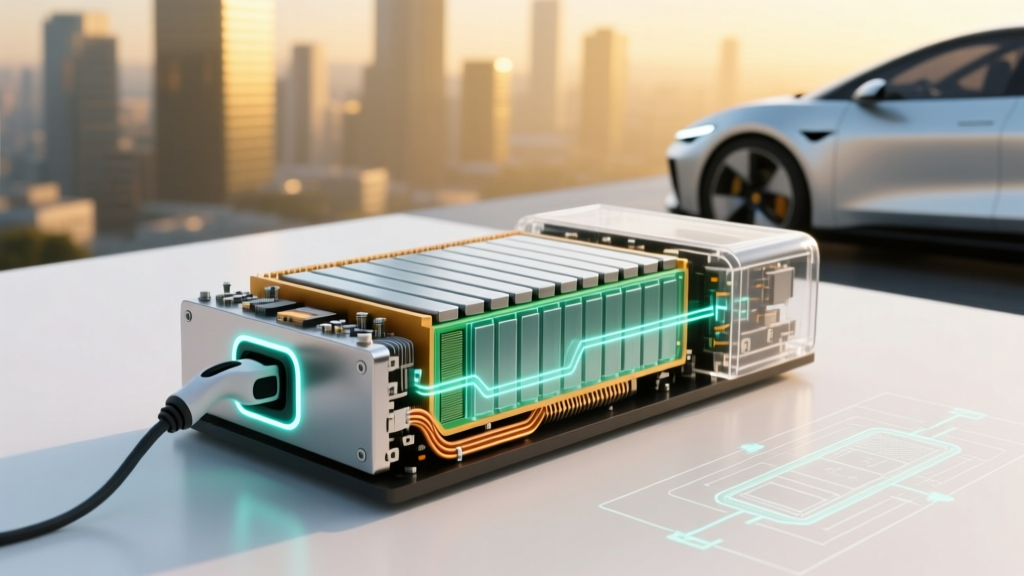
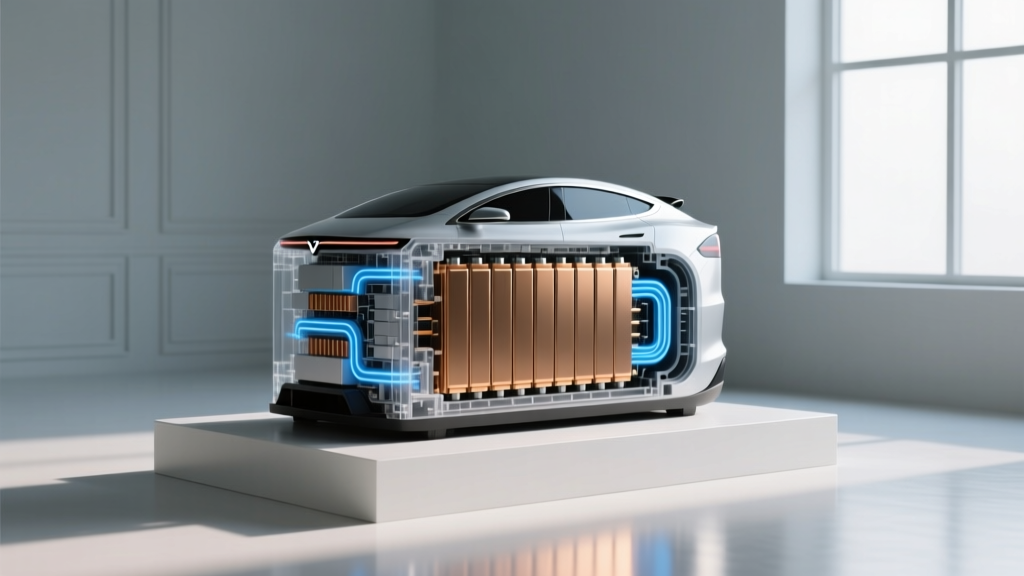
A modern EV like the 2026 Hyundai Ioniq 5 or Tesla Model Y also has a 12V (or 16V lithium) auxiliary battery for lights, infotainment, and safety systems. But the real heart of the vehicle is the high-voltage traction battery — typically 58–100+ kWh of lithium-ion cells operating at 400V or 800V. This is the component that determines range, performance, and long-term ownership cost. When we say "EV battery" in this guide, we mean the traction pack.
EV Battery Chemistry: LFP vs. NMC vs. NCA
Not all lithium-ion batteries are the same. The two dominant chemistries in 2026 EVs are LFP (lithium iron phosphate) and NMC/NCA (nickel manganese cobalt / nickel cobalt aluminum). Your choice of chemistry affects range, longevity, cold-weather performance, and price.
| Attribute | LFP (LiFePO₄) | NMC / NCA |
|---|---|---|
| Energy Density | Lower (~160 Wh/kg cell-level) — heavier pack for same kWh | Higher (~250–300 Wh/kg) — lighter, more range per kg |
| Cycle Life | 3,000–5,000+ cycles to 80% SoH | 1,000–2,500 cycles to 80% SoH |
| Cold Performance | Weaker — greater range loss below 32°F; preconditioning critical | Better low-temp conductivity, less winter range penalty |
| Cost | ~20–30% cheaper per kWh — no cobalt or nickel | More expensive due to critical mineral content |
| Recommended SoC Range | Can charge to 100% regularly without significant harm | Best kept 20–80% daily; 100% only for trips |
| Thermal Stability | Excellent — higher thermal runaway threshold | Good but requires more active thermal management |
| Common In 2026 Models | Tesla Model 3/Y RWD, Ford Mustang Mach-E Select, BYD (non-US), Rivian Standard | Tesla Long Range, Hyundai Ioniq 5/6, BMW iX, most premium/long-range trims |
Which is better? Neither is universally superior. If you want maximum range in a lighter package and regularly drive in cold climates, NMC is the stronger choice. If you prioritize longevity, lower cost, and plan to keep the vehicle 10+ years, LFP's superior cycle life is compelling — provided you can accept slightly less range and greater winter range loss. Tesla's decision to use LFP in its Standard Range models while reserving NMC for Long Range trims reflects exactly this trade-off.
How Long Do EV Batteries Actually Last? Real Degradation Data
The fear that EV batteries need replacement every few years is not supported by data. Most modern packs are engineered to outlast the vehicle's economic life. Here's what the numbers show:
- Geotab fleet study (2024): Analyzed 10,000+ EVs across model years 2012–2023. Average annual degradation was 1.8% per year, meaning the average EV retains ~82% of original capacity after 10 years.
- Tesla Impact Report 2024: Model S/X batteries retain approximately 85% capacity at 200,000 miles. Model 3/Y LFP packs show similar or better retention.
- Recurrent Auto (2025 data): Chevrolet Bolt EV owners report an average of ~7% degradation at 100,000 miles, with most packs well within warranty thresholds.
- Nissan Leaf (early models, passive cooling): A known outlier — 2011–2017 Leafs with air-cooled packs saw 20–30% loss by 80,000 miles in hot climates. Modern liquid-cooled packs have largely solved this.
Sources: Geotab EV Battery Degradation Study, Tesla Impact Report, Recurrent Auto Research
The typical degradation curve is not linear. Batteries lose capacity more quickly in the first 1–2 years (roughly 3–5%), then the curve flattens to a slow, steady decline. By year 8–10, most liquid-cooled packs from major manufacturers retain 80–90% of original capacity. A 300-mile EPA-rated EV with 85% retention still delivers 255 miles — plenty for daily use and most road trips.
Battery Warranty Coverage: What's Protected and for How Long
Federal law mandates that EV batteries carry a minimum warranty of 8 years / 100,000 miles (10 years / 150,000 miles in California and states that follow CARB emissions standards). Most manufacturers exceed these minimums in meaningful ways.
| Vehicle | Warranty Term | Capacity Retention Threshold | Notes |
|---|---|---|---|
| Tesla Model 3/Y (LFP RWD) | 8 yr / 100,000 mi | 70% | Long Range: 8 yr / 120,000 mi |
| Hyundai Ioniq 5 | 10 yr / 100,000 mi | 70% | Among the longest coverage terms |
| Ford Mustang Mach-E | 8 yr / 100,000 mi | 70% | Covers battery and hybrid/EV components |
| Chevrolet Equinox EV | 8 yr / 100,000 mi | 60% (Bolt EUV was 60%) | Verify current threshold for 2026 MY |
| BMW iX / i4 | 8 yr / 100,000 mi | 70% | Transferable to second owner |
| Rivian R1T / R1S | 8 yr / 175,000 mi | 70% | Higher mileage cap reflects truck use case |
What triggers a warranty claim? If your battery's State of Health (SoH) drops below the stated threshold (typically 70% of original capacity) within the warranty period, the manufacturer must repair or replace it at no cost. In practice, very few owners hit this threshold. The warranty also covers defects — a failed module, BMS malfunction, or coolant leak into the pack — regardless of capacity.
Compare this to the 2015 Kia Sorento's 12V battery, which typically carries a 2–3 year prorated warranty and is considered a consumable wear item. EV traction batteries are warranted as major powertrain components, reflecting their engineered durability.
EV Battery Replacement Cost: The Real Numbers
This is the question that generates the most anxiety, so let's address it with specifics. Battery replacement costs vary enormously by pack size, chemistry, and vehicle platform.
| Vehicle / Pack Size | Battery Cost (Parts) | Labor + Total Estimate | Context |
|---|---|---|---|
| Nissan Leaf (40 kWh) | $6,500–$8,500 | $8,000–$11,000 | Older platform; third-party refurbished packs available for less |
| Chevrolet Bolt EV (65 kWh) | $9,000–$14,000 | $12,000–$17,000 | Post-recall packs are updated chemistry |
| Tesla Model 3 (LFP, ~60 kWh) | $8,000–$12,000 | $10,000–$15,000 | LFP chemistry lowers cell cost |
| Tesla Model Y LR (NMC, ~82 kWh) | $12,000–$16,000 | $14,000–$20,000 | Structural pack; labor-intensive removal |
| Hyundai Ioniq 5 (77.4 kWh) | $11,000–$15,000 | $13,000–$18,000 | E-GMP platform; module-level repair may reduce cost |
| Ford F-150 Lightning Ext. Range (131 kWh) | $18,000–$28,000 | $22,000–$35,000 | Largest consumer pack; highest replacement cost |
When is replacement actually needed? Almost never during normal ownership. The vast majority of EV batteries are never replaced. When they are, it's typically due to:
- Physical damage — a collision or ground impact that compromises the pack enclosure (covered by insurance).
- Manufacturing defect — a faulty module or seal (covered by warranty).
- Extreme high-mileage use — fleet vehicles, rideshare drivers exceeding 200,000+ miles. Even then, many packs remain functional with reduced capacity.
For context: the average American drives ~14,000 miles per year (FHWA data). At that rate, you'd need 14+ years to reach 200,000 miles — well beyond the point where most vehicles are retired or sold. The 2015 Kia Sorento's gasoline engine, by comparison, may need a $3,000–$6,000 timing chain or transmission repair at similar mileage, with far less warranty protection.
Factors That Affect EV Battery Life — and How to Maximize It
While modern battery management systems (BMS) do most of the work, owner habits still influence long-term degradation. Here's what matters and what doesn't:
- Avoid sustained 100% SoC (NMC/NCA only): Daily charging to 80% significantly reduces stress on nickel-based cells. Charge to 100% only when you need the full range for a trip. LFP owners can charge to 100% regularly — Tesla and Ford recommend it for LFP calibration.
- Minimize DC fast charging when possible: Occasional DCFC (150–350 kW) is fine. Daily reliance on fast charging, especially at peak rates above 200 kW, accelerates degradation slightly. A study by Idaho National Laboratory found that exclusive DCFC use over 40,000 miles resulted in ~3–5% additional capacity loss versus Level 2 charging — noticeable but not catastrophic.
- Precondition before fast charging: Cold batteries charge slowly and experience more stress. Use your vehicle's navigation-to-charger preconditioning feature (Tesla, Hyundai, BMW, Rivian all offer this) to warm the pack before arriving at a DC fast charger.
- Don't store at 0% or 100%: If leaving the vehicle for weeks, set the charge limit to 50–60% and leave it plugged in if possible. Extreme SoC at rest accelerates calendar degradation.
- Extreme heat is worse than extreme cold: Prolonged exposure to ambient temperatures above 95°F, especially at high SoC, is the single biggest degradation accelerator. Liquid-cooled packs mitigate this substantially, but garage parking in hot climates helps.
- Don't obsess over it: Modern BMS systems manage cell balancing, thermal limits, and charge buffers automatically. The usable capacity you see already excludes a top and bottom buffer (typically 5–10% combined) that protects the cells. Just drive.
How to Check Your EV Battery's State of Health (SoH)
State of Health (SoH) is the percentage of original capacity your battery retains. A new pack is 100% SoH; a pack that held 75 kWh when new and now holds 67.5 kWh is at 90% SoH. Here's how to monitor it:
Built-in vehicle tools:
- Tesla: The mobile app displays estimated range at 100% charge. Comparing this to the original EPA rating gives a rough SoH proxy. Third-party apps like Tessie or TeslaFi provide more granular tracking.
- Hyundai/Kia (e-GMP): The infotainment system's EV menu shows battery health percentage in some markets. The dealer diagnostic tool provides a detailed SoH readout.
- BMW: The iDrive system and My BMW app display battery health status. A certified SoH report is available from dealers.
- General Motors (Ultium): The myChevrolet/myCadillac app shows battery health metrics. OnStar diagnostics can provide detailed reports.
Third-party and OBD-II tools:
- OBD-II dongles + apps: Devices like the OBDLink SX paired with apps such as ABRP (A Better Route Planner), LeafSpy (Nissan Leaf), or EVNotify can read battery management data directly from the vehicle's CAN bus.
- Recurrent Auto: A free service that connects to your vehicle's telematics and provides ongoing battery health reports, comparing your pack to a fleet of identical vehicles.
- Dealer diagnostic: Any authorized service center can pull a full SoH report. Request this when buying a used EV — it's the single most important data point.
When buying used: Always verify SoH before purchase. A 2020 Tesla Model 3 Long Range with 60,000 miles and 93% SoH is a far better buy than one at 85% SoH, even if the price is similar. The EPA's fueleconomy.gov site lists original range ratings for comparison.
What's Next: Solid-State, Silicon Anodes, and Future Battery Tech
Next-generation battery technologies are in active development, but timelines matter. Here's where things stand as of 2026:
Solid-state batteries: These replace the liquid electrolyte with a solid material, promising higher energy density (potentially 400+ Wh/kg), faster charging, and improved safety. Toyota has announced limited production in select models for the 2027–2028 timeframe, and Samsung SDI is targeting 2027 for mass production. However, no solid-state EV is currently available for purchase in the US market. Manufacturing scale and cost remain significant hurdles. Expect solid-state to appear first in premium vehicles at significant price premiums before reaching mainstream models in the early 2030s.
Silicon anode technology: Companies like Sila Nanotechnologies and Group14 are replacing graphite anodes with silicon-dominant materials, boosting energy density by 20–40%. The Mercedes G-Class 580e (PHEV) uses Sila cells, and broader EV adoption is expected in 2027–2029 model years. This is closer to market than solid-state and represents an incremental but meaningful improvement.
Sodium-ion batteries: CATL and BYD have begun producing sodium-ion packs for lower-cost, shorter-range EVs in China. These trade energy density for dramatically lower material costs and better cold performance. US-market availability is uncertain and likely 2028+ at the earliest, potentially in entry-level urban EVs.
EV Battery FAQ
How long do EV batteries last in years and miles?
Based on fleet data from Geotab and manufacturer reports, most modern liquid-cooled EV batteries retain 80–90% of original capacity after 10 years or 150,000–200,000 miles. Many packs will function adequately for the full life of the vehicle. The warranty minimum is 8 years / 100,000 miles, but real-world longevity typically exceeds this.
How much does it cost to replace an EV battery?
Out-of-warranty replacement ranges from roughly $8,000 for smaller LFP packs to $35,000 for the largest packs (e.g., Ford F-150 Lightning Extended Range). However, the vast majority of EV batteries are never replaced — they outlast the vehicle's economic life or remain under warranty when issues arise.
What does the EV battery warranty actually cover?
Battery warranties cover capacity loss below a stated threshold (typically 70% of original capacity) and manufacturing defects for 8–10 years / 100,000–175,000 miles, depending on the manufacturer. This includes module failures, BMS defects, and coolant leaks. Physical damage from collisions is handled by insurance, not the battery warranty.
How do I check my EV's battery health?
Use your vehicle's built-in battery health display (if equipped), connect a third-party OBD-II reader with EV-compatible software, or request a diagnostic SoH report from your dealer. Services like Recurrent Auto provide free ongoing monitoring by connecting to your vehicle's telematics.
Is LFP or NMC better for my EV?
LFP offers longer cycle life, lower cost, and better thermal stability — ideal if you plan to keep the vehicle 10+ years and live in a moderate climate. NMC offers higher energy density and better cold-weather performance — ideal if you need maximum range and regularly drive in freezing temperatures. Neither is universally superior; the right choice depends on your ownership timeline and climate.
Does fast charging damage my EV battery?
Occasional DC fast charging has minimal impact. Exclusive reliance on DCFC (never using Level 2) can add roughly 3–5% additional degradation over 40,000 miles, per Idaho National Laboratory testing. For most owners who mix Level 2 home charging with occasional road-trip fast charging, the effect is negligible over the vehicle's life.
How does this compare to a conventional car battery?
A 2015 Kia Sorento's 12V lead-acid battery costs ~$180, lasts 3–5 years, and is a routine maintenance item. An EV's high-voltage traction battery costs $8,000–$35,000 but lasts 10–20 years with minimal degradation. The per-year cost of an EV battery, amortized over its lifespan, is often comparable to or lower than the cumulative cost of replacing multiple 12V batteries and maintaining a gasoline powertrain over the same period.