Why a 2015 Jeep Patriot Battery Search Leads to EV Battery Questions
If you've been searching for a 2015 Jeep Patriot battery, you're likely dealing with one of two things: a dead 12-volt starter battery (a $120–$200 fix at any auto parts store) or a growing curiosity about how modern electric vehicle batteries compare to the simple lead-acid units in older ICE vehicles. The Patriot, discontinued after the 2017 model year, uses a Group 34 or Group 86 12V battery rated around 600–700 cold cranking amps (CCA). It's a consumable part, typically lasting 3–5 years before replacement.
Modern EV traction batteries are a fundamentally different beast. They're lithium-ion packs ranging from 40 kWh to over 130 kWh, engineered to last 15–20 years, and cost between $5,000 and $22,000 to replace. Understanding the difference — and the real data behind EV battery longevity, chemistry, and degradation — matters whether you're maintaining a Patriot or considering an EV purchase in 2026.
How Long Do EV Batteries Actually Last?
Based on data from millions of EVs on the road, the average lithium-ion traction battery loses roughly 10–15% of its original capacity over 150,000–200,000 miles (approximately 10–15 years of average driving). Most EV batteries will outlast the vehicle's body, suspension, and interior before reaching a point where replacement makes economic sense.
Real-world degradation data from fleet operators and owner surveys shows:
- Tesla Model 3/Y (NMC/NCA chemistry): ~5–8% degradation at 100,000 miles; ~10–12% at 200,000 miles (Tesla Impact Report 2024 data)
- Nissan LEAF (early NMC, passive cooling): 15–25% degradation at 100,000 miles in hot climates — a cautionary example of thermal management importance
- Chevrolet Bolt EV (NMC, active liquid cooling): ~8–10% degradation at 100,000 miles
- LFP-equipped vehicles (Tesla Model 3 RWD, BYD models): ~3–5% degradation at 100,000 miles; projected 8–10% at 200,000 miles
The critical takeaway: battery degradation is not linear. Most capacity loss occurs in the first 20,000–30,000 miles (an initial "formation" drop of 2–5%), after which the curve flattens significantly. A 2026 model-year EV with liquid-cooled battery management is highly likely to retain 80%+ capacity at 200,000 miles.
LFP vs. NMC/NCA: Which Battery Chemistry Is Better?
The two dominant lithium-ion chemistries in 2026 EVs are NMC/NCA (nickel manganese cobalt / nickel cobalt aluminum) and LFP (lithium iron phosphate). Neither is universally "better" — the right choice depends on your driving patterns, climate, and budget.
| Attribute | NMC / NCA | LFP |
|---|---|---|
| Energy Density | Higher (~250–300 Wh/kg cell-level) | Lower (~160–200 Wh/kg cell-level) |
| Range per Pack Size | More range for same weight/volume | Needs larger/heavier pack for equivalent range |
| Cycle Life | ~1,000–2,000 full cycles to 80% SoH | ~3,000–5,000+ full cycles to 80% SoH |
| Cold-Weather Performance | Better low-temp energy delivery | Weaker below freezing; needs preconditioning |
| Cost | Higher (cobalt/nickel supply chain) | Lower (iron/phosphate abundant) |
| Thermal Stability / Safety | Good with active management | Excellent — less prone to thermal runaway |
| Charging to 100% | Best kept 20–80% daily; 100% for trips only | Can (and should) charge to 100% regularly for calibration |
| Common In 2026 Models | Tesla Model Y Long Range, Hyundai Ioniq 5, BMW i4, Rivian | Tesla Model 3 RWD, BYD Seal, Ford Mustang Mach-E Select, base Chevy Equinox EV |
Choose NMC/NCA if: You need maximum range in a lighter package, drive in cold climates frequently, or want a long-range AWD vehicle.
Choose LFP if: You prioritize longevity and lower cost, mostly drive in moderate climates, charge at home daily, and don't need 300+ miles of range.
EV Battery Warranty Coverage Explained
Federal law mandates a minimum EV battery warranty of 8 years / 100,000 miles (10 years / 150,000 miles in California Air Resources Board states). Most manufacturers guarantee the battery will retain at least 70% of its original capacity during the warranty period. If it degrades below that threshold, the manufacturer must repair or replace it at no cost.
| Manufacturer | Warranty Term | Capacity Threshold | Notes |
|---|---|---|---|
| Tesla | 8 yr / 120,000 mi (Model 3/Y RWD); 8 yr / 100,000 mi (LR/Performance) | 70% | LFP packs on RWD models; NCA on LR/Perf |
| Hyundai / Kia | 10 yr / 100,000 mi | 70% | Among the longest coverage |
| General Motors (Chevy/Cadillac) | 8 yr / 100,000 mi | 70% | Ultium platform NMC |
| Ford | 8 yr / 100,000 mi | 70% | LFP on Mach-E Select; NMC on GT/ER |
| BMW | 8 yr / 100,000 mi | 70% | Gen5 eDrive NMC packs |
Warranty claims for battery degradation are rare in practice. According to fueleconomy.gov and manufacturer data, fewer than 1–2% of EVs require battery replacement under warranty, and most of those are due to manufacturing defects in individual modules rather than wholesale degradation.
How Much Does an EV Battery Cost to Replace?
Out-of-warranty EV battery replacement costs remain a concern for used-EV buyers and long-term owners. Prices vary dramatically by pack size, chemistry, and whether you replace the full pack or individual modules.
| Vehicle / Pack Size | Full Pack Replacement | Module Repair | Typical Need Timeline |
|---|---|---|---|
| Nissan LEAF (40–62 kWh) | $6,500–$9,000 | $1,500–$3,000 | 150,000+ mi (early models with passive cooling degraded faster) |
| Tesla Model 3 (50–82 kWh) | $12,000–$16,000 | $3,000–$5,000 | 200,000+ mi (rare under normal use) |
| Chevy Bolt EV / EUV (65 kWh) | $14,000–$16,000 | $2,500–$4,000 | 200,000+ mi (recall replacements covered by GM through 2024) |
| Ford F-150 Lightning (98–131 kWh) | $18,000–$22,000 | $4,000–$7,000 | 200,000+ mi (projected) |
| Hyundai Ioniq 5 (77.4 kWh) | $13,000–$17,000 | $3,000–$5,500 | 200,000+ mi (projected) |
For comparison, the 2015 Jeep Patriot's 12V battery costs $120–$200 at an auto parts store — but that battery will need replacement every 3–5 years, meaning you'll spend $400–$1,000 on 12V batteries over 15 years of ownership. An EV's traction battery, while far more expensive upfront, is designed to last the vehicle's entire service life.
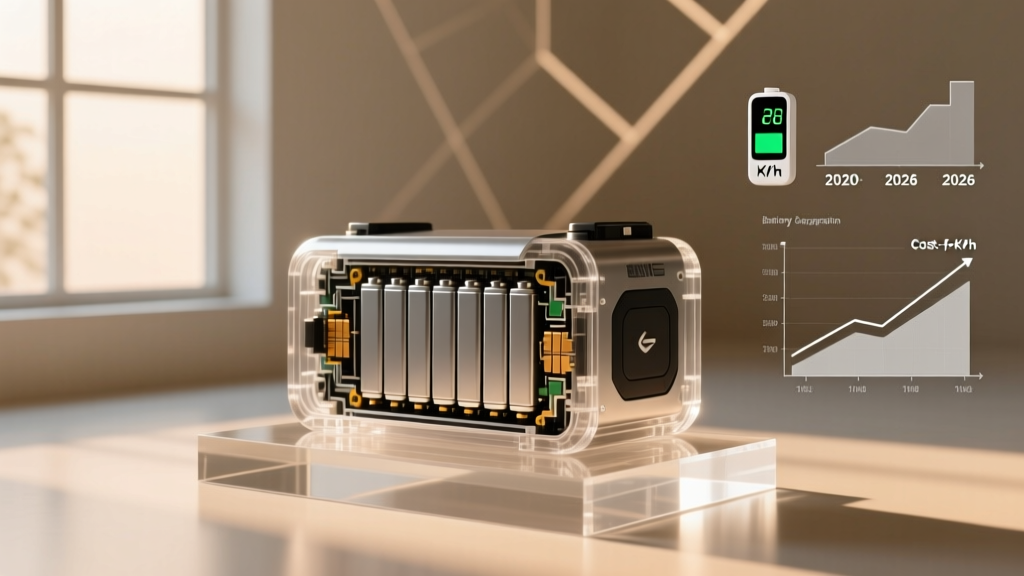
Industry-wide, battery pack costs have fallen from ~$1,200/kWh in 2010 to approximately $115–$135/kWh at the cell level in 2025–2026 (BloombergNEF data). Full-pack replacement pricing includes labor, diagnostics, and dealer markup, which is why out-the-door costs are 2–3x the raw cell cost.
Factors That Accelerate (or Slow) Battery Degradation
EV battery health is not purely a function of age. Your habits directly influence how quickly the pack loses capacity. Here's what the data shows matters most:
Battery Care Best Practices
- Avoid sustained 100% SoC (NMC/NCA only): Daily charging to 80% significantly slows degradation. Charge to 100% only when you need the full range for a trip, and drive shortly after reaching 100%. LFP batteries are an exception — they benefit from regular 100% charges for BMS calibration.
- Minimize DC fast charging when possible: Frequent use of 150+ kW DC fast chargers generates heat that accelerates cell wear. Use Level 2 home charging (7–11 kW) for daily needs; reserve DCFC for road trips. Data from Geotab fleet studies shows vehicles that DC fast-charge more than 3x/week degrade ~1–2% faster over 100,000 miles.
- Precondition before fast charging: Most 2026 EVs automatically precondition the battery when you navigate to a DC fast charger. This warms or cools the pack to its optimal charging temperature (~25–35°C), improving charge speed and reducing thermal stress.
- Avoid extreme SoC in extreme temperatures: Don't leave your EV at 100% SoC in 100°F+ heat, and avoid letting it sit below 10% SoC in sub-freezing weather for extended periods. The battery management system (BMS) protects against the worst damage, but moderate SoC (30–70%) during storage is ideal.
- Use scheduled charging: Set your EV to finish charging just before you leave in the morning rather than sitting at high SoC overnight. This minimizes time spent at voltage extremes.
- Keep cooling systems maintained: Liquid-cooled battery packs rely on coolant loops. Follow manufacturer service intervals for coolant checks — a failing thermal management system is one of the few things that can cause rapid degradation.
How to Check and Monitor Your EV's Battery Health
State of Health (SoH) is the metric that tells you what percentage of original capacity your battery retains. A new EV starts at 100% SoH; a pack at 85% SoH has lost 15% of its original capacity.
Here's how to monitor it:
- In-vehicle displays: Most 2026 EVs (Tesla, Hyundai, BMW, Ford, Rivian) include a battery health or degradation indicator in the settings menu. Tesla shows estimated range at 100% charge, which you can compare to the original EPA figure.
- OBD-II diagnostic tools: Third-party tools like the OBDeleven or LeafSpy (for Nissan LEAF) can read battery SoH directly from the BMS. For ~$50–$150, these tools give you detailed cell-level data including individual cell voltage variance — a key indicator of pack health.
- Dealer diagnostic reports: Request a battery health report during routine service. Most dealerships can pull a detailed SoH printout showing capacity retention, cell balancing status, and any fault codes.
- Third-party services: Companies like Recurrent Auto provide free battery health reports for many EV models by analyzing anonymized fleet data and offering personalized degradation projections based on your charging habits and climate.
If you're buying a used EV, a battery SoH check is as essential as a compression test was on a 2015 Jeep Patriot's 2.4L engine. A pack showing 90%+ SoH at 50,000 miles is in excellent shape; anything below 80% SoH before 100,000 miles warrants further investigation and could indicate a warranty claim opportunity.
What's Next: Solid-State and Silicon Anode Batteries
Emerging battery technologies promise step-changes in energy density, charging speed, and longevity — but realistic timelines matter more than hype.
Solid-state batteries replace the liquid electrolyte with a solid material (ceramic, sulfide, or polymer), enabling lithium-metal anodes that could double energy density to 400–500 Wh/kg. Toyota, Samsung SDI, and QuantumScape are leading development. Toyota has announced solid-state production for limited models in 2027–2028, with broader availability not expected until 2030+. Samsung SDI targets 2027 for initial production. These will debut in premium vehicles at significant cost premiums.
Silicon anode batteries (from companies like Sila Nanotechnologies and Group14) replace graphite anodes with silicon-dominant composites, boosting energy density by 20–30% without the manufacturing challenges of full solid-state cells. These are closer to market — the Mercedes-Benz G-Class electric variant (announced for 2025–2026) was among the first vehicles to feature silicon-anode cells from Sila. Expect broader adoption in 2026–2028 model-year vehicles.
Sodium-ion batteries are entering the budget EV segment in 2026, particularly from Chinese manufacturers (BYD, CATL). They offer lower energy density than LFP but cost significantly less and use no lithium, cobalt, or nickel. They're best suited for city EVs and compact models where 150–200 miles of range is acceptable.
None of these technologies are available in mainstream 2026 model-year EVs at scale today. If you're buying now, current LFP and NMC chemistries are mature, well-understood, and backed by extensive real-world durability data.
2015 Jeep Patriot Battery vs. EV Battery: The Bottom Line
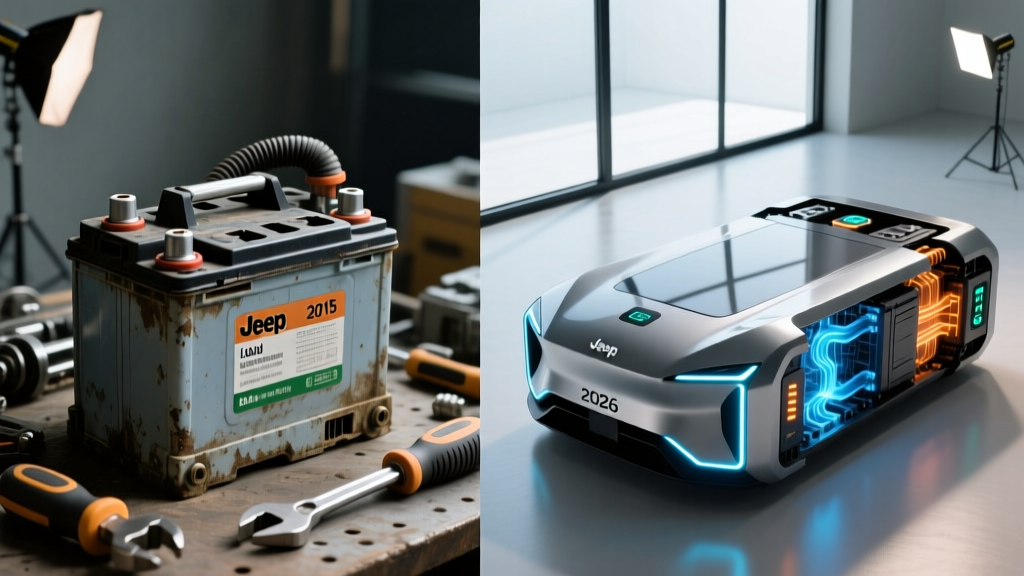
The 2015 Jeep Patriot's 12V lead-acid battery is a simple, inexpensive consumable — $120–$200, replaced every 3–5 years, no special tools needed. An EV's high-voltage traction battery is a $10,000–$22,000 engineered system designed to last 15–20 years and 200,000+ miles while retaining 80%+ of its original capacity.
If your 2015 Jeep Patriot battery search has you considering an EV upgrade, the data is reassuring: modern lithium-ion packs with active liquid cooling and sophisticated battery management systems rarely need replacement during typical ownership. The 8-year/100,000-mile federal warranty mandate provides a strong safety net, and real-world degradation rates of 1–2% per year mean most EVs will still offer 250+ miles of range at the 150,000-mile mark — even as the rest of the vehicle shows its age.
Frequently Asked Questions
How long do EV batteries last in years and miles?
Most modern EV batteries (2020+ models with liquid cooling) last 15–20 years or 200,000+ miles before degrading to 80% of original capacity. Early EVs without active thermal management (like the 2011–2017 Nissan LEAF) degraded faster, particularly in hot climates. Based on current data, an EV battery will typically outlast other major vehicle components.
How much does an EV battery cost to replace?
Full-pack replacement costs range from $6,500 for smaller packs (Nissan LEAF 40 kWh) to $22,000 for large truck packs (Ford F-150 Lightning 131 kWh). Most replacements fall in the $12,000–$17,000 range for mid-size SUVs and sedans. Module-level repairs — replacing only degraded cells — cost $1,500–$7,000. However, the vast majority of EV batteries never need replacement during normal ownership.
What does the EV battery warranty cover?
Federal law requires a minimum 8-year/100,000-mile warranty (10 years/150,000 miles in CARB states) guaranteeing the battery retains at least 70% of its original capacity. This covers degradation and manufacturing defects. It does not cover damage from accidents, flooding, or aftermarket modifications. Check IRS.gov for related EV tax credit eligibility, which requires battery capacity of at least 7 kWh and North American assembly for the §30D new-vehicle credit.
How do I check my EV's battery State of Health?
Use the vehicle's built-in battery health display (most 2026 models), an OBD-II diagnostic tool like OBDeleven or LeafSpy, or request a dealer diagnostic report. Third-party services like Recurrent Auto also provide free SoH estimates. Compare your current estimated range at 100% charge to the original EPA rating — a 310-mile EPA vehicle now showing 280 miles at full charge is at roughly 90% SoH.
LFP vs. NMC — which battery chemistry should I choose?
Choose LFP if you prioritize maximum cycle life (3,000–5,000 cycles), lower cost, and can charge to 100% regularly. Choose NMC/NCA if you need maximum range in a lighter package, drive in cold climates, or want long-range AWD. Both chemistries will comfortably outlast 200,000 miles with proper care — the choice is about optimizing for your specific use case, not avoiding a "bad" option.
Does frequent DC fast charging damage the battery?
Occasional DC fast charging (road trips, 1–2 times per week) has minimal impact. Geotab fleet data shows that vehicles DC fast-charging 3+ times per week degrade approximately 1–2% more over 100,000 miles compared to vehicles primarily using Level 2 charging. The heat generated during high-power (150–350 kW) charging stresses cells. For daily use, a home Level 2 charger at 7–11 kW is both gentler on the battery and cheaper per kWh.