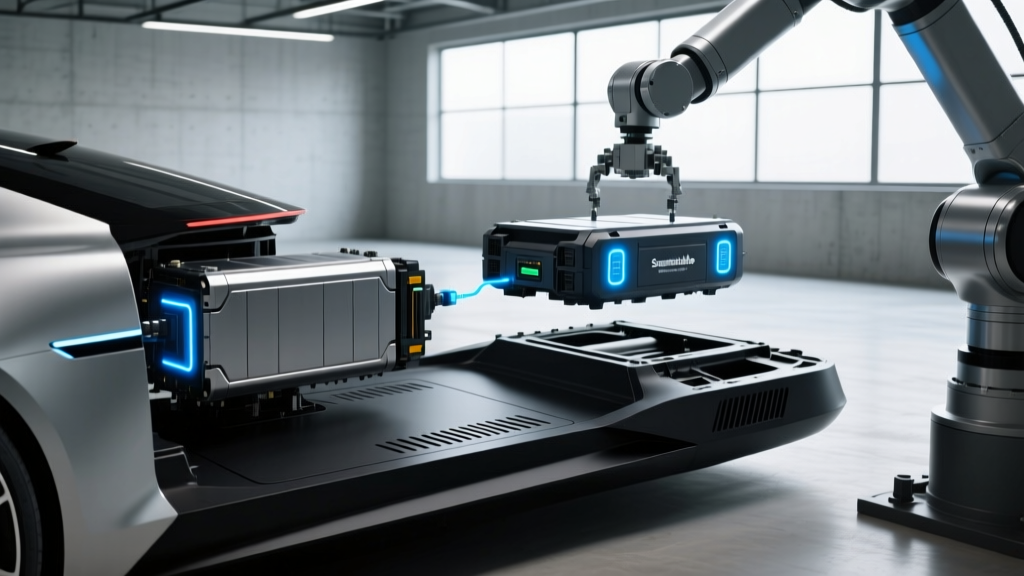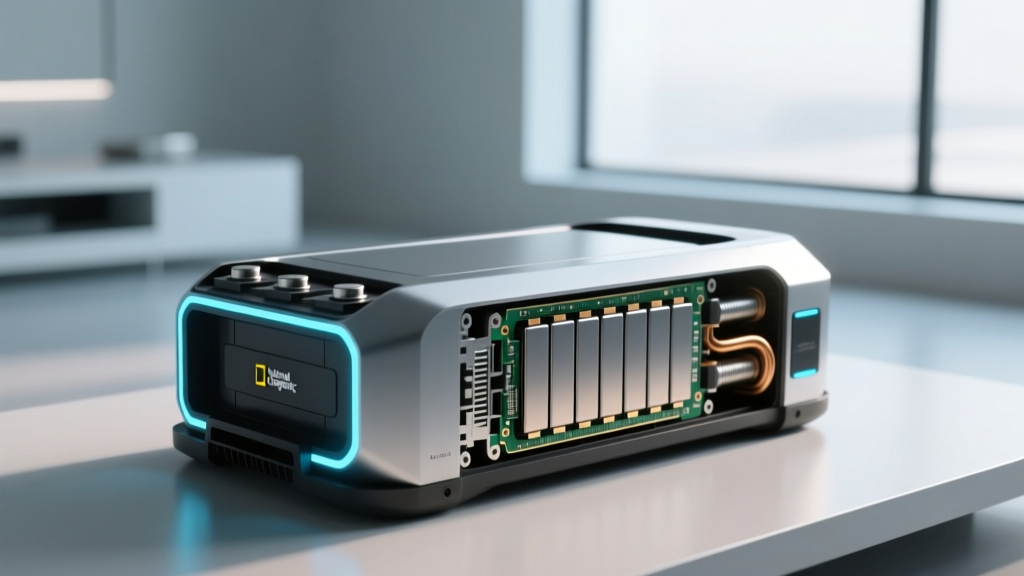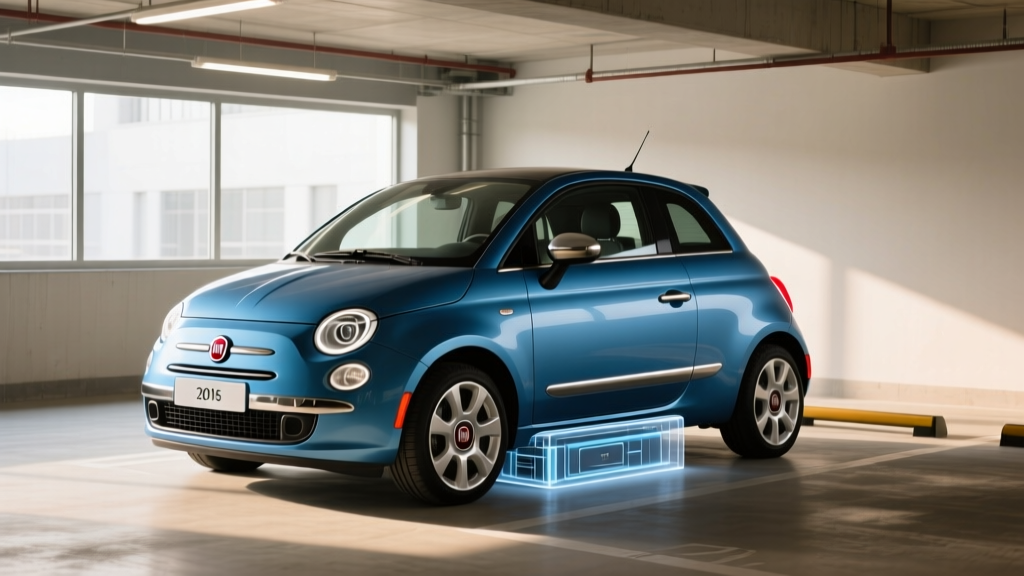
The 2015 Fiat 500e was one of the earliest mainstream affordable electric vehicles sold in the United States, built primarily to satisfy California's zero-emission vehicle mandate. With its compact 24 kWh lithium-ion battery and 87-mile EPA range, it served as an urban commuter rather than a road-trip machine. Now, more than a decade later, owners and prospective used-EV buyers are asking the critical question: how is the 2015 Fiat 500e battery holding up, and what does replacement look like in 2026?
This guide breaks down everything you need to know about the first-generation 500e's high-voltage traction battery — from its NMC chemistry and real-world degradation data to replacement costs, warranty coverage, and how to monitor State of Health (SoH). We'll also place it in the broader context of modern EV battery technology so you can make an informed decision.
2015 Fiat 500e Battery Specifications at a Glance
| Specification | Value |
|---|---|
| Battery Chemistry | NMC (Nickel Manganese Cobalt) |
| Total Battery Capacity | 24 kWh |
| Usable Capacity (approx.) | ~19.2 kWh (80% buffer-limited) |
| EPA Range (original) | 87 miles |
| Real-World Range (2026, aged pack) | ~55–72 miles (varies by SoH and conditions) |
| Onboard Charger (Level 2) | 6.6 kW |
| DC Fast Charging | Not supported |
| Electric Motor Output | 111 hp (83 kW) |
| 0–60 mph | ~9.1 seconds |
| EPA Efficiency | 112 MPGe combined (29 kWh/100 mi) |
| Battery Warranty (original) | 8 years / 100,000 miles (CA: 10 yr / 150,000 mi) |
Understanding NMC Battery Chemistry in the 500e
The 2015 Fiat 500e uses an NMC (Nickel Manganese Cobalt) lithium-ion battery pack manufactured by Samsung SDI. This was the dominant chemistry for most early-to-mid 2010s EVs, including the Nissan Leaf and early Chevrolet Spark EV. NMC offered a strong balance of energy density and power delivery for its era, though it differs significantly from chemistries gaining popularity in 2026.
To understand how the 500e's battery compares to modern packs, here's a breakdown of the two dominant EV battery chemistries in use today:
| Attribute | NMC / NCA (2015 500e era) | LFP (Lithium Iron Phosphate) |
|---|---|---|
| Energy Density | Higher (~150–220 Wh/kg cell-level) | Lower (~120–170 Wh/kg cell-level) |
| Cycle Life | ~1,000–2,000 full cycles before 80% capacity | ~3,000–5,000+ full cycles before 80% capacity |
| Cold-Weather Performance | Better low-temp discharge capability | Reduced performance below 32°F; requires preconditioning |
| Thermal Stability | Lower; more prone to thermal runaway at high SoC/temperature | Higher; inherently more stable chemistry |
| Cost (per kWh) | Higher (cobalt/nickel supply constraints) | Lower (~$80–100/kWh cell-level in 2026) |
| Recommended SoC Range | 20–80% for longevity | Can tolerate regular 100% charging |
| Typical Use in 2026 | Performance/long-range models (Tesla Model S, Hyundai Ioniq 6 Long Range) | Standard-range and value models (Tesla Model 3 RWD, Ford Mustang Mach-E Select) |
Which is better? Neither is universally superior — it depends on priorities. NMC/NCA packs deliver more range per pound and perform better in cold climates, making them ideal for long-range and performance vehicles. LFP packs last significantly longer (more charge cycles), cost less, and tolerate daily 100% charging, making them better for daily commuters who charge at home. The 2015 500e's NMC pack was the right choice for its time, but its smaller size and age mean degradation is now a practical concern.
How Long Do EV Batteries Last? Degradation Data for the 500e
One of the most common questions from used-EV shoppers is battery longevity. The broad answer for modern EVs is that most high-voltage traction batteries are designed to last 15–20 years or 150,000–200,000+ miles before reaching 70–80% of original capacity. However, early-generation EVs like the 2015 Fiat 500e tell a more nuanced story.
The 500e's 24 kWh Samsung SDI NMC pack uses passive air cooling rather than the active liquid thermal management systems found in modern EVs. This means the battery is more exposed to ambient temperature extremes, which accelerates degradation — particularly in hot climates like Arizona, Texas, and inland California.
Here's what real-world degradation data shows for the 2015 Fiat 500e and comparable early EVs:
Typical Degradation Curve — 2015 Fiat 500e (24 kWh NMC, Air-Cooled):
- Year 1–2 (0–30k miles): ~3–5% capacity loss (initial formation loss)
- Year 3–5 (30k–60k miles): ~8–12% cumulative loss
- Year 6–8 (60k–90k miles): ~12–18% cumulative loss
- Year 9–11 (90k–120k miles): ~18–28% cumulative loss (where most 2015 models sit in 2026)
Sources: fueleconomy.gov, owner-reported data from Fiat 500e forums, and Recurrent Auto battery degradation studies on early-generation EVs.
For context, a 2015 500e with 20–25% degradation retains roughly 18–19 kWh of usable capacity, translating to an effective range of approximately 60–70 miles under moderate conditions. Vehicles in hot climates with frequent Level 2 charging to 100% may see degradation at the higher end of this range.
Compared to liquid-cooled packs from the same era (like the 2015 Tesla Model S 85 kWh), the 500e's air-cooled design results in slightly faster degradation. Tesla's liquid-cooled packs from the same period typically show 10–15% loss at 100,000 miles, according to data compiled by Recurrent Auto.
2015 Fiat 500e Battery Warranty: What Was Covered
Fiat Chrysler (now Stellantis) provided a high-voltage battery warranty for the 500e that was competitive for its time. However, by 2026, virtually all 2015 models have exceeded the standard warranty period.
| Warranty Term | Coverage Details |
|---|---|
| Standard Federal | 8 years / 100,000 miles |
| CARB States (CA and adopting states) | 10 years / 150,000 miles |
| Capacity Retention Threshold | 70% of original capacity |
| What Triggers a Claim | Battery falls below 70% capacity (~16.8 kWh usable) as measured by dealer diagnostic tool |
| Remedy | Repair, replacement, or reconditioning at Stellantis discretion |
| Current Status (2026) | Expired for nearly all 2015 500e vehicles |
If you're purchasing a used 2015 500e today, assume the battery warranty has expired unless the vehicle has exceptionally low mileage and was registered in a CARB state. Even then, the 10-year/150,000-mile window closed in 2025 at the latest. This means any battery repair or replacement will be an out-of-pocket expense.
2015 Fiat 500e Battery Replacement Cost in 2026
Battery replacement is the single biggest financial risk of owning an older EV. For the 2015 Fiat 500e, the situation is complicated by the vehicle's age, limited parts availability, and the fact that Stellantis discontinued the 500e in the U.S. after the 2019 model year.
| Replacement Option | Estimated Cost (2026) | Notes |
|---|---|---|
| New OEM Pack (Stellantis dealer) | $8,000–$12,000+ | Limited availability; may require backorder. Includes labor. |
| Refurbished / Remanufactured Pack | $5,000–$7,500 | Sourced from salvaged or reconditioned 500e packs. Quality varies by supplier. |
| Individual Module Replacement | $1,500–$3,500 | If only 1–2 of the pack's modules are degraded. Requires specialized EV shop. |
| Aftermarket / Third-Party Pack | $6,000–$9,000 | Limited options for the 500e specifically. More common for Leaf/Model S. |
When is replacement typically needed? Most 2015 500e batteries will not require a full replacement unless the pack suffers catastrophic cell failure, physical damage, or degradation below 60% capacity (making the car impractical for daily use). At 70–80% SoH, the car remains functional for short urban commutes — it simply has less range. Many owners choose to sell or trade the vehicle rather than invest $5,000+ in a battery replacement for a car with a current resale value of roughly $5,000–$8,000.
This is the economic reality of early-generation EVs: the battery replacement cost can approach or exceed the vehicle's market value. For comparison, replacing the battery in a 2026 Tesla Model Y (82 kWh NMC pack) costs roughly $12,000–$16,000, but the vehicle itself retains $25,000–$35,000 in value.
Factors That Affect the 500e's Battery Life
Several variables determine how quickly the 500e's NMC pack degrades. Understanding these helps both current owners maximize remaining battery life and used-car buyers evaluate what to look for.
- Temperature exposure: The air-cooled 500e pack is vulnerable to sustained heat above 95°F and repeated deep-freeze cycles. Garage parking significantly extends battery life in hot climates.
- State of Charge (SoC) habits: Regularly charging to 100% and leaving the car parked at full charge accelerates NMC degradation. The 20–80% SoC window is ideal for daily use. However, the 500e's onboard software does manage some top- and bottom-buffer, which provides partial protection.
- Charging speed and frequency: The 500e does not support DC fast charging, which is actually a longevity advantage — it eliminates the high-C-rate thermal stress that frequent Supercharging puts on modern EVs. Level 2 charging at 6.6 kW is moderate and relatively gentle on the cells.
- Depth of discharge: Frequently running the battery to near-zero before recharging causes more wear than shallow, frequent top-ups. Try to recharge when the pack reaches 20–30%.
- Mileage and cycle count: A 2015 500e driven 8,000 miles/year has experienced roughly 1,500–2,000 partial charge cycles over 11 years. The Samsung SDI NMC cells in this pack are rated for ~1,000–2,000 full equivalent cycles before reaching 80% capacity.
- Calendar aging: Even a low-mileage 500e that sat unused for extended periods can experience calendar degradation, especially if stored at high SoC in hot conditions. A garage-kept, regularly driven 500e often has a healthier battery than one that sat for months at 100% charge.
How to Check the 500e's Battery State of Health (SoH)
Unlike modern EVs from Tesla, Hyundai, or Ford — which display battery health metrics directly in the infotainment system or app — the 2015 Fiat 500e does not provide a built-in SoH readout accessible to the owner. Here are the practical methods available in 2026:
1. Dealer Diagnostic Scan
A Stellantis dealer can run a battery diagnostic using the wiTECH scan tool, which reads the battery management system's (BMS) internal capacity estimate. This is the most authoritative method, though it typically costs $100–$175 for a diagnostic visit. Request a printout showing measured capacity in kWh versus the original 24 kWh.
2. OBD-II Dongle + Third-Party App
Several OBD-II adapters (such as the OBDLink MX+ or vLinker FS) paired with apps like ABRP (A Better Route Planner) or Leaf Spy-style tools adapted for Fiat can read BMS data including estimated capacity, cell voltage variance, and temperature. Results vary by adapter compatibility — confirm Fiat 500e support before purchasing.
3. Manual Range Test
Charge the vehicle to 100%, reset the trip meter, and drive under moderate conditions (city/suburban, 65°F–80°F, no extreme HVAC use) until the battery reaches 5%. Compare miles driven to the original 87-mile EPA figure. If you achieve 65 miles, your SoH is roughly 75%. This is imprecise but free and directionally accurate.
4. Third-Party Battery Health Reports
Services like Recurrent Auto offer battery health reports for many EV models based on connected-car data. Coverage for the 500e is limited compared to Tesla or Chevrolet, but it's worth checking if the previous owner enrolled the vehicle.
EV Battery Technology: What's Changed Since 2015
The 2015 Fiat 500e represents a first-generation approach to EV battery design. To put its technology in perspective, here's how the EV battery landscape has evolved by 2026:
Energy density: The 500e's pack stores 24 kWh in roughly 600 lbs. A 2026 Hyundai Ioniq 5 stores 84 kWh in a similar weight, delivering over 300 miles of range from a pack that isn't proportionally heavier. Cell-level energy density has improved roughly 40–60% since 2015.
Thermal management: Virtually all 2026 EVs use liquid-cooled battery packs with active heating and cooling, dramatically reducing temperature-driven degradation. The 500e's passive air cooling is now considered outdated.
LFP adoption: LFP chemistry, nearly absent from U.S. EVs in 2015, now powers roughly 40% of new EVs sold globally. Tesla, Ford, and Hyundai all offer LFP-equipped models that tolerate daily 100% charging and deliver 3,000+ cycle life.
Emerging technologies (forward-looking):
- Solid-state batteries: Toyota, Samsung SDI, and QuantumScape are targeting commercial production between 2027–2030. Solid-state cells promise 30–50% higher energy density, faster charging, and improved safety. These are not yet available in any production vehicle as of 2026.
- Silicon-dominant anodes: Companies like Sila Nanotechnologies and Group14 are replacing graphite anodes with silicon-based materials, boosting energy density by 15–25%. Limited deployment is expected in select 2027–2028 models.
- Sodium-ion batteries: CATL and BYD are producing sodium-ion packs for lower-cost, shorter-range EVs in China. U.S. availability is not expected before 2028–2029.
These advances are relevant context if you're weighing whether to invest in a battery replacement for a 2015 500e or redirect that budget toward a newer EV with modern battery technology, liquid cooling, and an active warranty.
Should You Buy a Used 2015 Fiat 500e in 2026?
Choose the 2015 500e if:
- You need a low-cost second car for short urban commutes (under 40 miles round-trip)
- You have home Level 2 charging and don't rely on public infrastructure
- You can verify battery SoH above 75% before purchase
- You understand that a $5,000+ battery replacement may not be economically justified
- You value the 500e's fun handling, compact size, and low operating cost (~$0.04–$0.06/mile on residential electricity)
Look elsewhere if:
- You need more than 60–70 miles of reliable daily range
- You live in a hot climate and can't garage the vehicle
- You want DC fast charging for any road-trip flexibility
- You want modern safety features (the 500e lacks automatic emergency braking, lane-keeping, and adaptive cruise)
- You'd prefer a remaining battery warranty — consider a 2022+ Chevrolet Bolt EV (used, ~$14,000–$18,000) with 259 miles of range and most of its 8-year warranty intact
Frequently Asked Questions
How long do EV batteries last in years and miles?
Most modern EV batteries (2020+) are designed to retain 70–80% of original capacity after 15–20 years or 150,000–200,000 miles. Early-generation EVs like the 2015 Fiat 500e with air-cooled NMC packs typically show 18–28% degradation at 10–11 years, depending on climate and charging habits. Complete battery failure is rare — gradual capacity loss is the norm.
How much does it cost to replace the 2015 Fiat 500e battery?
Expect to pay $5,000–$12,000 depending on whether you source a refurbished pack ($5,000–$7,500) or a new OEM replacement ($8,000–$12,000+). Individual module repair can cost $1,500–$3,500 if only a subset of cells has failed. Given the 500e's 2026 resale value of $5,000–$8,000, a full replacement often exceeds the car's worth.
What does the Fiat 500e battery warranty cover?
The original warranty covered defects and capacity loss below 70% for 8 years/100,000 miles (federal) or 10 years/150,000 miles (CARB states). As of 2026, this warranty has expired for virtually all 2015 models. Any battery issue is now the owner's financial responsibility.
How can I maximize the remaining battery life of my 500e?
Charge to 80–90% for daily use rather than 100%. Avoid letting the battery sit at 100% for extended periods. Park in a garage or shaded area, especially in hot climates. Drive and charge regularly — calendar aging worsens when the car sits unused. Keep tire pressure at spec and minimize heavy acceleration to reduce cell stress.
Does the 2015 Fiat 500e support DC fast charging?
No. The 2015 500e only supports Level 1 (120V, ~1.4 kW) and Level 2 (240V, 6.6 kW) AC charging. A full charge from empty takes approximately 4 hours on Level 2. The lack of DC fast charging limits road-trip utility but actually reduces long-term battery wear, as high-power DC charging generates significant thermal stress.
Is the 12V battery the same as the traction battery?
No. The 500e has a standard 12V auxiliary battery (like any car) that powers lights, infotainment, and the computers that manage the high-voltage system. The 24 kWh traction battery is the large, heavy pack under the floor that powers the electric motor. If the 12V battery dies, the car won't start — even if the traction battery is fully charged. The 12V battery typically costs $150–$250 to replace and is a routine maintenance item unrelated to EV-specific concerns.
LFP vs. NMC — which battery chemistry is better for daily use?
For daily commuting with home charging, LFP is generally the better choice in 2026. It tolerates 100% daily charging without accelerated degradation, lasts 2–3x more charge cycles, and costs less per kWh. NMC/NCA remains preferable for long-range and performance vehicles where energy density and cold-weather output matter more. The 500e's NMC pack was standard for its era, but if you're buying a new EV today, LFP-equipped models offer superior longevity for most drivers.