If you've searched for a 2015 Toyota Corolla battery, you're likely dealing with one of two things: a dead 12V starter battery (a $150–$250 fix) or curiosity about how conventional car batteries compare to the high-voltage traction batteries in modern electric vehicles. The contrast is instructive. A lead-acid 12V battery in a 2015 Corolla typically lasts 3–5 years. Meanwhile, EV traction batteries — the 60–100 kWh lithium-ion packs powering cars like the Tesla Model 3, Hyundai Ioniq 5, and Ford Mustang Mach-E — are now routinely exceeding 200,000 miles with manageable degradation.
This guide breaks down what a decade of real-world EV battery data tells us about chemistry, lifespan, replacement costs, and care — using the humble 2015 Corolla's battery as a starting point for understanding how far electrified battery tech has come.
12V vs. Traction Battery: Clearing Up the Confusion
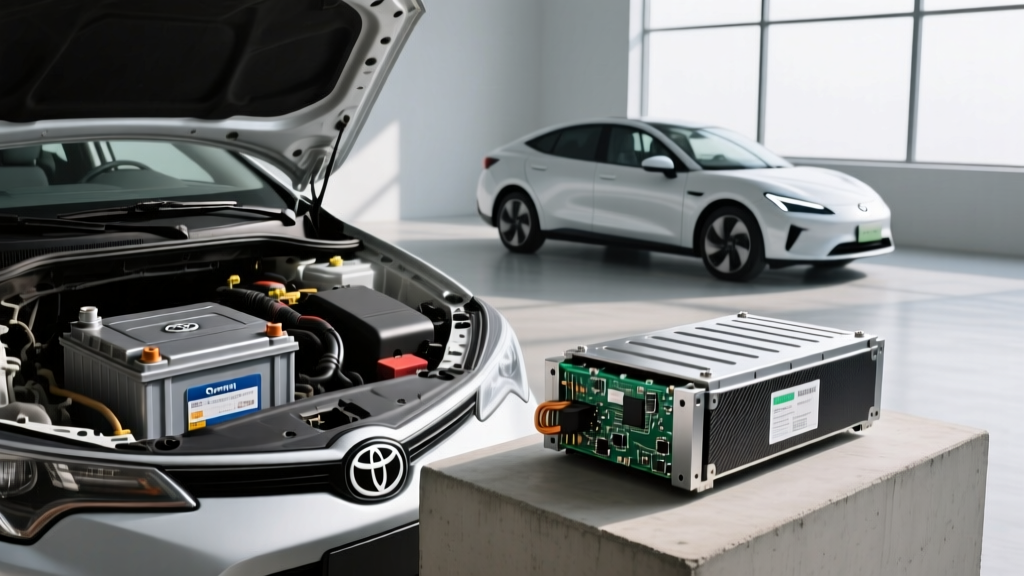
The 2015 Toyota Corolla uses a standard Group 35 or 24F lead-acid 12V battery (roughly 0.5–0.7 kWh of energy) to crank the engine and run accessories. It's a commodity part, widely available from AutoZone, Costco, or any auto parts store.
EVs also have a 12V battery for accessories and safety systems, but the main event is the high-voltage traction battery — typically 50–100+ kWh of lithium-ion (or LFP) cells. This is what propels the car and stores energy from the grid. When we discuss "EV battery life" below, we mean this traction pack, not the small 12V auxiliary unit.
How Long Do EV Batteries Actually Last?
The short answer: far longer than most buyers fear. Data from fleet operators, manufacturer reports, and independent testing consistently shows modern lithium-ion EV batteries retaining 85–95% of original capacity after 100,000 miles, and 75–90% after 200,000 miles depending on chemistry and usage patterns.
Here's what the data shows across major platforms:
Real-World EV Battery Degradation Data Points
- Tesla Model 3/Y (NMC/NCA, 2018–2024): Average ~12% capacity loss at 150,000 miles per Tesla's 2024 Impact Report. Fleet data from Recurrent Auto shows median 91% State of Health (SoH) at 100,000 miles.
- Nissan Leaf (NMC, 2013–2019, air-cooled): Higher degradation due to passive thermal management — average 20–25% loss at 100,000 miles, particularly in hot climates. A cautionary tale for thermal management importance.
- Chevrolet Bolt EV/EUV (NMC, 2017–2023): ~8–10% loss at 100,000 miles. Active liquid cooling proved effective. (Note: 2017–2019 models were subject to a recall for manufacturing defects, not chemistry-related degradation.)
- Tesla Model 3 LFP (Standard Range, 2021–present): Early fleet data from Recurrent shows <5% degradation at 60,000 miles — LFP's superior cycle life is bearing out in real-world use.
- Hyundai Ioniq 5 (NMC, 2022–present): Limited long-term data (too new), but Hyundai's 10-year/100,000-mile battery warranty and liquid-cooled pack design suggest confidence in longevity.
Sources: Recurrent Auto Battery Research, Tesla Impact Report, fueleconomy.gov
For comparison, a well-maintained 2015 Toyota Corolla's gasoline engine is engineered for ~200,000 miles before major overhaul. Modern EV traction batteries are reaching similar longevity milestones — without oil changes, timing belts, or head gaskets.
LFP vs. NMC/NCA: Which Chemistry Is Right for You?
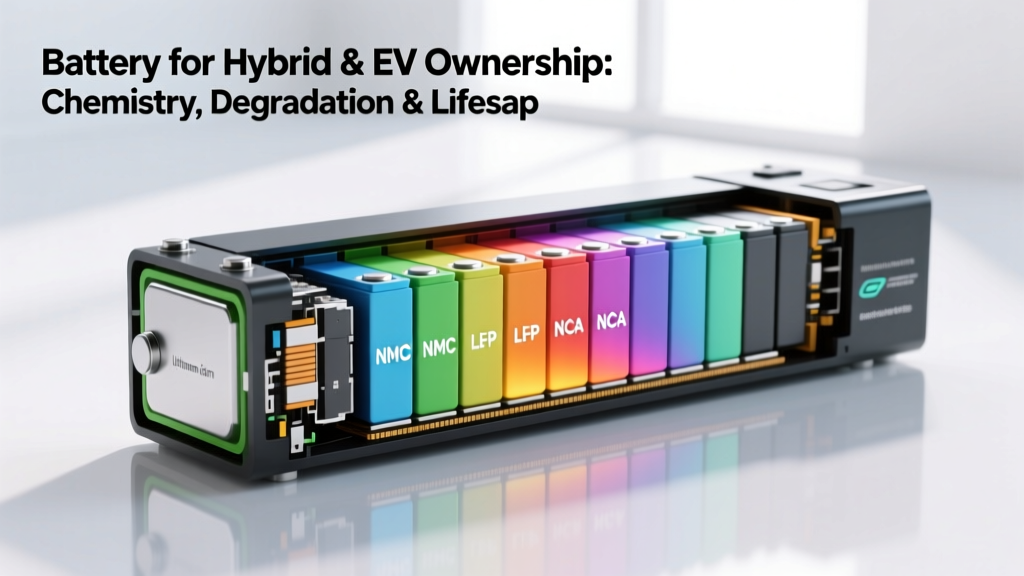
Not all lithium-ion batteries are the same. The two dominant chemistries in 2026 EVs are LFP (lithium iron phosphate) and NMC/NCA (nickel manganese cobalt / nickel cobalt aluminum). Each has distinct trade-offs:
| Attribute | LFP (Lithium Iron Phosphate) | NMC/NCA (Nickel-based) |
|---|---|---|
| Energy Density | Lower (~160 Wh/kg cell-level) | Higher (~250–300 Wh/kg cell-level) |
| Range per kWh (vehicle-level) | Heavier pack for same kWh; slightly less range | Lighter pack; more range for same weight |
| Cycle Life | 3,000–5,000+ full cycles to 80% SoH | 1,000–2,000 full cycles to 80% SoH |
| Cold-Weather Performance | Weaker — more range loss below 32°F | Better low-temp discharge capability |
| Fast-Charging Tolerance | Excellent — handles frequent DC fast charging well | Good but degrades faster with repeated 150+ kW sessions |
| Recommended Daily SoC | 100% daily is fine (no upper-buffer concern) | 80% daily recommended; 100% only for trips |
| Cost | ~$100/kWh (cell-level, 2025–2026) | ~$130–150/kWh (cell-level, 2025–2026) |
| Cobalt/Supply Chain | Cobalt-free — lower ethical/supply risk | Contains cobalt/nickel — more supply-chain exposure |
| Common in (2026 models) | Tesla Model 3 RWD, Ford Mustang Mach-E Select, BYD models | Tesla Model 3 LR, Hyundai Ioniq 5, Rivian, most long-range EVs |
Which is better? It depends on your use case. If you drive a daily commute under 60 miles, charge at home nightly, and live in a moderate climate, LFP is arguably superior — cheaper, longer-lasting, and you can charge to 100% without guilt. If you need maximum range for road trips, live in extreme cold, or want the lightest possible pack, NMC/NCA remains the choice. Neither is universally "better."
What Does the Battery Warranty Actually Cover?
Every EV sold in the U.S. carries a federally mandated minimum battery warranty of 8 years / 100,000 miles (10 years / 150,000 miles in California and states adopting CARB standards). But the details matter — specifically, the capacity retention threshold at which a warranty claim is honored.
| Manufacturer | Warranty Term | Capacity Threshold | Notes |
|---|---|---|---|
| Tesla (Model 3/Y RWD – LFP) | 8 yr / 100,000 mi | 70% retention | Below 70% SoH triggers replacement/repair |
| Tesla (Model 3/Y LR – NMC) | 8 yr / 120,000 mi | 70% retention | Longer mileage term for LR/Performance |
| Hyundai / Kia | 10 yr / 100,000 mi | 70% retention | Among the longest calendar terms |
| Ford (Mach-E, F-150 Lightning) | 8 yr / 100,000 mi | 70% retention | Standard across Ford EV lineup |
| GM (Chevrolet, Cadillac) | 8 yr / 100,000 mi | 60–70% (varies by model) | Check specific model terms — Bolt was 60% |
| Volkswagen (ID.4) | 8 yr / 100,000 mi | 70% retention | Standard VW EV warranty |
| Rivian | 8 yr / 175,000 mi | 70% retention | Highest mileage threshold in the market |
What this means practically: If your EV battery drops below the stated threshold (typically 70%) within the warranty period, the manufacturer must repair or replace it at no cost. In practice, very few owners hit this threshold — most batteries degrade 1–2% per year under normal use, landing at 85–92% SoH at the 8-year mark.
EV Battery Replacement Cost: What to Actually Expect
Here's where the fear-mongering usually starts. Yes, an out-of-warranty EV battery replacement is expensive. But context matters: most EV batteries will never need replacement during the vehicle's usable life, and costs are declining.
| Vehicle / Pack Size | Estimated Replacement Cost (2025–2026) | When Typically Needed |
|---|---|---|
| Tesla Model 3 RWD (~60 kWh LFP) | $12,000–$14,000 | Very rarely before 250,000+ mi |
| Tesla Model Y LR (~75 kWh NMC) | $14,000–$18,000 | Rarely before 200,000+ mi |
| Hyundai Ioniq 5 (~77.4 kWh NMC) | $14,000–$17,000 | Rarely before 200,000+ mi |
| Ford F-150 Lightning (~131 kWh ext. range) | $20,000–$28,000 | Very rarely; largest consumer packs |
| Chevrolet Bolt EV (~65 kWh NMC) | $14,000–$16,000 | Most 2017–2019 packs replaced under recall, not degradation |
| Nissan Leaf (40–62 kWh) | $8,000–$12,000 | More common at 100,000–150,000 mi due to air-cooling |
For perspective: a 2015 Toyota Corolla's engine replacement runs $4,000–$7,000 at an independent shop. A transmission rebuild is $2,500–$4,500. Over 200,000 miles, a gas car owner will spend $8,000–$15,000 on powertrain maintenance (oil, filters, timing chain, water pump, transmission fluid, spark plugs) that an EV owner simply doesn't pay for. The EV battery premium is real, but the total powertrain cost equation is closer than headlines suggest.
Factors That Accelerate (or Preserve) Battery Life
Battery degradation isn't random — it's driven by measurable stressors. Here's what actually moves the needle on State of Health:
What Hurts Battery Longevity
- Frequent DC fast charging above 150 kW: Occasional road-trip fast charging is fine. Daily reliance on 250–350 kW chargers generates sustained heat that accelerates cell wear. If you can Level 2 charge at home, do it.
- Sustained high State of Charge (NMC/NCA only): Sitting at 100% SoC for days stresses NMC chemistry. Charge to 80% daily; save 100% for departure day on trips. (LFP owners: 100% daily is recommended — it helps with cell balancing.)
- Deep discharges below 10%: Repeatedly draining to near-zero stresses cells. Plug in when you hit 15–20%.
- Extreme heat exposure: Parking in direct sun in Phoenix or Death Valley summers with a full battery accelerates degradation. Liquid-cooled packs mitigate this, but shade and preconditioning help.
- Extreme cold charging without preconditioning: Charging a frozen battery (below 20°F) without the car's thermal preconditioning cycle causes lithium plating. Always use your car's nav-to-charger preconditioning feature.
What Preserves Battery Longevity
- Level 2 home charging (7–11 kW): Gentle, slow charging generates minimal heat. This is the ideal daily charging method.
- 20–80% SoC range (NMC/NCA): The "middle of the curve" is the lowest-stress zone for nickel-based cells.
- Regular use: Batteries degrade slightly even when sitting unused. Driving and cycling the pack regularly (even short commutes) is better than letting it sit for months.
- Preconditioning before fast charging: Navigate to a DC fast charger using the car's built-in navigation — most EVs will automatically warm or cool the battery to optimal charging temperature.
- Garage parking in extreme climates: Even an unheated garage buffers against temperature extremes.
How to Check and Monitor Your Battery's State of Health
Most EV owners never need to think about SoH daily, but monitoring it is valuable — especially if you're buying used or planning long-term ownership.
Built-in methods:
- Tesla: No native SoH percentage in the UI, but the Service menu (or third-party apps like Tessie or Stats) can read BMS-reported capacity. Tesla service centers can run a battery health test on request.
- Hyundai/Kia: The EV Settings menu includes a "Battery Health" check that reports approximate SoH percentage.
- Ford: The FordPass app and in-vehicle diagnostics report battery condition; dealers can run a detailed SoH test.
- GM (Ultium platform): myChevrolet/myCadillac apps include battery health monitoring; OnStar diagnostics also report it.
Third-party tools:
- OBD-II dongles + apps: Devices like the OBDLink MX+ paired with apps such as EVNotify, LeafSpy (Nissan Leaf), or Scan My Tesla can read real-time BMS data including SoH, cell voltages, and pack temperature.
- Recurrent Auto: A free service that connects to your EV's telematics and provides ongoing battery health reports benchmarked against similar vehicles.
- Dealer diagnostic: Any authorized dealer can pull a detailed SoH report — ask for one during routine service, especially before a warranty expiration.
When to get concerned: If your SoH drops more than 3% in a single year, or if you notice a sudden range decrease of 15+ miles not explained by cold weather, schedule a dealer diagnostic. Sudden drops often indicate a faulty cell module rather than normal degradation.
Emerging Battery Tech: What's Coming (and When)
Current lithium-ion batteries are mature technology. But several next-generation approaches are in development:
Solid-state batteries: These replace the liquid electrolyte with a solid material, promising higher energy density (~400–500 Wh/kg), faster charging, and improved safety (no flammable electrolyte). Toyota has announced solid-state production for 2027–2028, initially in limited-run models. Samsung SDI targets 2027. Realistically, broad consumer availability at scale is a 2029–2031 proposition. Do not delay an EV purchase waiting for solid-state.
Silicon-dominant anodes: Companies like Sila Nanotechnologies and Group14 are replacing graphite anodes with silicon, boosting energy density 20–40%. These are already appearing in limited applications (Mercedes G-Class 580e uses a silicon-anode battery from Group14). Expect broader adoption by 2027–2028.
Sodium-ion batteries: Cheaper than lithium, with no critical-mineral supply concerns, but lower energy density (~120–150 Wh/kg). CATL and BYD are deploying these in Chinese-market city EVs. U.S. availability is uncertain — likely limited to budget/urban vehicles if adopted.
From a 2015 Corolla to a 2026 EV: The Battery Cost-per-Mile Reality
Let's put the 2015 Toyota Corolla battery question into full ownership context. Here's what 150,000 miles of powertrain energy costs look like:
| Cost Category | 2015 Toyota Corolla (Gas) | 2026 Tesla Model 3 RWD (LFP) |
|---|---|---|
| Fuel/Energy (150k mi) | ~$13,500 (30 MPG avg, $3.60/gal) | ~$4,800 (26 ¢/kWh avg, 4 mi/kWh) |
| 12V Battery Replacements | ~$540 (3 replacements × $180) | ~$180 (1 replacement) |
| Powertrain Maintenance | ~$4,500 (oil, filters, plugs, belts) | ~$400 (cabin filter, brake fluid, wipers) |
| Traction Battery Replacement | N/A | $0 (under warranty; unlikely needed) |
| Total Powertrain Energy + Maintenance | ~$18,540 | ~$5,380 |
The EV's traction battery — the component buyers fear most — costs nothing to maintain, rarely needs replacement, and the energy savings it enables more than offset its upfront premium. The 2015 Corolla's $180 lead-acid battery is cheap to replace, but the gasoline powertrain it supports costs 3–4× more to fuel and maintain over the same distance.
Frequently Asked Questions
How long do EV batteries last in years and miles?
Most modern liquid-cooled EV batteries (NMC or LFP) last 15–20 years or 200,000–300,000 miles before reaching 70–80% capacity. Data from Recurrent Auto and Tesla's Impact Report confirms median degradation of 8–12% at 150,000 miles. Air-cooled packs (early Nissan Leaf) degrade faster — 20–25% at 100,000 miles.
How much does it cost to replace an EV battery?
Out-of-warranty replacement costs range from $8,000 (Nissan Leaf 40 kWh) to $28,000 (Ford F-150 Lightning extended range). Most mid-size EVs (Tesla Model 3, Hyundai Ioniq 5) fall in the $12,000–$17,000 range. However, the vast majority of EV batteries never need replacement during the vehicle's usable life — degradation data shows most packs outlast 200,000 miles.
What does the EV battery warranty cover?
Federal law mandates a minimum 8-year/100,000-mile battery warranty (10/150,000 in CARB states). The warranty covers defects and capacity loss below a stated threshold — typically 70% of original capacity. If your battery falls below this threshold within the warranty period, the manufacturer repairs or replaces it free of charge.
How do I check my EV's battery health?
Methods vary by brand: Tesla owners can use third-party apps (Tessie, Stats) or request a dealer diagnostic. Hyundai/Kia include SoH in the EV Settings menu. Ford reports battery condition via FordPass. OBD-II dongles (OBDLink MX+) paired with brand-specific apps provide real-time BMS data. Free services like Recurrent Auto offer ongoing monitoring via telematics.
LFP vs NMC — which battery chemistry is better?
Neither is universally superior. LFP offers longer cycle life (3,000–5,000 cycles), lower cost (~$100/kWh), cobalt-free sourcing, and tolerance for daily 100% charging — but with lower energy density and worse cold-weather performance. NMC/NCA delivers higher range per pound and better cold performance, but costs more, degrades faster with frequent fast charging, and should be held at 80% daily. Choose LFP for commuting and daily driving; choose NMC for maximum range and cold climates.
Is a 2015 Toyota Corolla battery the same as an EV battery?
No. The 2015 Corolla uses a standard 12V lead-acid battery (~0.6 kWh, $150–$250) to start the engine and power accessories. EV traction batteries are high-voltage lithium-ion packs (50–130 kWh, $8,000–$28,000) that propel the vehicle. EVs also have a separate 12V battery for accessories, but the traction battery is fundamentally different in chemistry, capacity, and purpose.