If you own a 2014 Nissan Pathfinder, you have probably already replaced its 12V lead-acid battery once or twice. That $180 Group 35 battery under the hood is a routine maintenance item. But as Pathfinder owners increasingly consider trading in for an electric SUV—like the 2026 Nissan Ariya or a Tesla Model Y—the question shifts: how long do electric vehicle batteries actually last, and what does replacement really cost?
This guide bridges that gap. We will cover what you are actually replacing on a 2014 Pathfinder today, then dive deep into modern EV traction battery technology: chemistry trade-offs, real degradation data, warranty protections, replacement economics, and how to maximize battery health over a decade or more of ownership.
The 2014 Nissan Pathfinder's 12V Battery: What You Are Replacing Today
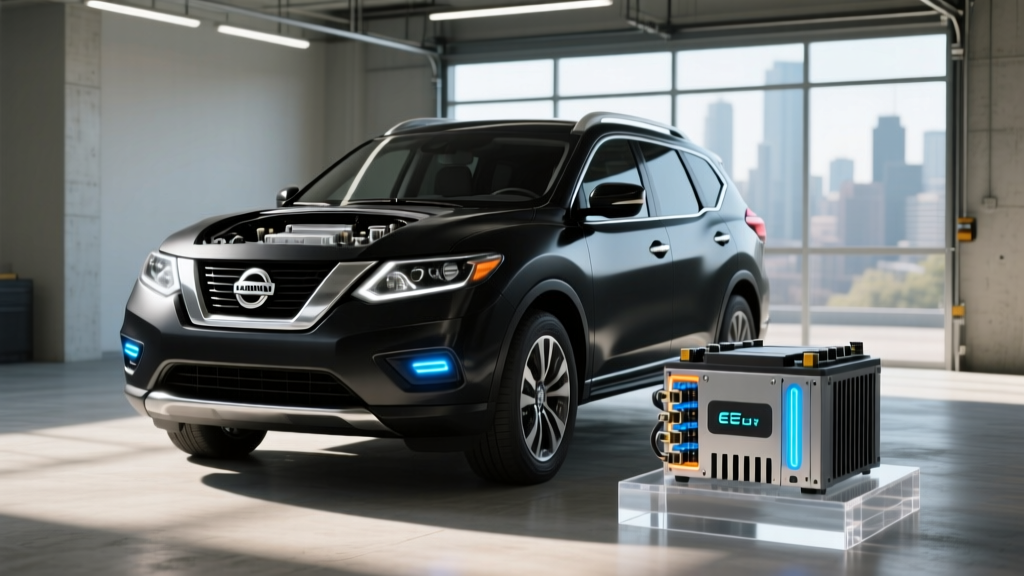
The 2014 Nissan Pathfinder (third-row, V6, gasoline) uses a standard 12V lead-acid starting battery. This is not a traction battery—it does not propel the vehicle. Its job is to crank the 3.5L V6 engine and run accessories when the engine is off.
| Spec | 2014 Pathfinder 12V Battery |
|---|---|
| Group Size | 35 (some trims: 24F) |
| Chemistry | Flooded lead-acid (AGM optional) |
| Typical CCA | 550–650 amps |
| Typical Lifespan | 3–5 years |
| Replacement Cost (2026) | $140–$280 (parts, DIY or shop) |
| Warranty | 24–36 months free replacement |
This is a well-understood, low-cost maintenance item. But EVs are fundamentally different: they use a high-voltage lithium-ion traction battery (typically 60–100+ kWh) to propel the vehicle, plus a small 12V battery for electronics. The traction battery is what buyers worry about—and where the real engineering story lies.
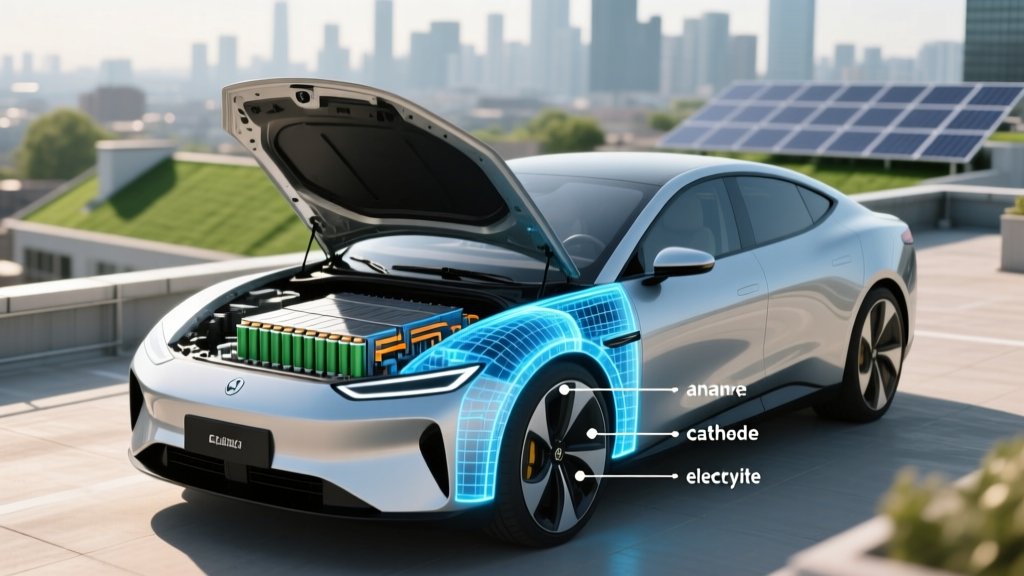
EV Battery Chemistry Explained: LFP vs NMC vs NCA
Modern EVs use one of two dominant lithium-ion chemistries for their traction batteries. Understanding the trade-off is critical before you buy.
| Factor | LFP (Lithium Iron Phosphate) | NMC / NCA (Nickel-based) |
|---|---|---|
| Energy Density | Lower (~160 Wh/kg cell-level) | Higher (~250–300 Wh/kg) |
| Typical Range Impact | Shorter range for same pack weight | Longer range, lighter packs |
| Cycle Life | 3,000–5,000+ cycles to 80% SoH | 1,000–2,000 cycles to 80% SoH |
| Cold-Weather Performance | Weaker below 32°F; slower charging | Better low-temp discharge and charging |
| Thermal Stability | Excellent; very low fire risk | Good but requires more thermal management |
| Cost (2026) | ~$85–$100/kWh at pack level | ~$110–$140/kWh at pack level |
| Can Charge to 100% Daily? | Yes—recommended for accuracy | No—80% daily recommended for longevity |
| Common In (2026) | Tesla Model 3 RWD, Model Y RWD, Ford Mustang Mach-E Select, BYD | Hyundai Ioniq 5, Kia EV6, Tesla Long Range, Rivian, GM Ultium vehicles |
Which is better? It depends on your use case. LFP wins on longevity and cost—you can charge to 100% daily without guilt, and the cells last significantly more cycles. NMC/NCA wins on range and cold-weather usability. If you live in Minnesota and need 300+ miles of range, NMC is still the better fit in 2026. If you commute 40 miles round-trip in California and want a battery that will outlast the car, LFP is increasingly the smart choice.
How Long Do EV Batteries Actually Last? Degradation Data
The short answer: most EV batteries outlast the vehicle they are installed in. But let us look at real numbers, not marketing.
Typical degradation trajectory for modern NMC batteries (2020–2026 models):
- Year 1: 2–5% loss (initial formation settling)
- Years 2–5: ~1% per year (linear phase)
- Years 5–10: ~0.5% per year (plateau)
- Expected capacity at 150,000 miles: 85–92% State of Health (SoH)
- Expected capacity at 200,000 miles: 80–88% SoH
LFP degradation trajectory:
- Year 1: 1–3% loss
- Years 2–8: Extremely gradual; often under 1% per year
- Expected capacity at 200,000 miles: 90–95% SoH in many observed cases
Real-world data from Recurrent Auto's fleet analysis of over 15,000 EVs shows that the median EV battery retains roughly 90% of its original capacity after 100,000 miles. The EPA's fueleconomy.gov database confirms that range reduction over time is modest for most models, and far less severe than early-2010s EVs like the original Nissan Leaf (which used passive air cooling and suffered notably higher degradation).
For context: a 2026 Hyundai Ioniq 5 with a 77.4 kWh NMC pack rated at 305 miles EPA will likely still deliver 260–280 miles of real-world range at 150,000 miles. That is still more than adequate for most daily driving.
EV Battery Warranties: What Is Actually Covered
Federal law mandates that EV batteries carry a minimum warranty of 8 years or 100,000 miles (10 years/150,000 miles in CARB states like California, New York, and others). But manufacturers often exceed these minimums, and the details matter.
| Manufacturer | Warranty Term | Capacity Threshold | Notes |
|---|---|---|---|
| Tesla (Model 3/Y RWD – LFP) | 8 yr / 100,000 mi | 70% retention | LFP packs have shown minimal degradation in practice |
| Tesla (Long Range / Performance) | 8 yr / 120,000 mi | 70% retention | NMC/NCA chemistry |
| Hyundai / Kia | 10 yr / 100,000 mi | 70% retention | Among the longest terms in the industry |
| GM (Ultium vehicles) | 8 yr / 100,000 mi | 70% retention (60% on some commercial) | Covers battery and powertrain components |
| Ford (Mach-E, F-150 Lightning) | 8 yr / 100,000 mi | 70% retention | LFP on Select trim, NMC on extended range |
| Nissan (Ariya) | 8 yr / 100,000 mi | 70% retention (5 bars of 12 on gauge) | Significantly improved over early Leaf warranty |
| Rivian | 8 yr / 175,000 mi | 70% retention | Higher mileage cap reflects adventure-use positioning |
What the warranty covers: If your battery's State of Health drops below the threshold (typically 70% of original capacity) within the warranty period, the manufacturer will repair or replace the battery at no cost. This covers defects and abnormal degradation. It does not cover damage from accidents, flooding, or unauthorized modifications.
What it does not cover: Normal degradation above the threshold. If your battery is at 75% SoH at year 9, you are outside the warranty window and above the threshold—no claim is possible. In practice, very few modern EVs fall below 70% within the warranty period.
EV Battery Replacement Cost: The Numbers in 2026
This is the question that causes the most anxiety. Let us put it in perspective with actual data.
| Battery Size | Typical Models | Replacement Cost Range (2026) | When Typically Needed |
|---|---|---|---|
| 50–60 kWh | Chevy Bolt EV, base Model 3 RWD | $8,000–$12,000 | Rarely before 200,000+ miles |
| 70–85 kWh | Model Y LR, Ioniq 5, EV6, Mach-E ER | $12,000–$18,000 | Rarely before 200,000+ miles |
| 90–100+ kWh | Model S/X, F-150 Lightning ER, Rivian | $15,000–$25,000 | Rarely before 200,000+ miles |
| LFP packs (various) | Model 3/Y RWD, Mach-E Select | $7,000–$13,000 | Extremely rare; LFP degrades very slowly |
Key context most coverage omits:
- Most EV batteries never need replacement. Data from NHTSA complaint databases and fleet studies show full battery replacement rates under 2% within the first 10 years for modern liquid-cooled packs.
- Module-level repair is increasingly common. Many shops can now replace individual battery modules rather than the full pack, cutting costs to $2,000–$5,000.
- Prices are falling. Pack-level costs have dropped from over $1,000/kWh in 2010 to roughly $100–$140/kWh in 2026. Aftermarket and refurbished packs are becoming available.
- The car will likely be totaled or retired before the battery dies. A 2014 Nissan Pathfinder has an average resale value of $6,000–$9,000 today. Most EVs will reach end-of-life (rust, electronics, suspension) before a $15,000 battery swap is needed.
Factors That Accelerate (or Preserve) Battery Life
Battery degradation is not random. It is driven by specific, controllable factors.
What Hurts Your Battery
- Frequent DC fast charging above 150 kW — sustained high-current sessions generate heat; occasional use is fine, but daily 350 kW charging accelerates wear.
- Sitting at 100% SoC for extended periods — especially in hot weather. If you charge to 100%, drive soon after.
- Deep discharges to 0% — regularly draining below 10% stresses cells. Keep a 10–20% buffer.
- Extreme heat exposure — parking in direct sun in Phoenix for weeks at a time without thermal management active.
- Ignoring preconditioning — fast-charging a cold battery (below 40°F) without preconditioning causes lithium plating on NMC cells.
What Preserves Your Battery
- Daily charging to 80% (NMC/NCA) or 100% (LFP) — moderate SoC reduces stress on cathode materials.
- Level 2 home charging as primary method — 7–11 kW is gentle on cells compared to 150+ kW DC.
- Using the car's preconditioning feature — navigate to a charger in your car's app so the battery warms up before arrival.
- Keeping the car plugged in during extreme cold — the thermal management system uses grid power, not battery energy, to maintain temperature.
- Driving regularly — batteries prefer use over sitting idle for months at high SoC.
How to Check and Monitor Your Battery's State of Health
State of Health (SoH) is the percentage of original capacity your battery can still hold. Here is how to track it:
- In-car battery health display: Many EVs show SoH directly. Tesla owners can check via the service menu or third-party tools. Hyundai/Kia display a bar-graph health indicator. The Nissan Ariya shows a 12-bar capacity gauge inherited from the Leaf's system.
- OBD-II dongles and apps: Tools like LeafSpy (Nissan), TeslaFi, or Scan My Tesla pull real-time SoH data from the battery management system (BMS). These typically cost $30–$80 for the hardware plus a small app subscription.
- Dealer diagnostic reports: Request a battery health check during service visits. Most manufacturers can print a detailed SoH report showing individual module voltages and total capacity.
- Range tracking: If your car showed 300 miles at 100% when new and now shows 270 miles at 100% (in similar weather), that is roughly 90% SoH. Track this over time, controlling for temperature—cold weather alone can reduce displayed range by 15–30% without any actual degradation.
When to be concerned: If SoH drops more than 3–4% in a single year after the first year, or if you notice sudden range loss that does not correlate with temperature changes, schedule a dealer diagnostic. This could indicate a failing module rather than normal degradation.
Emerging Battery Tech: What Is Coming (and When)
The battery landscape is evolving rapidly, but buyers should separate lab announcements from showroom reality.
- Silicon-dominant anodes: Companies like Sila Nanotechnologies and Group14 are replacing graphite anodes with silicon composites, boosting energy density by 20–40%. These are entering production in 2026–2027 in limited applications (Mercedes G-Class EV, select premium models). Expect broader adoption by 2028–2029.
- Solid-state batteries: Toyota, Samsung SDI, and QuantumScape are leading development. Toyota has announced a 2027–2028 production target for a solid-state EV with ~750 km (WLTP) range and 10-minute fast charging. However, manufacturing scale-up remains the major hurdle. Realistic mass-market availability: 2030 or later.
- Sodium-ion batteries: CATL and BYD are producing sodium-ion cells for lower-cost, shorter-range EVs (city cars, commercial vans). These trade energy density for extreme low-cost and zero critical-mineral dependence. US availability is limited as of 2026 but growing in commercial fleet applications.
- LMFP (lithium manganese iron phosphate): An evolution of LFP that adds manganese for ~15–20% higher energy density while retaining LFP's safety and cycle-life advantages. Expected in multiple 2027–2028 model-year vehicles from Tesla and Chinese OEMs entering global markets.
The practical takeaway: If you are buying in 2026, today's LFP and NMC batteries are mature, well-warrantied, and proven over billions of fleet miles. Waiting for solid-state means waiting at least 4+ years for limited availability at premium prices. Current technology is ready for real ownership today.
From Pathfinder to EV: Making the Transition
If you are driving a 2014 Nissan Pathfinder and considering your next vehicle, here is what the battery data tells us:
- Your Pathfinder's 12V battery costs $150–$280 and lasts 3–5 years. Over 12 years of ownership, you have likely spent $500–$1,000 on 12V replacements alone.
- A modern EV's traction battery will likely retain 85–92% capacity at 150,000 miles and is warrantied against dropping below 70% for 8–10 years.
- Full replacement is rare, expensive, but declining in cost—and most EVs will reach end-of-life before needing one.
- LFP chemistry is the longevity champion if range requirements allow; NMC/NCA offers more range and better cold-weather performance.
The IRS §30D clean vehicle credit can reduce the cost of a new EV by up to $7,500 in 2026, subject to MSRP caps ($55,000 for SUVs like the Ariya or Model Y), buyer income limits ($300,000 joint / $150,000 single), and battery sourcing requirements. Point-of-sale transfer is available, meaning the credit applies at purchase rather than at tax filing. Consult a tax professional for your specific eligibility.
How long do EV batteries last in years and miles?
Most modern liquid-cooled EV batteries (2020 and newer) retain 85–92% of original capacity at 150,000 miles and 80–88% at 200,000 miles. In calendar years, expect 15–20+ years of usable service before capacity drops to a level that meaningfully impacts daily driving. LFP chemistries tend to outlast NMC in cycle life.
How much does it cost to replace an EV battery?
In 2026, a full traction battery replacement ranges from $7,000–$13,000 for smaller LFP packs to $15,000–$25,000 for large 90–100+ kWh NMC packs. Module-level repairs cost $2,000–$5,000. However, actual replacement rates are under 2% in the first decade of ownership for modern packs.
What does the EV battery warranty cover?
Federal minimum is 8 years/100,000 miles (10 years/150,000 in CARB states). Coverage triggers when capacity drops below 70% of original (varies by manufacturer). It covers defects and abnormal degradation but not accident damage, flooding, or unauthorized modifications. Hyundai and Kia offer the longest terms at 10 years/100,000 miles.
How do I check my EV battery's health?
Use your car's built-in battery health display, an OBD-II diagnostic tool (LeafSpy, TeslaFi, Scan My Tesla), or request a dealer diagnostic report. You can also track full-charge range over time, controlling for temperature. A drop of more than 3–4% SoH per year after year one warrants investigation.
Is LFP or NMC better for battery longevity?
LFP (lithium iron phosphate) offers significantly longer cycle life (3,000–5,000+ cycles vs 1,000–2,000 for NMC), can be charged to 100% daily without degradation concern, and costs less per kWh. NMC/NCA offers higher energy density (more range per pound) and better cold-weather performance. For maximum longevity in moderate climates, LFP is the winner. For range and cold-weather usability, NMC remains preferable.
Will my EV battery need replacing before the car wears out?
Statistically, very unlikely. Modern liquid-cooled packs are designed to outlast the vehicle's mechanical and cosmetic lifespan. Rust, suspension wear, electronics failure, and accident damage retire most vehicles long before the traction battery reaches end-of-life. Early EVs (2011–2017 Nissan Leaf with passive air cooling) had higher degradation rates, but this is not representative of current technology.