Why a "Battery for 2014 Mazda 3" Search Leads Straight to EV Battery Science
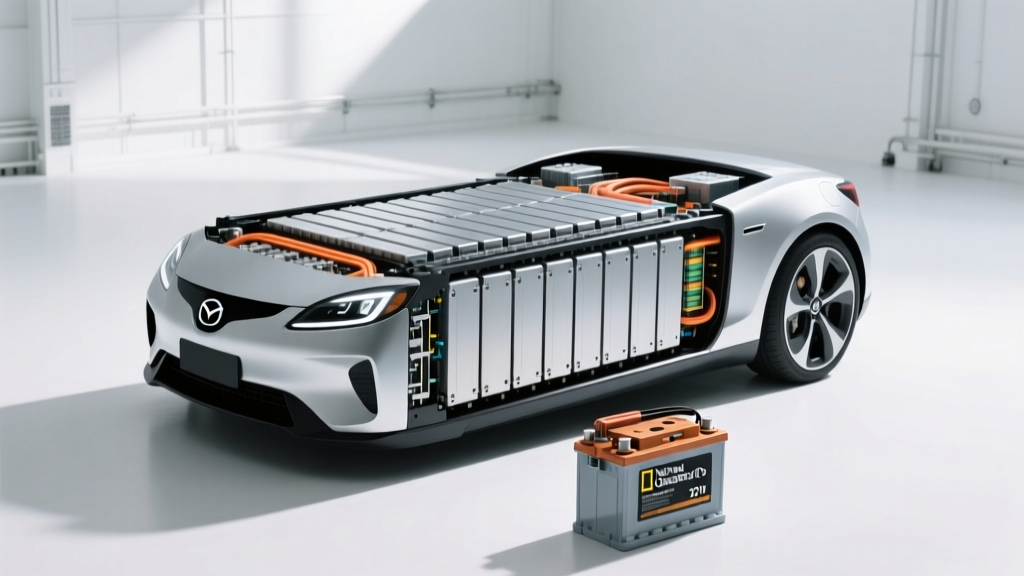
If you've landed here searching for a battery for 2014 Mazda 3, you're likely holding a dead key fob or staring at a no-start dashboard on a cold morning. The 2014 Mazda 3 uses a conventional 12V lead-acid (or AGM) auxiliary battery — typically a Group 35 or Group 48 — and replacing it is a $150–$250 job at any auto parts store. That's not what this guide covers.
What is worth exploring is how that humble 12V battery sits inside a broader conversation about automotive battery technology — especially as Mazda itself, and nearly every other automaker, pivots toward electrification. Whether you own a 2014 Mazda 3 and are considering an EV for your next purchase, or you're already driving a modern BEV and want to understand the high-voltage traction battery under your floor, the chemistry, degradation science, and economics of batteries matter enormously.
This guide covers the high-voltage traction batteries that power modern electric vehicles: the chemistry trade-offs, real-world degradation data, warranty protections, replacement costs, and care habits that determine whether your EV battery outlasts the car itself.
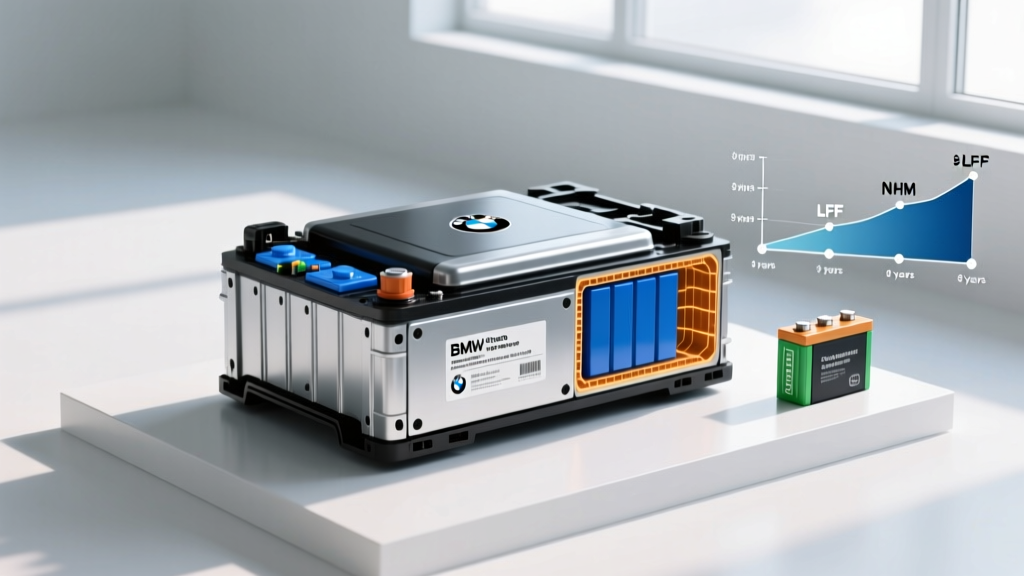
LFP vs NMC vs NCA: The Chemistry That Defines Your EV
Not all EV batteries are built the same. The cathode chemistry determines energy density, lifespan, cold-weather performance, and cost. In 2026, two chemistries dominate the market:
- NMC (Nickel Manganese Cobalt) and NCA (Nickel Cobalt Aluminum) — the high-energy-density choice used in most long-range EVs (Tesla Model 3 Long Range, Hyundai Ioniq 5, Ford Mustang Mach-E Extended Range).
- LFP (Lithium Iron Phosphate) — the durability-and-cost champion, now standard in base-trim EVs from Tesla, BYD, Ford, and others.
| Attribute | NMC / NCA | LFP |
|---|---|---|
| Energy Density | 220–300 Wh/kg (cell-level) | 150–200 Wh/kg |
| Cycle Life | 1,000–2,000 cycles to 80% SoH | 3,000–5,000+ cycles to 80% SoH |
| Cold Performance | Better at -10°C and below | Reduced range & slower charging in cold |
| Cost (per kWh) | $110–$140/kWh (pack-level, 2026) | $75–$100/kWh |
| Thermal Stability | Good, requires active management | Excellent — inherently safer |
| Recommended SoC Range | 20–80% daily (avoid 100% storage) | Can charge to 100% regularly |
| Typical Applications | Long-range, performance trims | Standard-range, fleet, budget EVs |
Which is better? For maximum range in a compact package — NMC/NCA wins. For longevity, daily charging simplicity, and lower cost — LFP is the clear pick. Tesla's Standard Range Model 3 has used LFP since 2021, and by 2026, LFP accounts for roughly 40% of global EV battery production. If you drive mostly under 200 miles per day and can charge at home, LFP's slightly lower energy density is rarely a real-world limitation.
How Long Do EV Batteries Actually Last?
The fear that EV batteries need frequent replacement is one of the most persistent myths in automotive. The data tells a different story.
Based on fleet data from Tesla's 2025 Impact Report, Geotab's analysis of over 10,000 EVs, and U.S. Department of Energy research, here's what real-world degradation looks like:
- Year 1 / 15,000 miles: ~2–3% capacity loss (initial formation loss)
- Year 3 / 45,000 miles: ~5–7% total loss
- Year 5 / 75,000 miles: ~7–10% total loss
- Year 8 / 120,000 miles: ~10–14% total loss
- Year 10 / 150,000 miles: ~12–18% total loss (varies heavily by usage)
LFP packs degrade even slower, often showing only 5–8% loss at 100,000 miles. Tesla reports its Model 3/Y batteries retain approximately 85% capacity at 200,000 miles.
Translation: for most owners, the battery will retain 80–90% of its original capacity for the entire time they own the vehicle. A 300-mile EPA-rated EV with 12% degradation still delivers ~264 miles — more than adequate for daily driving and most road trips.
The batteries that do fail prematurely are usually victims of manufacturing defects (covered under warranty) or extreme abuse: repeated 100% charges left sitting in 110°F heat, or exclusive use of 350 kW DC fast chargers without thermal preconditioning.
What Does the EV Battery Warranty Actually Cover?
Federal law in the United States mandates that EV batteries carry a minimum warranty of 8 years or 100,000 miles (whichever comes first). In California Air Resources Board (CARB) states — which include California, New York, Massachusetts, Oregon, Washington, and about a dozen others — that extends to 10 years or 150,000 miles.
| Manufacturer | Duration | Mileage | Capacity Threshold |
|---|---|---|---|
| Tesla (Model 3/Y) | 8 years | 120,000 mi (LR) / 100,000 mi (RWD) | 70% retention |
| Hyundai / Kia | 10 years | 100,000 mi | 70% retention |
| Ford (Mach-E, F-150 Lightning) | 8 years | 100,000 mi | 70% retention |
| GM (Ultium-based EVs) | 8 years | 100,000 mi | 70% retention (60% for Bolt-era) |
| BMW | 8 years | 100,000 mi | 70% retention |
What triggers a warranty claim? If your battery's State of Health (SoH) drops below the stated threshold — typically 70% of original capacity — within the warranty period, the manufacturer must repair or replace the battery at no cost. This covers degradation and manufacturing defects. It does not cover damage from accidents, flooding, or unauthorized modifications.
For context: dropping below 70% SoH within 8 years/100,000 miles is statistically rare for liquid-cooled packs. According to data aggregated by Geotab, the average EV loses only about 1.8% per year — meaning most batteries sit well above 80% SoH at the warranty boundary.
EV Battery Replacement Cost: What to Budget and When
Here's the number that generates the most anxiety — and the most misunderstanding. Yes, a full EV battery pack replacement is expensive. But the context matters enormously:
| Vehicle / Pack Size | Battery (Parts) | Labor | Total Estimate |
|---|---|---|---|
| Tesla Model 3 RWD (~60 kWh, LFP) | $7,000–$9,000 | $1,500–$2,500 | $8,500–$11,500 |
| Tesla Model Y LR (~75 kWh, NMC) | $10,000–$13,000 | $1,500–$2,500 | $11,500–$15,500 |
| Hyundai Ioniq 5 (~77 kWh, NMC) | $11,000–$14,000 | $2,000–$3,000 | $13,000–$17,000 |
| Ford F-150 Lightning Ext. (~131 kWh) | $18,000–$25,000 | $2,500–$4,000 | $20,500–$29,000 |
| Chevrolet Equinox EV (~85 kWh) | $9,000–$12,000 | $1,500–$2,500 | $10,500–$14,500 |
When is replacement typically needed? For the vast majority of EV owners, the answer is never. Battery pack costs have fallen from over $1,000/kWh in 2010 to roughly $100–$140/kWh at the pack level in 2026 (per BloombergNEF data). More importantly, most liquid-cooled EV batteries outlast the useful economic life of the vehicle itself. A 2013 Tesla Model S with 200,000+ miles is still on its original pack in many documented cases.
When replacements do happen, they're increasingly modular. Many modern packs allow technicians to replace individual modules (a few kWh each) rather than the entire pack — reducing costs by 60–80% compared to a full swap.
Factors That Accelerate (or Preserve) Battery Life
Battery degradation isn't random — it's driven by specific, controllable factors. Here's what the electrochemistry actually rewards and punishes:
- Limit DC fast charging to road trips. Frequent 150+ kW DC sessions accelerate degradation by ~1–2% over 5 years vs. primarily Level 2 charging. Occasional fast charging is fine; daily fast charging adds up.
- Keep SoC between 20–80% for daily use (NMC/NCA). Storing a battery at 100% SoC, especially in heat, stresses the cathode. LFP owners can charge to 100% daily without concern.
- Avoid extreme SoC in extreme temperatures. A battery at 5% SoC in -20°F weather is under maximum stress. Precondition your battery before fast charging in cold weather.
- Use scheduled charging. Set your car to finish charging right before you leave — minimizes time spent at high SoC.
- Don't baby it excessively. The difference between "perfect" battery care and "normal" care is typically 2–4% SoH over 8 years. Drive your car.
What actually kills batteries? The real risk factors are: (1) consistent high-SoC storage in hot climates — leaving a car at 100% in a Phoenix summer for weeks; (2) repeated deep discharges to 0% followed by long sit periods; and (3) manufacturing defects, which typically manifest in the first 1–2 years and are covered under warranty.
How to Monitor Your Battery's State of Health
State of Health (SoH) is the percentage of your battery's original capacity that remains usable. A brand-new battery is at 100% SoH; one that holds 65 kWh of its original 75 kWh is at 86.7% SoH.
How to check SoH:
- In-car displays: Tesla shows estimated range at 100% charge, from which you can calculate SoH. Hyundai/Kia's infotainment includes a battery health screen on 2024+ models.
- OBD-II apps: Tools like Leaf Spy (Nissan Leaf), Scan My Tesla, or ABRP's OBD integration read the BMS (Battery Management System) directly for precise SoH figures.
- Dealer diagnostics: Any authorized service center can pull a full battery health report, including individual module voltage balance and internal resistance measurements.
- Third-party services: Companies like Recurrent Auto provide battery health reports based on telematics data, useful for used-EV purchases.
When to be concerned: If your SoH drops more than 3% in a single year after the initial break-in period, or if you notice sudden range drops (not explained by cold weather), schedule a dealer diagnostic. Uneven module degradation — where one cell group lags behind the others — can sometimes be corrected via a BMS rebalance rather than a full replacement.
What's Next: Solid-State, Silicon Anodes, and Beyond
The battery landscape is evolving rapidly, but separating marketing hype from production reality is essential.
Solid-state batteries — which replace the liquid electrolyte with a solid material for higher energy density and faster charging — remain in limited production as of 2026. Toyota has announced a solid-state EV for 2027–2028 with a claimed 750 km (WLTP) range and 10-minute fast charging, but this is announced, not available. Nissan, Samsung SDI, and QuantumScape are all targeting 2027–2030 production timelines. Expect initial solid-state EVs to carry premium pricing above $70,000.
Silicon-dominant anodes are closer to mainstream adoption. Companies like Sila Nanotechnologies and Group14 are supplying silicon-carbon anode materials that boost energy density by 10–20% over traditional graphite. These are appearing in select 2025–2026 model-year cells and should reach broader production by 2027–2028.
Sodium-ion batteries — cheaper than lithium, using abundant materials — are entering production in China (CATL, BYD) for budget EVs and energy storage. U.S. market adoption is expected in the 2027–2029 timeframe, likely in entry-level EVs and commercial fleet vehicles.
Back to Your 2014 Mazda 3: When It's Time to Go Electric
If your 2014 Mazda 3 is nearing the end of its life and you're researching an EV replacement, here's what the battery landscape means for your decision:
- Budget under $35,000? Look at LFP-equipped EVs like the Tesla Model 3 RWD ($38,990 MSRP, ~$31,490 after the $7,500 §30D point-of-sale credit if eligible) or the Chevrolet Equinox EV LT ($33,600 MSRP). LFP means simpler charging habits and exceptional longevity.
- Need 300+ miles of range? NMC-based options like the Hyundai Ioniq 5 (EPA 318 mi, $45,500 MSRP) or Tesla Model Y Long Range (EPA 320 mi, $47,990) deliver the energy density for true road-trip flexibility.
- Worried about battery replacement? Don't be. The data consistently shows that modern liquid-cooled EV batteries retain 80%+ capacity at 150,000 miles. The 8-year/100,000-mile federal warranty mandate provides a strong safety net, and the trend toward modular pack repair keeps worst-case costs manageable.
For current federal EV tax credit eligibility under IRS §30D, remember that income caps ($150K single / $300K joint), MSRP limits ($55K cars / $80K SUVs and trucks), and battery critical-mineral sourcing requirements all apply. The point-of-sale transfer option lets you apply the credit directly at the dealership rather than waiting for tax filing. Consult a tax professional for your specific situation, as rules are subject to legislative change.
Frequently Asked Questions
How long do EV batteries last in years and miles?
Most modern liquid-cooled EV batteries retain 80–90% of their original capacity after 10 years or 150,000 miles. Tesla's fleet data shows approximately 85% retention at 200,000 miles. The battery will typically outlast the vehicle's economic useful life. The federal warranty mandates coverage for at least 8 years/100,000 miles.
How much does an EV battery cost to replace in 2026?
Full pack replacement ranges from approximately $8,500 for a smaller LFP pack (Tesla Model 3 RWD) to $25,000+ for a large truck pack (F-150 Lightning Extended Range). However, most replacements are modular — swapping individual cell modules rather than the entire pack — reducing costs by 60–80%. Most EV batteries never need replacement during typical ownership.
What does the EV battery warranty cover?
Federal law requires at least 8 years/100,000 miles of coverage (10 years/150,000 miles in CARB states). The warranty covers capacity loss below a specified threshold (usually 70% of original capacity) as well as manufacturing defects. It does not cover accident damage, flooding, or unauthorized modifications. Check your specific manufacturer's terms, as some offer more generous coverage.
How do I check and maximize my EV battery health?
Check SoH via your car's infotainment system, an OBD-II diagnostic app, or a dealer service visit. To maximize longevity: limit DC fast charging to road trips, keep daily SoC between 20–80% for NMC/NCA batteries (100% is fine for LFP), avoid leaving the car at extreme SoC in extreme temperatures, and use scheduled charging to minimize high-SoC storage time.
LFP vs NMC — which battery chemistry should I choose?
Choose LFP if you want maximum cycle life, lower cost, the ability to charge to 100% daily without concern, and enhanced thermal safety — ideal for daily commuting and home charging. Choose NMC/NCA if you need maximum range per charge, better cold-weather performance, or are buying a performance/long-range trim. Both chemistries are proven to last well beyond 150,000 miles with proper care.
Does the 2014 Mazda 3 have an EV battery?
No. The 2014 Mazda 3 is a conventional gasoline vehicle with a standard 12V lead-acid battery (Group 35 or Group 48, ~$150–$250 replacement). It does not have a high-voltage traction battery. If you're replacing the 12V battery, any auto parts store can match the correct group size and CCA (cold cranking amps) rating for your climate.
Sources: U.S. Department of Energy / fueleconomy.gov, Tesla 2025 Impact Report, IRS §30D Clean Vehicle Credits, Geotab EV Battery Degradation Study, BloombergNEF Battery Price Survey 2025.