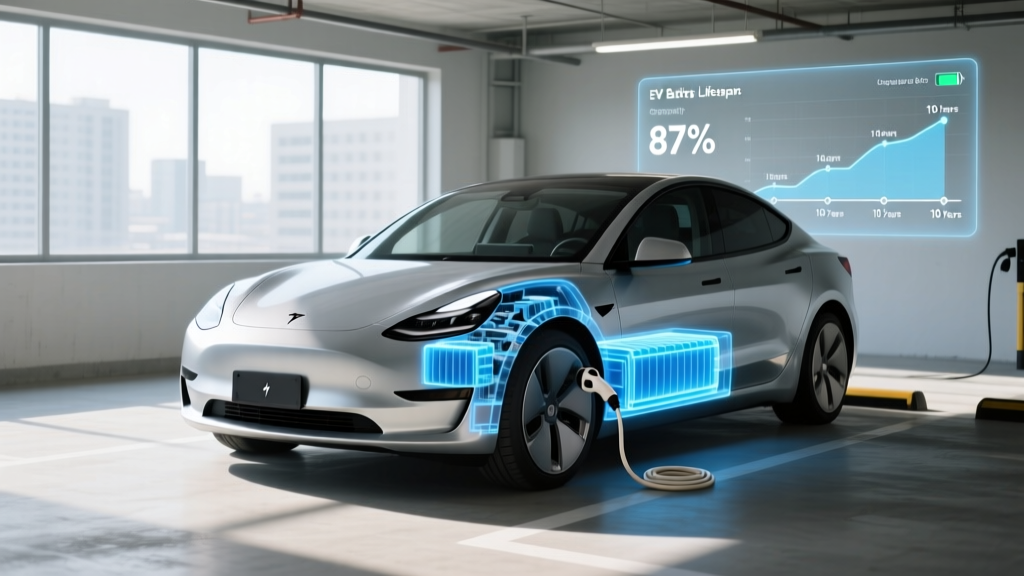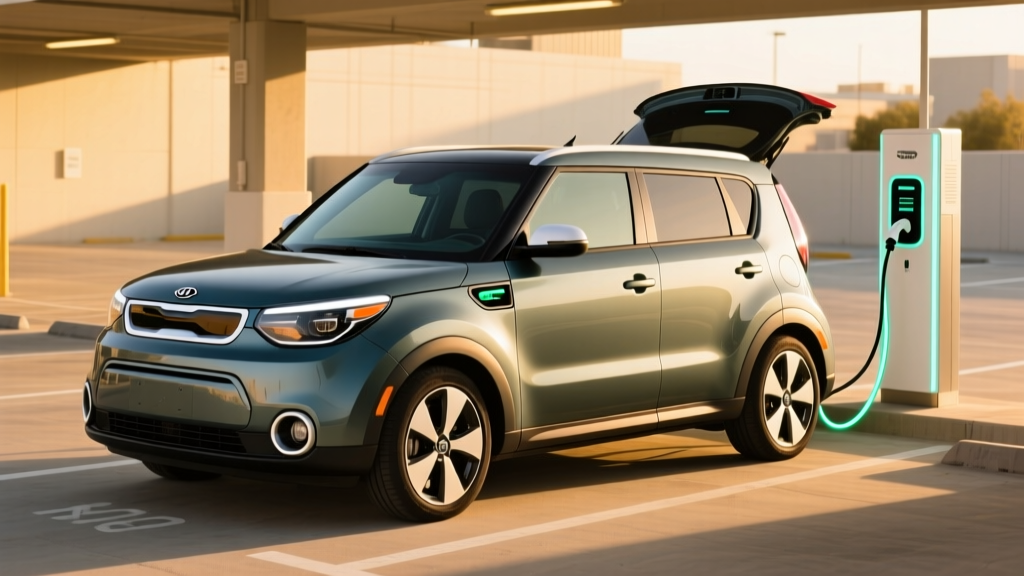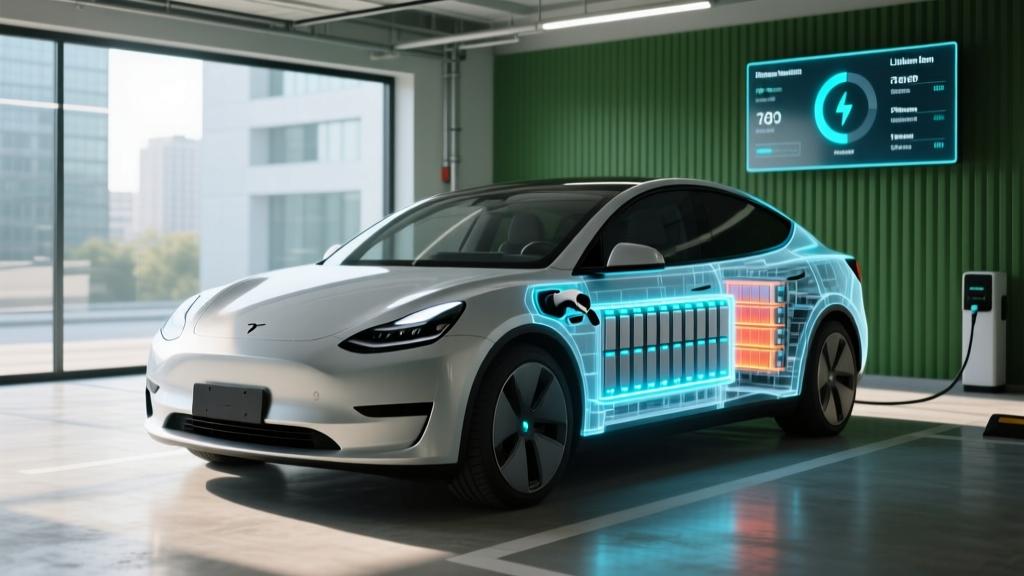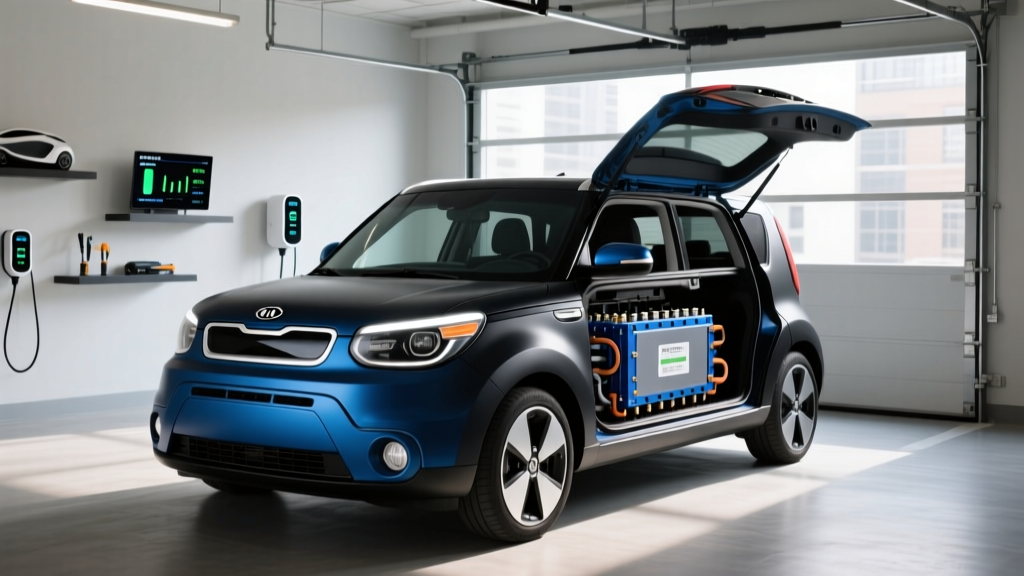
The 2014 Kia Soul EV was a pioneer among mainstream affordable electric vehicles, offering 93 miles of EPA-rated range from its 27 kWh (usable) lithium-ion battery pack. More than a decade later, many original packs are still on the road — but owners and prospective used buyers need to understand what aging means for this specific high-voltage traction battery, what replacement actually costs, and how modern battery chemistries compare to what was under the floor of the first-generation Soul EV.
This guide covers the battery for the 2014 Kia Soul EV in depth: chemistry, real-world degradation data, warranty coverage, replacement pricing, care strategies, and how today's LFP and advanced NMC packs have evolved since this car launched. Whether you own one, are considering buying a used example, or simply want to benchmark early-EV longevity against modern packs, the numbers below tell the full story.
The Original 2014 Kia Soul EV Battery Pack: NMC Chemistry and Specs
The 2014 Kia Soul EV shipped with a 27 kWh (usable capacity) lithium-ion traction battery using NMC (nickel manganese cobalt) chemistry. At the time, NMC was the dominant choice for automakers prioritizing energy density — packing more range into a lighter, more compact module than alternatives like LFP (lithium iron phosphate). The pack weighed approximately 600 lbs and was mounted under the floor, contributing to the Soul EV's relatively low center of gravity.
Key factory specifications for the original pack:
- Usable capacity: 27 kWh (gross ~30 kWh with buffer)
- Chemistry: NMC (nickel manganese cobalt oxide)
- EPA range (new): 93 miles
- EPA efficiency: 105 MPGe combined (31 kWh/100 mi)
- Peak DC fast-charge rate: ~50 kW (CHAdeMO connector)
- Level 2 AC charge rate: 6.6 kW onboard charger
- Motor output: 109 hp / 210 lb-ft torque
- 0-60 mph: ~11.2 seconds
The 50 kW CHAdeMO DC fast-charging capability was competitive in 2014, enabling a roughly 25-minute session from 20% to 80% state of charge under ideal thermal conditions. However, CHAdeMO has since been eclipsed by CCS1 and NACS as the dominant fast-charging standards in North America, which affects long-term charging infrastructure access for 2014 Soul EV owners in 2026.
LFP vs NMC Battery Chemistry: Trade-Offs Explained
Understanding why Kia chose NMC in 2014 — and why the industry has since diversified — requires comparing the two dominant EV battery chemistries. Here's how LFP and NMC stack up across the metrics that matter most to owners:
| Attribute | NMC (2014 Soul EV) | LFP (e.g., Tesla Model 3 RWD, BYD) |
|---|---|---|
| Energy density (Wh/kg, cell-level) | 200–260 Wh/kg | 150–180 Wh/kg |
| Typical cycle life | 1,000–2,000 cycles | 3,000–5,000+ cycles |
| Cold-weather range loss (at ~20°F) | ~25–35% reduction | ~30–40% reduction (slightly worse) |
| Cost per kWh (2026 pack-level) | ~$110–$130/kWh | ~$80–$100/kWh |
| Thermal stability / fire risk | Moderate | Higher inherent stability |
| Optimal daily charge target | 80% for longevity | 100% acceptable (recommended weekly) |
| Cobalt content | Yes (supply chain concern) | None |
NMC's energy-density advantage is why Kia used it in 2014 — getting 93 miles of range into a compact crossover required the lightest possible pack. LFP's lower energy density would have meant either fewer miles or a heavier car. But LFP's superior cycle life, lower cost, and cobalt-free supply chain have made it the go-to chemistry for standard-range models by 2026, appearing in the Tesla Model 3 RWD, Ford Mustang Mach-E Select (base), and most BYD global models.
For 2014 Soul EV owners, the NMC chemistry means the pack is more sensitive to sustained high states of charge and frequent DC fast charging than an equivalent LFP pack would be. This directly affects the care strategies covered later in this guide.
How Long Does the 2014 Kia Soul EV Battery Last? Degradation Data
This is the central question for any early-EV owner: how much capacity has the pack lost after 10+ years and potentially 100,000+ miles? The answer depends heavily on climate, charging habits, and whether the car was garage-kept — but aggregated data from Soul EV owner communities and diagnostic tools paints a clear picture.
Based on owner-reported State of Health (SoH) data from Soul EV forums and OBD2 diagnostic readings (2024–2026 aggregated samples):
- Year 1–3 (0–40k miles): ~3–6% capacity loss (SoH 94–97%)
- Year 4–6 (40k–75k miles): ~7–12% total loss (SoH 88–93%)
- Year 7–9 (75k–110k miles): ~12–18% total loss (SoH 82–88%)
- Year 10–12 (100k–140k miles): ~15–25% total loss (SoH 75–85%)
Sources: Kia Soul EV Owners Club forums, U.S. DOE EV Tech Overview, Geotab fleet battery degradation study.
A 2014 Soul EV with 80,000 miles and 85% SoH will deliver roughly 79 miles of real-world range (down from the original 93). That's still viable for urban commuting but represents a meaningful reduction. Cars in hot climates (Arizona, Texas, Southern California) that were frequently DC fast-charged tend to cluster toward the higher-loss end of these ranges, while garage-kept examples in temperate Pacific Northwest climates often exceed 90% SoH even at 100,000 miles.
Critically, degradation is not linear. Most NMC packs experience a steeper initial drop (the "break-in" phase) during the first 10,000–20,000 miles, then settle into a slower, more predictable decline. A 2014 Soul EV at 82% SoH today is not necessarily headed for rapid failure — it may hold 75–78% for another 40,000 miles with proper care.
Battery Warranty: What Kia Covered and What Remains in 2026
Kia's original high-voltage battery warranty for the 2014 Soul EV was a benchmark at the time and remains relevant for understanding what the manufacturer considered acceptable degradation:
| Parameter | Coverage |
|---|---|
| Duration | 10 years / 100,000 miles (whichever comes first) |
| Capacity retention threshold | 70% of original usable capacity |
| What triggers a claim | SoH drops below 70% (i.e., less than ~18.9 kWh usable) |
| Remedy | Repair, module replacement, or full pack replacement at Kia's discretion |
| Transferable to second owner? | Yes, in most states (verify with Kia USA) |
| Exclusions | Damage from accidents, floods, unauthorized modifications, or improper charging equipment |
For a 2014 model, the 10-year / 100,000-mile warranty window has now expired or is expiring in 2024–2025 depending on the original in-service date. This means owners facing significant degradation in 2026 are responsible for replacement costs unless an extended warranty or certified pre-owned program applies.
For context, most modern EV warranties (2025–2026 model years) follow a similar structure: 8 years / 100,000 miles with a 70% capacity retention threshold, per federal emissions-related component guidelines. Some manufacturers, like Hyundai and Kia on newer models, still offer 10 years / 100,000 miles. The 70% threshold is industry-standard — it's the point at which range loss becomes noticeably impactful for daily driving.
EV Battery Replacement Cost: 2014 Soul EV and Broader Market
Out-of-warranty high-voltage battery replacement is the single largest potential expense in EV ownership. For the 2014 Kia Soul EV, the reality in 2026 is nuanced:
| Vehicle / Pack Size | Battery Cost (parts) | Labor | Total Estimated Range |
|---|---|---|---|
| 2014–2019 Kia Soul EV (27–30 kWh, NMC) | $6,000–$8,500 | $1,500–$2,500 | $7,500–$11,000 |
| Nissan Leaf (24–40 kWh) | $5,500–$8,000 | $1,200–$2,000 | $6,700–$10,000 |
| Tesla Model 3 (50–82 kWh) | $10,000–$16,000 | $1,500–$3,000 | $11,500–$19,000 |
| Ford F-150 Lightning (98–131 kWh) | $18,000–$28,000 | $2,500–$4,000 | $20,500–$32,000 |
| Chevrolet Bolt EV/EUV (65 kWh) | $9,000–$14,000 | $1,500–$2,500 | $10,500–$16,500 |
For the 2014 Soul EV specifically, a full OEM replacement pack from a Kia dealer typically runs $7,500–$11,000 installed. However, a growing market for refurbished and salvaged packs has emerged: third-party EV shops can source tested used modules from wrecked Soul EVs for $3,500–$5,500 (parts only), bringing total replacement to $5,000–$8,000. This is a meaningful option for owners who plan to keep the car another 3–5 years but don't want to invest in a brand-new OEM pack for a vehicle with a Kelley Blue Book value of $5,000–$8,000.
The critical context: the vast majority of 2014 Soul EV batteries do not need full replacement. Module-level repairs — swapping individual degraded cells within the pack — are increasingly offered by independent EV specialists for $1,500–$3,500, restoring capacity to 85–90% SoH at a fraction of full-pack cost. This option requires a shop with high-voltage certification and access to Soul EV-specific diagnostic tools.
Factors That Accelerate Battery Degradation (and How to Minimize Them)
The 2014 Soul EV's NMC pack is more sensitive to abuse than modern LFP or advanced NMC chemistries. Here are the primary degradation drivers and actionable mitigation strategies:
- Avoid sustained 100% SoC: Charge to 80% for daily use; reserve 100% for road trips. NMC chemistry degrades faster at high voltage states.
- Limit DC fast charging: Use CHAdeMO DCFC (50 kW) sparingly — ideally no more than 1–2 times per week. Frequent 50 kW sessions generate heat that accelerates cell wear.
- Precondition in cold weather: Use the Soul EV's scheduled charging/climate feature to warm the pack before driving in sub-40°F conditions. A cold pack charged at high rates suffers lithium plating damage.
- Avoid extreme heat storage: Don't leave the car at 100% SoC in direct sun at 100°F+. If garage parking isn't available, charge to 60–70% for outdoor summer storage.
- Drive moderately in hot weather: Aggressive acceleration generates internal pack heat. The Soul EV's air-cooled battery (no active liquid cooling) is especially vulnerable to thermal stress during repeated hard launches.
- Keep firmware updated: Kia issued BMS (Battery Management System) updates that improved charge algorithms and thermal protection. Verify your car has the latest dealer-applied updates.
The Soul EV's air-cooled battery management system is a notable limitation compared to liquid-cooled packs in the Tesla Model 3, Chevrolet Bolt, and most modern EVs. Air cooling is simpler and lighter but less effective at managing heat during fast charging and hot-weather driving. This is a primary reason Soul EV packs in Phoenix or Las Vegas show measurably higher degradation than identical cars in Portland or Minneapolis (where cold, not heat, is the primary concern — and cold-related loss is largely reversible, while heat damage is permanent).
Checking Battery Health: How to Monitor State of Health (SoH)
The 2014 Kia Soul EV does not display a precise SoH percentage on its dashboard — a frustration for owners trying to track degradation. Here are the reliable methods available in 2026:
OBD2 diagnostic apps: The most accurate method uses an OBD2 Bluetooth adapter ($30–$80) paired with an EV-specific app like SoulEVSpy (Android, designed specifically for Kia Soul EV diagnostics) or EVNotify. These read the BMS directly and report SoH as a percentage, along with individual cell voltages, pack temperature, and charge/discharge counters. This is the gold standard for pre-purchase inspections on used Soul EVs.
Dealer diagnostic check: A Kia service department can run a full battery health report using the KDS (Kia Diagnostic System) tool. This typically costs $100–$150 as a standalone service and provides an official SoH reading that may be required for warranty claims (if still within the coverage window). Request a printout showing SoH percentage and individual module balance.
Range-based estimation: If you consistently drive the same route in similar weather, tracking your real-world range over time provides a rough SoH proxy. A car that delivered 88 miles on a full charge in 70°F weather when new but now delivers 74 miles in identical conditions has roughly 84% SoH (74/88 = 0.84). This method is imprecise but useful for spotting sudden drops that might indicate a failing module.
Charging session data: Measuring how many kWh your Level 2 charger delivers during a 20% to 100% session gives a rough capacity check. A healthy 27 kWh pack should accept ~22 kWh in that window (accounting for charger efficiency losses). If you're only seeing 17–18 kWh, SoH is likely below 80%.
Emerging Battery Technology: What's Next Beyond NMC and LFP
The 2014 Soul EV's NMC pack represents first-generation EV battery technology. The industry has advanced substantially, and several next-generation chemistries are in various stages of commercialization:
Silicon-dominant anodes: Companies like Sila Nanotechnologies and Group14 are replacing graphite anodes with silicon composites, boosting energy density by 20–40% without changing cathode chemistry. These are entering production in 2025–2026 in select models (e.g., Mercedes G-Class EV). For existing Soul EV owners, this won't enable a retrofit — but it illustrates how far pack-level energy density has moved since 2014.
Solid-state batteries: Toyota, Samsung SDI, and QuantumScape are targeting 2027–2030 for initial solid-state production, promising 500+ mile ranges, 10-minute fast charging, and dramatically improved safety (non-flammable electrolyte). These remain pre-commercial as of 2026 and will debut in premium vehicles at high cost. Mass-market adoption is realistically a 2030+ timeline.
Sodium-ion batteries: CATL and BYD have begun producing sodium-ion packs for low-cost, short-range EVs in China (2024–2025). Sodium-ion offers lower energy density than LFP but eliminates lithium, cobalt, and nickel entirely, with excellent cold-weather performance. U.S. availability is limited to announced commercial vehicles; no timeline for consumer passenger cars in North America as of early 2026.
None of these technologies will retroactively improve a 2014 Soul EV. But for owners considering a replacement vehicle, they underscore why modern EVs (even affordable ones like the 2026 Hyundai Kona EV or Chevrolet Equinox EV) offer 250+ miles of range, liquid-cooled packs, and 150–200 kW DC fast charging — a generational leap from the Soul EV's original capabilities.
Should You Replace, Repair, or Retire a 2014 Soul EV Battery?
The decision framework for a degraded 2014 Soul EV battery depends on three variables: current SoH, vehicle value, and your intended ownership horizon.
Choose module repair ($1,500–$3,500) if: SoH is 70–80%, you plan to keep the car 2–4 more years, and a qualified EV shop has confirmed only 1–3 modules are degraded beyond tolerance.
Choose full OEM replacement ($7,500–$11,000) if: SoH is below 65%, you love the car and plan to drive it 5+ more years, and the rest of the vehicle (suspension, interior, electronics) is in excellent condition.
Choose a refurbished/salvaged pack ($5,000–$8,000 installed) if: You want a cost-effective middle ground, can source a tested pack with 85%+ SoH from a reputable EV recycler, and accept a shorter warranty (typically 1–2 years vs. OEM coverage).
Choose to retire/sell the vehicle if: The car has other significant issues (rust, transmission, HVAC), the replacement cost exceeds the car's market value, or your daily commute now requires more range than the degraded pack can provide even after repair.
Frequently Asked Questions: 2014 Kia Soul EV Battery
How long do EV batteries last in years and miles?
Modern NMC and LFP packs are designed for 150,000–200,000+ miles before reaching 70–80% SoH. The 2014 Soul EV's first-generation NMC pack typically reaches 75–85% SoH at 100,000–130,000 miles (10–12 years), based on aggregated owner data. Most EV batteries outlast the vehicle's useful economic life — catastrophic failure is rare; gradual capacity loss is the norm.
How much does it cost to replace a 2014 Kia Soul EV battery?
A full OEM replacement pack costs $7,500–$11,000 installed at a Kia dealer in 2026. Refurbished packs from EV recyclers run $5,000–$8,000 installed at independent shops. Module-level repair (replacing individual degraded cells) costs $1,500–$3,500 and is often sufficient if the pack is above 70% SoH with isolated weak modules.
What did the original Kia Soul EV battery warranty cover?
Kia covered the high-voltage battery for 10 years / 100,000 miles with a 70% capacity retention threshold. If SoH dropped below 70% within that window, Kia would repair or replace the pack at its discretion. For 2014 models, this warranty has now expired or is expiring — out-of-warranty owners bear full replacement costs.
How do I check my 2014 Soul EV's battery health?
The most reliable method is an OBD2 adapter paired with the SoulEVSpy app, which reads SoH directly from the BMS. A Kia dealer can also run a KDS diagnostic for $100–$150. Tracking real-world range over consistent routes or measuring kWh accepted during a Level 2 charge session provides rough estimates without special equipment.
LFP vs NMC — which battery chemistry is better for daily use?
For daily commuting with home charging, LFP is generally superior in 2026: longer cycle life (3,000–5,000 vs. 1,000–2,000 cycles), lower cost, no cobalt, and tolerance for 100% daily charging. NMC remains advantageous for long-range vehicles where energy density (and thus weight/space efficiency) is critical. The 2014 Soul EV's NMC pack was the right choice for its era — but modern buyers prioritizing longevity over maximum range should look for LFP-equipped models.
Is the 2014 Soul EV's CHAdeMO connector a problem in 2026?
Increasingly, yes. Most new DC fast-charging installations in North America use CCS1 or NACS (Tesla Supercharger, now opening to other brands via adapters). CHAdeMO stations still exist — particularly Electrify America legacy sites and some ChargePoint locations — but the network is shrinking relative to CCS/NACS. Soul EV owners on road trips must plan routes around CHAdeMO availability using apps like PlugShare or A Better Routeplanner. No reliable CHAdeMO-to-NACS adapter exists as of 2026.