If you have landed on this page searching for a 2014 Hyundai Sonata battery, you are likely dealing with one of two very different situations. You either need to replace the small 12-volt lead-acid auxiliary battery that starts the electronics, or you are researching the high-voltage hybrid traction battery in the Sonata Hybrid and wondering how its longevity compares to modern electric vehicles (EVs). This distinction is critical.
As we look back from 2026, the 2014 Sonata Hybrid serves as a fascinating case study in battery durability. That 1.4 kWh lithium-polymer pack was tiny by today's standards, but its real-world aging data helps us understand the massive 75–100+ kWh traction batteries powering modern EVs like the Ioniq 5, Ioniq 6, and Tesla Model Y. In this guide, we will break down the chemistry, degradation curves, warranty structures, and replacement economics that every EV and hybrid buyer needs to know.
The 2014 Sonata Hybrid Battery: A Decade of Data
The 2014 Hyundai Sonata Hybrid utilized a 47 kW electric motor paired with a 2.4-liter gasoline engine. Its high-voltage battery was a 1.4 kWh lithium-polymer unit. Unlike a pure EV, this pack was never designed for deep cycling; it operated in a narrow state-of-charge (SoC) window to buffer regenerative braking and assist acceleration.
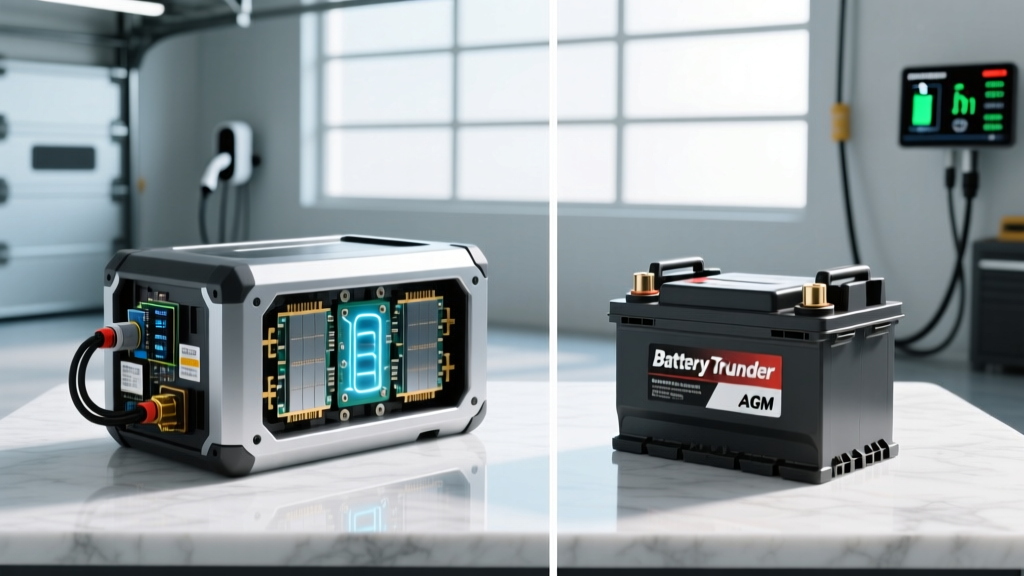
Because hybrid batteries are 'shallow-cycled'—rarely dropping below 40% or above 80% SoC—they often outlast the vehicle itself. However, if you are replacing a 12V auxiliary battery in a 2014 Sonata (gas or hybrid), you are looking at a standard Group 121R or H6 AGM battery, typically costing $150–$250 installed. This is entirely separate from the high-voltage traction battery discussed below.
Battery Chemistry in 2026: LFP vs. NMC vs. NCA
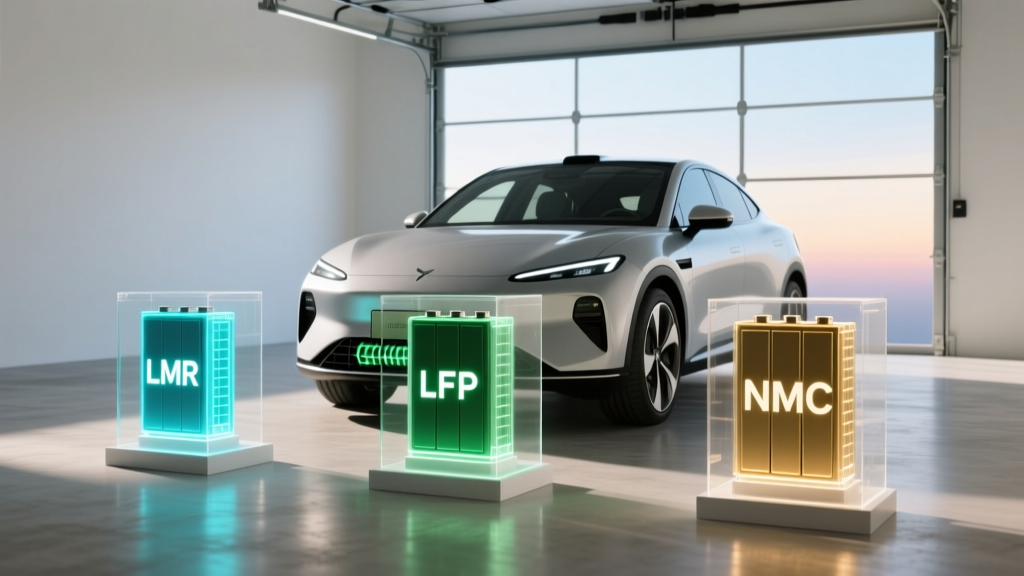
Modern EV batteries are not one-size-fits-all. The chemistry inside the cells dictates range, lifespan, and how the car handles a Midwest winter. The two dominant chemistries in 2026 are Lithium Iron Phosphate (LFP) and Nickel Manganese Cobalt (NMC) or Nickel Cobalt Aluminum (NCA).
| Feature | LFP (Lithium Iron Phosphate) | NMC / NCA (Nickel-based) |
|---|---|---|
| Energy Density | Lower (heavier pack for same range) | Higher (lighter, more range-dense) |
| Cycle Life | Excellent (3,000+ cycles to 80% SoH) | Good (1,000–2,000 cycles to 80% SoH) |
| Cold Performance | Poor (significant range loss & slow charging below freezing) | Better (more resilient in sub-zero temps) |
| Cost | Lower (no cobalt/nickel) | Higher (commodity metal volatility) |
| SoC Recommendation | Can/should be charged to 100% regularly | Best kept at 80% daily; 100% for trips only |
| Common 2026 Uses | Tesla Model 3 RWD, Ford Mustang Mach-E Select, BYD | Hyundai Ioniq 5/6 Long Range, Rivian, Lucid, Porsche |
How Long Do EV Batteries Actually Last?
The fear that an EV battery will 'die' like a smartphone after two years is a myth. Modern thermal management systems (liquid cooling/heating) have drastically extended lifespans. According to data aggregated by Recurrent Auto, most modern EVs will see only 10–15% degradation over 100,000 miles.
Typical Degradation Curve (NMC Chemistry, Liquid-Cooled):
- Year 1 (0-15k mi): ~2-3% loss (initial 'break-in' drop)
- Year 3 (45k mi): ~5-7% total loss
- Year 5 (75k mi): ~8-10% total loss
- Year 8 (120k mi): ~12-15% total loss (flattening curve)
Note: LFP batteries often show even less degradation but may have more variance in SoC estimation accuracy.
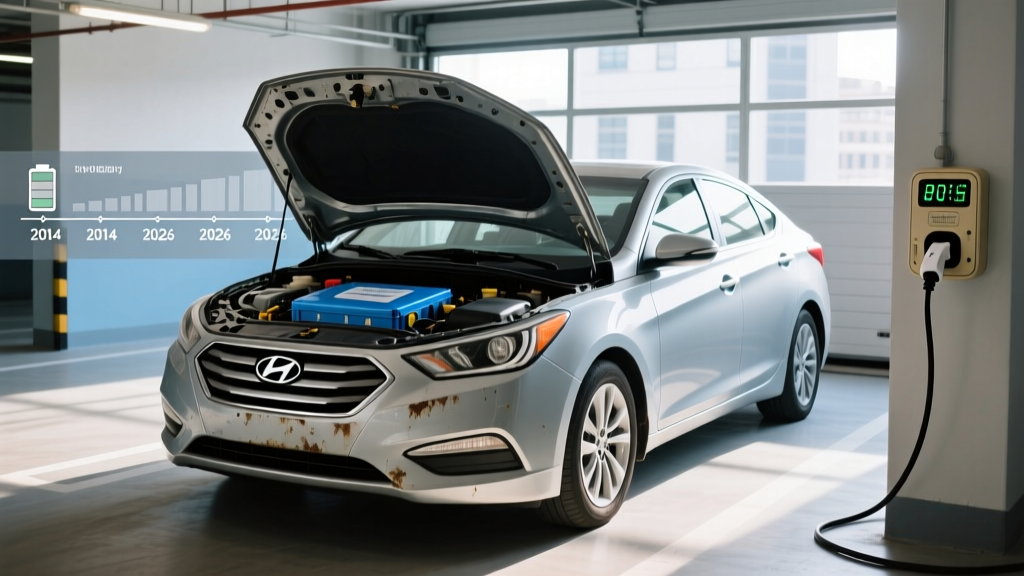
For context, a 2014 Sonata Hybrid with 150,000 miles might still have 90% of its original 1.4 kWh capacity because it was never stressed. A 2026 Ioniq 5 with 150,000 miles and frequent DC fast charging might sit closer to 82–85% State of Health (SoH).
Battery Warranties: What is Actually Covered?
Federal law mandates that hybrid and EV batteries carry a minimum warranty of 8 years/100,000 miles (10 years/150,000 miles in CARB states like California, New York, and Massachusetts). This is a capacity retention warranty, not just a 'defect' warranty.
| Manufacturer | Warranty Term | Capacity Threshold |
|---|---|---|
| Hyundai / Kia / Genesis | 10 yr / 100,000 mi | 70% SoH |
| Tesla (Model 3/Y LFP) | 8 yr / 100,000 mi | 70% SoH |
| Tesla (Model S/X NMC) | 8 yr / 150,000 mi | 70% SoH |
| Ford (Mach-E / F-150) | 8 yr / 100,000 mi | 70% SoH |
| GM (Ultium Platform) | 8 yr / 100,000 mi | 70% SoH |
If your battery falls below the 70% threshold within the term, the manufacturer must replace or repair it to meet that threshold. This is a robust safety net that makes battery replacement on a modern EV extremely rare for the original owner.
The Economics of Replacement: Cost and Timing
When a battery does need replacement—usually due to physical damage, manufacturing defect, or extreme mileage (200,000+ miles)—the cost is significant but trending downward as pack designs become more modular.
| Battery Size / Type | Approx. Cost (Parts + Labor) | Typical Replacement Timeline |
|---|---|---|
| 12V Aux Battery (Any Car) | $150 – $350 | Every 3–5 years |
| Hybrid Traction (1–2 kWh) | $2,000 – $4,500 | Rarely needed; 150k+ mi |
| PHEV Traction (15–25 kWh) | $6,000 – $10,000 | 150k+ mi or defect |
| BEV Standard (60–80 kWh) | $12,000 – $18,000 | Rarely needed; 200k+ mi |
| BEV Long Range (90–110 kWh) | $18,000 – $28,000 | Rarely needed; 200k+ mi |
In 2026, we are seeing more 'module-level' repairs. Instead of replacing a $20,000 pack, a technician can swap a single faulty module for $2,000–$4,000. This was not possible on early EVs but is standard on modern skateboard platforms.
Factors That Kill (or Save) Battery Health
Batteries degrade via two mechanisms: calendar aging (time/temperature) and cycle aging (use). To maximize your SoH, follow these data-backed rules:
- Avoid 100% SoC (NMC/NCA): Unless you are leaving on a road trip, set your daily charge limit to 80%. Storing an NMC battery at 100% accelerates electrolyte oxidation.
- LFP Exception: If you have an LFP pack (e.g., Tesla Model 3 RWD), charge to 100% at least once a week to keep the Battery Management System (BMS) calibrated.
- DC Fast Charging: Occasional use is fine. However, daily use of 150+ kW chargers, especially in hot weather without preconditioning, will increase degradation by 1–2% over the life of the car.
- Extreme Heat: Parking in direct sun in Arizona with a low SoC is more damaging than freezing in Minnesota. Heat is the enemy of lithium-ion longevity.
- Preconditioning: Always use your car's app to 'precondition' the battery before a fast-charge session. This warms the cells to ~35°C (95°F), allowing for faster charging and less internal stress.
How to Monitor Your Battery State of Health (SoH)
Unlike the 2014 Sonata, which required a dealer scan tool to see hybrid battery health, 2026 EVs provide granular data. You can check SoH via:
- In-Car Menus: Many brands (Hyundai, Kia, Ford) now include a 'Battery Health' percentage in the settings.
- OBD-II Dongles: Apps like Car Scanner or OBDeleven can read the BMS 'SoH' PID (Parameter ID) directly.
- Third-Party Testing: Services like Recurrent or Geotab provide battery health certificates, which are becoming essential for used-EV resale values.
The Future: Solid-State and Silicon Anodes
Looking forward, the industry is moving toward silicon-anode batteries (offering 20% more density) and solid-state batteries (using a solid electrolyte for faster charging and safety). While Toyota and Nissan have announced solid-state pilots for 2027–2028, these will initially be limited to low-volume, high-end models. For the 2026 buyer, LFP and NMC remain the proven, warrantied, and economical choices.
Frequently Asked Questions
Is the 2014 Hyundai Sonata Hybrid battery an EV battery?
No. It is a 1.4 kWh hybrid traction battery designed for shallow cycling. It is much smaller than a pure EV battery (which starts around 50 kWh) and cannot be plugged in.
How much does a 2014 Sonata 12V battery cost?
A standard 12V lead-acid or AGM replacement battery for a 2014 Sonata costs between $150 and $250, including installation at most auto parts stores.
Should I buy an EV with an LFP or NMC battery?
Choose LFP if you want maximum longevity, lower cost, and plan to charge at home daily (100% SoC). Choose NMC if you need maximum range, live in a very cold climate, or need the fastest possible DC charging speeds.
Will my EV battery need to be replaced before I sell the car?
Statistically, no. Data shows that most EV batteries retain 85%+ of their capacity at 150,000 miles. With an 8-year/100,000-mile federal warranty, the risk of a catastrophic out-of-pocket failure is very low.