The 2014 Fiat 500e was one of the earliest mainstream compliance EVs sold in the United States, built primarily to satisfy California's zero-emission vehicle mandate. With a 24 kWh lithium-ion traction battery and an EPA-rated 87 miles of range, it was never designed for road trips. But more than a decade later, a surprising number of these cars are still on the road — and their batteries tell an instructive story about early EV longevity, degradation patterns, and what happens when a first-generation electric car ages well past its warranty window.
If you own a 2014 Fiat 500e, are considering buying one used, or simply want to understand how early EV batteries hold up over time, this guide covers everything from the original battery chemistry to real-world degradation data, replacement costs, and modern battery care principles that apply across the EV landscape.
The 2014 Fiat 500e Battery Pack: Specs and Chemistry
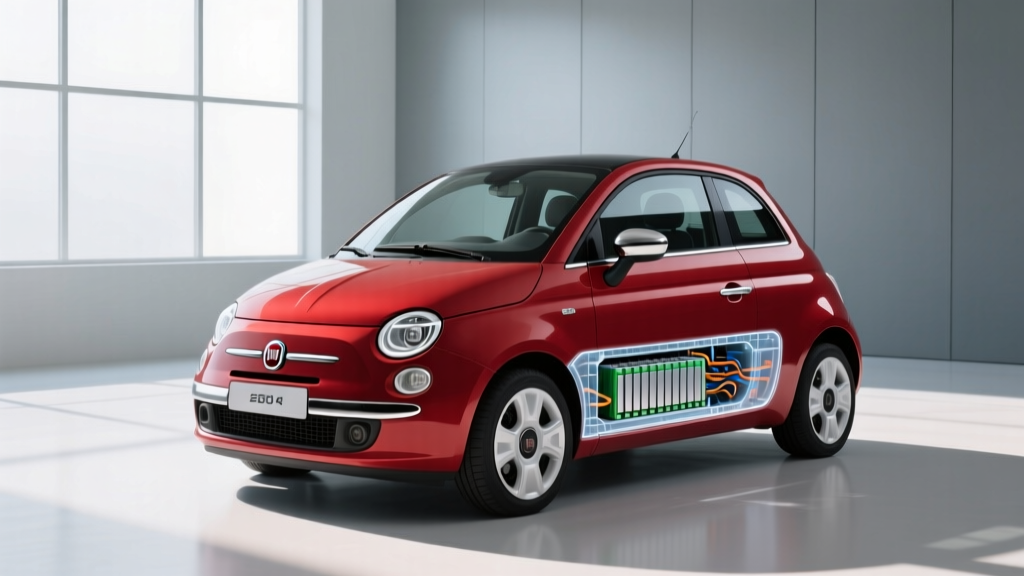
The 2014 Fiat 500e uses a 24 kWh (gross) lithium-ion battery pack built by Samsung SDI, using NMC (nickel manganese cobalt) cell chemistry — the dominant EV battery chemistry of that era. The usable capacity is approximately 21-22 kWh, with a buffer protecting the cells from full charge and full discharge extremes.
| Specification | Value |
|---|---|
| Gross Battery Capacity | 24 kWh |
| Usable Capacity | ~21-22 kWh |
| Cell Chemistry | NMC (Nickel Manganese Cobalt) |
| Cell Supplier | Samsung SDI |
| EPA Range (New) | 87 miles |
| EPA Efficiency | 112 MPGe combined (29 kWh/100 mi) |
| Onboard Charger | 6.6 kW (Level 2 AC) |
| DC Fast Charging | Not supported |
| Thermal Management | Passive (air-cooled) |
| Motor Output | 83 kW (111 hp), 147 lb-ft torque |
| 0-60 mph | ~9.1 seconds |
A critical design detail: the 500e uses passive air cooling rather than the active liquid thermal management systems found in the Nissan Leaf's later iterations or the Tesla Model S. This means the battery relies on ambient airflow rather than a dedicated coolant loop to manage temperature. In moderate climates like coastal California — where most 500e cars were originally sold — this works adequately. In extreme heat or cold, the lack of active thermal management accelerates degradation and limits performance.
NMC vs LFP: Understanding EV Battery Chemistry Trade-Offs
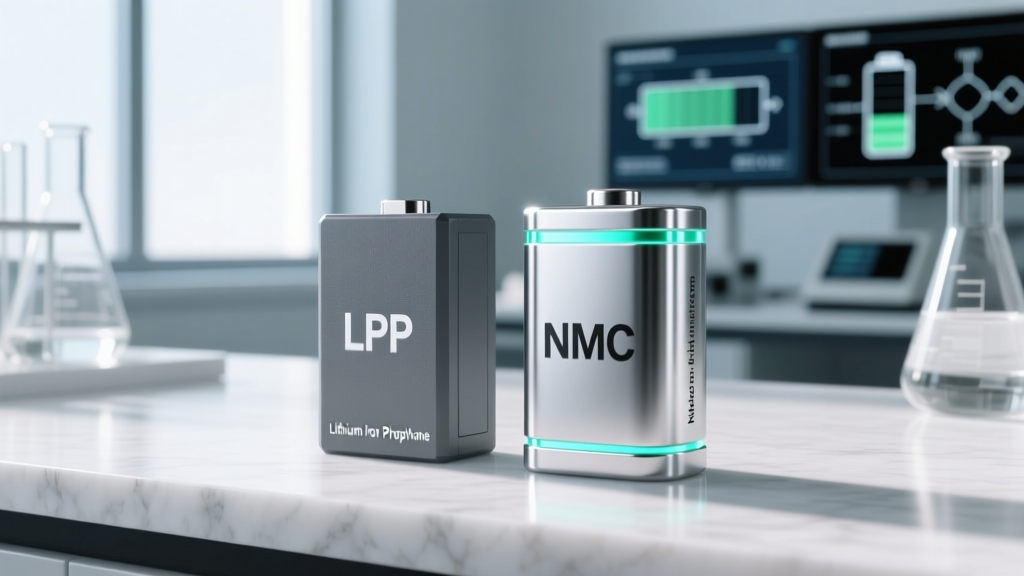
The 2014 Fiat 500e's NMC chemistry was the industry standard in the early 2010s, offering a good balance of energy density and cost. But the EV battery landscape has shifted dramatically since then, with LFP (lithium iron phosphate) chemistry gaining major market share — especially in standard-range and entry-level models from Tesla, BYD, Ford, and others.
Understanding the trade-offs between these two chemistries matters whether you're evaluating a used 500e or shopping for a new EV in 2026.
| Attribute | NMC (Nickel Manganese Cobalt) | LFP (Lithium Iron Phosphate) |
|---|---|---|
| Energy Density | Higher (200-300 Wh/kg cell-level) | Lower (140-180 Wh/kg cell-level) |
| Cycle Life | 1,000-2,000 cycles to 80% SoH | 3,000-5,000+ cycles to 80% SoH |
| Cold-Weather Performance | Better at low temperatures | Reduced performance below 32°F |
| Thermal Stability | Lower — more prone to thermal runaway | Higher — inherently more stable |
| Cost (per kWh) | Higher (cobalt and nickel expensive) | Lower (abundant iron and phosphate) |
| Recommended Charge Habit | 80% daily limit preferred | 100% regular charging acceptable |
| Typical Use Case (2026) | Long-range, performance models | Standard-range, fleet, budget EVs |
| Examples | Tesla Model S/X, Hyundai Ioniq 5 LR, early 500e | Tesla Model 3 RWD, Ford Mustang Mach-E SR, BYD models |
Which is better? It depends on the use case. NMC wins on energy density — you get more range in a smaller, lighter pack, which is why it remains the choice for long-range and performance EVs. LFP wins on longevity, cost, and safety, making it ideal for daily commuters and high-mileage drivers who can charge to 100% regularly without degradation concerns. The 500e's NMC pack reflects its era: smaller packs needed every bit of energy density available.
How Long Do EV Batteries Last? Degradation Data for the 500e and Beyond
The core question for any aging EV: how much capacity has the battery lost, and how much life remains?
For the 2014 Fiat 500e, real-world owner reports and fleet data paint a consistent picture. Early NMC packs with passive cooling typically lose 15-25% of original capacity over 10-12 years under normal California-climate usage. Some cars in hot inland areas (Phoenix, Central Valley) have seen losses approaching 30%, while garage-kept cars in mild coastal zones may show only 10-15% loss.
- 2014 Fiat 500e (NMC, passive cooling): ~15-25% loss at 10-12 years / 60K-100K miles
- Nissan Leaf (NMC, passive cooling): ~20-30% loss at 8-10 years, well-documented in hot climates
- Tesla Model S/X (NMC/NCA, liquid-cooled): ~10-15% loss at 150K-200K miles per Tesla's 2024 impact report
- Chevrolet Bolt EV (NMC, liquid-cooled): ~8-12% loss at 80K-100K miles
- Modern LFP packs (Tesla Model 3 RWD, BYD): Projected 5-10% loss over 200K+ miles based on cycle-life testing
Sources: fueleconomy.gov, owner forums (Fiat 500e Forum, My Nissan Leaf), Tesla Impact Report 2024.
The pattern is clear: active liquid cooling is the single biggest factor in long-term battery health. Cars with liquid-cooled packs (Tesla, GM Ultium, Hyundai E-GMP) consistently outperform passively cooled packs (early Leaf, 500e) in capacity retention. Temperature is the enemy of lithium-ion cells, and managing it actively makes a measurable difference over years and tens of thousands of miles.
Most lithium-ion EV batteries will outlast the vehicle itself. A 2026 study by NREL (National Renewable Energy Laboratory) found that the median EV battery retains approximately 85-90% of its original capacity after 10 years of typical use when equipped with active thermal management. Catastrophic battery failure (sudden, total loss) is rare — gradual capacity loss is the norm.
What Does the Battery Warranty Cover?
When the 2014 Fiat 500e was new, it came with a federal-mandated battery warranty of 8 years / 100,000 miles (10 years / 150,000 miles in CARB states like California). This warranty guaranteed that the battery would retain at least 70% of its original capacity over the coverage period.
| Vehicle / Era | Warranty Period | Capacity Threshold | Notes |
|---|---|---|---|
| 2014 Fiat 500e | 8 yr / 100K mi (10/150K CARB) | 70% retention | Now expired for all 2014 models |
| 2026 Tesla Model 3 LR (NMC) | 8 yr / 120K mi | 70% retention | Liquid-cooled, strong track record |
| 2026 Hyundai Ioniq 5 | 10 yr / 100K mi | 70% retention | Among the best standard warranties |
| 2026 Chevrolet Equinox EV | 8 yr / 100K mi | 60% retention | GM's Ultium platform |
| 2026 Ford F-150 Lightning | 8 yr / 100K mi | 70% retention | Liquid-cooled NMC/LFP options |
For 2014 Fiat 500e owners in 2026, the original battery warranty has expired regardless of mileage. Any battery replacement or repair is now an out-of-pocket expense. This is a critical factor when evaluating a used 500e purchase — budget for the possibility of a battery replacement, or confirm through a State of Health (SoH) check that the pack still has substantial capacity remaining.
How Much Does an EV Battery Cost to Replace?
Battery replacement cost is the number-one fear among used EV buyers. For the 2014 Fiat 500e, the reality is nuanced but manageable compared to larger, more expensive packs.
| Vehicle | Battery Size | Replacement Cost (Parts + Labor) | Notes |
|---|---|---|---|
| 2014 Fiat 500e | 24 kWh | $5,000 - $9,000 | Limited OEM supply; aftermarket/refurbished options available |
| Nissan Leaf (24-30 kWh) | 24-30 kWh | $5,500 - $8,500 | Nissan offers official replacement; some refurbished options |
| Chevrolet Bolt EV | 60-66 kWh | $9,000 - $14,000 | Many covered under extended recall warranty |
| Tesla Model 3 | 50-82 kWh | $10,000 - $16,000 | Tesla service centers; refurbished packs sometimes available |
| Tesla Model S/X | 75-100 kWh | $13,000 - $22,000 | Larger packs, higher cost; remanufactured options exist |
| Ford F-150 Lightning | 98-131 kWh | $18,000 - $30,000+ | Large packs; under warranty for most current owners |
For the 500e specifically, the challenge in 2026 is parts availability. Fiat (now under Stellantis) never sold the 500e in high volume — roughly 10,000 units total across the 2013-2019 production run. OEM replacement packs are scarce. Most owners who need a replacement turn to:
- Salvage yards and EV recyclers: Used packs from wrecked 500e cars, typically $3,000-$5,000 for the pack alone
- Aftermarket refurbishers: Companies that rebuild packs with new cells, $5,000-$8,000 installed
- Cell-level repair: Some EV-specialty shops can identify and replace individual degraded modules within the pack for $1,500-$3,500, if only a few modules have failed
Factors That Accelerate Battery Degradation
Not all 500e batteries age the same way. The spread between 10% and 30% capacity loss over 12 years comes down to how the car was used and where it lived. These factors apply to all EV batteries, but are especially pronounced in passively cooled packs like the 500e's.
Temperature Exposure
Heat is the primary degradation driver for lithium-ion cells. Sustained exposure to ambient temperatures above 95°F — common in Arizona, Texas, and inland California — accelerates electrolyte decomposition and cathode wear. A 500e parked outdoors in Phoenix will lose capacity measurably faster than one garaged in San Francisco. Cold weather doesn't degrade cells permanently in the same way, but charging a cold battery (below 32°F) without preconditioning can cause lithium plating, a form of irreversible damage.
State of Charge Habits
NMC batteries degrade fastest when held at extreme states of charge — either 100% or near 0% — for extended periods. The 500e's built-in buffer protects against the worst effects, but owners who consistently charge to 100% and let the car sit for days will see faster degradation than those who charge to 80-90% for daily use.
Charging Speed
The 500e's lack of DC fast charging is actually a longevity advantage. High-rate DC charging (150+ kW) generates significant heat within the cells, accelerating wear. The 500e's 6.6 kW Level 2 maximum charge rate is gentle on the battery. For modern EVs with DC fast charging capability, frequent use of 150-350 kW chargers (multiple times per week) adds measurable degradation over time compared to predominantly Level 2 home charging.
Depth of Discharge
Regularly draining the battery to very low states of charge (below 10-15%) stresses NMC cells. Shallow cycles — using 30-50% of capacity and recharging — are gentler than deep cycles from 100% to 10%.
- ✓ Charge to 80-90% for daily driving; reserve 100% for when you need full range
- ✓ Avoid leaving the car at 100% SoC for more than a few hours
- ✓ Don't let the battery sit below 15% for extended periods
- ✓ Park in shade or a garage during hot weather
- ✓ In cold weather, precondition the battery before charging (if the vehicle supports it)
- ✓ Favor Level 2 home charging over frequent DC fast charging
- ✓ Drive the car regularly — batteries prefer moderate, consistent use over long idle periods
How to Check Battery Health (State of Health) on a 500e
Unlike modern EVs with detailed battery health displays in their infotainment systems, the 2014 Fiat 500e provides limited onboard State of Health (SoH) information. The dashboard shows a range estimate that adjusts based on recent driving, but it doesn't display a direct capacity percentage.
Here are the practical methods for checking 500e battery health:
1. Full-Charge Range Test
Charge the car to 100% and note the displayed range estimate. A new 500e showed approximately 87 miles at full charge. If your 500e shows 70 miles at full charge, that suggests roughly 80% SoH (70/87 = ~80%). This is an approximation — the range estimator also factors in recent driving style and temperature — but it's the simplest at-home method.
2. OBD-II Diagnostic Tools
Using an OBD-II Bluetooth adapter (such as an OBDLink or Vgate iCar) paired with an EV-focused app, you can read deeper battery parameters including pack voltage, individual cell voltages, and in some cases estimated capacity. Apps like Leaf Spy (designed for Nissan Leaf but partially compatible with other EVs) or generic OBD readers can pull battery module data. Results vary by adapter compatibility with the 500e's CAN bus protocol.
3. Dealer or EV Specialist Diagnostic
A Fiat dealer with the proper diagnostic tool (wiTECH) can read the battery's internal capacity counter. However, many Fiat dealers have limited EV expertise, and the 500e has been discontinued for years. Independent EV-specialty shops are often a better option for a thorough battery health assessment, typically charging $75-$150 for a diagnostic report.
4. Third-Party Battery Reports
Services like Recurrent Auto and Geotab provide battery health reports based on telematics data, though these are more commonly used by fleet operators and may not be available for individual 500e owners without an enrolled vehicle.
Emerging Battery Technology: What's Next Beyond NMC and LFP
If you're evaluating a used 500e against a new EV purchase, it's worth understanding where battery technology is heading — and what timelines are realistic.
Silicon Anode Batteries
Companies like Sila Nanotechnologies and Group14 are replacing graphite anodes with silicon-dominant materials, increasing energy density by 20-40%. These are beginning to appear in limited production vehicles (the 2025 Mercedes G-Class EV uses Sila cells in select modules). Expect broader adoption in 2027-2030 model-year vehicles. Silicon anodes improve energy density but don't fundamentally change the charging or longevity equation — they're an incremental improvement, not a revolution.
Solid-State Batteries
Solid-state batteries replace the liquid electrolyte with a solid material (ceramic, sulfide, or polymer), promising higher energy density, faster charging, and improved safety. Toyota, Samsung SDI, and QuantumScape are leading development. Toyota has announced a solid-state EV for 2027-2028, though initial production will be limited and expensive. Widespread, affordable solid-state EVs are realistically a 2030-2035 prospect. These are not available in any production vehicle as of 2026.
Sodium-Ion Batteries
CATL and BYD are producing sodium-ion batteries for low-cost, short-range EVs in China. Sodium-ion uses abundant, inexpensive materials and offers excellent cycle life, but lower energy density limits it to city cars and fleet vehicles. US availability is not expected before 2028-2029 at the earliest.
Is the 2014 Fiat 500e Still Worth It in 2026?
The 2014 Fiat 500e occupies a specific niche: an ultra-cheap, ultra-short-range city EV with a fun-to-drive character that belies its compliance-car origins. With used prices typically ranging from $5,000 to $9,000 in 2026, it's one of the least expensive ways to get into an electric car — provided you understand the limitations.
- Low purchase price ($5K-$9K used)
- No DC fast charging = gentle on battery
- Fun, peppy city driving (111 hp, instant torque)
- 6.6 kW onboard charger = full charge in ~3.5 hours on Level 2
- Tiny, easy to park
- Low operating cost (~$0.04-$0.06/mile on home electricity)
- 87-mile EPA range when new; 65-74 miles typical in 2026
- No DC fast charging — road trips are impractical
- Passive cooling — worse degradation in hot climates
- Battery warranty expired; replacement cost $5K-$9K
- Limited parts and service support (discontinued model)
- Tiny back seat and minimal cargo space
- No federal tax credit on used purchase (MSRP was too low; does not meet §30D used-EV credit vehicle requirements in many cases)
- Choose the 2014 Fiat 500e if: You need a dirt-cheap second car for city commuting under 40 miles round-trip, have home Level 2 charging, live in a moderate climate, and accept that this is a short-range urban runabout — not a primary vehicle.
- Look elsewhere if: You need more than 80 miles of range, live in a hot climate, lack home charging, want modern safety tech (the 500e lacks AEB, lane-keeping, and adaptive cruise), or need a car that can handle highway road trips.
Frequently Asked Questions
How long does the 2014 Fiat 500e battery last?
Based on real-world data, the 24 kWh NMC pack typically retains 75-85% of its original capacity after 10-12 years in moderate climates. With passive cooling and hot-climate exposure, that figure drops to 70-75%. Most 500e batteries remain functional for 15+ years, though range decreases proportionally with capacity loss. Expect 65-74 real-world miles at full charge in 2026 on an average example.
How much does it cost to replace a 2014 Fiat 500e battery?
Full battery replacement runs $5,000-$9,000 including parts and labor, though OEM pack availability is limited. Salvage packs from wrecked 500e cars cost $3,000-$5,000. Module-level repair (replacing only the degraded cells) can cost $1,500-$3,500 at an EV-specialty shop.
Is the 2014 Fiat 500e eligible for any tax credits?
The federal §30D clean vehicle credit applies to new vehicles only. The separate used clean vehicle credit (§25E) provides up to $4,000 or 30% of the sale price (whichever is less) for qualifying used EVs sold by a dealer for $25,000 or less. The 500e typically falls within the price cap, but eligibility depends on buyer income limits ($75K single / $150K joint), dealer reporting requirements, and whether the vehicle meets battery-component sourcing rules. Consult a tax professional and verify current-year rules on irs.gov.
Does the 500e support DC fast charging?
No. The 2014 Fiat 500e has no DC fast charging capability. It charges exclusively via Level 1 (120V, ~1.4 kW, adding ~5 miles per hour) or Level 2 (240V, 6.6 kW, adding ~25 miles per hour). A full Level 2 charge takes approximately 3.5 hours from empty. This limits the car to home and workplace charging — public fast-charger stops are not an option.
Can I upgrade the 500e battery to a larger pack?
There is no factory or widely available aftermarket upgrade path to increase the 500e's battery capacity. The pack is physically integrated into the chassis, and the vehicle's battery management system (BMS) is calibrated for the original 24 kWh Samsung SDI cells. Some EV conversion shops have explored custom upgrades, but these are expensive ($10,000+), complex, and may affect vehicle registration and insurance. A replacement with a same-specification pack is the practical option.
LFP vs NMC — which battery chemistry is better for a used EV buyer?
For a used EV buyer, NMC (like the 500e's pack) offers higher energy density but requires more careful charging habits (avoid sustained 100% SoC, minimize heat exposure). LFP, found in newer models like the Tesla Model 3 RWD, offers longer cycle life and tolerance for 100% daily charging — a significant advantage for high-mileage drivers. If buying a 2022+ used EV, an LFP-equipped model will generally offer better long-term battery longevity, though at a higher purchase price than a 2014 500e.