From Lead-Acid to Lithium: Why the 2014 Dodge Journey Battery Matters in the EV Conversation
If you own a 2014 Dodge Journey, you've likely dealt with its 12V lead-acid battery — a component that needs replacement every 3-5 years, costs $150-$250, and has nothing to do with electric propulsion. But searching for "2014 Dodge Journey battery" information in 2026 often leads to a bigger question: how do modern EV batteries compare, and what should you know before making the jump to electric?
This guide bridges that gap. We'll cover the Journey's conventional battery system briefly, then dive deep into modern EV battery technology — chemistry, degradation, warranties, replacement costs, and care strategies — so you can make an informed decision whether you're maintaining your current vehicle or considering an EV purchase.
The 2014 Dodge Journey Battery: What You're Actually Replacing
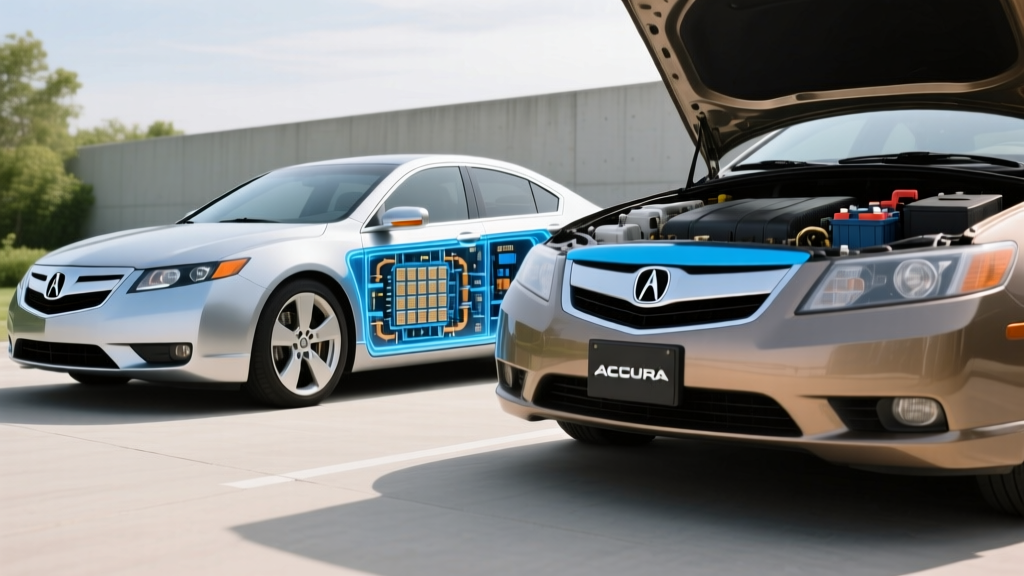
The 2014 Dodge Journey uses a conventional 12V lead-acid battery (Group 34 or 24F, depending on engine). Here's what owners typically face:
- Battery type: Flooded lead-acid or AGM (Absorbent Glass Mat)
- Typical lifespan: 3-5 years in moderate climates, 2-4 years in extreme heat
- Replacement cost: $150-$280 installed
- Warranty: 2-3 years free replacement, then pro-rated
- Function: Starts the engine, powers accessories when engine is off
This is a starter battery, not a traction battery. It has no role in propulsion. When it dies, your Journey won't start — but the engine and drivetrain are unaffected.
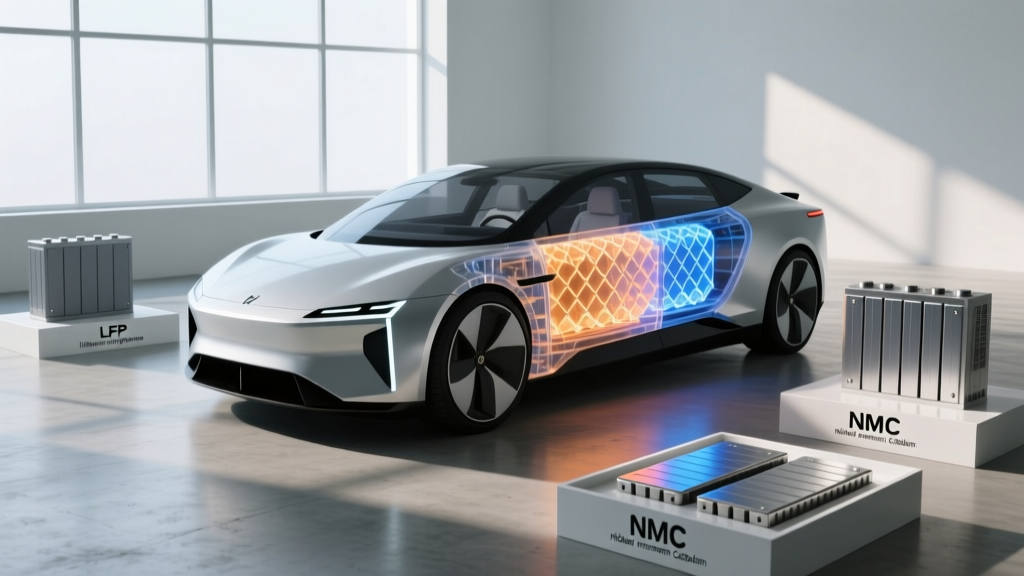
EV Battery Chemistry: LFP vs NMC/NCA Explained
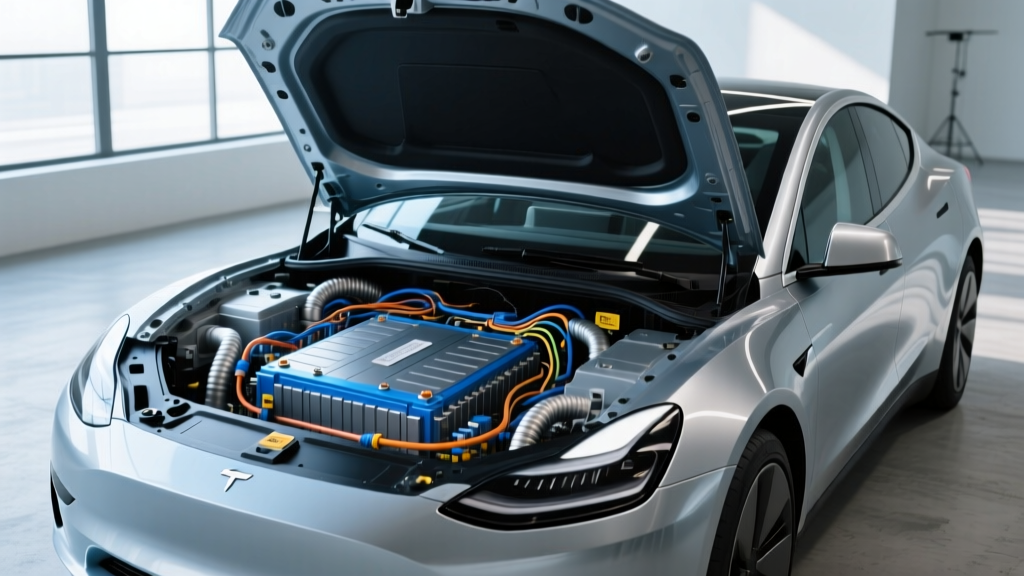
Modern electric vehicles use high-voltage lithium-ion traction batteries, typically in one of two chemistries:
| Characteristic | LFP (Lithium Iron Phosphate) | NMC/NCA (Nickel Manganese Cobalt / Nickel Cobalt Aluminum) |
|---|---|---|
| Energy density | Lower (~160 Wh/kg cell-level) | Higher (~220-260 Wh/kg cell-level) |
| Cycle life | 3,000-5,000+ cycles to 80% capacity | 1,000-2,000 cycles to 80% capacity |
| Cold-weather performance | More range loss below freezing (~30-40%) | Better cold performance (~20-30% loss) |
| Cost | Lower (no cobalt/nickel) | Higher (critical minerals) |
| Thermal stability | Excellent (less prone to thermal runaway) | Good (requires more thermal management) |
| State-of-charge recommendation | Can charge to 100% daily | Best kept 20-80% for daily use |
| Common in | Tesla Model 3/Y RWD, Ford Mustang Mach-E Select, BYD models | Tesla Long Range, Hyundai Ioniq 5/6, Kia EV6, Rivian, Lucid |
Which is better? It depends on your use case. LFP wins on longevity and cost — ideal for daily commuters who can charge at home and don't need maximum range. NMC/NCA wins on energy density and cold-weather performance — better for long-distance drivers, those in northern climates, and vehicles where maximizing range per kWh matters.
How Long Do EV Batteries Last? Real Degradation Data
The fear that EV batteries need replacement every few years is outdated. Here's what the data shows:
Typical EV Battery Degradation Curve
- Year 1-2: 2-5% capacity loss (initial "break-in" degradation)
- Year 3-5: Additional 3-7% loss (linear degradation phase)
- Year 6-10: Gradual 1-2% per year (plateau phase)
- Typical 8-year retention: 85-92% of original capacity
Source: Recurrent Auto battery health data (2024-2025), Geotab fleet study
Real-world examples from fueleconomy.gov and owner reports:
- Tesla Model 3 (NMC, 2018-2022): ~90% capacity at 100,000 miles
- Nissan Leaf (LMO/NMC, 2013-2017, passive cooling): 70-80% at 100,000 miles (worse due to thermal management)
- Chevrolet Bolt (NMC, 2017-2022): ~88-92% at 80,000 miles
- Hyundai Ioniq 5 (NMC, 2022-present): Early data shows ~95% at 30,000 miles
Most modern EVs with active thermal management (liquid cooling/heating) retain 85%+ capacity well past the warranty period. The battery typically outlasts the vehicle.
EV Battery Warranties: What's Actually Covered
Federal law mandates a minimum 8-year/100,000-mile battery warranty for EVs sold in the US. Here's how major manufacturers structure their coverage:
| Manufacturer | Warranty Period | Capacity Threshold | Notes |
|---|---|---|---|
| Tesla | 8 yr / 120,000 mi (Model 3/Y), 8 yr / 150,000 mi (S/X) | 70% retention | Covers defects + capacity below threshold |
| Hyundai / Kia | 10 yr / 100,000 mi | 70% retention | Among the longest coverage |
| Ford | 8 yr / 100,000 mi | 70% retention | Standard across Mach-E, F-150 Lightning |
| GM (Chevrolet, Cadillac) | 8 yr / 100,000 mi | 70% retention (65% for Bolt due to recall) | Ultium platform vehicles |
| Rivian | 8 yr / 175,000 mi | 70% retention | Higher mileage cap for commercial use |
| BMW | 8 yr / 100,000 mi | 70% retention | i4, iX, i7 models |
What the warranty covers: Manufacturing defects, premature degradation below the stated threshold, and complete failure. It does not cover damage from accidents, improper charging (e.g., using damaged equipment), or modifications.
What happens if capacity drops below threshold? The manufacturer will replace or refurbish the battery pack to bring it above the threshold. This is rare — most packs retain 85%+ capacity at the 8-year mark.
EV Battery Replacement Costs: When and How Much
If your battery fails outside warranty (typically after 8-10 years or 100,000+ miles), replacement costs are significant but declining:
| Vehicle | Battery Size (kWh) | Replacement Cost (Parts + Labor) |
|---|---|---|
| Tesla Model 3 Standard Range | 50-60 kWh (LFP) | $12,000-$16,000 |
| Tesla Model Y Long Range | 75-82 kWh (NMC) | $18,000-$24,000 |
| Hyundai Ioniq 5 | 77.4 kWh (NMC) | $16,000-$22,000 |
| Ford Mustang Mach-E Extended Range | 91 kWh (NMC) | $20,000-$28,000 |
| Chevrolet Bolt EV | 65 kWh (NMC) | $14,000-$18,000 |
| Nissan Leaf (older, passive cooling) | 40-62 kWh | $8,000-$12,000 (refurbished packs available) |
Context matters: Battery replacement is rare. According to NHTSA and manufacturer service data, fewer than 2-3% of EVs require battery replacement within the first 10 years. Most batteries outlast the vehicle's useful life or are replaced under warranty.
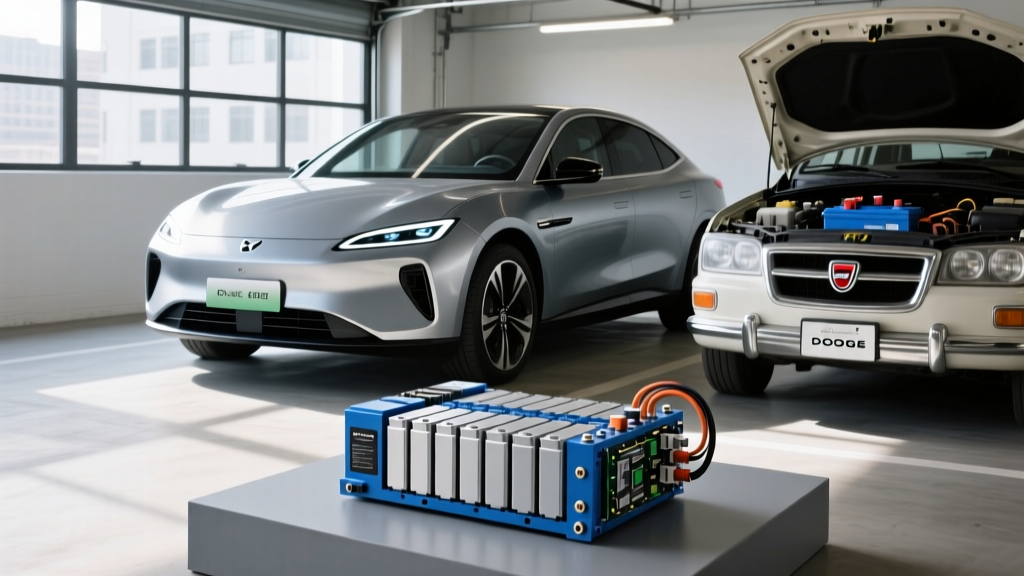
Compare this to the 2014 Dodge Journey's 12V battery: $200 every 4 years over 12 years = $600 total. An EV's traction battery is a single, much larger expense — but one that rarely materializes.
Factors That Affect EV Battery Life (and How to Maximize It)
Battery Longevity Best Practices
- Avoid frequent DC fast charging: Occasional use is fine, but daily 150+ kW charging accelerates degradation. Level 2 home charging (7-11 kW) is gentler.
- Maintain 20-80% state of charge for daily use (NMC/NCA): LFP batteries can handle daily 100% charges without significant harm.
- Use preconditioning: Warm the battery before fast charging in cold weather. Most EVs do this automatically when you navigate to a charger.
- Avoid extreme heat exposure: Park in shade or a garage when possible. Sustained 100°F+ ambient temps stress the battery.
- Don't let the battery sit at 0% or 100% for weeks: If storing the vehicle, leave it at ~50% SoC.
- Use regenerative braking moderately: Aggressive regen in cold weather can stress the battery. Many EVs limit regen when the battery is cold.
The biggest myth: "Fast charging destroys batteries." Modern EVs with active thermal management can handle regular DC fast charging with minimal impact. The degradation difference between exclusive Level 2 charging and mixed Level 2/DC fast charging is typically 2-4% over 8 years — not a dealbreaker.
How to Check Your EV's Battery Health (State of Health, SoH)
Most modern EVs provide battery health information, though access varies:
- In-vehicle display: Some EVs (Tesla, Rivian, Lucid) show estimated range and energy consumption but not direct SoH percentage.
- Manufacturer app: Tesla, Ford, Hyundai, and others provide battery health estimates in their mobile apps.
- OBD-II scanners: Tools like OBDLink MX+ with apps such as LeafSpy (Nissan), Scan My Tesla, or ABRP can read battery SoH directly from the BMS (Battery Management System).
- Dealership diagnostic: Request a battery health report during service visits. Most manufacturers can provide a detailed SoH printout.
- Third-party services: Recurrent Auto and Geotab offer battery health monitoring for fleet and individual owners.
What to look for: If your EV's estimated range has dropped more than 10-15% from when it was new (and it's within the warranty period), contact the manufacturer. This may indicate a warranty-covered issue.
Emerging Battery Tech: What's Coming (and When)
Battery technology is advancing, but timelines matter. Here's what's realistic:
- Solid-state batteries: Promise 20-40% higher energy density, faster charging, and improved safety. Toyota, Nissan, and Samsung SDI have announced pilot production for 2027-2028, but mass-market availability is likely 2030+. Not available in any production vehicle as of 2026.
- Silicon anode batteries: Increase energy density by 10-20%. Used in limited applications (Porsche Taycan, some Tesla cells) but not yet mainstream. Expected to scale by 2027-2028.
- Sodium-ion batteries: Lower cost, no lithium required. BYD and CATL are producing these for low-range vehicles in China. US availability uncertain, likely 2028+.
- LFP improvements: Ongoing chemistry tweaks are improving LFP's cold-weather performance and energy density. Expect gradual 5-10% improvements over the next 3-5 years.
Bottom line: If you're buying an EV in 2026, current NMC and LFP batteries are mature, reliable, and well-warrantied. Waiting for solid-state means waiting 4+ years with no guarantee of affordability or availability.
Frequently Asked Questions
How long do EV batteries last in years and miles?
Most modern EV batteries (2018+) retain 85-92% capacity at 8 years / 100,000 miles. With proper care, they can last 15-20 years or 200,000+ miles before dropping below 70% capacity. The battery typically outlasts the vehicle.
How much does it cost to replace an EV battery?
Out-of-warranty replacement costs $12,000-$28,000 depending on battery size and vehicle. However, fewer than 3% of EVs require replacement within 10 years. Most are covered by the 8-year/100,000-mile federal warranty mandate.
What does the EV battery warranty cover?
Federal law requires 8 years / 100,000 miles of coverage for defects and capacity loss below a stated threshold (typically 70%). This includes manufacturing defects and premature degradation. It does not cover accident damage or improper use.
How do I check my EV's battery health?
Use the manufacturer app, OBD-II scanner with EV-specific software (LeafSpy, Scan My Tesla), or request a diagnostic report from the dealership. Look for State of Health (SoH) percentage — if it drops below 85% within the warranty period, contact the manufacturer.
LFP vs NMC — which battery chemistry is better?
LFP wins on longevity (3,000-5,000 cycles vs 1,000-2,000), cost, and thermal stability. NMC wins on energy density (more range per kWh) and cold-weather performance. Choose LFP for daily commuting and home charging; choose NMC for long-distance driving and cold climates.
Does the 2014 Dodge Journey have an EV battery?
No. The 2014 Dodge Journey is a conventional gasoline vehicle with a 12V lead-acid starter battery (Group 34 or 24F). It has no high-voltage traction battery or electric propulsion. The 12V battery costs $150-$280 to replace every 3-5 years.
Can I upgrade my 2014 Dodge Journey to an EV?
Not practically. EV conversions cost $20,000-$50,000+ and require extensive custom engineering. If you want electric propulsion, purchasing a modern EV is more cost-effective and comes with warranties, safety systems, and charging infrastructure compatibility.
Final Takeaway: Conventional vs EV Battery Ownership
The 2014 Dodge Journey's 12V battery is a simple, inexpensive component that needs periodic replacement. Modern EV traction batteries are far more complex — but also far more durable, with 8-10 year warranties and typical lifespans exceeding 15 years.
If you're maintaining a Journey, budget $200 every 4 years for a new 12V battery. If you're considering an EV, focus on chemistry (LFP vs NMC), warranty terms, and charging habits — not replacement cost fears. The data shows EV batteries are one of the most reliable components in the vehicle.
For official EV battery warranty and safety information, consult NHTSA.gov and your vehicle manufacturer. For fuel economy and range data, visit fueleconomy.gov.