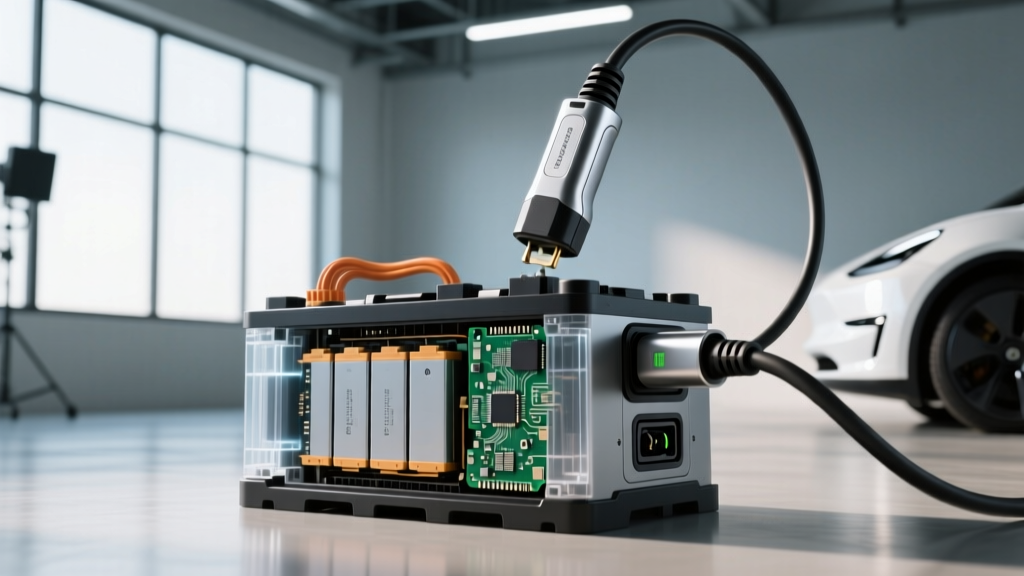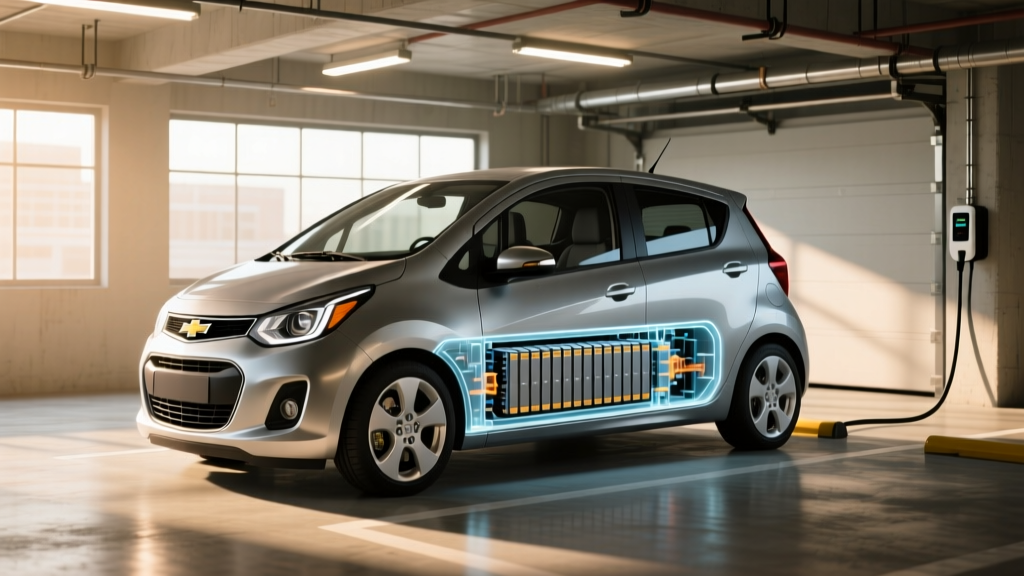
The 2014 Chevrolet Spark EV was one of GM's earliest compliance electric vehicles, sold primarily in California and Oregon. With a 21.3 kWh battery pack and an EPA-rated 82 miles of range, it was never designed for road trips — but as a city commuter, it remains surprisingly relevant in 2026. For current owners and used-EV shoppers, the central question is the high-voltage traction battery: how much capacity has it lost after a decade-plus on the road, what does replacement cost, and is it still a viable daily driver?
This guide covers everything specific to the 2014 Spark EV battery while also explaining broader EV battery chemistry, degradation science, and care practices that apply to any electric vehicle.
The 2014 Spark EV Battery: Specs at a Glance
| Specification | Value |
|---|---|
| Battery chemistry | NMC (Nickel Manganese Cobalt) |
| Gross capacity | 21.3 kWh |
| Usable capacity (approx.) | ~18.5 kWh |
| Supplier | A123 Systems |
| EPA range (new) | 82 miles |
| EPA efficiency | 119 MPGe combined (28 kWh/100 mi) |
| DC fast charge (CHAdeMO) | Up to 50 kW (0-80% in ~30 min) |
| Level 2 AC charge | 3.3 kW (~7 hours 0-100%) |
| Motor output | 140 hp / 400 lb-ft torque |
| 0-60 mph | ~7.6 seconds |
| Battery warranty (original) | 8 years / 100,000 miles |
The Spark EV's A123-supplied NMC pack was liquid-cooled — a significant advantage over the passive air-cooling used in the Nissan Leaf of the same era. Active thermal management slows degradation by keeping cells within their ideal temperature window, and Spark EV owners have generally reported better long-term capacity retention than Leaf owners.
Battery Chemistry Explained: NMC vs LFP
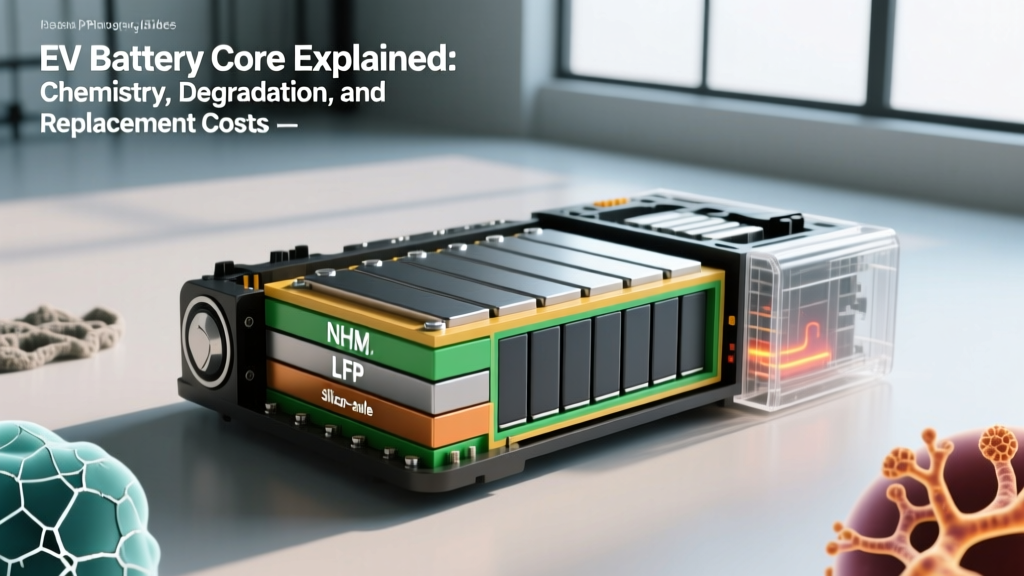
The 2014 Spark EV uses NMC (Nickel Manganese Cobalt) chemistry, which was the dominant lithium-ion type in the 2010s. Today's EV market has shifted significantly, with LFP (Lithium Iron Phosphate) now powering many affordable models. Here is how the two chemistries compare:
| Factor | NMC / NCA | LFP |
|---|---|---|
| Energy density | Higher (200-300 Wh/kg cell-level) — more range in less space | Lower (140-180 Wh/kg) — heavier/bulkier for same kWh |
| Cycle life | 1,000-2,000 full cycles to 80% SoH | 3,000-5,000+ full cycles to 80% SoH |
| Cold-weather performance | Better low-temp discharge and charge acceptance | Reduced charge speed and range below 32°F; needs preconditioning |
| Cost per kWh | Higher — cobalt and nickel add material cost | Lower — iron and phosphate are abundant and cheaper |
| Thermal stability | Good with active management; higher runaway risk if damaged | Excellent — inherently more stable chemistry |
| Typical use cases | Long-range vehicles, cold climates, performance models | Standard-range models, fleet/high-mileage, warm climates |
Which is better? It depends on the application. If you need maximum range in a compact package or regularly drive in freezing temperatures, NMC/NCA remains the stronger choice. If you prioritize longevity, lower cost, and can accept slightly less range per pound, LFP is superior. The 2014 Spark EV's NMC pack reflects the technology of its era — and with proper care, it has aged reasonably well.
How Much Degradation Should You Expect?
Lithium-ion batteries lose capacity over time through two mechanisms: calendar aging (chemical changes that occur regardless of use) and cycle aging (wear from charge-discharge cycles). For the 2014 Spark EV in 2026, calendar aging is the dominant factor.
EPA sticker: 82 miles (when new). After 10-12 years, expect approximately 15-25% total capacity loss depending on climate and usage. That translates to roughly 62-70 miles of real-world range in moderate temperatures. In cold weather (below 40°F), range may drop further to 50-58 miles due to reduced battery efficiency and cabin heating load.
Here is what degradation data from early-generation EVs tells us:
- Year 1-2: 2-5% loss (initial formation period — steepest early drop)
- Year 3-5: ~1-2% loss per year (linear phase)
- Year 6-10: ~1-1.5% loss per year (gradual taper)
- Year 10-12: Cumulative loss typically 15-25% for liquid-cooled packs
Sources: Geotab fleet battery health study, Recurrent Auto battery data reports. Individual results vary based on climate, charging habits, and storage conditions.
The Spark EV's liquid-cooled thermal management gives it an advantage. Packs in hot climates like Phoenix or inland California will have degraded faster than those in temperate coastal areas. A 2014 Spark EV in San Francisco may retain 80-85% of original capacity, while one in Sacramento's Central Valley heat might be closer to 75%.
Battery Warranty: What Was (and Is) Covered
| Term | Detail |
|---|---|
| Duration | 8 years / 100,000 miles (whichever comes first) |
| Capacity retention threshold | 60% of original capacity (below this triggers warranty replacement) |
| Coverage type | Defects in materials/workmanship + excessive capacity loss |
| Transferable to second owner? | Yes — warranty follows the vehicle, not the original buyer |
| Status in 2026 | Expired for all 2014 models (8-year term ended in 2022) |
GM's 60% threshold was lower than some competitors. Nissan used a similar 60-70% bar for the Leaf, while Tesla warranted 70% retention over 8 years/120,000 miles. In practice, most liquid-cooled Spark EV packs stayed well above 60% within the warranty period, so warranty claims were relatively rare.
Important for 2026 buyers: The original battery warranty has expired on all 2014 Spark EVs. Any battery failure or excessive degradation is now an out-of-pocket expense. Some states (California included) had extended emissions-related warranty provisions under CARB rules that covered certain EV components up to 10 years/150,000 miles — but these applied primarily to the powertrain electronics, not necessarily the full battery pack. Check with a GM dealer for specific state-level coverage details.
Replacement Cost: What to Budget
| Vehicle / Pack Size | New OEM Pack | Remanufactured / Used | Labor (additional) |
| 2014 Spark EV (21.3 kWh) | $5,000 - $8,000 (if available) | $2,500 - $4,500 | $800 - $1,500 |
| Nissan Leaf 24-30 kWh | $6,500 - $9,000 | $3,000 - $5,000 | $800 - $1,200 |
| Chevy Bolt EV 60-65 kWh | $14,000 - $18,000 | $8,000 - $12,000 | $1,000 - $1,800 |
| Tesla Model 3/Y 75-82 kWh | $12,000 - $16,000 | $7,000 - $10,000 | $1,000 - $1,500 |
For the 2014 Spark EV specifically, replacement is complicated by parts availability. GM discontinued the Spark EV after the 2016 model year, and the A123 Systems pack is no longer in production. Your realistic options in 2026 are:
- Remanufactured or refurbished pack from an EV battery specialist ($2,500-$4,500 installed). Companies like Greentec Auto and regional EV repair shops source used modules and rebuild packs.
- Used OEM pack from a salvage-yard Spark EV ($1,500-$3,000 for the pack alone, plus labor). Risk: the donor pack has its own unknown degradation history.
- Module-level repair ($800-$2,000). If only a few cells or modules have failed, a qualified EV technician can replace individual modules rather than the entire pack. This is the most cost-effective option when applicable.
A 2014 Spark EV in 2026 has a private-party market value of roughly $4,000-$7,000 depending on condition and mileage. A full battery replacement at $4,000-$6,000 installed can approach or exceed the car's value. Before committing to a replacement, consider whether the investment makes financial sense versus trading into a newer used EV (such as a 2017-2020 Chevy Bolt EV with 238+ miles of range, available for $10,000-$14,000).
Factors That Accelerate (or Slow) Battery Aging
Not all 2014 Spark EVs aged equally. Here are the variables that most influence how much capacity remains today:
- 🔴 High impact — Extreme heat exposure: Parking or storing the vehicle in sustained 95°F+ temperatures (especially at high state of charge) accelerates calendar aging. Garage parking in hot climates is the single best thing an owner can do.
- 🔴 High impact — Sustained 100% SoC: Storing an NMC battery at full charge stresses cells. If daily driving only requires 60-70% of range, set the charge limit accordingly. The Spark EV's stock charger software does not natively support charge limiting, so unplugging or using a smart Level 2 charger with scheduling helps.
- 🟡 Moderate impact — Frequent DC fast charging: The Spark EV's 50 kW CHAdeMO capability was modest by modern standards, and moderate DCFC use is not inherently damaging. However, daily fast-charging (especially in heat) adds thermal stress. Level 2 home charging is gentler on the pack.
- 🟡 Moderate impact — Deep discharges to near 0%: Regularly running the pack to the buffer floor stresses cells. Try to plug in before dropping below 15-20% SoC.
- 🟢 Low impact — Cold weather: Cold reduces range temporarily but does not cause permanent degradation the way heat does. The Spark EV's liquid cooling helps moderate cold-charge stress.
- 🟢 Low impact — Mileage / cycle count: The Spark EV's 21.3 kWh pack would need ~1,400 full cycles to reach 200,000 miles. Most Spark EVs have far fewer miles, so cycle aging is rarely the limiting factor.
How to Check Battery State of Health (SoH)
State of Health (SoH) is the percentage of original capacity the battery currently holds. A new pack is 100% SoH; a pack with 80% SoH holds only 80% of its original kWh. Here is how Spark EV owners can assess SoH:
- OBD-II diagnostic scan: The most reliable method. Use an OBD-II adapter (such as an OBDLink or Vgate iCar) paired with an app like EVNotify, LeafSpy (adapted for GM), or MyGreenVolt. These read the battery management system (BMS) directly and report actual vs. original kWh capacity. This is what dealers and EV shops use.
- Dealer diagnostic: A Chevrolet dealer can run a battery health report through GDS2 (GM's diagnostic tool). Ask specifically for "HV battery capacity test" — not just a code scan.
- Manual range tracking: Fully charge the vehicle to 100%, reset the trip meter, and drive until the battery reaches a low SoC (e.g., 10%). Calculate miles driven vs. percentage used. If 90% of the battery yields only 55 miles (vs. ~74 miles when new), SoH is roughly 75%. This method is approximate but requires no equipment.
- Charging energy measurement: Use a smart Level 2 charger that reports kWh delivered. Charge from a known low SoC to 100% and compare the kWh delivered (minus ~10% charging losses) to the pack's original usable capacity (~18.5 kWh).
For used-car shoppers evaluating a 2014 Spark EV, insist on an OBD-II SoH reading before purchase. A pack above 80% SoH still offers 65+ miles of practical range and represents a good value. Below 70%, negotiate the price down to account for likely replacement costs.
Looking Ahead: Solid-State and Silicon-Anode Batteries
While the 2014 Spark EV uses conventional NMC lithium-ion cells, the broader battery industry is advancing rapidly. Two technologies are worth monitoring:
Solid-state batteries replace the liquid electrolyte with a solid material, promising higher energy density, faster charging, and improved safety. Toyota, Samsung SDI, and QuantumScape have demonstrated prototypes, but mass production for consumer vehicles is not expected before 2028-2030 at the earliest. Initial deployment will likely be in premium vehicles at high cost.
Silicon-anode batteries (from companies like Sila Nanotechnologies and Group14) increase energy density by using silicon in the anode instead of graphite. These are closer to market — appearing in limited production vehicles as early as 2026-2027 — and may incrementally improve range and charge speed in mainstream EVs within the next few years.
Neither technology is relevant to the 2014 Spark EV (you cannot retrofit a new chemistry into an existing pack), but they inform the purchase decision: today's used EVs will not benefit from future battery breakthroughs, so buy based on current capability and cost.
Is the 2014 Spark EV Still Worth It in 2026?
Consider the 2014 Spark EV if:
- You need a sub-$6,000 electric commuter for city driving under 50 miles round-trip
- You have home Level 2 charging and don't rely on public infrastructure
- The specific vehicle you are evaluating shows 80%+ SoH on an OBD-II scan
- You value the Spark EV's surprisingly quick 400 lb-ft torque and tight turning radius
Look at alternatives (Bolt EV, Leaf, Model 3) if:
- You need more than 70 miles of real-world range
- You want DC fast charging on modern CCS or NACS networks (CHAdeMO infrastructure is declining)
- You want a battery warranty that still has years remaining
- Battery replacement cost would exceed the vehicle's value for your budget
Frequently Asked Questions
How long do EV batteries last in years and miles?
Modern liquid-cooled EV batteries typically last 15-20 years or 150,000-200,000 miles before degrading to 70-80% of original capacity. The 2014 Spark EV's NMC pack, now 12 years old, typically retains 75-85% SoH depending on climate and care. Most EV batteries outlast the vehicles they are installed in — total pack failure is rare and usually results from manufacturing defects or physical damage, not normal aging.
How much does it cost to replace a 2014 Chevy Spark EV battery?
A remanufactured or used replacement pack runs $2,500-$4,500 for the battery plus $800-$1,500 in labor, totaling roughly $3,300-$6,000 installed. A new OEM pack, if one can be sourced, may cost $5,000-$8,000. Module-level repair (replacing only degraded cells) can cost $800-$2,000 when applicable. Given the Spark EV's 2026 market value of $4,000-$7,000, weigh replacement cost carefully against the vehicle's worth.
What did the original Spark EV battery warranty cover?
GM warranted the battery for 8 years/100,000 miles against defects and capacity loss below 60% of original. This warranty has expired for all 2014 models as of 2022. Some California and CARB-state vehicles may have had extended coverage on certain powertrain components — check with a GM dealer for specifics.
How can I maximize the remaining life of a 2014 Spark EV battery?
Key practices: avoid parking in extreme heat (garage when possible), don't leave the car at 100% SoC for extended periods, prefer Level 2 home charging over daily DC fast charging, and avoid routinely draining below 15-20% SoC. The Spark EV lacks built-in charge limiting, so use a smart charger with scheduling or manually unplug when the desired level is reached.
Is the CHAdeMO charging connector a problem in 2026?
Yes, increasingly so. The North American charging market has standardized on NACS (Tesla's connector, now adopted by Ford, GM, Rivian, and others) and CCS1. CHAdeMO stations are not being expanded, and many existing units face reliability challenges. Spark EV owners should plan around Level 2 home charging as their primary strategy and verify CHAdeMO availability on road-trip routes using apps like PlugShare or A Better Routeplanner.
Does the 2014 Spark EV qualify for any tax credits in 2026?
The federal §30D new-vehicle credit does not apply (the car is long discontinued). However, the used EV credit (§25E) may apply: up to $4,000 or 30% of the sale price (whichever is less) for qualified used EVs purchased from a dealer, subject to buyer income caps ($75,000 single / $150,000 joint) and a sale price below $25,000. Consult the IRS used EV credit page and a tax professional to confirm eligibility.
Sources: fueleconomy.gov EV technology, IRS §25E used EV credit, Geotab battery degradation research, Recurrent Auto battery reports. All specifications reflect manufacturer data for the 2014 model year. Replacement costs are 2026 estimates and vary by region and provider.