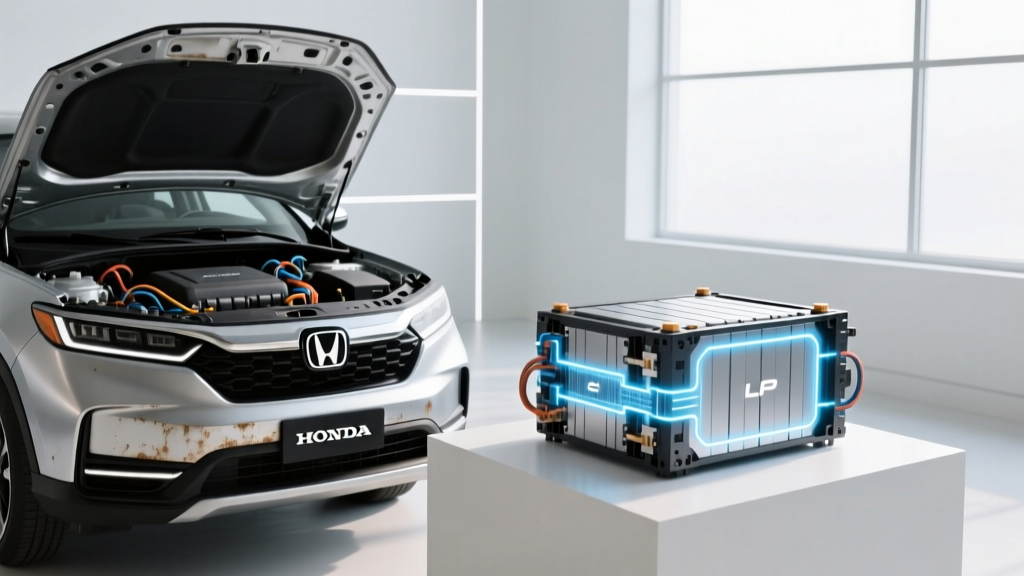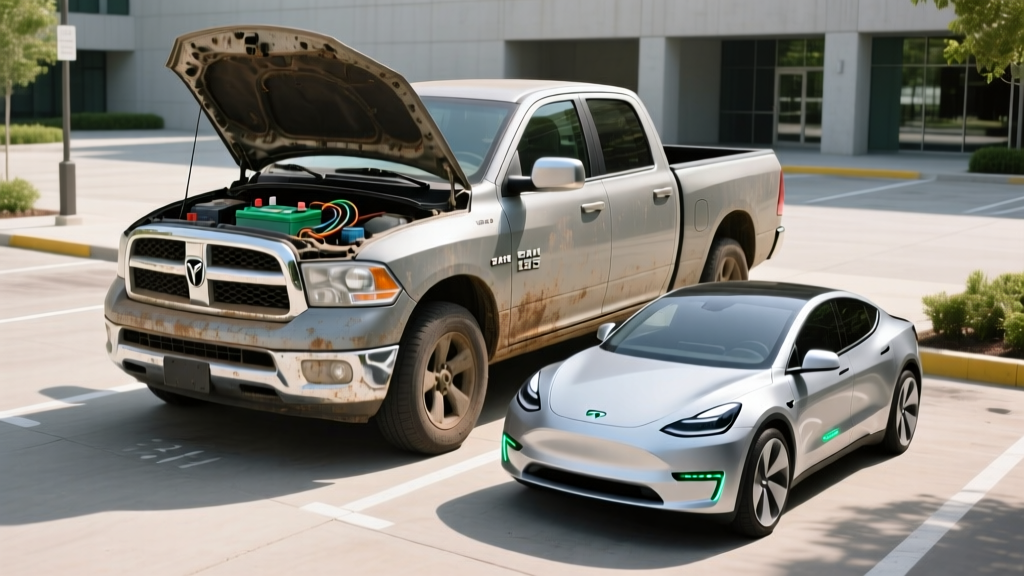
If you've searched for a 2013 Ram 1500 battery, you're likely looking at a 12-volt lead-acid starter battery — a $150–$250 component that cranks a 5.7L Hemi V8. But as Ram transitions to electrification with models like the Ram 1500 REV and Ramcharger, the word "battery" now means something entirely different: a 100+ kWh lithium-ion traction pack costing upward of $15,000 to replace. Understanding the difference matters more than ever for truck buyers evaluating used EVs, planning ownership costs, or simply trying to make sense of battery technology headlines.
This guide breaks down everything current and prospective EV truck owners need to know about high-voltage battery technology in 2026 — from chemistry trade-offs and real-world degradation data to warranty coverage and emerging solid-state timelines.
The 2013 Ram 1500 Battery: A 12V Baseline
The 2013 Ram 1500 uses a Group 34 or Group H7 12V lead-acid battery (typically 70–80 Ah, ~700–800 CCA). It powers the starter motor, lights, infotainment, and ECU. Replacement is straightforward: pop the hood, swap the battery, and you're back on the road for under $200.
This battery has nothing to do with propulsion. It typically lasts 3–5 years depending on climate and usage, and it's the same type of battery found in virtually every internal-combustion vehicle on the road. Even modern EVs carry a 12V auxiliary battery (often lithium-ion in newer models) to run low-voltage electronics — but it's entirely separate from the high-voltage traction battery that actually moves the vehicle.
EV Traction Batteries: LFP vs. NMC Chemistry Explained
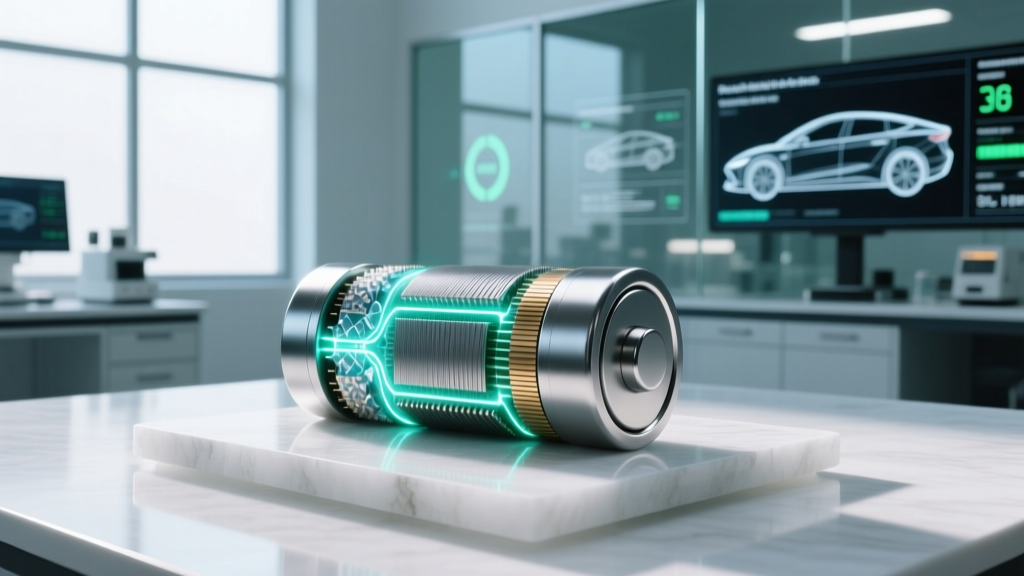
Modern electric trucks and SUVs use lithium-ion traction batteries ranging from roughly 60 kWh to 200+ kWh. The two dominant chemistries in 2026 are LFP (lithium iron phosphate) and NMC (nickel manganese cobalt), with NCA (nickel cobalt aluminum) used by Tesla and a few others. The chemistry choice affects range, longevity, cost, and cold-weather behavior.
| Attribute | LFP (LiFePO₄) | NMC / NCA |
|---|---|---|
| Energy density | ~160–180 Wh/kg (lower) | ~220–300 Wh/kg (higher) |
| Typical cycle life | 3,000–5,000+ cycles | 1,000–2,500 cycles |
| Cost per kWh (pack level) | ~$90–$110 | ~$120–$150 |
| Cold-weather performance | Reduced; slower charging below 32°F | Better low-temp performance |
| Max recommended daily SoC | 100% (no penalty) | 80% for daily; 100% for trips only |
| Thermal runaway risk | Very low | Higher (requires robust BMS) |
| Common applications | Tesla Model 3/Y RWD, Ford F-150 Lightning Std Range, BYD models | Tesla Long Range, Rivian R1T, Ram 1500 REV, Hyundai Ioniq 5 |
The practical takeaway: LFP batteries sacrifice some energy density (meaning a heavier or physically larger pack for the same range) but gain substantially in cycle life, cost, and safety. NMC packs deliver more range per kilogram, making them the choice for long-range trucks like the Ram 1500 REV with its 168 kWh pack targeting 350+ miles of range. For fleet or high-mileage use, LFP's superior cycle life often makes it the smarter long-term bet.
How Long Do EV Batteries Actually Last? Degradation Data
The single most persistent myth in EV ownership is that batteries need replacing every few years like a phone battery. Real-world data tells a different story. According to long-term fleet studies and manufacturer data, most modern EV batteries lose roughly 5–10% of total capacity over the first 100,000 miles, with degradation slowing significantly after the initial break-in period.
| Age / Mileage | Avg. Capacity Retained (NMC) | Avg. Capacity Retained (LFP) |
|---|---|---|
| Year 1 / ~12,000 mi | 95–97% | 97–99% |
| Year 3 / ~36,000 mi | 91–94% | 95–97% |
| Year 5 / ~60,000 mi | 88–92% | 93–96% |
| Year 8 / ~100,000 mi | 83–89% | 90–95% |
| Year 10 / ~130,000 mi | 80–86% | 88–93% |
Sources: Recurrent Auto fleet data (2025), Geotab long-term battery study, manufacturer warranty thresholds. Actual results vary by climate, charging habits, and thermal management system.
Several factors influence where a specific battery lands on this spectrum:
- Fast-charging frequency: Regular use of DC fast charging (150+ kW) accelerates degradation slightly. Owners who DC-fast-charge daily may see 1–3% more loss over 100k miles versus those who primarily use Level 2 home charging.
- Extreme temperatures: Sustained exposure to 95°F+ heat is more damaging than cold. Batteries with active liquid cooling (standard on most 2026 EVs) mitigate this significantly.
- State of charge habits: For NMC packs, routinely sitting at 100% SoC or dropping below 10% accelerates wear. LFP packs tolerate 100% SoC far better, which is why Tesla recommends periodic 100% charges for LFP-equipped vehicles to support cell balancing.
- Calendar aging: Even a parked EV battery degrades over time. A 10-year-old battery with 40,000 miles may show similar retention to one with 80,000 miles driven over 5 years.
EV Battery Warranty Terms: What's Actually Covered
Federal law mandates a minimum 8-year/100,000-mile warranty on EV battery packs for emissions-related compliance, and most manufacturers match or exceed this standard. California and states adopting CARB standards require 10 years/150,000 miles.
| Manufacturer / Model | Warranty Term | Capacity Threshold |
|---|---|---|
| Tesla Model 3/Y (LFP) | 8 yr / 100,000 mi | 70% retention |
| Tesla Model 3/Y LR (NMC) | 8 yr / 120,000 mi | 70% retention |
| Ford F-150 Lightning | 8 yr / 100,000 mi | 70% retention |
| Rivian R1T / R1S | 8 yr / 175,000 mi | 70% retention |
| Hyundai Ioniq 5 | 10 yr / 100,000 mi | 70% retention |
| Chevrolet Silverado EV | 8 yr / 100,000 mi | 60% retention |
| Ram 1500 REV (announced) | 8 yr / 100,000 mi (est.) | 70% retention (est.) |
The warranty threshold matters: if your battery drops below 70% of original capacity within the warranty period, the manufacturer must repair or replace it at no cost. In practice, very few batteries hit this threshold within the warranty window based on current fleet data. The warranty covers defects and excessive degradation — it does not cover damage from accidents, flooding, or unauthorized modifications.
EV Battery Replacement Cost: What to Budget For
Out-of-warranty battery replacement remains expensive, but costs have declined substantially since the early 2010s. In 2026, pack-level pricing averages roughly $100–$150 per kWh, meaning a full replacement scales with battery size.
| Vehicle / Pack Size | Battery Cost (parts) | Installed Total (est.) |
|---|---|---|
| Tesla Model 3 RWD (~60 kWh LFP) | $5,500–$7,500 | $8,000–$11,000 |
| Hyundai Ioniq 5 (~77 kWh NMC) | $9,000–$12,000 | $12,000–$16,000 |
| Ford F-150 Lightning Ext. Range (~131 kWh) | $14,000–$18,000 | $18,000–$24,000 |
| Ram 1500 REV (~168 kWh, announced) | $17,000–$22,000 | $22,000–$28,000 (est.) |
| Chevrolet Silverado EV (~200 kWh) | $20,000–$26,000 | $25,000–$32,000 |
Installed totals include labor ($1,500–$4,000), coolant, diagnostics, and shop fees. Module-level repair (replacing individual failed modules rather than the full pack) can reduce costs by 40–60% when available.
The critical context: most EV batteries outlive the vehicles they're installed in. Data from Recurrent Auto shows fewer than 1.5% of EV batteries in their study fleet required replacement outside of warranty claims. For a comparison: the 2013 Ram 1500's transmission or engine rebuild could easily cost $4,000–$7,000 — the EV equivalent is rarer but more expensive when it occurs.
Maximizing Battery Health: A Practical Care Checklist
Daily and Weekly Habits
- NMC owners: Set daily charge limit to 80%. Charge to 100% only when departing on a road trip.
- LFP owners: Charge to 100% at least once per week to support cell balancing and accurate SoC estimation.
- Avoid letting the battery sit below 10% SoC for extended periods (days or weeks).
- If storing the vehicle for 2+ weeks, leave it plugged in at 50–70% SoC with scheduled departure enabled.
Charging Strategy
- Prioritize Level 2 home charging (7–11 kW) for daily use. It's gentler on the battery and far cheaper than DC fast charging.
- Limit DC fast charging (150+ kW) to road trips or when genuinely needed. Occasional fast charging won't destroy your battery, but daily reliance adds up.
- Use battery preconditioning when navigating to a fast charger — most EVs warm or cool the pack to optimal temperature automatically, which reduces stress and improves charge speed.
Climate Considerations
- In hot climates (sustained 95°F+), park in shade or a garage when possible. Heat is the primary long-term enemy of lithium-ion cells.
- In cold climates, plug in when parked to allow the thermal management system to maintain pack temperature without draining the battery.
- Expect 20–30% range loss in sub-freezing temperatures — this is temporary efficiency loss, not permanent degradation.
How to Check Battery State of Health (SoH)
Most 2026 EVs display battery health information in the vehicle settings menu or companion app. Tesla owners can access SoH data through the Service menu or third-party apps like Tessie. Hyundai/Kia models show battery health diagnostics through the dealer scan tool. For a more precise reading:
- OBD-II scanners with EV support: Tools like the OBDeleven or dedicated EV apps can read pack voltage, cell imbalance data, and estimated SoH percentage.
- Dealer diagnostic reports: Request a battery health report during routine service — most manufacturers provide this free under warranty.
- Third-party services: Companies like Recurrent and AVILOO offer battery health certifications that are increasingly useful for used-EV transactions.
Emerging Battery Technology: What's Next (and When)
Several next-generation battery technologies are in development, but it's important to separate lab breakthroughs from production timelines:
Solid-state batteries: These replace the liquid electrolyte with a solid material, promising higher energy density (~400+ Wh/kg projected), faster charging, and improved safety. Toyota, Samsung SDI, and QuantumScape are leading development. Toyota has announced limited production for 2027–2028, but widespread availability in affordable vehicles is realistically 2030 or later. Early applications will likely be premium models only.
Silicon-dominant anodes: Companies like Sila Nanotechnologies and Group14 are replacing graphite anodes with silicon, boosting energy density by 20–40%. Some 2025–2026 models already incorporate silicon-blend anodes. Full silicon anodes are expected in limited production by 2027–2028.
Sodium-ion batteries: CATL and BYD have begun producing sodium-ion packs for budget EVs in China. These offer lower energy density but dramatically lower cost and no reliance on lithium or cobalt. US-market adoption for passenger vehicles remains uncertain but is being watched closely for fleet and entry-level applications.
None of these technologies are available in production vehicles sold in the US as of early 2026. Buyers should make purchasing decisions based on today's proven LFP and NMC technology rather than waiting for future breakthroughs that may take 3–5+ years to reach mainstream pricing.
From the 2013 Ram 1500 to the Ram 1500 REV: A Battery Evolution
The distance between a 2013 Ram 1500 battery and the pack inside the upcoming Ram 1500 REV illustrates how dramatically vehicle electrification has changed what "battery" means for truck owners. A 12V lead-acid unit costing $180 and lasting four years has given way to a 168 kWh lithium-ion pack costing tens of thousands but engineered to outlast 200,000 miles. The maintenance calculus has inverted: fewer fluid changes, no starter motor wear, and regenerative braking that extends brake life — offset by a single component whose replacement cost dwarfs anything in the old truck.
For buyers cross-shopping used ICE trucks and new EVs, understanding battery longevity, warranty coverage, and chemistry trade-offs is as important as checking tow ratings and bed length. The battery isn't a liability to fear — it's the most engineered, most warrantied component in the vehicle. Just make sure you know which kind of battery you're actually buying.
How long do EV batteries last in years and miles?
Most modern EV batteries retain 83–90% of original capacity at 100,000 miles (roughly 8 years of average driving). With proper care, reaching 200,000 miles with 75–85% capacity retention is realistic for NMC packs, and LFP packs often do better. Complete failure is rare — fewer than 1.5% of batteries in major fleet studies required out-of-warranty replacement.
How much does it cost to replace an EV battery?
Full pack replacement ranges from roughly $8,000 for a smaller pack (60 kWh) to $25,000–$32,000 for large truck packs (130–200 kWh), including labor. However, most batteries never need replacement during the vehicle's useful life, and module-level repairs can reduce costs substantially when only a portion of the pack has failed.
What does the EV battery warranty actually cover?
Standard warranties cover battery capacity falling below a specified threshold (typically 70% of original capacity) due to defect or normal degradation, for 8 years/100,000 miles minimum (10 yr/150,000 mi in CARB states). Warranties do not cover accident damage, flood damage, or unauthorized modifications. Check your specific manufacturer terms on the fueleconomy.gov database or your owner's manual.
How do I check my EV's battery health?
Most EVs display battery health data in the vehicle settings or companion app. For a more detailed analysis, use an OBD-II scanner with EV support, request a dealer diagnostic report, or use a third-party battery health certification service. Track your range over time as a simple proxy — if your real-world range drops noticeably more than seasonal variation explains, request a professional assessment.
LFP vs. NMC — which battery chemistry is better for truck owners?
It depends on your use case. Choose LFP if you prioritize longevity, lower cost, and daily charging to 100% (ideal for fleet, commute, and work-truck use). Choose NMC if you need maximum range per charge for towing or long-distance hauling, and you're willing to follow 80% daily charge limits. Neither is universally superior — the right choice matches your driving pattern.