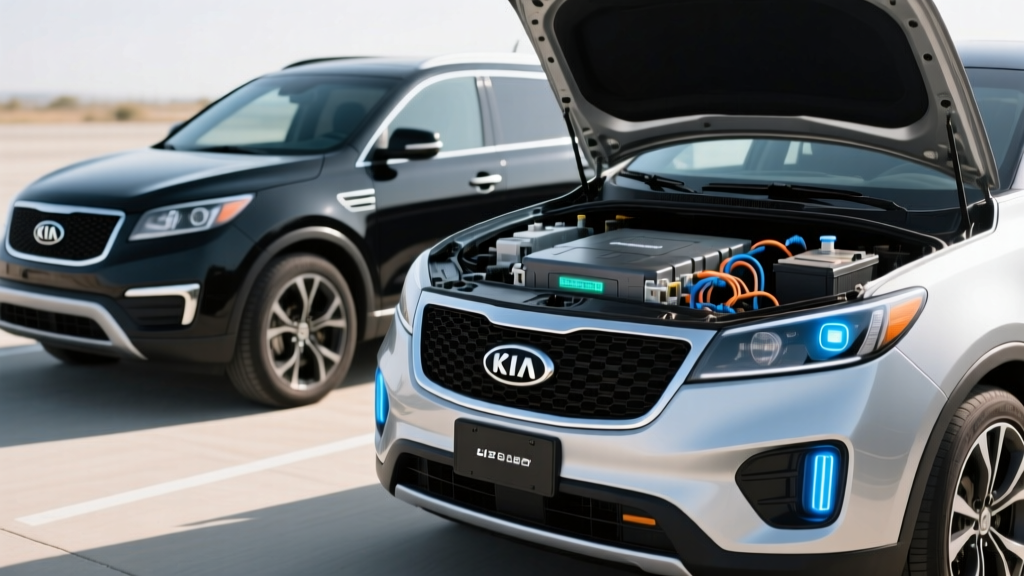
If you're researching a 2013 Kia Sorento battery, you're likely dealing with one of two scenarios: replacing the 12V auxiliary battery in a gas or hybrid Sorento, or comparing the longevity and cost of that conventional battery system against a modern electric vehicle's high-voltage traction battery. The differences are enormous — in chemistry, cost, lifespan, and what "battery replacement" actually means.
This guide uses the 2013 Sorento as a baseline to explain how EV batteries work in 2026, what they cost, how long they last, and why the comparison between a $180 lead-acid battery and a $10,000+ lithium-ion pack matters for your next vehicle decision.
What Battery Does a 2013 Kia Sorento Actually Use?
The 2013 Kia Sorento came in several powertrain configurations, each with a different battery setup:
- Gas models (2.4L I4 / 3.5L V6): Standard 12V lead-acid battery (Group 121R or H5/47). Replacement cost: $140–$220. Typical lifespan: 3–5 years.
- Sorento Hybrid (2.4L HEV): 12V auxiliary battery plus a ~1.4 kWh lithium-polymer hybrid battery pack operating at approximately 270V. The hybrid pack is designed to last the life of the vehicle but can cost $2,000–$4,000 to replace if it fails outside warranty.
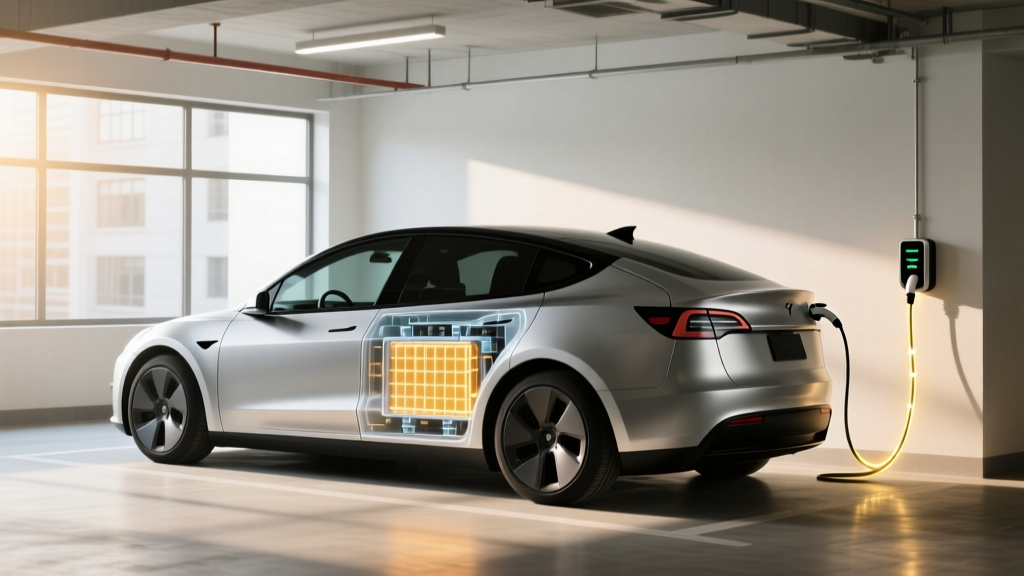
Neither of these systems resembles the large lithium-ion traction batteries in modern EVs like the Hyundai Ioniq 5 (77.4 kWh), Tesla Model Y (~75 kWh), or Ford Mustang Mach-E (91 kWh usable). Understanding the gap between these battery types is essential before we look at EV battery longevity and cost.
EV Battery Chemistry Explained: LFP vs. NMC in 2026
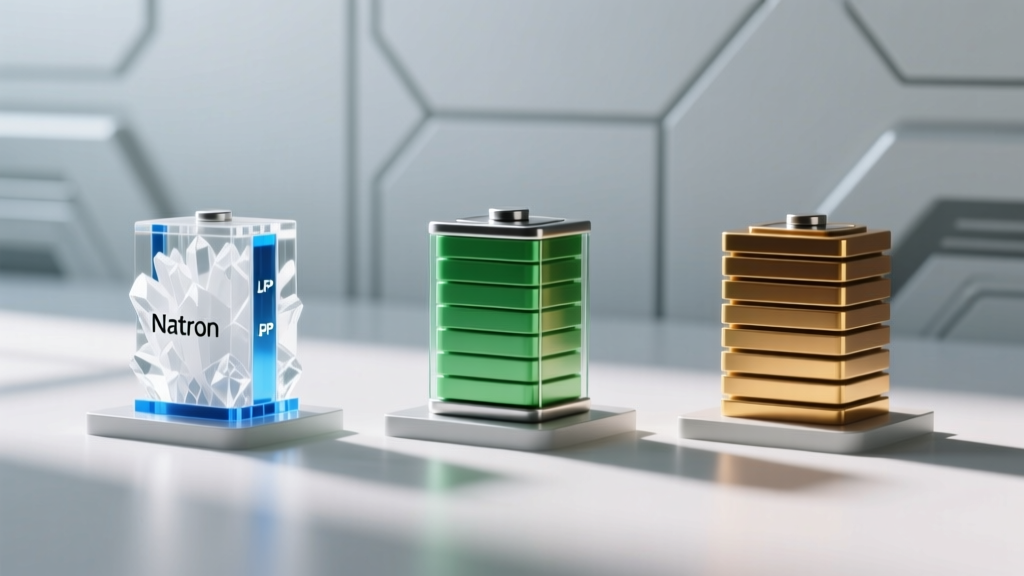
Modern EV batteries primarily use one of two lithium-ion chemistries. Your choice affects range, longevity, cold-weather behavior, and price.
| Attribute | LFP (Lithium Iron Phosphate) | NMC/NCA (Nickel Manganese Cobalt / Nickel Cobalt Aluminum) |
|---|---|---|
| Energy Density | Lower (~160–180 Wh/kg cell-level) | Higher (~220–280 Wh/kg cell-level) |
| Typical Cycle Life | 3,000–5,000+ cycles | 1,000–2,000 cycles |
| Cold-Weather Performance | More range loss below 32°F; slower charge acceptance | Better cold performance; heat-pump integration common |
| Cost (per kWh) | ~$80–$100/kWh at pack level | ~$110–$140/kWh at pack level |
| State-of-Charge Recommendation | Can charge to 100% daily (recommended for calibration) | Best kept 20–80% daily; 100% for trips only |
| Examples (2026) | Tesla Model 3 RWD, Ford Mustang Mach-E Select (standard range) | Hyundai Ioniq 5 Long Range, BMW i4, Rivian R1T (Dual-Motor Max) |
| Cobalt Content | None | Low but present (supply-chain concern) |
The trade-off in plain terms: LFP batteries are cheaper, last more charge cycles, and contain no cobalt — but they're heavier for the same range and lose more performance in freezing temperatures. NMC/NCA batteries deliver more range per pound and handle cold better, but degrade faster if routinely charged to 100% and cost more per kWh.
For a driver in Phoenix who charges at home daily, LFP is often the better pick. For someone in Minneapolis who needs maximum winter range, NMC with a heat pump is the stronger choice.
How Long Do EV Batteries Last? Real Degradation Data
This is where the comparison to a 2013 Kia Sorento battery gets illuminating. A lead-acid 12V battery lasts 3–5 years and costs under $200. A hybrid battery pack might last 10–15 years. But modern EV traction batteries are engineered for a fundamentally different lifespan.
Based on aggregated fleet data, owner reports, and manufacturer testing through 2025–2026, here's what real-world degradation looks like for NMC and LFP packs:
- Year 1 / 15,000 mi: ~2–4% capacity loss (initial "break-in" curve)
- Year 3 / 45,000 mi: ~6–9% total loss (curve flattens significantly)
- Year 5 / 75,000 mi: ~8–12% total loss for NMC; ~5–8% for LFP
- Year 8 / 120,000 mi: ~12–18% total loss for NMC; ~8–12% for LFP
- Year 10 / 150,000 mi: ~15–22% total loss (NMC); ~10–15% (LFP)
A pack with 15% degradation on a 300-mile EPA vehicle still delivers ~255 real-world miles — usable for most daily driving. According to Recurrent Auto, the vast majority of EV batteries retain above 85% capacity at 100,000 miles.
For context, a 2013 Kia Sorento's 12V battery will have been replaced 2–4 times by now. The hybrid pack, if the vehicle is still on the road, may be approaching end-of-life. EV traction batteries, by contrast, are designed to outlast 200,000 miles in most cases.
What Does the EV Battery Warranty Actually Cover?
Federal law mandates a minimum 8-year/100,000-mile warranty on EV battery packs (emissions-related component rules under the Clean Air Act apply to zero-emission vehicles). Most manufacturers meet or exceed this. Here's how the major brands stack up in 2026:
| Manufacturer | Warranty Period | Capacity Retention Threshold |
|---|---|---|
| Tesla (Model 3/Y RWD — LFP) | 8 yr / 100,000 mi | 70% |
| Tesla (Model 3/Y Long Range — NMC) | 8 yr / 120,000 mi | 70% |
| Hyundai / Kia (Ioniq 5, EV6, EV9) | 10 yr / 100,000 mi | 70% |
| Ford (Mach-E, F-150 Lightning) | 8 yr / 100,000 mi | 70% |
| GM (Ultium-based: Equinox EV, Blazer EV, Silverado EV) | 8 yr / 100,000 mi | 60% (some trims 70%) |
| Rivian (R1T, R1S) | 8 yr / 175,000 mi | 70% |
| BMW (i4, iX) | 8 yr / 100,000 mi | 70% |
What triggers a warranty claim: If your battery's State of Health (SoH) drops below the stated threshold within the warranty period, the manufacturer must repair or replace the pack at no cost. In practice, most warranty replacements involve swapping individual modules rather than the entire pack, which reduces downtime.
What's NOT covered: Damage from accidents, flooding, improper charging equipment, or modifications. Gradual degradation above the threshold is considered normal wear.
Compare this to the 2013 Kia Sorento Hybrid battery warranty, which was originally 10 years/100,000 miles but has long since expired on a 13-year-old vehicle. The 12V battery on any Sorento carries a typical 2–3 year prorated warranty from the parts retailer.
How Much Does an EV Battery Cost to Replace?
This is the question that generates the most anxiety — and the most misinformation. Let's look at actual 2026 replacement costs alongside the 2013 Sorento battery for scale.
| Vehicle / Battery Type | Battery Size | Replacement Cost (Parts + Labor) | Typical Replacement Timing |
|---|---|---|---|
| 2013 Kia Sorento (12V lead-acid) | ~0.7 kWh | $140–$220 | Every 3–5 years |
| 2013 Kia Sorento Hybrid pack | ~1.4 kWh | $2,000–$4,000 | 10–15 years (if needed) |
| Nissan Leaf (40 kWh, NMC) | 40 kWh | $6,500–$9,000 | 12–15 years (passive air cooling accelerates degradation) |
| Tesla Model 3 Standard Range (LFP, ~60 kWh) | ~60 kWh | $8,000–$12,000 | Rarely needed within vehicle life |
| Hyundai Ioniq 5 (77.4 kWh, NMC) | 77.4 kWh | $10,000–$15,000 | Rarely needed within vehicle life |
| Ford F-150 Lightning Extended Range (131 kWh) | 131 kWh | $18,000–$25,000 | Rarely needed within vehicle life |
| GMC Hummer EV (212.7 kWh) | 212.7 kWh | $25,000–$35,000+ | Rarely needed within vehicle life |
The reality check: According to data from fueleconomy.gov and industry tracking by BloombergNEF, battery pack prices have fallen from over $1,000/kWh in 2010 to roughly $115–$135/kWh at the pack level in 2025–2026. Replacement costs remain high because of labor, diagnostic procedures, and dealer markup — but the vast majority of EV batteries never need replacement during the original owner's time with the vehicle.
A 2013 Kia Sorento owner will likely spend $400–$800 on 12V batteries over the vehicle's remaining life. An EV owner will likely spend $0 on traction battery replacement — the pack will outlast the car's economic value in most scenarios.
Factors That Accelerate (or Preserve) EV Battery Life
Not all miles are equal when it comes to battery wear. Here's what the data shows:
- Avoid daily DC fast charging. Occasional road-trip fast charging is fine, but daily use of 150+ kW DC chargers accelerates degradation by ~1–3% over 5 years compared to Level 2 home charging. The charge curve matters: peak kW is sustained only between ~10–50% SoC, then tapers sharply.
- Keep SoC between 20–80% for NMC/NCA. Storing a battery at 100% for extended periods (days or weeks) stresses the cathode. LFP owners should charge to 100% at least weekly for SoC calibration but daily 100% is acceptable.
- Precondition before fast charging. Battery preconditioning (available on Tesla, Hyundai E-GMP, Ford, and most modern platforms) warms the pack to ~30–35°C for optimal charge acceptance. Skipping this in cold weather can cut charge speed by 40–60% and cause lithium plating over time.
- Park in shade or a garage when possible. Sustained battery temperatures above 95°F accelerate calendar degradation. Active thermal management systems (liquid cooling) mitigate this, but passive-cooled packs (older Nissan Leaf) suffer significantly.
- Don't let SoC sit at 0% for extended periods. A fully depleted battery can drop below safe voltage thresholds, potentially bricking modules. Keep it above 10% if storing.
- Use regenerative braking moderately in extreme cold. High-regen settings on a cold battery (<32°F) can stress cells. Most modern EVs automatically limit regen when the pack is cold.
How to Check Your EV Battery's State of Health (SoH)
Unlike a 2013 Kia Sorento's 12V battery — where you check voltage with a multimeter or have an auto parts store run a load test — EV battery health monitoring is software-driven and increasingly accessible.
Built-in vehicle displays: Most 2024–2026 EVs show SoH or estimated range vs. original in the settings menu. Tesla displays "Battery Health" under Service mode (accessible via a tap sequence on the software screen). Hyundai/Kia EVs show battery conditioning status and estimated degradation through the infotainment system.
OBD-II dongles and apps: Tools like the OBDeleven or Carly OBD-II adapters, paired with apps such as Battery Health (iOS/Android) or Scan My Tesla, can read the battery management system's (BMS) internal SoH estimate. These readings are typically accurate within 1–2%.
Third-party testing: Companies like Recurrent and Geotab offer fleet-level battery health analytics. Some dealerships can pull a full BMS diagnostic report showing individual cell-group voltages, internal resistance, and capacity estimates.
Range tracking method: The simplest approach — track your actual miles driven per full charge over time. If your 300-mile EPA vehicle consistently delivers 285 miles at 100% SoC after 30,000 miles, that's roughly 5% degradation. Compare against seasonal baselines (winter range drops 15–30% due to cabin heating and battery resistance — this is not degradation).
What's Next: Solid-State and Silicon-Anode Batteries
If you're weighing whether to buy an EV now or wait for "next-gen" batteries, here's the honest 2026 landscape:
Silicon-anode batteries (used in limited production by startups like Sila Nanotechnologies, supplying Mercedes-Benz for the G-Class EV) offer ~20% higher energy density than current graphite anodes. They're available now in small volumes but add cost. Expect broader adoption by 2028–2029.
Solid-state batteries — which replace the liquid electrolyte with a solid ceramic or polymer conductor — promise higher energy density, faster charging, and improved safety. Toyota, Samsung SDI, and QuantumScape have all announced pilot production lines, with Toyota targeting limited commercial availability in 2027–2028. However, manufacturing scale-up remains the primary bottleneck. Widespread, affordable solid-state EVs are realistically a 2030+ proposition.
2013 Kia Sorento Battery vs. Modern EV: The Bottom Line
If you're maintaining a 2013 Sorento, budget $150–$200 every 3–5 years for the 12V battery, and if you have the Hybrid, be aware that the hybrid pack replacement ($2,000–$4,000) may exceed the vehicle's resale value if it fails.
If you're considering an EV as your next vehicle, the battery is the component that worries buyers most but fails least. Modern LFP and NMC packs are engineered to retain 70–85% capacity at 150,000 miles, carry 8–10 year warranties, and rarely require out-of-pocket replacement. The total cost of battery ownership over 10 years is typically lower than the cumulative 12V battery replacements and hybrid system maintenance on aging vehicles like the 2013 Sorento.
Frequently Asked Questions
How long do EV batteries last in years and miles?
Based on fleet data through 2025–2026, most modern EV batteries (both LFP and NMC) retain 78–90% of original capacity at 150,000 miles or 10 years. LFP chemistries tend to outperform NMC in cycle life. Complete failure before 200,000 miles is rare. According to Recurrent Auto, fewer than 5% of EV batteries have required warranty replacement across tracked fleets.
How much does an EV battery cost to replace in 2026?
Replacement costs range from approximately $6,500 for a 40 kWh pack (Nissan Leaf) to $25,000+ for a 130+ kWh pack (Ford F-150 Lightning Extended Range, GMC Hummer EV). Most owners never pay this — the battery outlasts the vehicle's economic life, and warranty coverage (8–10 years, 100,000+ miles) covers premature degradation below 60–70% capacity.
What does the EV battery warranty cover?
EV battery warranties cover capacity loss below a stated threshold (typically 70% of original capacity) within the warranty period (8–10 years / 100,000–175,000 miles depending on manufacturer). They do not cover damage from accidents, flooding, or unauthorized modifications. See the IRS for how battery sourcing also affects federal tax credit eligibility under §30D.
LFP vs. NMC — which battery chemistry is better?
Neither is universally better. LFP wins on cost (~$80–$100/kWh vs. $110–$140/kWh), cycle life (3,000–5,000 vs. 1,000–2,000 cycles), and cobalt-free sourcing. NMC wins on energy density (more range per pound), cold-weather performance, and fast-charge acceptance at low temperatures. Choose LFP for budget and daily commuting in moderate climates; choose NMC for maximum range and cold-weather driving.
How do I check my EV battery health at home?
Use your vehicle's built-in battery health display (if equipped), an OBD-II adapter with a BMS-reading app (OBDeleven, Scan My Tesla, Carly), or simply track your real-world range per full charge over time and compare against the original EPA estimate, adjusting for seasonal temperature effects. Most modern EVs also log charging and degradation data accessible through the manufacturer's mobile app.
Can a 2013 Kia Sorento Hybrid battery be replaced with an EV battery?
No. The Sorento Hybrid's ~1.4 kWh lithium-polymer pack is specifically engineered for its parallel hybrid powertrain and cannot be swapped with a BEV traction battery. If the hybrid battery fails, replacement must use a compatible OEM or refurbished hybrid-specific pack. If hybrid battery replacement costs approach $3,000–$4,000 on a 13-year-old vehicle, it may be more economical to transition to a modern EV or PHEV.