If you've landed here searching for a 2013 Hyundai Santa Fe battery, you're likely facing one of two scenarios: your hybrid's high-voltage traction pack is showing age, or you're weighing whether to keep an aging hybrid running versus upgrading to a modern battery-electric vehicle (BEV). Either way, understanding battery chemistry, degradation, replacement costs, and warranty coverage is critical to making a smart financial decision.
The 2013 Hyundai Santa Fe was offered exclusively as a gasoline or hybrid crossover — it was never a plug-in electric vehicle. That means the "battery" in question is either the conventional 12V starter battery or the ~1.8 kWh nickel-metal hydride (NiMH) hybrid traction pack. But the principles of battery health, degradation, and replacement economics apply broadly across all electrified vehicles, from that 2013 hybrid to today's 80+ kWh NMC and LFP packs in modern BEVs.
This guide uses the 2013 Santa Fe hybrid as a starting point to explain everything EV and hybrid owners need to know about battery longevity, chemistry trade-offs, real-world degradation data, warranty terms, and replacement costs — with exact numbers you can use to make decisions.
What Battery Does the 2013 Hyundai Santa Fe Hybrid Use?
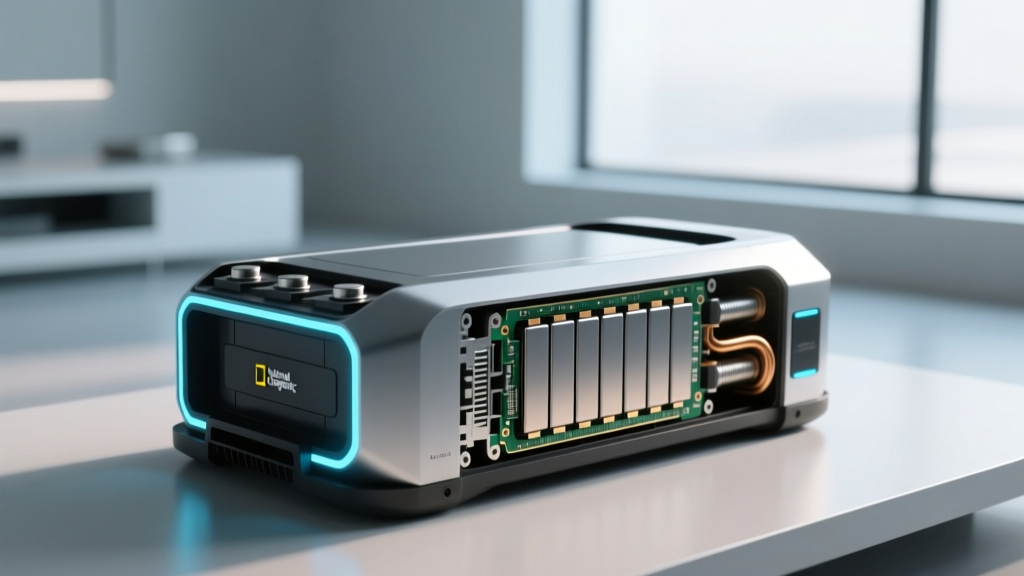
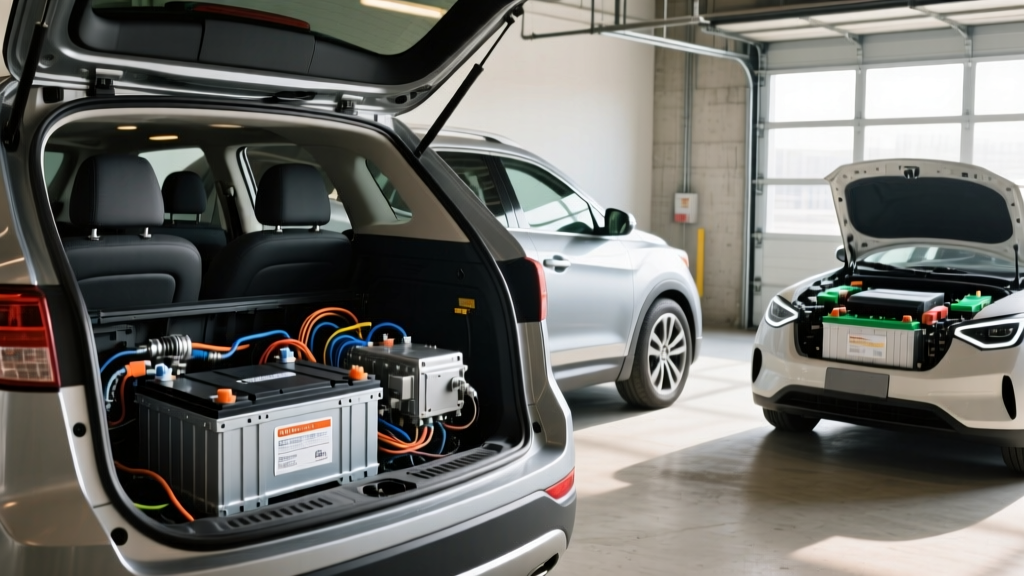
The 2013 Hyundai Santa Fe hybrid (sold in some markets as the Santa Fe Sport Hybrid) used a nickel-metal hydride (NiMH) traction battery pack with approximately 1.8 kWh of total capacity. This is a conventional hybrid (HEV), not a plug-in — the battery assists the 2.4L gasoline engine during acceleration and captures energy during regenerative braking, but cannot be plugged in to charge.
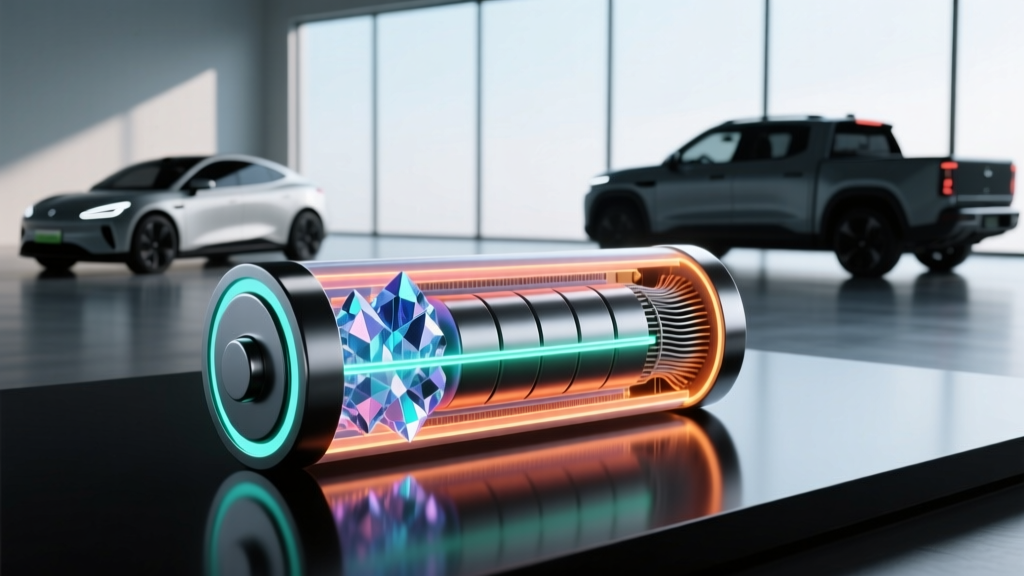
This is fundamentally different from the lithium-ion (Li-ion) packs found in modern BEVs and PHEVs. NiMH chemistry was the industry standard for hybrids in the early 2010s (used in the Toyota Prius, Honda Insight, and Hyundai Sonata Hybrid of that era). It's heavier and less energy-dense than today's lithium-ion options, but it proved durable — many NiMH packs from that era are still functioning, albeit with reduced capacity.
LFP vs NMC vs NiMH: Battery Chemistry Trade-Offs Explained
Understanding battery chemistry is the single most important factor in predicting how a pack will age, perform in your climate, and cost to replace. Here's how the three chemistries relevant to Hyundai owners compare:
| Attribute | NiMH (2013 Santa Fe Hybrid) | NMC/NCA (Modern BEVs) | LFP (Modern BEVs) |
|---|---|---|---|
| Energy Density | Low (~70 Wh/kg) | High (~250–300 Wh/kg) | Medium (~160–200 Wh/kg) |
| Typical Cycle Life | 500–1,000 full cycles | 1,000–2,000 full cycles | 3,000–5,000+ full cycles |
| Cold-Weather Performance | Moderate loss | Good with thermal mgmt | Poor below 32°F without heating |
| Cost per kWh (2026) | N/A (legacy) | ~$110–$130/kWh | ~$80–$100/kWh |
| Degradation Profile | Steady linear decline | Gradual, accelerates after ~80% SoH | Very flat curve, long plateau |
| Best Use Case | Small HEV packs | Long-range BEVs, AWD | Standard-range, daily commuters |
| Example Vehicles | 2013 Santa Fe Hybrid | Hyundai Ioniq 5 Long Range | Tesla Model 3 RWD, Ford Mustang Mach-E SR |
Which Chemistry Is Better?
There is no universally "better" chemistry — the right choice depends on your driving pattern:
- Choose NMC/NCA if you need maximum range (300+ miles), frequently road-trip, or live in a cold climate where energy density matters. The trade-off is higher cost and slightly faster long-term degradation.
- Choose LFP if you mostly commute under 150 miles daily, can charge to 100% regularly (LFP actually benefits from periodic full charges for cell balancing), and want the longest possible cycle life. Tesla, Ford, and Hyundai now offer LFP variants in standard-range trims.
- NiMH is legacy technology. If you're maintaining a 2013-era hybrid, the pack was engineered for its specific application and replacement options are limited to refurbished units or aftermarket suppliers.
How Long Do EV and Hybrid Batteries Actually Last?
The short answer: far longer than most buyers fear. According to data aggregated from fleet operators and fueleconomy.gov, modern lithium-ion EV batteries typically retain 85–92% of original capacity after 100,000 miles. Most packs will outlast the vehicle's useful economic life.
For the 2013 Hyundai Santa Fe hybrid's NiMH pack, the picture is different. After 12+ years and 120,000–180,000 miles, expect 20–40% capacity loss. The pack won't "die" suddenly — it gradually loses its ability to assist the engine, resulting in reduced fuel economy (perhaps 28–30 MPG combined versus the original 34 MPG EPA rating) and less regenerative braking capture.
Real-World Degradation Data Points
Here's what fleet and owner data shows across chemistries:
| Mileage | NiMH (HEV, ~2 kWh) | NMC (BEV, 75–85 kWh) | LFP (BEV, 55–65 kWh) |
|---|---|---|---|
| 50,000 mi | ~92–95% SoH | ~94–97% SoH | ~97–99% SoH |
| 100,000 mi | ~82–88% SoH | ~88–93% SoH | ~94–97% SoH |
| 150,000 mi | ~70–80% SoH | ~82–89% SoH | ~90–95% SoH |
| 200,000 mi | ~60–72% SoH | ~76–85% SoH | ~87–93% SoH |
SoH = State of Health (percentage of original capacity remaining). Data synthesized from fleet reports, manufacturer warranty claims, and owner community tracking. Individual results vary based on climate, charging habits, and thermal management system quality.
What Does the Battery Warranty Cover?
Federal law mandates that hybrid and EV battery packs carry a minimum warranty of 8 years / 100,000 miles in CARB states (California and states that follow California emissions standards) and 10 years / 100,000 miles for Hyundai specifically, which has long offered one of the industry's most generous powertrain warranties.
| Manufacturer | Warranty Term | Capacity Retention Threshold | Coverage Type |
|---|---|---|---|
| Hyundai (2026 Ioniq 5/6) | 10 yr / 100,000 mi | 70% SoH | Repair or replace |
| Tesla (Model 3/Y LFP) | 8 yr / 120,000 mi | 70% SoH | Repair or replace |
| Tesla (Model 3/Y NMC Long Range) | 8 yr / 120,000 mi | 70% SoH | Repair or replace |
| Ford (Mach-E) | 8 yr / 100,000 mi | 70% SoH | Repair or replace |
| GM (Ultium-based) | 8 yr / 100,000 mi | 70% SoH | Repair or replace |
| Toyota (bZ4X) | 10 yr / 150,000 mi | 70% SoH | Repair or replace |
Critical detail: The warranty triggers at a specific capacity threshold — typically 70% State of Health. If your battery degrades to 69% within the warranty window, the manufacturer must repair or replace it at no cost. Normal gradual degradation above that threshold is considered expected wear and is not covered.
For a 2013 Hyundai Santa Fe hybrid, the original 10-year/100,000-mile battery warranty has expired for virtually all examples on the road. Replacement is an out-of-pocket expense.
How Much Does a Battery Replacement Cost?
This is the question that generates the most anxiety — and the most misinformation. Let's separate the 2013 Santa Fe hybrid from modern EVs with hard numbers:
| Vehicle Type / Example | Battery Size | Replacement Cost (Parts + Labor) | Typical Need Timeline |
|---|---|---|---|
| 2013 Santa Fe Hybrid (NiMH) | ~1.8 kWh | $2,000–$3,800 (refurbished/aftermarket) | 120K–180K mi / 12–15 years |
| Hyundai Sonata Hybrid (2020+, Li-ion) | ~1.6 kWh | $2,500–$4,500 | 150K+ mi / rarely needed |
| Hyundai Ioniq 5 (NMC) | 77.4 kWh | $12,000–$18,000 | 200K+ mi / under warranty for most |
| Tesla Model 3 (LFP) | 60 kWh | $8,000–$12,000 | 250K+ mi / rarely needed |
| Ford F-150 Lightning (Extended) | 131 kWh | $20,000–$30,000 | 200K+ mi / under warranty for most |
| Chevrolet Bolt EV (NMC) | 65 kWh | $9,000–$14,000 | Recalled/replaced under warranty |
Context that matters: The vast majority of modern EV batteries will never need replacement during typical ownership. A 2026 Hyundai Ioniq 5 with its 10-year warranty will likely see its second or third owner before the pack drops below 70% SoH. For the 2013 Santa Fe hybrid, however, you're looking at an out-of-warranty expense of $2,000–$3,800 — which may or may not be worth it depending on the vehicle's overall condition and your local used-car market.
- Replace if: The rest of the vehicle is in good shape, you've maintained it well, and $3,000 is less than a down payment on a comparable replacement vehicle.
- Don't replace if: The vehicle has other major issues (transmission, suspension, rust), or you can apply that $3,000+ toward a modern PHEV or BEV with a fresh warranty — especially if you qualify for the federal §30D tax credit (up to $7,500 for new EVs, $4,000 for used, subject to IRS income and MSRP caps).
Factors That Accelerate Battery Degradation
Not all miles are equal when it comes to battery wear. Research from the National Renewable Energy Laboratory (NREL) and real-world fleet data identify these primary degradation accelerators:
Battery Care Checklist: Maximize Pack Longevity
- Avoid sustained high State of Charge: For NMC/NCA packs, don't store the car at 100% SoC for days. Charge to 80% for daily use; save 100% for road trips. (LFP is an exception — periodic 100% charges help cell balancing.)
- Minimize DC fast-charging frequency: Occasional fast charging is fine, but daily 150+ kW sessions generate heat that accelerates degradation. Level 2 home charging (7–11 kW) is gentler on the pack.
- Precondition in cold weather: Use your EV's preconditioning feature (or plug in and set a departure time) so the battery warms up before driving. Cold lithium-ion cells experience increased internal resistance and, if charged while cold, can suffer lithium plating.
- Avoid extreme heat exposure: Parking in direct sun in 100°F+ climates for extended periods stresses the thermal management system. Garage parking extends pack life.
- Don't let SoC drop to 0%: Deep discharge stresses cells. Try to keep the pack above 10–15% SoC. The car's buffer (typically 5–10% of gross capacity) protects against true zero, but repeated deep cycling still accelerates wear.
- Drive smoothly: Aggressive acceleration generates high current draw, which heats cells. Moderate driving is both more efficient and easier on the battery.
The Fast-Charging Reality
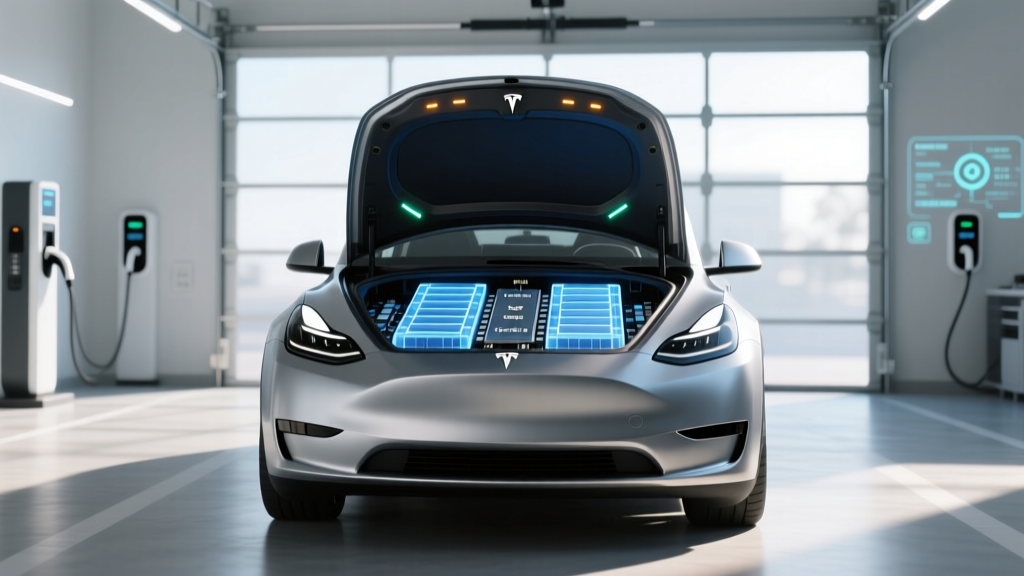
A common concern: "Will DC fast charging destroy my battery?" The data says occasional use is fine. Tesla's fleet data shows vehicles that fast-charge more than 90% of the time exhibit only ~2–3% additional degradation at 100,000 miles compared to vehicles that primarily use Level 2. The key word is occasional — modern thermal management systems actively cool the pack during fast charging. The risk is highest in older EVs without active liquid cooling (which does not apply to the 2013 Santa Fe hybrid, as its small NiMH pack uses air cooling but also sees far less thermal stress due to its small size and low charge/discharge rates).
How to Check and Monitor Battery Health (SoH)
Whether you're evaluating a used 2013 Santa Fe hybrid or monitoring a new Ioniq 5, knowing your battery's State of Health is essential.
For Modern EVs (2020+)
- In-vehicle displays: Many EVs (Hyundai, Kia, BMW) include a battery health indicator in the settings menu, showing SoH as a percentage or bar graph.
- OBD-II dongles + apps: Tools like Car Scanner, LeafSpy (Nissan), or Scan My Tesla read the BMS (Battery Management System) directly and report SoH, cell voltage variance, and cycle count.
- Dealer diagnostic: Any authorized service center can pull a battery health report. Request this before purchasing any used EV.
- Charging data analysis: Track how many kWh it takes to charge from 10% to 80% over time. If that number drops noticeably over 6–12 months, capacity is declining.
For the 2013 Santa Fe Hybrid
The 2013 model year predates sophisticated consumer-facing SoH displays. Your options:
- Hyundai dealer scan tool: A service department can read hybrid battery voltage and internal resistance values, which indicate pack condition.
- Fuel economy tracking: A sustained drop from the original 34 MPG combined to 28–30 MPG strongly suggests hybrid battery degradation.
- OBD-II hybrid apps: Some aftermarket apps (like Torque Pro with hybrid PIDs) can read battery voltage and temperature, though support for 2013 Hyundai hybrid systems is limited.
Emerging Battery Technology: What's Next?
If you're deciding whether to invest in a battery replacement or wait for next-gen technology, here's a realistic timeline for what's coming:
Solid-State Batteries
Solid-state batteries replace the liquid electrolyte with a solid material, promising higher energy density (~400+ Wh/kg at the cell level), faster charging, and improved safety. Toyota, Samsung SDI, and QuantumScape are leading development. However:
- Current status (2026): Small-scale production for limited applications. Not yet in mass-market consumer vehicles.
- Realistic mass-market timeline: 2028–2032 for premium vehicles; 2032+ for mainstream pricing.
- Impact on current owners: Solid-state won't retroactively help your 2013 Santa Fe or even your 2024 Ioniq 5. Buy based on today's technology, not tomorrow's promises.
Silicon-Anode Lithium-Ion
Companies like Sila Nanotechnologies and Group14 are commercializing silicon-dominant anodes that boost energy density by 20–40% over graphite anodes. These are beginning to appear in premium EVs (Mercedes-Benz G-Class electric, 2025+) and will trickle down to mainstream models by 2027–2029. This is incremental improvement, not a reason to delay an EV purchase.
Sodium-Ion Batteries
CATL and BYD are producing sodium-ion packs for lower-cost, shorter-range EVs in China. These offer lower energy density but dramatically lower material costs and excellent cold-weather performance. U.S. availability remains limited and is expected primarily in budget segments post-2027.
Frequently Asked Questions
How long do EV batteries last in years and miles?
Modern lithium-ion EV batteries (NMC and LFP) typically last 15–20 years and 200,000+ miles before dropping below 70% State of Health. Most packs will outlive the vehicle they're installed in. The 2013 Santa Fe hybrid's NiMH pack has a shorter useful life of approximately 12–15 years / 120,000–180,000 miles before significant capacity loss affects fuel economy.
How much does an EV battery cost to replace?
Replacement costs range from $2,000–$4,000 for small hybrid packs (like the 2013 Santa Fe's ~1.8 kWh NiMH) to $8,000–$30,000 for full BEV packs depending on capacity. A 77 kWh Hyundai Ioniq 5 pack runs approximately $12,000–$18,000. However, most modern EV batteries will never need replacement during typical ownership, and warranty coverage protects against premature failure.
What does the battery warranty actually cover?
EV and hybrid battery warranties cover capacity loss below a specific threshold (typically 70% SoH) and manufacturing defects for 8–10 years / 100,000–150,000 miles, depending on the manufacturer. Hyundai offers 10 years / 100,000 miles. The warranty does not cover normal gradual degradation above the threshold, damage from accidents, or improper modifications. For a 2013 Santa Fe, the original warranty has expired.
How do I check my battery's State of Health?
Modern EVs display SoH in the vehicle settings or via OBD-II diagnostic apps. For older hybrids like the 2013 Santa Fe, a dealer scan tool or tracking fuel economy decline over time provides the best indication. Always request a battery health report before purchasing any used electrified vehicle.
LFP vs NMC — which battery chemistry should I choose?
Choose LFP if you commute under 150 miles daily, want maximum cycle life (3,000–5,000+ cycles), don't mind slightly reduced cold-weather range, and prefer lower cost. Choose NMC/NCA if you need 300+ miles of range, frequently drive in cold climates, or take regular road trips where energy density matters. For the 2013 Santa Fe hybrid, this choice is moot — the NiMH pack is fixed. But if you're upgrading to a new EV, this is one of the most impactful spec decisions you'll make.
Is it worth replacing the battery in a 2013 Hyundai Santa Fe hybrid?
It depends on the vehicle's overall condition and your budget. At $2,000–$3,800 for a refurbished NiMH pack, the replacement may be justified if the rest of the car is solid and you plan to keep it 3+ more years. However, that same $3,000+ could serve as a down payment on a modern PHEV (like the Hyundai Tucson PHEV) or a used BEV — both offering dramatically better efficiency, technology, and a fresh battery warranty. Run the numbers against your local used-car market before committing.