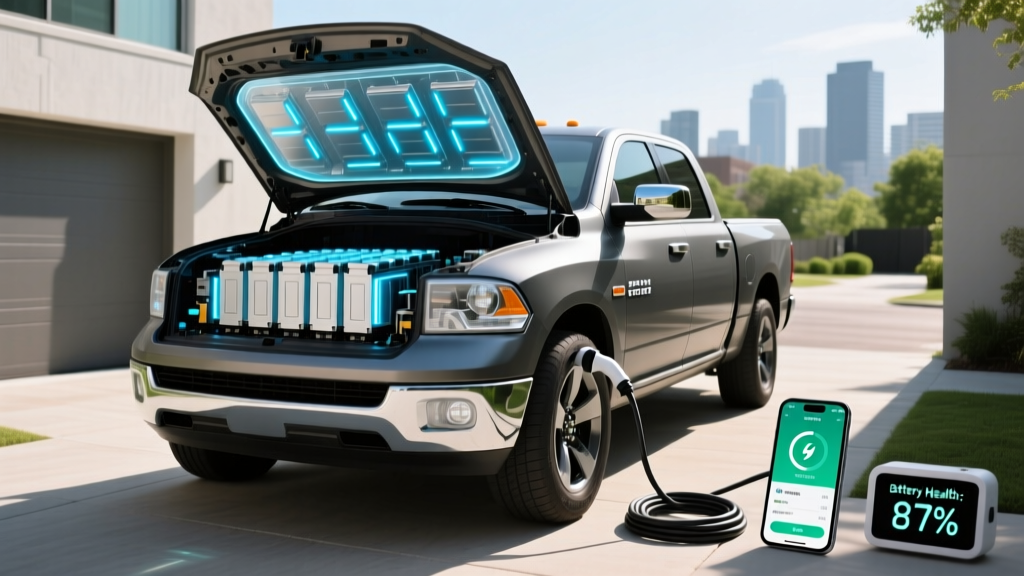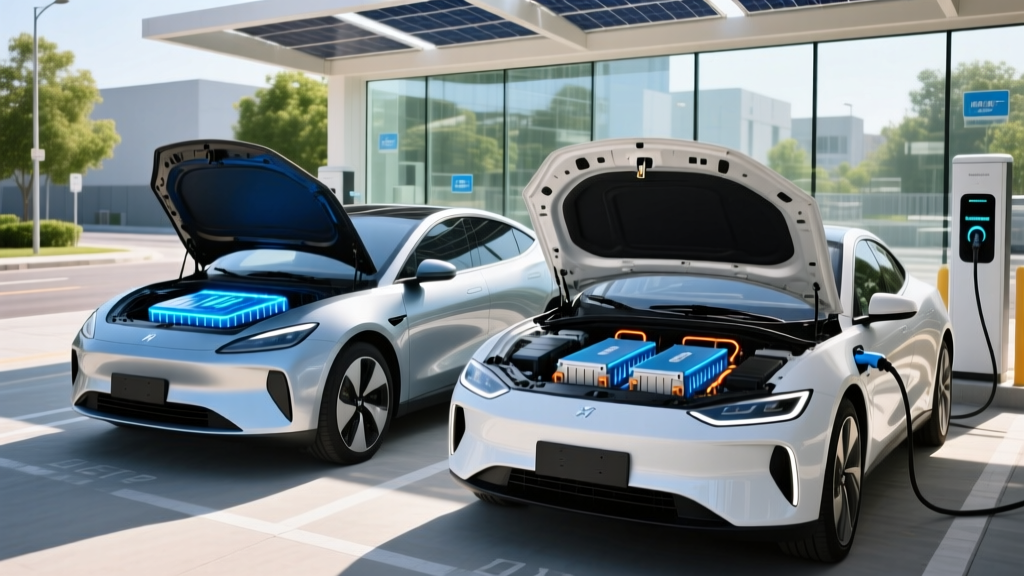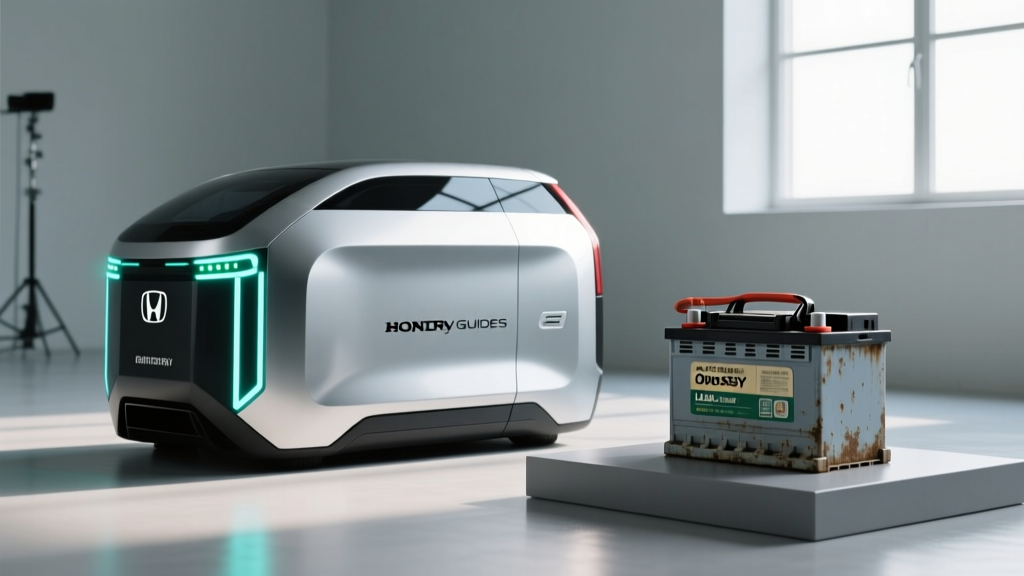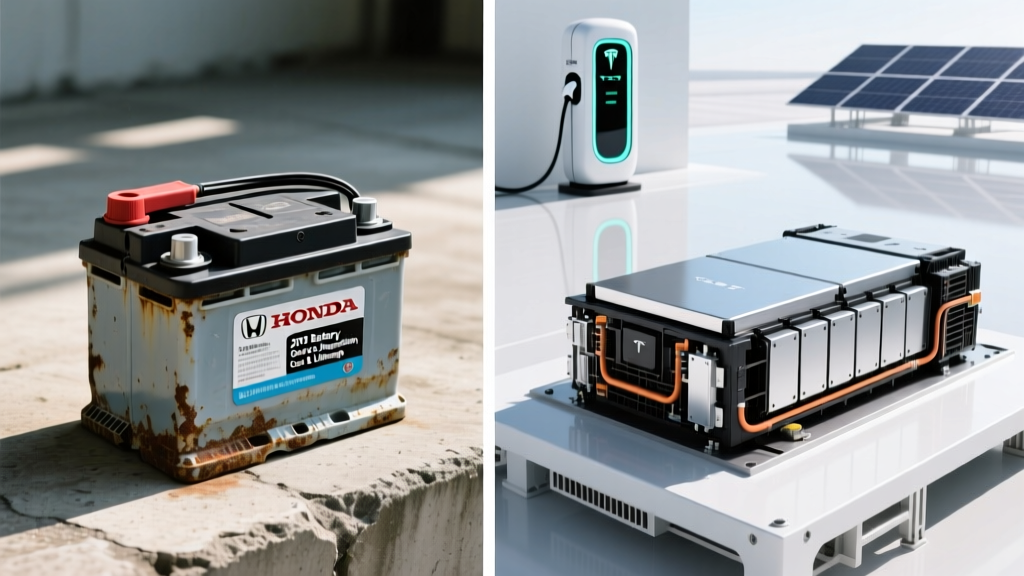
If you've searched for a 2013 Honda Civic battery, you're likely dealing with a dead 12-volt lead-acid unit under the hood — or you might be curious how that conventional car battery compares to the high-voltage traction batteries powering today's electric vehicles. The gap between a $180 replacement 12V battery in a 2013 Civic and a $10,000+ EV battery pack is enormous, but understanding both systems reveals a lot about where automotive energy storage has gone — and where it's headed.
This guide breaks down everything EV buyers and current owners need to know about modern traction battery chemistry, real-world degradation data, replacement economics, warranty coverage, and how to maximize the lifespan of an EV battery pack. We'll also clarify exactly what you're looking at with a 2013 Civic's battery system versus a 2026 EV's high-voltage architecture.
2013 Honda Civic Battery: What You're Actually Replacing
The 2013 Honda Civic uses a conventional 12-volt lead-acid auxiliary battery (Group 51R, typically 410–500 cold cranking amps). This battery powers the starter motor, lights, infotainment, and ECU — it has nothing to do with propulsion. Even the 2013 Civic Hybrid uses a relatively small nickel-metal hydride (NiMH) IMA (Integrated Motor Assist) battery pack rated at roughly 0.5 kWh, which assists the gasoline engine but doesn't drive the car independently for meaningful distances.
Key specs for the 2013 Civic battery systems:
- Gasoline Civic: 12V lead-acid, ~$130–$200 replacement, 3–5 year typical lifespan
- Civic Hybrid (IMA): NiMH pack (~0.5 kWh), replacement ~$2,000–$3,500, often lasts 100,000+ miles
- Warranty: Hybrid IMA battery covered for 8 years/80,000 miles (10 years/150,000 miles in CARB states) per Honda's original terms
This is fundamentally different from a modern EV's high-voltage traction battery, which stores 50–100+ kWh of energy, weighs 700–1,200 pounds, and costs $8,000–$20,000+ to replace. Let's look at what that means for today's EV owners.
EV Battery Chemistry: LFP vs NMC Explained
Modern EVs use two dominant lithium-ion chemistries: LFP (lithium iron phosphate) and NMC (nickel manganese cobalt), with NCA (nickel cobalt aluminum) used primarily by Tesla and a few others. The chemistry choice affects range, longevity, cost, cold-weather performance, and charging habits.
| Attribute | LFP (Lithium Iron Phosphate) | NMC / NCA |
|---|---|---|
| Energy Density | Lower (~160 Wh/kg cell-level) | Higher (~250–300 Wh/kg cell-level) |
| Typical Vehicles | Tesla Model 3 RWD, Ford Mustang Mach-E Select (2025+), BYD models | Hyundai Ioniq 5, Chevy Equinox EV, most long-range models |
| Cycle Life | 3,000–5,000+ full cycles | 1,000–2,000 full cycles |
| Cold Performance | Reduced — more range loss below 32°F | Better low-temp discharge capability |
| Recommended Charge Habit | Can be charged to 100% regularly | Best kept at 80% daily; 100% for trips only |
| Cost per kWh | Lower ($100–$130/kWh pack-level, 2026 est.) | Higher ($130–$160/kWh pack-level, 2026 est.) |
| Thermal Stability | Excellent — less prone to thermal runaway | Good but requires more active thermal management |
The practical takeaway: LFP is better for daily drivers who charge at home every night and want maximum cycle life. NMC is better for road-trippers who need maximum range per charge and don't mind managing state of charge carefully. Tesla's Standard Range Model 3 uses LFP, which is why Tesla explicitly recommends charging it to 100% at least once per week to keep the battery management system calibrated.
How Long Do EV Batteries Last? Real Degradation Data
The most common fear among EV shoppers is that the battery will need expensive replacement within a few years. The data tells a different story. According to long-term fleet studies and manufacturer data:
Typical EV Battery Degradation Curve (NMC Chemistry, Average Use):
- Year 1 / 15,000 mi: ~2–3% capacity loss (initial settling)
- Year 3 / 45,000 mi: ~5–7% total loss
- Year 5 / 75,000 mi: ~8–10% total loss
- Year 8 / 120,000 mi: ~10–15% total loss
- Year 10 / 150,000 mi: ~12–18% total loss (many packs still above 80% SoH)
LFP batteries degrade even more slowly. Tesla's 2025 Impact Report noted that Model 3 RWD (LFP) vehicles retained an average of roughly 85% battery capacity after 200,000 miles. The key insight is that degradation is non-linear — most capacity loss occurs in the first 20,000–30,000 miles, after which the curve flattens significantly.
Compare this to the 2013 Honda Civic's 12V battery, which typically needs replacement every 3–5 years regardless of mileage. The EV traction battery is designed to outlast most other major vehicle components.
Battery Warranty Coverage: What's Actually Protected
Federal law mandates that EV batteries carry a minimum warranty of 8 years / 100,000 miles (10 years / 150,000 miles in California and states adopting CARB emissions standards). Here's how major manufacturers structure their coverage in 2026:
| Manufacturer | Warranty Term | Capacity Threshold | Notes |
|---|---|---|---|
| Tesla (Model 3/Y NMC) | 8 yr / 120,000 mi | 70% retention | Long Range and Performance trims |
| Tesla (Model 3 RWD LFP) | 8 yr / 100,000 mi | 70% retention | Standard Range models |
| Hyundai / Kia | 10 yr / 100,000 mi | 70% retention | Among the longest terms in the industry |
| Ford | 8 yr / 100,000 mi | 70% retention | Mach-E, F-150 Lightning |
| GM (Ultium) | 8 yr / 100,000 mi | 70% retention | Equinox EV, Blazer EV, Silverado EV |
| Volkswagen | 8 yr / 100,000 mi | 70% retention | ID.4 models |
The 70% capacity retention threshold is the industry standard trigger for a warranty claim. If your battery's State of Health (SoH) drops below 70% of its original capacity within the warranty period, the manufacturer must repair or replace it at no cost. In practice, very few owners ever hit this threshold — most EV batteries retain 85–90% SoH at the 8-year mark under normal use.
EV Battery Replacement Cost: The Real Numbers
When an EV battery does need replacement — typically well beyond the warranty period, if ever — costs vary dramatically by pack size and manufacturer:
| Vehicle / Pack Size | Battery Chemistry | Estimated Pack Cost | Total Replacement (Installed) |
|---|---|---|---|
| Tesla Model 3 RWD (~60 kWh) | LFP | $6,000–$8,000 | $8,000–$12,000 |
| Tesla Model Y LR (~82 kWh) | NMC/NCA | $10,000–$14,000 | $13,000–$18,000 |
| Hyundai Ioniq 5 (~77.4 kWh) | NMC | $10,000–$13,000 | $13,000–$17,000 |
| Ford F-150 Lightning Ext. (~131 kWh) | NMC | $18,000–$25,000 | $22,000–$30,000 |
| Chevy Equinox EV (~85 kWh) | NMC (Ultium) | $11,000–$14,000 | $14,000–$18,000 |
Context matters here. Pack costs have fallen from over $1,000/kWh in 2010 to roughly $110–$140/kWh at the pack level in 2026, according to BloombergNEF data. And because most batteries outlast 200,000+ miles, the vast majority of EV owners will sell or trade the vehicle before ever needing a replacement. For comparison, a 2013 Honda Civic owner might spend $300–$600 on multiple 12V battery replacements over the same ownership period, plus thousands on transmission or engine work the EV simply doesn't require.
Factors That Accelerate Battery Degradation
Not all EV batteries age equally. The following factors measurably speed up capacity loss:
- Frequent DC fast charging: Regular use of 150+ kW DC fast chargers (especially without battery preconditioning) adds thermal stress. Occasional road-trip fast charging is fine; daily fast charging accelerates degradation by an estimated 1–3% over the battery's life.
- Sustained high state of charge: Parking an NMC battery at 100% SoC for days or weeks stresses the cathode. LFP batteries tolerate 100% SoC much better — this is a key advantage for owners without home Level 2 charging who rely on weekly top-ups.
- Extreme heat exposure: Ambient temperatures consistently above 95°F without active thermal management accelerate chemical degradation. Most modern EVs have liquid-cooled packs, which mitigate this significantly.
- Deep discharge cycles: Regularly driving to 0–5% SoC stresses the anode. Keeping the battery between 20–80% for NMC (or 10–100% for LFP) is optimal.
- Cold-weather fast charging without preconditioning: Charging a cold battery at high power causes lithium plating on the anode, which permanently reduces capacity. Always use your EV's navigation-based preconditioning feature when routing to a DC fast charger.
How to Check and Maximize Battery Health (SoH)
Monitoring your EV's State of Health (SoH) is straightforward with modern tools:
In-vehicle methods:
- Many EVs display SoH or estimated range vs. original in the settings menu (Hyundai/Kia's EV menu, Tesla's service mode)
- Track your "rated range" at 100% charge over time — a decline from 310 miles to 285 miles at full charge indicates roughly 8% degradation
Third-party tools:
- Recurrent Auto (free) — connects to your EV's telematics and provides ongoing SoH reports and fleet comparisons
- OBDeleven / OBD-II adapters — read battery management system (BMS) data directly for detailed cell-level voltage and capacity readings
- Manufacturer service centers — can run a formal battery health diagnostic, often required for warranty claims
For maximizing longevity, the single most impactful habit is installing a home Level 2 charger and setting your charge limit to 80% for daily driving (NMC) or 100% (LFP). Slow, overnight Level 2 charging at 7–11 kW generates far less thermal stress than DC fast charging, and consistent partial charges keep lithium-ion cells in their comfort zone.
What's Next: Solid-State and Silicon Anode Batteries
Looking ahead, two technologies promise to reshape EV batteries — but neither is commercially available in mass-market vehicles as of 2026:
Solid-state batteries replace the liquid electrolyte with a solid ceramic or polymer layer, potentially offering 40–50% higher energy density, faster charging, and improved safety. Toyota has announced a solid-state battery targeting 2027–2028 production vehicles with a claimed 750 km (~465 miles) of range, but volume manufacturing timelines remain uncertain. Samsung SDI and QuantumScape are also pursuing solid-state cells with pilot production underway, but industry analysts at BloombergNEF project meaningful market penetration won't arrive until 2029–2032.
Silicon anode batteries replace the graphite anode with silicon, which can store roughly 10x more lithium ions per unit mass. Companies like Sila Nanotechnologies (supplying Mercedes-Benz for the G-Class EV) and Group14 (partnered with SK On) are shipping early-production cells in 2025–2026. Expect incremental energy density gains of 20–40% in premium models first, with broader adoption through 2028.
Neither technology will affect your current EV's battery or its replacement economics. Today's lithium-ion packs are mature, well-understood, and proven to last 200,000+ miles with proper care.
Frequently Asked Questions
How long do EV batteries last in years and miles?
Based on fleet data from Geotab and Recurrent Auto, most modern EV batteries retain 85–90% of their original capacity after 8 years and 120,000 miles. Many packs reach 200,000+ miles before dropping to the 70% warranty threshold. LFP-chemistry batteries tend to last even longer due to higher cycle life.
How much does it cost to replace an EV battery?
Replacement costs range from roughly $8,000 for a smaller LFP pack (Tesla Model 3 RWD) to $25,000+ for a large NMC pack (F-150 Lightning Extended Range). However, most EV batteries never need replacement during typical ownership — they outlast other vehicle components.
What does the EV battery warranty actually cover?
Federal law requires a minimum 8-year/100,000-mile warranty (10 years/150,000 miles in CARB states). Coverage triggers when battery capacity drops below 70% of original. The manufacturer must repair or replace the pack at no cost. Normal degradation above 70% is not covered, as it's considered expected wear.
How do I check my EV's battery health?
Use your vehicle's built-in range estimator at 100% charge and compare it to the original EPA rating. For more precise data, services like Recurrent Auto connect to your EV's telematics for free. OBD-II adapters can read cell-level BMS data. Dealerships can run formal diagnostics.
Is LFP or NMC battery chemistry better?
It depends on your driving pattern. LFP offers longer cycle life (3,000–5,000 cycles), lower cost, and the ability to charge to 100% daily — ideal for commuters with home charging. NMC offers higher energy density (more range per kWh) and better cold-weather performance — better for road-trippers who need maximum range. Neither is universally "better."
Does the 2013 Honda Civic Hybrid battery relate to EV batteries?
Only distantly. The 2013 Civic Hybrid uses a small nickel-metal hydride (NiMH) pack (~0.5 kWh) for mild engine assist. Modern EV batteries are lithium-ion, 100–250x larger in capacity, and designed for full electric propulsion. The Hybrid's IMA battery replacement (~$2,000–$3,500) shares the concept of electrochemical degradation but uses entirely different chemistry and engineering.