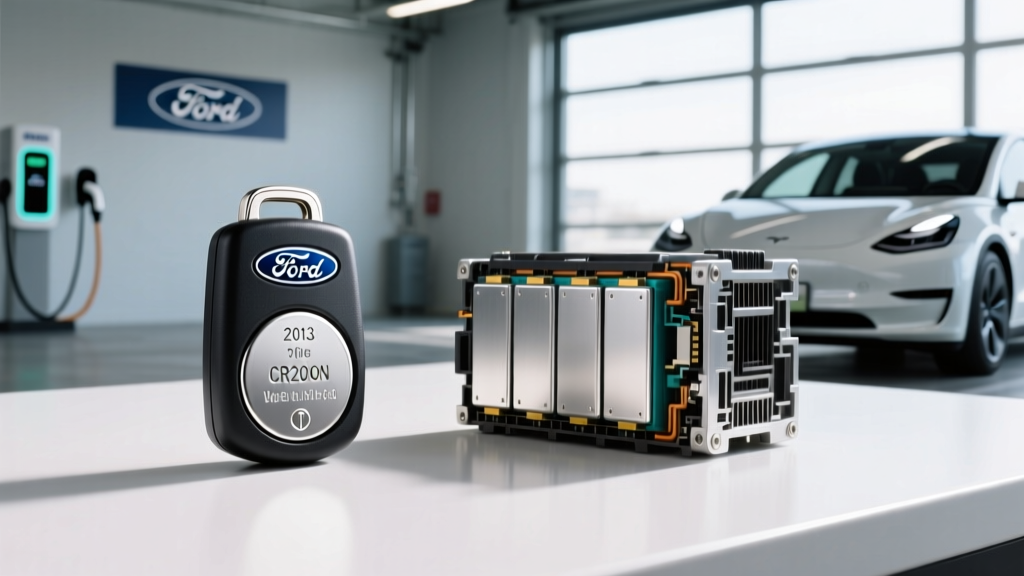
If you own a 2013 Ford Fusion (or its hybrid/Energi variants), you've likely replaced the key fob battery at least once — a CR2032 coin cell that costs about $5 and takes 30 seconds to swap. But that tiny lithium battery opens a much larger conversation for anyone transitioning from a conventional or hybrid car to a full battery-electric vehicle (BEV). The high-voltage traction battery in a modern EV is a fundamentally different beast: 60–120+ kWh of energy, liquid-cooled thermal management, and a price tag measured in thousands rather than single digits.
This guide bridges that gap. We'll explain exactly what powers your Fusion key fob, then dive deep into EV traction battery chemistry, degradation data, warranties, replacement costs, and care — everything you need to evaluate long-term battery ownership in 2026.
2013 Ford Fusion Key Fob Battery: The Quick Answer
The 2013 Ford Fusion standard key fob uses a CR2032 3V lithium coin cell. If you have the Intelligent Access push-button start fob (common on SEL and Titanium trims), it also takes a CR2032. The Ford Fusion Energi plug-in hybrid's key fob uses the same cell. Here's what you need:
- Battery type: CR2032 (3V lithium manganese dioxide)
- Typical lifespan: 2–4 years depending on use frequency
- Replacement cost: $3–$8 for a quality cell (Panasonic, Energizer, Duracell)
- Tools needed: Small flathead screwdriver or coin to twist open the fob shell
- Time required: Under 60 seconds
When the fob displays a "Key Fob Battery Low" message on the instrument cluster, you have roughly 1–2 weeks of normal use remaining. The Fusion also supports a backup start procedure: place the fob in the center console pocket (or against the start button) to use passive RFID even with a dead battery.
That's straightforward. But the Fusion Energi's traction battery — and the far larger packs in modern BEVs — require a completely different level of understanding.
EV Traction Battery Chemistry: LFP vs. NMC Explained
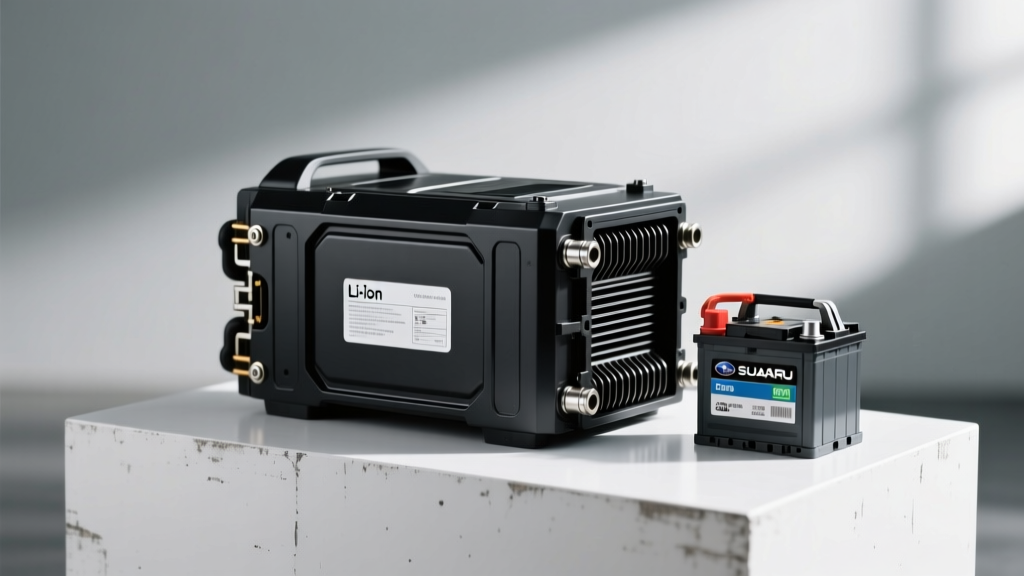
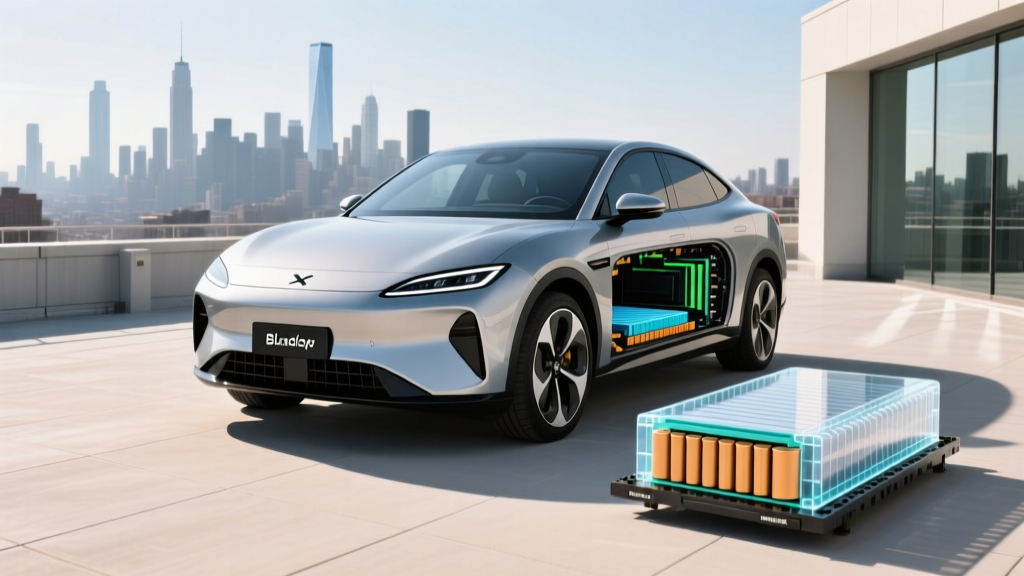
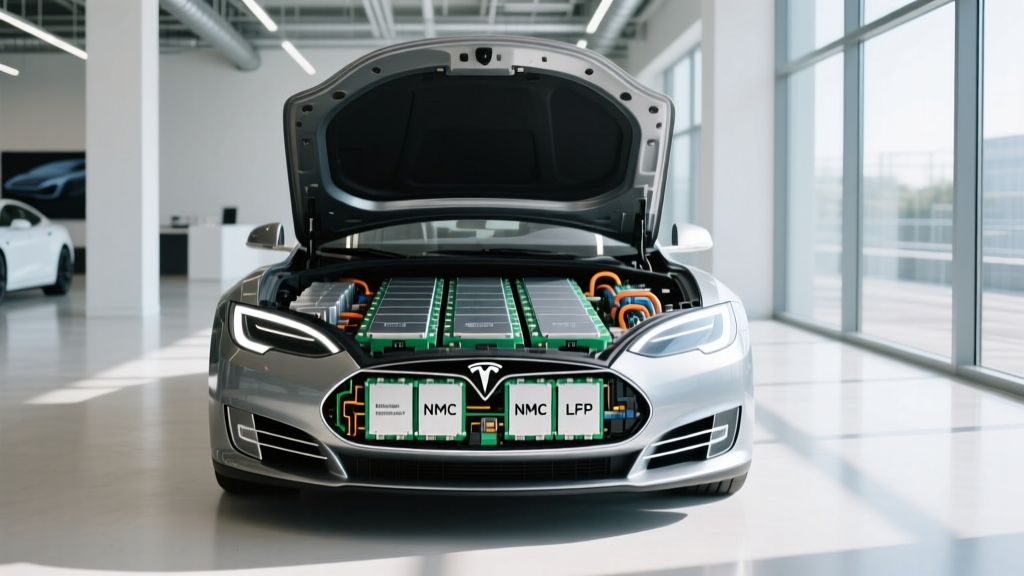
Every modern EV uses one of two dominant lithium-ion chemistries in its traction battery: LFP (lithium iron phosphate) or NMC/NCA (nickel manganese cobalt / nickel cobalt aluminum). The chemistry determines energy density, longevity, cold-weather performance, and cost. Here's how they compare:
| Attribute | LFP (Lithium Iron Phosphate) | NMC / NCA (Nickel-based) |
|---|---|---|
| Energy density | ~160–180 Wh/kg (lower) | ~220–300 Wh/kg (higher) |
| Cycle life | 3,000–6,000+ cycles | 1,000–2,500 cycles |
| Cold performance | Moderate loss; slower charge acceptance below 32°F | Better low-temp charge/discharge |
| Thermal stability | Excellent (less prone to thermal runaway) | Good (requires more active management) |
| Cost per kWh | ~$70–90/kWh (2026 pack-level) | ~$100–130/kWh (2026 pack-level) |
| Recommended daily SoC | 100% (LFP tolerates full charge well) | 80% daily; 100% only for trips |
| Common 2026 models | Tesla Model 3/Y RWD, Ford Mustang Mach-E Select (base), BYD Seal | Hyundai Ioniq 5/6, Kia EV6/9, Tesla Long Range/Performance, Rivian, Lucid |
Which is better? It depends on your use case. If you prioritize maximum range and fast-charging speed, NMC delivers. If you want a battery that will likely outlast the car with minimal degradation and lower upfront cost, LFP is the pragmatic choice. Tesla's shift to LFP for standard-range vehicles reflects this calculus — the chemistry sacrifices ~15% energy density for roughly 2–3× cycle life and lower material costs.
How Long Do EV Batteries Actually Last?
The short answer: far longer than most buyers expect. Real-world fleet data from sources like Recurrent Auto and Tesla's impact reports consistently show that modern liquid-cooled EV batteries lose approximately 5–12% capacity over the first 100,000 miles, after which degradation typically flattens to a slow linear decline.
Typical degradation trajectory (NMC, liquid-cooled):
- Year 1 / ~12,000 mi: 3–5% loss (initial formation)
- Year 3 / ~36,000 mi: 6–8% loss
- Year 5 / ~60,000 mi: 8–10% loss
- Year 8 / ~96,000 mi: 10–12% loss
- Year 10 / ~120,000 mi: 12–15% loss
- Year 15 / ~180,000 mi: 15–20% loss (estimated)
LFP packs in similar duty cycles show 1–3% less loss at equivalent milestones, owing to their superior cycle life. A 2013 Ford Fusion Energi, by comparison, uses a much smaller 7.6 kWh NMC pack that has shown 15–25% loss at 100,000+ miles — partly because early PHEV thermal management was less robust.
According to fueleconomy.gov, most EV batteries are designed to retain at least 70–80% of original capacity for 8–10 years or 100,000–150,000 miles. Catastrophic failure (sudden death) is extremely rare in liquid-cooled packs; the concern is gradual capacity fade reducing range.
What Does the Battery Warranty Cover?
Federal law (EPA emissions warranty requirements) effectively mandates that manufacturers warrant EV batteries for a minimum of 8 years / 100,000 miles (10 years / 150,000 miles in California and states following CARB rules). Here's how major 2026 warranties compare:
| Manufacturer | Warranty Period | Capacity Threshold | Notes |
|---|---|---|---|
| Tesla | 8 yr / 120,000 mi (LR); 8 yr / 100,000 mi (RWD) | 70% retention | Includes drive unit |
| Hyundai / Kia | 10 yr / 100,000 mi | 70% retention | Among the longest coverage |
| Ford | 8 yr / 100,000 mi | 70% retention | Covers Mach-E, F-150 Lightning |
| GM (Chevrolet/Cadillac) | 8 yr / 100,000 mi | 70% retention (60% for Bolt EV/EUV) | Ultium platform coverage |
| Rivian | 8 yr / 175,000 mi | 70% retention | Higher mileage cap for commercial use |
| BMW | 8 yr / 100,000 mi | 70% retention | Includes i4, i5, i7, iX |
The key detail: warranties cover capacity falling below the threshold (typically 70%), not normal gradual degradation above it. If your 80 kWh pack drops to 58 kWh (72.5%) at year 7, you're still within spec. If it hits 54 kWh (67.5%), the manufacturer must repair or replace it — usually with a refurbished unit, not necessarily brand-new.
EV Battery Replacement Cost: What to Budget
Most EV batteries will never need replacement during typical ownership. But for buyers of older used EVs or high-mileage fleet vehicles, here's the current landscape:
| Battery Size / Vehicle Class | Estimated Pack Cost (2026) | Labor + Installation | Total Range |
|---|---|---|---|
| 40–60 kWh (compact EV, e.g., Chevy Bolt, Nissan Leaf) | $6,000–$10,000 | $1,500–$3,000 | $7,500–$13,000 |
| 70–85 kWh (mid-size, e.g., Tesla Model 3/Y, Ioniq 5) | $10,000–$16,000 | $2,000–$3,500 | $12,000–$19,500 |
| 90–120 kWh (large, e.g., F-150 Lightning, Rivian, Lucid) | $15,000–$25,000 | $2,500–$4,500 | $17,500–$29,500 |
| PHEV pack (10–20 kWh, e.g., Fusion Energi, RAV4 Prime) | $3,000–$7,000 | $1,000–$2,000 | $4,000–$9,000 |
Context matters here. Pack-level battery pricing has fallen to roughly $70–$130/kWh in 2026 depending on chemistry, down from $200+/kWh a decade ago. And because most packs last 200,000+ miles before falling below 70% capacity, the vast majority of EV owners will sell or trade the vehicle before ever facing an out-of-warranty replacement. For comparison, a 2013 Ford Fusion owner might spend $4,000–$7,000 on a transmission replacement — a far more common failure point in ICE vehicles.
Factors That Accelerate (or Preserve) Battery Life
Not all miles are equal for battery wear. Here's what actually moves the needle on degradation:
Practices that accelerate degradation:
- Frequent DC fast charging above 150 kW — occasional use is fine, but daily 250 kW sessions add heat stress. Data shows exclusive DCFC users see ~1–3% additional loss over 100k miles vs. Level 2 users.
- Sustained 100% state of charge — storing an NMC battery at full charge for days accelerates calendar aging. LFP is more tolerant.
- Regular deep discharge below 10% — low SoC stresses cell chemistry similarly to high SoC.
- Extreme heat exposure — parking in 110°F+ environments without thermal management active (some EVs precondition when plugged in).
- Repeated high-current track/launch use — sustained high C-rate discharge generates internal heat.
Practices that maximize longevity:
- Daily charging to 80% (NMC) or 100% (LFP) — follow manufacturer guidance for your chemistry.
- Primarily Level 2 home charging — slower charging generates less heat.
- Keeping SoC between 20–80% for daily use — the "middle zone" minimizes stress.
- Plugging in during extreme cold — allows the thermal management system to keep the pack in its optimal 60–95°F window using grid power rather than battery energy.
- Driving normally — moderate regen settings and typical acceleration put negligible extra wear on the pack.
How to Check and Monitor Battery State of Health (SoH)
State of Health (SoH) is the percentage of original capacity your battery currently holds. A new pack is 100% SoH; at 70%, you've lost 30% of your original range. Here's how to monitor it:
- In-vehicle displays: Tesla offers a battery health estimate in the service menu. Hyundai/Kia's infotainment includes an EV battery diagnostics screen. Most other brands show estimated range at full charge, which you can compare to the original EPA figure.
- OBD-II apps: Tools like Leaf Spy (Nissan), Scan My Tesla, or Car Scanner ELM can read SoH directly from the BMS (Battery Management System) via the OBD-II port.
- Third-party services: Recurrent offers free battery health reports that compare your pack's degradation against their fleet database of 100,000+ EVs.
- Dealer diagnostics: Any authorized service center can run a full BMS report showing individual cell voltages, SoH percentage, and fault history.
For used-EV buyers, a pre-purchase SoH check is as essential as a compression test was for gas cars. A 2020 model showing 92% SoH at 45,000 miles is tracking well; one at 82% warrants price negotiation or warranty investigation.
What's Next: Solid-State and Silicon Anode Batteries
Two emerging technologies promise to reshape EV batteries — but neither is available in production vehicles as of 2026:
Solid-state batteries replace the liquid electrolyte with a solid ceramic or polymer, potentially doubling energy density (~500 Wh/kg) and enabling 10-minute fast charges. Toyota, Samsung SDI, and QuantumScape have demonstrated prototypes, but manufacturing scale-up remains the bottleneck. Realistic timeline for meaningful market penetration: 2028–2032 for premium models, 2033+ for mainstream vehicles. These are not currently available in any production EV.
Silicon anode technology replaces graphite anodes with silicon, boosting energy density by 20–40%. Companies like Sila Nanotechnologies and Group14 are supplying early production cells for niche applications (e.g., Mercedes G-Class EV prototype). Expect gradual integration into NMC cells starting 2027–2029, initially in high-performance trims. This is an evolution, not a revolution — it improves existing lithium-ion rather than replacing it.
Neither technology changes the current buying calculus. Today's LFP and NMC packs already deliver 200,000+ mile lifespans with manageable degradation. Waiting for solid-state means waiting 4–8 years for vehicles that will cost significantly more at launch.
From CR2032 to 100 kWh: The Battery Ownership Takeaway
Whether you're swapping a $5 coin cell in your 2013 Ford Fusion key fob or evaluating the long-term health of a $15,000 EV traction pack, the core principle is the same: batteries are consumables, but modern engineering has made them remarkably durable consumables. The Fusion's key fob battery lasts 2–4 years. A 2026 EV traction battery will likely outlast the car's body, power electronics, and suspension components.
For buyers transitioning from hybrid or ICE vehicles, the data should ease the most common concern: you are very unlikely to face a five-figure battery bill. Federal warranty mandates, declining pack costs, and proven degradation curves make the EV battery one of the least risky components in modern automotive ownership.
How long do EV batteries last in years and miles?
Most modern liquid-cooled EV batteries retain 85–90% capacity at 100,000 miles and 80–85% at 150,000 miles. In calendar terms, expect 15–20+ years of usable service before capacity drops below 70%. Many will outlast the vehicle's structural and cosmetic life.
How much does an EV battery cost to replace in 2026?
Replacement costs range from $7,500–$13,000 for compact EVs (40–60 kWh) to $17,500–$29,500 for large-pack trucks and luxury sedans (90–120 kWh). However, most batteries never need replacement during typical ownership — degradation data shows the majority remain above 70% capacity past 200,000 miles.
What does the EV battery warranty actually cover?
Manufacturer warranties guarantee the battery will retain at least 70% of original capacity for 8 years/100,000 miles (10 years/150,000 miles in CARB states). If capacity drops below the threshold, the manufacturer repairs or replaces the pack — typically with a refurbished unit. Normal degradation above the threshold is not covered.
LFP vs. NMC: which battery chemistry should I choose?
Choose LFP if you want maximum cycle life, lower cost, and the ability to charge to 100% daily without accelerated wear — ideal for commuters and city drivers. Choose NMC if you need maximum range per charge, faster DC charging speeds, and better cold-weather performance — better for road-trippers and cold-climate owners. Both chemistries are proven to 200,000+ miles.
How do I check my EV battery health before buying used?
Use an OBD-II scanner app compatible with the vehicle's BMS (e.g., Scan My Tesla, Leaf Spy) to read State of Health percentage. Alternatively, request a dealer diagnostic report or use a service like Recurrent for a fleet-comparison report. Compare the current estimated full-charge range against the original EPA figure as a quick sanity check.
Does the 2013 Ford Fusion Energi battery warranty still apply?
The 2013 Fusion Energi's hybrid battery warranty was 8 years/100,000 miles from the original in-service date. For most 2013 models, this warranty expired between 2021–2023 depending on mileage. Out-of-warranty replacement for the Energi's 7.6 kWh pack runs approximately $4,000–$7,000 including labor.