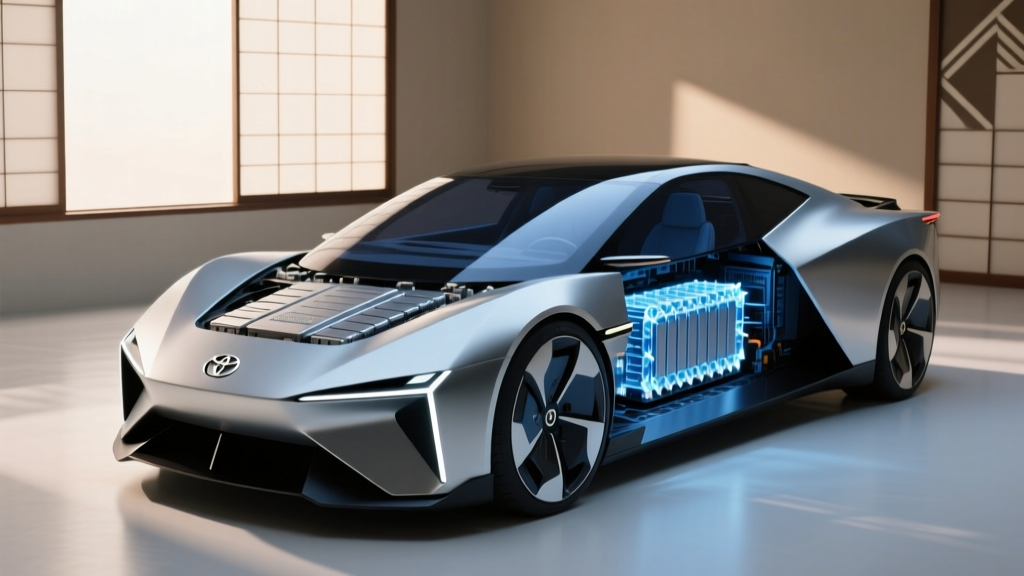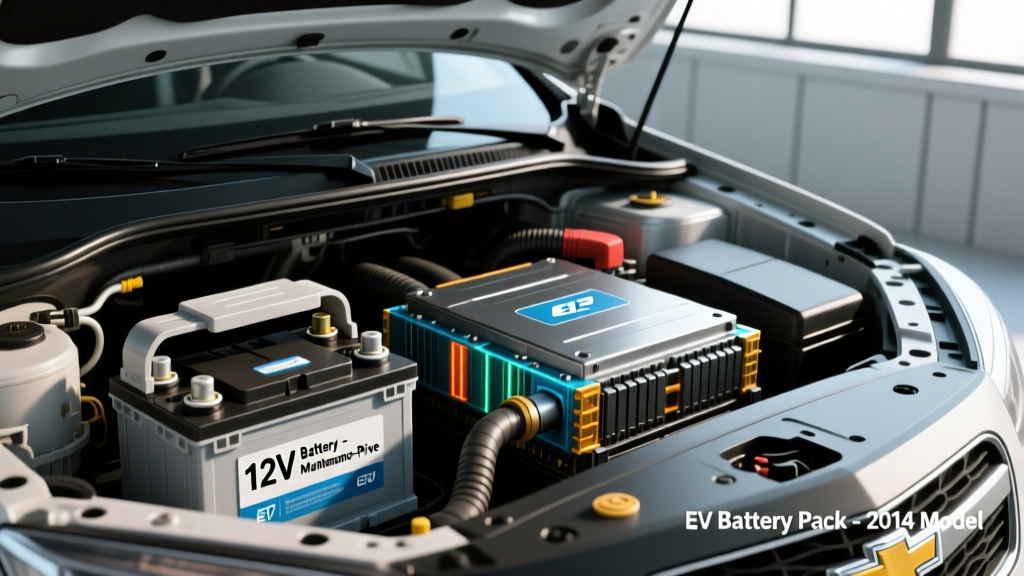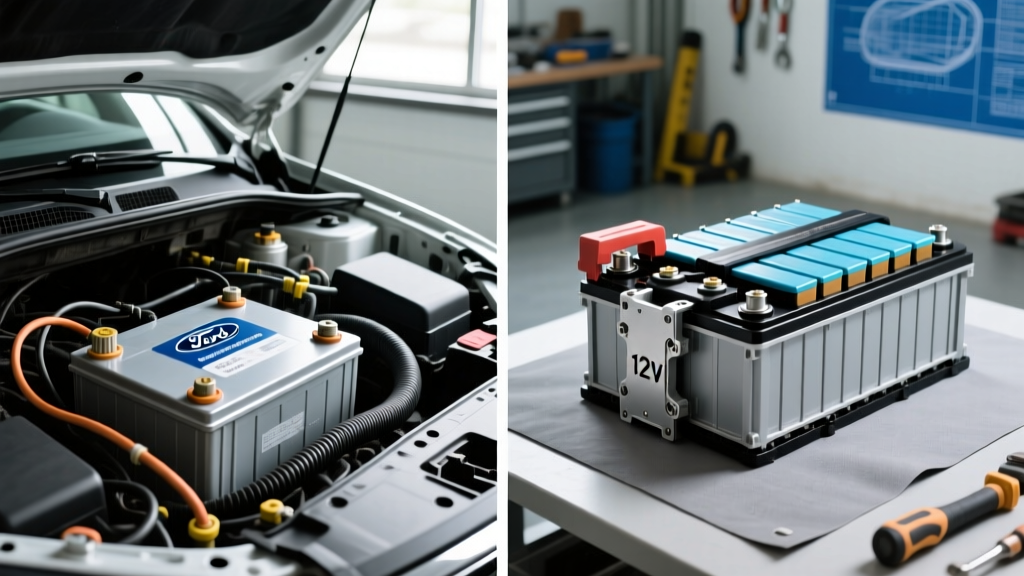
If you are searching for a battery for a 2013 Ford Edge, you are likely dealing with a dead or aging 12-volt lead-acid battery under the hood of a conventional V6 crossover. But the term "battery" means something entirely different in the electric vehicle world. This guide covers exactly what you need for the 2013 Edge, then pivots to what every EV shopper and owner needs to know about high-voltage traction batteries — from chemistry and degradation to replacement costs and warranties in 2026.
The 2013 Ford Edge Battery: What You Actually Need
The 2013 Ford Edge (available with a 2.0L EcoBoost I4, 3.5L V6, or 3.7L V6) uses a standard 12V lead-acid automotive battery, typically Group Size 65 or 96R depending on engine. This battery powers the starter, electronics, and accessories — it is not a traction battery that propels the vehicle.
- Group Size: 65 (most trims) or 96R
- Cold Cranking Amps (CCA): 650–750 CCA recommended
- Typical Cost: $140–$220 (AGM models up to $280)
- Lifespan: 3–5 years depending on climate and use
- Warranty: Usually 2–3 years free replacement
This is routine maintenance for a 12-year-old gas vehicle. But if you're cross-shopping a used 2013 Edge against a modern EV or PHEV, understanding the traction battery — the large lithium-ion pack that actually drives an electric vehicle — is critical to making an informed purchase.
EV Traction Battery Chemistry: LFP vs NMC vs NCA
Every modern EV uses a lithium-ion traction battery, but not all lithium-ion chemistries are equal. The three dominant chemistries in 2026 are LFP (lithium iron phosphate), NMC (nickel manganese cobalt), and NCA (nickel cobalt aluminum). Each has distinct trade-offs that affect your real-world ownership experience.
| Attribute | LFP (Lithium Iron Phosphate) | NMC / NCA |
|---|---|---|
| Energy Density | Lower (~160 Wh/kg cell-level) | Higher (~230–260 Wh/kg cell-level) |
| Cycle Life | 3,000–5,000+ cycles | 1,000–2,500 cycles |
| Cold-Weather Performance | Weaker — greater range loss below freezing | Better cold-weather discharge efficiency |
| Recommended SoC | 100% daily charging OK (and recommended for calibration) | 80% daily limit recommended for longevity |
| Cost per kWh | Lower (~$90–110/kWh pack-level in 2026) | Higher (~$120–150/kWh pack-level) |
| Cobalt Content | Zero cobalt — fewer supply-chain/ethical concerns | Contains cobalt (NMC) or none (NCA) |
| Common In (2026) | Tesla Model 3/Y RWD, Ford Mustang Mach-E Select, BYD, Rivian Standard | Tesla Long Range, Hyundai Ioniq 5/6, GM Ultium vehicles, Porsche Taycan |
The practical takeaway: If you want maximum battery lifespan and plan to keep a vehicle 10+ years, LFP offers a compelling cycle-life advantage. If you need maximum range in a smaller package and drive in cold climates, NMC/NCA delivers better energy density and cold performance. Neither chemistry is universally "better" — it depends on your use case.
How Long Do EV Batteries Last? Real Degradation Data
The single most persistent EV myth is that batteries need replacing every few years, like a phone. The data tells a different story. According to long-term fleet analyses, most modern EV batteries lose approximately 5–10% of their original capacity in the first 100,000 miles, with the degradation curve flattening significantly after the initial break-in period.
- Year 1 / 15,000 mi: ~2–3% capacity loss
- Year 3 / 45,000 mi: ~5–7% capacity loss
- Year 5 / 75,000 mi: ~7–9% capacity loss
- Year 8 / 120,000 mi: ~10–13% capacity loss
- Year 10 / 150,000 mi: ~12–17% capacity loss
Sources: Recurrent Auto fleet data (2025 report), fueleconomy.gov, manufacturer warranty disclosures. Individual results vary based on climate, charging habits, and chemistry.
For context, a 2026 Tesla Model Y Long Range with a 75 kWh usable NMC battery losing 12% over 150,000 miles would still retain ~66 kWh — translating to roughly 275 miles of EPA-equivalent range (down from an original 310 miles EPA). That's still more usable range than most gas cars get on a full tank.
LFP batteries in vehicles like the Tesla Model 3 RWD and base Mustang Mach-E are showing even slower degradation in fleet data, with some packs retaining 95%+ capacity at 100,000 miles. The trade-off is lower initial energy density, meaning a slightly heavier pack for the same range.
EV Battery Warranty Terms: What's Actually Covered
Federal law mandates that EV batteries carry a minimum warranty of 8 years / 100,000 miles (10 years / 150,000 miles in California and states adopting CARB standards). Most manufacturers exceed these minimums with capacity-retention guarantees.
| Manufacturer (2026 MY) | Warranty Period | Capacity Threshold | Notes |
|---|---|---|---|
| Tesla (Model 3/Y) | 8 yr / 100,000 mi (RWD) or 120,000 mi (LR/Perf) | 70% retention | LFP and NMC packs covered |
| Hyundai / Kia (E-GMP) | 10 yr / 100,000 mi | 70% retention | Among the longest coverage periods |
| Ford (Mach-E, F-150 Lightning) | 8 yr / 100,000 mi | 70% retention | Covers battery and electric drivetrain components |
| GM (Ultium-based EVs) | 8 yr / 100,000 mi | 70% retention | NMC chemistry; covers module-level replacement |
| Rivian (R1T/R1S) | 8 yr / 175,000 mi | 70% retention | Higher mileage cap reflects truck use case |
Key distinction: These warranties cover capacity degradation below the stated threshold, not just total failure. If your battery drops to 68% capacity within the warranty period, the manufacturer is obligated to repair or replace it to bring it back above the threshold. In practice, very few owners ever file a warranty claim — fleet data shows the vast majority of packs stay well above 70% at 100,000 miles.
EV Battery Replacement Cost: When and How Much
Out-of-warranty battery replacement is the scenario that generates the most fear. Here are the actual numbers as of 2026:
| Vehicle / Pack Size | Battery Capacity | Replacement Cost Range (2026) | Typical Replacement Timeline |
|---|---|---|---|
| Tesla Model 3 RWD (LFP) | ~57 kWh | $10,000–$14,000 | Rarely needed before 200,000+ mi |
| Tesla Model Y Long Range (NMC) | ~75 kWh | $14,000–$18,000 | Rarely needed before 180,000+ mi |
| Hyundai Ioniq 5 (NMC) | 77.4 kWh | $15,000–$20,000 | 10-year warranty reduces owner risk |
| Ford F-150 Lightning Ext. Range | 131 kWh | $22,000–$30,000 | Largest consumer packs; highest cost |
| Chevrolet Bolt EV/EUV (NMC) | 65 kWh | $14,000–$16,000 | Post-recall packs show strong longevity |
These costs include the battery pack and labor but can vary by region and service provider. The critical context: most EV batteries outlast the vehicles they're installed in. The average age of a scrapped US vehicle is approximately 15 years (per S&P Global Mobility). A well-maintained EV battery at 15 years may have 80–85% capacity remaining — still perfectly functional for daily driving.
For comparison, replacing the engine or transmission on a 2013 Ford Edge at 150,000 miles can cost $3,000–$6,000 — a similar financial event that gas-car owners accept as routine. Module-level repair (replacing individual battery modules rather than the full pack) is also becoming more common, reducing out-of-warranty costs to $3,000–$8,000 for many models.
Factors That Affect EV Battery Lifespan
Not all miles are equal when it comes to battery wear. These factors have the greatest measurable impact on long-term State of Health (SoH):
- Avoid sustained 100% SoC (NMC/NCA only): Daily charging to 80% and reserving 100% for road trips measurably slows calendar degradation. LFP owners should charge to 100% at least weekly for accurate BMS calibration.
- Minimize DC fast charging frequency: Frequent 150+ kW DC fast charging (more than 2–3 times per week consistently) accelerates degradation by approximately 1–3% over the pack's life compared to predominantly Level 2 home charging, per Recurrent Auto data.
- Precondition before fast charging: Using the vehicle's battery preconditioning feature (available on Tesla, Hyundai E-GMP, GM Ultium, Rivian) warms the battery to optimal temperature before arriving at a DC fast charger, reducing stress and improving charge speed.
- Avoid extreme SoC + extreme heat: A battery sitting at 100% SoC in 100°F+ ambient temperatures experiences the highest calendar degradation. If storing in summer heat, leave SoC at 50–60%.
- Cold-weather range loss is temporary: Expect 20–30% range reduction at 20°F and 30–40% at 0°F due to increased cabin heating demand and reduced battery discharge efficiency. This is not permanent degradation — range recovers as temperatures rise.
- Use Level 2 home charging as your primary method: A 240V Level 2 charger at 7.2–11.5 kW is the optimal balance of convenience and battery health for daily use.
How to Check and Monitor EV Battery Health (SoH)
State of Health (SoH) is the percentage of a battery's original capacity that remains usable. Monitoring it is straightforward with modern tools:
- In-vehicle displays: Most EVs (Tesla, Hyundai, Kia, GM, Ford) display estimated range and energy consumption. While not a direct SoH readout, comparing your current full-charge range to the original EPA figure gives a rough SoH estimate.
- OBD-II diagnostic tools: Devices like the OBDLink SX paired with apps such as EVNotify or LeafSpy (Nissan) can read battery SoH percentage directly from the vehicle's BMS. Tesla owners can use third-party apps like Tessie or TeslaFi for detailed battery analytics.
- Manufacturer service diagnostics: Any dealership or certified EV service center can run a full battery health report. Request one before purchasing a used EV — it's the single most important pre-purchase inspection item.
- Recurrent Auto (free service): Connects to your vehicle's telematics and provides ongoing battery health tracking with fleet-comparison benchmarks.
For used-EV buyers: A 2018–2020 model-year EV with 60,000–80,000 miles showing 90%+ SoH is typical and healthy. Anything below 85% warrants a deeper diagnostic check and should factor into price negotiation.
Emerging Battery Technology: What's Coming (And When)
Battery technology is advancing rapidly, but it's important to separate lab announcements from showroom reality:
- Solid-state batteries: Toyota, Samsung SDI, and QuantumScape have demonstrated prototype cells with higher energy density and faster charging. Toyota has announced limited production in select 2027–2028 models. Mass-market availability is realistically 2029–2032. These are not available in any production vehicle as of 2026.
- Silicon-dominant anodes: Companies like Sila Nanotechnologies and Group14 are replacing graphite anodes with silicon composites, boosting energy density 15–25%. Early deployments began in limited luxury applications (Mercedes G-Wagon EQS variants) in 2025–2026, with broader adoption expected by 2028.
- Sodium-ion batteries: CATL and BYD have begun producing sodium-ion cells for lower-cost, shorter-range EVs primarily in China. US-market availability remains uncertain but could offer sub-$25,000 EV options by 2028–2029.
- LMFP (lithium manganese iron phosphate): A hybrid chemistry blending LFP's cost advantages with manganese for ~15% higher energy density. Expected in Ford and Tesla mid-range models by 2027–2028 per industry reports.
The practical advice: don't delay an EV purchase waiting for next-generation batteries. Current LFP and NMC chemistries already deliver 250,000+ mile lifespans with manageable degradation, and the vehicles available today benefit from mature manufacturing and extensive warranty coverage.
From a 2013 Edge to an EV: The Battery Mindset Shift
Owners replacing the battery for a 2013 Ford Edge are used to a $150–$250 expense every 3–5 years for a 12V lead-acid unit. Transitioning to an EV means trading that recurring maintenance item for a far larger, far longer-lasting traction battery that most owners will never need to replace during their ownership.
The 2013 Edge's 3.5L V6 averages 21 MPG combined (source: fueleconomy.gov). A comparable 2026 EV like the Hyundai Ioniq 5 achieves 114 MPGe combined and costs roughly $0.04–$0.06 per mile to fuel on home electricity versus $0.14–$0.18 per mile for the Edge on $3.40/gallon gasoline. Over 150,000 miles, that's $15,000–$18,000 in fuel savings — more than enough to offset any theoretical battery replacement concern.
Frequently Asked Questions
How long do EV batteries last in years and miles?
Based on 2025–2026 fleet data, most modern EV batteries retain 85–90% capacity at 150,000 miles and 80–85% at 200,000 miles. In calendar years, expect 15–20+ years of functional use before capacity drops below 70%. LFP chemistry packs are trending toward the upper end of these ranges.
How much does an EV battery cost to replace in 2026?
Full pack replacement ranges from $10,000–$30,000 depending on capacity (57 kWh to 131 kWh). However, most packs outlast the vehicle. Module-level repairs cost $3,000–$8,000. Under the federal 8-year/100,000-mile minimum warranty, premature degradation is covered at no cost to the owner.
What does the EV battery warranty actually cover?
Federal law requires a minimum 8-year/100,000-mile warranty (10/150,000 in CARB states). Coverage applies when capacity drops below the manufacturer's stated threshold (typically 70%). This includes both sudden failure and gradual degradation below the threshold. See IRS.gov for related EV tax credit rules that factor battery sourcing into eligibility.
LFP vs NMC — which battery chemistry should I choose?
Choose LFP if you prioritize maximum lifespan, lower cost, plan to keep the vehicle 10+ years, and don't need maximum range. Choose NMC/NCA if you need longer range per charge, drive frequently in cold climates, or tow regularly. Both chemistries are proven to exceed 150,000 miles with minimal degradation when properly maintained.
How do I check my EV battery's State of Health before buying used?
Request a battery health report from the selling dealer or use an OBD-II diagnostic tool with EV-compatible software (EVNotify, LeafSpy, Tessie). Compare the current full-charge range to the original EPA rating. A SoH reading of 90%+ on a 3–5-year-old EV is healthy and typical.
Does frequent DC fast charging damage my EV battery?
Occasional DC fast charging (road trips, 1–2 times per week) has negligible impact. Consistent daily DC fast charging at 150+ kW can accelerate degradation by 1–3% over the pack's lifetime compared to Level 2 home charging. For daily use, a home Level 2 charger at 7.2–11.5 kW is optimal for battery health.