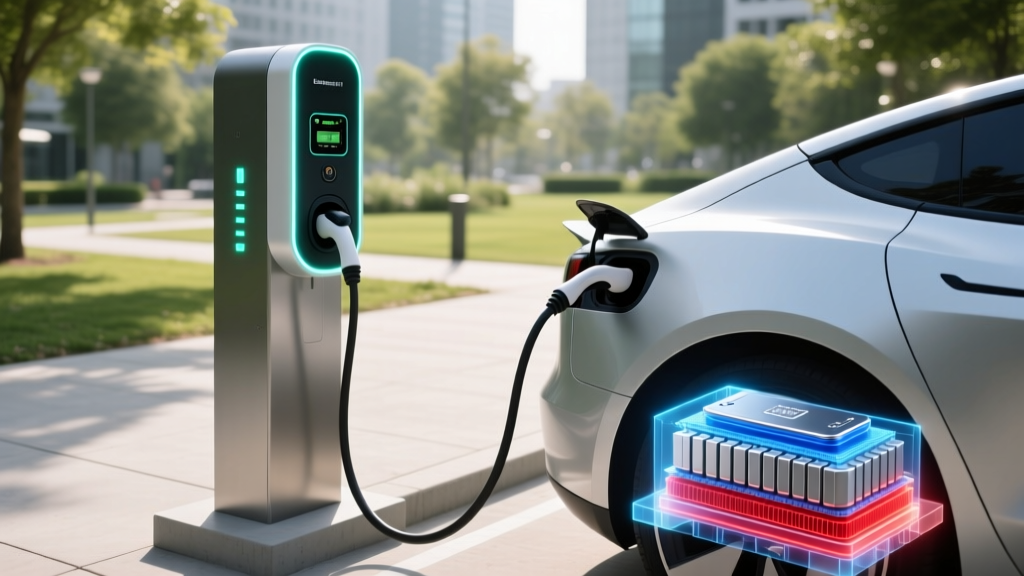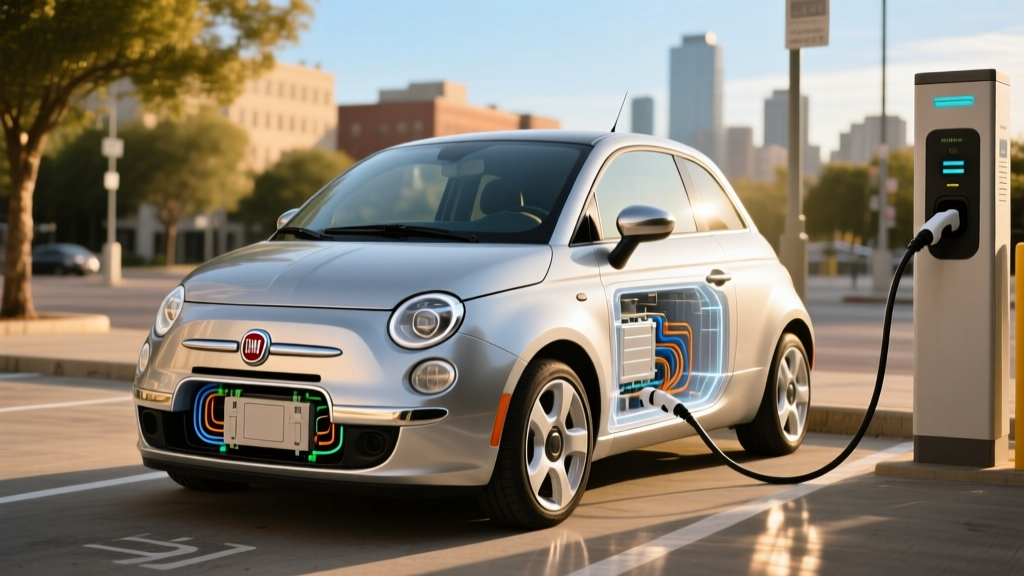
The 2013 Fiat 500e was one of the earliest mass-market compliance EVs sold in the United States, built primarily to satisfy California's Zero Emission Vehicle mandate. More than a decade later, many of these compact hatchbacks are still on the road — a testament to the durability of early lithium-ion traction batteries. But as these vehicles age past the 10-year mark, owners and prospective used-EV buyers have a critical question: how much life is left in the 2013 Fiat 500e battery electric pack, and what happens when it needs replacing?
This guide uses the 500e as a real-world case study to explore EV battery longevity, degradation patterns, replacement economics, and best-care practices — while also explaining the chemistry and technology landscape that defines modern EV battery ownership.
The 2013 Fiat 500e Battery Pack: Specs and Chemistry
The 2013 Fiat 500e shipped with a 24 kWh lithium-ion battery pack (approximately 19.2 kWh usable) supplied by Samsung SDI. The pack uses NMC (nickel manganese cobalt) cell chemistry — the dominant choice for EVs in the early-to-mid 2010s and still widely used today in vehicles like the Volkswagen ID.4 and Ford Mustang Mach-E.
| Specification | 2013 Fiat 500e |
|---|---|
| Battery Capacity (gross) | 24 kWh |
| Usable Capacity | ~19.2 kWh |
| Cell Chemistry | NMC (Samsung SDI) |
| EPA Range (new) | 87 miles |
| Real-World Range (new, mixed driving) | ~70–80 miles |
| Onboard Charger | 6.6 kW (Level 2) |
| DC Fast Charging | Not supported |
| Motor Output | 111 hp / 147 lb-ft torque |
| 0–60 mph | ~9.1 seconds |
| Battery Warranty (original) | 8 years / 100,000 miles |
The absence of DC fast charging is notable. While it limited road-trip practicality, it also meant the pack was never subjected to high-C-rate thermal stress from rapid charging — a factor that has likely contributed to better-than-average longevity in surviving 500e examples.
LFP vs NMC Battery Chemistry: Trade-Offs Explained
The 500e's NMC pack represents one of two dominant chemistries in modern EVs. The other is LFP (lithium iron phosphate), which has gained significant market share since Tesla began using it in standard-range Model 3 vehicles in 2021 and is now found in vehicles from Ford, BYD, and others.
| Attribute | NMC / NCA | LFP |
|---|---|---|
| Energy Density | High (200–300 Wh/kg cell-level) | Moderate (140–180 Wh/kg) |
| Cycle Life | ~1,000–2,000 full cycles | ~3,000–5,000+ full cycles |
| Cold-Weather Performance | Better low-temp discharge | Reduced performance below freezing |
| Cost per kWh | Higher (cobalt/nickel dependent) | Lower (no cobalt or nickel) |
| Thermal Stability | Good; requires active management | Excellent; inherently stable |
| Optimal SoC for Longevity | 20–80% daily; avoid 100% | Can charge to 100% regularly |
| Common Applications | Long-range / performance EVs | Standard-range / fleet / budget EVs |
Which is better? Neither is universally superior. NMC delivers more range in a smaller, lighter package — ideal for long-range vehicles. LFP offers dramatically longer cycle life, lower cost, and the convenience of routine 100% charging without degradation concerns. For a daily commuter like the 500e, an LFP pack (had it been available in 2013) would have been a strong match, but the energy density penalty would have further reduced its already-limited range.
EV Battery Degradation: What Real Data Shows
All lithium-ion batteries lose capacity over time and use. The question is how fast — and whether the loss is linear or accelerates.
For the 2013 Fiat 500e specifically, owner-reported data from forums and tracking tools like fueleconomy.gov and EV community databases suggests the following degradation curve for well-maintained examples:
| Vehicle Age / Mileage | Typical Capacity Retention | Estimated Range Remaining |
|---|---|---|
| Year 1 / 10,000 mi | ~97–99% | 84–86 mi |
| Year 3 / 30,000 mi | ~92–95% | 80–83 mi |
| Year 5 / 50,000 mi | ~88–92% | 77–80 mi |
| Year 8 / 80,000 mi | ~82–88% | 71–77 mi |
| Year 10+ / 100,000+ mi | ~75–85% | 65–74 mi |
This aligns with broader industry data. A large-scale study by Geotab tracking over 6,300 EV battery packs found an average degradation rate of approximately 2.3% per year across all models, with most packs retaining 80%+ capacity after 8 years. The 500e's passive thermal management and lack of DC fast charging have likely helped it track near the better end of this range.
Key insight: degradation is typically non-linear. Most packs experience a steeper initial drop (2–5% in the first year or two) as the solid electrolyte interface (SEI) layer forms, followed by a long, slow linear decline. A sudden acceleration in degradation late in life is uncommon but possible if cells become unbalanced or if the pack has been chronically exposed to extreme heat.
Factors That Accelerate or Slow Battery Aging
Battery longevity is not purely a function of time. How you use and store the vehicle matters enormously.
- State of Charge habits: For NMC packs like the 500e's, routinely charging to 100% and letting the car sit at full SoC accelerates electrolyte decomposition. Target 80% for daily use; reserve 100% for when you need maximum range.
- Temperature exposure: Sustained heat above 95°F (35°C) is the single biggest enemy of lithium-ion longevity. Parking in shade or a garage matters more than most owners realize. Extreme cold temporarily reduces range but causes less permanent damage.
- Fast-charging frequency: DC fast charging at high C-rates generates internal heat and accelerates degradation. The 500e sidesteps this entirely (no DC port), but for modern EVs, limiting DCFC to road trips rather than daily use is advisable.
- Depth of discharge: Shallow cycles (e.g., 30–70% SoC) are far gentler than deep cycles (5–95%). Partial discharges extend cycle life.
- Calendar aging: Even a parked EV battery degrades. Storing at ~50% SoC in a cool environment minimizes calendar aging. A car parked at 100% SoC in a hot garage will lose capacity faster than one driven regularly at moderate SoC.
Battery Warranty: What's Covered and What Isn't
The original 2013 Fiat 500e battery warranty was 8 years or 100,000 miles (whichever came first), with Chrysler (now Stellantis) guaranteeing the pack would retain at least 70% of its original capacity. This aligned with the federal minimum mandate for EV battery warranties as defined under EPA emissions-related coverage guidelines.
| Warranty Element | 2013 Fiat 500e | Typical 2025/2026 EV |
|---|---|---|
| Duration | 8 years / 100,000 mi | 8 years / 100,000 mi (industry standard) |
| Capacity Threshold | 70% retention | 70% retention (most brands) |
| Coverage Type | Defects + excessive degradation | Defects + excessive degradation |
| Transferable to 2nd Owner | Yes | Yes (most brands) |
| Exclusions | Damage, misuse, unauthorized mods | Same; also may exclude fleet use |
For 2013 500e owners in 2026, the original battery warranty has expired (the 8-year window closed in 2021). This means any battery replacement or refurbishment is now an out-of-pocket expense — which brings us to cost.
EV Battery Replacement Cost: What to Budget
Replacing the high-voltage traction battery in a 2013 Fiat 500e is a significant expense, but context matters: most EV batteries outlast the vehicles they power. According to IRS clean vehicle credit guidelines, the cost of a replacement battery can factor into the economics of used-EV ownership, though the used-EV tax credit (up to $4,000 under §25E) applies to vehicle purchase, not standalone battery replacements.
| Vehicle / Pack Size | OEM Replacement (parts + labor) | Refurbished / Aftermarket | Typical Replacement Trigger |
|---|---|---|---|
| 2013 Fiat 500e (24 kWh) | $10,000–$15,000 | $5,000–$8,000 | Below 60–70% SoH or cell failure |
| Nissan Leaf (24–40 kWh) | $8,000–$15,000 | $4,500–$9,000 | Below 70% SoH (9-bar loss on dash) |
| Chevrolet Bolt EV (60 kWh) | $14,000–$18,000 | $9,000–$12,000 | Below 70% SoH or recall-related |
| Tesla Model 3/Y (75–82 kWh) | $13,000–$20,000 | $8,000–$14,000 | Below 70% SoH or internal fault |
| Large pack (100+ kWh, e.g., Lucid, GMC Hummer) | $20,000–$35,000 | Not widely available yet | Rare; most under warranty still |
For the 500e specifically, the car's low resale value ($5,000–$9,000 for a 2013–2015 model in 2026) creates a difficult economic calculation: an OEM battery replacement can exceed the vehicle's market value. This is why refurbished packs, individual module replacement (a specialist can swap only the degraded modules for $3,000–$5,000), or simply accepting reduced range are more common solutions.
When is replacement actually needed? Most EV batteries don't "die" — they gradually lose capacity. A 500e at 75% State of Health still delivers roughly 65 miles of range, which is adequate for many urban commutes. Full replacement typically becomes necessary only when capacity drops below 60–65%, when individual cells fail causing voltage imbalance, or when the battery management system (BMS) flags a fault code.
How to Check and Monitor Battery Health (State of Health)
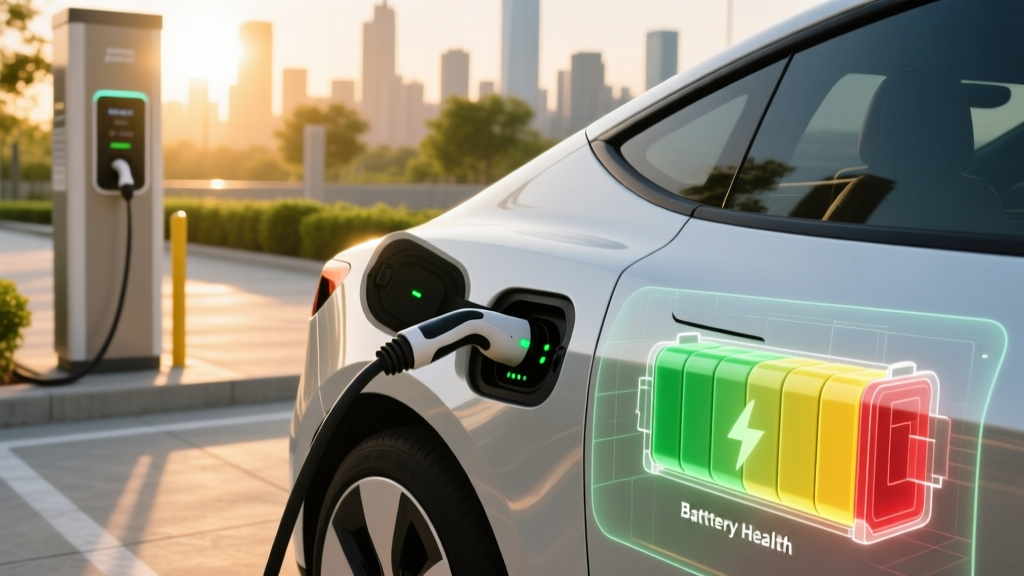
State of Health (SoH) is the percentage of a battery's original capacity that remains available. A new pack is 100% SoH; one that can only hold 18 kWh of its original 24 kWh is at 75% SoH.
Here are the primary methods for checking SoH on a 2013 Fiat 500e and other EVs:
- OBD-II scanner with EV-capable software: Tools like LeafSpy (for Nissan), ScanGauge, or generic OBD-II readers paired with apps such as Torque Pro or ABRP can read the BMS-reported SoH directly. For the 500e, compatible diagnostic apps can pull cell voltage data and estimated capacity.
- Dealer diagnostic check: A Stellantis (formerly Fiat/Chrysler) dealer can run a battery health report using the factory wiTECH diagnostic tool. This is the most authoritative reading but may cost $100–$150 out of warranty.
- Manual calculation: Fully charge the vehicle, note the displayed range, and compare it to the original EPA figure. If your 500e shows 68 miles at 100% versus the original 87, you're at roughly 78% SoH. This method is approximate (temperature and driving style affect the estimate) but useful for quick checks.
- Charging data analysis: If you use a smart Level 2 charger (e.g., ChargePoint, Emporia), track how many kWh are delivered during a full charge from near-empty. Comparing this to the pack's known usable capacity provides a SoH estimate. A 500e that accepts only 14.5 kWh on a full charge from 5% to 100% is at roughly 75% SoH (14.5 ÷ 19.2 = 75.5%).
Emerging Battery Technologies: What's Coming Next
While current EV owners manage NMC and LFP packs, the industry is developing next-generation chemistries that promise meaningful improvements. These are not yet available in production vehicles and should be considered forward-looking.
- Solid-state batteries: Replace the liquid electrolyte with a solid conductor, offering higher energy density, faster charging, and improved safety. Toyota has announced plans for limited solid-state EV production around 2027–2028, but mass-market availability and cost parity remain uncertain. Companies like QuantumScape and Solid Power are still in pre-commercial testing phases.
- Silicon-dominant anodes: Replacing graphite anodes with silicon can boost energy density by 20–40%. Sila Nanotechnologies and Group14 are supplying early silicon-anode materials, with Mercedes-Benz and others testing prototypes. Expect initial appearances in premium vehicles by 2027–2029.
- Sodium-ion batteries: Use abundant sodium instead of lithium, dramatically reducing cost. CATL has begun limited deployment in Chinese-market vehicles. Energy density is lower than LFP, making sodium-ion best suited for budget city cars and stationary storage. US-market availability is not expected before 2028.
For current 500e owners and used-EV buyers, these technologies won't affect your vehicle — but they signal that replacement battery costs across the industry are trending downward as manufacturing scales and new chemistries mature.
Frequently Asked Questions
How long do EV batteries last in years and miles?
Most modern EV batteries are designed to last 15–20 years or 150,000–200,000 miles before reaching 70–80% of their original capacity. The 2013 Fiat 500e's Samsung SDI NMC pack has proven durable, with many examples retaining 75–85% capacity at 10+ years. Catastrophic failure is rare; gradual capacity loss is the norm.
How much does it cost to replace a 2013 Fiat 500e battery?
An OEM replacement pack costs approximately $10,000–$15,000 installed. Refurbished or used packs range from $5,000–$8,000. Individual module replacement (repairing only the weak cells) can cost $3,000–$5,000 at a specialist shop. Given the 500e's resale value of $5,000–$9,000, a full OEM replacement rarely makes economic sense.
What does the EV battery warranty actually cover?
Federal guidelines require manufacturers to warrant EV batteries for at least 8 years / 100,000 miles against defects and excessive capacity loss (typically below 70% retention). The 500e's original warranty has now expired. Warranties do not cover damage from accidents, flooding, unauthorized modifications, or extreme abuse.
How do I maximize my EV battery's lifespan?
Keep daily charging between 20–80% SoC for NMC packs. Avoid leaving the car at 100% SoC for extended periods. Park in shade or a garage to minimize heat exposure. Use Level 2 charging rather than DC fast charging when possible. Drive regularly — calendar aging at moderate SoC is less harmful than deep cycling.
Is the 2013 Fiat 500e a good used EV buy in 2026?
It depends on your needs. At $5,000–$9,000, it's one of the cheapest EVs available. With ~65–75 miles of real-world range (depending on battery health), it works as a city commuter or second car. The lack of DC fast charging and limited cargo space are real drawbacks. Before purchasing, verify SoH via OBD-II scan and budget for potential battery work within a few years.
LFP vs NMC — which battery chemistry should I choose?
For maximum longevity, lowest cost, and hassle-free 100% charging, choose LFP (found in Tesla Model 3 RWD, Ford Mustang Mach-E Select, and many budget EVs). For maximum range in a lighter, more compact pack — especially in cold climates — choose NMC (found in long-range and performance models from most brands). Neither is "bad"; the right choice depends on your driving patterns and priorities.
Sources: U.S. Department of Energy / fueleconomy.gov, Geotab EV Battery Health Study, IRS Clean Vehicle Credits (§30D / §25E).