If you've landed here searching for a 2013 Chrysler Town and Country battery, you're likely dealing with a dead 12-volt starter battery in a gasoline minivan. That's a $150–$220 group-48 lead-acid replacement at any auto parts store. But if you're cross-shopping a used Chrysler Pacifica Hybrid or any modern electric vehicle, the battery conversation changes dramatically — you're now dealing with a high-voltage lithium-ion traction battery that costs thousands, lasts 15+ years, and operates under completely different chemistry and warranty rules.
This guide bridges both worlds. We'll cover exactly what the 2013 Town & Country uses, then give you the full EV battery technology breakdown — chemistry types, degradation data, warranty terms, replacement costs, and health-monitoring tactics — so you can evaluate any electrified vehicle with confidence.
The 2013 Chrysler Town & Country Battery: What You're Actually Replacing
The 2013 Chrysler Town & Country minivan uses a conventional 12-volt lead-acid battery (Group 48/H6, ~730 CCA) to start its 3.6L Pentastar V6 engine. This is not a traction battery — it has zero role in propulsion. Chrysler's eTorque mild-hybrid system didn't arrive until the 2019 Pacifica, and the plug-in hybrid Pacifica launched for the 2017 model year with a 16 kWh lithium-ion pack.
Replacement is straightforward: a Group 48 AGM or flooded lead-acell battery from Interstate, DieHard, or Duralast runs $150–$220 installed. Expect 3–5 years of life depending on climate and parasitic draw. This is standard internal-combustion maintenance with no connection to EV battery technology.
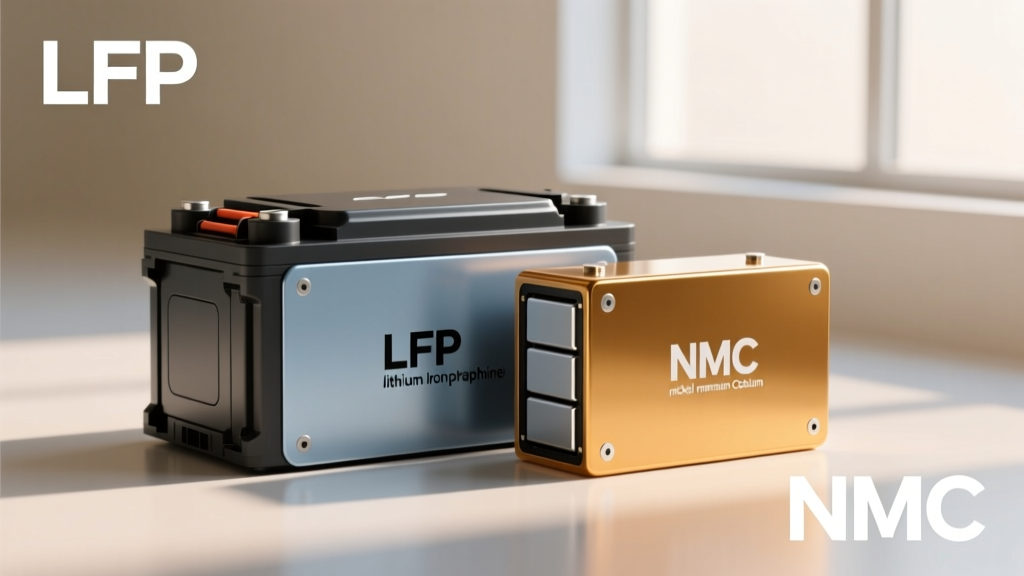
EV Battery Chemistry: LFP vs. NMC vs. NCA Explained
Modern electric vehicles use one of three dominant lithium-ion cathode chemistries. The choice affects range, longevity, cold-weather performance, and price. Here's how they compare as of 2026:
| Attribute | LFP (Lithium Iron Phosphate) | NMC (Nickel Manganese Cobalt) | NCA (Nickel Cobalt Aluminum) |
|---|---|---|---|
| Energy Density | Lower (~160 Wh/kg cell) | Higher (~230–260 Wh/kg) | Highest (~260–300 Wh/kg) |
| Cycle Life | 3,000–5,000+ cycles | 1,500–2,500 cycles | 1,000–2,000 cycles |
| Cold Performance | Weaker below 32°F; needs preconditioning | Better cold-weather discharge | Good with thermal management |
| Charge to 100% Regularly? | Yes — recommended periodically for BMS calibration | No — 80% daily max recommended | No — 80% daily max recommended |
| Cost | Lower (no cobalt/nickel) | Higher | Highest |
| Notable 2026 Applications | Tesla Model 3/Y RWD, Ford Mustang Mach-E Select (base), Rivian Standard | Hyundai Ioniq 5/6, Kia EV6/EV9, VW ID.4, BMW iX | Tesla Model S/X, Lucid Air |
LFP has become the volume chemistry for base-trim EVs. Tesla shifted all Standard Range Model 3 and Model Y production to LFP by 2022, and by 2026, Ford, Rivian, and several Chinese OEMs selling in the US follow suit. The trade-off is lower energy density — meaning heavier packs for the same range — but dramatically longer cycle life and lower cost. If you plan to keep a vehicle 10+ years or put on high mileage, LFP is the longevity play.
NMC remains the choice for vehicles prioritizing range-per-pound. Hyundai's Ioniq 5 uses an NMC pack delivering up to 303 miles EPA on the Long Range AWD trim. The chemistry is mature, well-managed thermally, and offers better cold-weather performance than LFP without preconditioning.
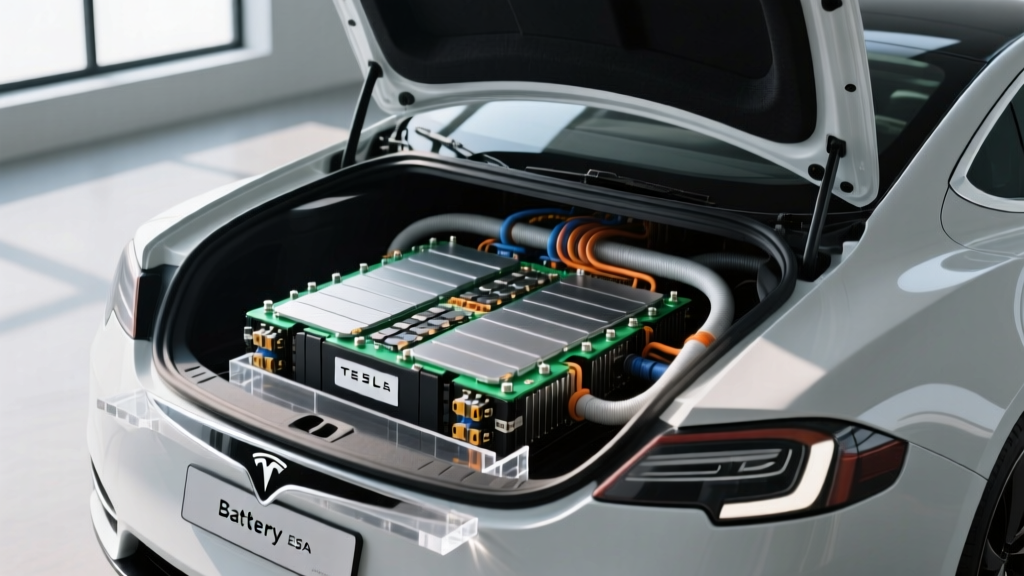
NCA is largely a Tesla/Lucid specialty, optimized for maximum energy density in performance sedans. It degrades slightly faster than NMC and requires careful thermal management, but Tesla's pack engineering has proven it can exceed 200,000 miles with acceptable retention.
How Long Do EV Batteries Actually Last? Degradation Data
The single most common question from EV shoppers: "Will I need a $20,000 battery replacement in five years?" The data says almost certainly not. Most EV batteries outlast the vehicles they're installed in.
Here's what real-world fleet and owner data shows as of 2026:
- Year 1: ~2–5% capacity loss (initial formation loss)
- Year 3 / 50,000 miles: ~5–8% total loss
- Year 5 / 100,000 miles: ~8–12% total loss (NMC/NCA); ~4–7% (LFP)
- Year 8 / 150,000 miles: ~12–18% total loss (NMC/NCA); ~6–10% (LFP)
- Year 10+ / 200,000+ miles: ~15–25% loss (NMC/NCA); ~10–15% (LFP)
Sources: Geotab fleet data, Recurrent Auto battery health reports, Tesla Impact Reports.
The degradation curve is not linear. Most lithium-ion packs lose 2–5% in the first year as the solid electrolyte interphase (SEI) layer forms on the anode. After that, degradation slows to roughly 1–2% per year under normal use. LFP chemistry degrades even more slowly, which is why Tesla warranties LFP packs at the same 8-year/100,000-mile threshold but expects them to retain more capacity at end-of-warranty.
A critical nuance: range loss is not the same as battery death. A pack that has degraded 15% still functions — it simply delivers 85% of its original range. A 300-mile EPA vehicle with 15% degradation still gives you ~255 usable miles. Most owners adapt their habits and never find this limiting for daily driving.
EV Battery Warranty Terms: What's Covered and for How Long
Federal law mandates that EV battery warranties cover a minimum of 8 years / 100,000 miles (10 years / 150,000 miles in CARB states like California, New York, and Massachusetts). But the capacity retention threshold — how much degradation triggers a warranty claim — varies by manufacturer.
| Manufacturer | Warranty Period | Capacity Threshold | Chemistry |
|---|---|---|---|
| Tesla (Model 3/Y RWD — LFP) | 8 yr / 100,000 mi | 70% | LFP |
| Tesla (Model 3/Y LR/Perf — NCA/NMC) | 8 yr / 120,000 mi | 70% | NCA/NMC |
| Hyundai / Kia | 10 yr / 100,000 mi | 70% | NMC |
| Ford (Mach-E, F-150 Lightning) | 8 yr / 100,000 mi | 70% | NMC / LFP |
| Volkswagen (ID.4) | 8 yr / 100,000 mi | 70% | NMC |
| Rivian (R1T/R1S) | 8 yr / 175,000 mi | 70% | NMC / LFP |
| GM (Ultium-based: Equinox EV, Blazer EV, Silverado EV) | 8 yr / 100,000 mi | 70% | NMC (Ultium) |
The 70% threshold means the manufacturer will repair or replace the battery if its usable capacity drops below 70% of original within the warranty period. In practice, warranty claims are rare. Data from Recurrent Auto shows that fewer than 5% of EV batteries in their 10,000-vehicle study required warranty replacement, and most of those were due to manufacturing defects (bad cells, BMS faults) rather than gradual degradation.
One important note for PHEV buyers: Plug-in hybrid battery warranties follow the same federal mandate (8/100k), but PHEV packs are smaller (typically 13–25 kWh) and experience shallower charge/discharge cycles, which actually reduces stress. The Chrysler Pacifica Hybrid's 16 kWh pack, for example, carries the same 8-year/100,000-mile warranty with a 70% retention threshold.
EV Battery Replacement Cost: What You'll Actually Pay
Out-of-warranty battery replacement is the scenario that generates the most fear — and the most misleading headlines. Here's the actual cost landscape in 2026:
| Vehicle / Pack Size | Battery Capacity | Replacement Cost (2026) | Typical Replacement Timeline |
|---|---|---|---|
| Tesla Model 3 RWD | ~60 kWh (LFP) | $12,000–$16,000 | Rarely needed; 300k+ mi projected |
| Tesla Model Y Long Range | ~75 kWh (NMC) | $14,000–$18,000 | 200k–300k mi |
| Hyundai Ioniq 5 Long Range | 77.4 kWh (NMC) | $15,000–$20,000 | 200k+ mi projected |
| Ford F-150 Lightning Ext. Range | 131 kWh (NMC) | $22,000–$30,000 | 200k+ mi projected |
| Chevrolet Equinox EV | ~85 kWh (NMC Ultium) | $14,000–$18,000 | 200k+ mi projected |
| Chrysler Pacifica Hybrid (PHEV) | 16 kWh (NMC) | $5,000–$8,000 | 150k–200k mi |
Several realities soften these numbers:
- Most batteries outlive the car. The average US vehicle is scrapped at ~17 years and ~185,000 miles. At 1–2% annual degradation, the battery will still hold 75–85% capacity at that point.
- Module-level repair is increasingly common. Many shops can replace individual bad modules within a pack for $2,000–$5,000 rather than swapping the entire unit.
- Battery costs continue falling. Pack-level pricing dropped below $130/kWh in 2025 (per BloombergNEF), and LFP packs are under $100/kWh. A replacement pack in 2030 will cost significantly less than today's quotes.
- The used-EV market adjusts. A 10-year-old EV with 80% battery health is still a functional, affordable vehicle — just as a 10-year-old gas car with a slightly worn engine is still drivable.
What Kills EV Batteries: 6 Factors That Accelerate Degradation
Not all miles are equal when it comes to battery wear. These six factors have the biggest impact on long-term State of Health (SoH):
- Limit DC fast charging to road trips. Frequent 150+ kW charging generates heat, which accelerates SEI layer growth and electrolyte breakdown. Occasional fast charging is fine; daily fast charging shortens pack life by an estimated 2–4% over 5 years vs. Level 2 home charging.
- Avoid sustained 100% State of Charge (NMC/NCA). Storing a nickel-based pack at 100% SoC for days stresses the cathode. Set your daily charge limit to 80% and charge to 100% only when you'll drive immediately. LFP owners: periodic 100% charges are fine and actually help BMS calibration.
- Don't let the pack sit at 0% for extended periods. Deep discharge below the buffer floor can cause copper dissolution in the anode current collector. If storing the vehicle, leave it at 40–60% SoC.
- Use preconditioning before fast charging. Tesla, Hyundai, Ford, and most modern EVs warm the battery to ~95°F before a DC fast-charge session. This reduces internal resistance and prevents lithium plating on the anode. Always navigate to a charger via the vehicle's built-in route planner to trigger preconditioning.
- Park in shade or a garage in extreme heat. Sustained ambient temperatures above 100°F with a high SoC accelerate calendar degradation. A garage in Phoenix can add 2–3% capacity retention over 5 years vs. outdoor parking.
- Drive it regularly. Lithium-ion batteries prefer regular shallow cycles to long idle periods. A daily-driven EV typically degrades less than a weekend car that sits at 90% SoC for weeks.
How to Check and Monitor EV Battery Health (SoH)
State of Health (SoH) is the percentage of original capacity your battery retains. Unlike the 12V battery in a 2013 Town & Country — which you test with a $50 load tester at an auto parts store — EV battery health requires software-level diagnostics. Here's how owners check it in 2026:
Built-In Vehicle Displays
Most modern EVs show battery health or estimated range degradation in the settings menu. Tesla displays "Battery Health" as a percentage under Service > Battery Health (added via OTA in 2023). Hyundai/Kia shows a battery health indicator in the EV menu. Ford's Sync 4 includes a battery health estimate. These readings are derived from the Battery Management System's coulomb counting and impedance measurements.
Third-Party Apps and Services
Recurrent Auto offers a free battery health report for participating owners — they compare your pack's degradation against their 15,000+ vehicle database. TeslaFi and Tessie log detailed charge data for Tesla owners, allowing you to calculate SoH by comparing actual kWh added at known SoC percentages over time.
OBD-II Dongles
Devices like the OBDeleven (VW/Hyundai/Kia) or Scan My Tesla (with an OBDLink MX+ adapter) can read raw BMS data including individual cell voltages, pack impedance, and precise SoH percentages that the OEM display may round or hide.
Dealer Diagnostics
Any authorized dealer can run a full battery health report. This is particularly useful when buying a used EV — request a printout of the BMS health check as a condition of purchase. A healthy 3-year-old EV should show 92–96% SoH. Anything below 88% at low mileage warrants investigation.
Emerging Battery Technology: Solid-State and Silicon Anodes
If you're reading this to time your next EV purchase around future battery tech, here's the realistic 2026 outlook — with honest timelines, not concept-car hype:
Solid-state batteries replace the liquid electrolyte with a solid ceramic, polymer, or sulfide conductor. The promise: 2–3x energy density, faster charging, no fire risk, and 5,000+ cycle life. Toyota has announced a solid-state EV for 2027–2028 production, and QuantumScape's cells are in Volkswagen prototype testing. However, manufacturing scale-up remains the unsolved challenge. No solid-state EV is currently available for purchase, and industry consensus puts meaningful market penetration at 2029–2032 for premium vehicles and 2033+ for mainstream pricing.
Silicon anode batteries are closer to reality. Companies like Sila Nanotechnologies and Group14 Technologies are replacing graphite anodes with silicon-dominant composites, boosting energy density by 20–40%. The Mercedes G-Class 580e (2025+) uses a Sila anode in its PHEV pack. Expect silicon anodes to become standard in premium EVs by 2027–2028 and trickle to mainstream models by 2030.
Sodium-ion batteries are emerging as an ultra-low-cost alternative for entry-level EVs and stationary storage. CATL began shipping sodium-ion packs in Chinese-market vehicles in 2024. Energy density is lower than LFP (~140 Wh/kg), but cost is 30–40% cheaper with no lithium, cobalt, or nickel required. US-market adoption is likely by 2028–2030 for budget-oriented models.
From the 2013 Town & Country to a 2026 EV: Making the Jump
If you're replacing a $180 lead-acid battery in a 2013 Chrysler Town & Country and wondering whether your next vehicle should be electric, here's the pragmatic comparison:
- 2013 Town & Country 12V battery: $150–$220, replaced every 3–5 years, zero impact on propulsion, available at any auto parts store.
- Modern EV traction battery: $12,000–$30,000 if replaced out-of-warranty (rarely needed), designed to last 15–20 years / 200,000+ miles, covered by 8–10 year federal warranty, requires no routine maintenance.
- Modern PHEV battery (e.g., Pacifica Hybrid): 16 kWh pack, $5,000–$8,000 out-of-warranty, 8-year/100,000-mile warranty, 32 miles electric-only range per fueleconomy.gov.
The math favors electrification over time: a modern EV eliminates oil changes, transmission fluid, spark plugs, timing belts, and exhaust system repairs — savings that total $1,500–$3,000 over 5 years according to Consumer Reports. The battery, far from being a liability, is the most durable component in the vehicle.
Frequently Asked Questions
How long do EV batteries last in years and miles?
Based on fleet data from Geotab and Recurrent Auto, the average EV battery retains 85–90% capacity at 100,000 miles and 75–85% at 200,000 miles. In years, expect 15–20+ years of functional use before capacity drops below 70%. LFP chemistry packs trend toward the higher end of these ranges. Most EV batteries are never replaced — the vehicle is retired for other reasons first.
How much does an EV battery cost to replace?
Out-of-warranty replacement costs range from $5,000–$8,000 for a PHEV pack (16–20 kWh) to $12,000–$30,000 for a full BEV pack (60–131 kWh) in 2026. However, fewer than 5% of EV batteries require replacement, and those that do are typically covered under the 8-year/100,000-mile federal warranty. Module-level repairs ($2,000–$5,000) are increasingly available as an alternative to full pack replacement.
What does the EV battery warranty cover?
Federal law requires a minimum 8-year/100,000-mile warranty (10/150k in CARB states) covering defects and capacity loss below 70% of original. This covers the entire high-voltage system: cells, modules, BMS, cooling system, and high-voltage wiring. It does not cover damage from accidents, flooding, or unauthorized modifications. Hyundai/Kia leads the industry with a 10-year/100,000-mile warranty on all EV and PHEV models.
How do I check my EV battery health?
Check the vehicle's built-in battery health display (Tesla: Service > Battery Health; Hyundai: EV settings menu), use a third-party service like Recurrent Auto's free report, connect an OBD-II reader (OBDeleven, OBDLink MX+) for raw BMS data, or request a dealer diagnostic printout. For used-EV purchases, always verify SoH before completing the transaction.
LFP vs NMC — which battery chemistry is better?
Neither is universally better; it depends on your priorities. Choose LFP if you want maximum cycle life (3,000–5,000+ cycles), plan to keep the vehicle 10+ years, don't mind slightly lower range, and live in a moderate climate. Choose NMC if you need maximum range per charge, frequently drive in cold weather, or prioritize lighter vehicle weight. Both are proven, well-warrantied, and will outlast most ownership periods.
Does the 2013 Chrysler Town & Country have an EV battery?
No. The 2013 Town & Country is a conventional gasoline minivan with a 3.6L V6 and a standard 12V lead-acid starter battery (Group 48/H6, ~730 CCA, $150–$220). Chrysler's first electrified minivan was the 2017 Pacifica Hybrid (PHEV with a 16 kWh traction battery). There is no EV or hybrid version of the Town & Country.
Will my EV battery need to be replaced before I sell the car?
Statistically, no. The average American keeps a vehicle 8.4 years and drives ~14,000 miles per year (totaling ~118,000 miles). At that usage, an EV battery will retain approximately 88–93% of its original capacity. Even at 15 years and 200,000 miles, most packs hold 75–85%. Battery replacement before vehicle retirement is the exception, not the rule.