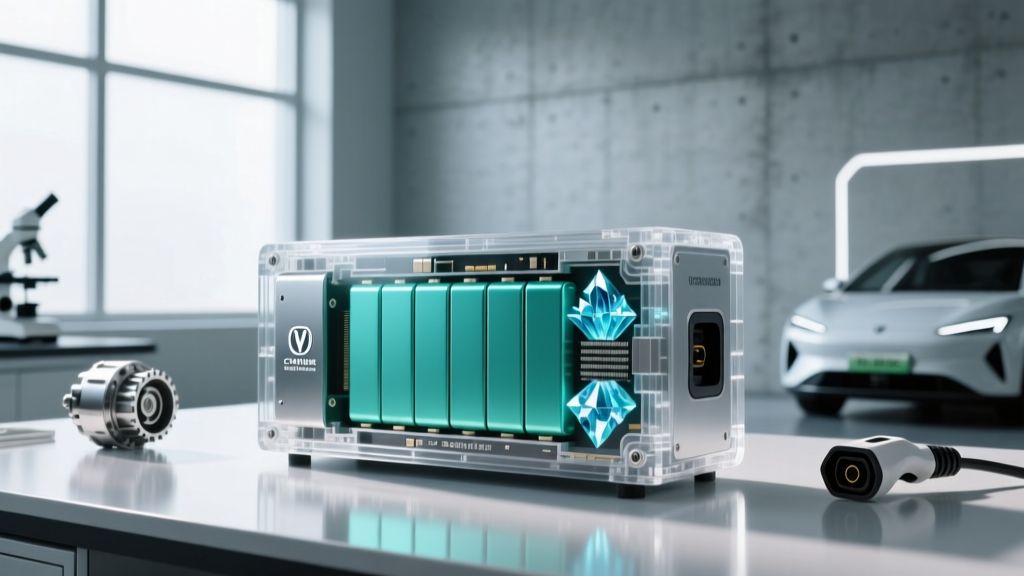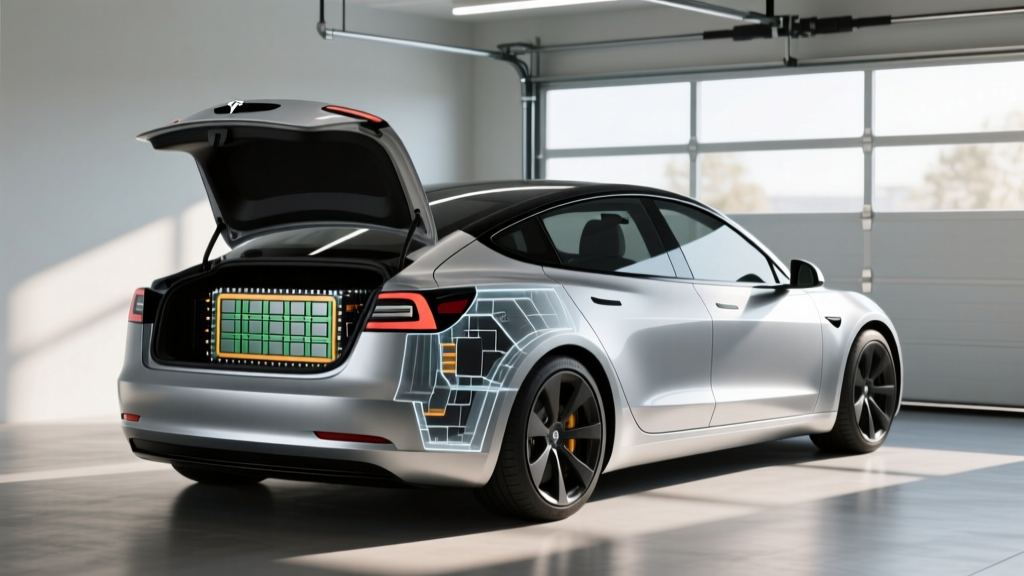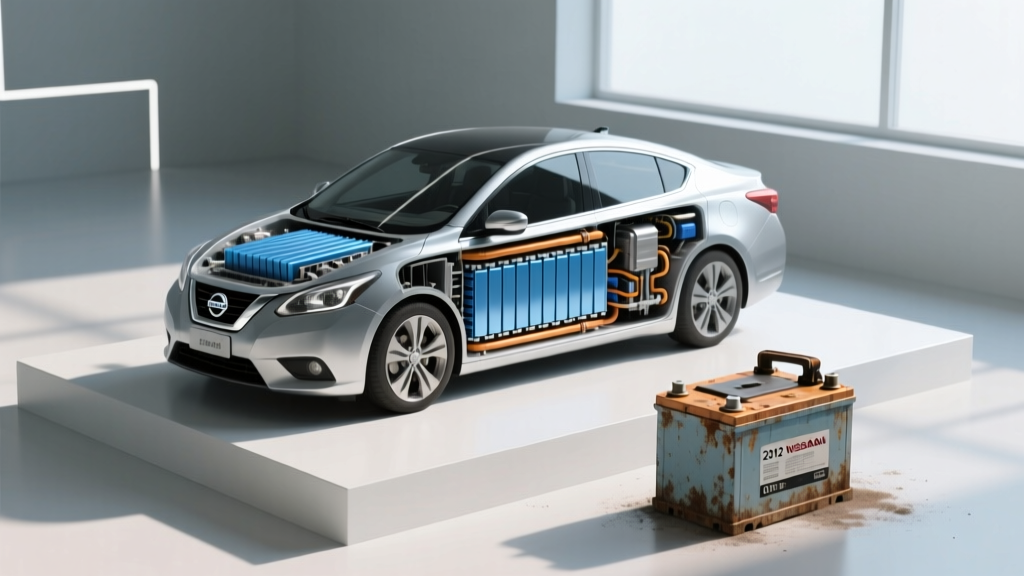
If you've searched for a battery for 2012 Nissan Sentra, you're likely looking at a standard 12-volt lead-acid or AGM replacement — a Group 35 or Group 24F unit costing roughly $120–$220 at an auto parts store. That's a straightforward maintenance item. But the moment you start comparing that purchase to the high-voltage traction batteries inside modern electric vehicles, the scale, chemistry, cost, and engineering complexity diverge dramatically. This guide uses that comparison as a lens to explain how EV battery technology actually works in 2026 — from lithium-ion chemistry trade-offs to real-world degradation data, warranty coverage, replacement economics, and the emerging solid-state horizon.
The 2012 Nissan Sentra Battery: A Quick Baseline
Before diving into EV traction packs, let's anchor on what a battery for 2012 Nissan Sentra actually is. The 2012 Sentra (equipped with the 2.0L or 2.5L inline-four) uses a conventional 12V flooded lead-acid or AGM (Absorbent Glass Mat) battery. Typical specs:
- Group size: 35 or 24F (depending on trim and climate package)
- Cold Cranking Amps (CCA): 550–640 CCA
- Reserve Capacity: 90–110 minutes
- Voltage: 12.6V nominal (14.4V when alternator is charging)
- Typical lifespan: 3–5 years
- Replacement cost: $120–$220 (parts only, DIY installation)
This battery's sole job is to crank the starter motor and power accessories when the engine is off. The alternator handles all running electrical loads and recharges the 12V battery continuously. It weighs about 35–45 pounds, contains lead plates submerged in sulfuric acid electrolyte, and is almost infinitely recyclable. Simple, proven, cheap — and fundamentally different in every meaningful way from the 40–100+ kWh lithium-ion traction batteries that propel modern EVs.
EV Traction Battery Chemistry: LFP vs. NMC/NCA Explained
Modern EV batteries use lithium-ion cells, but not all lithium-ion is the same. The cathode chemistry determines energy density, cycle life, thermal stability, cold-weather performance, and cost. In 2026, two families dominate the US market:
| Attribute | LFP (Lithium Iron Phosphate) | NMC/NCA (Nickel Manganese Cobalt / Nickel Cobalt Aluminum) |
|---|---|---|
| Energy density | ~160–180 Wh/kg (cell level) | ~220–300 Wh/kg (cell level) |
| Cycle life | 3,000–5,000+ full cycles to 80% SoH | 1,000–2,000 full cycles to 80% SoH |
| Thermal stability | Excellent — runaway threshold ~270°C | Good — runaway threshold ~210°C |
| Cold-weather performance | Weaker — greater range loss below 32°F | Better — retains more capacity in cold |
| Cost per kWh (2026) | ~$75–$90/kWh (pack level) | ~$100–$130/kWh (pack level) |
| Cobalt content | None | Contains cobalt (supply chain/ethical concerns) |
| Recommended SoC range | Can charge to 100% daily (per Tesla/BYD guidance) | Best kept 20–80% for daily; 100% for trips only |
| Common 2026 vehicles | Tesla Model 3/Y RWD, Ford Mustang Mach-E Select (LFP option), BYD models | Hyundai Ioniq 5/6, Kia EV6/EV9, Tesla Long Range/Performance, Chevy Equinox EV, Rivian |
The practical takeaway: LFP batteries sacrifice some range-per-pound but offer dramatically longer cycle life, better safety margins, lower cost, and the simplicity of daily 100% charging. NMC/NCA batteries pack more energy into a smaller, lighter package — essential for long-range (300+ mile) and performance models — but require more careful state-of-charge management and carry higher per-kWh costs. Neither is universally "better"; the right choice depends on your driving patterns, climate, and budget.
How Long Do EV Batteries Actually Last?
This is the single most common question from prospective EV buyers, and the answer is more reassuring than the fear-mongering suggests. Here's what the data shows:
Real-World Degradation Data Points
- Tesla 2025 Impact Report: Model 3/Y batteries retain approximately 85% of original capacity after 200,000 miles. Model S/X retain roughly 88% at the same mileage.
- Geotab fleet study (2024, 10,000+ EVs): Average annual degradation across all brands was 1.8% per year, meaning a typical EV retains ~82% capacity after 10 years.
- Recurrent Auto data (2025, 15,000 vehicles): Nissan Leaf (2013–2019, passively cooled) showed the highest degradation at ~3.5% per year. Liquid-cooled packs (Tesla, Hyundai, BMW) averaged 1.2–1.8% per year.
- Consumer Reports long-term survey: Only about 5% of EVs required battery replacement within the first 10 years, and most of those were covered under warranty.
For context, the 12V battery in your 2012 Nissan Sentra will likely need replacement every 3–5 years — meaning you might go through 3 or 4 of those lead-acid units in the time an EV traction battery loses just 15–20% of its capacity. The traction battery is designed to outlast the vehicle's economic life in most cases.
Battery Warranty Terms: What's Actually Covered
Federal law mandates a minimum 8-year/100,000-mile warranty on EV battery packs for emissions-related compliance, and most manufacturers exceed this baseline. Here's how major brands structure coverage in 2026:
| Manufacturer | Warranty Period | Capacity Threshold | Notes |
|---|---|---|---|
| Tesla (Model 3/Y RWD — LFP) | 8 years / 100,000 miles | 70% retention | Long Range/Performance: 8 yr / 120,000 mi |
| Hyundai / Kia | 10 years / 100,000 miles | 70% retention | Among the longest in the industry |
| Ford (Mach-E, F-150 Lightning) | 8 years / 100,000 miles | 70% retention | Covers battery components + management system |
| GM (Chevy, Cadillac, GMC EVs) | 8 years / 100,000 miles | 70% retention (some models 60%) | Ultium platform; verify trim-specific terms |
| Rivian | 8 years / 175,000 miles | 70% retention | Higher mileage cap reflects adventure-use positioning |
| BMW | 8 years / 100,000 miles | 70% retention | Includes i4, i5, i7, iX lineup |
What the warranty covers: Defects in materials/workmanship AND capacity loss below the stated threshold (typically 70% of original kWh). If your 75 kWh pack drops below 52.5 kWh usable within the warranty period, the manufacturer must repair or replace it at no cost.
What it doesn't cover: Damage from accidents, flooding, improper modifications, or use outside manufacturer guidelines (e.g., persistent 100% storage on NMC packs against owner's manual advice). Always read the specific warranty booklet for your model year — terms can shift between model years even within the same brand.
EV Battery Replacement Costs: The Honest Numbers
Out-of-warranty battery replacement is the scenario that generates the most anxiety. Let's put actual numbers to it:
| Vehicle / Battery Size | Battery kWh | Replacement Cost Range | Typical Replacement Timing |
|---|---|---|---|
| Tesla Model 3 RWD (LFP) | ~57 kWh | $10,000–$14,000 | Rarely needed; most packs last 300,000+ mi |
| Tesla Model Y Long Range | ~75 kWh | $13,000–$18,000 | Rarely needed within vehicle life |
| Hyundai Ioniq 5 | 77.4 kWh | $14,000–$20,000 | 10-year warranty reduces owner risk significantly |
| Ford F-150 Lightning (Extended) | ~131 kWh | $20,000–$30,000 | Large pack = higher cost; warranty critical |
| Chevy Bolt EV/EUV (older gen) | 65 kWh | $14,000–$16,000 | Post-recall replacement packs are updated chemistry |
| Nissan Leaf (40 kWh pack) | 40 kWh | $8,000–$12,000 | Passive cooling = faster degradation; more common replacement |
Important context: These are full-pack replacement costs at current 2026 pricing. Battery costs have fallen roughly 80% since 2013 and continue declining. Module-level repair (replacing individual failed modules rather than the entire pack) is increasingly available at specialized EV shops for $3,000–$8,000 depending on the vehicle. Additionally, by the time most current EVs need out-of-warranty replacement (likely 2035+), pack prices will be substantially lower than today's figures.
Compare this to the $120–$220 cost of a battery for 2012 Nissan Sentra, and the scale difference is obvious — but so is the value proposition. A Sentra 12V battery lasts 3–5 years and powers a starter motor. An EV traction battery lasts 15–20+ years and propels a 4,000-pound vehicle hundreds of miles per charge.
Factors That Accelerate (or Preserve) Battery Health
Not all EV batteries age equally. Here's what actually moves the needle on degradation:
Battery Health Maximization Checklist
- Limit DC fast charging frequency: Occasional road-trip fast charging is fine. Daily reliance on 150+ kW DCFC accelerates degradation by roughly 0.3–0.5% per year vs. Level 2 home charging, according to Recurrent Auto data.
- Avoid extreme state-of-charge storage: For NMC/NCA packs, don't store at 100% SoC for extended periods. Set your daily charge limit to 80% and only charge to 100% when you'll drive immediately. LFP packs can be charged to 100% daily — in fact, Tesla and BYD recommend periodic 100% charges for accurate BMS calibration.
- Use preconditioning: Most modern EVs let you precondition the battery before fast charging or before departure in cold weather. This brings the pack to optimal temperature (~25–35°C), reducing stress and improving charge speed.
- Park in shade/garage when possible: Sustained high ambient temperatures (above 95°F) accelerate calendar degradation. A garage or shaded spot can reduce annual degradation by 0.2–0.4%.
- Don't baby it excessively: The difference between "perfect" battery care and "normal" care is roughly 3–5% additional capacity retention over 10 years. Drive your EV normally — the thermal management system handles most of the protection.
- Keep software updated: OTA updates often include BMS (Battery Management System) refinements that improve charge algorithms and thermal management.
How to Check Your Battery's State of Health (SoH)
State of Health (SoH) is the percentage of original capacity your battery currently holds. A brand-new pack is 100% SoH; a pack that originally held 75 kWh but now holds 63.75 kWh is at 85% SoH. Here's how to monitor it:
- In-vehicle displays: Many EVs (Hyundai, Kia, BMW, Mercedes) include a battery health indicator in the infotainment or driver display. Tesla does not natively show SoH percentage but displays estimated range at full charge, which serves as a proxy.
- Third-party apps: Services like Recurrent Auto, Tessie (for Tesla), and ABRP (A Better Route Planner) can track your battery's capacity over time using OBD-II dongles or API connections.
- Dealer diagnostic: Any authorized service center can run a full battery health report, typically showing individual module voltages, internal resistance, and overall SoH percentage. Request this during routine service visits.
- OBD-II scan tools: Devices like the OBDLink SX or vLinker FD, paired with apps like Leaf Spy (Nissan) or Scan My Tesla, can read real-time battery data including SoH, cell voltage spread, and pack temperature.
When to be concerned: If your SoH drops below 80% within the warranty period, contact the manufacturer — you're likely entitled to a repair or replacement. If you're buying a used EV, always request a battery health report before purchase.
Emerging Battery Tech: Solid-State and Beyond
The next frontier in EV battery technology is solid-state batteries, which replace the liquid electrolyte with a solid material (ceramic, sulfide, or polymer). The promised benefits are significant:
- Energy density: 400–500 Wh/kg at the cell level (roughly 2x current NMC)
- Charge speed: Potential for 10–80% in under 10 minutes
- Safety: No flammable liquid electrolyte; higher thermal runaway threshold
- Cycle life: Projected 5,000–10,000 cycles
Realistic timeline (as of 2026): Toyota has announced limited solid-state production for 2027–2028, initially in small volumes for premium models. Samsung SDI and QuantumScape are in pilot production phases. Widespread, cost-competitive solid-state batteries for mainstream EVs remain a 2029–2032 prospect. This technology is not currently available in any production vehicle sold in the US.
Meanwhile, silicon-anode batteries (from companies like Sila Nanotechnologies and Group14) are already entering production in 2025–2026, offering 10–20% energy density improvement over graphite anodes. The Mercedes G-Class EQS and select Panasonic cells already incorporate silicon-anode technology. This is an incremental but meaningful improvement happening now, not a distant promise.
EV Battery vs. 2012 Sentra Battery: The Bottom Line
If you're replacing the battery in a 2012 Nissan Sentra, you're spending $120–$220 on a consumable 12V lead-acid unit that will need replacing again in 3–5 years. If you're evaluating an EV purchase and worried about battery longevity, the data is clear: modern liquid-cooled lithium-ion traction batteries retain 80–88% of their capacity after 10 years or 150,000+ miles, are backed by 8–10 year warranties with 70% retention thresholds, and in most cases will outlast the vehicle's economic lifespan.
The technology gap between a $150 lead-acid starter battery and a $10,000–$20,000 lithium-ion traction pack is enormous — but so is the engineering, longevity, and value each delivers in its respective role. Understanding the chemistry, degradation patterns, and warranty protections behind EV batteries removes most of the uncertainty that still surrounds electrified ownership.
Frequently Asked Questions
How long do EV batteries last in years and miles?
Based on fleet data from Geotab and Recurrent Auto, modern liquid-cooled EV batteries retain 80–88% of original capacity after 10 years or 150,000–200,000 miles. Many packs continue functioning well beyond 250,000 miles, albeit with reduced range. The battery typically outlasts the vehicle's useful economic life.
How much does an EV battery cost to replace in 2026?
Full pack replacement costs range from approximately $8,000 (Nissan Leaf 40 kWh) to $30,000 (Ford F-150 Lightning Extended Range 131 kWh), depending on battery size and vehicle. Module-level repairs at specialized shops can cost $3,000–$8,000. Most replacements are covered under the 8–10 year manufacturer warranty.
What does the EV battery warranty actually cover?
Manufacturer warranties cover defects and capacity loss below a specified threshold (typically 70% of original capacity) for 8–10 years or 100,000–175,000 miles, whichever comes first. They do not cover accident damage, flooding, or misuse. Always consult your specific model-year warranty booklet for exact terms.
How do I check my EV battery's State of Health?
Use your vehicle's built-in battery health display (if available), third-party apps like Recurrent Auto or Tessie, OBD-II scan tools (Leaf Spy, Scan My Tesla), or request a diagnostic report from your dealer during service visits. Monitor SoH annually and flag any sudden drops.
LFP vs NMC — which battery chemistry is better?
Neither is universally superior. LFP offers longer cycle life (3,000–5,000 cycles), better thermal safety, lower cost (~$75–90/kWh), and allows daily 100% charging — ideal for standard-range, daily-driving use cases. NMC/NCA provides higher energy density (~220–300 Wh/kg), better cold-weather performance, and enables 300+ mile range — necessary for long-range and performance models. Choose based on your driving needs, climate, and budget.
Can I use a regular 12V battery for a 2012 Nissan Sentra in an EV?
No. EVs do contain a separate 12V auxiliary battery (for accessories, computers, and contactors), but the high-voltage traction battery that propels the vehicle is a completely different system — typically 40–131 kWh of lithium-ion cells operating at 400–800 volts. The 12V battery in a 2012 Sentra and an EV's traction battery share no interchangeability.