If you've searched for a 2012 Mini Cooper battery, you're likely dealing with a 12-volt lead-acid starter battery — not a high-voltage EV traction pack. The all-electric Mini Cooper SE didn't arrive until the 2020 model year, and BMW's broader electrification push didn't include a battery-electric Mini until well after 2012. Still, that search query surfaces a real question many shoppers ask: how do early-generation batteries compare to the lithium-ion packs powering today's EVs?
This guide uses the 2012 Mini Cooper's conventional battery as a jumping-off point to break down everything you need to know about modern EV battery technology in 2026 — chemistry, degradation, warranties, replacement costs, and what's coming next.
What Battery Does a 2012 Mini Cooper Actually Use?
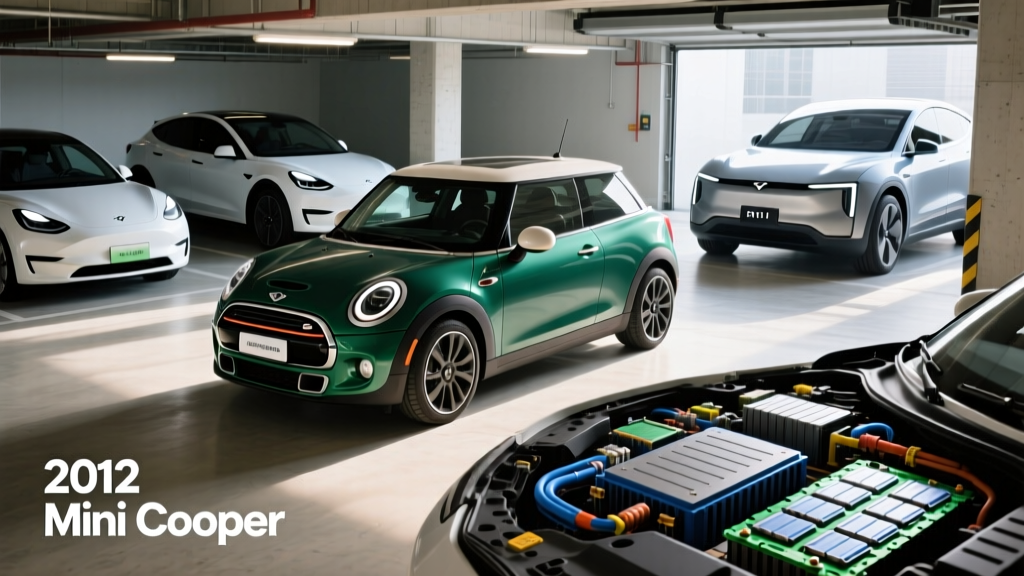
The 2012 Mini Cooper (hardtop, convertible, Clubman, Countryman) was offered exclusively with internal combustion engines — a 1.6L naturally aspirated or turbocharged four-cylinder. The vehicle uses a standard 12V lead-acid auxiliary battery (typically Group H5 or H6, around 55–70 Ah) to start the engine and power accessories. Replacement cost for this battery is roughly $150–$250 at an auto parts store.
This is categorically different from the high-voltage lithium-ion traction batteries found in battery-electric vehicles (BEVs). A modern EV like the 2026 Mini Cooper SE uses a 54.2 kWh lithium-ion pack (NMC chemistry) operating at approximately 350V, delivering an EPA-estimated 200+ miles of range. Understanding this distinction matters — whether you're replacing a dying 12V in your older Mini or evaluating a new EV purchase.
EV Battery Chemistry Explained: LFP vs. NMC/NCA
Every modern EV uses lithium-ion cells, but the cathode chemistry varies significantly. In 2026, two chemistries dominate the market: LFP (lithium iron phosphate) and NMC/NCA (nickel manganese cobalt / nickel cobalt aluminum). Each has distinct trade-offs that affect range, longevity, cold-weather performance, and price.
| Attribute | LFP (Lithium Iron Phosphate) | NMC / NCA (Nickel-based) |
|---|---|---|
| Energy Density | ~160–180 Wh/kg (lower) | ~220–300 Wh/kg (higher) |
| Typical Range Impact | Shorter range for same pack weight | Longer range per kg — preferred for 300+ mi vehicles |
| Cycle Life | 3,000–5,000+ cycles to 80% SoH | 1,000–2,000 cycles to 80% SoH |
| Cold-Weather Performance | More range loss below 32°F (~30–40% loss at 0°F) | Better low-temp performance (~20–30% loss at 0°F) |
| Charging to 100% | Can be charged to 100% daily without significant harm | Best kept at 80% daily; 100% only for road trips |
| Cobalt Content | Zero cobalt — lower supply-chain risk | Contains cobalt/nickel — higher material cost |
| Cost per kWh | ~$80–$100 (cheaper) | ~$110–$140 (more expensive) |
| Common In 2026 | Tesla Model 3/Y RWD, Ford Mustang Mach-E Select, base BYD models | Long-range AWD trims, Hyundai Ioniq 5/6, Rivian, Lucid |
Which is better? Neither is universally superior. LFP wins on longevity, cost, and daily charging convenience — ideal for commuters who charge at home and don't need 350 miles of range. NMC wins on energy density and cold-weather usability — better for road-trippers, cold-climate drivers, and anyone who needs maximum range from a smaller pack. The 2026 Mini Cooper SE uses NMC cells, prioritizing range in a compact footprint.
How Long Do EV Batteries Actually Last?
The short answer: most EV batteries outlast the vehicle they're installed in. Data from millions of miles of real-world operation shows that modern lithium-ion packs degrade slowly and predictably.
Here's what the degradation data looks like across major platforms:
- Tesla fleet data (2025 Impact Report): Model 3/Y packs retain approximately 85% of original capacity after 200,000 miles. NMC packs in early Model S/X showed ~90% retention at 150,000 miles.
- Geotab fleet study (2024, 10,000+ vehicles): Average annual degradation across all EV models was ~1.8% per year, meaning a typical pack retains ~82% capacity after 10 years.
- Hyundai/Kia E-GMP platform: Real-world owner data from Ioniq 5 forums shows ~5–8% degradation after 60,000 miles / 3 years, consistent with manufacturer projections.
- LFP-specific data: Tesla's LFP Model 3 packs have demonstrated less than 3% degradation after 100,000 miles in multiple fleet analyses, attributed to LFP's superior cycle life.
For context, the 2012 Mini Cooper's lead-acid battery lasts roughly 3–5 years before needing replacement. A modern EV traction battery is engineered for 15–20 years of service life.
What Does the EV Battery Warranty Cover?
Federal law mandates that EV batteries carry a minimum warranty of 8 years / 100,000 miles. In California Air Resources Board (CARB) states, that extends to 10 years / 150,000 miles. Most manufacturers exceed these minimums. Here's how major 2026 warranties stack up:
| Manufacturer | Warranty Period | Mileage Limit | Capacity Threshold |
|---|---|---|---|
| Tesla (Model 3/Y) | 8 years | 100,000–120,000 mi | 70% retention |
| Hyundai / Kia | 10 years | 100,000 mi | 70% retention |
| Ford (Mach-E, F-150 Lightning) | 8 years | 100,000 mi | 70% retention |
| BMW / Mini (Cooper SE, i4, iX) | 8 years | 100,000 mi | 70% retention |
| Rivian | 8 years | 175,000 mi (R1T/R1S) | 70% retention |
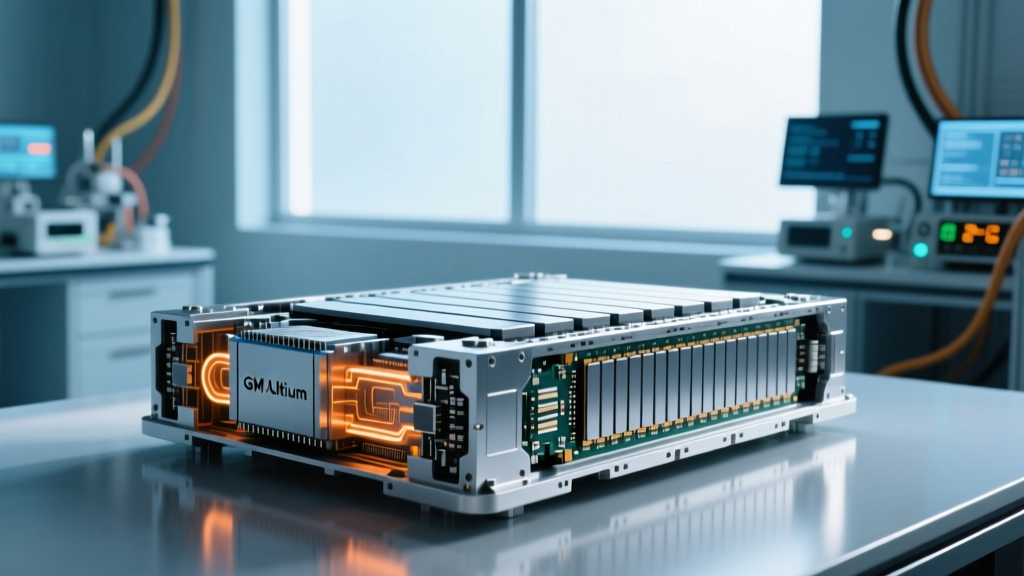
| GM (Ultium platform) | 8 years | 100,000 mi | 70% retention |
What triggers a warranty claim? If your battery's State of Health (SoH) drops below the stated threshold (typically 70%) within the warranty period, the manufacturer must repair or replace the pack at no cost. This covers cell-level degradation and manufacturing defects. It does not cover damage from accidents, flooding, improper modifications, or unauthorized repairs.
Source: fueleconomy.gov provides current EV incentive and warranty reference data.
EV Battery Replacement Cost: What You'll Actually Pay
Battery replacement is the single biggest fear for prospective EV buyers. The reality: very few owners ever need a replacement. But if you do — whether due to out-of-warranty degradation, physical damage, or buying an older used EV — here's what it costs in 2026:
| Vehicle / Pack Size | Battery Capacity | Estimated Replacement Cost |
|---|---|---|
| Mini Cooper SE | 54.2 kWh | $8,000 – $12,000 |
| Tesla Model 3 (LFP, RWD) | 60 kWh | $7,500 – $11,000 |
| Tesla Model Y (NMC, LR) | 82 kWh | $12,000 – $16,000 |
| Hyundai Ioniq 5 | 77.4 kWh | $10,000 – $15,000 |
| Ford F-150 Lightning (Ext. Range) | 131 kWh | $18,000 – $28,000 |
| Chevrolet Bolt EV/EUV (older) | 65 kWh | $9,000 – $14,000 |
Costs have been declining steadily. In 2015, replacement packs averaged over $200/kWh at the consumer level; by 2026, that figure is closer to $130–$170/kWh installed. For a 2012 Mini Cooper owner considering a future EV purchase, this is reassuring: a $10,000–$15,000 out-of-pocket replacement is unlikely within the first 12–15 years, and by the time it might be needed, costs will have fallen further and third-party refurbishment options will be more widely available.
Also worth noting: individual module replacement is often possible. Rather than swapping the entire pack, a technician can replace a single degraded module for $1,500–$4,000, restoring most of the lost capacity.
Factors That Affect EV Battery Lifespan
Not all miles are created equal when it comes to battery wear. These are the primary factors that accelerate — or slow — degradation:
- DC fast-charging frequency: Exclusive use of DC fast chargers (50–350 kW) adds thermal stress. Data suggests packs charged primarily via DCFC may degrade 2–4% more over 100,000 miles compared to Level 2 home charging. Occasional fast charging is fine; daily fast charging is what accumulates wear.
- Extreme temperatures: Sustained exposure to ambient temperatures above 95°F accelerates electrolyte breakdown. Cold weather doesn't permanently degrade the pack but temporarily reduces range by 20–40% due to increased internal resistance. Preconditioning (warming the battery before charging or driving) mitigates cold-weather losses.
- State of Charge habits: For NMC packs, regularly sitting at 100% SoC or dropping below 10% SoC stresses cells. The 20–80% daily window is ideal. LFP packs are more tolerant of 100% SoC and actually benefit from periodic full charges for cell balancing.
- Thermal management: Vehicles with active liquid cooling (Tesla, Hyundai E-GMP, GM Ultium, BMW/Mini) maintain tighter cell-temperature ranges and degrade more slowly than passively cooled packs (older Nissan Leaf, early Fiat 500e).
- Calendar aging: Even a parked EV battery degrades over time. A pack stored at 50% SoC in moderate temperatures will age more slowly than one stored at 100% in a hot garage.
- Charge to 80% daily (NMC) or 100% (LFP) — set charge limit in your vehicle's app
- Use Level 2 home charging as your primary method; reserve DCFC for road trips
- Enable battery preconditioning when navigating to a fast charger
- Avoid leaving the vehicle at 100% SoC for more than 24 hours
- In extreme heat, park in shade or a garage when possible
- Don't let the pack sit below 10% for extended periods
- Keep your vehicle's software updated — manufacturers refine thermal management via OTA updates
How to Check and Monitor Battery Health (SoH)
State of Health (SoH) is expressed as a percentage: a brand-new pack is at 100% SoH, and a pack that has lost 12% of its original capacity sits at 88% SoH. Here's how to monitor it:
- In-vehicle displays: Some manufacturers (BMW/Mini, Hyundai/Kia, Mercedes) show SoH or estimated range degradation directly in the infotainment system or driver app. The Mini Cooper SE's connected app shows estimated range based on current pack health.
- OBD-II scanners with EV capability: Tools like the OBDLink SX paired with apps such as EV Health or LeafSpy (for Nissan) can read the battery management system (BMS) and report SoH, cell voltage variance, and pack temperature.
- Third-party diagnostics: Services like Recurrent and Geotab offer battery health reports based on telematics data, increasingly used by dealerships and used-EV certification programs.
- Manual range tracking: Charge to 100% (or your known full-charge SoC), note the displayed range, and compare it to the original EPA rating. A 2020 Mini Cooper SE that originally displayed 145 miles at 100% but now shows 130 miles has approximately 89% SoH (accounting for temperature and driving-style variables).
For buyers evaluating a used EV, always request a battery health report or perform an OBD-II scan before purchase. Source: NHTSA maintains safety and recall data but does not regulate SoH reporting — this is currently manufacturer-voluntary.
What's Next: Solid-State and Silicon-Anode Batteries
Battery technology continues to evolve. Two developments are generating significant attention, though neither is broadly available in production vehicles as of 2026:
Solid-state batteries replace the liquid electrolyte with a solid conductor, promising higher energy density (potentially 400+ Wh/kg), faster charging, and improved safety (no flammable electrolyte). Toyota, Samsung SDI, and QuantumScape are leading development. Toyota has announced solid-state packs for limited production in 2027–2028, but widespread availability at consumer price points is not expected before 2030–2032.
Silicon-anode batteries replace graphite anodes with silicon, which can store roughly 10x more lithium ions per unit mass. Companies like Sila Nanotechnologies and Group14 are supplying early silicon-anode materials to Mercedes-Benz and other OEMs. Expect incremental adoption starting in 2027–2028 model-year luxury vehicles, with mainstream trickle-down by the early 2030s.
From a 2012 Mini Cooper Battery to a 2026 EV: The Bottom Line
If you're replacing the 12V battery in a 2012 Mini Cooper, you're spending $150–$250 on a lead-acid unit that will last 3–5 years. If you're considering upgrading to a modern EV — whether a Mini Cooper SE or another model — you're looking at a lithium-ion traction pack engineered to last 15–20 years, backed by an 8-year/100,000-mile warranty, and increasingly affordable to replace if the unlikely need arises.
The technology gap between a 2012 auxiliary battery and a 2026 EV pack is enormous: one stores ~0.8 kWh of energy in a chemistry unchanged for a century; the other stores 50–130 kWh in cells refined over just 15 years of automotive use. That pace of improvement is precisely why today's EV batteries are more durable, more predictable, and less expensive (per kWh) than at any point in history.
For current EV tax credit rules that may offset your purchase, see the IRS §30D Clean Vehicle Credit page — eligibility depends on MSRP caps, buyer income limits, and battery-sourcing requirements that vary by model year.
Frequently Asked Questions
How long do EV batteries last in years and miles?
Most modern EV batteries are designed to last 15–20 years or 200,000+ miles before dropping below 70% capacity. Real-world fleet data shows average degradation of ~1.8% per year, meaning a 10-year-old pack typically retains 80–85% of its original range. LFP chemistry packs often last even longer.
How much does it cost to replace an EV battery in 2026?
Replacement costs range from approximately $7,500 for a smaller LFP pack (e.g., Tesla Model 3 RWD) to $28,000 for a large pack like the F-150 Lightning Extended Range. Most owners never need a replacement within the vehicle's lifetime, and costs continue to decline year over year.
What does the EV battery warranty actually cover?
Federal law requires at minimum 8 years / 100,000 miles of coverage (10 years / 150,000 miles in CARB states). The warranty covers degradation below a stated threshold (typically 70% capacity retention) and manufacturing defects. It does not cover accident damage, flooding, or unauthorized modifications.
How do I check my EV's battery health?
Options include your vehicle's connected app, OBD-II scanners with EV-specific software (like EV Health or LeafSpy), third-party telematics reports from services like Recurrent, or manual range tracking by comparing your full-charge displayed range to the original EPA figure.
Is LFP or NMC better for daily driving?
For daily commuting with home charging, LFP is generally better — it tolerates 100% daily charges, lasts more cycles, and costs less. For long road trips, cold climates, or maximum range needs, NMC is preferable due to higher energy density and better cold-weather performance. Your driving pattern should determine the choice.
Does a 2012 Mini Cooper have an EV battery?
No. The 2012 Mini Cooper was only available with gasoline engines and uses a conventional 12V lead-acid battery. The first all-electric Mini (Cooper SE) debuted for the 2020 model year with a 32.6 kWh lithium-ion pack. The 2026 Mini Cooper SE uses an updated 54.2 kWh NMC pack.