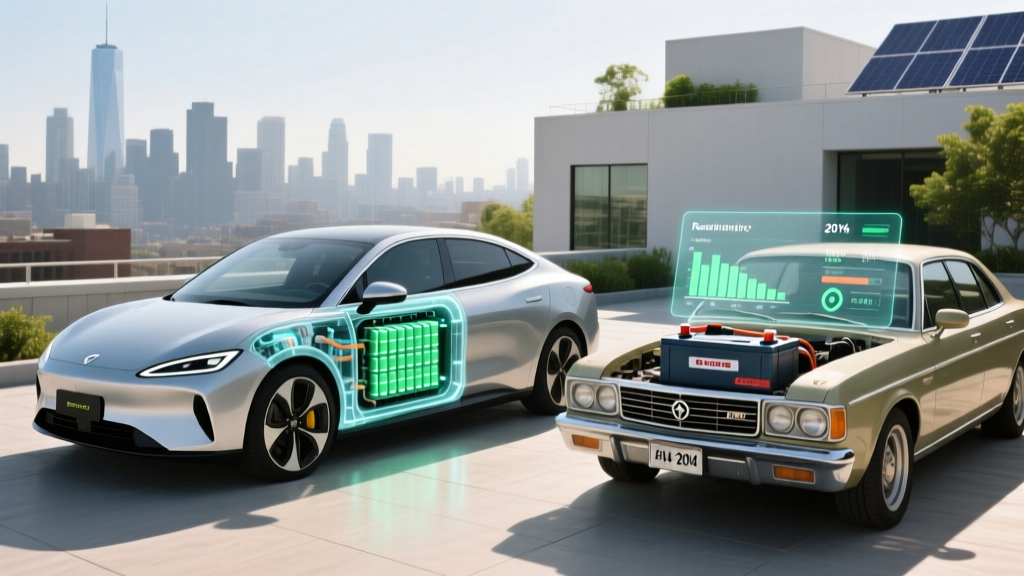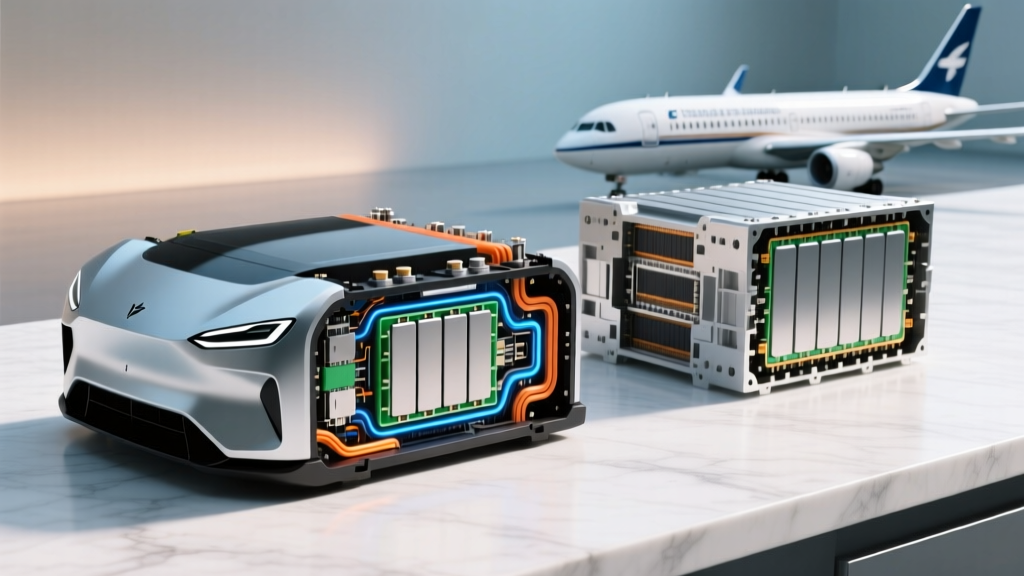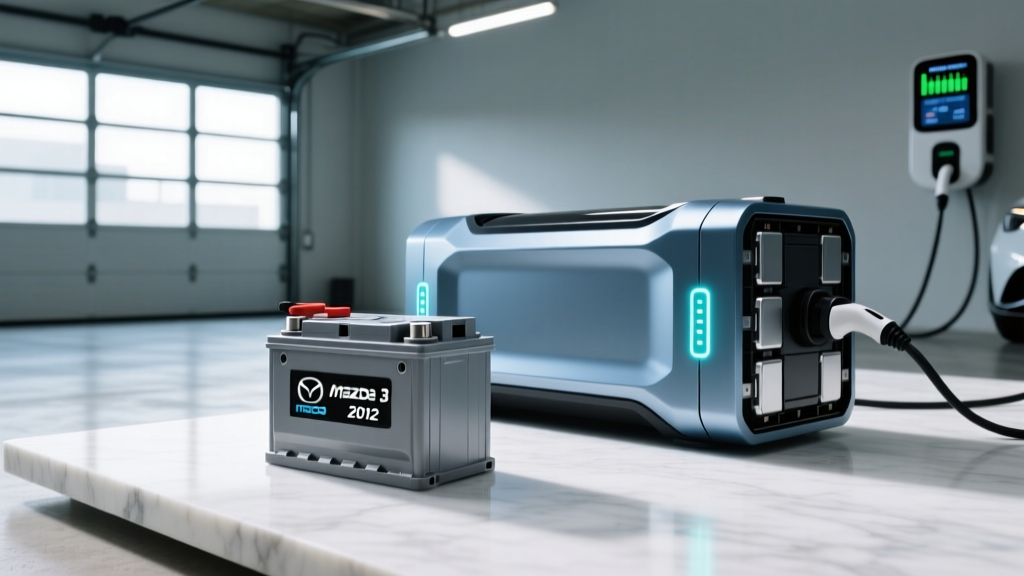
If you’re researching a 2012 Mazda 3 battery, you’re likely dealing with a failing 12-volt lead-acid unit — a $150–$250 drop-in fix. But if that search has led you to electric vehicles, the battery conversation changes entirely. Modern EV traction batteries are high-voltage lithium-ion packs that cost thousands to replace, last well over a decade, and use chemistry fundamentally different from the lead-acid cell cranking your Mazda 3.
This guide bridges both worlds: we’ll clarify the 2012 Mazda 3 battery replacement basics, then dive deep into EV traction battery technology — chemistry, degradation, warranty, replacement cost, and care — so you know exactly what you’re signing up for before buying an electric car in 2026.
2012 Mazda 3 Battery: The 12V Basics
The 2012 Mazda 3 uses a conventional Group 35 or 26R 12-volt lead-acid battery (typically 55–65 Ah) to start the internal-combustion engine and power accessories. Replacement is straightforward:
- Part cost: $130–$240 for an AGM or flooded-cell unit from AutoZone, Advance Auto, or Costco
- Labor: 10 minutes DIY; $20–$50 at a shop
- Lifespan: 3–5 years depending on climate and use
- Warranty: 2–4 years free replacement, then prorated
EVs also carry a 12V auxiliary battery (often lithium iron phosphate, or LFP, in newer models) to run lights, infotainment, and computers — but it does not propel the car. That’s the job of the high-voltage traction battery, which is the focus of the rest of this article.
EV Traction Battery Chemistry: LFP vs NMC/NCA
Every modern EV uses one of two dominant lithium-ion chemistries: LFP (lithium iron phosphate) or NMC/NCA (nickel manganese cobalt / nickel cobalt aluminum). The choice affects range, longevity, cold-weather performance, and price.
| Attribute | LFP | NMC/NCA |
|---|---|---|
| Energy density | Lower (~160 Wh/kg cell) | Higher (~250–300 Wh/kg cell) |
| Typical cycle life | 3,000–5,000+ cycles | 1,500–2,500 cycles |
| Cold-weather range loss | Greater (~35–45% at 20°F) | Moderate (~25–35% at 20°F) |
| Cost per kWh (pack-level) | ~$90–$110 | ~$120–$150 |
| Recommended daily SoC | Up to 100% | 80% for daily; 100% for trips |
| Notable 2026 users | Tesla Model 3 RWD, BYD, Ford Mustang Mach-E Select | Hyundai Ioniq 5, Tesla Long Range, Rivian, BMW iX |
Which is better? It depends on your use case. LFP wins on longevity and cost — ideal for commuters who charge daily and want a battery that will outlast the car. NMC/NCA wins on range and cold-weather performance — better for road-trippers and northern-climate drivers. Neither is universally superior; both are proven at scale.
How Long Do EV Batteries Actually Last?
Most EV batteries outlive the vehicle itself. Real-world fleet data from Tesla’s 2025 Impact Report and independent analyses by fueleconomy.gov show:
- Average degradation at 100,000 miles: 8–12% capacity loss
- Average degradation at 150,000 miles: 12–17% capacity loss
- Average degradation at 200,000 miles: 15–22% capacity loss
For a 2026 Hyundai Ioniq 5 Long Range (84 kWh usable, EPA 325 miles), a 15% loss at 150,000 miles means ~276 miles of real-world range — still highly usable. The battery isn’t "dead"; it simply holds less energy.
Early degradation (first 20,000–30,000 miles) is steeper — typically 3–5% — then the curve flattens significantly. This is normal lithium-ion behavior and not a defect.
Battery Warranty: What’s Covered and What’s Not
Federal law mandates a minimum 8-year / 100,000-mile warranty on EV batteries for emissions compliance, but most automakers exceed this. Here’s how major 2026 warranties compare:
| Manufacturer | Duration | Mileage | Capacity Threshold |
|---|---|---|---|
| Tesla (Model 3/Y) | 8 years | 100,000–120,000 mi | 70% retention |
| Hyundai / Kia | 10 years | 100,000 mi | 70% retention |
| Ford (Mach-E, F-150 Lightning) | 8 years | 100,000 mi | 70% retention |
| GM (Ultium platform) | 8 years | 100,000 mi | 70% retention |
| BMW / Mercedes | 8 years | 100,000 mi | 70% retention |
What triggers a warranty claim? If your battery drops below the stated threshold (typically 70% of original capacity) within the warranty period, the manufacturer must repair or replace it at no cost. In practice, warranty claims are rare — most batteries retain 80%+ capacity at 100,000 miles.
Note: warranty does not cover damage from accidents, flooding, or unauthorized modifications. And it covers the traction battery only — the 12V auxiliary battery (even in EVs) typically carries a separate 3-year/36,000-mile warranty, similar to the 12V battery in your 2012 Mazda 3.
EV Battery Replacement Cost: What to Budget
If your battery degrades beyond the warranty period — or suffers physical damage — replacement is expensive but rarely needed within a typical ownership cycle. Here are real-world 2026 replacement ranges:
| Battery Size / Model Class | Parts Cost | Labor | Total Range |
|---|---|---|---|
| 40–60 kWh (compact, e.g., Nissan Leaf, base Bolt) | $5,500–$9,000 | $1,000–$2,500 | $6,500–$11,500 |
| 70–90 kWh (mid-size, e.g., Model 3, Ioniq 5) | $9,000–$15,000 | $1,500–$3,000 | $10,500–$18,000 |
| 100–130 kWh (large, e.g., F-150 Lightning, Rivian) | $14,000–$22,000 | $2,000–$4,000 | $16,000–$26,000 |
When is replacement typically needed? For most owners, it isn’t. Data from Recurrent Auto (a battery analytics firm) shows fewer than 5% of EVs require a full pack replacement within 150,000 miles. Most degradation is gradual — you simply lose range over time, much like a phone battery. The car remains drivable; it just doesn’t go as far on a charge.
Compare this to the 2012 Mazda 3: its timing belt, transmission, or head gasket could easily cost $2,000–$4,000 to replace — and those failures are sudden, leaving you stranded. A degraded EV battery gives you years of warning.
Factors That Accelerate Battery Degradation
Not all miles are equal. These habits and conditions cause faster capacity loss:
- Frequent DC fast charging: Daily use of 150+ kW chargers generates heat stress. Occasional road-trip fast charging is fine; daily reliance accelerates wear by an estimated 1–3% over 100,000 miles.
- Extreme heat exposure: Parking in 100°F+ ambient without thermal management active. Modern EVs actively cool batteries, but prolonged desert heat still stresses cells.
- Sustained 100% or 0% SoC: For NMC/NCA batteries, storing the car at full charge or fully depleted for days accelerates calendar degradation. LFP batteries tolerate 100% better.
- Cold-weather fast charging without preconditioning: Charging a frozen battery at high power causes lithium plating. Always use the car’s preconditioning feature before DC fast charging in sub-40°F weather.
- High-mileage, high-C-rate driving: Repeated hard acceleration and sustained 90+ mph speeds generate internal heat. Moderate driving preserves the pack.
The good news: modern battery management systems (BMS) actively protect against most of these scenarios. Your car limits charge rate when the pack is cold, caps usable capacity with a buffer (typically 5–10% of gross kWh is locked), and manages thermal conditions automatically.
How to Check and Maximize Battery Health
Most 2026 EVs offer built-in State of Health (SoH) monitoring via the infotainment screen or companion app. Here’s how to check across major brands:
- Tesla: No native SoH readout, but third-party apps like Tessie or TeslaFi estimate SoH from charge logs. Service centers can run a full diagnostic.
- Hyundai/Kia: SoH percentage displayed in the EV settings menu (Bluelink/Kia Connect also reports remotely).
- Ford: FordPass app shows estimated range vs. original, which correlates to SoH.
- GM (Ultium): myChevrolet/myCadillac app includes a battery health indicator.
- Nissan: The Leaf’s dashboard shows "battery health bars" (12 bars = 100%; each bar lost ≈ 6–8% degradation).
For a more precise reading, OBD-II dongles paired with apps like Car Scanner or Leaf Spy (for Nissan) can pull raw BMS data including cell voltage variance and exact SoH percentage.
Maximizing longevity — practical rules:
- Charge to 80% daily (NMC/NCA) or 100% (LFP) — set the charge limit in your car’s settings.
- Use Level 2 home charging as your primary method; reserve DC fast charging for road trips.
- Enable battery preconditioning before fast charging, especially in cold weather.
- Avoid leaving the car at 0% or 100% SoC for extended periods (days/weeks).
- Park in shade or a garage during extreme heat when possible.
Emerging Battery Tech: Solid-State and Silicon Anodes
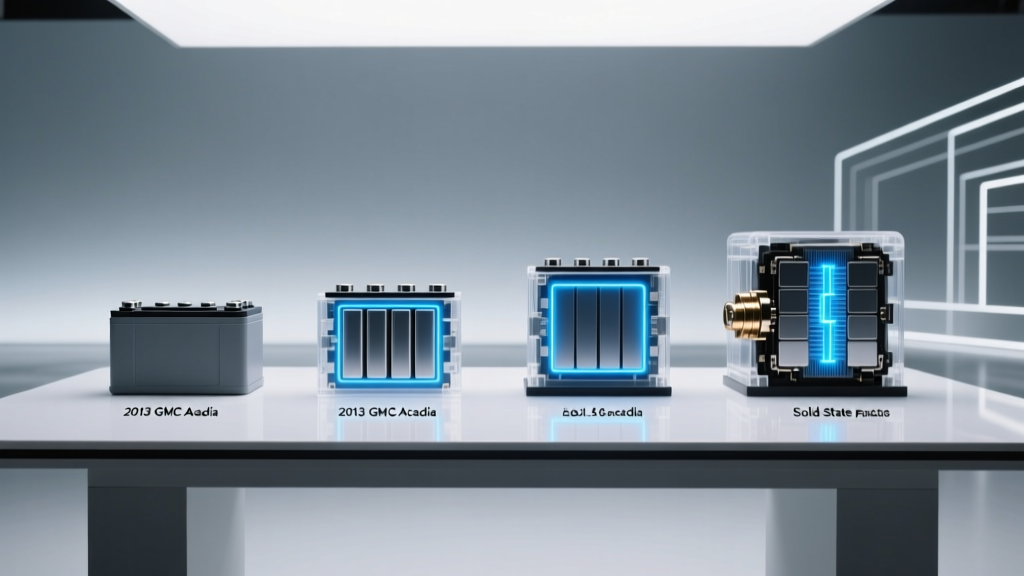
The next frontier in EV batteries includes solid-state batteries (replacing liquid electrolyte with a solid conductor) and silicon-anode cells (boosting energy density by 20–40%). Here’s where they stand in 2026:
- Solid-state: Toyota and Nissan have announced pilot production, with limited commercial availability expected in 2028–2030 model-year vehicles. Projected benefits: 500+ mile range, 10-minute fast charging, improved safety. Current limitation: manufacturing cost remains 2–3x that of lithium-ion.
- Silicon anode: Already in limited use (Porsche Taycan, some GM Ultium cells). Group14 and Sila Nanotechnologies supply silicon-carbon anode materials that boost energy density by ~20%. Expect broader adoption in 2027–2028 models.
- Sodium-ion: BYD and CATL have begun producing sodium-ion packs for low-cost, short-range EVs in China. US availability is not yet announced but may appear in budget models by 2028.
Realistic timeline: These technologies are announced and in pilot production, not yet in vehicles you can buy today. If you’re shopping for an EV in 2026, current lithium-ion (LFP or NMC) batteries are mature, well-warrantied, and proven at scale. Waiting for solid-state means waiting at least 2–4 years for limited availability at premium prices.
Frequently Asked Questions
How long do EV batteries last in years and miles?
Most EV batteries retain 70–85% of original capacity at 150,000 miles (roughly 10–15 years of average driving). They rarely "fail" catastrophically; instead, range gradually decreases. Many EVs are still running on original batteries past 200,000 miles with 15–22% degradation.
How much does an EV battery cost to replace in 2026?
Replacement costs range from $6,500 for a small 40–60 kWh pack to $26,000 for a 100+ kWh truck/SUV battery, including labor. However, fewer than 5% of EVs need a full replacement within 150,000 miles, and most are covered under the 8-year/100,000-mile warranty.
What does the EV battery warranty actually cover?
Federal law requires a minimum 8-year/100,000-mile warranty on EV traction batteries. Most automakers guarantee 70% capacity retention over that period. If your battery drops below 70% within the warranty window, the manufacturer repairs or replaces it free of charge. The warranty does not cover accident damage, flooding, or the 12V auxiliary battery.
How do I check my EV’s battery health?
Most 2026 EVs display State of Health (SoH) in the infotainment system or companion app. For more detail, OBD-II dongles with apps like Car Scanner or Leaf Spy pull raw BMS data. Tesla owners can use third-party apps like Tessie or TeslaFi to estimate SoH from charge history.
LFP vs NMC — which battery chemistry should I choose?
Choose LFP if you prioritize longevity, lower cost, and daily commuting (charge to 100% freely). Choose NMC/NCA if you need maximum range, better cold-weather performance, or frequent road trips. Both chemistries are proven; the right choice depends on your climate and driving patterns.
Is a 2012 Mazda 3 battery the same as an EV battery?
No. The 2012 Mazda 3 uses a 12-volt lead-acid battery (~$150–$250, 3–5 year lifespan) to start the engine. EV traction batteries are high-voltage lithium-ion packs (40–130 kWh, $6,500–$26,000 replacement cost, 10–15+ year lifespan) that propel the vehicle. They serve entirely different functions and operate on different chemistry.
Whether you’re replacing a $200 lead-acid cell in your 2012 Mazda 3 or evaluating a $50,000 EV with a 100 kWh lithium-ion pack, understanding battery chemistry, degradation, and warranty terms is the single most important factor in your purchase decision. Modern EV batteries are engineered to last — and the data proves it.