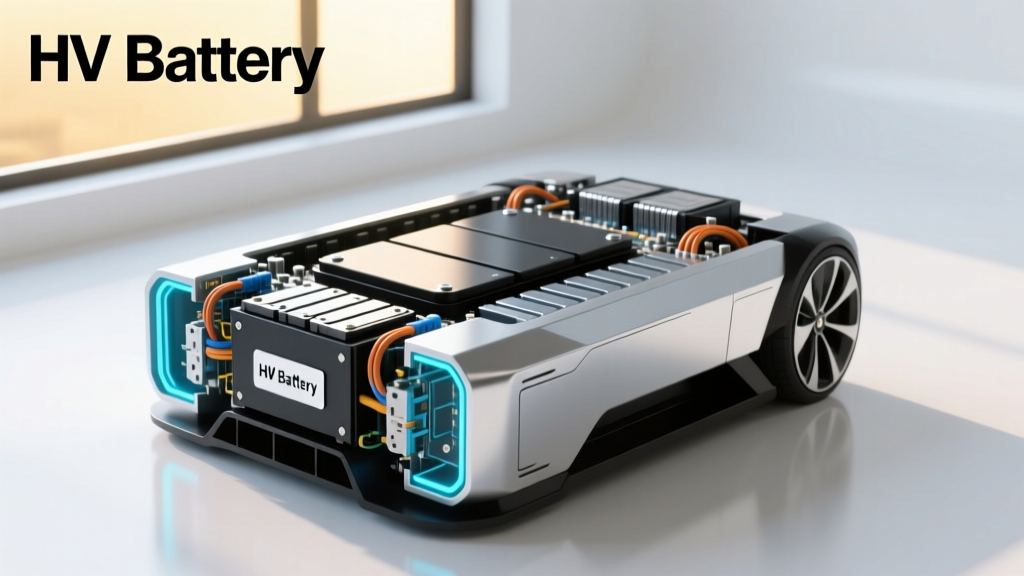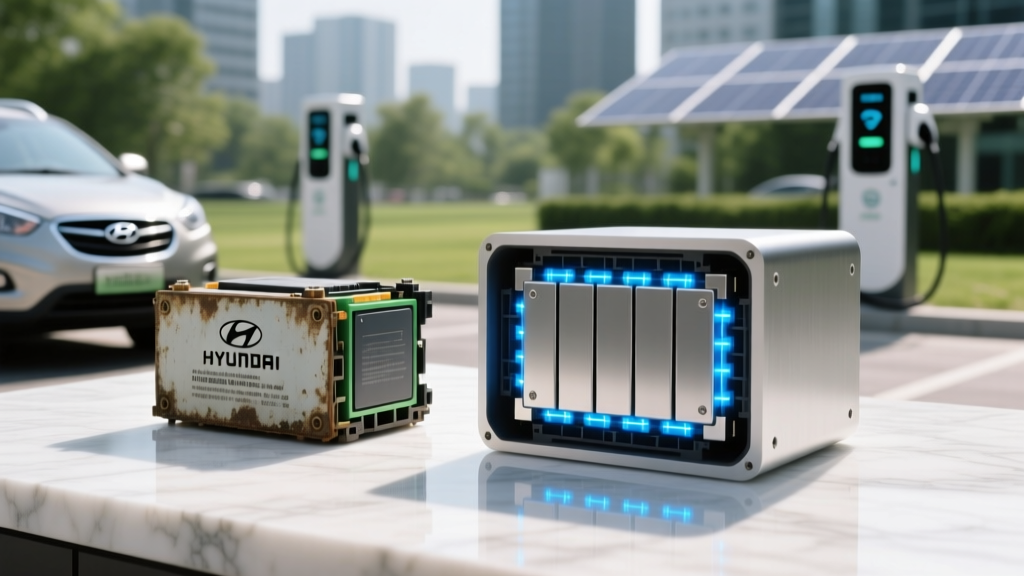
If you've ever searched for a 2012 Hyundai Santa Fe battery, you were almost certainly looking for a 12-volt lead-acid starter battery — the kind that powers the headlights, radio, and engine crank in a conventional gas SUV. That 2012 Santa Fe had no high-voltage traction pack; it was a pure internal-combustion vehicle. But that simple search query opens the door to a far more important question for today's car buyers: how long do modern EV batteries actually last, and what does it cost when they don't?
In this guide, we break down EV battery longevity with real degradation data, chemistry trade-offs, warranty coverage, replacement economics, and the care habits that maximize pack life — all from a 2026 ownership perspective.
How Long Do EV Batteries Actually Last?
The short answer: most modern EV traction batteries outlast the vehicles they're installed in. The long answer requires looking at real-world degradation data rather than manufacturer marketing.
Based on fleet data aggregated by Recurrent Auto and long-term owner tracking, the typical lithium-ion EV battery loses roughly 5–10% of its original capacity in the first 50,000 miles, then degradation slows considerably. By 100,000 miles, most 2020-and-newer packs retain between 88% and 95% of their original capacity. By 200,000 miles — a milestone many gas engines don't reach without major work — well-maintained packs still hold 80–90%.
Typical EV Battery Degradation Curve (NMC Chemistry, Moderate Climate):
- Year 1 / ~12,000 mi: ~2–4% capacity loss (initial formation settling)
- Year 3 / ~36,000 mi: ~5–7% total loss
- Year 5 / ~60,000 mi: ~7–10% total loss
- Year 8 / ~96,000 mi: ~10–14% total loss
- Year 10 / ~120,000 mi: ~12–18% total loss
- Year 15 / ~180,000 mi: ~18–25% total loss (varies widely by care and climate)
Source: Recurrent Auto fleet data, 2024–2025; Geotab fleet study of 6,300+ EVs.
The key insight: degradation is non-linear. The steepest drop happens early, then the curve flattens. A battery isn't "dead" at 80% capacity — it simply offers 80% of its original range. A vehicle with an EPA-estimated 300-mile range when new would still deliver ~240 miles at 80% State of Health (SoH), which is plenty for most daily driving.
LFP vs. NMC/NCA: Which Battery Chemistry Is Right for You?
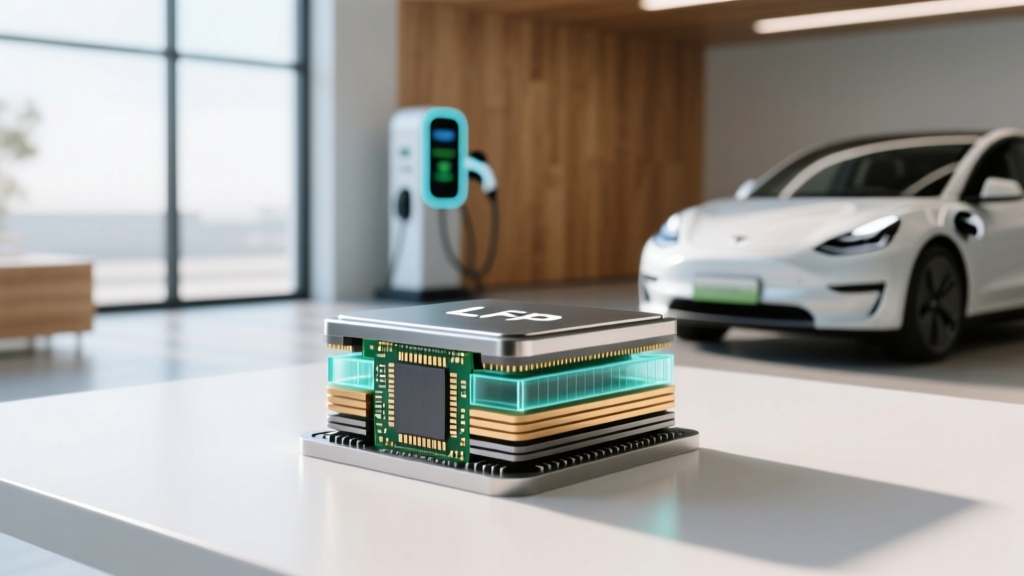
Not all EV batteries are the same. The two dominant lithium-ion chemistries in 2026 are LFP (lithium iron phosphate) and NMC/NCA (nickel manganese cobalt / nickel cobalt aluminum). The chemistry in your EV affects range, longevity, cold-weather behavior, and price.
| Attribute | LFP (LiFePO₄) | NMC / NCA |
|---|---|---|
| Energy Density | Lower (~160 Wh/kg cell-level) | Higher (~250–300 Wh/kg cell-level) |
| Typical Cycle Life | 3,000–5,000+ cycles | 1,000–2,500 cycles |
| Cold-Weather Performance | Weaker; more range loss below 32°F | Better low-temp discharge capability |
| 100% SoC Charging | Safe and recommended regularly | Better kept at 80% daily; 100% for trips |
| Cobalt Content | None | Contains cobalt (supply-chain concern) |
| Cost per kWh | Lower (~$80–100/kWh pack-level, 2026) | Higher (~$110–140/kWh pack-level, 2026) |
| Common In (2026) | Tesla Model 3 RWD, Model Y RWD, BYD, base Ford Mustang Mach-E, Rivian Standard | Long-range/performance trims, Hyundai Ioniq 5/6, BMW iX, Lucid, Porsche Taycan |
Choose LFP if: you want maximum cycle life, plan to keep the car 10+ years, mostly drive in mild climates, and don't need the absolute longest single-charge range.
Choose NMC/NCA if: you need maximum range per charge, regularly face sub-freezing winters, or want the lightest pack for a given capacity.
What Does the EV Battery Warranty Actually Cover?
Federal law mandates a minimum 8-year / 100,000-mile battery warranty for EVs sold in the United States. In California Air Resources Board (CARB) states, that extends to 10 years / 150,000 miles. Most manufacturers set the capacity-retention threshold at 70% of original capacity, though some are more generous.
| Manufacturer (2026 Models) | Battery Warranty | Capacity Threshold |
|---|---|---|
| Tesla (Model 3/Y LFP) | 8 yr / 100,000 mi | 70% |
| Tesla (Model 3/Y LR/Perf NMC) | 8 yr / 120,000 mi | 70% |
| Hyundai / Kia (Ioniq 5/6, EV6, EV9) | 10 yr / 100,000 mi | 70% |
| Ford (Mustang Mach-E, F-150 Lightning) | 8 yr / 100,000 mi | 70% |
| GM (Ultium-based: Equinox EV, Blazer EV, Silverado EV) | 8 yr / 100,000 mi | 60% (some trims 70%) |
| Rivian (R1T/R1S) | 8 yr / 175,000 mi | 70% |
| BMW (i4, iX, i7) | 8 yr / 100,000 mi | 70% |
| Volkswagen (ID.4) | 8 yr / 100,000 mi | 70% |
Critical nuance: these warranties cover defects and excessive degradation — not damage from accidents, flooding, or improper modifications. If your battery drops to 69% SoH at year 7 and 85,000 miles, the manufacturer is obligated to repair or replace it. If it's at 72%, you're on your own. Always document your charging habits and keep service records.
How Much Does an EV Battery Replacement Cost?
This is the question that fuels the most anxiety — and the most misinformation. Let's ground it in actual numbers.
| Vehicle / Pack Size | Battery Capacity | Replacement Cost Range (2026) | Typical Replacement Timeline |
|---|---|---|---|
| Tesla Model 3 RWD (LFP) | ~60 kWh | $10,000–$14,000 | Rarely needed before 250,000+ mi |
| Tesla Model Y Long Range (NMC) | ~82 kWh | $14,000–$18,000 | Rarely needed before 200,000+ mi |
| Hyundai Ioniq 5 (NMC) | ~77.4 kWh | $13,000–$17,000 | Rarely needed before 200,000+ mi |
| Ford F-150 Lightning Extended | ~131 kWh | $22,000–$30,000 | Very few out-of-warranty replacements to date |
| Chevrolet Bolt EV/EUV | ~65 kWh | $9,000–$13,000 | Post-recall packs showing excellent longevity |
| Nissan LEAF (40/62 kWh) | 40–62 kWh | $7,000–$10,000 | Earlier packs degraded faster; 2019+ improved |
The honest context: according to data from Consumer Reports, the average EV battery replacement rate within the first 10 years of ownership is well under 5%. Most packs simply don't fail catastrophically — they slowly lose capacity. And as battery manufacturing scales, per-kWh replacement costs continue to decline. A pack that cost $20,000 to replace in 2020 might cost $13,000 by 2026 for the same chemistry and capacity.
If you're comparing this to a gas vehicle: a timing belt, transmission rebuild, or head gasket job on an ICE car can easily run $3,000–$6,000 — and those repairs are expected maintenance items, not rare failures. EV battery replacement is a low-probability, high-cost event; gas powertrain repairs are moderate-probability, moderate-cost events.
Factors That Accelerate (or Preserve) Battery Life
Not all miles are equal when it comes to battery wear. Here's what actually moves the needle on degradation:
Habits That Preserve Battery Health:
- Daily charge to 80% (NMC/NCA): Keeping an NMC pack between 20–80% SoC for daily use minimizes stress. LFP packs can and should be charged to 100% regularly for cell balancing.
- Use Level 2 home charging as your primary method: Slow, steady charging generates less heat than DC fast charging.
- Precondition the battery before DC fast charging: Most modern EVs do this automatically when you navigate to a charger. A warm battery (65–95°F) charges faster and with less degradation.
- Park in shade or a garage during extreme heat: Sustained pack temperatures above 100°F accelerate calendar degradation.
- Drive moderately in extreme cold: Cold batteries have higher internal resistance; gentle acceleration for the first few miles helps.
Habits That Accelerate Degradation:
- Frequent DC fast charging (3+ times/week): Exclusively relying on 150+ kW DCFC adds thermal stress. Fleet data shows vehicles that fast-charge daily lose ~2–4% more capacity over 5 years vs. primarily Level 2 charging.
- Routinely sitting at 100% SoC for days (NMC): High voltage + time = accelerated calendar aging.
- Deep discharges to 0%: Dropping below 5% regularly stresses the anode. Keep a buffer.
- Leaving the vehicle unplugged at low SoC in extreme heat: This is the worst-case scenario for calendar degradation.
How to Check and Monitor Your Battery's State of Health
State of Health (SoH) is the percentage of a battery's original usable capacity that remains. A new battery is at 100% SoH; one that has degraded to hold only 70 of its original 80 kWh is at 87.5% SoH.
Here's how to check it:
- In-vehicle displays: Tesla, Hyundai/Kia, BMW, and Rivian show estimated battery health or degradation percentage in the vehicle settings menu. Tesla's service mode (accessible via the software screen) provides a detailed SoH readout.
- Manufacturer apps: The Tesla app, Hyundai Bluelink, Kia Connect, and myChevrolet apps often display estimated range at full charge — comparing this to the original EPA figure gives a rough SoH estimate.
- OBD-II dongles and third-party apps: Tools like OBDeleven, Carista, or ScanGauge can read battery management system (BMS) data on many EVs, including remaining capacity in kWh, cell voltage variance, and pack temperature.
- Dealer diagnostic report: Any authorized service center can pull a full battery health report. Request this before buying a used EV — it's the single most important pre-purchase check.
- Recurrent Auto (free enrollment): This service connects to your EV's telematics and provides ongoing SoH tracking, range scores compared to similar vehicles, and battery health reports useful for resale.
Pro tip for used-EV buyers: A full-charge range test is the simplest SoH proxy. Charge to 100%, note the displayed range, and compare it to the original EPA estimate. If a 2021 Tesla Model 3 Long Range (EPA 353 mi) shows 310 miles at 100%, that's roughly 88% SoH — perfectly normal for a 5-year-old pack.
What's Next: Solid-State, Silicon Anodes, and Future Battery Tech
Several next-generation battery technologies are in development, but it's essential to separate lab announcements from showroom reality.
Solid-state batteries replace the liquid electrolyte with a solid material, promising higher energy density (potentially 400+ Wh/kg at the cell level), faster charging, and reduced fire risk. Toyota has announced a solid-state battery targeting 2027–2028 production vehicles with up to 620 miles of range. Samsung SDI and QuantumScape are also in advanced testing. However, as of early 2026, no mass-production solid-state EV is on sale. Expect initial deployment in limited, premium models first, with mainstream availability no earlier than 2029–2030.
Silicon-dominant anodes (from companies like Sila Nanotechnologies and Group14) replace graphite anodes with silicon, boosting energy density by 20–40%. These are already appearing in limited applications — the Mercedes G-Class electric SUV uses a silicon-anode pack from Sila. Wider adoption is expected by 2027–2028 as manufacturing costs come down.
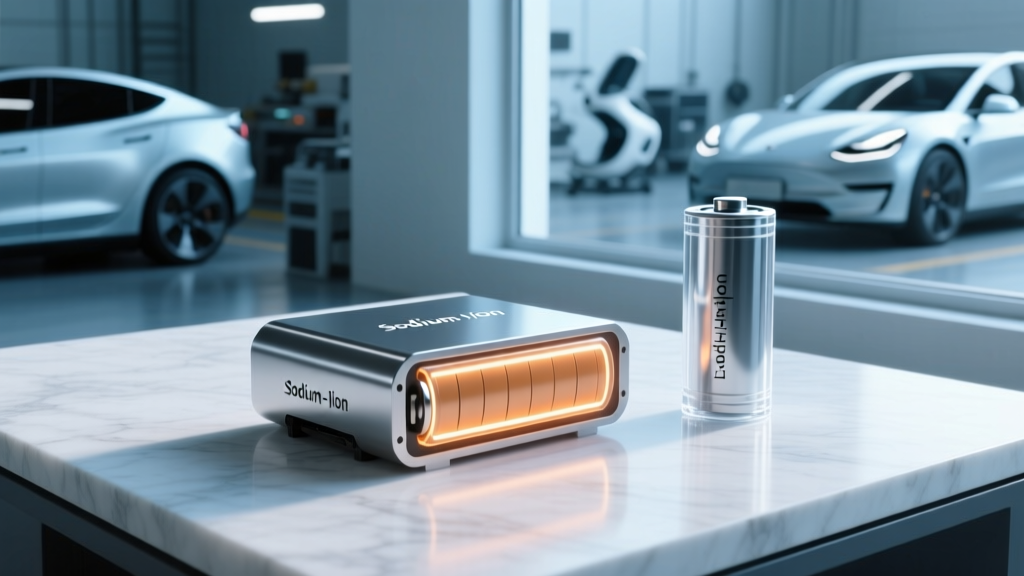
Sodium-ion batteries are emerging as a low-cost alternative for budget EVs and stationary storage. CATL has begun shipping sodium-ion packs in Chinese-market vehicles. Energy density is lower (~120–150 Wh/kg), but the raw materials are abundant and cheap. US-market adoption is likely in entry-level models by 2028–2029.
The practical takeaway: today's LFP and NMC batteries are mature, well-understood technologies with proven longevity data. Waiting for solid-state is a valid choice for buyers with a 5+ year timeline, but current chemistries are more than adequate for the vast majority of drivers.
EV Battery FAQ
How long do EV batteries last in years and miles?
Most modern EV batteries (2020 and newer) retain 85–95% capacity at 100,000 miles and 80–90% at 200,000 miles. In years, expect 15–20+ years of usable service before capacity drops below 70%. LFP chemistry packs tend to outlast NMC packs in cycle life, though NMC offers better cold-weather range.
How much does it cost to replace an EV battery in 2026?
Replacement costs range from roughly $7,000 for a smaller pack (Nissan LEAF, Chevrolet Bolt) to $30,000 for the largest packs (Ford F-150 Lightning Extended Range). Most mainstream mid-size EVs (Tesla Model 3/Y, Hyundai Ioniq 5, Ford Mach-E) fall in the $10,000–$18,000 range. However, fewer than 5% of EVs need a battery replacement within the first decade, and most are covered under the 8-year/100,000-mile federal warranty mandate.
What does the EV battery warranty cover?
Federal law requires at least 8 years / 100,000 miles of battery warranty coverage (10 years / 150,000 miles in CARB states). The warranty covers defects and capacity loss below a stated threshold — typically 70% of original capacity. It does not cover damage from accidents, floods, or unauthorized modifications. Check your specific manufacturer's terms, as some (like Rivian) offer 175,000-mile coverage.
How do I maximize my EV battery's lifespan?
For NMC/NCA packs: charge to 80% daily, use Level 2 home charging as your primary method, avoid frequent DC fast charging, precondition before fast charging, and avoid leaving the car at 100% or near 0% for extended periods. For LFP packs: charge to 100% regularly (it's required for cell balancing), and follow the same temperature and fast-charging guidelines.
LFP vs. NMC — which battery chemistry is better?
Neither is universally "better." LFP wins on cycle life (3,000–5,000+ cycles vs. 1,000–2,500), cost, cobalt-free sourcing, and the ability to charge to 100% daily. NMC wins on energy density (longer range in a lighter pack), cold-weather performance, and availability in long-range/performance trims. If you live in a mild climate and plan to keep your EV for 10+ years, LFP is the longevity play. If you need maximum range or face harsh winters, NMC is the better fit.
Does fast charging damage my EV battery?
DC fast charging generates more heat than Level 2 charging, and heat is the primary driver of accelerated degradation. However, modern battery management systems actively cool the pack during fast charging and taper the charge rate above 80% SoC to protect cells. Occasional fast charging (1–2 times per week) has a negligible impact on long-term health. Exclusive daily fast charging may add 2–4% extra capacity loss over 5 years compared to primarily Level 2 charging.
Can I check my EV battery health myself?
Yes. Most EVs display estimated range at full charge, which serves as a rough SoH proxy. For more precise data, use the manufacturer app, access service mode (Tesla), connect an OBD-II scanner that reads BMS data, or request a battery health report from your dealer. Third-party services like Recurrent Auto provide ongoing SoH monitoring for free.
Whether you're coming from a 2012 Hyundai Santa Fe with its simple lead-acid battery or evaluating your first EV purchase, the data is clear: modern EV traction batteries are remarkably durable components. With basic care — moderate charging habits, thermal awareness, and regular SoH monitoring — your pack will likely serve you well past 200,000 miles, making the "battery replacement nightmare" narrative a relic of early-EV skepticism rather than a 2026 reality.