Why the 2012 Ford Fusion Hybrid Battery Still Matters in 2026
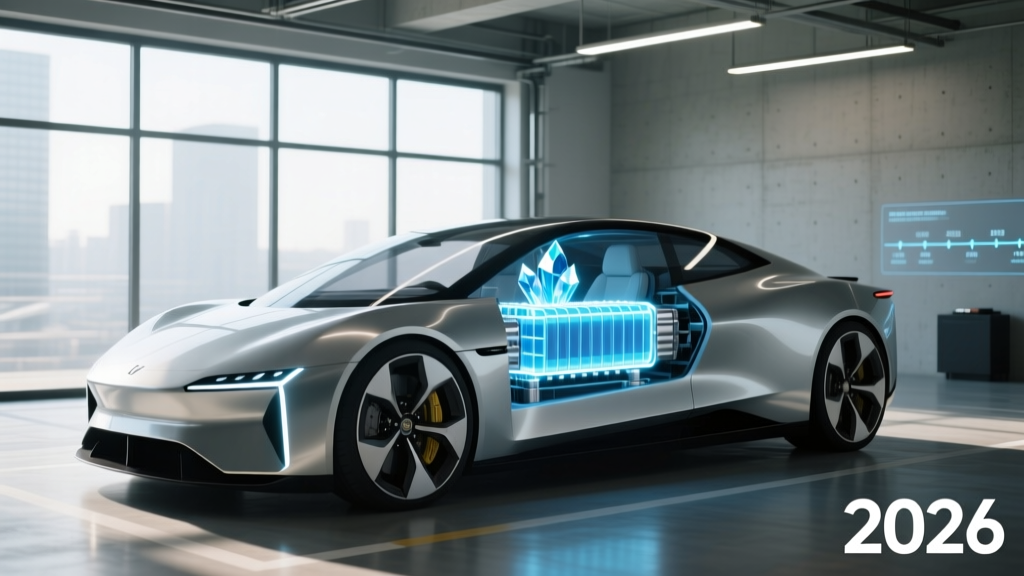
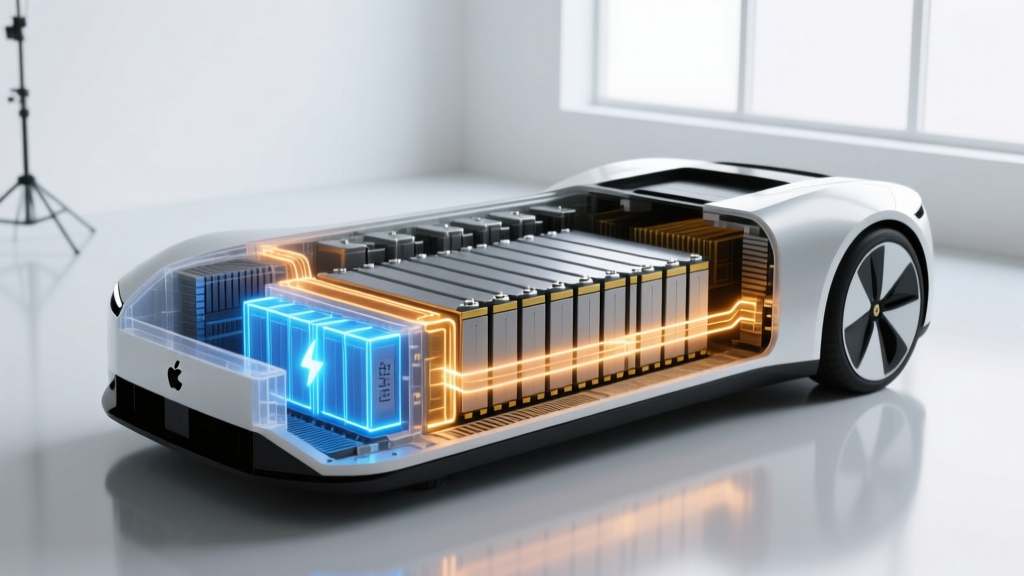
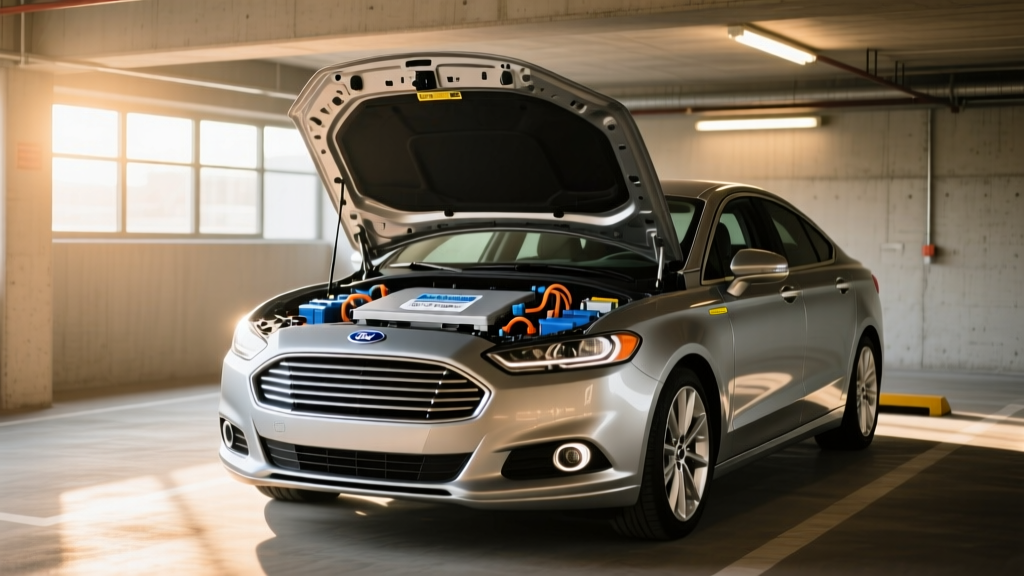
If you own or are considering a used 2012 Ford Fusion Hybrid, the high-voltage traction battery is likely your single biggest ownership question. This first-generation Fusion Hybrid uses a 1.4 kWh nickel-metal hydride (NiMH) battery pack — a fundamentally different chemistry from the lithium-ion packs in modern EVs and newer hybrids. Understanding what that means for longevity, replacement cost, and daily drivability is essential before you commit to this 14-year-old hybrid sedan.
This guide covers the 2012 Fusion Hybrid battery specifically, then expands into broader hybrid and EV battery technology so you can compare what Ford offered in 2012 against what's available today — including lithium iron phosphate (LFP), nickel manganese cobalt (NMC), and emerging solid-state designs.
- Chemistry: Nickel-Metal Hydride (NiMH)
- Capacity: 1.4 kWh (gross)
- Voltage: ~270V nominal
- Electric-only capability: Very limited (brief low-speed assists only; not a plug-in)
- EPA combined fuel economy: 39 MPG (per fueleconomy.gov)
NiMH vs. Modern Lithium-Ion: The Chemistry Gap
The 2012 Fusion Hybrid's NiMH pack was already a mature, proven technology when the car launched. Toyota's Prius had used NiMH since 1997, and Ford licensed similar hybrid powertrain technology for its early hybrids. NiMH batteries are rugged, tolerant of temperature extremes, and have a well-documented degradation profile — but they are heavy, energy-dense only by 2005 standards, and cannot be charged to high states of charge as quickly as modern lithium-ion cells.
Here's how NiMH compares to the dominant lithium-ion chemistries used in 2026-era EVs and hybrids:
| Attribute | NiMH (2012 Fusion) | NMC / NCA (Lithium-Ion) | LFP (Lithium Iron Phosphate) |
|---|---|---|---|
| Energy density | 60–120 Wh/kg | 200–300 Wh/kg | 140–200 Wh/kg |
| Typical cycle life | 500–1,000 full cycles | 1,000–2,000 full cycles | 3,000–6,000+ full cycles |
| Cold-weather performance | Moderate; power drops below freezing | Good with thermal management; range loss 15–30% at 20°F | Poor below freezing without preconditioning; higher internal resistance |
| Cost per kWh (2026) | Legacy / no longer manufactured at scale | $100–$140/kWh at pack level | $70–$100/kWh at pack level |
| Thermal runaway risk | Very low | Low with BMS; higher than LFP | Extremely low |
| Typical application (2026) | Legacy hybrids only | Most BEVs, performance PHEVs | Standard-range BEVs, fleet vehicles, stationary storage |
LFP vs NMC — which is better? There is no universal winner. NMC delivers higher energy density, making it ideal for long-range EVs where pack weight and volume are constrained (e.g., a 350-mile SUV). LFP sacrifices some range per kilogram but offers dramatically longer cycle life, lower cost, and near-zero fire risk — making it the default for standard-range models like the Tesla Model 3 RWD and many Chinese-market EVs. For a daily commuter who charges to 100% nightly, LFP is the superior choice because it tolerates full-charge storage without accelerated degradation.
How Long Does the 2012 Fusion Hybrid Battery Last?
NiMH packs in early Ford and Toyota hybrids have proven surprisingly durable. The 2012 Fusion Hybrid's battery was designed to operate within a narrow state-of-charge window — typically between 40% and 80% SoC — managed by the vehicle's battery management system (BMS). This shallow-cycling strategy dramatically reduces cell stress compared to a full EV that regularly charges from 10% to 90%.
Real-World Degradation Data
Based on owner reports across hybrid forums, iFixit teardowns, and independent hybrid repair shop data:
- Years 1–5 (0–75,000 miles): Minimal measurable degradation; most owners report no change in fuel economy or electric-assist behavior.
- Years 5–10 (75,000–150,000 miles): Gradual capacity loss of approximately 10–20%. You may notice slightly less electric-only assist at low speeds and marginally lower city MPG (36–37 MPG combined vs. the EPA's 39 MPG sticker).
- Years 10–15 (150,000–200,000+ miles): Cell imbalance becomes more likely. Individual NiMH cells may weaken unevenly, triggering the hybrid system warning light. Capacity loss of 20–35% is common at this stage. Some packs fail outright due to a single weak cell dragging down the series-connected string.
2012 Ford Fusion Hybrid Battery Replacement Cost
When the hybrid battery does need replacement — typically between 150,000 and 200,000 miles, or 12–16 years of age — here is what to expect in 2026:
| Option | Cost Range | Notes |
|---|---|---|
| OEM Ford replacement (dealer) | $3,000–$4,500 | New NiMH pack; includes labor. Availability may be limited as Ford phases out legacy hybrid parts. |
| Aftermarket / remanufactured pack | $1,800–$2,800 | Reconditioned cells balanced and tested; 1–3 year warranty typical. Common choice for 14-year-old vehicles. |
| Individual cell replacement | $400–$900 | Requires a hybrid-specialist shop that can identify and swap weak cells. Not all shops offer this. Risk of repeat imbalance. |
| Used salvage pack | $500–$1,200 | From a wrecked Fusion Hybrid. Unknown remaining life — a gamble. Labor adds $400–$700. |
For context, replacing a modern EV's large lithium-ion pack (e.g., a 75–100 kWh BEV battery) costs $8,000–$20,000+ in 2026. The Fusion Hybrid's small 1.4 kWh pack is far less expensive to replace — but it's also far less likely to be covered by any remaining warranty.
What Does the Battery Warranty Cover?
Ford originally warranted the 2012 Fusion Hybrid's traction battery for 8 years or 100,000 miles (whichever came first), with a capacity retention threshold of approximately 70% of original capacity. In states that adopted California's CARB emissions standards (including CA, NY, MA, and others), the hybrid battery warranty extended to 10 years or 150,000 miles.
| Coverage Tier | Duration | Mileage Limit | Capacity Threshold |
|---|---|---|---|
| Federal (standard) | 8 years | 100,000 miles | ~70% of original capacity |
| CARB states | 10 years | 150,000 miles | ~70% of original capacity |
As of 2026, all 2012 Fusion Hybrid battery warranties have expired, even in CARB states. Any battery failure is an out-of-pocket repair. If you're buying a used 2012 Fusion Hybrid today, assume the battery has no warranty protection and budget accordingly.
For comparison, modern EV battery warranties in 2026 are federally mandated at a minimum of 8 years / 100,000 miles for the traction battery, with many automakers (Hyundai, Kia, Tesla) offering 8–10 years / 100,000–150,000 miles with 70% capacity retention thresholds. The IRS §30D tax credit for new EVs also requires battery sourcing compliance, indirectly pushing manufacturers toward longer-lasting, warrantied packs.
Factors That Accelerate (or Preserve) Hybrid Battery Life
The 2012 Fusion Hybrid's NiMH pack is managed conservatively by the BMS, but owner habits still influence longevity:
- Avoid prolonged storage at extreme SoC: If the car will sit for weeks, try to leave it with a moderate charge (the BMS handles this, but a completely dead 12V auxiliary battery can strand the hybrid system).
- Drive regularly: NiMH cells benefit from regular cycling. A Fusion Hybrid driven 3–4 times per week degrades more gracefully than one parked for months.
- Extreme heat is the enemy: Garage parking in Arizona or Texas summers meaningfully extends NiMH life. Sustained cabin temperatures above 100°F accelerate cell degradation.
- Don't ignore warning lights: A hybrid system warning or reduced-power mode means a cell is likely weak. Early diagnosis at a hybrid specialist can save $1,000+ by replacing individual cells instead of the full pack.
- Maintain the cooling system: The Fusion Hybrid's battery has a dedicated cooling fan and duct. A clogged filter or failed fan causes heat buildup and accelerated degradation. Check the battery cooling vent (located near the rear seat) for blockage.
These principles apply broadly across hybrid and EV batteries, though modern lithium-ion packs with active liquid thermal management (like those in the Tesla Model Y, Hyundai Ioniq 5, or Ford Mustang Mach-E) handle temperature extremes far better than the Fusion's air-cooled NiMH system.
How to Check Battery Health on a 2012 Fusion Hybrid
Unlike modern EVs that display a State of Health (SoH) percentage in the infotainment system or app, the 2012 Fusion Hybrid does not provide a native battery health readout to the driver. Here are your options:
- OBD-II scan tool with hybrid data: Tools like the ScanGauge, Torque Pro (with hybrid PID support), or dedicated hybrid diagnostic readers can pull real-time battery data including individual cell voltages, pack voltage, current flow, and temperature. A healthy NiMH pack should show cell voltages within 0.1–0.2V of each other under load. A spread greater than 0.3V signals a weak cell.
- Dealer or hybrid specialist diagnostic: A Ford dealer or independent hybrid shop can run a full battery capacity test using Ford's IDS (Integrated Diagnostic System) software. This typically costs $100–$150 and gives a definitive SoH reading.
- Fuel economy tracking: A practical proxy — if your Fusion Hybrid consistently returns 35–39 MPG combined in mixed driving, the battery is likely in acceptable health. A sustained drop below 33 MPG (excluding winter cold-weather dips) suggests meaningful degradation.
- Regenerative braking behavior: A degraded NiMH pack accepts charge more slowly. If you notice the regen braking feels weaker or the charge indicator rarely reaches the upper range during deceleration, capacity loss is probable.
For modern EV owners, checking SoH is simpler: Tesla displays battery health in the service menu, Hyundai/Kia provide it via the infotainment system, and third-party apps like Recurrent or Tessie can track degradation curves over time using telematics data.
Modern Hybrid & EV Battery Technology: What's Changed Since 2012
The battery landscape has shifted dramatically in 14 years. If you're weighing whether to repair a 2012 Fusion Hybrid or upgrade to a newer electrified vehicle, here's what 2026 offers:
- LFP adoption: Tesla, Ford (for standard-range models), BYD, and others now use LFP chemistry for cost-sensitive, high-durability applications. LFP packs routinely exceed 3,000 full charge cycles with less than 10% degradation — effectively outlasting the vehicle.
- Energy density gains: Modern NMC packs achieve 250–300 Wh/kg at the cell level, enabling 300+ mile ranges in midsize SUVs — something impossible with NiMH.
- 800V architectures: Hyundai/Kia's E-GMP platform and Porsche's Taycan use 800V systems enabling 10–80% DC fast charges in under 18 minutes at 250+ kW peak rates.
- PHEV battery growth: The 2026 Ford Escape PHEV carries a 14.4 kWh lithium-ion pack (10x the Fusion Hybrid's capacity) for 37 miles of EPA-rated electric-only range — a capability the 2012 Fusion simply cannot match.
Emerging Technology: Solid-State and Silicon Anode Batteries
Solid-state batteries — which replace the liquid electrolyte with a solid conductor — promise higher energy density (potentially 400–500 Wh/kg), faster charging, and improved safety. Toyota, Samsung SDI, and QuantumScape have all announced pilot production, with Toyota targeting limited commercial deployment in 2027–2028 vehicles.
Silicon anode technology (used in limited form by companies like Sila Nanotechnologies and Group14) increases the amount of lithium ions a cell can store, boosting energy density by 10–20% over conventional graphite anodes. Mercedes-Benz's EQG and some premium 2026 EVs incorporate early silicon-dominant anodes.
Should You Replace the Battery or Upgrade Vehicles?
This is the core decision for 2012 Fusion Hybrid owners facing a degraded battery. Here's a practical framework:
Repair the battery if:
- The rest of the car is in good condition (transmission, suspension, body)
- A remanufactured pack is available for under $2,500 installed
- You drive under 12,000 miles per year and want to minimize monthly costs
- You lack access to home charging (making a BEV impractical) and a hybrid's fuel savings still matter to you
Upgrade to a newer hybrid or EV if:
- The car has other major issues (transmission, rust, A/C failure) making a $2,500+ battery investment hard to justify
- You want plug-in electric range, modern safety features (AEB, lane-keeping, blind-spot monitoring), or Apple CarPlay/Android Auto
- You have home Level 2 charging access and can benefit from the §30D federal tax credit (up to $7,500 for qualifying new EVs, subject to MSRP, income, and battery-sourcing requirements)
- You drive 15,000+ miles per year — a modern EV's lower per-mile energy cost (typically $0.04–$0.06/mile vs. the Fusion's ~$0.10–$0.12/mile at 39 MPG) recoups a higher purchase price faster
Frequently Asked Questions
How long do EV and hybrid batteries last in years and miles?
NiMH hybrid batteries like the 2012 Fusion's typically last 12–18 years or 150,000–200,000+ miles before significant degradation forces replacement. Modern lithium-ion EV batteries (NMC and LFP) are projected to last 15–25 years or 200,000–500,000 miles depending on chemistry, with LFP lasting significantly longer. Most EV batteries outlive the vehicle they're installed in.
How much does an EV battery cost to replace?
Replacement costs vary enormously by pack size and chemistry. The 2012 Fusion Hybrid's 1.4 kWh NiMH pack costs $1,800–$4,500 to replace. A modern BEV with a 60–80 kWh lithium-ion pack costs $8,000–$18,000+ for a full OEM replacement. However, full pack replacements are rare — most failures involve individual modules or cells, which cost significantly less.
What does the battery warranty cover?
Federal law mandates a minimum 8-year/100,000-mile warranty on hybrid and EV traction batteries. Most manufacturers warrant the battery against defects and capacity loss below 70% of original capacity. The 2012 Fusion Hybrid's original warranty has expired as of 2020 (or 2022 in CARB states). Always check current warranty terms on new purchases via the manufacturer or NHTSA.
How do I check and maximize battery health?
For the 2012 Fusion Hybrid, use an OBD-II hybrid-capable scan tool to check individual cell voltages, or visit a hybrid specialist for a capacity test. For modern EVs, use the manufacturer's app or third-party telematics tools. To maximize health: avoid frequent DC fast charging on NMC packs, don't store the vehicle at 100% or 0% SoC for extended periods, keep the battery cooling system maintained, and precondition the battery before fast charging in cold weather.
LFP vs NMC — which battery chemistry is better for me?
Choose LFP if you prioritize longevity, lower cost, and plan to charge to 100% daily (LFP tolerates full-charge storage well). Choose NMC if you need maximum range in a lighter package, frequently take road trips requiring fast charging, or drive in very cold climates where NMC's lower internal resistance provides better winter performance. Neither chemistry is universally superior — the right choice depends on your driving pattern.