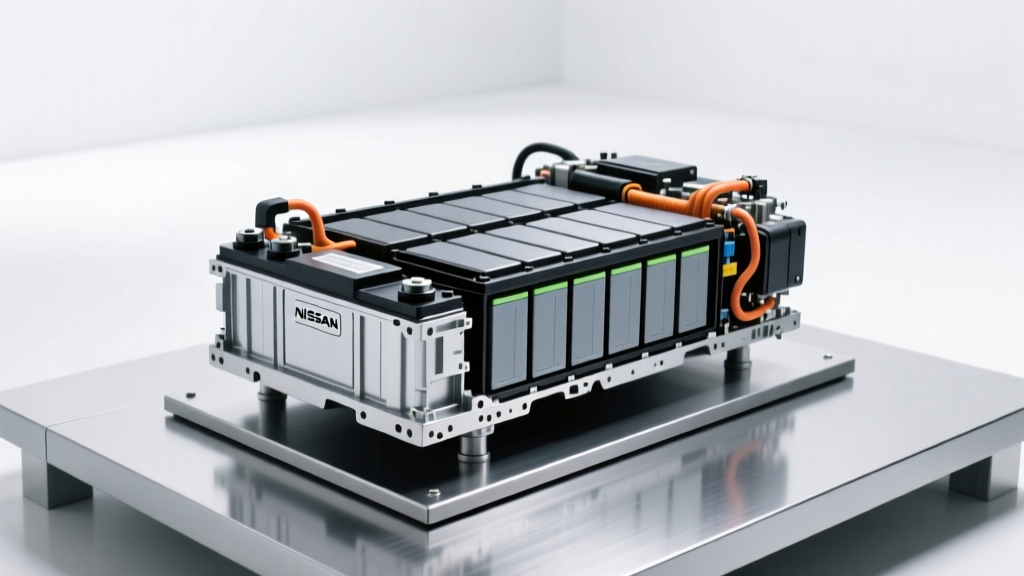
If you own a 2011 Nissan Leaf—or any early-generation electric vehicle—you have likely noticed reduced range on your dashboard. The original 24 kWh lithium-ion pack in the 2011 Leaf was rated for 73 miles of EPA range when new. By 2026, many of these packs have degraded to 60–70% of their original capacity, making a 2011 Nissan Leaf battery replacement a practical necessity for daily drivers who need more than 40–50 miles per charge.
But this is not just a Leaf story. Every EV owner eventually faces battery degradation, warranty questions, and the specter of replacement costs. This guide covers everything from chemistry fundamentals to real-world degradation data, replacement pricing across models, and actionable steps to maximize your pack's lifespan.
How Long Do EV Batteries Actually Last?
The short answer: modern EV batteries are designed to last 15–20 years or 150,000–200,000+ miles before degrading to 70–80% of original capacity. But "last" depends on what you consider acceptable range loss.
According to data aggregated by Recurrent Auto, which monitors over 15,000 EVs in real-world conditions, the average EV battery loses roughly 5–10% of its capacity in the first 50,000 miles, then degradation slows significantly. Most packs retain 85–90% of original capacity at 100,000 miles.
The 2011 Nissan Leaf is an outlier in this data—for good reason. Early Leaf packs used a passive air-cooling system rather than the active liquid thermal management found in Tesla, GM, Hyundai, and most modern platforms. Heat is the primary enemy of lithium-ion cells, and Leafs driven in hot climates (Arizona, Texas, Southern California) saw accelerated degradation, with some packs dropping below 70% State of Health (SoH) within 5–7 years.
- 2011–2015 Nissan Leaf (24 kWh, air-cooled): 20–35% capacity loss after 10–15 years; 50–70% SoH common
- 2013–2018 Tesla Model S (liquid-cooled): 8–15% capacity loss at 100,000+ miles
- 2018–2024 Nissan Leaf Plus (62 kWh, still air-cooled): 10–18% loss at 60,000–80,000 miles
- 2020+ Hyundai Ioniq 5 / Tesla Model Y (liquid-cooled, modern chemistry): 3–8% loss at 50,000 miles
The takeaway: liquid-cooled battery packs with modern management systems degrade far more slowly than early air-cooled designs. If you are shopping for a used EV, thermal management architecture matters as much as the odometer reading.
2011 Nissan Leaf Battery Replacement: What It Costs in 2026
Nissan no longer sells brand-new 24 kWh packs for the 2011 Leaf through dealerships. Most replacements today come from one of three sources:
- Refurbished OEM packs: Third-party EV shops source used Leaf packs, test and balance cells, and sell them with limited warranties. Typical cost: $3,500–$5,500 installed.
- Upgraded OEM packs: Some specialists retrofit 30 kWh (2016+) or 40 kWh (2018+) packs into 2011–2015 Leaf chassis, restoring 80–120+ miles of range. Cost: $5,500–$8,500 installed.
- Used/salvage packs: Pulled from wrecked Leafs with low mileage. Least expensive at $2,000–$3,500 (parts only), but SoH is a gamble and installation adds $800–$1,500 in labor.
For context, here is how Leaf replacement costs compare to other popular EVs:
| Vehicle | Battery Size | Replacement Cost | Typical Need Window |
|---|---|---|---|
| 2011–2015 Nissan Leaf | 24 kWh | $3,500–$8,500 | 8–15 years |
| 2018–2023 Nissan Leaf Plus | 62 kWh | $8,000–$12,000 | 12–18 years (est.) |
| 2012–2020 Tesla Model S | 60–100 kWh | $12,000–$20,000 | 10–15 years |
| 2017–2023 Chevy Bolt EV | 60–65 kWh | $9,000–$14,000 | 12–18 years (est.) |
| 2022+ Hyundai Ioniq 5 | 58–77.4 kWh | $10,000–$16,000 | 15–20 years (est.) |
One critical note: for most modern EVs with liquid-cooled packs, battery replacement within the first 10 years or 100,000 miles is rare. Many packs will outlast the vehicle itself. The 2011 Leaf's accelerated degradation is a product of its era, not an indictment of EV technology broadly.
Understanding Battery Chemistry: LFP vs NMC/NCA
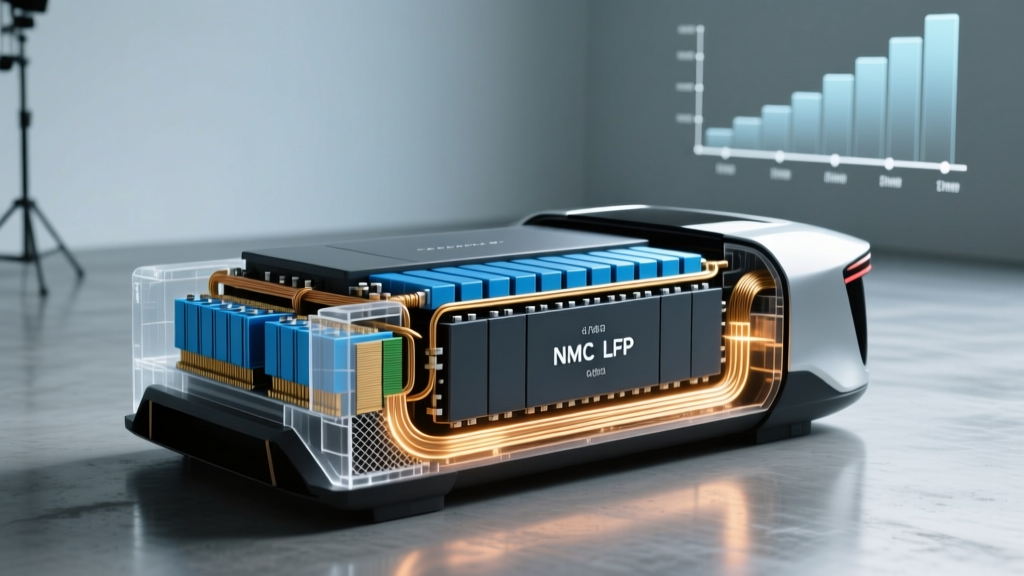
The 2011 Nissan Leaf used a lithium manganese oxide (LMO) cathode chemistry—an early formulation that offered decent power density but poor thermal stability and faster degradation compared to modern alternatives. Today's EV market is dominated by two chemistries: NMC/NCA (nickel manganese cobalt / nickel cobalt aluminum) and LFP (lithium iron phosphate).
Here is how they compare on the metrics that matter to owners:
| Attribute | LFP (Lithium Iron Phosphate) | NMC / NCA |
|---|---|---|
| Energy Density | Lower (~150–180 Wh/kg) | Higher (~220–300 Wh/kg) |
| Cycle Life | 3,000–5,000+ cycles | 1,000–2,000 cycles |
| Degradation Rate | Slower; tolerates 100% SoC daily | Faster; 80% daily SoC recommended |
| Cold-Weather Performance | Weaker; more range loss below 32°F | Better low-temp efficiency |
| Cost | Lower (no cobalt/nickel) | Higher (critical mineral costs) |
| Thermal Stability | Excellent; lower fire risk | Good with active cooling |
| Common In (2026) | Tesla Model 3 RWD, Model Y RWD, Ford Mustang Mach-E Select (base) | Tesla Long Range, Hyundai Ioniq 5/6, Rivian, GM Ultium vehicles |
Which is better? It depends on your use case. LFP is the clear winner for daily commuting, ride-share drivers, and anyone who wants maximum longevity with minimal care (you can charge to 100% regularly without accelerated degradation). NMC/NCA wins for long-range needs, cold climates, and performance-oriented vehicles where energy density translates directly to more miles in a lighter pack.
For a 2011 Leaf owner considering replacement, the original pack is neither LFP nor modern NMC—it is an older LMO chemistry. Upgrading to a refurbished 40 kWh or 62 kWh pack (which use newer NMC chemistry) will deliver meaningfully better longevity and range than the original 24 kWh unit.
What Does the EV Battery Warranty Actually Cover?
Federal law mandates that EV batteries carry a minimum warranty of 8 years or 100,000 miles (whichever comes first). In California and states adopting CARB (California Air Resources Board) emissions standards, the requirement extends to 10 years or 150,000 miles. Most automakers match or exceed these thresholds.
However, the critical detail is the capacity retention threshold—the point at which the manufacturer considers the battery "failed" and triggers a warranty replacement or repair.
| Manufacturer | Warranty Period | Capacity Threshold | Notes |
|---|---|---|---|
| Nissan (Leaf) | 8 yr / 100,000 mi | Below 9 of 12 capacity bars (~70%) | Original 2011 Leaf warranty has expired |
| Tesla | 8 yr / 100,000–150,000 mi (varies by model) | Below 70% | Module-level repair possible, not always full pack swap |
| Hyundai / Kia | 10 yr / 100,000 mi | Below 70% | Strongest standard warranty in the market |
| GM (Ultium) | 8 yr / 100,000 mi | Below 70% | Modular pack design allows section replacement |
| Ford | 8 yr / 100,000 mi | Below 70% | Covers battery and hybrid components |
For the 2011 Nissan Leaf, the original 8-year/100,000-mile battery warranty expired no later than 2019. Any degradation-related replacement is now an out-of-pocket expense. Nissan's warranty used a "capacity bar" system displayed on the dashboard—12 bars when new, with warranty coverage triggering below 9 bars. This system was opaque compared to the percentage-based SoH readouts in modern EVs.
Warranties cover defects and excessive degradation, not damage from accidents, flooding, or improper modifications. If your pack drops below the threshold within the warranty window, the manufacturer will either replace the entire pack, swap in a refurbished unit, or (in modular designs like GM's Ultium) replace individual modules.
Factors That Accelerate Battery Degradation
Not all miles are equal when it comes to battery wear. Research from the National Renewable Energy Laboratory (NREL) and real-world fleet data identify these primary degradation accelerators:
- Limit DC fast charging: Frequent use of Level 3 DC fast chargers (50 kW+) generates significant heat. For daily needs, rely on Level 2 home charging (6–19.2 kW). Use DC fast charging for road trips, not routine top-ups.
- Avoid extreme State of Charge: For NMC/NCA batteries, keep daily SoC between 20–80%. Charging to 100% regularly accelerates cathode wear. LFP batteries are an exception—manufacturers recommend periodic 100% charges for cell balancing.
- Minimize heat exposure: Parking in direct sunlight in hot climates, repeated high-speed driving in summer heat, and fast charging in 95°F+ temperatures all stress cells. The 2011 Leaf's air-cooled pack is especially vulnerable—garage parking and shaded charging make a measurable difference.
- Don't store at 0% or 100%: If leaving your EV parked for weeks, set SoC to 50–60%. Prolonged storage at full charge or near-empty causes irreversible capacity loss.
- Use preconditioning: Many modern EVs let you precondition the battery (warm it to optimal temperature) before fast charging or departure. This reduces charge time and cell stress. The 2011 Leaf lacks this feature, which is another reason its packs degraded faster.
- Drive smoothly: Aggressive acceleration and heavy regenerative braking at high SoC both generate internal cell heat. Moderate driving extends pack life.
The 2011 Leaf's air-cooled design makes it disproportionately affected by every factor on this list. Owners in temperate climates (Pacific Northwest, Northern Europe) have reported significantly better SoH retention than those in the Southwest, underscoring how much thermal management matters.
How to Check Your EV Battery Health (State of Health)
State of Health (SoH) is expressed as a percentage: 100% means the battery holds its original rated capacity; 80% means it holds 80% of what it did when new. Here is how to check it across platforms:
- 2011–2017 Nissan Leaf: The dashboard displays capacity bars (out of 12). Each bar represents roughly 8.3% of original capacity. 12 bars = ~100% SoH; 9 bars = ~75% SoH. For a more precise reading, use an OBD-II dongle with the LeafSpy app (approximately $30 for the dongle, $20 for the app), which reads actual SoH percentage, cell voltage variance, and temperature data directly from the BMS (Battery Management System).
- Tesla: The Tesla app and in-car service menu do not display SoH directly. Third-party tools like TeslaFi or Scan My Tesla can estimate SoH from charge/discharge data. Alternatively, compare your actual range at 100% charge (after a full balancing charge) to the original EPA rating.
- Hyundai/Kia/GM/Ford: Most 2020+ EVs display SoH or a battery health indicator in the infotainment system or via the manufacturer's app. Dealerships can run a formal battery health check that produces a printout with module-level voltage data.
- Universal method: Charge to 100%, drive to near-empty, and measure actual miles driven against the EPA original rating. If your 230-mile-rated EV delivers 175 miles in moderate conditions, your SoH is approximately 76%.
For the 2011 Leaf specifically, LeafSpy is the gold standard. It reveals not just overall SoH but individual cell pair voltages—critical for identifying a single weak cell module that may be dragging down the entire pack. A large voltage spread (more than 0.1V between cell pairs at rest) often indicates one or more failing modules, which can sometimes be replaced individually for $200–$500 per module rather than replacing the entire pack.
Emerging Battery Technology: What's Next
While 2011 Leaf owners are managing today's replacement realities, the broader battery industry is advancing rapidly. Here is a realistic look at what is coming—and when:
Solid-state batteries: These replace the liquid electrolyte with a solid material, promising higher energy density (potentially 400–500 Wh/kg vs. today's 250–300 Wh/kg for NMC), faster charging, and improved safety. Toyota has announced a solid-state EV targeting 2027–2028, and Nissan has a pilot production line running. However, manufacturing scale-up remains the bottleneck. Realistic mass-market availability: 2028–2032. This technology will not help current Leaf owners, but it signals that future EVs will have dramatically longer-lasting, faster-charging packs.
Silicon-dominant anodes: Companies like Sila Nanotechnologies and Group14 are replacing graphite anodes with silicon-based materials, increasing energy density by 20–40% without changing cathode chemistry. Mercedes-Benz's G-Wagon EV (2025) uses silicon anode cells from Sila. Expect broader adoption across mainstream EVs by 2027–2029.
Sodium-ion batteries: CATL and other Chinese manufacturers have begun producing sodium-ion cells for lower-cost, shorter-range EVs. These use no lithium, cobalt, or nickel, making them cheaper and more supply-chain-resilient. Energy density is lower (~120–160 Wh/kg), making them best suited for city cars and fleet vehicles. US availability is 2027+ at earliest.
None of these technologies are currently available for purchase in the US market. Treat any claims of "solid-state EVs on sale now" with skepticism—announced timelines frequently slip.
Frequently Asked Questions
Is it worth replacing the battery in a 2011 Nissan Leaf?
It depends on the car's overall condition and your needs. A 2011 Leaf in good shape with a refurbished 40 kWh pack can deliver 90–110 miles of real-world range and serve as a reliable commuter for another 5–8 years at a total cost of $5,000–$8,500. That is significantly cheaper than a new EV, even after incentives. However, if the car has other issues (suspension, interior wear, rust), the investment may not be justified. The Leaf's resale value rarely exceeds $5,000–$7,000 even with a fresh battery.
Can I upgrade my 2011 Leaf to a larger battery?
Yes. Several EV specialty shops offer "battery upgrades" that retrofit 30 kWh, 40 kWh, or even 62 kWh packs into the 2011–2015 Leaf chassis. A 40 kWh pack restores roughly 120–140 miles of EPA range; a 62 kWh pack can push past 170 miles. This requires compatible BMS software and sometimes minor wiring modifications. Expect to pay $5,500–$8,500 for a professional upgrade with warranty.
Does fast charging ruin the 2011 Leaf battery?
The 2011 Leaf's CHAdeMO DC fast-charging port tops out at roughly 50 kW, which is modest by today's standards. However, because the pack is air-cooled and only 24 kWh, even 50 kW charging generates substantial heat. Repeated daily fast charging in hot weather has been shown to accelerate degradation by 2–5% annually compared to Level 2-only charging. If you must fast-charge regularly, try to do so in cooler morning hours and avoid charging above 80% SoC.
How do I know if my Leaf's 12V battery is the problem, not the main pack?
The 12V auxiliary battery powers the Leaf's electronics, lights, and computers—but not the drivetrain. If your Leaf won't start, shows error messages, or has flickering dash lights, the 12V battery (a standard lead-acid unit, roughly $120–$180 to replace) is the likely culprit. If the car drives but range is severely reduced, that points to the high-voltage traction battery. These are entirely separate systems.
What is the cheapest way to extend my 2011 Leaf's battery life?
The single most impactful step is to avoid fast charging in hot weather and charge primarily on a Level 2 home charger (240V, 16–30 amps). Set your charge limit to 80% for daily use (the Leaf's timer function can help). Park in shade or a garage whenever possible. Install LeafSpy to monitor SoH monthly, catching cell imbalances early. These steps cost nothing and can add years of usable life to an aging pack.