The 2011 Nissan Leaf Battery: A Pioneering Pack Under the Microscope
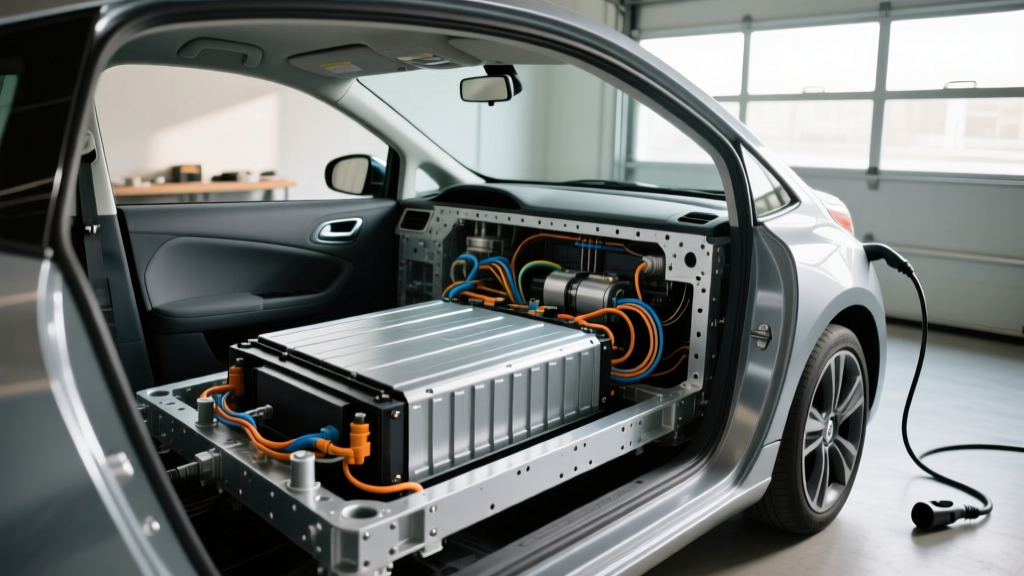
The first-generation Nissan Leaf launched in late 2010 as a 2011 model with a 24 kWh lithium-ion battery pack — a landmark moment that made mass-market electric mobility a reality. More than a decade later, thousands of these early Leafs are still on the road, but their batteries tell a complicated story. The 2011 Nissan Leaf battery used a manganese dioxide cathode chemistry (a variant distinct from today's dominant NMC and LFP formulations), lacked active thermal management, and relied on passive air cooling. Those design decisions have had lasting consequences for longevity, making this pack one of the most studied EV batteries in the real world.
If you own a 2011 Leaf, are considering buying one used, or simply want to understand how early EV batteries age, this guide covers degradation data, replacement economics, and practical battery care — all grounded in real numbers.
Understanding EV Battery Chemistry: Then vs. Now
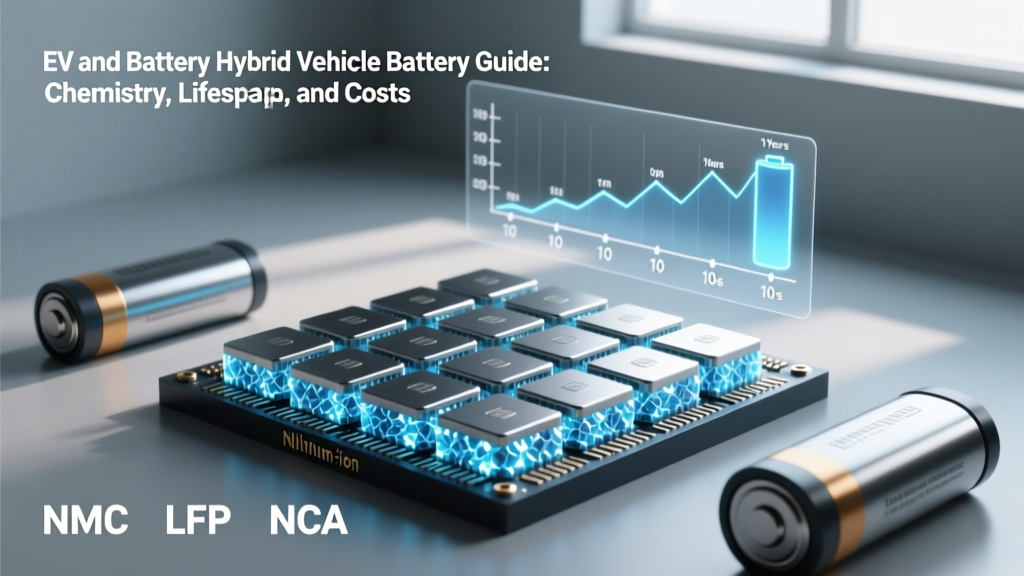
To put the 2011 Leaf's battery in context, it helps to understand the chemistry landscape of modern EV batteries. Today's market splits primarily between two chemistries: NMC (nickel manganese cobalt) and LFP (lithium iron phosphate). The 2011 Leaf's AESC-manufactured pack used a lithium manganese oxide (LMO) variant — a chemistry chosen for cost and thermal stability but with lower energy density and faster degradation than modern alternatives.
| Attribute | LFP (Lithium Iron Phosphate) | NMC/NCA (Nickel-based) | 2011 Leaf LMO (Manganese) |
|---|---|---|---|
| Energy Density | ~160 Wh/kg (lower) | ~250-300 Wh/kg (higher) | ~140 Wh/kg (lowest) |
| Cycle Life | 3,000-5,000+ cycles | 1,000-2,000 cycles | ~800-1,200 cycles |
| Cold-Weather Performance | Poor below 32°F | Better in cold | Moderate |
| Cost per kWh | Lower ($100-$130/kWh) | Higher ($130-$170/kWh) | N/A (discontinued) |
| Thermal Stability | Excellent | Good with active cooling | Poor (passive air cooling) |
| Typical Degradation | ~1-2% per year | ~2-3% per year | ~3-5%+ per year (climate-dependent) |
LFP vs. NMC — which is better and why? It depends on the use case. LFP offers superior cycle life and safety at lower cost but sacrifices energy density and cold-weather range. NMC delivers more range per kilogram and performs better in winter but degrades faster and costs more. The 2011 Leaf's LMO chemistry sits below both in most metrics, particularly because the pack had no liquid cooling — a critical factor in hot climates where battery temperatures routinely exceeded optimal operating ranges.
How Long Do EV Batteries Last? Degradation Data for the 2011 Leaf
Industry-wide, modern EV batteries are designed to retain 70-80% of original capacity after 8-10 years or 100,000-150,000 miles. According to data from fueleconomy.gov and owner-reported surveys, the average EV loses roughly 1-2% of capacity per year under normal conditions. The 2011 Leaf's experience diverges sharply from this average.
2011 Nissan Leaf Battery Degradation — Real-World Data Points
Based on aggregated owner reports, LeafSpy community data, and Nissan service records:
| Vehicle Age | Average Capacity Retained | Estimated Remaining Range (from 73 mi EPA) |
|---|---|---|
| Year 1 (2012) | ~95-97% | ~70-71 miles |
| Year 3 (2014) | ~85-90% | ~62-66 miles |
| Year 5 (2016) | ~75-85% | ~55-62 miles |
| Year 8 (2019) | ~60-75% | ~44-55 miles |
| Year 10+ (2021-2026) | ~50-70% | ~37-51 miles |
| Year 14-15 (2025-2026) | ~40-65% | ~29-47 miles |
Key variable: climate. Leafs in hot climates (Arizona, Texas, Southern California) experienced significantly faster degradation — often losing 5-7% per year — compared to 2-3% annually in temperate Pacific Northwest or Northern European climates. The passive air-cooling system simply couldn't keep cell temperatures in check during summer months, accelerating chemical aging.
The 2011 Leaf's original EPA-rated range was 73 miles. By 2026, a 14-to-15-year-old pack in a hot climate may deliver as little as 29 miles of real-world range on a full charge — a 60% loss. In cooler climates, owners report 45-50 miles, which is still usable for short commutes but a far cry from the sticker number.
What Does the Nissan Leaf Battery Warranty Cover?
Nissan provided two battery-related warranties for the 2011 Leaf:
| Warranty Type | Coverage Period | What It Covers | Capacity Threshold |
|---|---|---|---|
| Lithium-Ion Battery Capacity Warranty | 8 years / 100,000 miles | Capacity loss below threshold | Below 9 of 12 capacity bars (~70-75%) |
| Battery Component Warranty | 5 years / 60,000 miles | Defects in materials/workmanship | N/A (component failure) |
Important context for 2026: Both warranty periods have expired for all 2011 Leaf vehicles. The 8-year/100,000-mile capacity warranty lapsed no later than 2019 for the last 2011 model-year vehicles sold. Any battery replacement or refurbishment is now an out-of-pocket expense for the owner. Nissan's capacity bar system (displayed on the dashboard as 12 bars when new) was the primary SoH indicator — dropping below 9 bars triggered a warranty claim. Many owners reported the bar-drop system as imprecise, with bars sometimes falling in clusters rather than linearly.
2011 Nissan Leaf Battery Replacement Cost: What to Expect
Battery replacement for the 2011 Leaf is a well-documented process, and the market has evolved as the vehicle has aged. Here's a realistic cost breakdown as of 2026:
| Replacement Option | Battery Capacity | Estimated Cost (Parts + Labor) | Range After Replacement |
|---|---|---|---|
| Used/refurbished 24 kWh pack | 24 kWh | $3,500 - $5,000 | ~55-70 miles (depending on pack SoH) |
| Nissan-remanufactured 24 kWh pack | 24 kWh | $5,500 - $6,500 | ~65-73 miles |
| Aftermarket upgrade to 30 kWh pack | 30 kWh | $6,000 - $8,500 | ~80-95 miles |
| Aftermarket upgrade to 40 kWh pack | 40 kWh | $8,000 - $12,000 | ~110-130 miles |
When is replacement typically needed? Most 2011 Leaf owners who drove the car daily began considering replacement between years 8 and 12, when range dropped below 40 miles and the car became impractical for even modest commutes. However, for second owners who purchased the Leaf as a low-cost local runabout, many packs soldier on with reduced range that still covers 20-30 mile daily needs.
The 40 kWh upgrade (sourced from later-generation Leaf packs or aftermarket specialists) has become popular among enthusiasts who want to extend the car's useful life. The economics are tricky: a $10,000 battery upgrade on a car with a resale value of $4,000-$6,000 is hard to justify purely on financial grounds, but owners who love the car and lack home-charging alternatives sometimes find it worthwhile.
Factors That Accelerate (or Preserve) EV Battery Health
The 2011 Leaf's battery is particularly sensitive to abuse because of its lack of active thermal management. Here's what the data shows about the factors that matter most:
Battery Care Checklist — Applicable to All EVs, Critical for the 2011 Leaf
- Avoid frequent DC fast charging: The 2011 Leaf's CHAdeMO port supports up to ~50 kW DC fast charging. Every fast-charge session generates heat that the passive cooling system struggles to dissipate. Owners who relied primarily on Level 2 (3.3 kW on the 2011 model) charging show measurably better long-term SoH than frequent DCFC users.
- Minimize exposure to extreme heat: Parking in direct sunlight in hot climates was the single largest degradation accelerant for early Leafs. Garage parking or shaded spots made a measurable difference — data from LeafSpy users in Phoenix vs. Seattle showed 15-25% divergence in capacity retention at the 8-year mark.
- Avoid sustained 100% SoC: Storing the car fully charged for extended periods stresses the cells. Nissan's own guidance recommended charging to 80% for daily use (a feature available in the car's timer settings) and reserving 100% charges for trips requiring maximum range.
- Don't let SoC drop to 0% for extended periods: Deep discharge below the buffer zone can cause cell imbalance and accelerated degradation. If storing the vehicle, maintain ~50% SoC.
- Drive moderately in extreme temperatures: Aggressive acceleration and regen in very hot or cold conditions generates excess heat in the pack. Gentle driving in summer and preconditioning in winter reduce thermal stress.
- Use Level 2 charging as your primary method: The 2011 Leaf's onboard charger maxes at 3.3 kW (Level 2), adding roughly 10-12 miles of range per hour. This slower rate is inherently gentler on the battery chemistry.
How to Check Battery Health: Monitoring State of Health (SoH)
The 2011 Leaf provides two primary ways to assess battery health:
1. Dashboard Capacity Bars: The instrument cluster displays up to 12 bars representing battery capacity. A new battery shows all 12 bars. Each lost bar represents roughly a 6-8% drop in capacity. When the display drops below 9 bars (the warranty threshold when it was active), the pack has lost approximately 25-30% of its original capacity. This system is crude — it doesn't give a precise percentage and is known to update in steps rather than smoothly.
2. LeafSpy Pro (OBD-II Diagnostic Tool): This third-party app, paired with an OBD-II Bluetooth dongle (typically $30-$50 for the hardware, ~$20 for the Pro app), reads the battery management system (BMS) directly and provides:
- State of Health (SoH) as a precise percentage
- Individual cell voltage readings (identifying weak or imbalanced cells)
- Battery temperature in real time
- Charge/discharge cycle count
- Hx value (a Nissan-specific internal health metric)
LeafSpy has become the de facto standard for Leaf owners and used-car buyers evaluating pack health. A 2011 Leaf showing 70%+ SoH on LeafSpy in 2026 is considered above-average for its age; anything below 55% signals significant degradation and likely range below 40 miles.
How do I maximize battery health going forward? For a 2011 Leaf in 2026, the damage from years of passive cooling exposure is largely done. The most impactful remaining actions are: charge to 80% daily (use the car's charge timer), avoid DC fast charging except when necessary, park in shade or a garage, and use LeafSpy to monitor cell balance. If one or two cells are significantly lower than the rest, a professional cell-balancing service may recover some capacity.
Looking Ahead: Solid-State and Next-Generation Battery Technology
The battery industry is pursuing several next-generation technologies that will eventually make packs like the 2011 Leaf's look primitive by comparison. Here's a realistic timeline grounded in current industry announcements:
Solid-state batteries replace the liquid electrolyte with a solid material, promising higher energy density (~400-500 Wh/kg), faster charging, and improved safety. Toyota has announced plans for commercial solid-state EV production targeting 2027-2028, initially in limited-run vehicles. Nissan has stated it will have a solid-state pilot production line operational by 2028, with mass production aimed at 2029-2030. Samsung SDI and QuantumScape are also targeting 2027-2029 for initial automotive deployments.
Silicon anode technology (used by companies like Sila Nanotechnologies and Group14) increases energy density by replacing graphite anodes with silicon-dominant materials. This tech is already entering production in limited applications and is expected to reach mainstream EV packs by 2027-2028, offering 10-20% more energy density without the full manufacturing overhaul that solid-state requires.
Sodium-ion batteries are emerging as a low-cost alternative for budget EVs and stationary storage, with CATL already shipping sodium-ion packs in Chinese-market vehicles. These won't appear in US-market vehicles until approximately 2028-2030 and will likely target affordable compact cars rather than performance vehicles.
None of these technologies are available today, and none will help a 2011 Leaf owner directly. But they signal that the degradation and cost challenges of early EV batteries are being systematically addressed — future used EV buyers will face far less battery anxiety.
Frequently Asked Questions
How long do EV batteries last in years and miles?
Modern EV batteries (2020 and later) are engineered to retain 70-80% of original capacity after 8-10 years or 100,000-150,000 miles. Many packs last the full life of the vehicle. The 2011 Nissan Leaf is an outlier — its passively cooled LMO pack degraded faster, with many showing 50-70% retention after 10-12 years. According to NHTSA data and industry analyses, the average EV battery will outlast the car it's installed in, provided it has active thermal management.
How much does a 2011 Nissan Leaf battery cost to replace?
A used or refurbished 24 kWh replacement pack costs between $3,500 and $5,000 installed. A Nissan-remanufactured pack runs $5,500-$6,500. Aftermarket upgrades to 30 kWh or 40 kWh packs cost $6,000-$12,000 respectively. For comparison, a new EV battery pack in a modern vehicle (60-80 kWh) typically costs $8,000-$15,000+ to replace, though these modern packs rarely need replacement within the vehicle's useful life.
What does the battery warranty cover, and is it still valid?
Nissan's original battery warranty covered capacity loss below ~70-75% (9 of 12 bars) for 8 years/100,000 miles and component defects for 5 years/60,000 miles. As of 2026, all 2011 Leaf battery warranties have expired. For newer EVs, federal law mandates a minimum 8-year/100,000-mile battery warranty, and many manufacturers (Hyundai, Tesla, BMW) extend this to 8 years/100,000-150,000 miles with a 70% capacity retention threshold.
Is it worth replacing the battery in a 2011 Nissan Leaf?
This depends on your situation. If the car is otherwise in good condition, you have home Level 2 charging, and your daily driving needs are under 30 miles, a $4,000-$5,000 refurbished pack can extend the car's life by another 5-8 years at a fraction of the cost of a new EV. If you need reliable range above 60 miles or lack home charging, the investment is harder to justify — that money could serve as a down payment on a modern used EV with 200+ miles of range and an active warranty.
LFP vs. NMC — which battery chemistry is better for longevity?
LFP (lithium iron phosphate) wins on longevity, offering 3,000-5,000+ charge cycles and typically losing only 1-2% capacity per year. NMC (nickel manganese cobalt) offers higher energy density — meaning more range in a smaller, lighter pack — but typically manages 1,000-2,000 cycles with 2-3% annual degradation. If you prioritize maximum vehicle lifespan and don't need the extra range, LFP is the more durable choice. If range-per-charge and cold-weather performance matter more, NMC remains the better option. Both are vastly superior to the 2011 Leaf's LMO chemistry.
How do I check my 2011 Leaf's battery health before buying?
Use LeafSpy Pro with an OBD-II dongle to read the exact State of Health percentage, individual cell voltages, and cycle count. Check the dashboard capacity bars (12 is perfect; below 9 indicates significant loss). Ask for the car's charging history — frequent DC fast charging and hot-climate ownership are red flags. Test-drive the car with the climate control on and note how quickly the range estimate drops. Per fueleconomy.gov, the 2011 Leaf rated at 73 miles EPA range and 99 MPGe combined — compare your observed efficiency against that baseline.
Bottom Line: The 2011 Leaf Battery in 2026
The 2011 Nissan Leaf battery is a case study in how far EV technology has come — and how much early adopters sacrificed for the cause. Its 24 kWh LMO pack with passive air cooling was adequate for 2011 but has not aged gracefully, particularly in hot climates. Replacement costs of $3,500-$12,000 are manageable for some owners but exceed the car's market value in most cases.
For current owners: monitor SoH with LeafSpy, charge slowly, avoid heat, and plan your exit strategy — whether that's a battery swap, selling the car for parts, or upgrading to a modern EV. For used-car shoppers: a 2011 Leaf with 70%+ SoH can still serve as a cheap local commuter, but go in with eyes open about the 35-50 mile real-world range you'll likely experience. The good news is that every EV built since 2018 benefits from active thermal management and superior chemistry, making the 2011 Leaf's battery challenges a thing of the past.