From a 2011 Mazda 3 Battery to Modern EV Packs: A Complete Battery Guide
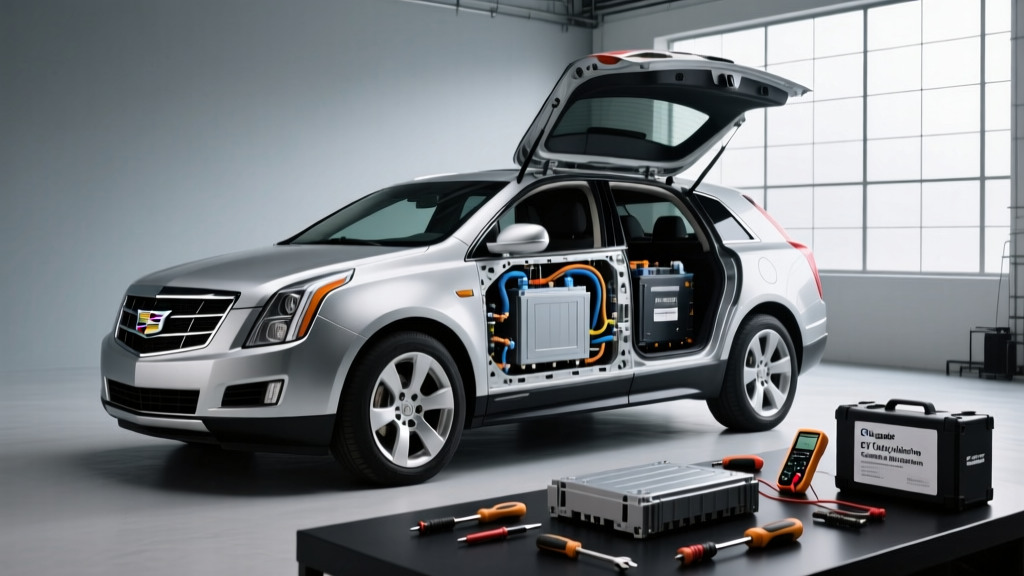
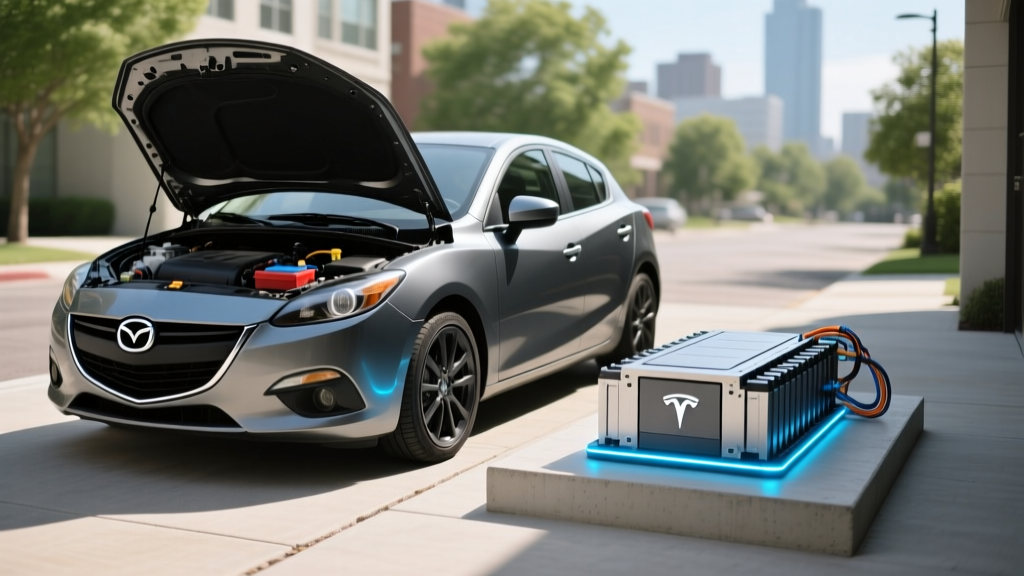
If you've searched for a 2011 Mazda 3 battery, you're likely dealing with a familiar scenario: your compact car won't start, the lights are dim, and you need a new 12V lead-acid battery — typically a Group 35 or Group 26R unit costing $120–$220 at an auto parts store. It's a straightforward swap, and it highlights a question many drivers now face as they consider switching to an electric vehicle: how different is an EV battery, and how much will it cost when it eventually needs replacing?
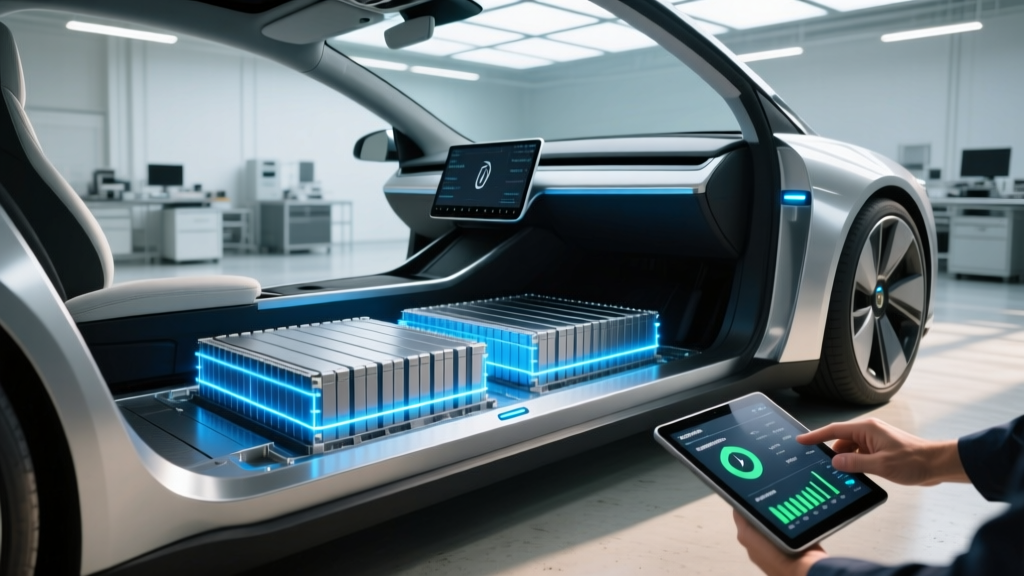
The answer is: fundamentally different in chemistry, scale, cost, and lifespan. The 12V battery in your 2011 Mazda 3 stores roughly 0.5–0.7 kWh of energy and cranks a starter motor. A modern EV traction battery stores 60–100+ kWh, powers a 200–500+ hp electric motor, and is engineered to last the life of the vehicle. This guide breaks down everything you need to know about EV battery technology in 2026 — chemistry, degradation, warranties, replacement costs, and how to maximize longevity — so you can make an informed decision whether you're maintaining a gas car or shopping for your first EV.
LFP vs NMC/NCA: Understanding EV Battery Chemistry
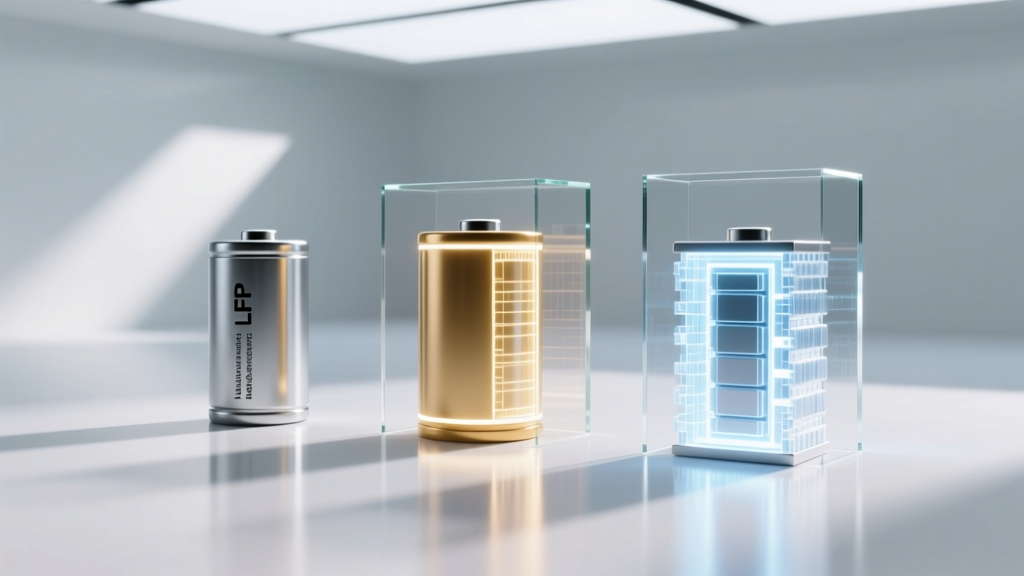
The two dominant lithium-ion chemistries in today's EVs are LFP (lithium iron phosphate) and NMC/NCA (nickel manganese cobalt / nickel cobalt aluminum). Each has distinct trade-offs that affect range, longevity, cold-weather performance, and price.
| Attribute | LFP (Lithium Iron Phosphate) | NMC/NCA (Nickel-Based) |
|---|---|---|
| Energy Density | Lower (~160–180 Wh/kg cell-level) | Higher (~220–300 Wh/kg cell-level) |
| Typical Range per Pack Size | Slightly less range for same physical pack | More range for same physical pack |
| Cycle Life | 3,000–5,000+ cycles to 80% capacity | 1,000–2,000 cycles to 80% capacity |
| Cold-Weather Performance | Reduced efficiency below freezing; slower charging | Better cold-weather discharge and charge acceptance |
| Cost per kWh | Lower — no cobalt or nickel | Higher — commodity-sensitive metals |
| Recommended SoC for Daily Use | 100% is fine; manufacturers encourage it | 80% daily; 100% only before long trips |
| Thermal Stability | Excellent — lower risk of thermal runaway | Good, but requires more active thermal management |
| Examples (2026 Models) | Tesla Model 3 RWD, BYD Seal, Ford Mustang Mach-E Select (LFP option) | Hyundai Ioniq 5, Kia EV6, BMW i4, Rivian R1T, Chevrolet Equinox EV |
Which is better? It depends on your use case. LFP is the pragmatic choice for daily commuting and long ownership horizons — you get more charge cycles, lower cost, and the ability to charge to 100% without anxiety. NMC/NCA is better if you need maximum range in a lighter package, frequently drive in cold climates, or want the fastest DC charging speeds. Neither chemistry is universally superior; both are proven at scale.
How Long Do EV Batteries Actually Last?
The short answer: most EV batteries outlast the vehicles they're installed in. Current data from fleet operators, manufacturer reports, and independent testing shows that modern lithium-ion EV packs are engineered for 15–20 years of service or 200,000+ miles before reaching the end of their useful automotive life (defined as dropping below 70–80% of original capacity).
Here's what real-world degradation data shows across different ownership milestones:
Typical EV Battery Degradation Curve (Fleet & Owner Data Aggregates)
| Time / Mileage | Average Capacity Retained | Notes |
|---|---|---|
| Year 1 / 15,000 mi | 95–98% | Initial steeper drop as cells stabilize (SEI layer formation) |
| Year 3 / 45,000 mi | 91–95% | Degradation curve flattens significantly |
| Year 5 / 75,000 mi | 88–93% | Most owners notice minimal real-world range loss |
| Year 8 / 120,000 mi | 85–90% | Still within warranty threshold for most manufacturers |
| Year 10 / 150,000 mi | 82–88% | LFP packs typically outperform NMC at this stage |
| Year 15 / 200,000+ mi | 75–85% | Still drivable; range reduced but functional for daily use |
Sources: Geotab fleet battery health study, Tesla Impact Reports, Recurrent Auto battery data (2024–2025).
A critical distinction: degradation is non-linear. Most capacity loss occurs in the first year or two, then the curve flattens considerably. A battery that retains 92% after three years is statistically likely to retain 85%+ after ten years — not a linear extrapolation of early losses.
What Does the EV Battery Warranty Actually Cover?
Federal regulations mandate a minimum 8-year / 100,000-mile warranty on EV battery packs for emissions-related components, and nearly every automaker meets or exceeds this baseline. Here's how the major manufacturers structure their coverage in 2026:
| Manufacturer | Battery Warranty | Capacity Retention Threshold | What's Covered |
|---|---|---|---|
| Tesla | 8 yr / 120,000 mi (Model 3/Y RWD); 8 yr / 150,000 mi (Long Range/Performance) | 70% | Defects, excessive degradation below threshold |
| Hyundai / Kia | 10 yr / 100,000 mi | 70% | Defects, degradation below threshold |
| General Motors (Chevrolet, Cadillac) | 8 yr / 100,000 mi | 70% (varies by model) | Defects, capacity loss below threshold |
| Ford | 8 yr / 100,000 mi | 70% | Defects, excessive degradation |
| BMW | 8 yr / 100,000 mi | 70% | Defects, capacity loss below threshold |
| Rivian | 8 yr / 120,000 mi (Adventure); 8 yr / 175,000 mi (Commercial) | 70% | Defects, degradation below threshold |
Key details buyers often miss:
- The threshold matters. A 70% retention threshold means the manufacturer only replaces or repairs the pack if it drops below 70% of original capacity within the warranty period. A pack at 72% is still covered — it hasn't triggered a claim.
- Warranties cover defects AND degradation. It's not just manufacturing flaws; if normal use causes the battery to fall below the threshold, the manufacturer must remedy it.
- Module-level repair is common. Many manufacturers replace individual modules (a fraction of the full pack) rather than the entire battery, which is faster and keeps more vehicles on the road.
- Transferability varies. Most factory battery warranties transfer to second owners, but verify before buying used.
How Much Does an EV Battery Cost to Replace?
This is the question that generates the most anxiety — and the most misinformation. Let's ground it in actual 2026 replacement figures.
| Battery Size / Vehicle Class | Full Pack Replacement Cost (2026) | Typical When Needed | Context |
|---|---|---|---|
| 40–60 kWh (Compact EVs: Nissan Leaf, base Chevy Bolt) | $6,500–$10,000 | Rarely within 15 years; mostly collision or defect | Pack costs have dropped ~80% since 2015 |
| 60–85 kWh (Mid-range: Tesla Model 3, Hyundai Ioniq 5, Ford Mach-E) | $10,000–$16,000 | Rarely within 15 years; module repair more common ($2,000–$5,000) | LFP packs at the lower end of this range |
| 85–120 kWh (Long-range / Luxury: Tesla Model S, BMW iX, Rivian R1T) | $15,000–$25,000 | Very rarely needed; most packs outlive vehicle economic life | Module-level repairs typically $3,000–$8,000 |
Important context most headlines omit:
- Catastrophic full-pack failure is extremely rare. According to Recurrent Auto's 2024–2025 data, fewer than 1.5% of EVs have required a battery replacement outside of recalls, and the majority of those were early-model vehicles (2011–2016 era) with less mature thermal management.
- Battery pack prices continue to fall. BloombergNEF reports average pack prices at roughly $115/kWh in 2025, down from $1,200/kWh in 2010. By the time a 2026 EV actually needs a replacement (likely 2038–2042), packs will cost significantly less.
- Compare it to your 2011 Mazda 3. Over 15 years, a gas car will need 3–5 replacement 12V batteries ($120–$220 each), plus timing belt replacements ($500–$1,000), transmission service, and other powertrain maintenance that an EV simply doesn't require. The EV battery isn't an additional cost — it replaces the entire internal combustion powertrain.
Factors That Affect EV Battery Life (and How to Minimize Them)
While modern battery management systems (BMS) do an excellent job protecting the pack automatically, owner habits still influence long-term health. Here's what the data shows:
Battery Longevity Best Practices
- Limit DC fast charging to road trips. Occasional fast charging is fine, but daily use of 150+ kW DC chargers accelerates degradation by an estimated 1–3% over the pack's life. Level 2 home charging (7–11 kW) is gentler on cells.
- Avoid sustained 100% or 0% State of Charge. For NMC/NCA packs, set your daily charge limit to 80%. LFP packs are more tolerant of 100% — many manufacturers actually recommend periodic 100% charges for LFP to recalibrate the BMS.
- Precondition in cold weather. Using your EV's preconditioning feature (warming the battery while still plugged in) before driving or fast-charging in freezing temperatures reduces stress on cells and improves charge acceptance. Most EVs do this automatically when you set a departure time or navigate to a charger.
- Park in shade or a garage when possible. Sustained high battery temperatures (above 95°F / 35°C ambient, especially at high SoC) are the single biggest degradation accelerator. A garage or shaded spot meaningfully extends pack life in hot climates.
- Don't stress about regen braking. Regenerative braking generates charge current, but the BMS manages this within safe C-rates. One-pedal driving does not harm the battery.
- Keep software updated. OTA updates often include BMS refinements that improve thermal management and charging profiles — Tesla, Rivian, and Ford have all pushed updates that measurably improved long-term battery health.
How to Check Your EV Battery's State of Health (SoH)
State of Health (SoH) is the percentage of original capacity your battery currently retains. Unlike your 2011 Mazda 3's 12V battery — where a quick voltage test at an auto parts store tells you everything — EV SoH monitoring requires more sophisticated tools. Here's how owners check it in 2026:
In-Vehicle Displays
Some manufacturers provide a battery health indicator directly in the infotainment system or instrument cluster. Hyundai and Kia offer a battery health percentage in their EV menus. Tesla does not display SoH natively, but third-party apps can estimate it.
Third-Party Apps and Services
Apps like Recurrent, Tessie (for Tesla), and ABRP (A Better Route Planner) can estimate SoH by comparing your actual energy consumption and range against the vehicle's original EPA-rated figures over multiple charge cycles. These estimates are typically within 2–3% of a dealer diagnostic reading.
Dealer Diagnostics
Any authorized service center can run a full battery health report, measuring individual module voltages, internal resistance, and total usable capacity. This is the gold standard and is often required for a warranty claim. Expect this to be part of routine service visits at no additional charge.
OBD-II Scanners
Advanced OBD-II dongles paired with apps like Leaf Spy (Nissan Leaf) or Scan My Tesla can read real-time pack data including cell voltages, temperatures, and estimated SoH. These tools cost $30–$80 for the hardware and provide granular data that satisfies even the most detail-oriented owners.
What's Next: Solid-State and Silicon-Anode Batteries
Emerging battery technologies promise significant leaps in energy density, charge speed, and longevity — but realistic timelines matter.
Solid-state batteries replace the liquid electrolyte with a solid material, enabling lithium-metal anodes and dramatically higher energy density (potentially 400–500 Wh/kg at the cell level). Toyota has announced pilot production for 2027–2028, with initial deployment likely in limited-run luxury models. Samsung SDI and QuantumScape are also targeting 2027–2029 production. However, manufacturing scale-up remains the primary bottleneck — expect solid-state to reach mainstream, affordable EVs no earlier than 2030–2032.
Silicon-anode batteries (used in limited form in the Porsche Taycan and emerging in 2026 models from GM and others) increase energy density by 10–20% over conventional graphite anodes. This is a nearer-term improvement already reaching production, not a future promise.
Sodium-ion batteries are entering the market for lower-cost, shorter-range EVs (primarily in China via BYD and CATL), offering LFP-like cycle life at even lower material cost, though with lower energy density. These may appear in US-market budget EVs by 2028–2030.
None of these technologies make current EVs a bad purchase. Today's lithium-ion packs — both LFP and NMC — are mature, well-understood, and backed by robust warranties. The EV you buy in 2026 will have a battery engineered to outlast your ownership.
Frequently Asked Questions
How long do EV batteries last in years and miles?
Modern EV batteries (2020 and newer) are designed to last 15–20 years or 200,000+ miles before dropping below 70–80% of original capacity. Real-world fleet data from Geotab and Recurrent Auto confirms that the vast majority of packs retain 85%+ capacity after 8 years and 100,000 miles.
How much does it cost to replace an EV battery?
Full pack replacement ranges from $6,500 for smaller packs (40–60 kWh) to $15,000–$25,000 for large long-range packs (85–120 kWh) in 2026. However, full replacements are rarely needed — fewer than 1.5% of modern EVs have required one outside of recalls. Module-level repairs ($2,000–$8,000) are far more common when service is needed.
What does the EV battery warranty cover?
Federal law mandates at minimum 8 years / 100,000 miles. Most manufacturers cover defects and degradation below a 70% capacity threshold. Some, like Hyundai and Kia, extend coverage to 10 years / 100,000 miles. The warranty covers both manufacturing defects and normal-use degradation that falls below the stated threshold.
How do I check and maximize my EV battery health?
Check SoH via in-vehicle menus, third-party apps (Recurrent, Tessie), or dealer diagnostics. Maximize longevity by limiting DC fast charging to road trips, keeping NMC packs between 20–80% daily (LFP can go to 100%), preconditioning in cold weather, parking in shade, and keeping your vehicle's software updated.
LFP vs NMC — which battery chemistry is better for me?
Choose LFP if you want maximum cycle life, lower cost, the ability to charge to 100% daily, and plan to own the vehicle 10+ years. Choose NMC/NCA if you need maximum range in a lighter vehicle, frequently drive in cold climates, or want the fastest DC charging speeds. Both chemistries are proven and well-supported in 2026.
Is an EV battery like the 12V battery in my 2011 Mazda 3?
No. Your Mazda 3's 12V lead-acid battery stores about 0.5 kWh, costs $120–$220, and lasts 3–5 years. An EV traction battery stores 60–120 kWh, costs $10,000–$25,000 to replace, but is engineered to last 15–20 years. The EV battery replaces your entire engine, transmission, and fuel system — components that cost far more to maintain over a gas car's lifetime. Note: EVs also have a small 12V auxiliary battery for accessories, which functions similarly to your Mazda's battery and may need replacement every 4–6 years.