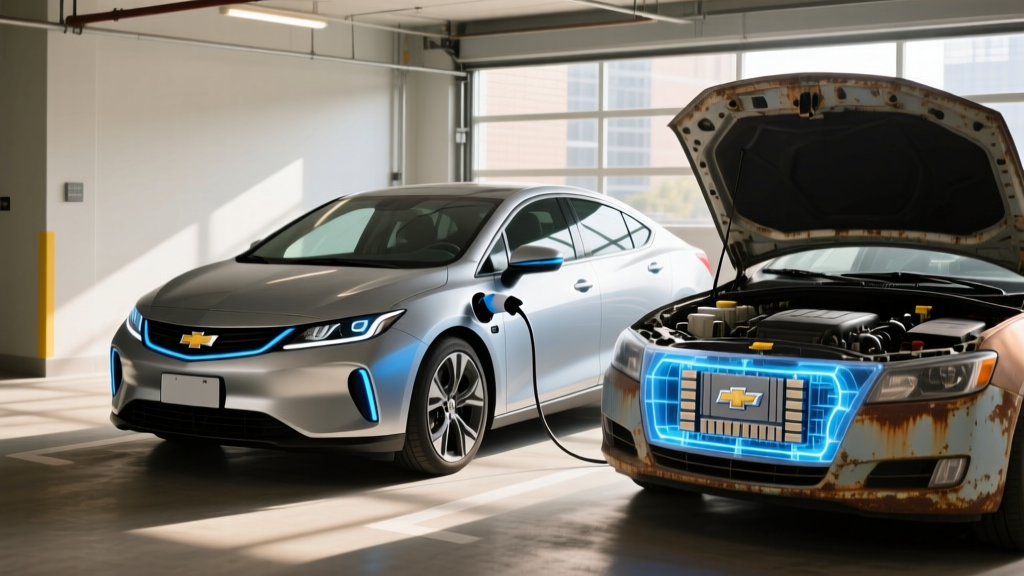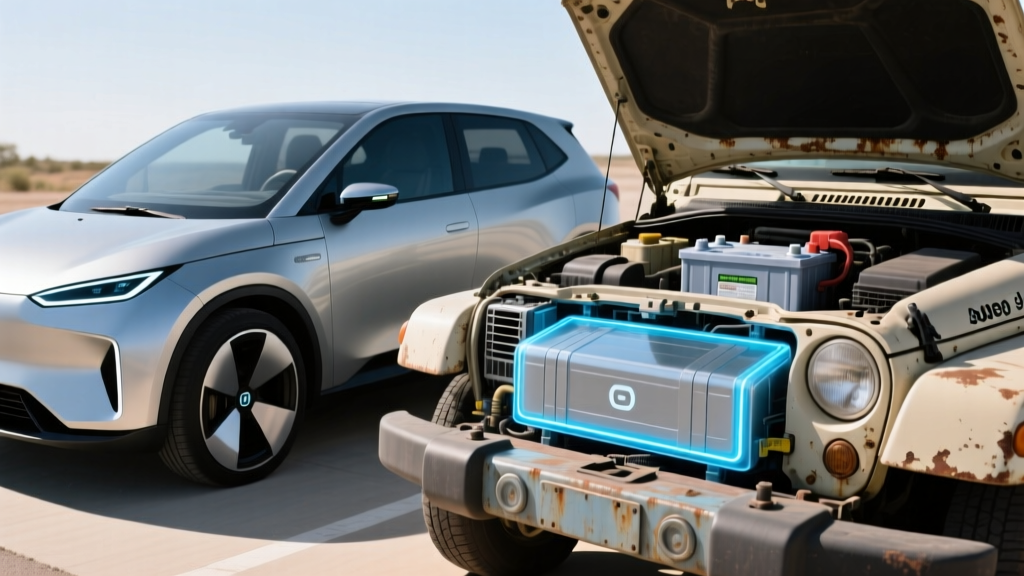
If you've ever swapped a 2011 Jeep Wrangler battery, you know the drill: a $150–$250 12V lead-acid group 48 or H6 from the auto-parts store, a 10mm wrench, ten minutes in the driveway. It's one of the simplest maintenance tasks in the automotive world — and it's the single biggest source of confusion when new EV owners start asking about "the battery."
The high-voltage traction battery in a modern electric vehicle is a fundamentally different machine: a liquid-cooled, chemically engineered energy store costing thousands of dollars, designed to last the lifetime of the car, and warrantied by federal mandate for at least eight years. Understanding how it works — and how it differs from the humble 12V starter battery in a Wrangler JK — is essential for anyone shopping for an EV in 2026 or managing one they already own.
This guide covers EV battery chemistry, degradation data, warranty terms, replacement costs, and the habits that maximize longevity. We'll also address the 2011 Jeep Wrangler battery directly, because the comparison illuminates exactly why EV batteries are engineered the way they are.
The 2011 Jeep Wrangler Battery vs. an EV Traction Battery
The 2011 Jeep Wrangler (JK generation, 3.8L V6) uses a conventional 12-volt lead-acid battery — typically a Group 48 or H6 size, rated around 700–800 cold cranking amps (CCA). Its sole job is to crank the starter motor and power accessories when the engine is off. It stores roughly 0.6–0.8 kWh of usable energy, weighs about 40–50 pounds, and costs between $140 and $260 at retail.
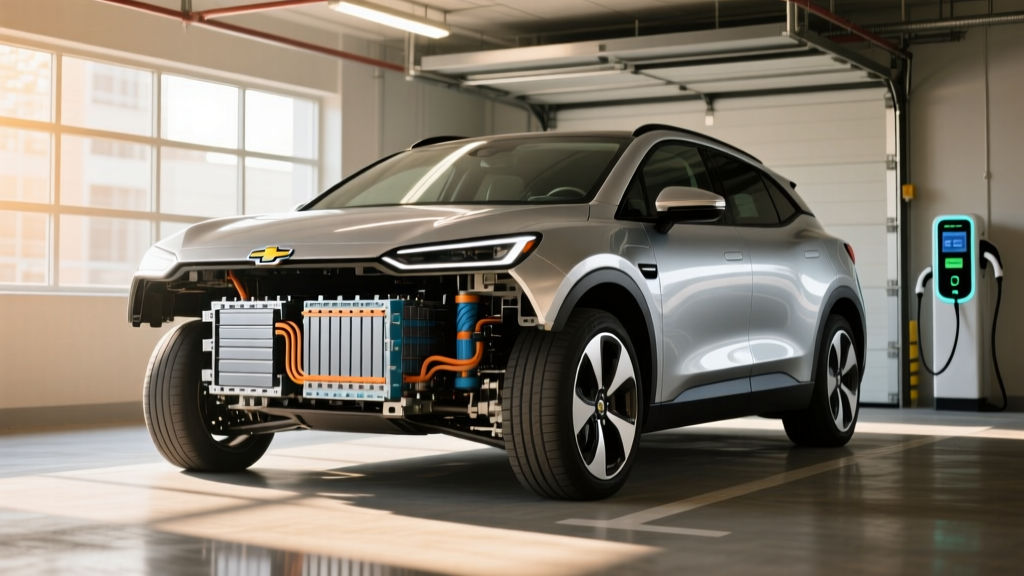
Compare that to the traction battery in a 2026 Tesla Model Y Long Range: an NMC (nickel-manganese-cobalt) lithium-ion pack with approximately 75 kWh of usable capacity, weighing roughly 1,000 pounds, liquid-cooled, and priced in the $12,000–$16,000 range for a full replacement. It powers the drive motors, runs the climate system, and feeds every electronic module in the vehicle.
| Attribute | 2011 Wrangler 12V | 2026 EV Traction (typical) |
| Chemistry | Lead-acid (flooded or AGM) | Lithium-ion (NMC or LFP) |
| Voltage | 12V nominal | 350–800V nominal |
| Usable energy | ~0.6–0.8 kWh | 50–115 kWh |
| Typical lifespan | 3–5 years | 15–20+ years |
| Replacement cost | $140–$260 | $6,000–$22,000 |
| Warranty | 2–3 years (prorated) | 8 yr / 100,000 mi (federally mandated min) |
One critical note: EVs also have a 12V auxiliary battery (increasingly a small lithium-ion unit) that powers the computers, lights, and door handles. It's functionally similar to the Wrangler's 12V battery but is kept charged by a DC-DC converter from the main pack. When EV owners talk about "the battery," they almost always mean the high-voltage traction pack — and that's what this guide focuses on.
LFP vs. NMC/NCA: Choosing Your Battery Chemistry
Two lithium-ion chemistries dominate the 2026 EV market, and the choice between them affects range, longevity, cold-weather performance, and price.
NMC (Nickel-Manganese-Cobalt) and its close cousin NCA (Nickel-Cobalt-Aluminum) offer higher energy density — meaning more kWh packed into a smaller, lighter battery. This translates to longer range in a given vehicle platform. Most long-range EVs (Tesla Model 3/Y Long Range, Hyundai Ioniq 5, Ford Mustang Mach-E Extended Range) use NMC or NCA packs.
LFP (Lithium Iron Phosphate) sacrifices some energy density for dramatically better cycle life, thermal stability, and lower cost. LFP cells tolerate regular charging to 100% without accelerated degradation — a significant daily-use advantage. Tesla's standard-range Model 3 and Model Y, the base Ford Mustang Mach-E, and several Chinese-market imports use LFP. By 2026, LFP adoption in the U.S. has grown substantially as automakers push toward lower-cost, longer-life packs.
| Attribute | LFP (Lithium Iron Phosphate) | NMC / NCA |
|---|---|---|
| Energy density | ~160–180 Wh/kg (lower) | ~220–300 Wh/kg (higher) |
| Cycle life | 3,000–6,000+ cycles | 1,000–2,500 cycles |
| Daily charge recommendation | 100% SoC is fine | 80% SoC for daily; 100% for trips |
| Cold-weather performance | Weaker below 32°F; needs preconditioning | Better low-temp discharge; still benefits from preconditioning |
| Thermal runaway risk | Very low | Low but higher than LFP |
| Cost per kWh (cell-level, 2026) | ~$60–$80 | ~$90–$120 |
| Cobalt content | None | Some (NMC) to low (NCA) |
| Best for | Daily commuters, high-mileage drivers, cost-sensitive buyers | Long-range needs, cold-climate drivers, performance models |
Which is better? There's no universal winner. If you drive 30–50 miles daily, have home charging, and want a battery that will likely outlast the car with minimal degradation, LFP is the pragmatic choice. If you regularly drive 200+ miles between charges, live in a cold climate, or need maximum range from a given vehicle size, NMC/NCA delivers the energy density you need.
How Long Do EV Batteries Last? Real Degradation Data
The fear that EV batteries need frequent replacement is not supported by fleet data. Modern liquid-cooled lithium-ion packs are engineered for 15–20+ years of service, and most will retain well above 80% of original capacity over that span.
- Tesla Model 3/Y (NMC, 2018–2023): ~5–7% capacity loss at 100,000 miles; ~8–12% at 200,000 miles (Tesla Impact Report 2023, fleet telemetry)
- Chevrolet Bolt EV (NMC, 2017–2023): ~6–10% loss at 100,000 miles; some early 2017 models recalled for fire risk — replacement packs show improved longevity
- Nissan LEAF (passive-cooled NMC, 2011–2017 24/30 kWh): 15–25% loss at 80,000–100,000 miles — the cautionary tale that drove the industry toward active thermal management
- Hyundai/Kia E-GMP platform (NMC, 2022–2026): Early data suggests ~3–5% loss at 50,000 miles; projected 8–10% at 150,000 miles
- Tesla Model 3 Standard Range (LFP, 2021–2025): ~2–4% loss at 60,000 miles; LFP's superior cycle life suggests minimal long-term fade
The key takeaway: a modern, liquid-cooled EV battery losing 10–15% of its capacity over 150,000–200,000 miles is the expected norm, not a failure scenario. A 2026 Model Y Long Range with an EPA-estimated 320 miles of range would still deliver roughly 270–290 miles after a decade and 150,000 miles of use — still ample for most drivers.
Compare this to the 2011 Jeep Wrangler's 12V battery, which typically needs replacement every 3–5 years regardless of mileage, simply because lead-acid chemistry degrades with time and charge cycles. Over 15 years of Wrangler ownership, you'll likely buy three to five 12V batteries. Over the same period, an EV's traction battery will likely still be functional — just with somewhat reduced range.
What Does the EV Battery Warranty Actually Cover?
Under federal law, every EV sold in the United States must carry a battery warranty of at least 8 years or 100,000 miles, whichever comes first. In California Air Resources Board (CARB) states — which include California, New York, Massachusetts, Oregon, Washington, and several others — the mandate extends to 10 years or 150,000 miles.
The warranty covers capacity loss below a specified threshold, typically 70% of original capacity (some manufacturers use 65% or 60%). If your battery falls below that threshold within the warranty period, the manufacturer must repair or replace it at no cost.
| Manufacturer | Federal (non-CARB) | CARB States | Capacity Threshold |
|---|---|---|---|
| Tesla | 8 yr / 120,000 mi (Model 3/Y) | 8 yr / 120,000 mi | 70% |
| Hyundai / Kia | 10 yr / 100,000 mi | 10 yr / 150,000 mi | 70% |
| Ford | 8 yr / 100,000 mi | 8 yr / 100,000 mi | 70% |
| GM (Chevrolet/Cadillac) | 8 yr / 100,000 mi | 10 yr / 150,000 mi | 70% |
| BMW | 8 yr / 100,000 mi | 8 yr / 100,000 mi | 70% |
| Rivian | 8 yr / 175,000 mi | 8 yr / 175,000 mi | 70% |
Worth noting: warranty claims for total battery failure are rare. According to data compiled by fueleconomy.gov and manufacturer reports, the vast majority of EV batteries never require warranty replacement. When they do, it's often a single module or cell group that's replaced, not the entire pack — reducing cost and downtime.
EV Battery Replacement Cost: What to Budget and When
Out-of-warranty battery replacement is the scenario that generates the most anxiety — and the most misleading headlines. Here's what the numbers actually look like in 2026.
| Vehicle / Pack Size | Battery Cost (parts) | Labor | Total Estimate |
|---|---|---|---|
| Tesla Model 3 Standard Range (~57 kWh LFP) | $6,000–$8,000 | $1,500–$2,500 | $7,500–$10,500 |
| Tesla Model Y Long Range (~75 kWh NMC) | $10,000–$14,000 | $1,500–$2,500 | $11,500–$16,500 |
| Hyundai Ioniq 5 (~77 kWh NMC) | $9,000–$13,000 | $1,500–$2,000 | $10,500–$15,000 |
| Ford F-150 Lightning Extended Range (~131 kWh NMC) | $18,000–$22,000 | $2,000–$3,500 | $20,000–$25,500 |
| Chevrolet Equinox EV (~85 kWh NMC) | $8,000–$11,000 | $1,500–$2,000 | $9,500–$13,000 |
| Nissan LEAF (early 24 kWh, out-of-warranty) | $4,500–$6,500 | $1,000–$1,500 | $5,500–$8,000 |
Context matters enormously here. These costs apply to out-of-warranty, full-pack replacements — a scenario that affects a tiny fraction of EVs. Most EV batteries will never need replacement during typical ownership. By the time a pack degrades enough to warrant replacement (usually 200,000+ miles or 15+ years), the vehicle's residual value is often comparable to or less than the replacement cost, at which point the battery becomes a factor in a trade-in or retirement decision, not an emergency expense.
Also critical: cell-level prices have dropped roughly 85% since 2010 (per BloombergNEF data), and that trend continues. A replacement pack in 2035 will almost certainly cost substantially less than today's prices. And third-party refurbishers are increasingly offering module-level repairs for $2,000–$5,000, replacing only the degraded cells rather than the full pack.
Factors That Accelerate (or Preserve) Battery Life
Not all miles are equal when it comes to battery wear. The following factors have the most significant impact on long-term State of Health (SoH):
🟢 Habits that preserve battery health:
- Charging to 80% daily (NMC/NCA) or 100% (LFP) — set your charge limit in the vehicle app
- Using Level 2 home charging (7–11.5 kW) for the majority of your charging
- Preconditioning the battery before DC fast charging (most EVs do this automatically when you navigate to a charger)
- Parking in shade or a garage during extreme heat; plugging in during extreme cold so the thermal management system can run on grid power
- Keeping the battery between 20% and 80% SoC for daily use (NMC); LFP tolerates wider swings
🔴 Habits that accelerate degradation:
- Frequent DC fast charging (150+ kW) as your primary charging method — occasional use is fine; daily use adds wear
- Regularly draining below 10% SoC or sitting at 0% for extended periods
- Leaving an NMC battery at 100% SoC for days at a time, especially in hot weather
- Repeated high-performance launches (track use) generating sustained high cell temperatures
- Ignoring preconditioning in cold weather — charging a frozen battery causes lithium plating, a permanent degradation mechanism
The single most impactful habit is thermal management. Liquid-cooled packs (standard on virtually all 2026 EVs) handle heat far better than the passively cooled early Nissan LEAF, which became the industry's cautionary tale. If your EV has a preconditioning feature, use it — especially before DC fast charging in cold weather. The battery's internal resistance drops when warm, allowing faster charging and reducing stress on the cells.
How to Check Your EV's Battery Health (State of Health)
State of Health (SoH) is a percentage representing your battery's current maximum capacity relative to its original capacity. A new battery is 100% SoH; one that can hold only 63 kWh of its original 75 kWh is at 84% SoH.
Here's how to monitor it:
- In-vehicle display: Many EVs (Tesla, Hyundai/Kia, BMW, Rivian) show battery health or degradation data in the settings menu or service screen. Tesla's "Battery Health" test (introduced in 2023 software updates) runs a controlled discharge cycle and reports SoH directly.
- Manufacturer app: Tesla, Ford, Hyundai, and others surface battery health metrics in their companion apps, often updated after each charge cycle.
- OBD-II dongles and third-party tools: Devices like the OBDLink MX+ paired with apps such as EVNotify or LeafSpy (for Nissan LEAF) can read the BMS (Battery Management System) directly and report SoH, cell voltage variance, and temperature data.
- Dealer diagnostic: Any authorized service center can run a full battery health report. Request one before buying a used EV — it's the single most important data point for a pre-purchase inspection.
- Manual calculation: Charge to 100%, note the displayed range, and compare it to the original EPA range. Factor in that displayed range is an estimate — it's directionally useful but less precise than BMS data.
For used-EV buyers: a 2020 Tesla Model 3 Long Range showing 85–90% SoH at 60,000 miles is typical and healthy. Anything below 80% at that mileage warrants investigation — it could indicate excessive DC fast charging, a defective module, or a BMS calibration issue.
What's Next: Solid-State, Silicon Anodes, and Beyond
Next-generation battery technologies are in active development, but it's important to separate announced timelines from production reality.
Solid-state batteries replace the liquid electrolyte with a solid material (ceramic, sulfide, or polymer), promising higher energy density (~400–500 Wh/kg at the cell level), faster charging, and improved safety. Toyota has announced a solid-state EV target for 2027–2028, and QuantumScape is working with Volkswagen on pilot production. However, manufacturing scale-up remains the bottleneck — expect solid-state to appear in limited, premium models first, with mass-market availability not before 2030.
Silicon-dominant anodes (replacing graphite) can increase energy density by 20–40%. Companies like Sila Nanotechnologies and Group14 are already supplying silicon-anode materials for 2025–2026 model-year vehicles, including the Mercedes-Benz G-Class EV. This technology is closer to mainstream adoption than solid-state and is incrementally improving existing lithium-ion cells rather than requiring entirely new manufacturing infrastructure.
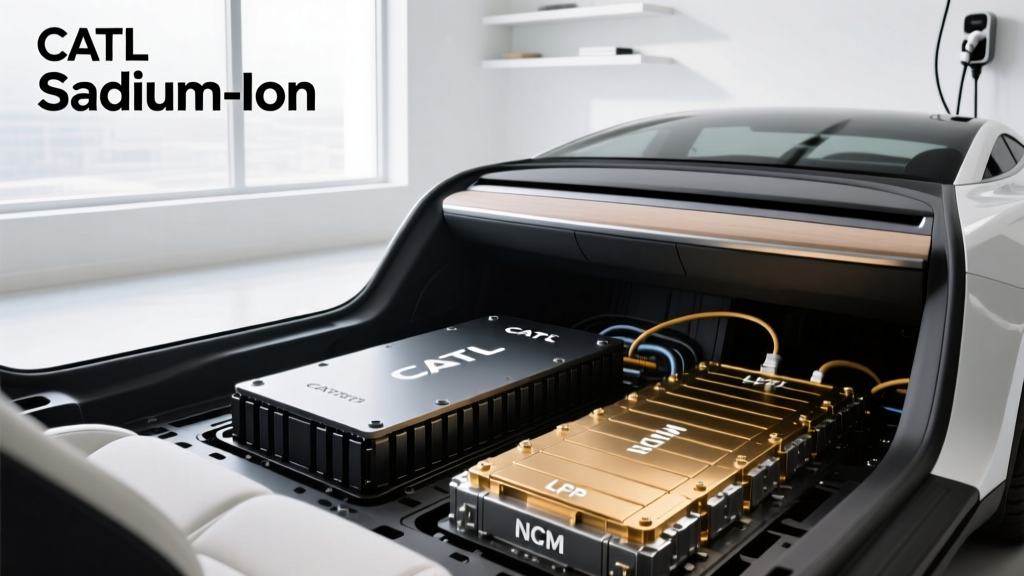
Sodium-ion batteries use abundant, cheap sodium instead of lithium. CATL has begun production in China for low-range city EVs. Energy density is lower (~120–160 Wh/kg), but cost is significantly less. U.S. availability is likely 2028+ and targeted at budget EV segments.
None of these technologies are available in production EVs sold in the U.S. as of early 2026. If you're buying now, today's NMC and LFP packs are mature, well-understood, and backed by substantial warranty coverage — there is no compelling reason to wait for next-generation chemistry unless your purchase timeline is flexible by 3–5 years.
Frequently Asked Questions
Can I put the same type of battery in a 2011 Jeep Wrangler and an EV?
No. The 2011 Wrangler uses a 12V lead-acid starter battery (Group 48/H6, ~$150–$260). An EV's traction battery is a high-voltage lithium-ion pack (350–800V, 50–131 kWh, $6,000–$25,000+). They serve entirely different functions. However, EVs do have a separate 12V auxiliary battery — similar in concept to the Wrangler's — that powers low-voltage systems and is typically a smaller lithium-ion unit maintained by a DC-DC converter from the main pack.
How long do EV batteries last in years and miles?
Modern liquid-cooled EV batteries are engineered for 15–20+ years and 200,000+ miles of service. Real-world fleet data shows typical degradation of 5–12% over 100,000–200,000 miles depending on chemistry, climate, and charging habits. LFP batteries generally show even less degradation over the same period.
How much does it cost to replace an EV battery out of warranty?
Full pack replacement ranges from approximately $5,500 (small older packs like the early Nissan LEAF) to $25,000+ (large packs like the Ford F-150 Lightning Extended Range). Most mainstream EVs fall in the $10,000–$16,000 range including labor. However, most EV batteries never require out-of-warranty replacement, and module-level repairs are increasingly available for $2,000–$5,000.
What does the federal EV battery warranty require?
Federal law mandates a minimum of 8 years / 100,000 miles of battery warranty coverage. CARB states require 10 years / 150,000 miles. Coverage applies if the battery falls below the manufacturer's stated capacity threshold (typically 70% of original capacity). The warranty covers defects and excessive degradation, not damage from accidents or modifications. For the latest rules, consult irs.gov and your manufacturer's warranty documentation.
How do I maximize my EV battery's lifespan?
Set your daily charge limit to 80% (NMC/NCA) or 100% (LFP). Use Level 2 home charging as your primary method. Precondition the battery before DC fast charging. Avoid leaving the car at 0% or 100% SoC for extended periods, especially in extreme heat. Park in shade or a garage when possible. These habits can meaningfully slow degradation and keep your battery well above warranty thresholds for the life of the vehicle.
LFP or NMC — which should I choose?
Choose LFP if you want maximum cycle life, can charge to 100% daily without worry, prioritize lower cost, and don't need the absolute longest range. Choose NMC/NCA if you need maximum range per charge, live in a cold climate where LFP's low-temperature performance is a disadvantage, or drive a performance-oriented model. Both chemistries are proven and well-supported in 2026.
Sources: EPA fueleconomy.gov, Tesla Impact Report, IRS.gov (warranty and credit guidance), manufacturer warranty documentation, BloombergNEF battery price survey. Replacement cost estimates reflect 2026 market data and may vary by region and service provider.