From Lead-Acid to Lithium: Why the 2010 Mazda 6 Battery Still Comes Up
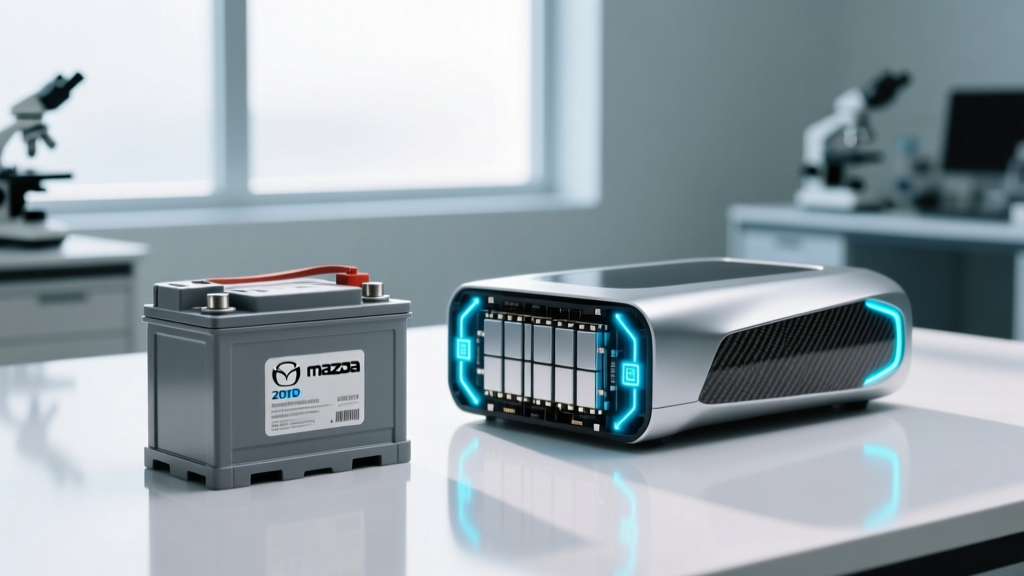
If you've ever searched for a 2010 Mazda 6 battery, you were almost certainly looking for a 12-volt lead-acid starter battery — the kind that sits under the hood, cranks a 2.5-liter four-cylinder engine, and costs about $120 to $180 at an auto parts store. That battery has nothing in common with the high-voltage lithium-ion traction packs powering today's electric vehicles, yet the search persists because owners of aging vehicles often conflate the two or wonder whether EV batteries face the same replacement cycle.
They don't. A modern EV traction battery is engineered to last the lifetime of the vehicle — typically 150,000 to 200,000 miles or more — while the 12V battery in your 2010 Mazda 6 (Group 35, ~550 CCA) needs swapping every three to five years. This guide uses that contrast as a starting point to explain everything you need to know about EV battery chemistry, degradation, warranties, replacement costs, and care in 2026.
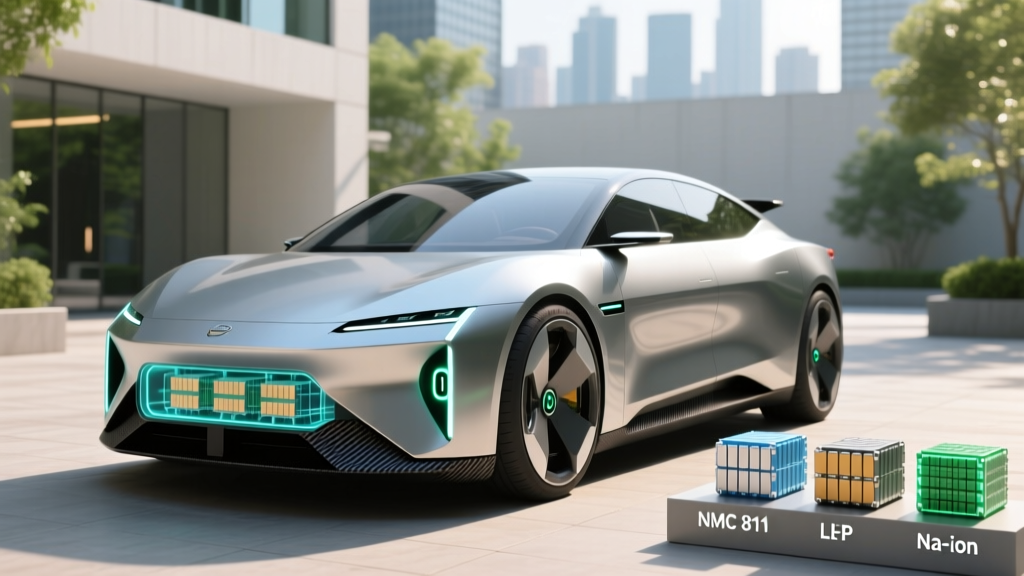
LFP vs. NMC/NCA: The Chemistry Decision That Shapes Your EV
Every EV sold in 2026 uses one of two dominant lithium-ion chemistries for its traction battery. Understanding the trade-offs is the single most important technical decision in your purchase.
| Attribute | LFP (Lithium Iron Phosphate) | NMC/NCA (Nickel Manganese Cobalt / Nickel Cobalt Aluminum) |
|---|---|---|
| Energy density | Lower (~160–180 Wh/kg cell-level) | Higher (~220–300 Wh/kg cell-level) |
| Typical pack size | 50–75 kWh (compact/mid-size EVs) | 75–120+ kWh (long-range/performance EVs) |
| Cycle life | 3,000–5,000+ cycles to 80% capacity | 1,000–2,000 cycles to 80% capacity |
| Cold-weather performance | More range loss below 32°F; slower DC charging in cold | Better low-temp conductivity; still loses ~20–30% range at 20°F |
| Cost per kWh (pack-level, 2026) | ~$90–$110 | ~$120–$150 |
| Cobalt/nickel content | None — iron and phosphate only | Contains cobalt and/or nickel (supply-chain and ethical considerations) |
| SoC recommendation | Can charge to 100% daily without accelerated degradation | Best kept 20–80% daily; 100% only for trips |
| Examples (2026 models) | Tesla Model 3 RWD, BYD Seal, base Volvo EX30 | Tesla Model Y Long Range, Hyundai Ioniq 5, Ford Mustang Mach-E Extended Range |
Which is better? There is no universal winner. LFP excels in longevity, cost, and ethical sourcing — ideal for daily commuters who charge at home and don't need 350+ miles of range. NMC/NCA delivers higher energy density for long road trips and better cold-weather charging, at the cost of a shorter cycle life and higher price. If you drive 12,000 miles per year and charge nightly, LFP's 4,000-cycle life translates to roughly 800,000 miles of driving before hitting 80% capacity — far beyond any vehicle's structural lifespan.
How Long Do EV Batteries Actually Last? Real Degradation Data
The fear that an EV battery will "die" like the 12V battery in a 2010 Mazda 6 is the single biggest misconception in electrification. Traction batteries degrade slowly and predictably, losing capacity in a curve that flattens after the first two years.
- Year 1 / 15,000 mi: ~2–4% capacity loss (initial formation loss)
- Year 3 / 45,000 mi: ~6–8% total loss
- Year 5 / 75,000 mi: ~8–11% total loss
- Year 8 / 120,000 mi: ~10–14% total loss
- Year 10+ / 150,000+ mi: ~12–18% total loss (curve flattens significantly)
Source: Geotab's analysis of 10,000+ EVs across multiple model years shows an average degradation rate of ~1.8% per year for liquid-cooled packs. Tesla's own 2024 Impact Report documented an average of 12% degradation at 200,000 miles across Model S/X fleets.
LFP packs tend to show slightly more capacity loss in the first 1–2 years (partly because their flat voltage curve makes SoC estimation less precise), but then degrade more slowly than NMC over the long haul. The practical result: a 2026 Hyundai Ioniq 5 with a 77.4 kWh NMC pack rated for 305 miles of EPA range will likely still deliver ~265–275 miles at year eight. That's still enough for most daily driving without a replacement.
What Does the Battery Warranty Actually Cover?
Federal law mandates that EV traction batteries carry a minimum warranty of 8 years or 100,000 miles (whichever comes first). In California and states that follow CARB emissions rules, that extends to 10 years or 150,000 miles. Most manufacturers exceed the federal floor voluntarily.
| Manufacturer (2026) | Warranty Period | Capacity Retention Threshold | Notes |
|---|---|---|---|
| Tesla (Model 3/Y) | 8 yr / 100,000 mi (RWD); 8 yr / 120,000 mi (Long Range) | 70% | Covers defects and excessive degradation below threshold |
| Hyundai / Kia | 10 yr / 100,000 mi | 70% | Among the longest coverage in the industry |
| Ford (Mach-E, F-150 Lightning) | 8 yr / 100,000 mi | 70% | Covers battery components and excessive degradation |
| General Motors (Ultium platform) | 8 yr / 100,000 mi | 70% (some models 60% for specific modules) | Modular design allows single-module replacement |
| BMW (iX, i4) | 8 yr / 100,000 mi | 70% | Transferable to subsequent owners |
The critical detail is the capacity retention threshold. A warranty that guarantees 70% capacity means the manufacturer will repair or replace the battery only if it falls below 70% of its original capacity during the warranty period. Normal degradation to, say, 78% at year seven is considered acceptable wear. In practice, very few liquid-cooled EV batteries breach the 70% threshold within the warranty window — the warranty is there primarily as a safety net against manufacturing defects and outlier degradation.
How Much Does It Cost to Replace an EV Battery?
This is the question that keeps prospective buyers up at night — and it's the question most likely to generate misleading headlines. Let's ground it in actual 2026 numbers.
| Vehicle / Pack Size | Full Pack Replacement (out of warranty) | Module Repair (where applicable) | Typical Replacement Trigger |
|---|---|---|---|
| Tesla Model 3 RWD (57.5 kWh LFP) | $12,000–$16,000 | Not modular — full pack swap | Rare; most packs exceed 200,000 mi |
| Hyundai Ioniq 5 (77.4 kWh NMC) | $14,000–$18,000 | $3,000–$5,000 per module section | Cell imbalance or defect, not age |
| Ford F-150 Lightning Ext. Range (131 kWh NMC) | $22,000–$30,000 | $5,000–$8,000 per module | Larger packs cost more but also have more redundancy |
| Chevrolet Bolt EV (65 kWh NMC, older platform) | $14,000–$16,000 (post-recall pricing) | N/A | Recall replacements covered; out-of-warranty rare |
Context matters enormously here. According to data aggregated by Consumer Reports, the vast majority of EV batteries never need replacement during the original owner's tenure. When replacements do occur, they are most often covered under warranty due to manufacturing defects or cell failures, not age-related degradation. The $15,000+ out-of-pocket figures apply primarily to out-of-warranty scenarios on vehicles 10+ years old — by which point the vehicle's residual value may not justify the investment.
For comparison: you would spend roughly $1,200–$2,400 replacing the 12V battery in a 2010 Mazda 6 over 15 years of ownership (three to five replacements at $120–$180 each, plus potential alternator-related costs). An EV traction battery, if it lasts 15 years, costs you nothing in that same period if it stays above the warranty threshold.
Factors That Accelerate (or Preserve) Battery Life
Battery longevity isn't random. The following variables have the largest measurable impact on how quickly your pack degrades:
- Avoid sustained high SoC (NMC/NCA): Charge to 80% daily; reserve 100% for road trips. LFP owners can ignore this — charge to 100% freely.
- Minimize DC fast charging when possible: Frequent 150+ kW sessions generate heat that accelerates degradation. Use Level 2 (7–19 kW) for daily charging; DCFC for road trips.
- Precondition before fast charging: Most 2026 EVs automatically precondition the battery when you navigate to a charger. This warms the cells to ~95°F for optimal charge acceptance and reduces stress. If your EV has a manual precondition toggle, use it in cold weather.
- Avoid extreme SoC storage: Don't leave the car at 5% or 100% for weeks. If storing, set SoC to ~50%.
- Park in shade or a garage in hot climates: Sustained battery temperatures above 104°F (40°C) accelerate calendar aging. Phoenix and Las Vegas owners see slightly higher degradation rates than Seattle owners.
- Use regenerative braking moderately: Aggressive one-pedal driving in cold weather (below 40°F) can stress cold cells. Many 2026 EVs automatically reduce regen when the battery is cold.
How to Check Your Battery's State of Health (SoH)
State of Health (SoH) is the percentage of original capacity your battery currently holds. A new pack is 100% SoH; at 85% SoH, your 77.4 kWh pack effectively holds ~65.8 kWh.
Built-in methods (2026 models):
- Tesla: The Service menu (hold the model name on the About screen for 3 seconds) shows a "Battery Health" test. Alternatively, the Tesla app provides a battery health check that runs over 24 hours.
- Hyundai/Kia: The infotainment system's EV diagnostics page shows estimated SoH. Dealers can pull a detailed BMS (Battery Management System) report via the OBD-II port.
- GM (Ultium): The myChevrolet/myCadillac app includes a battery health indicator based on BMS telemetry.
- Universal OBD-II method: Apps like Car Scanner, Leaf Spy (Nissan), or OBDeleven can read BMS data directly, including cell-level voltage variance, which reveals imbalances before they become problems.
A healthy pack shows cell voltage variance under 20–30 mV at rest. If one module group consistently reads 50+ mV lower than others, that's an early indicator of cell imbalance — often fixable under warranty before it triggers a capacity-loss threshold.
Emerging Battery Technology: What's Real and What's Still Coming
The battery landscape is evolving rapidly, but it's critical to separate production reality from press-release promises.
Silicon-dominant anodes (production now, limited): Companies like Sila Nanotechnologies and Group14 are shipping silicon-composite anode materials that boost energy density by 10–20% over graphite. These appear in limited 2025–2026 applications (notably the Mercedes G-Class electric SUV). Expect broader adoption by 2028–2029.
Solid-state batteries (announced, not yet in production vehicles): Toyota, Samsung SDI, and QuantumScape have all demonstrated solid-state prototypes with 400+ Wh/kg energy density and 10-minute fast-charge capability. However, manufacturing yield and cost remain unsolved at automotive scale. Toyota has announced a 2027–2028 production target for a limited-run vehicle. Realistic mass-market availability is 2030 or later. Any 2026 article claiming solid-state is "here now" is misleading.
Sodium-ion batteries (early production in China): CATL and BYD are producing sodium-ion packs for low-cost, short-range urban EVs in the Chinese market. Energy density (~140 Wh/kg) limits them to city cars with 150–200 miles of range. U.S. availability is not expected before 2028.
Frequently Asked Questions
How long do EV batteries last in years and miles?
Based on fleet data from Geotab and manufacturer reports, liquid-cooled EV batteries retain 80–88% of original capacity at 10 years / 150,000 miles. Many exceed 200,000 miles before reaching the 70% warranty threshold. LFP packs often outlast 300,000 miles at 80% SoH due to their superior cycle life.
How much does an EV battery cost to replace in 2026?
Full pack replacement ranges from $12,000 for a ~57 kWh LFP pack to $30,000 for a 131 kWh NMC pack, out of warranty. However, the vast majority of replacements are covered under the 8-year/100,000-mile warranty. Module-level repairs, where supported, cost $3,000–$8,000.
What does the battery warranty actually cover?
EV battery warranties cover manufacturing defects and excessive capacity loss — typically defined as falling below 70% of original capacity within 8 years / 100,000 miles (or 10/150,000 in CARB states). Normal degradation above the threshold is not covered. Review your specific manufacturer's warranty document for exact terms.
How do I maximize my EV battery's health?
For NMC/NCA packs: charge to 80% daily, minimize DC fast charging, precondition before fast charging, avoid storing at extreme SoC, and park in temperature-moderate environments. For LFP packs: charge to 100% at least weekly to keep the BMS calibrated, and follow the same temperature and fast-charging guidelines.
LFP vs. NMC — which should I choose?
Choose LFP if you prioritize longevity, lower cost, cobalt-free sourcing, and you mostly drive under 250 miles per day with home charging. Choose NMC/NCA if you need 300+ miles of range, frequently road-trip in cold weather, or want the fastest DC charging speeds. Both chemistries will outlast the vehicle's structural and mechanical components in typical use.
Is a 2010 Mazda 6 battery the same as an EV battery?
No. The 2010 Mazda 6 uses a 12V lead-acid starter battery (Group 35, ~$120–$180, replaced every 3–5 years). EVs use a high-voltage lithium-ion traction battery (40–131+ kWh, $12,000–$30,000, designed to last 15+ years) plus a separate 12V auxiliary battery for accessories. They serve entirely different purposes and operate on different chemistries.
Sources: Geotab EV Battery Degradation Study, EPA Fuel Economy, manufacturer warranty documentation (Tesla, Hyundai, Ford, GM, BMW). Tax-credit and incentive rules referenced from IRS §30D. All pricing and specs reflect 2026 model-year data available at time of publication.