Searches for the 2010 Dodge Journey battery typically point to one thing: a failing 12-volt lead-acid battery in a gas-powered midsize crossover. But that search also reveals a fascinating snapshot of how far automotive battery technology has come. In 2010, the Journey relied on a conventional Group 34 or Group 24F flooded lead-acid battery producing roughly 700 cold cranking amps (CCA) to start a 3.5L V6 engine. Fast-forward to 2026, and electrified vehicles carry high-voltage lithium-ion traction batteries with 60–120+ kWh of usable energy, sophisticated thermal management, and chemistries engineered for 15+ years of service.
This guide uses the 2010 Dodge Journey as a baseline to explain everything modern EV buyers and owners need to know about battery technology — from LFP versus NMC chemistry to real-world degradation data, warranty coverage, replacement economics, and what's coming next.
The 2010 Dodge Journey Battery: A 12V Baseline
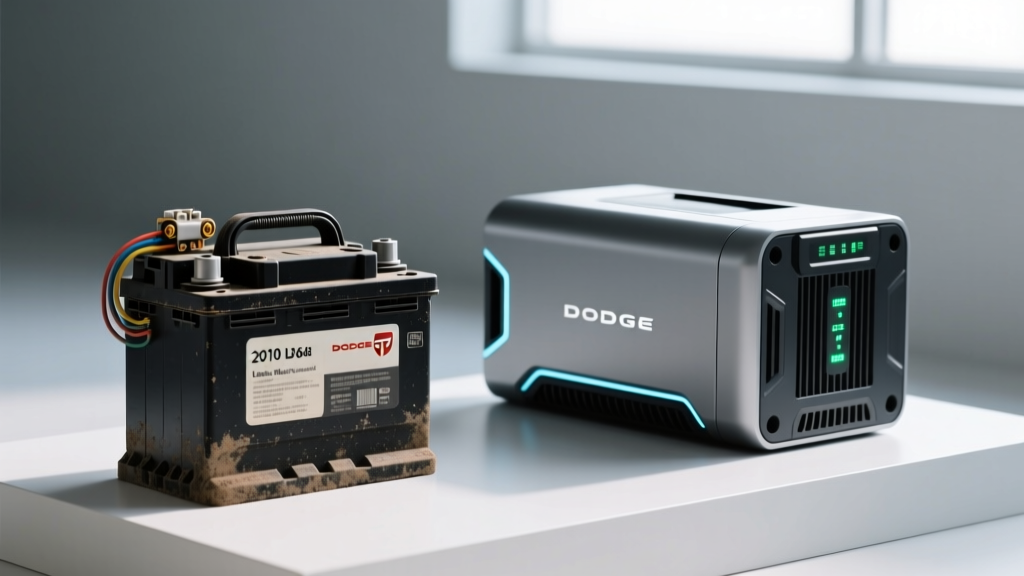
The 2010 Dodge Journey is not an electric or hybrid vehicle. It uses a standard 12V lead-acid battery (typically an Interstate MTX-34 or equivalent Group 34 AGM) solely for engine cranking, lighting, and accessory power. Key specs for that battery:
- Voltage: 12V nominal
- Capacity: ~55–65 Ah
- CCA: 650–800 amps
- Typical lifespan: 3–5 years
- Replacement cost: $120–$220 (parts only)
That's a simple, inexpensive component with a short service life. Modern EV traction batteries operate on an entirely different scale — and the confusion between the two is one of the most common pain points for shoppers new to electric vehicles.
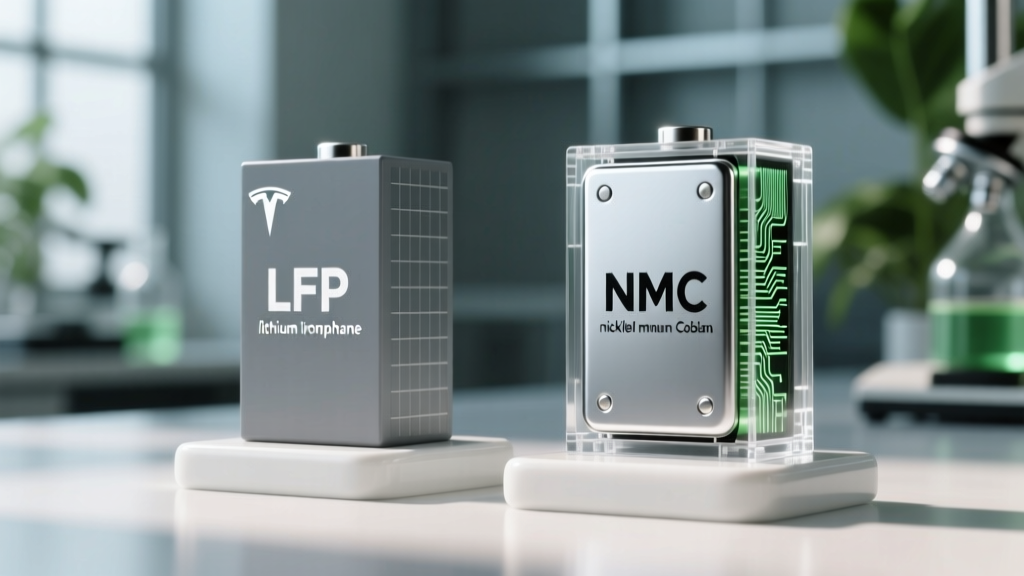
EV Battery Chemistry Explained: LFP vs. NMC vs. NCA
The high-voltage traction battery is the single most expensive component in any electric vehicle. Its chemistry determines range, charging speed, longevity, cold-weather performance, and cost. In 2026, two dominant chemistries power the EV market:
| Attribute | LFP (Lithium Iron Phosphate) | NMC / NCA (Nickel Manganese Cobalt / Nickel Cobalt Aluminum) |
|---|---|---|
| Energy Density | Lower (~160–180 Wh/kg cell-level) | Higher (~230–300 Wh/kg cell-level) |
| Range per Pack Size | Shorter for same weight/volume | Longer — preferred for 300+ mi vehicles |
| Cycle Life | 3,000–5,000+ cycles to 80% SoH | 1,000–2,000 cycles to 80% SoH |
| Cold-Weather Performance | More range loss below 32°F; slower cold charging | Better cold tolerance with preconditioning |
| Charging to 100% | Recommended periodically for SoC calibration | Best kept at 80% daily; 100% only for trips |
| Cost (Pack-Level) | Lower — no cobalt or nickel | Higher — commodity-sensitive pricing |
| Thermal Stability | Excellent — very low thermal runaway risk | Good — requires more active thermal management |
| Common 2026 Examples | Tesla Model 3/Y RWD, Ford Mustang Mach-E Select, BYD models | Tesla Long Range, Hyundai Ioniq 5/6, Rivian, GM Ultium vehicles |
Which Chemistry Is Better?
Neither is universally superior — it depends on your priorities:
- Choose LFP if: You plan to keep the vehicle 10+ years, charge mostly at home, live in a moderate climate, and want maximum cycle life with lower cost. The Tesla Model 3 RWD's 57.5 kWh LFP pack is a benchmark example.
- Choose NMC/NCA if: You need maximum range (300+ miles EPA), frequently drive in cold climates, rely on DC fast charging, or need the highest energy density for towing. The Hyundai Ioniq 5's 77.4 kWh NMC pack delivers EPA 303 miles and peaks at 240 kW DC charging.
How Long Do EV Batteries Last? Real Degradation Data
This is the question every prospective EV buyer asks, and the answer is almost always better than expected. Modern lithium-ion traction batteries are engineered to outlast the vehicle's typical first-ownership period — and often the car itself.
According to data aggregated by Recurrent Auto, which tracks over 15,000 EVs in real-world conditions, typical degradation follows a predictable curve:
- Year 1: ~2–3% capacity loss (initial formation loss)
- Years 2–4: ~1% per year (gradual linear decline)
- Year 5: ~8–10% total loss (90–92% State of Health)
- Year 8: ~10–14% total loss (86–90% SoH)
- Year 10: ~12–17% total loss (83–88% SoH)
- 150,000+ miles: Most packs retain 85–90% SoH
LFP packs show even slower degradation. Tesla's 2025 Impact Report noted that Model 3/Y vehicles with LFP batteries retained an average of 92% capacity after 100,000 miles. The key insight: the steepest degradation occurs in the first year, then flattens into a slow, linear decline for the remaining lifespan.
For comparison, the 2010 Dodge Journey's 12V lead-acid battery would typically need full replacement every 3–5 years — a far shorter service life than any modern EV traction battery.
What Does the EV Battery Warranty Actually Cover?
Federal law (EPA emissions warranty requirements applied to EV batteries) mandates a minimum battery warranty of 8 years / 100,000 miles for EVs sold in the United States. California Air Resources Board (CARB) states extend this to 10 years / 150,000 miles. Most manufacturers meet or exceed these thresholds.
| Manufacturer | Warranty Term | Capacity Threshold | Notes |
|---|---|---|---|
| Tesla | 8 yr / 100,000–120,000 mi (varies by model) | 70% retention | Model 3/Y RWD: 100k mi; Long Range: 120k mi |
| Hyundai / Kia | 10 yr / 100,000 mi | 70% retention | Among the longest coverage terms |
| Ford | 8 yr / 100,000 mi | 70% retention | Applies to Mach-E, F-150 Lightning |
| GM (Chevrolet, Cadillac) | 8 yr / 100,000 mi | 70% retention | Ultium platform vehicles |
| Rivian | 8 yr / 120,000 mi | 70% retention | R1T and R1S |
What triggers a warranty claim? The battery must fall below the stated capacity retention threshold (typically 70%) within the warranty period. This is measured by State of Health (SoH), which the vehicle's battery management system (BMS) tracks continuously. A 77.4 kWh pack at 70% SoH still holds ~54 kWh — enough for meaningful daily range.
What's NOT covered: Physical damage (collision, flood, road debris), unauthorized modifications, and in some cases, failure to follow manufacturer charging guidelines. Always review the specific warranty booklet for your vehicle.
EV Battery Replacement Cost: What You'll Actually Pay
Out-of-warranty battery replacement is the scenario that generates the most anxiety — and the most misleading headlines. Here are real-world replacement cost ranges as of 2026, based on manufacturer service bulletins and independent shop data:
| Vehicle / Pack Size | Battery Capacity | Estimated Replacement Cost | When Typically Needed |
|---|---|---|---|
| Tesla Model 3 RWD (LFP) | 57.5 kWh | $12,000–$16,000 | Rarely within 15 years |
| Tesla Model Y Long Range (NMC) | 75 kWh | $14,000–$20,000 | Rarely within 15 years |
| Hyundai Ioniq 5 (NMC) | 77.4 kWh | $15,000–$22,000 | 10+ years / 150k+ miles |
| Ford F-150 Lightning Ext. Range | 131 kWh | $25,000–$35,000 | 10+ years / 150k+ miles |
| Chevrolet Bolt EV/EUV | 65 kWh | $14,000–$16,000 | Most under recall/warranty replacement |
The context that matters: Battery pack costs have declined roughly 80% since 2010 on a per-kWh basis (from ~$1,200/kWh to ~$130–$140/kWh at the cell level in 2026, per BloombergNEF). Most EV batteries never need replacement during their first owner's tenure. The vast majority of packs reaching end-of-vehicle-life still hold 80–85% capacity and are repurposed for stationary energy storage rather than discarded.
Factors That Accelerate (or Preserve) Battery Life
Not all miles are equal when it comes to battery wear. The following factors have the most significant measurable impact on long-term State of Health:
- Minimize DC fast charging frequency. Occasional road-trip fast charging is fine, but daily use of 150+ kW DC chargers accelerates degradation by 1–2% over 5 years versus Level 2 home charging. Plan for 80%+ home/workplace Level 2 charging.
- Avoid sustained 100% State of Charge (NMC/NCA). For nickel-based chemistries, set your daily charge limit to 80%. Reserve 100% for long trips. LFP owners should charge to 100% at least weekly for accurate SoC calibration.
- Don't let the battery sit at 0%. Extended storage at very low SoC causes copper dissolution in the anode current collector. If storing for weeks, leave the pack at 40–60% SoC.
- Precondition before fast charging in cold weather. Most EVs automatically precondition the battery when a DC fast charger is set as your navigation destination. This warms the cells to ~30–35°C for optimal charge acceptance and reduced lithium plating risk.
- Extreme heat is worse than extreme cold. Sustained ambient temperatures above 95°F combined with high SoC accelerate calendar aging. If you live in hot climates, park in shade or a garage and avoid leaving the car at 100% SoC for extended periods.
- Use regenerative braking moderately in extreme cold. Heavy regen on a freezing battery stresses cells. Many EVs automatically limit regen when the pack is cold — respect this and use friction brakes until the battery warms.
How to Check Your EV Battery's State of Health
State of Health (SoH) is expressed as a percentage of original capacity. A new 77.4 kWh pack at 90% SoH holds approximately 69.7 kWh of usable energy. Here's how to monitor it:
Built-In Vehicle Displays
Some manufacturers provide SoH readings directly in the vehicle's infotainment system or app. Tesla displays battery health percentage in the Service menu. Hyundai/Kia's Bluelink app shows estimated range trends that correlate with SoH. Ford's Pass app provides battery health status.
OBD-II Diagnostic Tools
Third-party tools like OBDLink SX paired with apps such as LeafSpy (for Nissan Leaf) or Scan My Tesla can read detailed BMS data including cell voltage spread, pack SoH, cycle count, and individual module balance. These tools typically cost $40–$120 and provide dealer-level data.
Dealer Service Department
Any authorized service center can run a battery health diagnostic. Request this during routine service visits, especially if you're approaching a warranty mileage threshold and want documentation of current capacity.
Charging Data Analysis
Track how many kWh your vehicle accepts during a full charge (from near-0% to 100%). If your 77.4 kWh pack consistently accepts only 65 kWh on a slow Level 2 charge (accounting for ~5% charging losses), your SoH is roughly 88%. Apps like ABRP (A Better Routeplanner) and TezLab automate this tracking over time.
What's Next: Solid-State and Silicon-Anode Batteries
Next-generation battery technologies are in active development, but realistic timelines matter more than press-release promises:
- Solid-state batteries replace the liquid electrolyte with a solid ceramic, glass, or polymer separator. Benefits include higher energy density (potentially 400+ Wh/kg), faster charging, and improved safety. Toyota has announced a solid-state battery targeting 2027–2028 production in limited vehicles. Samsung SDI and QuantumScape are pursuing similar timelines. Expect initial deployment in premium/low-volume models before mainstream adoption around 2030+.
- Silicon-anode batteries replace graphite anodes with silicon, which can store roughly 10x more lithium ions per unit mass. Companies like Sila Nanotechnologies and Group14 are already shipping silicon-dominant anode materials to manufacturers. The Mercedes-Benz G-Class EV (2025) uses a silicon-anode battery from Sila. Expect broader adoption by 2027–2028 as manufacturing scales.
- Sodium-ion batteries offer a lower-cost alternative to lithium for budget EVs and stationary storage. CATL began shipping sodium-ion packs in Chinese-market vehicles in 2024. U.S. availability remains limited, with mainstream adoption expected 2028+.
None of these technologies are currently available in mainstream U.S.-market EVs as of 2026. They are announced and in various stages of validation and limited production. If you're shopping for an EV today, current LFP and NMC packs already offer excellent longevity and performance.
From Lead-Acid to Lithium: The 2010-to-2026 Battery Evolution
The 2010 Dodge Journey's $150 lead-acid battery needed replacement every few years and provided zero propulsion energy. Today's EV traction batteries cost 100x more but deliver 200–400 miles of range, last 15+ years with gradual degradation, carry 8–10 year warranties, and are continuously monitored by sophisticated battery management systems.
The comparison underscores a critical point for EV shoppers: battery anxiety is largely a legacy concern. The data consistently shows that modern lithium-ion packs — whether LFP or NMC — retain well over 85% capacity at 100,000 miles, and the vast majority never require replacement during a typical ownership cycle. The 2010 Journey will likely go through three or four 12V batteries in the time a 2026 EV's traction battery loses 10% of its capacity.
Frequently Asked Questions
How long do EV batteries last in years and miles?
Most modern EV batteries are designed to last 15–20 years or 200,000+ miles before reaching 70–80% State of Health. Real-world data from Recurrent Auto shows average degradation of roughly 12–17% over 10 years for NMC packs and 8–12% for LFP packs. The federal warranty minimum is 8 years / 100,000 miles, and many manufacturers exceed this.
How much does it cost to replace an EV battery?
Out-of-warranty replacement costs range from approximately $12,000 for a 57.5 kWh pack (Tesla Model 3 RWD) to $35,000+ for a 131 kWh pack (Ford F-150 Lightning Extended Range). However, most EV batteries never need replacement during the first owner's tenure, and pack costs continue declining ~8–10% annually at the cell level.
What does the EV battery warranty cover?
The standard warranty covers battery capacity loss below a threshold (typically 70% of original capacity) within 8 years / 100,000 miles (10 years / 150,000 miles in CARB states). It does not cover physical damage, accidents, flooding, or unauthorized modifications. Check your manufacturer's specific warranty booklet for exact terms.
How do I check and maximize my EV battery's health?
Monitor State of Health through your vehicle's app, OBD-II diagnostic tools, or dealer service visits. To maximize longevity: charge primarily on Level 2 at home, set daily charge limits to 80% for NMC/NCA packs (100% weekly for LFP), precondition before DC fast charging in cold weather, and avoid leaving the vehicle at 0% or 100% SoC for extended periods.
LFP vs. NMC — which battery chemistry is better for me?
LFP offers longer cycle life (3,000–5,000+ cycles), lower cost, and superior thermal stability, but with lower energy density and worse cold-weather performance. NMC/NCA delivers higher range per kWh, better cold-weather behavior, and faster charging, but at higher cost and shorter cycle life. For high-mileage, long-ownership, moderate-climate drivers, LFP is often the better choice. For maximum range, cold climates, and towing needs, NMC/NCA is preferred.
Does the 2010 Dodge Journey have an EV battery?
No. The 2010 Dodge Journey is a conventional gasoline-powered crossover with a standard 12V lead-acid battery (Group 34 or 24F) for engine starting and accessories. It has no high-voltage traction battery, electric motor, or hybrid system. If you're researching EV battery technology, the Journey serves as a useful comparison point for how far automotive battery technology has advanced since 2010.