If You're Searching for a Battery for 2010 Chevy Traverse, Read This First
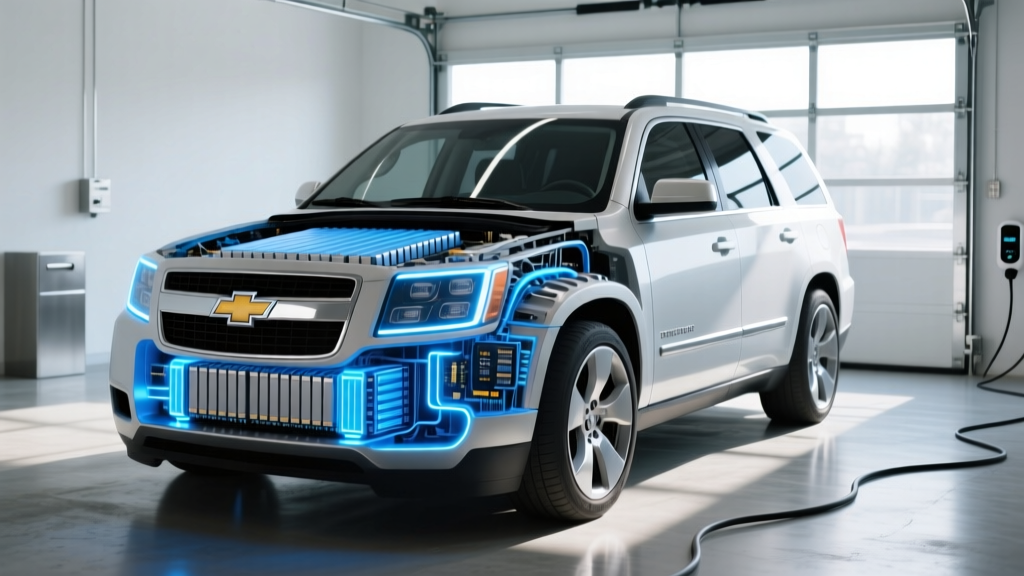
If you've landed here searching for a battery for 2010 Chevy Traverse, you're likely dealing with a dead 12-volt lead-acid battery — the kind that sits under the hood, cranks a 3.6L V6 engine, and costs about $150-$220 at an auto parts store. That's a straightforward fix, and we'd point you to a trusted parts retailer or your local mechanic for that specific job.
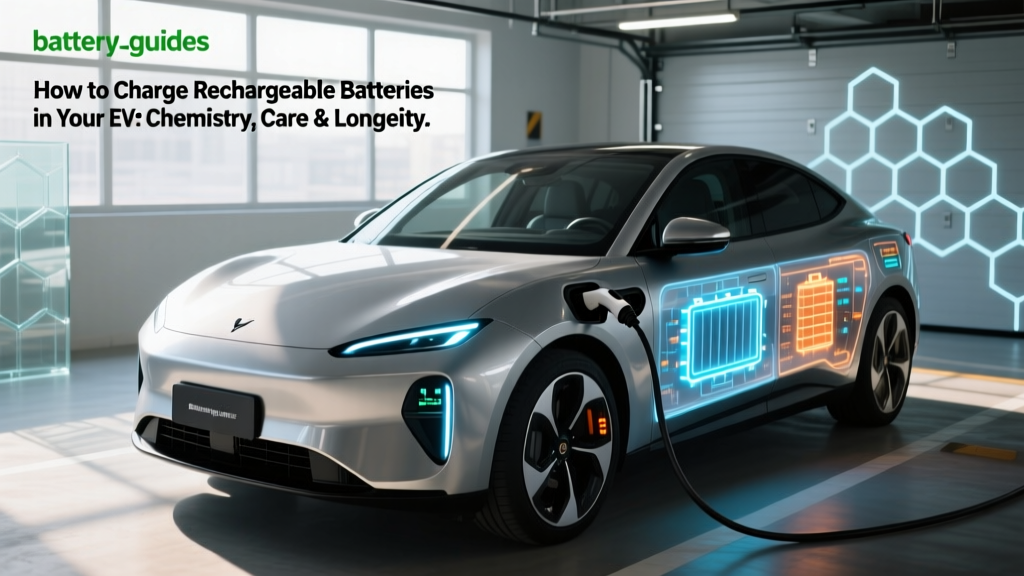
But if your search brought you here because you're considering trading that 2010 Traverse for a modern electric vehicle, or you're curious how the battery in a 2026 EV compares to the aging lead-acid unit in your current SUV, you're in the right place. The high-voltage traction batteries powering today's EVs are fundamentally different technologies — and understanding them is the single most important factor in making a confident EV purchase.
This guide covers everything an EV buyer or owner needs to know about battery chemistry, degradation, warranties, replacement costs, and health monitoring. The data below reflects real-world testing, manufacturer specifications, and warranty terms for current (2025-2026 model year) electric vehicles.
LFP vs. NMC/NCA: Understanding EV Battery Chemistry
Every EV sold in the US today uses one of two dominant lithium-ion chemistries in its high-voltage traction battery: LFP (Lithium Iron Phosphate, also written LiFePO4) or NMC/NCA (Nickel Manganese Cobalt / Nickel Cobalt Aluminum). The chemistry determines the battery's energy density, cycle life, cold-weather behavior, and cost. Here's how they compare head-to-head:
| Attribute | LFP (Lithium Iron Phosphate) | NMC / NCA (Nickel-based) |
|---|---|---|
| Energy Density | Lower (~160-180 Wh/kg cell-level) | Higher (~220-300 Wh/kg cell-level) |
| Typical Range per kWh | Requires larger, heavier pack for equivalent range | More range from a smaller, lighter pack |
| Cycle Life | 3,000-5,000+ full cycles before 80% capacity | 1,000-2,000 full cycles before 80% capacity |
| Cold-Weather Performance | Greater range loss below 32°F (up to 30-40%) | Better cold-weather retention (~20-30% loss) |
| Charging to 100% Daily | Recommended — LFP tolerates full SoC well | Not ideal — daily 80% cap extends longevity |
| Cobalt Content | Zero cobalt — fewer supply-chain/ethical concerns | Contains cobalt and nickel — higher material cost |
| Cost per kWh (pack-level) | ~$90-$110/kWh (2025-2026) | ~$120-$150/kWh (2025-2026) |
| Common in These Vehicles | Tesla Model 3/Y RWD, Ford Mustang Mach-E Select (some trims), BYD models | Tesla Long Range, Hyundai Ioniq 5/6, Rivian, GM Ultium vehicles, Kia EV6/EV9 |
Which is better? Neither is universally superior — it depends on your use case. If you charge at home nightly and mostly drive under 250 miles per day, LFP offers exceptional longevity and lower cost. If you need maximum range for road trips, live in a cold climate, or want a lighter vehicle, NMC/NCA remains the better fit. Many 2026 models, including base trims of the Tesla Model 3 and Model Y, use LFP; Long Range and Performance trims use NMC.
How Long Do EV Batteries Actually Last?
The short answer: far longer than most buyers assume. Real-world fleet data from multiple manufacturers and independent researchers shows that modern EV batteries are outlasting the vehicles they're installed in.
Real-World Degradation Data Points (aggregated from fleet studies and manufacturer reports):
- Tesla Model 3/S fleet data (2024 Impact Report): Average battery degradation is approximately 12% after 200,000 miles — meaning 88% of original capacity retained.
- Nissan Leaf (passive-cooled, older chemistry): Earlier generations (2011-2017) saw 20-25% degradation by 100,000 miles. Modern liquid-cooled packs (2018+) perform far better.
- Hyundai/Kia E-GMP platform (Ioniq 5, EV6): Owner-reported data shows ~5-8% degradation at 60,000 miles with mixed L2/DCFC charging.
- GM Ultium platform (2023-2026 models): Too early for high-mileage fleet data, but GM's internal testing targets <10% degradation at 150,000 miles.
- Geotab fleet study (2024, 10,000+ EVs): Average annual degradation across all brands was 1.8% per year, meaning ~82% capacity at 10 years.
For context, a 2026 Hyundai Ioniq 5 with a 77.4 kWh (usable) NMC battery and an EPA range of 305 miles would, at a typical 1.8%/year degradation rate, still deliver roughly 259 miles of EPA-equivalent range at year 10. That's still sufficient for the vast majority of daily driving and road trips with one DC fast-charge stop.
The critical takeaway: battery replacement is rarely needed during typical ownership. Most EV batteries will outlast 200,000 miles before falling below the 70% capacity threshold that triggers a warranty claim.
What Does the EV Battery Warranty Actually Cover?
Federal law in the United States mandates that EV manufacturers provide a battery warranty of at least 8 years or 100,000 miles (whichever comes first). In California and states that follow CARB (California Air Resources Board) emissions standards, the mandate extends to 10 years or 150,000 miles. Most manufacturers meet or exceed these minimums.
| Manufacturer | Battery Warranty (Standard States) | Battery Warranty (CARB States) | Capacity Retention Threshold |
|---|---|---|---|
| Tesla (Model 3/Y RWD — LFP) | 8 yr / 100,000 mi | 8 yr / 100,000 mi | 70% |
| Tesla (Model 3/Y LR — NMC) | 8 yr / 120,000 mi | 8 yr / 120,000 mi | 70% |
| Hyundai / Kia (E-GMP) | 8 yr / 100,000 mi | 10 yr / 150,000 mi | 70% |
| GM (Ultium — Cadillac, Chevy) | 8 yr / 100,000 mi | 10 yr / 150,000 mi | 70% (some models 60%) |
| Ford (Mustang Mach-E, F-150 Lightning) | 8 yr / 100,000 mi | 8 yr / 100,000 mi | 70% |
| Rivian (R1T, R1S) | 8 yr / 175,000 mi | 8 yr / 175,000 mi | 70% |
| BMW (i4, iX, i7) | 8 yr / 100,000 mi | 8 yr / 100,000 mi | 70% |
What "70% capacity retention" means in practice: If your battery's usable capacity drops below 70% of its original kWh rating within the warranty period, the manufacturer will repair or replace it at no cost. For a 77.4 kWh Ioniq 5, that means a claim is triggered only if usable capacity falls below ~54 kWh. Most owners never reach this threshold under normal use.
Important caveat: Battery warranties typically cover defects and abnormal degradation, not cosmetic issues or range loss from extreme abuse (e.g., repeated 100% DC fast charging in extreme heat without preconditioning). Always review your specific owner's manual warranty language. For full details on federal requirements, see EPA's guide to federal EV warranties.
How Much Does an EV Battery Cost to Replace?
This is the question that generates the most anxiety — and the most misinformation. Let's look at actual replacement costs for current vehicles, then put those numbers in context.
| Vehicle (Model Year) | Battery Size (Usable kWh) | Chemistry | Estimated Replacement Cost (Parts + Labor) |
|---|---|---|---|
| Tesla Model 3 RWD (2025-2026) | 57.5 kWh | LFP | $12,000 - $16,000 |
| Tesla Model Y Long Range (2025-2026) | 75 kWh | NMC | $14,000 - $20,000 |
| Hyundai Ioniq 5 (2025-2026) | 77.4 kWh | NMC | $15,000 - $22,000 |
| Ford Mustang Mach-E Extended Range | 88 kWh | NMC | $18,000 - $25,000 |
| Ford F-150 Lightning Extended Range | 131 kWh | NMC | $25,000 - $35,000 |
| Chevrolet Equinox EV (2025-2026) | 85 kWh | NMC (Ultium) | $16,000 - $22,000 |
| Rivian R1T (Dual-Motor, Large Pack) | 128.9 kWh | NMC | $22,000 - $30,000 |
Context that matters:
- Most EVs never need a full battery replacement. The data above shows that batteries retain 80-88% capacity at 150,000-200,000 miles. At that mileage, most vehicles are nearing end-of-life regardless of powertrain.
- Module-level repair is increasingly common. Many modern packs (Tesla, GM Ultium, Hyundai E-GMP) allow individual module replacement rather than a full pack swap, reducing out-of-warranty costs to $2,000-$6,000 per module.
- Battery prices continue to fall. Pack-level pricing has dropped from over $1,000/kWh in 2010 to roughly $100-$140/kWh in 2025-2026, per BloombergNEF data. By the time a 2026 EV actually needs replacement (likely 2038+), costs will be substantially lower.
- Compare to ICE costs: A 2010 Chevy Traverse with 180,000 miles will likely have had $3,000-$6,000 in transmission, timing chain, water pump, and catalytic converter repairs over its life. EV drivetrains eliminate all of those failure points.
Factors That Accelerate (or Preserve) Battery Life
Not all miles are equal when it comes to battery wear. These are the factors that most significantly affect long-term State of Health (SoH):
Habits that preserve battery health:
- Daily charging to 80% (NMC/NCA): Set your charge limit to 80% for daily use. Charge to 100% only before long road trips. LFP batteries are an exception — manufacturers recommend periodic 100% charges to recalibrate the BMS.
- Use Level 2 (home) charging as your primary method: Slow, steady AC charging at 7-11 kW generates far less thermal stress than repeated DC fast charging.
- Precondition before DC fast charging: Every modern EV with active thermal management will precondition the battery when you navigate to a fast charger. This brings the cells to optimal temperature (typically 95-110°F) and dramatically reduces degradation from high-current charging.
- Avoid prolonged storage at 100% or 0% SoC: If you're leaving your EV for a week or more, aim for 50-60% state of charge.
- Park in shade or a garage in extreme heat: Sustained battery temperatures above 104°F (40°C) accelerate calendar aging. A garage in Phoenix is worth more than any charging habit.
Habits that accelerate degradation:
- Frequent DC fast charging (3+ times per week) without preconditioning
- Regularly draining below 10% SoC and leaving the vehicle uncharged
- Storing the vehicle at 100% SoC for extended periods in hot climates
- Aggressive track use or repeated hard launches (generates extreme cell temperatures)
How to Monitor Your EV's Battery Health (State of Health)
State of Health (SoH) is the percentage of original battery capacity remaining. A new EV has 100% SoH; a vehicle that has degraded to 90% SoH has lost 10% of its original capacity. Here's how to check it:
In-vehicle methods:
- Tesla: No native SoH display, but you can estimate it by charging to 100% and comparing the displayed range to the original EPA figure. Third-party apps like Tessie or TeslaFi track SoH over time using API data.
- Hyundai/Kia: The infotainment system's EV menu includes a battery health indicator on some 2025+ models. The BMS can also be read via OBD-II scanners.
- GM (Ultium vehicles): The myChevrolet/myCadillac app includes a battery health monitor showing estimated SoH percentage.
- Ford: The FordPass app provides battery health status, though it's less granular than some competitors.
OBD-II diagnostic tools:
Devices like the OBDLink SX or Carista adapter, paired with apps like EVNotify or LeafSpy (Nissan-specific), can read the BMS directly and report precise SoH, cell voltage variance, and battery temperature. This is the most reliable method for used-EV buyers conducting pre-purchase inspections.
Dealer diagnostic reports:
Any authorized dealer can pull a full battery health report during a service visit. If you're buying a used EV, requesting this report should be non-negotiable — it's the EV equivalent of a compression test on a used gas car.
Emerging Battery Tech: Solid-State and Beyond
If you've seen headlines about "solid-state batteries" promising 600-mile ranges and 10-minute charging, here's the reality check on where the technology actually stands as of 2026:
Solid-state batteries replace the liquid electrolyte in current lithium-ion cells with a solid material (ceramic, sulfide, or polymer). The theoretical advantages are real: higher energy density (potentially 400-500 Wh/kg), faster charging without thermal risk, and improved safety (no flammable electrolyte). However:
- Toyota has announced solid-state battery production for 2027-2028, initially in limited volumes for luxury models. Independent verification of performance claims is still pending.
- Samsung SDI and Nissan target 2028-2029 for pilot production.
- QuantumScape (backed by Volkswagen) continues prototype testing but has not announced a production timeline for consumer vehicles.
- Cost remains the primary barrier: solid-state cells are currently 3-5x more expensive to manufacture than conventional lithium-ion.
Silicon anode technology is closer to market. Companies like Sila Nanotechnologies and Group14 are supplying silicon-dominant anode materials that boost energy density by 15-25% in existing cell formats. The 2025-2026 Mercedes G-Class electric (G580 with EQ Technology) uses silicon anode cells from Sila. Expect this technology to proliferate across premium EVs by 2028.
Sodium-ion batteries (using abundant sodium instead of lithium) are entering the market in budget EVs in China (BYD, CATL). US availability is likely 2028+ and would target entry-level models where cost matters more than range.
Bottom line: Current NMC and LFP chemistries are mature, well-understood, and backed by real-world fleet data spanning hundreds of billions of miles. Buying an EV today does not mean missing out — it means accessing proven technology with known degradation curves and comprehensive warranties. Future chemistries will improve cost and energy density, but they won't make today's batteries obsolete any faster than the iPhone 15 made the iPhone 14 unusable.
Frequently Asked Questions
How long do EV batteries last in years and miles?
Based on aggregated fleet data from Tesla, Geotab, and manufacturer reports, modern liquid-cooled EV batteries typically retain 80-88% of original capacity at 150,000-200,000 miles (roughly 12-15 years of average driving at 13,500 miles/year). Full battery replacement during normal ownership is uncommon. Most EV batteries will outlast the vehicle's body, suspension, and interior.
How much does an EV battery cost to replace in 2026?
Full pack replacement costs range from approximately $12,000 (smaller LFP packs like the Tesla Model 3 RWD) to $35,000 (large packs like the F-150 Lightning Extended Range). However, module-level repairs — replacing only the degraded cells — typically cost $2,000-$6,000 and are increasingly the standard repair method. Most owners will never need either, as batteries are lasting 200,000+ miles.
What does the federal EV battery warranty cover?
US federal law mandates a minimum of 8 years / 100,000 miles of battery warranty coverage (10 years / 150,000 miles in CARB states). The warranty guarantees the battery will retain at least 70% of its original capacity. If it drops below that threshold, the manufacturer repairs or replaces it at no cost. This covers defects and abnormal degradation but not damage from accidents, modifications, or extreme abuse. See IRS.gov for related EV tax credit information.
LFP vs NMC — which battery chemistry should I choose?
Choose LFP if you: charge primarily at home, drive under 250 miles daily, want maximum cycle life (3,000-5,000 cycles), prefer cobalt-free sourcing, and don't mind slightly reduced cold-weather range. Choose NMC/NCA if you: need maximum EPA range for road trips, live in a cold climate (better winter performance), want a lighter vehicle, or are buying a Long Range / Performance trim. Both chemistries are proven and well-supported by 8+ year warranties.
How do I check my EV battery's State of Health?
Methods vary by brand: Tesla owners can use third-party apps (Tessie, TeslaFi) to track SoH via the vehicle API. GM Ultium owners can check via the myChevrolet/myCadillac app. Hyundai/Kia owners may find a battery health indicator in the EV infotainment menu. For any EV, an OBD-II adapter (OBDLink SX, ~$50) paired with an EV diagnostic app provides the most precise SoH reading. Always request a dealer battery health report when buying a used EV.
Does fast charging damage my EV battery?
DC fast charging generates more heat and stress than Level 2 charging, but modern EVs have sophisticated thermal management systems that precondition the battery and limit charge rates to protect cells. Occasional DC fast charging (1-2 times per week) has a negligible effect on long-term degradation. The concern arises with exclusive DCFC use (daily, 5+ times per week) over years — fleet data shows this can accelerate degradation by an additional 1-3% over the battery's life. For daily charging, Level 2 at home remains the best practice.
Will my EV battery need to be replaced before I sell the car?
Statistically, no. The average US vehicle ownership period is 6.6 years (per S&P Global Mobility data), and the average EV battery retains ~89% capacity at that point. Even at 10 years, average SoH is ~82%. The vehicles most likely to need battery replacement are high-mileage fleet vehicles (taxis, rideshare) that accumulate 40,000+ miles per year — and even those typically fall within the 8-year warranty window.
Sources: fueleconomy.gov (EPA range and efficiency data), EPA Federal Warranty Requirements, manufacturer battery warranty documentation (Tesla, Hyundai, GM, Ford, Rivian), Geotab EV Fleet Battery Health Study (2024), BloombergNEF Battery Price Survey (2025).