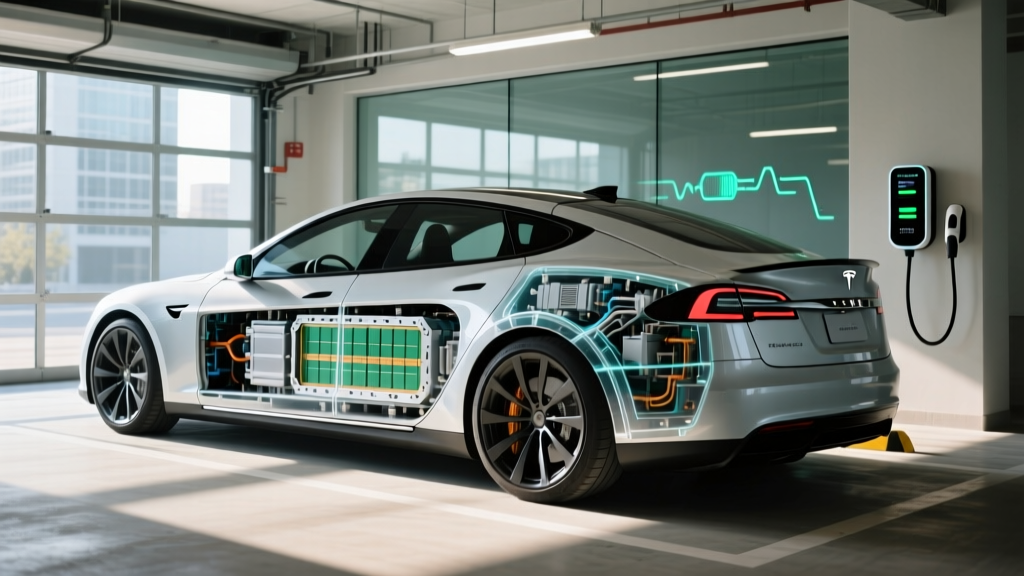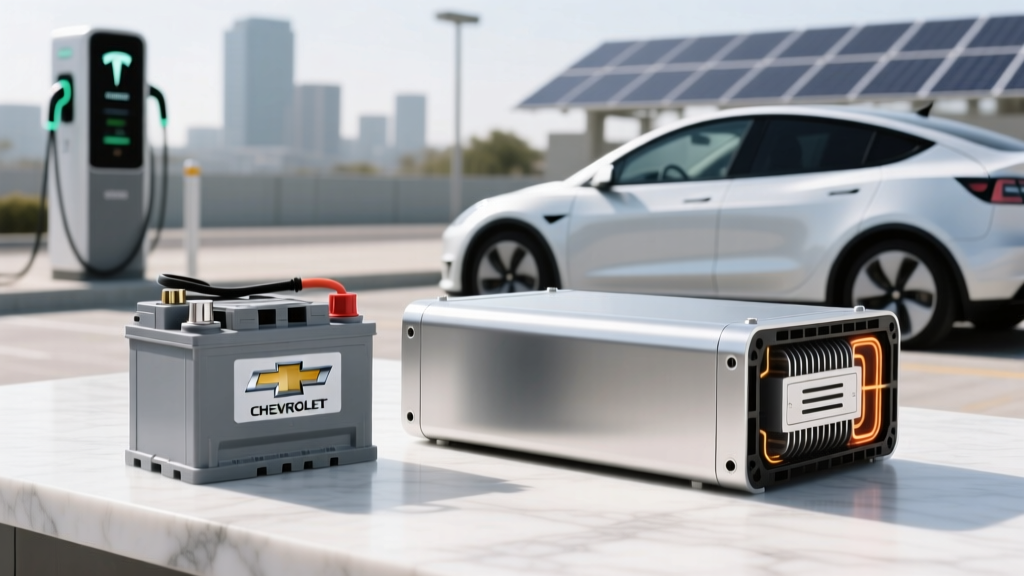
Search for "2010 Chevrolet Cobalt battery" and you'll mostly find replacement 12-volt lead-acid batteries for a compact gas-powered sedan. That's because the 2010 Cobalt was never an electric vehicle — it was a conventional internal-combustion compact car. But that search query opens a fascinating window into how far automotive battery technology has come in 15 years. In 2010, the Nissan Leaf was just launching with a 24 kWh battery and 73 miles of range. Today's EVs routinely pack 75-100 kWh packs delivering 300+ miles, with fundamentally different chemistries, warranties, and lifespan expectations.
This guide uses that 2010-to-2026 arc as a framing device to explain everything modern EV buyers and owners need to know about high-voltage traction batteries: chemistry choices, degradation reality, warranty coverage, replacement economics, and how to maximize the pack you've got.
The 2010 Baseline: What "EV Battery" Meant Before the Boom
The 2010 Chevrolet Cobalt came equipped with a standard Group 51R 12V lead-acid battery — roughly 0.5 kWh of capacity used solely for cranking the engine and powering accessories. Meanwhile, the handful of EVs on the road in 2010 told a different story:
- 2011 Nissan Leaf (released late 2010): 24 kWh NMC pack, 73 miles EPA range, passive air cooling — many packs degraded to 70-80% capacity within 5 years in hot climates.
- 2010 Tesla Roadster: 53 kWh NMC pack, 244 miles range, but at $109,000 MSRP and with battery replacement quotes exceeding $30,000.
- 2010 Chevrolet Volt (PHEV, late 2010): 16 kWh usable (from a larger gross pack), 35 miles electric range, liquid-cooled — one of GM's earliest thermal-managed packs.
The contrast with 2026 is stark. A current Chevrolet Equinox EV offers an 85 kWh Ultium battery with 319 miles EPA range, liquid thermal management, and an 8-year/100,000-mile warranty — all starting under $35,000 after federal incentives. The Cobalt's 12V battery cost about $130 to replace at an auto parts store. Today's EV traction batteries cost thousands — but they're engineered to outlast the vehicle itself in most cases.
Battery Chemistry Explained: LFP vs NMC vs NCA
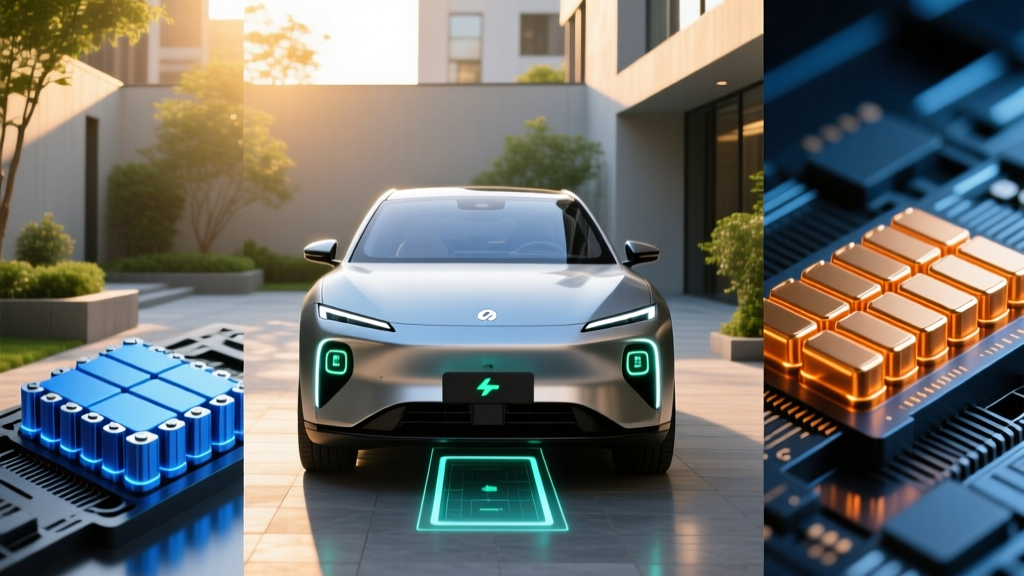
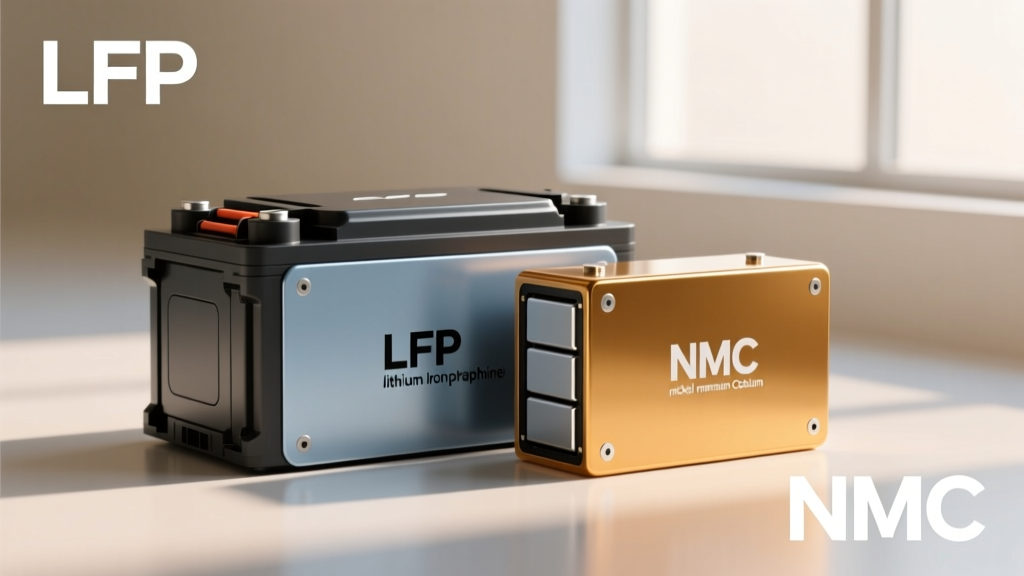
Modern EV batteries use lithium-ion cells, but the cathode chemistry varies significantly. The two dominant families in 2026 are LFP (lithium iron phosphate) and NMC/NCA (nickel manganese cobalt / nickel cobalt aluminum). Each has distinct trade-offs that affect your daily ownership experience.
| Attribute | LFP (Lithium Iron Phosphate) | NMC/NCA (Nickel-Based) |
|---|---|---|
| Energy Density | Lower (~160-180 Wh/kg cell-level) | Higher (~250-300 Wh/kg cell-level) |
| Typical Range per Pack Size | Shorter range for same physical pack | Longer range for same physical pack |
| Cycle Life | 3,000-5,000+ full cycles to 80% SoH | 1,000-2,000 full cycles to 80% SoH |
| Cold-Weather Performance | Weaker — slower charging below 32°F | Better low-temp charge acceptance |
| Recommended Daily SoC | Can charge to 100% regularly | Best kept at 80% daily; 100% for trips only |
| Cost per kWh | Lower — no cobalt or nickel | Higher — commodity-price sensitive |
| Safety / Thermal Stability | Excellent — higher thermal runaway threshold | Good — requires robust BMS and cooling |
| Common in 2026 Models | Tesla Model 3/Y RWD, Ford Mustang Mach-E Select, Rivian Standard | Tesla Long Range, Hyundai Ioniq 5/6, BMW iX, GM Ultium (NMC) |
Which is better? It depends on your use case. If you drive a moderate daily commute, have home charging, and want maximum longevity with minimal babysitting, LFP is the pragmatic choice — charge to 100%, don't worry about it. If you need maximum range in a single charge for frequent road trips or live in a cold climate where every mile counts in winter, NMC/NCA delivers higher energy density and better cold-weather charging. Neither is objectively superior; the "best" chemistry is the one matched to your driving pattern.
How Long Do EV Batteries Actually Last?
This is the single most common anxiety among prospective EV buyers. The data in 2026 is reassuring: most modern liquid-cooled EV batteries are designed to retain 70-80% of original capacity after 150,000-200,000 miles, which for the average American driver (13,500 miles/year per FHWA data) translates to 11-15 years of service.
Real-World Degradation Data Points (2026):
- Tesla Model 3/Y (NMC Long Range): Tesla's 2025 Impact Report showed fleet data averaging ~12% capacity loss at 150,000 miles, with the majority of packs still above 85% State of Health (SoH).
- Nissan Leaf (2013-2017, air-cooled 24/30 kWh): A cautionary tale — many packs in hot climates dropped to 70-75% SoH within 5-6 years due to lack of active thermal management. This generation is largely out of warranty now.
- Chevrolet Bolt EV/EUV (65 kWh NMC, liquid-cooled): Owner surveys on forums like InsideEVs and Reddit's r/BoltEV show typical degradation of 6-10% at 80,000-100,000 miles. GM's 2017 recall/replacement program for early fire-risk cells also refreshed many packs to near-new capacity.
- Hyundai Ioniq 5 (77.4 kWh NMC): Early 2022-2024 models reporting ~4-7% loss at 50,000 miles per owner data — consistent with Hyundai's conservative BMS buffer strategy.
- LFP packs (Tesla Model 3 RWD, Ford Mach-E Select): Limited long-term fleet data yet, but accelerated aging tests and early Chinese-market fleet reports suggest <5% loss at 100,000 miles when charged to 100% regularly.
Key takeaway: The early-Leaf era of rapid degradation is largely behind us. Modern liquid-cooled packs with sophisticated battery management systems (BMS) degrade slowly and predictably. The vehicle's body, suspension, or electronics are more likely to end the car's life before the battery becomes unusable.
What Does the Battery Warranty Actually Cover?
Federal law (EPA emissions warranty requirements interpreted for EV powertrains) mandates that manufacturers warrant the battery for a minimum of 8 years or 100,000 miles. California Air Resources Board (CARB) states require 10 years/150,000 miles. Most manufacturers meet or exceed these floors. Here's how major 2026 warranties compare:
| Manufacturer | Warranty Period | Capacity Retention Threshold | Notes |
|---|---|---|---|
| Tesla | 8 yr / 120,000 mi (Model 3/Y); 8 yr / 150,000 mi (S/X) | 70% SoH | Covers cells, BMS, and drive unit |
| Hyundai / Kia | 10 yr / 100,000 mi | 70% SoH | Among the longest in the industry |
| GM (Chevrolet, Cadillac) | 8 yr / 100,000 mi | 60-70% SoH (varies by model) | Ultium packs covered; Bolt was 8/100k |
| Ford | 8 yr / 100,000 mi | 70% SoH | Covers battery and electric drive components |
| BMW | 8 yr / 100,000 mi | 70% SoH | Includes high-voltage components |
| Rivian | 8 yr / 120,000 mi (175,000 mi for commercial) | 70% SoH | Module-level replacement where possible |
What triggers a warranty claim? If your battery's State of Health drops below the stated threshold (typically 70%) within the warranty period, the manufacturer will repair or replace it — usually by swapping in a refurbished pack with equivalent or better capacity. The warranty covers defects and abnormal degradation. It does not cover damage from accidents, flooding, or unauthorized modifications.
Critical distinction: A battery at 70% SoH still functions — it just has 30% less range than new. For a vehicle originally rated at 300 miles EPA, that means ~210 miles of range. Still very usable for most drivers, which is why out-of-warranty replacements are rare.
EV Battery Replacement Costs: The Real Numbers
This is where fear-mongering runs rampant. Yes, EV battery replacements are expensive — but context matters enormously. Most batteries never need replacement during typical ownership. When they do, costs have been declining steadily.
| Vehicle / Pack Size | Battery Chemistry | Approximate Replacement Cost (Parts + Labor) | When Typically Needed |
|---|---|---|---|
| Nissan Leaf (40 kWh) | NMC | $6,500 - $9,000 | 8-12 years, especially in hot climates without liquid cooling |
| Chevrolet Bolt EV (65 kWh) | NMC | $9,000 - $14,000 | Rare — most covered by recall or warranty |
| Tesla Model 3 (75 kWh) | NMC / LFP | $12,000 - $16,000 | Rare before 200,000+ miles |
| Hyundai Ioniq 5 (77.4 kWh) | NMC | $10,000 - $15,000 | Rare before 150,000+ miles |
| Ford F-150 Lightning (131 kWh Extended) | NMC | $18,000 - $28,000 | Very rare — largest packs, newest designs |
| GM Ultium (85-200 kWh depending on model) | NMC | $12,000 - $25,000+ (model-dependent) | Module-level repair may reduce cost |
Important context: Battery pack prices at the cell level have fallen from over $1,000/kWh in 2010 to roughly $100-130/kWh in 2026 per BloombergNEF tracking. Installed replacement costs are higher due to labor, diagnostics, and dealer markup, but the trend is firmly downward. Additionally, a growing ecosystem of independent EV repair shops now offers module-level repairs — replacing only the degraded cell modules rather than the entire pack — for 40-60% less than a full pack swap.
For comparison, a 2010 Chevrolet Cobalt's engine replacement would have cost $3,000-$5,000, and its transmission another $2,500-$4,000. The EV equivalent is a single component that, in most cases, never needs replacing.
Factors That Accelerate (or Preserve) Battery Life
Your habits meaningfully affect how quickly your pack degrades. Here's what the data shows:
Habits That Preserve Battery Health:
- Keep daily SoC between 20-80% for NMC/NCA packs. LFP packs are the exception — manufacturers like Tesla recommend periodic 100% charges to help the BMS calibrate cell balancing.
- Use Level 2 (home) charging as your primary method. Slow, steady charging generates less heat and stress on cells than repeated DC fast charging.
- Precondition your battery before DC fast charging. Most modern EVs do this automatically when you navigate to a charger, warming the pack to optimal temperature for faster, healthier charging.
- Park in shade or a garage during extreme heat. Sustained high temperatures (above 95°F ambient) accelerate calendar degradation, especially at high SoC.
- Don't leave the car at 100% SoC for extended periods. If you charge to full for a road trip, try to depart within 24 hours.
Habits That Accelerate Degradation:
- Frequent DC fast charging as your primary method. Occasional road-trip fast charging is fine, but daily 150+ kW sessions generate sustained heat that wears cells faster. Studies from the Idaho National Laboratory showed packs exclusively DC fast-charged degraded ~10% more over 50,000 miles than packs charged primarily on Level 2.
- Regularly draining to 0% or charging to 100% and letting it sit (NMC/NCA). The extremes of SoC stress the chemistry.
- Ignoring thermal management. If your EV's cooling system has a fault or you're charging in 110°F+ heat without preconditioning, the pack suffers.
- Aftermarket modifications to the BMS or charging system. These void warranties and risk cell damage.
Monitoring Battery Health: How to Check Your SoH
State of Health (SoH) is the percentage of your battery's current maximum capacity relative to its original capacity. A new pack is 100% SoH; a pack that can only hold 75 kWh out of an original 85 kWh is at ~88% SoH.
How to check SoH in 2026:
- In-vehicle displays: Tesla shows battery health in the service menu (or via the Tesla app under "Battery Health"). Hyundai/Kia includes a battery condition indicator in the EV settings. GM's Ultium-based vehicles report SoH through the MyChevrolet/MyCadillac app.
- OBD-II diagnostic tools: Third-party apps like LeafSpy (Nissan Leaf), Scan My Tesla, or ABRP OBD adapters can read detailed cell voltage, pack SoH, and individual module balance data. These are invaluable for used-EV buyers.
- Dealer diagnostic reports: Any authorized service center can run a full battery health report showing capacity, cell balance, and fault codes. Request one before buying a used EV.
- Charging data analysis: If you track how many kWh it takes to charge from 10% to 100% and compare it to the pack's original usable capacity, you can estimate SoH. A pack that originally held 75 kWh usable but now only takes 65 kWh from 10-100% is at roughly 87% SoH (accounting for charging losses).
For used-EV buyers: Always verify SoH before purchase. A 2018 Leaf at 60,000 miles might look like a bargain at $12,000, but if LeafSpy shows 78% SoH, you're getting only ~117 miles of its original 150-mile range — and replacement is a $7,000-$9,000 question within a few years.
Emerging Battery Tech: What's Coming (and When)
The battery landscape is evolving rapidly, but it's essential to separate lab announcements from production reality:
- Solid-state batteries: Promise 30-50% higher energy density, faster charging, and improved safety by replacing the liquid electrolyte with a solid material. Toyota has announced a 2027-2028 production target for limited models. QuantumScape is shipping prototype cells to automotive partners. Samsung SDI targets 2027. Realistic mass-market availability: 2029-2032. Don't delay an EV purchase waiting for solid-state.
- Silicon-dominant anodes: Companies like Sila Nanotechnologies and Group14 are replacing graphite anodes with silicon to boost energy density by 20-40%. Mercedes-Benz's G-Class EV (2025) uses Sila cells in a limited run. Expect broader adoption in 2027-2029 model-year vehicles.
- Sodium-ion batteries: Lower energy density than lithium-ion, but dramatically cheaper and free of lithium, cobalt, and nickel. CATL and BYD are producing sodium-ion packs for Chinese-market city cars. US availability is unlikely before 2028-2030 and will likely target budget urban EVs with 150-200 mile range.
- LMFP (lithium manganese iron phosphate): An evolution of LFP that adds manganese for ~15-20% higher energy density while retaining LFP's cost and safety advantages. CATL and Gotion are shipping LMFP cells in 2025-2026. Expect US-market vehicles with LMFP by 2027-2028.
These are forward-looking developments. None are available in production vehicles you can buy today in the US market. The batteries shipping in 2026 model-year EVs — LFP and NMC/NCA with liquid cooling — are mature, well-tested, and backed by substantial warranties.
From a 2010 Cobalt's Lead-Acid to 2026's Lithium-Ion: The Ownership Reality
The 2010 Chevrolet Cobalt's Group 51R battery cost $100-$150, lasted 3-5 years, and cranked a 2.2L four-cylinder engine. Its 2026 EV counterparts cost more upfront but deliver 150,000+ miles of service with gradual, predictable degradation. The math has inverted: where the Cobalt owner replaced their battery (and eventually their transmission, head gasket, and exhaust system) over a decade of ownership, the EV owner's single largest wear component — the battery — is warrantied for 8-10 years and typically outlasts the vehicle's economic life.
If you're shopping for an EV in 2026, focus on the battery chemistry that matches your lifestyle (LFP for simplicity and longevity, NMC for maximum range), verify SoH on any used purchase, lean on Level 2 home charging, and let the warranty cover the unlikely worst case. The days of fearing a sudden $20,000 battery bill at 80,000 miles are largely over.
How long do EV batteries last in years and miles?
Most modern liquid-cooled EV batteries retain 70-85% of their original capacity after 150,000-200,000 miles, which translates to 11-15 years for the average US driver. LFP chemistry packs may exceed 300,000 miles before reaching 70% SoH based on cycle-life testing. The battery is rarely the component that ends an EV's life.
How much does an EV battery cost to replace?
Full replacement costs range from roughly $6,500 for a Nissan Leaf 40 kWh pack to $25,000+ for a large Ford F-150 Lightning Extended Range pack, including labor. However, most batteries never require replacement during typical ownership. Module-level repairs, where available, cost 40-60% less. Declining cell prices continue to push replacement costs downward.
What does the EV battery warranty cover?
Federal minimum is 8 years/100,000 miles; CARB states require 10 years/150,000 miles. Coverage applies when battery State of Health drops below the manufacturer's threshold (typically 70% of original capacity) due to defects or abnormal degradation. It does not cover accident damage, flooding, or unauthorized modifications. Check your specific manufacturer's warranty booklet for exact terms.
How do I check and maximize my EV battery health?
Check SoH through your vehicle's app, in-car diagnostics, or an OBD-II tool like LeafSpy or Scan My Tesla. To maximize health: use Level 2 charging as your primary method, keep NMC/NCA packs between 20-80% SoC for daily use (LFP can go to 100%), precondition before DC fast charging, avoid leaving the car at 100% for days, and park in shade during extreme heat.
LFP vs NMC — which battery chemistry is better?
Neither is universally better. LFP offers longer cycle life (3,000-5,000+ cycles), lower cost, better safety, and the convenience of regular 100% charging — ideal for daily commuters with home charging. NMC/NCA delivers higher energy density for longer range per charge and better cold-weather performance — ideal for road-trippers and cold-climate drivers. Choose based on your driving pattern, not hype.