Why Searching for a "2009 Nissan Versa Battery" Leads to an EV Battery Education
If you've landed here searching for a 2009 Nissan Versa battery, you're likely dealing with a dead 12-volt lead-acid battery in a compact gas car that Nissan sold nearly two decades ago. That battery — typically a Group 35 or 26R lead-acid unit costing $120–$180 at any auto parts store — is a fundamentally different technology from the high-voltage lithium-ion traction batteries powering today's electric vehicles.
But the search raises a worthwhile question: how do modern EV batteries compare to the simple lead-acid batteries we've been replacing every 3–5 years in gas cars like the 2009 Versa? The answer reveals why EV battery technology has become one of the most consequential engineering achievements in automotive history — and why most EV owners will never need to replace their traction battery at all.
This guide covers everything current and prospective EV owners need to know about battery chemistry, degradation, warranties, replacement costs, and care — with the kind of real-world data that separates marketing from reality.
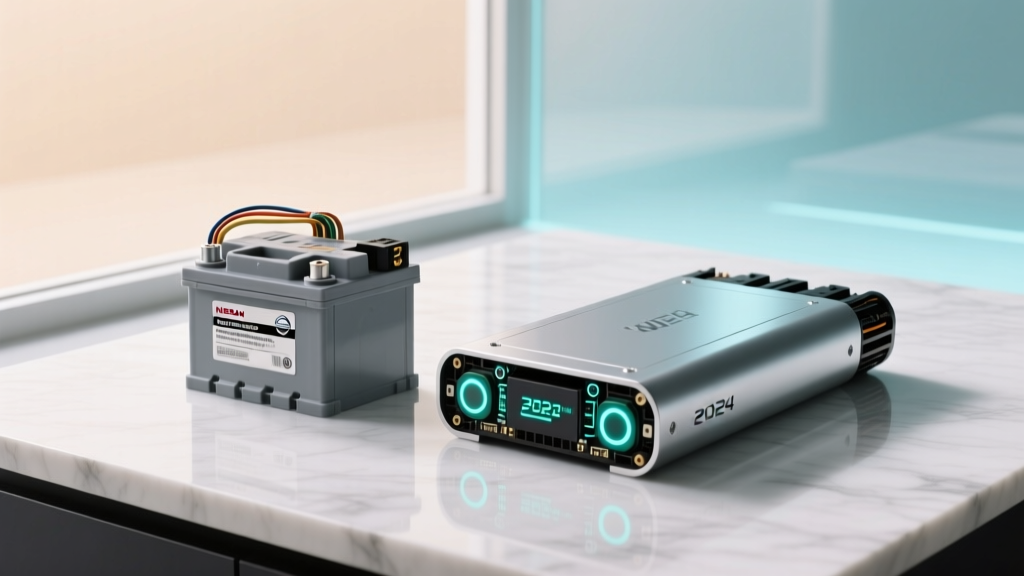
The 2009 Nissan Versa's Battery vs. a Modern EV Traction Battery
The 2009 Nissan Versa uses a conventional 12V lead-acid battery rated at roughly 550 cold-cranking amps (CCA). It weighs about 30–35 pounds, stores approximately 0.5 kWh of energy, and its job is simple: crank a 1.8-liter gasoline engine and power accessories when the alternator isn't running. Expect to replace it every 3–5 years at a cost of $120–$180.
A modern EV traction battery, by contrast, is the single most expensive component in the vehicle. Consider the 2025 Hyundai Ioniq 5: its 84 kWh (usable) lithium-ion pack weighs roughly 1,050 pounds, delivers 320 volts nominal, and provides an EPA-estimated 303 miles of range. That battery is designed to last 15–20 years and 150,000+ miles while retaining 70% or more of its original capacity.
The two batteries share a name but almost nothing else. One is a consumable maintenance item; the other is a structural, warrantied, thermally managed energy system. Understanding that distinction is the first step to confident EV ownership.
EV Battery Chemistry: LFP vs. NMC/NCA Trade-Offs
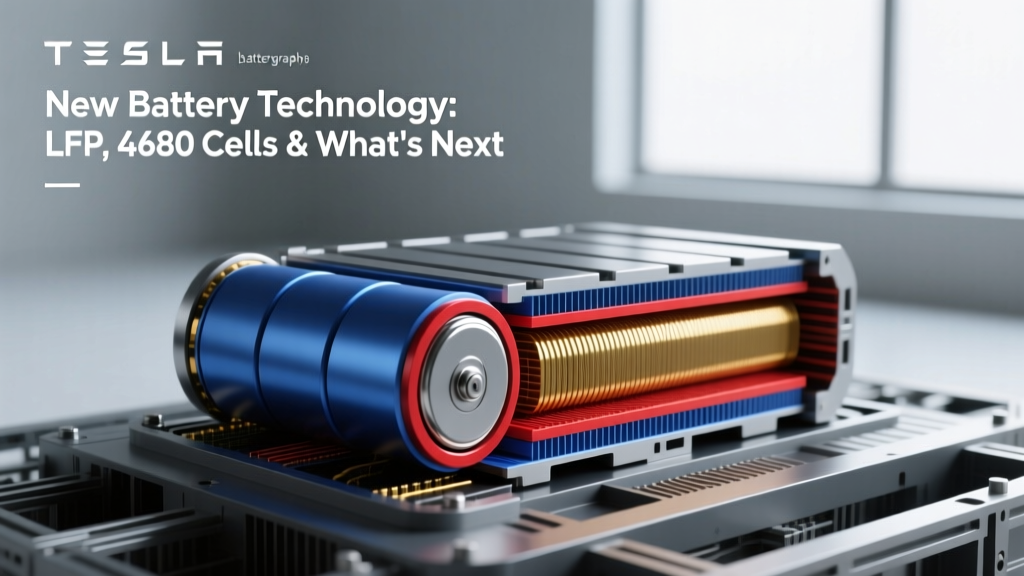
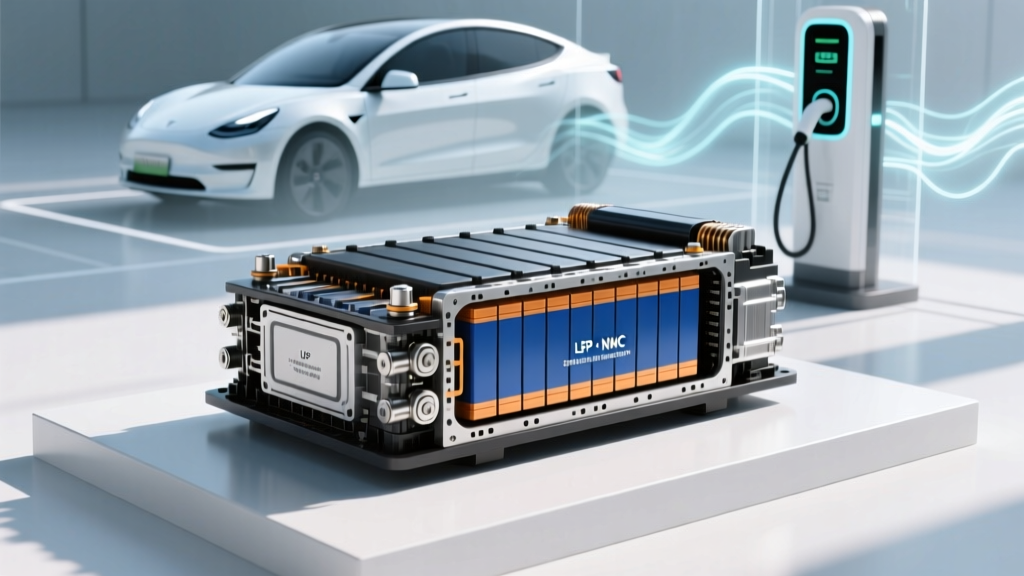
Modern EV batteries use lithium-ion cells, but not all lithium-ion chemistry is the same. The two dominant chemistries in 2026 are LFP (lithium iron phosphate) and NMC/NCA (nickel manganese cobalt / nickel cobalt aluminum). Each has distinct trade-offs that affect range, longevity, cost, and cold-weather performance.
| Attribute | LFP (Lithium Iron Phosphate) | NMC / NCA (Nickel-based) |
|---|---|---|
| Energy density | Lower (~160 Wh/kg cell-level) | Higher (~250–300 Wh/kg cell-level) |
| Typical cycle life | 3,000–5,000+ cycles | 1,000–2,000 cycles |
| Cold-weather performance | Moderate range loss (15–30% at 20°F) | Slightly better cold performance (10–25% loss) |
| Cost per kWh | Lower (~$80–100/kWh pack-level in 2026) | Higher (~$110–140/kWh pack-level) |
| Recommended daily SoC | 100% OK — LFP tolerates full charge | 80% preferred for daily use |
| Cobalt/nickel content | None — avoids supply-chain and ethical concerns | Contains cobalt and/or nickel |
| Common in (2025–2026) | Tesla Model 3/Y RWD, Ford Mustang Mach-E Select (some), BYD, Rivian Standard | Tesla Long Range, Hyundai Ioniq 5/6, BMW i4/iX, most premium EVs |
The bottom line: LFP is the better choice if you prioritize longevity, lower cost, and hassle-free daily charging to 100%. NMC/NCA wins on maximum range per pound and cold-weather efficiency. For most drivers covering under 300 miles per week, LFP's slightly lower energy density is a non-issue — you're trading 10–15% less range for a battery that can outlast the car itself.
How Long Do EV Batteries Actually Last? Degradation Data
The fear that EV batteries die early and cost a fortune to replace is the single biggest barrier to EV adoption — and it's largely unsupported by real-world data. Most modern lithium-ion traction batteries are engineered to retain 70–80% of their original capacity after 150,000–200,000 miles or 10–15 years.
Typical EV Battery Degradation Curve (NMC Chemistry, Average Use):
- Year 1 / 15,000 mi: ~2–4% capacity loss (initial formation loss)
- Year 3 / 45,000 mi: ~6–8% total loss
- Year 5 / 75,000 mi: ~8–12% total loss
- Year 8 / 120,000 mi: ~12–18% total loss
- Year 10 / 150,000 mi: ~15–22% total loss
- Year 15 / 200,000 mi: ~20–30% total loss (approaching end-of-automotive-life threshold)
Sources: Recurrent Auto battery health data (2024–2025 fleet analysis), Geotab fleet degradation studies.
LFP batteries degrade even more slowly. Tesla's 2025 Impact Report noted that Model 3/Y vehicles with LFP packs showed an average of only ~8% degradation at 100,000 miles. That means a 2025 Tesla Model 3 RWD with an EPA-estimated 272 miles of range would still deliver roughly 250 miles at the 100,000-mile mark — more than adequate for daily driving.
Critically, "end of life" for an EV battery doesn't mean it stops working. It means the battery has degraded to 70% of its original capacity — still functional, just with reduced range. Many batteries continue serving in vehicles well past this threshold, and retired packs often find second lives in stationary energy storage.
What Does the EV Battery Warranty Actually Cover?
Federal law mandates that EV batteries carry a minimum warranty of 8 years / 100,000 miles (10 years / 150,000 miles in California and states adopting CARB emissions standards). But the details matter — specifically, what capacity-retention threshold triggers a warranty claim.
| Manufacturer | Warranty Period | Capacity Retention Threshold | Notes |
|---|---|---|---|
| Tesla (Model 3/Y RWD, LFP) | 8 yr / 120,000 mi | 70% | Long Range/Performance: 8 yr / 120,000 mi, 70% |
| Hyundai / Kia | 10 yr / 100,000 mi | 70% | Among the longest coverage in the industry |
| Ford (Mach-E, F-150 Lightning) | 8 yr / 100,000 mi | 70% | Covers battery and electric drive components |
| BMW (i4, iX) | 8 yr / 100,000 mi | 70% | Includes thermal management system |
| Rivian (R1T/R1S) | 8 yr / 175,000 mi | 70% | Higher mileage threshold than most competitors |
| Chevrolet (Equinox EV, Blazer EV) | 8 yr / 100,000 mi | 60–70% | Varies by model year; verify on window sticker |
If your battery drops below the stated threshold within the warranty period, the manufacturer will repair or replace it — typically with a new or remanufactured pack — at no cost to you. In practice, warranty claims remain rare. Most degradation is gradual, and most batteries stay above 70% capacity well past the warranty expiration.
EV Battery Replacement Cost: What It Actually Costs and When You'd Need It
Out-of-warranty battery replacement is the nightmare scenario EV skeptics point to. The costs are real, but context matters: the vast majority of EV owners will sell or trade their vehicle before the battery needs replacement.
| Vehicle (2024–2026) | Battery Size (kWh usable) | Replacement Cost Range | Typical Replacement Timeline |
|---|---|---|---|
| Tesla Model 3 RWD (LFP) | 57.5 kWh | $12,000–$16,000 | 15–20 years / 200,000+ mi |
| Hyundai Ioniq 5 | 84 kWh | $18,000–$24,000 | 15–20 years / 180,000+ mi |
| Ford F-150 Lightning (Extended Range) | 131 kWh | $28,000–$38,000 | 15+ years / 150,000+ mi |
| Chevrolet Bolt EV/EUV (older platform) | 65 kWh | $14,000–$18,000 | 12–18 years / 150,000+ mi |
| BMW iX xDrive50 | 111.5 kWh | $30,000–$42,000 | 15+ years / 150,000+ mi |
For comparison, a gasoline engine replacement on a modern vehicle runs $5,000–$10,000, and a transmission rebuild can hit $4,000–$7,000. Gas cars aren't immune to catastrophic powertrain costs — those expenses are just normalized over decades of ownership.
Several factors are driving replacement costs down over time. Pack-level battery prices have fallen from over $1,000/kWh in 2010 to approximately $100–140/kWh in 2026, according to BloombergNEF. As cell manufacturing scales and recycling infrastructure matures (companies like Redwood Materials are already recovering 95% of critical minerals from spent packs), replacement costs will continue declining.
Factors That Accelerate (or Protect) Battery Life
Not all miles are created equal when it comes to battery health. The following factors have the most measurable impact on long-term degradation:
Habits that protect your EV battery:
- Keep daily SoC between 20–80% (for NMC/NCA batteries). LFP batteries can be charged to 100% daily without significant penalty.
- Precondition the battery before DC fast charging — most EVs do this automatically when you navigate to a charger. Cold batteries charge slower and experience more stress.
- Use Level 2 home charging (7–11 kW) as your primary method. Gentle, overnight charging generates minimal heat.
- Park in shade or a garage when possible. Sustained heat exposure (above 95°F / 35°C) accelerates calendar degradation more than any other environmental factor.
- Drive it regularly. Batteries that sit at high SoC for weeks without use degrade faster than batteries in regular rotation.
Habits that accelerate degradation:
- Frequent DC fast charging (150+ kW) — occasional use is fine, but daily fast-charging adds thermal stress. Data from Geotab shows fleets that fast-charge more than 3x per week degrade ~2–3% faster over 4 years.
- Regularly charging to 100% on NMC and then letting the car sit — high voltage + heat is the worst combination for lithium-ion cells.
- Deep discharges to 0% — running the battery completely empty stresses cells and can trigger low-voltage cutoffs that require dealer service.
- Extreme cold charging without preconditioning — charging a frozen battery at high power can cause lithium plating on the anode, a permanent form of damage.
How to Check Your EV Battery's State of Health (SoH)
State of Health (SoH) is the percentage of original capacity your battery retains. A brand-new battery is 100% SoH; one that has degraded to 85% of its original capacity is at 85% SoH. Monitoring this metric helps you track degradation, plan for warranty claims, and assess value when buying or selling a used EV.
How to check SoH by brand:
- Tesla: The in-car Service menu (hold the model name on the About screen for 3 seconds, enter "service" as the access code) shows a battery health test. Third-party apps like Tessie or Teslamate (for logging) can also estimate SoH.
- Hyundai/Kia: Use the dealer diagnostic tool or apps like Car Scanner ELM OBD2 with an OBD-II dongle to read battery management system (BMS) data.
- Ford: The FordPass app provides a battery health indicator. For detailed SoH, a dealer scan or OBD-II tool is required.
- Nissan (Leaf): The dashboard displays "capacity bars" out of 12 — each bar lost represents roughly 6.25% degradation. Leaf Spy Pro (via OBD-II) provides precise SoH percentage.
- Universal: Apps like Recurrent (free for EV owners) compare your vehicle's range to a fleet database and estimate SoH without any hardware.
A healthy used EV should show 90%+ SoH at under 50,000 miles. Anything below 85% at that mileage warrants investigation — it could indicate frequent fast-charging, exposure to extreme heat, or a defective module.
What's Next: Solid-State, Silicon Anodes, and Realistic Timelines
The next frontier in battery technology includes solid-state batteries (replacing the liquid electrolyte with a solid material for higher energy density and faster charging) and silicon-dominant anodes (replacing graphite to boost capacity by 20–40%).
Here's where these technologies actually stand as of 2026:
- Toyota has announced a solid-state battery pilot for limited-production vehicles in 2027–2028, targeting 745 km (~463 mi) of range and 10-minute 10–80% charging. Mass production is not expected before 2030.
- Samsung SDI is sampling solid-state cells to automakers, with commercial availability projected for 2028–2029.
- Sila Nanotechnologies has begun shipping silicon-anode cells for consumer electronics and is targeting automotive production in 2026–2027 with partners including Mercedes-Benz and Panasonic.
- QuantumScape continues testing solid-state cells with Volkswagen Group, but commercial deployment remains in the 2028+ timeframe.
For buyers in 2026, these technologies are not yet available in production vehicles. Current-generation LFP and NMC batteries are mature, well-understood, and backed by extensive warranty coverage — there is no practical reason to delay an EV purchase waiting for solid-state.
Frequently Asked Questions
How long do EV batteries last in years and miles?
Most modern EV batteries (2023–2026 models) are engineered to retain 70%+ of their original capacity for 150,000–200,000 miles or 10–15 years. LFP batteries often exceed 200,000 miles with minimal degradation. Real-world fleet data from Recurrent Auto confirms that the majority of EV batteries outlast the vehicles they're installed in.
How much does an EV battery cost to replace?
Out-of-warranty replacement costs range from roughly $12,000 for a smaller pack (Tesla Model 3 RWD, ~58 kWh) to $38,000+ for a large pack (Ford F-150 Lightning Extended Range, ~131 kWh). However, most owners never face this cost — batteries typically outlast 15 years, and most vehicles are sold or retired before replacement is needed. Pack-level prices continue declining ~8–12% per year.
What does the EV battery warranty cover?
Federal law requires a minimum 8-year / 100,000-mile warranty (10 years / 150,000 miles in CARB states). Coverage applies when the battery degrades below a stated capacity threshold — typically 70% of original capacity. The warranty covers the battery pack, modules, and often the thermal management system. Verify specific terms on your vehicle's warranty booklet or the manufacturer's website.
How do I check and maximize my EV battery health?
Check SoH using your vehicle's built-in diagnostics (Tesla Service menu, FordPass, Nissan capacity bars) or third-party tools like OBD-II scanners with apps such as Car Scanner or Leaf Spy Pro. Maximize longevity by keeping daily charge between 20–80% (NMC) or charging freely to 100% (LFP), preconditioning before fast charging, parking in cool environments, and avoiding repeated deep discharges.
LFP vs NMC — which battery chemistry is better for me?
Choose LFP if you want maximum cycle life, lower cost, and the convenience of charging to 100% daily — ideal for commuters covering under 250 miles per week. Choose NMC/NCA if you need maximum range for long road trips, better cold-weather efficiency, or are buying a premium vehicle where energy density matters. Neither is universally "better" — the right choice depends on your driving pattern.
Does the 2009 Nissan Versa battery have anything to do with EV batteries?
No. The 2009 Nissan Versa uses a conventional 12V lead-acid battery (Group 35/26R, ~$120–$180) that powers the starter motor and accessories in a gasoline car. An EV traction battery is a high-voltage lithium-ion pack (50–130+ kWh) that powers the electric drive motor. The only similarity is the word "battery." If you need a replacement 12V battery for a 2009 Versa, any auto parts retailer can match the correct group size.