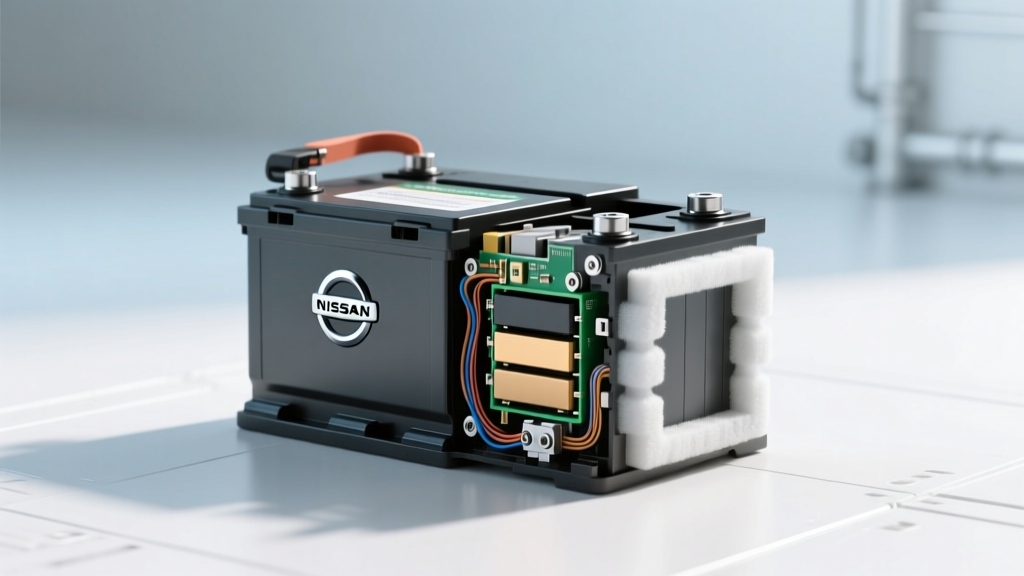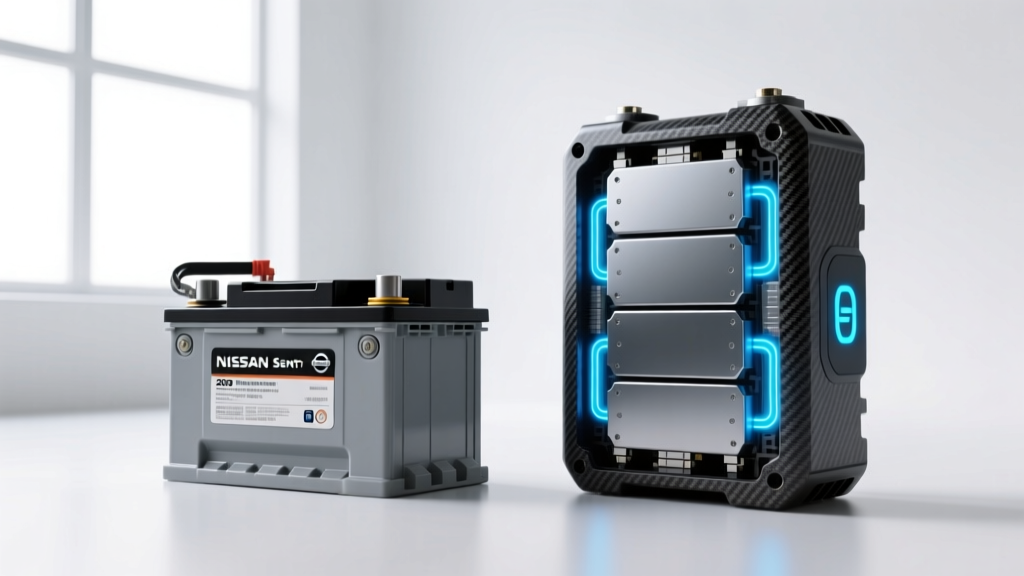
If you've ever searched for a "2009 Nissan Sentra battery," you probably ended up looking at a 12-volt lead-acid unit — the small under-hood battery that cranks a 2.0L four-cylinder engine and powers the radio. That battery costs around $120-$180, weighs about 35 pounds, and lasts 3-5 years. It's a completely different animal from the high-voltage lithium-ion traction batteries that power today's electric vehicles.
But that comparison is actually instructive. Understanding how far battery technology has come — and what modern EV battery ownership really looks like — helps buyers separate real concerns from internet myths. This guide covers the chemistry, degradation data, warranty terms, replacement costs, and care practices that define EV battery ownership in 2026.
The 2009 Nissan Sentra Battery: A Baseline for Comparison
The 2009 Nissan Sentra used a Group 35 or 26R 12V lead-acid battery with roughly 550 cold-cranking amps (CCA). Its job was simple: start an internal-combustion engine and run accessories when the alternator wasn't spinning. Total energy capacity: about 0.6 kWh. Replacement cost today: $120-$180 at any auto parts store.
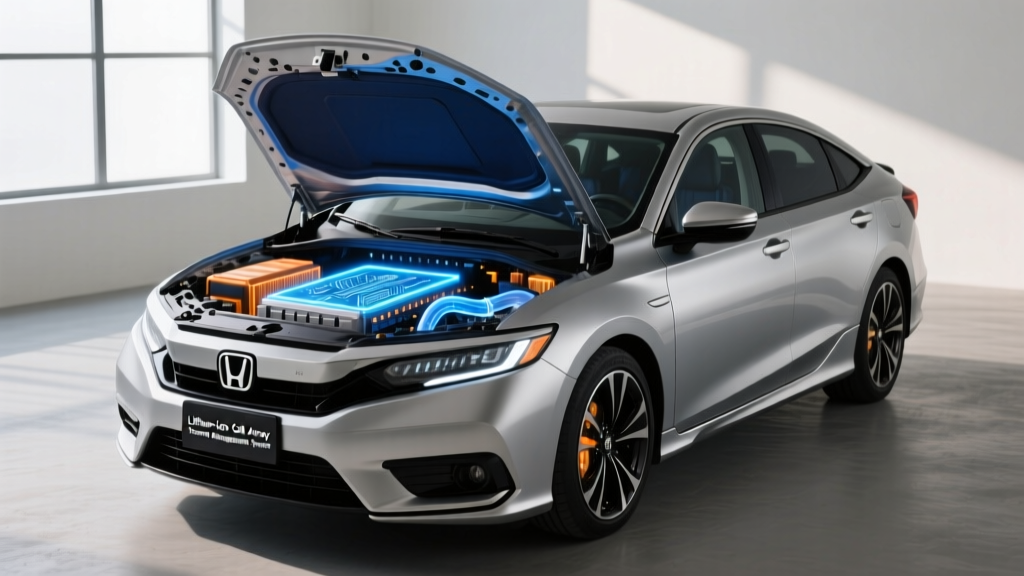
Modern EVs also carry a 12V auxiliary battery for electronics, lights, and safety systems. But the traction battery — the one that actually moves the car — is a fundamentally different component. A 2026 Nissan LEAF, for example, carries a 60 kWh lithium-ion pack operating at roughly 360V. That's 100 times the energy capacity of the Sentra's 12V battery, and it's engineered to last the life of the vehicle.
LFP vs. NMC/NCA: The Chemistry Decision That Matters
Every EV sold in 2026 uses one of two dominant lithium-ion chemistries for its traction battery: LFP (lithium iron phosphate) or NMC/NCA (nickel manganese cobalt / nickel cobalt aluminum). The choice affects range, longevity, cold-weather behavior, and price.
| Attribute | LFP (Lithium Iron Phosphate) | NMC / NCA (Nickel-Based) |
|---|---|---|
| Energy Density | Lower (~160-180 Wh/kg cell-level) | Higher (~220-300 Wh/kg cell-level) |
| Cycle Life | 3,000-5,000+ cycles to 80% SoH | 1,000-2,500 cycles to 80% SoH |
| Cold Performance | Weaker below 32°F; greater range loss | Better low-temp performance |
| Thermal Stability | Excellent; very low thermal runaway risk | Good; requires more active thermal management |
| Cost | Lower (no cobalt or nickel) | Higher (commodity-priced metals) |
| Recommended SoC Range | Can be charged to 100% daily | Best kept 20-80% for daily use |
| Common In (2026) | Tesla Model 3/Y RWD, Ford Mustang Mach-E Select, BYD, Rivian Standard | Tesla Long Range, Hyundai Ioniq 5/6, BMW iX, Porsche Taycan, GM Ultium vehicles |
Which is better? It depends on your use case. LFP wins on longevity, cost, and safety — ideal for commuters who charge at home daily and live in mild climates. NMC/NCA wins on energy density and cold-weather performance — better for long-range needs, cold-climate drivers, and performance-oriented models. Neither is universally superior; they're engineering trade-offs.
How Long Do EV Batteries Actually Last?
The short answer: far longer than most buyers assume. Data from fleet operators, manufacturer warranty claims, and independent testing consistently shows that modern EV traction batteries lose roughly 5-10% of total capacity over the first 100,000 miles, with degradation slowing significantly after the initial break-in period.
- Tesla 2025 Impact Report: Model 3/Y batteries retain an average of ~85% capacity at 200,000 miles.
- Geotab fleet study (2024, 10,000+ EVs): Average annual degradation of 1.8% across all brands — meaning ~82% retention at 10 years.
- Nissan LEAF (2011-2017, air-cooled packs): Higher degradation in hot climates — some packs at 70-75% SoH by year 8. This was an outlier that drove the industry toward liquid-cooled thermal management.
- Hyundai/Kia E-GMP platform (Ioniq 5, EV6): Early data from 2022-2025 models shows ~3-5% loss at 50,000 miles with liquid cooling.
To put this in perspective: a 2026 Hyundai Ioniq 5 with an EPA range of 303 miles and an 84 kWh usable battery might realistically deliver ~275-290 miles at 100,000 miles. That's a noticeable but manageable reduction — not the "dead battery" scenario that dominates online fear.
Most EV batteries will outlast the vehicle they're installed in. The average age of a scrapped car in the US is roughly 12-15 years. At 1.8% annual degradation, a 15-year-old EV battery would retain approximately 73% of its original capacity — still entirely functional for daily driving.
What Does the Battery Warranty Actually Cover?
Federal law mandates that EV batteries carry a minimum warranty of 8 years / 100,000 miles (10 years / 150,000 miles in California Air Resources Board states). Most manufacturers exceed this baseline.
| Manufacturer / Platform | Warranty Term | Capacity Retention Threshold |
|---|---|---|
| Tesla (Model 3/Y) | 8 yr / 120,000 mi (LR: 120k mi) | 70% |
| Hyundai / Kia (E-GMP) | 10 yr / 100,000 mi | 70% |
| GM (Ultium platform) | 8 yr / 100,000 mi | 60% (Cadillac: 70%) |
| Ford (Mustang Mach-E, F-150 Lightning) | 8 yr / 100,000 mi | 70% |
| BMW (iX, i4, i7) | 8 yr / 100,000 mi | 70% |
| Rivian (R1T, R1S) | 8 yr / 175,000 mi | 70% |
What triggers a warranty claim? If your battery's State of Health (SoH) drops below the stated threshold within the warranty period, the manufacturer must repair or replace it — typically by swapping in a refurbished pack with capacity above the threshold. The warranty covers defects and abnormal degradation, not damage from accidents, flooding, or unauthorized modifications.
According to fueleconomy.gov, EV battery warranties are among the longest powertrain protections in the auto industry, reflecting manufacturer confidence in lithium-ion durability.
How Much Does an EV Battery Replacement Cost?
This is the question that generates the most anxiety — and the most misinformation. Let's look at actual numbers.
| Vehicle / Pack Size | Battery Capacity | Estimated Replacement Cost | Typical Replacement Timeline |
|---|---|---|---|
| Nissan LEAF (60 kWh) | 60 kWh | $8,000 - $12,000 | Rarely needed; 12-15+ yr |
| Tesla Model 3 RWD (LFP, ~60 kWh) | ~60 kWh | $8,000 - $13,000 | Rarely needed; 15+ yr |
| Hyundai Ioniq 5 (84 kWh) | 84 kWh | $12,000 - $18,000 | Rarely needed; 15+ yr |
| Ford F-150 Lightning (131 kWh ext.) | 131 kWh | $18,000 - $28,000 | Rarely needed; 12-15+ yr |
| Porsche Taycan (93.4 kWh) | 93.4 kWh | $20,000 - $30,000+ | Rarely needed; 12-15+ yr |
The critical context: out-of-pocket full battery replacements are extremely rare. The vast majority of EVs are sold, traded, or scrapped before the traction battery requires replacement. When replacements do occur, they're often covered by warranty, insurance (if damage-related), or performed with refurbished packs at lower cost. Battery prices have fallen roughly 90% since 2010 (from ~$1,200/kWh to ~$120-140/kWh at the pack level in 2025-2026), and this trend continues to drive replacement costs down.
Compare this to the 2009 Nissan Sentra: over 15 years of ownership, you'd likely buy 3-5 replacement 12V batteries at $120-$180 each — totaling $400-$900. An EV traction battery replacement is far more expensive per event, but it's a once-in-the-lifetime-of-the-car expense, not a recurring maintenance item.
Factors That Affect EV Battery Lifespan
Not all miles are equal when it comes to battery wear. These factors have the most measurable impact on long-term State of Health:
- Avoid frequent DC fast charging when Level 2 is available. DCFC sessions generate more heat. Occasional road-trip fast charging is fine — daily reliance on it accelerates wear. Studies show a ~1-2% additional annual degradation for vehicles that exclusively use DCFC vs. Level 2 home charging.
- Keep NMC/NCA batteries between 20-80% SoC for daily use. Charging to 100% occasionally for road trips is fine, but sitting at 100% for days stresses the cells. LFP batteries are more tolerant of 100% daily charges — follow your manufacturer's guidance.
- Precondition the battery before fast charging. Most modern EVs do this automatically when you navigate to a charger. A cold battery charged at high power sustains more stress. Preconditioning warms the pack to optimal temperature (~77-95°F internal).
- Extreme heat is worse than extreme cold for long-term degradation. Sustained ambient temperatures above 95°F accelerate chemical aging. Liquid-cooled packs (standard on nearly all 2026 EVs) mitigate this significantly, but parking in shade or a garage in desert climates still helps.
- Don't let the battery sit at 0% or near-zero for extended periods. If storing the vehicle, leave it at ~50% SoC. Modern BMS (battery management systems) protect against deep discharge, but it's good practice.
- Use regenerative braking normally. Regen doesn't meaningfully harm the battery — the BMS manages charge acceptance rates to stay within safe limits.
How to Check and Monitor Battery Health (SoH)
State of Health (SoH) is expressed as a percentage of the battery's original usable capacity. A new battery is 100% SoH; a battery at 85% SoH holds 85% of its original energy.
How owners check SoH in 2026:
- In-vehicle displays: Tesla, BMW, Hyundai/Kia, and others now include battery health indicators in the settings menu or companion app. These are manufacturer-calculated estimates based on charge/discharge cycles, internal resistance measurements, and capacity tests.
- OBD-II diagnostic tools: Third-party apps like Leaf Spy (Nissan), OBDeleven (VW Group), and Scan My Tesla read raw BMS data including cell voltages, pack capacity, and degradation counters. These provide more granular data than the manufacturer's smoothed display.
- Dealer diagnostic reports: Any authorized service center can pull a full battery health report. Request one before buying a used EV — it's the EV equivalent of a compression test on a gas engine.
- Third-party testing: Services like Recurrent Auto and AVILOO offer battery health certifications based on standardized charge/discharge testing. Some used-EV listings now include these reports.
If you're buying a used EV, SoH is the single most important data point — more predictive of remaining value than odometer reading alone. A 60,000-mile EV with 94% SoH is a better buy than a 30,000-mile example at 88% SoH (which may indicate hot-climate abuse or excessive DCFC use).
Emerging Battery Technology: What's Next (and When)
Several next-generation technologies are in development, but none are available in production vehicles as of 2026. Here's a realistic timeline based on manufacturer announcements and industry analysis:
Solid-state batteries replace the liquid electrolyte with a solid material, promising higher energy density (~400-500 Wh/kg), faster charging, and improved safety. Toyota has announced limited production for 2027-2028, initially in low-volume models. Nissan and Samsung SDI target 2028-2030. Widespread, affordable solid-state EVs are realistically a 2030+ proposition. NHTSA and industry safety bodies are still developing testing standards for solid-state packs.
Silicon-dominant anodes replace graphite anodes with silicon, which can store roughly 10x more lithium ions per unit mass. Companies like Sila Nanotechnologies and Group14 are in early production with partial-silicon anodes (5-10% silicon content). Full silicon anodes face expansion/cracking challenges that remain unsolved at scale. Expect incremental adoption through 2028-2030.
Sodium-ion batteries use abundant sodium instead of lithium, offering lower cost and good cycle life at the expense of energy density. CATL and BYD have begun production for Chinese-market EVs. US-market adoption is uncertain and likely limited to budget/urban EVs where range is less critical. Timeline: 2027+ for limited availability.
Frequently Asked Questions
How long do EV batteries last in years and miles?
Based on fleet data and manufacturer reports, modern liquid-cooled EV batteries (2020+) typically retain 80-85% of original capacity at 150,000-200,000 miles, or roughly 12-15 years of average use. The battery doesn't "die" at this point — it simply holds less energy, reducing range proportionally. Many EVs will reach end-of-life (due to other mechanical issues, accident damage, or economic factors) before the traction battery requires replacement.
How much does an EV battery cost to replace in 2026?
Replacement costs range from roughly $8,000 for a smaller pack (60 kWh, like a Tesla Model 3 RWD) to $28,000+ for large packs (131 kWh, like the F-150 Lightning Extended Range). However, most replacements are covered by the 8-year/100,000-mile federal warranty minimum, and out-of-warranty full replacements are rare because most vehicles are retired before needing one. Pack-level battery costs continue to decline at roughly 5-8% annually.
What does the EV battery warranty cover?
The battery warranty covers capacity loss below a stated threshold (typically 70% of original capacity) within the warranty period (typically 8 years / 100,000 miles, or 10 years / 150,000 miles in CARB states). It also covers manufacturing defects and premature cell failures. It does not cover damage from collisions, flooding, unauthorized modifications, or normal wear that stays above the threshold. Check your specific manufacturer's warranty terms — details vary. For federal requirements, see IRS.gov resources on clean vehicle standards.
How do I maximize my EV battery's lifespan?
The highest-impact practices are: (1) use Level 2 home charging as your primary method, reserving DC fast charging for road trips; (2) for NMC/NCA batteries, set your daily charge limit to 80% and only charge to 100% when you need the full range; (3) avoid letting the car sit at very low or very high SoC for days at a time; (4) precondition the battery before fast charging (most EVs do this automatically when navigating to a charger); and (5) park in shade or a garage in hot climates. LFP battery owners can generally charge to 100% daily without concern — consult your owner's manual.
LFP vs. NMC — which battery chemistry is better for me?
Choose LFP if: you charge at home daily, want maximum cycle life (3,000-5,000+ cycles), prioritize lower cost, and live in a moderate or warm climate. Tesla Model 3/Y RWD, base Ford Mustang Mach-E, and many Chinese-market EVs use LFP. Choose NMC/NCA if: you need maximum range per charge, regularly drive in sub-freezing temperatures, or want a performance-oriented model. Most Long Range and AWD variants use NMC/NCA. Both chemistries are proven and reliable — the "best" choice depends on your climate, driving patterns, and priorities.
Does the 2009 Nissan Sentra have anything in common with modern EV batteries?
Only at the 12V auxiliary level. The 2009 Sentra's 12V lead-acid battery is functionally identical to the 12V auxiliary batteries found in modern EVs — they power lights, infotainment, door locks, and safety systems. The high-voltage traction battery that propels an EV is a fundamentally different technology: lithium-ion cells managed by sophisticated BMS hardware, liquid-cooled, and engineered for 15+ years of service. The 2009 Sentra's battery is a $150 maintenance item; an EV traction battery is a $10,000+ engineered system designed to outlast the car.