From Lead-Acid to Lithium: Why Battery Tech Defines the EV Era
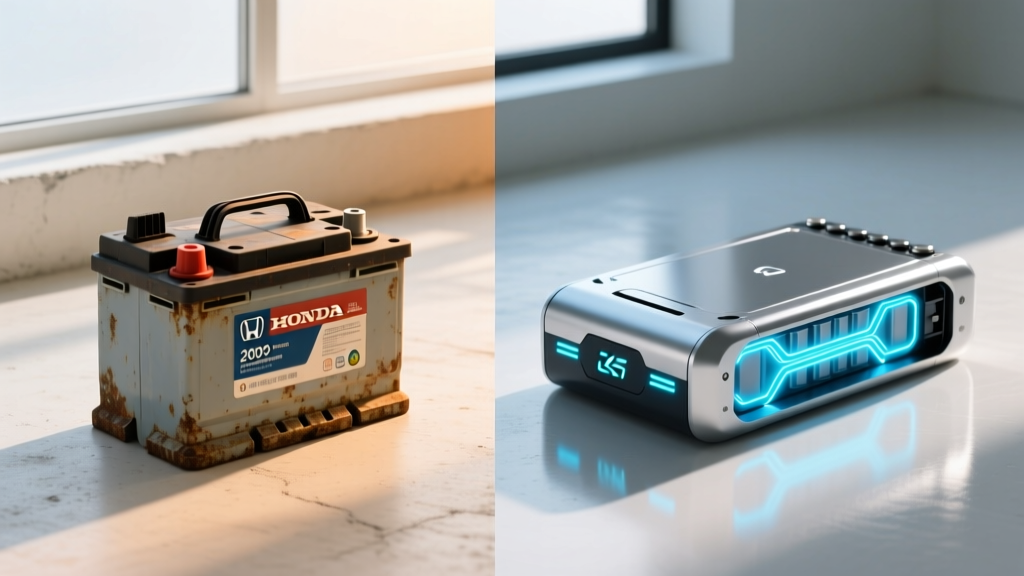
If you've searched for a 2009 Honda Odyssey battery, you're likely dealing with a familiar scenario: a dead 12V lead-acid unit under the hood of a trusty minivan. That Group 24F battery costs about $130–$180, takes five minutes to swap, and stores roughly 0.7 kWh of energy — enough to crank a 3.5L V6 engine and power the radio.
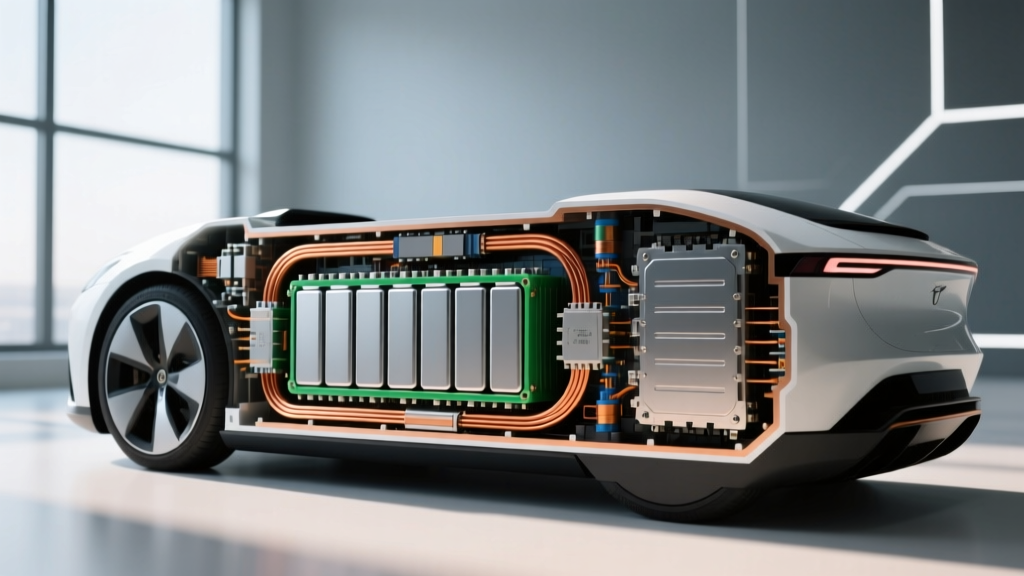
Fast-forward to today's electric vehicles, and the "battery" is an entirely different machine. A 2026 Tesla Model Y carries a 75 kWh usable lithium-ion pack weighing nearly 1,000 pounds. A Ford F-150 Lightning stores 131 kWh. These aren't accessories — they're the most expensive, most engineered component in the vehicle, and they dictate range, performance, charging speed, and long-term ownership cost.
This guide explains how modern EV traction batteries work, how they compare to the simple lead-acid units in vehicles like the 2009 Odyssey, and what every EV buyer or owner needs to know about chemistry, degradation, warranties, and replacement reality.
LFP vs. NMC/NCA: The Chemistry Decision That Shapes Your EV
Not all lithium-ion batteries are the same. The two dominant chemistries in 2026 EVs are LFP (lithium iron phosphate) and NMC/NCA (nickel manganese cobalt / nickel cobalt aluminum). Your choice of vehicle often locks you into one chemistry, and the trade-offs are significant.
| Attribute | LFP (LiFePO₄) | NMC / NCA |
|---|---|---|
| Energy Density | ~160 Wh/kg (lower) | ~250–280 Wh/kg (higher) |
| Cycle Life | 3,000–5,000+ cycles | 1,000–2,000 cycles |
| Cold-Weather Performance | Reduced; slower charging below 32°F | Better low-temp conductivity |
| Cost per kWh | ~$90–$105 (2026) | ~$120–$140 (2026) |
| Cobalt Content | None | Contains cobalt (supply-chain risk) |
| State of Charge (SoC) Range | Can charge to 100% daily | Best kept 20–80% for longevity |
| Common In (2026 Models) | Tesla Model 3 RWD, Ford Mustang Mach-E Select, BYD | Tesla Model Y LR, Hyundai Ioniq 5, Rivian R1S |
Bottom line: LFP wins on longevity, cost, and daily convenience (100% charging is fine). NMC wins on range-per-pound and cold-weather charging. For a commuter who charges at home nightly, LFP is often the smarter long-term bet. For a road-tripper in Minnesota winters, NMC's cold performance matters.
How Long Do EV Batteries Last? Degradation Data, Not Guesswork
The most persistent EV myth is that batteries "need replacing every few years." Real-world data tells a different story. Modern liquid-cooled lithium-ion packs are designed to outlast the vehicles they power.
Typical EV Battery Degradation Curve (Liquid-Cooled Packs, 2020–2026 Models):
- Year 1 / 15,000 miles: ~2–4% capacity loss (initial "break-in" drop)
- Year 3 / 45,000 miles: ~5–8% total loss
- Year 5 / 75,000 miles: ~8–12% total loss
- Year 8 / 120,000 miles: ~10–15% total loss
- Year 10+ / 150,000+ miles: ~15–20% total loss (pack remains functional)
Sources: Geotab fleet data, Recurrent Auto battery health reports, manufacturer warranty thresholds.
A 2026 Hyundai Ioniq 5 with its 77.4 kWh NMC pack, for example, might deliver 303 miles of EPA range when new. After 100,000 miles, real-world testing from fleet data suggests it would retain roughly 88–92% of original capacity — still good for ~265 miles. That's not a crisis; it's a slight reduction in buffer.
Compare this to the 2009 Honda Odyssey battery (12V lead-acid): typical lifespan is 3–5 years before replacement, with cold cranking amps declining steadily from day one. The EV traction battery is engineered for a fundamentally longer service life.
Battery Warranty Terms: What's Actually Covered?
Federal law (EPA emissions-related warranty requirements) effectively mandates that EV manufacturers warranty the traction battery for at least 8 years / 100,000 miles (or 10 years / 150,000 miles in California Air Resources Board states). Most manufacturers meet or exceed this.
| Manufacturer | Warranty Term | Capacity Threshold | Chemistry |
|---|---|---|---|
| Tesla (Model 3/Y RWD) | 8 yr / 100,000 mi | 70% retention | LFP |
| Tesla (Model Y LR/Perf) | 8 yr / 120,000 mi | 70% retention | NMC/NCA |
| Hyundai / Kia | 10 yr / 100,000 mi | 70% retention | NMC |
| Ford (Mach-E, F-150 Lightning) | 8 yr / 100,000 mi | 70% retention | NMC / LFP (select trims) |
| Chevrolet (Equinox EV, Blazer EV) | 8 yr / 100,000 mi | 60–70% retention (varies) | NMC |
| Rivian (R1S / R1T) | 8 yr / 175,000 mi | 70% retention | NMC |
| BMW (iX, i4) | 8 yr / 100,000 mi | 70% retention | NMC |
Critical detail: The warranty guarantees the pack will retain a specific percentage (usually 70%) of original capacity. If your 77.4 kWh Ioniq 5 pack drops to 52 kWh (67%) within 10 years/100k miles, Hyundai replaces or repairs it. If it drops to 55 kWh (71%), it's considered normal wear. Read the fine print — "capacity retention" is the operative phrase, not "like-new replacement."
EV Battery Replacement Cost: The Numbers and the Reality
Yes, EV battery replacements are expensive. But context matters: most packs outlive the vehicle's economic life, and costs have dropped sharply since 2015.
| Vehicle | Battery Size | Chemistry | Replacement Cost (Parts + Labor) |
|---|---|---|---|
| Tesla Model 3 RWD | ~60 kWh | LFP | $8,000–$12,000 |
| Tesla Model Y Long Range | ~75 kWh | NMC/NCA | $12,000–$16,000 |
| Hyundai Ioniq 5 | 77.4 kWh | NMC | $12,000–$18,000 |
| Ford F-150 Lightning (Ext Range) | 131 kWh | NMC | $20,000–$30,000 |
| Chevrolet Bolt EV (2023) | 65 kWh | NMC | $14,000–$16,000 |
| Rivian R1T (Max Pack) | 149 kWh | NMC | $25,000–$35,000 |
When is replacement typically needed? In practice, full pack replacement due to degradation alone is rare before 200,000+ miles. Most out-of-warranty replacements stem from physical damage (collision, flood), manufacturing defects discovered late, or isolated module failures that cascade. According to Recurrent Auto, fewer than 5% of EVs in their study fleet required battery replacement through 2025.
To anchor this: the 2009 Honda Odyssey battery replacement runs $130–$180 for the part. But that battery needs replacing every 3–5 years, and the van's fuel cost over 100,000 miles at 19 MPG combined and $3.50/gal exceeds $18,000. The EV's battery cost, amortized over a longer lifespan and paired with lower energy costs, often nets out favorably.
Factors That Accelerate (or Preserve) Battery Life
Battery degradation isn't just about time — it's about how you treat the pack. Here's what the data shows:
Battery Longevity Best Practices
- Avoid daily DC fast charging: Frequent use of 150+ kW DCFC stresses cells thermally. Reserve it for road trips; use Level 2 (7–11 kW) for daily needs.
- Keep SoC between 20–80% (NMC/NCA): Sitting at 100% for days accelerates calendar degradation. LFP owners can ignore this — 100% is fine.
- Precondition before fast charging: Cold batteries charge slowly and unevenly. Use your EV's navigation-to-charger preconditioning feature (Tesla, Hyundai, Ford all offer this).
- Avoid extreme SoC in extreme heat: 100% SoC + 100°F ambient is the worst-case degradation scenario. Park in shade, charge to 80% in summer.
- Don't let the pack sit at 0%: If storing the EV for weeks, leave it at ~50% SoC. A fully depleted pack can brick the 12V system and stress cells.
- Use scheduled charging: Charge to 80% just before you leave in the morning, rather than sitting at 80% overnight.
Liquid thermal management — standard on virtually every 2026 EV sold in the U.S. — has been transformative. Air-cooled packs (like the early Nissan Leaf) degraded 2–3× faster than liquid-cooled equivalents. This single engineering change is why modern EV batteries last so much longer than early-generation packs.
How to Check Your EV Battery's State of Health (SoH)
State of Health (SoH) is the percentage of original capacity your battery retains. A new pack is 100% SoH; a pack that holds 70 kWh of its original 77.4 kWh is at ~90% SoH. Here's how to monitor it:
Manufacturer Apps and In-Car Displays
Most 2026 EVs display SoH or estimated range degradation in the vehicle settings or companion app. Tesla shows projected range at 100% charge (compare to original EPA figure). Hyundai's Bluelink app provides a battery health indicator. Ford's Pass app includes SoH data for fleet customers.
OBD-II Dongles and Third-Party Tools
Devices like the OBDLink SX paired with apps such as LeafSpy (Nissan), TeslaFi (Tesla), or ABRP (A Better Route Planner) can pull detailed cell-level voltage data and estimated SoH from the BMS (Battery Management System). Enthusiast communities on Reddit's r/electricvehicles and InsideEVs forums share model-specific OBD-II PID codes.
Dealer Diagnostic Reports
Any authorized service center can run a full battery diagnostic, providing cell-by-cell voltage variance, internal resistance readings, and an official SoH percentage. Request this before buying a used EV — it's the most reliable health check available.
Used-EV buying tip: If you're cross-shopping a used EV against a used minivan like the 2009 Honda Odyssey (where you'd simply check the 2009 Honda Odyssey battery date sticker and voltage), the EV equivalent is the SoH diagnostic report. Always ask for it.
Emerging Battery Technology: Solid-State and Beyond
Next-generation battery tech is real but not yet in driveways. Here's a grounded timeline:
Solid-State Batteries
Solid-state cells replace the liquid electrolyte with a solid material (ceramic, sulfide, or polymer), promising higher energy density (~400+ Wh/kg), faster charging, and improved safety. Toyota has announced a 2027–2028 production timeline for solid-state EVs with ~750 km (466 mi) range and 10-minute 10–80% charging. Samsung SDI targets 2027 for mass production. QuantumScape continues pilot production with Volkswagen. None are available in consumer vehicles as of early 2026.
Silicon Anode Cells
Companies like Sila Nanotechnologies and Group14 are replacing graphite anodes with silicon, boosting energy density by 20–40%. These are beginning to appear in premium EVs and are expected to become mainstream by 2027–2028. The Mercedes-Benz G-Class EV (2025) uses silicon-anode cells from Sila.
Sodium-Ion Batteries
CATL and BYD are producing sodium-ion packs for budget EVs in China, offering lower cost and better cold performance than LFP, at the expense of energy density. U.S. availability remains limited to announced commercial-vehicle applications as of 2026.
Realistic expectation: These technologies will debut in premium or limited-production vehicles first, with broad market availability likely in the 2028–2030 timeframe. Current LFP and NMC chemistries will remain dominant through at least 2029.
EV Battery FAQ: Straight Answers to Common Questions
How long do EV batteries last in years and miles?
Most modern liquid-cooled EV batteries (2020–2026 models) retain 85–90% of original capacity after 100,000 miles and 80–85% after 150,000 miles. At typical U.S. driving rates (~13,500 miles/year), that's 11+ years of service before reaching the 70% warranty threshold. Many packs will outlast the vehicle's economic life.
How much does an EV battery cost to replace?
Out-of-warranty replacement ranges from ~$8,000 for a 60 kWh LFP pack (Tesla Model 3 RWD) to $30,000+ for a 131–149 kWh NMC pack (F-150 Lightning Extended Range, Rivian Max Pack). However, full replacements due to degradation are uncommon — most are driven by collision damage or rare manufacturing defects.
What does the EV battery warranty actually cover?
Federal and state rules require at minimum 8 years/100,000 miles (10 years/150,000 miles in CARB states) of coverage against capacity loss below a stated threshold — typically 70%. If your battery degrades faster than that threshold, the manufacturer repairs or replaces it at no cost. Warranties do not cover damage from collisions, flooding, or unauthorized modifications.
LFP vs. NMC — which battery chemistry is better?
Neither is universally "better." LFP offers longer cycle life (3,000–5,000 cycles), lower cost, cobalt-free sourcing, and the convenience of daily 100% charging. NMC delivers higher energy density (more range per pound), better cold-weather performance, and faster DC charging in cold conditions. Choose LFP for commuting and value; choose NMC for maximum range and cold-climate road trips.
How do I check and maximize my EV battery health?
Check SoH via your EV's companion app, an OBD-II diagnostic tool, or a dealer service report. Maximize longevity by favoring Level 2 home charging over DC fast charging, keeping NMC packs between 20–80% SoC (LFP packs can sit at 100%), preconditioning before fast charges, and avoiding prolonged storage at 0% or 100% SoC in extreme temperatures.
Is the 2009 Honda Odyssey battery the same type as an EV battery?
No. The 2009 Honda Odyssey uses a 12V lead-acid battery (Group 24F, ~0.7 kWh) for engine starting and accessory power. EVs use a high-voltage lithium-ion traction battery (60–150+ kWh) for propulsion, plus a separate 12V auxiliary battery for electronics. The two systems serve entirely different purposes and operate at vastly different voltages and capacities.
For current EPA range and efficiency data, consult fueleconomy.gov. For federal EV tax credit rules affecting your purchase decision, see the IRS §30D clean vehicle credit page.