Why a 2009 Toyota Corolla Battery Search Leads to EV Battery Truths
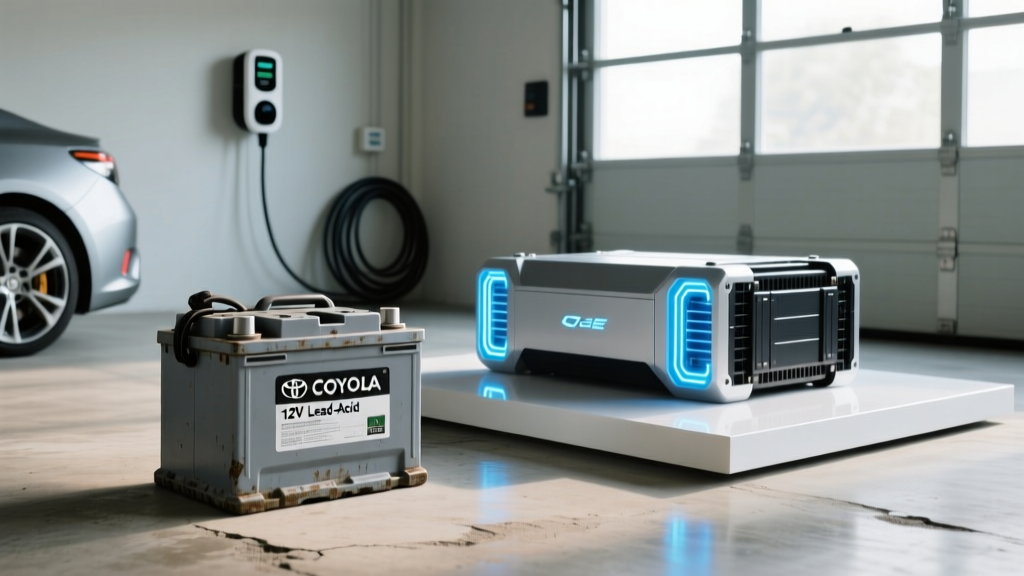
If you've ever searched for a 2009 Toyota Corolla battery, you likely discovered that the 12V lead-acid battery in that car costs $120–$180, lasts 3–5 years, and is a routine maintenance item. Now compare that to the high-voltage traction battery in a 2026 Toyota bZ4X or Tesla Model 3: a 65–75 kWh lithium-ion pack costing $8,000–$16,000 to replace, designed to outlast the vehicle itself. These are fundamentally different components with different chemistries, failure modes, and ownership implications.
This guide uses that contrast as a starting point to explain everything current and prospective EV owners need to know about traction battery longevity, degradation, replacement economics, and the chemistry choices shaping 2026's EV market. Whether you're cross-shopping a used Corolla against a new EV or simply trying to understand what lives under your electric car's floor, the data below provides concrete answers.
Battery Chemistry Explained: LFP vs NMC vs NCA
Not all lithium-ion batteries are the same. The cathode chemistry determines energy density, cycle life, thermal stability, and cost. In 2026, two families dominate the EV market:
- NMC (Nickel Manganese Cobalt) and NCA (Nickel Cobalt Aluminum) — high energy density, used in most long-range EVs
- LFP (Lithium Iron Phosphate) — lower energy density but longer cycle life, lower cost, and better thermal stability
| Attribute | LFP (LiFePO₄) | NMC / NCA |
|---|---|---|
| Energy density (cell-level) | 160–200 Wh/kg | 220–300 Wh/kg |
| Cycle life (to 80% SoH) | 3,000–6,000+ cycles | 1,000–2,500 cycles |
| Cold-weather performance | Moderate; greater range loss below 32°F without heat pump | Better low-temp discharge; still loses 20–30% range at 20°F |
| Thermal runaway risk | Very low | Low but higher than LFP |
| Cobalt/nickel content | None (iron + phosphate) | Yes — supply chain & ethical concerns |
| Typical 2026 vehicles | Tesla Model 3 RWD, Model Y RWD, Ford Mustang Mach-E Select (LFP option), BYD models | Tesla Long Range, Hyundai Ioniq 5/6, Kia EV6/EV9, BMW iX, Rivian |
| Cost per kWh (pack-level, 2026) | ~$90–$110 | ~$120–$150 |
Which is better?
Neither is universally better — it depends on your use case. Choose LFP if you prioritize longevity, plan to keep the car 10+ years or 150,000+ miles, charge primarily at home, and don't need maximum range per charge. Tesla recommends charging LFP packs to 100% regularly, which simplifies daily use. Choose NMC/NCA if you need the longest possible single-charge range (road trips, towing), live in a very cold climate where energy density matters more, or want the lightest possible pack for performance applications.
How Long Do EV Batteries Actually Last? Degradation Data
The question "how long do EV batteries last?" has a data-backed answer that surprises most first-time EV buyers: the vast majority of traction batteries outlast the vehicle they're installed in.
According to analysis from Geotab's fleet battery study covering over 10,000 EVs, the average lithium-ion EV battery loses approximately 1.8% of its capacity per year under normal use. That translates to roughly:
- Year 1: ~2–3% loss (initial formation loss, steeper curve)
- Years 2–5: ~1.5–2% per year (linear degradation)
- Years 6–10: ~1–1.5% per year (plateau phase)
- At 200,000 miles: most packs retain 80–88% of original capacity
- Tesla Model 3/Y (NMC, 2018–2022): ~12% loss at 100,000 miles per Tesla Impact Report
- Nissan Leaf (passive air cooling, 2013–2017): 20–30% loss at 80,000 miles — a cautionary tale on thermal management
- Chevrolet Bolt EV (liquid-cooled NMC, 2017–2023): ~8–10% loss at 100,000 miles
- Hyundai Kona Electric (liquid-cooled NMC): ~7% loss at 60,000 miles per owner surveys
- LFP-equipped Tesla Model 3 RWD: minimal published fleet data yet, but lab cycle-life suggests <5% at 100k miles
The critical insight: modern liquid-cooled battery packs with active thermal management degrade far more slowly than early passive-cooled designs. If you're buying a 2024–2026 EV, the battery will very likely retain 80%+ capacity at 150,000 miles — which is more miles than most owners keep a car.
Battery Warranty Terms: What's Actually Covered
Federal law mandates a minimum 8-year / 100,000-mile warranty on EV battery packs for emissions-related compliance, and most manufacturers match or exceed this. In California Air Resources Board (CARB) states, the requirement extends to 10 years / 150,000 miles.
| Manufacturer / Model | Duration | Mileage | Capacity Retention Threshold |
|---|---|---|---|
| Tesla Model 3 / Model Y | 8 years | 100,000–120,000 mi (trim-dependent) | 70% |
| Hyundai Ioniq 5 / Ioniq 6 | 10 years | 100,000 mi | 70% |
| Kia EV6 / EV9 | 10 years | 100,000 mi | 70% |
| Ford Mustang Mach-E / F-150 Lightning | 8 years | 100,000 mi | 70% |
| Chevrolet Equinox EV / Blazer EV | 8 years | 100,000 mi | 70% |
| Rivian R1T / R1S | 8 years | 175,000 mi | 70% |
| Toyota bZ4X | 10 years | 150,000 mi | 70% |
What triggers a warranty claim: The battery's State of Health (SoH) dropping below the stated threshold — typically 70% of original capacity — within the time/mileage window. This means a 75 kWh pack warrantied at 70% must retain at least 52.5 kWh of usable capacity. If it drops to 50 kWh at year 7 and 90,000 miles, the manufacturer must repair or replace it at no cost.
What's NOT covered: Damage from accidents, flooding, improper modifications, or using non-approved charging equipment. Gradual degradation above the threshold (e.g., dropping to 72% at year 9) is considered normal wear and is not a warranty event.
EV Battery Replacement Cost: What to Budget (and Why You Probably Won't Need To)
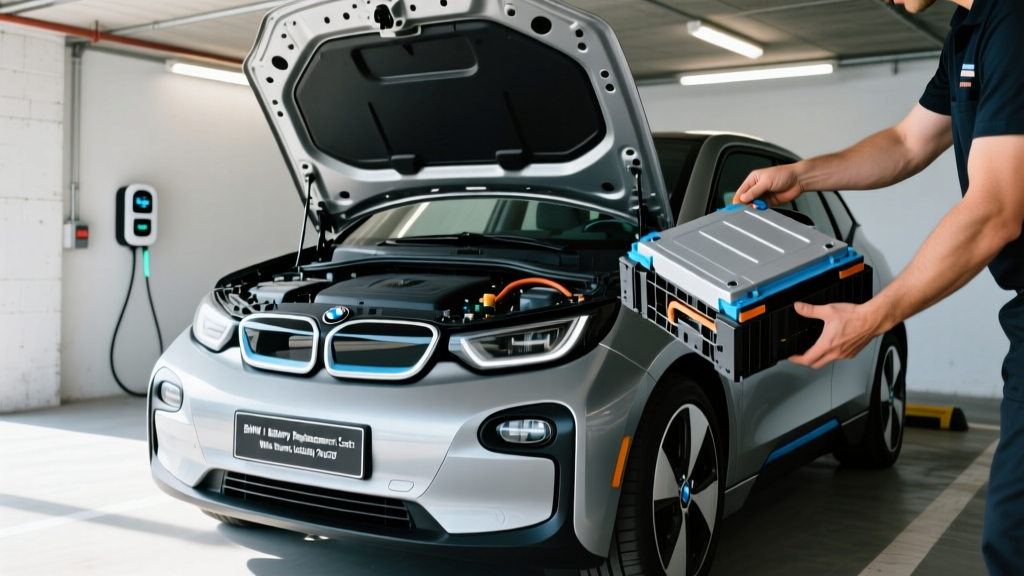
Here's where the comparison to a 2009 Toyota Corolla battery is starkest. That Corolla's 12V battery costs $120–$180 at any auto parts store and takes five minutes to swap. An EV traction battery is a five-figure component requiring a service center lift. But context matters enormously:
| Vehicle / Pack Size | Battery kWh | Estimated Replacement Cost | Typical Replacement Trigger |
|---|---|---|---|
| Tesla Model 3 RWD (LFP) | ~60 kWh | $8,000–$12,000 | Physical damage; degradation replacement extremely rare |
| Tesla Model Y Long Range (NMC) | ~75 kWh | $12,000–$16,000 | Physical damage; degradation replacement very rare |
| Hyundai Ioniq 5 (NMC) | 77.4 kWh | $12,000–$18,000 | Physical damage or cell-module failure |
| Ford F-150 Lightning Extended Range | 131 kWh | $20,000–$30,000 | Physical damage; largest consumer packs |
| Chevrolet Bolt EV (older, NMC) | 65 kWh | $14,000–$16,000 (declining as aftermarket grows) | Post-recall replacements; module-level repair possible |
The honest context most articles skip: Out-of-warranty traction battery replacements due to degradation alone are exceedingly rare in liquid-cooled EVs built after 2017. The packs that have needed replacement are overwhelmingly from physical damage (collision, ground strike), manufacturing defects caught under warranty, or the early Nissan Leaf's passively-cooled design. For a 2026 EV with liquid cooling and an 8–10 year warranty, the statistical likelihood of paying for an out-of-pocket battery replacement during typical ownership (8–12 years) is very low.
Additionally, module-level repair is increasingly available. Rather than replacing the entire pack, specialized shops can identify and swap degraded or failed modules for $2,000–$5,000 — a fraction of a full-pack swap.
Factors That Accelerate Battery Degradation (and How to Minimize Them)
Battery longevity isn't purely a function of time — how you use and charge the pack matters significantly. Here are the primary degradation accelerators, ranked by impact:
- ✅ Do: Charge to 80% daily for NMC/NCA packs; set 100% only for road trips. LFP packs can and should be charged to 100% regularly (per Tesla and BYD guidance).
- ✅ Do: Use Level 2 home charging as your primary method. Slow, steady charging generates less heat and stress.
- ✅ Do: Precondition the battery before DC fast charging (most EVs do this automatically when you navigate to a charger).
- ✅ Do: Park in shade or a garage during extreme heat. Sustained pack temperatures above 95°F accelerate chemical aging.
- ✅ Do: Drive the car regularly. Batteries that sit at low SoC for months can develop cell imbalance.
- ❌ Avoid: Exclusively DC fast charging. Daily 150–350 kW charging sessions increase degradation by an estimated 1–3% over 5 years compared to Level 2 only.
- ❌ Avoid: Leaving an NMC/NCA pack at 100% SoC for extended periods (days/weeks). High voltage + heat = accelerated calendar aging.
- ❌ Avoid: Letting the pack sit below 10% SoC for more than a few days. Store at 40–60% if parking long-term.
- ❌ Avoid: Repeatedly draining to 0%. The low-voltage cutoff protects the pack, but frequent deep discharges stress cells.
The DC fast-charging nuance
DC fast charging is not inherently harmful — modern battery management systems (BMS) carefully control charge rate, temperature, and voltage to protect the pack. The issue is cumulative thermal stress. If you road-trip monthly and use 150–250 kW chargers, the impact on long-term degradation is minimal (perhaps 2–4% additional loss over 100,000 miles). If you DC fast charge daily because you lack home charging access, the cumulative effect is more meaningful. Studies from Idaho National Laboratory have shown that exclusive DC fast charging can add roughly 5–8% additional capacity loss over 50,000 miles compared to Level 2 charging alone.
Monitoring Battery Health: How to Check Your EV's State of Health
State of Health (SoH) is the percentage of original battery capacity remaining. A new EV has 100% SoH; a pack with 85% SoH holds 85% of its original kWh. Here's how to check it:
In-vehicle methods
- Tesla: No native SoH display in the car. Use the TeslaFi or Tessie third-party app, which calculates SoH from energy added during charges vs. the pack's known capacity.
- Hyundai/Kia: Some models display SoH in the EV settings menu or via the dealer diagnostic tool.
- General Motors (Ultium): OnStar diagnostics can report battery health; the myChevrolet/myCadillac app may show estimated range trends.
- Nissan Leaf: The dashboard "health bars" (12 bars when new) are a rough SoH indicator. LeafSpy (OBD-II app) provides precise SoH percentage.
OBD-II diagnostic tools
For more precise readings, an OBD-II Bluetooth dongle paired with an EV-specific app can read the BMS directly:
- OBDLink MX+ or SX ($50–$120) paired with apps like Car Scanner, ABRP (A Better Routeplanner) OBD, or manufacturer-specific tools
- These read actual pack voltage, cell balance, and BMS-reported SoH — far more accurate than range estimation
Dealer diagnostic reports
Any authorized dealer can run a battery health check, typically during scheduled service. Request this before purchasing a used EV — a dealer printout showing SoH percentage is the single most valuable data point for a used-EV purchase decision.
Emerging Battery Technology: Solid-State and Silicon Anodes
The next generation of EV battery technology is in active development, but realistic timelines matter:
Solid-state batteries
Solid-state batteries replace the liquid electrolyte with a solid material (ceramic, sulfide, or polymer), promising higher energy density (potentially 400+ Wh/kg at cell level), faster charging, and reduced fire risk. Current status (2026): Toyota has announced limited production of solid-state-equipped prototypes, and Samsung SDI and QuantumScape are in pilot production. However, mass-market availability at scale is projected for 2028–2030 at the earliest, with initial deployment likely in premium vehicles. Cost remains the primary barrier — solid-state cells currently cost 2–4x more than equivalent NMC cells.
Silicon-dominant anodes
Replacing graphite anodes with silicon can increase energy density by 20–40%. Companies like Sila Nanotechnologies and Group14 are supplying silicon-composite anode materials to battery manufacturers. Current status: Limited deployment in 2025–2026 model-year vehicles (Mercedes-Benz EQG has used silicon anode cells). Wider adoption is expected by 2027–2028 as manufacturing scales. This is an incremental improvement, not a revolution — expect 10–20% more range from the same pack size.
Sodium-ion batteries
Sodium-ion chemistry uses abundant, cheap materials (no lithium, cobalt, or nickel) and is targeted at budget EVs and stationary storage. CATL and BYD have begun production. Current status: Deployed in some Chinese-market micro-EVs in 2025–2026. Energy density is lower than LFP (~120–160 Wh/kg), making it suited for short-range urban vehicles. US-market adoption is uncertain before 2028.
Frequently Asked Questions
How long do EV batteries last in years and miles?
Modern liquid-cooled EV batteries (2020–2026 models) are designed to retain 70–85% of original capacity at 150,000–200,000 miles, which typically corresponds to 12–18 years of average driving (13,500 miles/year). Real-world fleet data from Geotab shows average degradation of ~1.8% per year. The battery will very likely outlast your ownership of the vehicle.
How much does it cost to replace an EV battery?
Full traction battery replacement costs range from approximately $8,000 for a smaller LFP pack (Tesla Model 3 RWD, ~60 kWh) to $20,000–$30,000 for large packs (Ford F-150 Lightning Extended Range, 131 kWh). However, out-of-warranty replacements due to degradation are extremely rare in liquid-cooled EVs. Most replacements result from collision damage. Module-level repair ($2,000–$5,000) is increasingly available as an alternative to full-pack replacement.
What does the EV battery warranty actually cover?
Federal minimum is 8 years / 100,000 miles; many manufacturers (Hyundai, Kia, Toyota) offer 10 years / 100,000–150,000 miles. The warranty covers the battery dropping below a stated capacity threshold — typically 70% of original capacity. It does not cover damage from accidents, floods, or unauthorized modifications. In CARB states (California and adopting states), coverage extends to 10 years / 150,000 miles.
How do I check and maximize my EV battery's health?
Check SoH through your vehicle's settings menu (if supported), third-party apps like TeslaFi or LeafSpy, an OBD-II diagnostic dongle, or a dealer health check. To maximize longevity: charge NMC/NCA to 80% daily (100% for LFP), use Level 2 home charging as your primary method, precondition before fast charging, avoid leaving the pack at 100% or below 10% for extended periods, and minimize exclusive DC fast charging.
LFP vs NMC — which battery chemistry is better for me?
Choose LFP if you want maximum cycle life (3,000–6,000+ cycles), lower cost, can charge to 100% without worry, and don't need the absolute longest single-charge range. Choose NMC/NCA if you need maximum range per charge for road trips or towing, live in a very cold climate where energy density matters, or want the lightest pack for performance. Both chemistries in 2026 EVs are well-proven — neither is a bad choice.
Is a 2009 Toyota Corolla battery the same as an EV battery?
No. The 2009 Corolla uses a standard 12V lead-acid battery (~$120–$180, 3–5 year lifespan) that powers the starter motor and electronics. An EV traction battery is a 400V–800V lithium-ion pack (50–131 kWh, $8,000–$30,000) that powers the electric motor and is designed to last 15+ years. EVs also have a separate 12V auxiliary battery for accessories — functionally similar to the Corolla's battery — but the traction battery is a completely different component class.