From Lead-Acid to Lithium-Ion: Why Battery Tech Matters More Than Ever
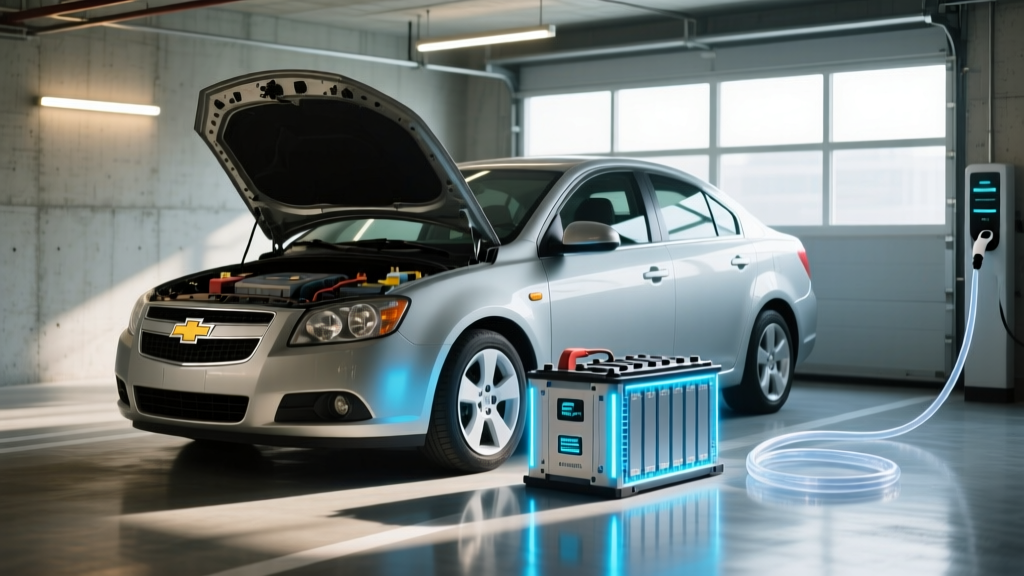
If you've landed here searching for a 2009 Chevrolet Cobalt battery, you're likely dealing with a familiar scenario: a dead 12V lead-acid unit that needs a ~$130 replacement from an auto-parts store. That Cobalt's Group 75 battery is a simple, well-understood component — swap it out every 3–5 years and move on.
But if you're researching that Cobalt because you're comparing it to a modern electric vehicle, the battery conversation changes entirely. Today's EV traction batteries are high-voltage lithium-ion packs (typically 400V–800V architectures) storing 50–130+ kWh of energy — enough to propel a vehicle 250–400+ miles on a charge. They're engineered to last the lifetime of the car, but understanding their chemistry, degradation behavior, warranty coverage, and eventual replacement cost is essential for any prospective EV buyer or owner.
This guide covers everything you need to know about modern EV battery technology in 2026 — whether you're upgrading from a 15-year-old Cobalt or optimizing a current EV.
LFP vs NMC/NCA: Choosing Your Battery Chemistry
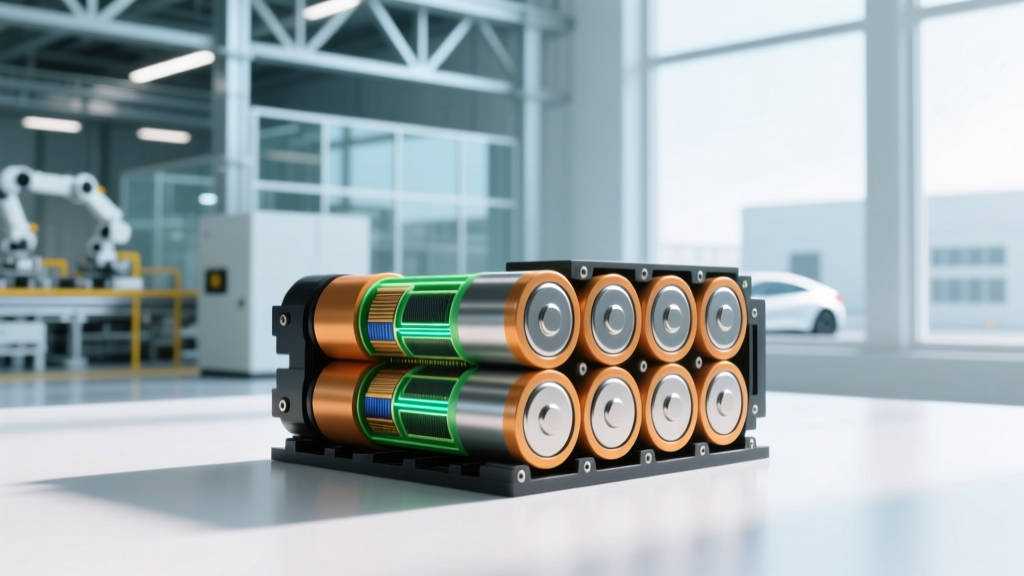
The two dominant lithium-ion chemistries in 2026 EVs are LFP (lithium iron phosphate) and NMC/NCA (nickel manganese cobalt / nickel cobalt aluminum). Each has distinct trade-offs that affect range, longevity, cold-weather performance, and price.
| Attribute | LFP (Lithium Iron Phosphate) | NMC / NCA (Nickel-based) |
|---|---|---|
| Energy Density | ~160–180 Wh/kg (lower) | ~220–300 Wh/kg (higher) |
| Cycle Life | 3,000–5,000+ cycles | 1,500–2,500 cycles |
| Cold Performance | Reduced; slower charging below freezing | Better low-temp performance |
| Cost (per kWh) | ~$80–100/kWh at pack level | ~$110–140/kWh at pack level |
| Recommended SoC for Daily | 100% (no degradation penalty) | 80% (to slow degradation) |
| Safety / Thermal Stability | Excellent; higher runaway threshold | Good; requires more active management |
| Typical Use in 2026 | Tesla Model 3/Y RWD, Ford Mustang Mach-E Select, BYD models, Rivian Standard | Long-range / performance trims, Hyundai Ioniq 5/6, BMW iX, Lucid Air |
The practical takeaway: LFP is the better choice for daily commuting and high-mileage drivers who want maximum cycle life and don't mind slightly less range. NMC/NCA suits buyers prioritizing maximum range per charge or living in consistently cold climates. Neither chemistry is universally "better" — it depends on your driving pattern.
How Long Do EV Batteries Actually Last?
The short answer: most EV batteries outlast the vehicle they're installed in. Real-world fleet data from millions of EVs on the road shows that modern lithium-ion packs are remarkably durable when properly managed.
Typical Degradation Curve (2026 fleet data):
- Year 1: ~2–3% capacity loss (initial formation loss)
- Years 2–4: ~0.5–1% per year (steady-state degradation)
- Years 5–8: ~0.5% per year continued; total loss ~8–12%
- Years 10+: Most packs retain 80–88% original capacity
- Mileage benchmark: Average pack shows ~10–12% degradation at 150,000 miles; many NMC packs tested by Recurrent retain 85%+ at 200,000 miles
Data from Geotab's fleet study of over 10,000 EVs confirmed an average annual degradation rate of approximately 1.8% in the first few years, tapering to under 1% annually afterward. LFP packs tend to degrade even more slowly, with some Tesla Model 3 Standard Range vehicles showing under 5% total loss after 100,000 miles.
The key insight: degradation is not linear. The steepest drop occurs in the first year, then the curve flattens significantly. A battery that has retained 92% capacity at year 3 is very likely to retain 85%+ at year 8.
What Does the Battery Warranty Actually Cover?
Federal law mandates that EV battery warranties cover a minimum of 8 years / 100,000 miles. In California Air Resources Board (CARB) states, the requirement extends to 10 years / 150,000 miles. Most manufacturers meet or exceed these minimums.
| Manufacturer | Warranty Period | Capacity Retention Threshold |
|---|---|---|
| Tesla (Model 3/Y LFP) | 8 yr / 100,000 mi | 70% of original capacity |
| Tesla (Model 3/Y Long Range NMC) | 8 yr / 120,000 mi | 70% of original capacity |
| Hyundai / Kia | 10 yr / 100,000 mi | 70% of original capacity |
| Ford (Mach-E, F-150 Lightning) | 8 yr / 100,000 mi | 70% of original capacity |
| GM (Ultium-based) | 8 yr / 100,000 mi | 70% of original capacity |
| Rivian | 8 yr / 175,000 mi | 70% of original capacity |
| BMW | 8 yr / 100,000 mi | 70% of original capacity |
What triggers a warranty claim: If your battery's State of Health (SoH) drops below the stated threshold (typically 70%) within the warranty period, the manufacturer will repair or replace modules or the entire pack at no cost. This covers abnormal degradation — not damage from accidents, flooding, or unauthorized modifications.
What it doesn't cover: Normal, gradual capacity loss above the threshold is not warrantable. A pack at 72% SoH at year 7, while below ideal, is still within the warranty boundary and won't trigger replacement.
EV Battery Replacement Cost: What to Expect
Out-of-warranty battery replacement is the number-one fear among prospective EV buyers. Here's the reality: it's expensive, but it's rarely needed within a typical ownership period.
| Battery Size / Vehicle Class | Estimated Replacement Cost (2026) | When Typically Needed |
|---|---|---|
| 40–60 kWh (compact EVs, e.g., Nissan Leaf, Chevy Bolt) | $6,500–$10,000 | Rarely before 200,000+ mi |
| 70–90 kWh (mid-size, e.g., Tesla Model 3/Y, Mach-E) | $10,000–$16,000 | Rarely before 200,000+ mi |
| 100–130 kWh (large, e.g., F-150 Lightning Extended, Lucid Air, Rivian) | $15,000–$25,000 | Rarely before 200,000+ mi |
Costs have been declining steadily. In 2026, pack-level pricing averages roughly $110–140/kWh for NMC and $80–100/kWh for LFP at the manufacturer level, though out-of-warranty retail replacement includes labor, diagnostics, and dealer markup. Module-level repairs (replacing only degraded sections of the pack) are increasingly available and can reduce costs to $2,000–$6,000.
For context: the average age of a scrapped passenger vehicle in the US is approximately 15–17 years. Most EV batteries are engineered to retain 70–80% capacity at 200,000 miles, meaning the vast majority will never need a full replacement before the vehicle is retired for other reasons.
Factors That Accelerate (or Slow) Battery Degradation
Not all EV miles are created equal. How you charge and drive has a measurable impact on long-term battery health.
Best Practices to Maximize Battery Life
- Limit DC fast charging to road trips. Frequent use of 150+ kW DC fast charging accelerates degradation. Research from the Idaho National Laboratory showed packs exclusively DC-charged degraded ~3–4% more over 50,000 miles than those charged primarily on Level 2. Use Level 2 (7–19 kW) for daily charging.
- Avoid extreme State of Charge storage. For NMC packs, don't leave the vehicle at 100% SoC for extended periods. Set your daily charge limit to 80%. LFP packs can (and should) be charged to 100% regularly to maintain cell-balancing accuracy.
- Minimize exposure to extreme heat. Battery degradation accelerates above ~95°F ambient. If you live in Arizona or Texas, park in shade or a garage when possible. Most EVs have active thermal management, but it works harder (and consumes energy) in extreme heat.
- Precondition in cold weather. Use your EV's scheduled departure feature to warm the battery while plugged in. Cold charging (especially DC fast charging below freezing) without preconditioning can cause lithium plating — a permanent degradation mechanism.
- Drive moderately when the battery is very cold or very hot. Aggressive acceleration at extreme SoC or temperature extremes puts additional stress on cells.
- Keep firmware updated. Manufacturers regularly refine battery management system (BMS) algorithms via OTA updates to optimize charging profiles and thermal management.
How to Check and Monitor Battery Health (SoH)
State of Health (SoH) is the percentage of your battery's original capacity that remains usable. Monitoring it helps you track degradation and plan for any warranty claims before coverage expires.
Built-in methods:
- Tesla: No native SoH display in-vehicle, but the Tesla app and service centers can provide degradation data. Third-party tools like Tessie or TeslaFi calculate SoH from energy logs.
- Hyundai/Kia: The EV battery health indicator is accessible through the infotainment system under EV settings → Battery.
- GM (Ultium): OnStar diagnostics can report battery condition; some models display a battery health estimate in the driver information center.
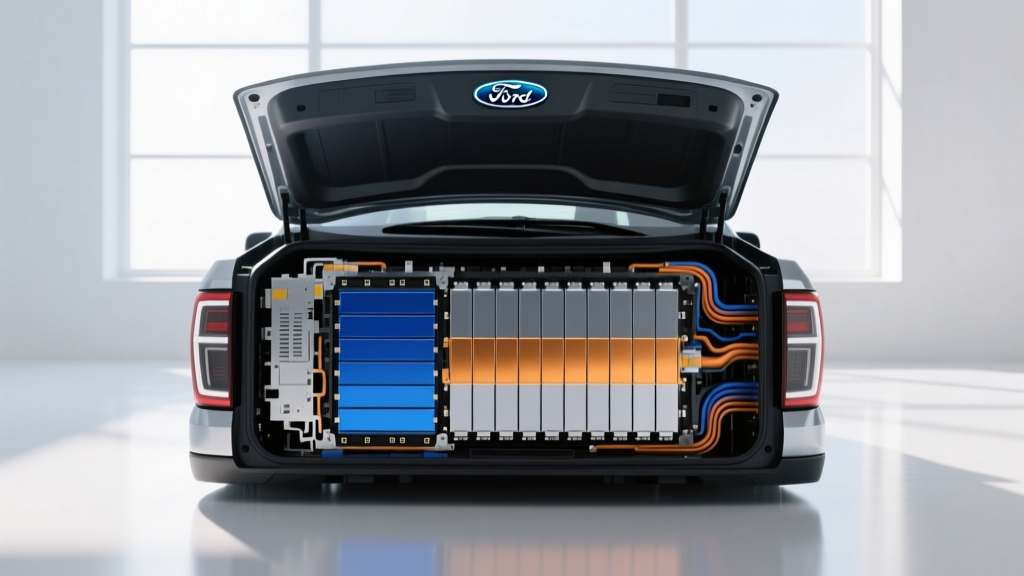
- Ford: FordPass provides battery state-of-charge and health alerts.
- Nissan Leaf: The dashboard displays "capacity bars" out of 12 — a crude but effective SoH indicator (12/12 = near-new; 9/12 ≈ 75% SoH).
OBD-II diagnostic tools: Devices like the OBDLink SX paired with apps such as Leaf Spy (Nissan), ABRP (generic), or manufacturer-specific scan tools can read detailed cell-level data including individual cell voltages, pack temperature, and precise SoH percentages.
Pro tip: Check your SoH at least twice a year — ideally before and after summer. If you notice an accelerated drop (more than ~2% in six months under normal use), schedule a dealer diagnostic to rule out a defective module while still under warranty.
Emerging Battery Technology: What's on the Horizon
The next generation of EV battery technology promises higher energy density, faster charging, and improved safety — but timelines matter. Here's what's realistic as of 2026:
Solid-state batteries: These replace the liquid electrolyte with a solid material, potentially doubling energy density and enabling 10–80% charging in under 10 minutes. Toyota has announced limited production for 2027–2028, but at extremely high cost and low volume. Samsung SDI and QuantumScape are targeting similar timelines. Widespread, affordable solid-state EVs are unlikely before 2030. Verdict: promising but not yet commercially available in consumer vehicles.
Silicon anode technology: Companies like Sila Nanotechnologies and Group14 are integrating silicon-dominant anodes into existing lithium-ion cells, boosting energy density by 15–25%. This tech is already appearing in limited applications (the Mercedes G-Class EV uses silicon-anode cells from Sila). Expect broader adoption across premium EVs by 2027–2028. Verdict: early commercial deployment underway; mainstream adoption within 2–3 years.
Sodium-ion batteries: CATL and BYD are producing sodium-ion packs for lower-cost, shorter-range EVs in China. Energy density (~140 Wh/kg) is lower than LFP, but cost is significantly less and cold performance is excellent. US-market availability is not yet confirmed. Verdict: viable for budget city EVs; unlikely to appear in US-market vehicles before 2028.
Frequently Asked Questions
How long do EV batteries last in years and miles?
Most modern EV batteries are designed to retain 70–85% of their original capacity after 200,000 miles or 10–15 years. Fleet data from Geotab and Recurrent shows average annual degradation of 1–2% in the first few years, slowing to under 1% thereafter. Many Tesla Model 3 and Model Y packs have exceeded 200,000 miles with 85%+ capacity retention.
How much does an EV battery cost to replace?
Out-of-warranty replacement costs range from approximately $6,500 for a small pack (40–60 kWh) to $25,000 for a large pack (100+ kWh). Module-level repairs can reduce this to $2,000–$6,000. However, full replacements are rare — the vast majority of EV batteries last the lifetime of the vehicle without needing replacement.
What does the battery warranty cover?
Federal minimum is 8 years/100,000 miles (10 years/150,000 miles in CARB states). The warranty guarantees the battery will retain at least 70% of its original capacity. If it drops below that threshold within the warranty period, the manufacturer will repair or replace it. The warranty covers abnormal degradation, not physical damage or misuse.
How do I check and maximize my EV battery health?
Monitor State of Health through your vehicle's built-in display, manufacturer app, or an OBD-II diagnostic tool. To maximize longevity: charge primarily on Level 2, set NMC daily limits to 80%, charge LFP to 100%, avoid frequent DC fast charging, precondition in cold weather, and minimize prolonged exposure to extreme heat.
LFP vs NMC — which battery chemistry is better?
Neither is universally better. LFP offers longer cycle life (3,000–5,000 cycles), lower cost, and the convenience of daily 100% charging — ideal for commuters and high-mileage drivers. NMC provides higher energy density (more range per kWh) and better cold-weather performance — better for long-range needs and cold climates. In 2026, LFP powers most standard-range trims while NMC dominates long-range and performance variants.
Can I still drive my EV if the battery degrades?
Yes. Degradation means reduced range, not failure. A pack at 80% SoH on a vehicle originally rated for 300 miles EPA still delivers ~240 miles — sufficient for most daily driving. The vehicle remains fully functional; you simply charge more frequently on long trips.
Does a 2009 Chevrolet Cobalt have anything in common with a modern EV battery?
Only in the broadest sense — both store electrical energy. The Cobalt uses a 12V lead-acid battery (typically 45–55 Ah, ~0.6 kWh) to start the engine and power accessories. A modern EV traction battery operates at 400–800V, stores 50–130+ kWh, and powers the entire drivetrain. The Cobalt's battery is a $100–$150 commodity item replaced every few years; an EV battery is a precision-engineered, actively managed system designed to last 15+ years.
Sources: EPA Fuel Economy for vehicle range and efficiency data; Geotab EV Battery Degradation Study; Recurrent Auto Battery Research.